DD
MM
YYYY

PAGES

DD
MM
YYYY

spot_img

PAGES

Home Blog Page 1636

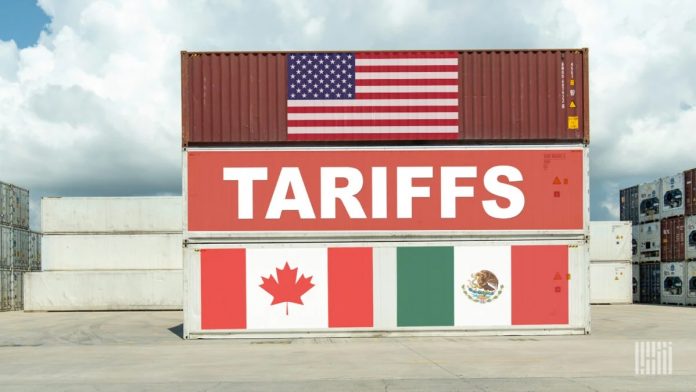
Exploring the Potential Impacts of Rollback of Tariffs on Mexico and Canada

0
USC experts talk about the importance of U.S.-China trade and how it affects the economy. (Illustration/iStock)

The potential rollback of tariffs on Mexico and Canada by President Donald Trump, could have significant implications for the U.S. economy. While no full rollback has been officially confirmed beyond specific exemptions (e.g., for automakers), analyzing the economic impact involves considering the effects of the existing tariffs and how reversing them might alter the current trajectory.

Current Impact of Tariffs on the U.S. Economy

The 25% tariffs on most imports from Mexico and Canada, implemented on March 4, 2025, along with a 10% tariff on Canadian energy exports, have already begun to influence the U.S. economy. These tariffs were introduced to address illegal immigration and fentanyl trafficking but have broader economic consequences:

Increased Consumer Prices: Tariffs are taxes on imports paid by U.S. businesses, often passed on to consumers. Economists estimate that the tariffs could raise prices significantly for goods like automobiles (e.g., an additional $3,000 per vehicle due to integrated North American supply chains), fresh produce (Mexico supplies over 60% of U.S. imports), and energy products (especially in the Midwest, reliant on Canadian oil).

The Urban-Brookings Tax Policy Center projected an annual cost of $930 per U.S. household in 2026, though some analyses suggest higher figures (up to $7,600 per household per the National Retail Federation) depending on the scope and duration.

Economic Growth Reduction: The Tax Foundation estimates that the tariffs on Canada and Mexico, if sustained without retaliation, would reduce U.S. long-run GDP by 0.2%, equating to a loss of approximately 223,000 full-time equivalent jobs and a 0.6% drop in after-tax incomes. With retaliation (as both countries have imposed 25% tariffs on U.S. exports), the Brookings Institution suggests a GDP hit of 0.25% even without escalation, while Piper Sandler forecasts a drop from 2% to 1% in 2025 GDP growth. Retaliation amplifies this, potentially costing over 400,000 U.S. jobs, per Mexican government estimates.

Market Volatility: The tariffs triggered immediate market reactions, with the S&P 500 dropping 1.8% on March 4 and continuing to slide (1.7% on March 5), reflecting investor concerns over trade war risks and inflation. This volatility could dampen business investment and consumer confidence.

Supply Chain Disruptions: Industries like automotive, agriculture, and construction, heavily reliant on cross-border supply chains, face higher costs and potential production slowdowns. For example, 50% of North American trade involves supply chain intermediates (e.g., a Chevy Silverado’s parts crossing borders multiple times), magnifying the tariff’s impact.

Inflationary Pressure: The tariffs contribute to a one-time price level increase, with potential for sustained inflation if expectations shift. The Bank of Canada notes that central banks may struggle to balance growth slowdowns (requiring looser policy) with price hikes (requiring tighter policy), risking stagflation—a mix of stagnant growth and rising prices.

If Trump were to rollback these tariffs, either partially (beyond the current auto exemption) or fully, the U.S. economy could see several shifts. Reducing or eliminating the 25% tariffs would lower import costs, potentially easing price pressures on consumer goods like cars, food, and energy. This could save households hundreds to thousands of dollars annually, reversing some of the projected $930–$7,600 cost increases.

Gasoline prices, particularly in the Midwest (reliant on Canadian crude), could stabilize or drop by 10–20 cents per gallon, per Cato Institute estimates for the 10% energy tariff’s impact. A rollback could mitigate the 0.2%–0.25% GDP reduction, preserving or restoring some of the 223,000–400,000 jobs at risk. The Global Trade Analysis Project (GTAP) model suggests that without tariffs, U.S. economic growth could rebound closer to pre-tariff projections (e.g., Piper Sandler’s 2% for 2025), especially if retaliation from Canada and Mexico is also scaled back.

A rollback signal could calm financial markets, reversing recent declines and boosting investor confidence. This might encourage business investment, which has been hampered by uncertainty and higher costs, particularly in tariff-sensitive sectors like manufacturing. Easing tariffs would restore efficiency to North American supply chains, reducing costs for industries like automakers (who received a one-month exemption on March 5) and agriculture. This could prevent long-term shifts away from U.S.-centric production, preserving the benefits of the USMCA framework.

Removing tariffs would reduce the immediate inflationary impulse, potentially averting stagflation risks. However, the one-time price hikes already in motion might not fully reverse, depending on how businesses adjust pricing and profit margins. The current auto exemption (for GM, Ford, and Stellantis) suggests a targeted approach rather than a blanket reversal. A full rollback would have broader positive effects, but partial measures might limit relief to specific sectors, leaving others exposed.

Retaliation Dynamics: Canada and Mexico’s retaliatory tariffs (e.g., Canada’s $107 billion levy on U.S. goods, Mexico’s planned measures) would need to be unwound in tandem for maximum benefit. Failure to coordinate could sustain some economic drag. The longer tariffs remain, the deeper the economic entrenchment (e.g., supply chain rerouting, price adjustments). A swift rollback would minimize damage, while delays could lock in costs.

Trump’s tariff rationale (border security, fentanyl) might shift to alternative measures, affecting the political and economic calculus. Commerce Secretary Lutnick’s hints at compromises (e.g., sector-specific relief) suggest flexibility, but no firm commitment exists as of March 6.

A rollback of tariffs on Mexico and Canada would likely benefit the U.S. economy by reducing consumer prices, supporting GDP growth, stabilizing markets, and easing supply chain strains. It could reverse much of the estimated 0.2%–1% GDP loss, save jobs, and curb inflation risks, particularly if paired with de-escalation from trading partners.

However, the extent of relief depends on the rollback’s scope, timing, and reciprocity. Without a full rollback, the U.S. economy may continue facing higher costs and slower growth, though the auto exemption offers a glimpse of potential mitigation.
IRS Drafting Plans to Cut Down Workforce by Half

0

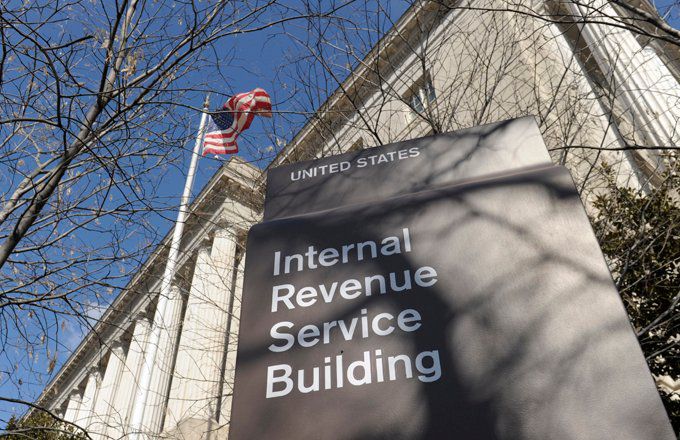
Reports indicate that the IRS is drafting plans to significantly reduce its workforce, potentially cutting up to half of its approximately 90,000 employees. These plans involve a combination of layoffs, attrition, and incentivized buyouts, according to sources familiar with the situation. A workforce reduction of the magnitude proposed in the IRS draft plans—potentially cutting up to half of its roughly 90,000 employees—would have wide-ranging impacts on the agency’s operations, the broader economy, and taxpayers.

This comes as part of broader efforts under the President Donald Trump administration to shrink the federal workforce, with influence from Elon Musk’s Department of Government Efficiency (DOGE). Already, around 7,000 probationary employees were laid off in February 2025, and further reductions are being considered, though it remains unclear if the White House will approve the full scope of the IRS’s proposal or over what timeline it would occur.

The initiative aligns with a push to streamline government operations, but critics, including former IRS Commissioner John Koskinen, warn that slashing tens of thousands of jobs could render the agency “dysfunctional.” Additional plans include redirecting some IRS staff to assist the Department of Homeland Security with immigration enforcement. Official confirmation from the White House, Treasury Department, or IRS is still pending, leaving the final outcome uncertain for now.

The IRS is responsible for collecting over $4 trillion annually in tax revenue, which funds most federal government operations. A 50% staff cut could severely limit its ability to audit tax returns, pursue tax evasion, and enforce compliance. For context, the IRS has historically struggled with understaffing—Koskinen’s warning of a “dysfunctional” agency suggests that losing tens of thousands of workers could lead to unprocessed returns, delayed refunds, and a backlog of cases. Studies show that each dollar spent on IRS enforcement yields $5–$10 in recovered revenue, so a diminished workforce might paradoxically increase the federal deficit by letting tax cheats slip through the cracks.

The IRS already faces criticism for long wait times and unanswered calls (e.g., only 29% of calls were answered in 2022 before recent funding boosts). Cutting staff would likely worsen this, leaving taxpayers—especially individuals and small businesses—stranded on filing issues, refund delays, or complex tax questions. Redirecting some staff to immigration enforcement, as proposed, would further strain resources for core tax functions.

The IRS has been working to modernize its outdated IT systems and shift to digital services. A reduced workforce, particularly if it includes skilled IT personnel, could slow these efforts, keeping the agency reliant on paper-based processes and antiquated infrastructure (some systems date back to the 1960s).

Economic and Social Impact

Laying off or buying out up to 45,000 workers would directly affect those employees and their families, particularly in areas like Ogden, Utah, or Kansas City, Missouri, where IRS facilities are major employers. This could depress local economies, reduce consumer spending, and increase demand for unemployment benefits. Incentivized buyouts might soften the blow for some, but mass layoffs (like the 7,000 probationary workers cut in February 2025) could still flood job markets with displaced workers.

A weaker IRS disproportionately benefits high-income earners and corporations, who are more likely to exploit tax loopholes or underreport income. Audits of millionaires and large firms—already down in recent years due to prior staffing shortages—could drop further, shifting the tax burden onto wage earners and small businesses who lack the resources to evade scrutiny. If IRS staff are reassigned to assist Homeland Security, as suggested, this could bolster immigration enforcement capacity (e.g., deportations tied to Trump’s agenda). However, it’s unclear how tax specialists would adapt to such roles, potentially leading to inefficiencies or misallocated skills.

Proponents, including those tied to Musk’s DOGE initiative, argue that a leaner IRS reduces bureaucratic waste and overreach (e.g., fewer “intrusive” audits). They might point to the agency’s $80 billion funding boost from the 2022 Inflation Reduction Act—partly reversed under Trump—as evidence of prior over-expansion. Opponents, including Democrats and tax experts, contend that gutting the IRS undermines its ability to serve the public and fund government programs. Public frustration could grow if services collapse, potentially fueling political pressure to reverse course or find alternative revenue sources (e.g., new taxes).

The exact impact hinges on execution: Will cuts target enforcement, customer service, or administrative roles? Will attrition and buyouts suffice, or will forced layoffs dominate? Without White House approval, the plan’s scope and timeline remain speculative. Historically, IRS staffing dropped from 117,000 in 1990 to under 80,000 by 2019, with noticeable declines in audit rates and revenue—halving it again could amplify those trends exponentially.  In short, a 50% reduction could streamline the agency in theory but risks crippling its core functions, widening economic gaps, and sparking public discontent—all while testing the limits of “doing more with less.”

EL Salvador Purchases More Bitcoin, Against IMF Order For $1.4 Billion Deal

0

El Salvador has announced the purchase of another bitcoin, which takes the total in the country’s strategic reserve to above 6,102 BTC holdings.

This was disclosed by the country’s National Bitcoin Office posted on X (formerly Twitter).

Part of the post reads,

“El Salvador just added another 1 BTC to our strategic reserve! Can’t stop, won’t stop stacking.

Total SBR Holdings:  6,102.18 BTC

Total added today: +1 BTC

Minimum total to add tomorrow: +1 BTC”.

Reacting to the post, El Salvador’s President Nayib Bukele noted that despite global skepticism, political pressure, and the abandonment of many so-called “bitcoiners,” El Salvador remains steadfast in its commitment to Bitcoin, without plans to stop acquiring the crypto asset.

Part of his post reads,

This all stops in April.” “This all stops in June.” “This all stops in December.” No, it’s not stopping. If it didn’t stop when the world ostracized us and most “bitcoiners” abandoned us, it won’t stop now, and it won’t stop in the future. Proof of work > proof of whining”.

For President Bukele and his government, the continuous purchase of Bitcoin is not just an experiment, but a revolution. Their stance is clear, proof of work prevails over proof of whining.

El Salvador Goes Against IMF Order of Bitcoin Acquisition

El Salvador purchase of more Bitcoin to its strategic reserves, comes against the International Monetary Fund (IMF) requests under its $1.4 billion deal with the Latin American country, aiming to restrict BTC purchases by the public sector.

It is understood that the IMF had added already contained strict limitations on government Bitcoin activities, while allowing retention of existing holdings.

In line with this, Nigel Clarke, deputy managing director and acting chair of the IMF board, wrote in a statement.

“Going forward, program commitments will confine government engagement in Bitcoin-related economic activities, as well as government transactions in and purchases of Bitcoin”.

The agreement, detailed in a March 2025 IMF Country report published, imposes three key crypto-specific requirements.

First, a “continuous quantitative performance criteria” prohibits any new Bitcoin acquisitions by public sector entities, maintaining a “ceiling of o” throughout the program period.

Secondly, the new arrangements also mandates liquidation of the Fidebitcoin trust fund by July 2025 and termination of government participation in the Chivo wallet system.

The third key requirement is the publication of all government Bitcoin wallet addresses, segregation of Chivo user funds, and audited financial statements for crypto-related entities.

In his own stance, Méndez Bertolo, the fund’s executive director for El Salvador said on Feb 26 that the IMF extended fund facility for El Salvador aims to provide several improvements in governance, transparency, and resilience to boost confidence and the country’s growth potential.

He pointed out that the funding deal will minimize Bitcoin-related risks saying,

“The authorities enacted amendments to the Bitcoin Law that clarify the legal nature of Bitcoin and remove from the law the essential features of legal tender. Acceptance of Bitcoin will be voluntary, tax payments will be made in US dollars, and the role of the public sector in the Bitcoin project will be confined.” he added

The director also mentioned that the IMF program is expected to attract substantial additional financial support from international organizations such as the World Bank, the Inter-American Development Bank, and other regional development banks.

Impact of El Salvador’s Bitcoin Adoption

In September 2021, with the entry into force of the Bitcoin Law, El Salvador adopted Bitcoin as currency with legal tender, alongside the US dollar, and started developing the infrastructure to facilitate its use by Salvadorans.

The Bitcoin project was intended to improve financial system access for unbanked individuals and businesses operating primarily in the informal economy, as well to expedite transactions and make remittances easier, faster, and cheaper. In an effort to launch the project, the government provided Salvadorans an initial allowance equivalent to US$30 in Bitcoin via the public e-wallet Chivo.

Before Bitcoin adoption, over 70% of El Salvador’s population lacked access to traditional banking. The introduction of Chivo Wallet, the government-backed Bitcoin app, provided an opportunity for Salvadorans to store, send, and receive money digitally, fostering financial participation.

Notably, Bitcoin adoption has turned El Salvador into a hub for crypto enthusiasts and investors, boosting tourism by over 30% in 2022. The government has also attracted crypto-related businesses and foreign investments, positioning the country as a leader in blockchain technology.

The Future of Bitcoin in El Salvador

El Salvador continues to double down on its Bitcoin strategy, with plans for a Bitcoin City powered by volcano energy and the issuance of Bitcoin-backed bonds. However, the long-term success depends on market recovery, improved infrastructure, and wider adoption among citizens and businesses.

While the experiment has had bold ambitions, its real economic impact remains uncertain, making El Salvador a case study for future Bitcoin-based economies.

Dota 2, CS2, and Fifa: Which Disciplines Are Popular in African Esports

0

Esports in Africa are exploding. Competitive gaming attracted only a select group of people around ten years ago. The gaming market now has multiple millions of dollars and receives worldwide interest. The betting market for esports continues to expand quickly and focuses primarily on Dota 2 CS2 and FIFA games. Local tournament events combined with growing internet access enable African competitors to demonstrate their skills at the international level. The future of African gaming depends on these three esports disciplines that dominate the scene.

The Rise of Esports in Africa

An African esports revolution works because of three fundamental elements: internet access paired with dedicated gamers and an expanding betting market infrastructure. Active internet user numbers in the continent surpass 570 million and continue to grow. Competitive gaming has increased the number of fans who place a bet on major tournaments to generate excitement in esports competitions. The gaming community expands through additional players, creating more tournaments that create better sponsorship opportunities and increased betting pool values.

South Africa leads the pack, while Nigeria, Kenya, and Egypt trail closely behind. Local African leagues have become more attractive to international scouts because they offer prize pools totaling tens of thousands of dollars. Investors are paying attention. Red Bull and MTN sponsor African tournaments, while international betting platforms provide odds for African matches. The African esports sector exceeds mere growth to thrive at an impressive level.

Dota 2: A Niche but Growing Scene

Dota 2 maintains a strong presence in Africa, although it does not rank as the largest esports competition in the region. The casual gaming community supports CS2 and FIFA, but Dota 2 requires advanced skill and strategic gameplay. The lower number of participants leads to outstanding dedication from each involved gamer. What factors lead to Dota 2 increasing popularity across African territories? Key factors:

  • Players in the Dota 2 competition can access substantial monetary rewards through international prize pools. Teams from Africa participate in The International because the event offers prize pools that exceed $40 million.
  • New opportunities arise from local tournament events that recently began in South Africa and Egypt.
  • Strategic bettors choose Dota 2 due to its complicated gameplay, which enables them to find lucrative betting opportunities through hero selection and in-game event markets.

Despite high internet costs and small player numbers, Dota 2 will continue to grow successfully in Africa. New funds will produce African teams that can compete worldwide in the near future.

CS2’s Competitive Popularity in Africa

Counter-Strike 2 stands as the core competitive gaming sector in African esports. CS2 provides intense tactical action that meets every requirement for an exciting esports game. Large CS2 tournaments create a strong demand for betting, which makes people around the world watch these events. South Africa keeps its position as the leading esports market in this region as Egypt, Nigeria, and Kenya enter the scene for the first time. The game spread widely throughout Africa because of its basic computer needs.

Major African CS2 Tournaments

The CS2 gaming environment in Africa develops through grassroots tournaments and elite competitions. The Africa Cyber Gaming League (ACGL) is a vital organizer that delivers national and regional competitions and distributes cash awards to players. Mettlestate operates from South Africa to organize competitive leagues that draw exceptional talent and betting interest.

Comic Con Africa presents its most significant event through its CS2 tournament, which hosts intense competitive matches between professional teams. The gaming events function as entertainment centers and attract large crowds of fans. Several African soccer clubs dream about competing in major international tournaments, but they now use their local competitions as opportunities to establish themselves globally. The rising number of streaming viewers combined with sponsorships signals that Counter-Strike 2 in Africa is about to experience significant growth.

Notable African CS2 Teams

Africa is producing serious CS2 contenders. Bravado Gaming, based in South Africa, is an international gaming legend after achieving success in qualification tournaments. The team has demonstrated that African teams possess world-class abilities by overcoming international competitors. ATK represents a new rising team that is participating in North American leagues, allowing them to develop their abilities against elite competition.

Egypt and Nigeria demonstrate strong team development, while their international success remains in the making. South African esports organization Sinister5 advances the African gaming scene by delivering skilled teams that excel through disciplined gameplay. The betting industry closely monitors these teams because unexpected victories from underdog teams are becoming increasingly common. CS2 in Africa continues to develop beyond growth into an evolution that will draw worldwide attention shortly.

FIFA’s Unmatched Appeal

The game provides a quick experience that matches the preferred sport of football while remaining the primary enthusiasm of the African continent. The necessity of high-end PC systems exists only in Dota 2 and CS2, while FIFA operates without this requirement. The game can be played with only three essential components: console, controller, and internet connection. The ease of access to FIFA tournaments has triggered their explosive growth throughout Africa, starting from neighborhood gaming centers and moving up to international qualifier stages.

African players participate in top-tier international competitions, including the FIFA Nations Cup and the ePremier League qualifiers. The gaming world sees South Africa, Nigeria, and Egypt taking the lead while Ghana and Kenya deliver surprising talents. The unpredictable nature of FIFA betting makes it a massive opportunity, since a straightforward error or scoring event can transform the entire competition. Esports in Africa has developed into a social transformation through FIFA.

The Future of African Esports

African esports serves as a major force that creates new opportunities for big tournaments while attracting big business sponsors and worldwide inclusion. Businesses within the betting industry are expanding through their services for local and international sports betting markets. FIFA CS2 and Dota 2 competitions have turned Africa from an observer into a genuine competitor through their successful introduction of top-tier gaming talent.

CMA Clears Microsoft-OpenAI Partnership, Says It Doesn’t Meet Investigation Criteria

0

In a significant decision on Wednesday, the United Kingdom’s Competition and Markets Authority (CMA) concluded that Microsoft’s partnership with OpenAI does not meet the criteria for investigation under the U.K.’s Enterprise Act 2002, the law governing anticompetitive practices.

The announcement effectively steers the tech giant clear of potential regulatory hurdles as it deepens its involvement in the booming artificial intelligence (AI) sector.

The CMA, which began its probe in December 2023, had initially raised concerns about Microsoft’s role as a dominant investor in OpenAI. Since 2019, Microsoft has infused nearly $14 billion into the AI startup, solidifying a deep collaborative relationship. The tech behemoth not only integrates OpenAI’s technologies into its Azure OpenAI Service but also works closely with the startup to develop products such as the Copilot chatbot and GitHub Copilot AI coding assistant.

Despite these ties, the CMA found that while Microsoft exerts a “high level of material influence” over OpenAI’s commercial policy, it does not control it.

“Overall, taking into account all of the available evidence […] the CMA does not believe that Microsoft currently controls OpenAI’s commercial policy,” the regulatory body stated. “In other words, there is no change of control giving rise to a relevant merger situation.”

At the heart of the investigation were worries that Microsoft’s growing influence over OpenAI could lead to a “substantial lessening” of competition in the U.K. The CMA feared that Microsoft might leverage its position to restrict competitors’ access to OpenAI’s leading AI models, especially in markets where foundational models play a critical role. The concern extended to the market for accelerated computing, with OpenAI positioned as a significant potential customer.

The situation became more complex following Microsoft’s role in securing OpenAI CEO Sam Altman’s re-appointment in November 2023, a move seen as indicative of its sway over the startup’s strategic direction. The CMA’s scrutiny aimed to determine whether these actions crossed the line into undue control that could distort market dynamics.

Crucially, recent developments have softened Microsoft’s grip on OpenAI. In January, Microsoft announced a renegotiation of its cloud computing agreement with OpenAI, adopting a model where it maintains a “first right of refusal” for specific AI workloads. Additionally, Microsoft granted waivers enabling OpenAI to build extra computing capacity, including a substantial $500 billion data center deal with investor SoftBank.

These adjustments were seen as reducing Microsoft’s potential to monopolize access to OpenAI’s technologies. The deal addressed regulatory concerns about competition and influence by allowing OpenAI to diversify its infrastructure options. This shift was likely pivotal in the CMA’s decision to forgo a formal investigation.

What This Means for the Market

The CMA’s decision not to investigate removes a potential obstacle for Microsoft as it continues to position itself at the forefront of generative AI development. The partnership with OpenAI has already boosted Microsoft’s competitiveness against rivals like Google and Amazon in the AI race. The regulatory green light in the U.K. could accelerate Microsoft’s growth in AI, enabling it to further integrate OpenAI’s models into its cloud services and software products without fear of antitrust backlash.

For OpenAI, this development offers a degree of operational independence and the freedom to pursue new partnerships without regulatory impediments. The decision underscores the broader industry dynamics, where tech giants are increasingly scrutinized for potential monopolistic behavior, particularly in fast-evolving sectors like AI.

While the CMA’s decision highlights that Microsoft’s influence over OpenAI has not crossed into outright control, it also sets a precedent for how regulatory bodies might assess influence in technology partnerships moving forward.