DD
MM
YYYY

PAGES

DD
MM
YYYY

spot_img

PAGES

Home Blog Page 1643

Apple Takes U.K. Govt. to Court Over Encryption Backdoor Order, Signals Defiance to U.S. Pressure Too

0

Apple has filed a legal challenge against a U.K. government order demanding a backdoor to its end-to-end encrypted iCloud backups, escalating a battle over digital privacy and government surveillance powers.

The tech giant lodged its case with the Investigatory Powers Tribunal (IPT), which oversees the activities of British intelligence agencies, the Financial Times reported.

The move not only signals Apple’s resistance to British authorities but also suggests the tech giant is unwilling to bow to similar pressures from the U.S. government.

The move marks a rare and significant escalation in the ongoing tug-of-war between tech companies and governments over data access. Apple, a staunch advocate for user privacy, is known for its hardline stance against building encryption backdoors, arguing that any such access could be exploited by bad actors.

Apple is not alone in its fight. Other tech giants, including Google, Meta (formerly Facebook), and Microsoft, have also resisted government demands for access to encrypted communications. The tech industry broadly supports strong encryption as essential to protecting user data against cyber threats.

The U.K. Order: A Backdoor to Privacy?

The U.K. government’s order, issued in January, invoked the country’s sweeping national security surveillance legislation—the Investigatory Powers Act 2016, commonly known as the Snooper’s Charter. The charter gives authorities broad powers to compel technology companies to assist in intercepting communications and accessing encrypted data. The order demanded that Apple create a backdoor to its Advanced Data Protection (ADP) feature, which offers end-to-end encryption on iCloud backups. This feature ensures that only the user, not even Apple, can access the stored data.

In response, Apple pulled the ADP feature from the U.K. market, effectively blocking British users from accessing the enhanced security offering. Simultaneously, the company filed a challenge with the IPT, the secretive court that oversees U.K. intelligence agencies, seeking to overturn the government’s demand.

The U.S. Pressure Mounts on Apple Too

Apple’s decision to challenge the U.K. government may also reflect its stance against similar pressures from the U.S. government. For years, U.S. authorities have lobbied Apple to provide backdoor access to its encrypted devices and services. The FBI has repeatedly criticized Apple’s privacy policies, particularly after the 2015 San Bernardino attack when Apple refused to unlock an iPhone belonging to one of the shooters.

Apple’s CEO Tim Cook argued then, as now, that creating a backdoor for law enforcement would inevitably weaken security for all users, as it could be exploited by bad actors. The FBI eventually found a workaround without Apple’s help, but the incident set the stage for ongoing tensions.

Cook’s White House Visit

Last month, Cook visited the White House, sparking speculation that his meeting with President Donald Trump was partly related to government demands for increased access to encrypted data. While the official agenda of the meeting was not disclosed, it is believed that Cook reiterated Apple’s firm stance on user privacy, despite mounting pressure from national security agencies.

The Trump administration had ramped up efforts to gain access to encrypted communications, citing concerns over terrorism and crime. The U.S. Department of Justice has previously advocated for legislation that would force tech companies to build backdoors into encrypted systems, a move that Apple and other tech firms have vehemently opposed.

Apple’s legal challenge in the U.K. is seen as part of a broader strategy to maintain its global privacy standards. While it has restricted the ADP feature in the U.K., Apple continues to offer strongly encrypted iCloud backups in other markets, signaling a refusal to compromise on privacy universally.

However, the U.K. government contends that this partial compliance is not enough. According to the Financial Times, the British government argues that Apple’s withdrawal of the ADP feature locally fails to address the order’s demand for access to data from users outside the U.K.

The Advanced Data Protection feature is a critical part of Apple’s security ecosystem, providing end-to-end encryption for iCloud backups, including photos, messages, and other personal data. Encryption ensures that data is scrambled in such a way that only the intended recipient can decipher it. Apple itself does not hold the keys to decrypt this data, which is why the U.K. government’s demand essentially amounts to forcing Apple to redesign its system.

If Apple were to comply with the order, it could potentially undermine the security of millions of users by creating a vulnerability that could be exploited by hackers or authoritarian regimes. The company has argued that even a government-sanctioned backdoor would create a “master key” that could be misused.

The outcome of this case could set a precedent not only in the U.K. but also in other jurisdictions where governments are seeking to bypass encryption. Privacy advocates warn that if Apple is forced to comply, it could embolden other nations, including the U.S., to push for similar concessions.

“If War Is What The U.S. Wants, We’re Ready To Fight Till The End”: China Vows To Fight U.S. Tariffs

0

China has vowed to return every energy given by the U.S. as President Trump pushes on with his trade tariffs, announced last month as a way of curbing the menace of fentanyl inflow from China.

In a statement on Wednesday, the spokesperson of China’s Ministry of Foreign Affairs underscored Beijing’s readiness to match the U.S.’s energy as the sweeping new tariffs take effect. The stark warning noted that China is “ready to fight till the end” for “any type of war” that the U.S. wants.

Trump, in a primetime address to Congress, attempted to downplay the repercussions of his aggressive trade policy, conceding only that his steep new tariffs would cause “a little disturbance.” However, experts have cautioned that the economic fallout may be far more significant than the president suggests.

The Impact of the Tariffs

The newly imposed 25% tariffs on Canada, Mexico, and China are part of Trump’s broader strategy to reset trade balances and pressure foreign governments into making concessions. However, these tariffs function as taxes on imported goods, and the costs are often passed directly to American consumers and businesses.

The tariffs on Chinese goods, in particular, target a broad range of products—from electronics and appliances to clothing and industrial components. Many of these items are staples in American households or critical to manufacturing supply chains. The increased costs are expected to filter through to retail prices, potentially leading to higher costs for everyday items such as smartphones, laptops, apparel, and even children’s toys.

As tensions escalate, China is not standing down, but rather, preparing for a robust response that could plunge global markets into deeper uncertainty.

In a detailed statement, the Chinese Ministry of Foreign Affairs criticized the U.S.’s use of the fentanyl crisis as a “flimsy excuse” to justify the new tariffs.

“The U.S., not anyone else, is responsible for the #FentanylCrisis inside the U.S. In the spirit of humanity and goodwill towards the American people, we have taken robust steps to assist the U.S. in dealing with the issue. Instead of recognizing our efforts, the U.S. has sought to smear and shift blame to China, and is seeking to pressure and blackmail China with tariff hikes,” the statement read.

“They’ve been PUNISHING us for helping them. This is not going to solve the U.S.’s problem and will undermine our counternarcotics dialogue and cooperation.”

China’s spokesperson also made it clear that Beijing would not back down in the face of intimidation.

“Intimidation does not scare us. Bullying does not work on us. Pressuring, coercion or threats are not the right way of dealing with China. Anyone using maximum pressure on China is picking the wrong guy and miscalculating.”

The statement concluded with a bold declaration: “If war is what the U.S. wants, be it a tariff war, a trade war or any other type of war, we’re ready to fight till the end.”

Global Retaliation and Economic Fallout

China is not alone in its response. Canada and Mexico, both major U.S. trade partners, have also retaliated with their own tariffs. Canada imposed duties on a variety of American goods, strategically targeting products from politically influential states. Mexico, a significant market for American agricultural products, imposed tariffs on U.S. farm exports, directly threatening an industry that is already struggling.

The European Union has similarly prepared countermeasures, warning that tariffs on American products like bourbon, motorcycles, and blue jeans could take effect if Trump continues his protectionist policies.

In total, the retaliatory tariffs from all affected countries cover billions of dollars worth of American goods, creating a ripple effect that could affect industries from agriculture to automotive manufacturing.

The Alliance for Automotive Innovation, representing most major automakers, has warned that the tariffs on Canada and Mexico could trigger price hikes of up to 25% on some car models. This would not only affect consumers but could also lead to job losses in the automotive sector, which relies heavily on cross-border supply chains.

The financial markets have reacted negatively to the unfolding trade war. U.S. stocks plummeted for the second straight day as Trump’s tariffs took effect, and economic analysts are warning of increased volatility ahead.

Despite Commerce Secretary Howard Lutnick’s suggestion that a compromise with Canada and Mexico could be imminent, Trump provided no indication of this during his address. Instead, he doubled down on his demands, particularly on the issue of drug trafficking.

“Mexico and Canada need to do much more than they’ve done, and they have to stop the fentanyl and drugs pouring into the U.S.A.,” Trump said.

However, the narrative linking tariffs to the fentanyl crisis has been widely criticized. Experts argue that imposing tariffs on imported goods is unlikely to address the complex issue of drug smuggling, and could instead harm legitimate trade and economic stability.

American Households in the Crossfire

For American consumers, the impact could be both swift and draining. Prices for everyday goods are expected to rise as importers pass on the costs of tariffs. Small businesses, particularly those that rely on imported materials, may struggle to absorb the additional expenses.

The National Retail Federation has urged the Trump administration to reconsider its approach, highlighting that the tariffs are essentially a tax on American consumers.

“Tariffs are not paid by foreign governments. They are paid here at home by American families and businesses,” said Matthew Shay, CEO of the National Retail Federation.

To many, Trump’s tariffs represent a high-stakes gamble that could reshape global trade dynamics. While the president remains confident that his strategy will lead to “trillions and trillions of dollars” and a U.S. “auto industry boom,” many economists warn that the risks far outweigh the potential rewards.

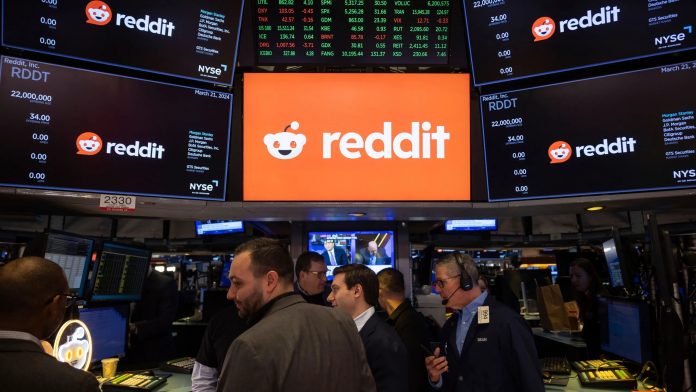
Reddit Cofounder Express Interest in Acquiring TikTok-US and Integrating it on the Blockchain

0

Alexis Ohanian, co-founder of Reddit, has recently expressed interest in acquiring TikTok’s U.S. operations and integrating it with blockchain technology. On March 4, 2025, Ohanian announced via X that he has joined a consortium, known as “The People’s Bid for TikTok,” led by billionaire Frank McCourt under Project Liberty. The goal is to purchase TikTok U.S. and transition it “on-chain” using the Frequency blockchain protocol, which is built on Polkadot’s infrastructure.

This move aims to give TikTok’s 170 million U.S. users greater control over their data and content, aligning with Ohanian’s vision of empowering creators and decentralizing social media. Ohanian has emphasized that “users should own their data” and “creators should own their audience,” suggesting that blockchain integration could make TikTok more transparent and creator driven.

Decentralized social media refers to platforms built on distributed technologies, like blockchain or peer-to-peer networks, where control isn’t concentrated in a single entity (e.g., a corporation like Meta or X). Instead, data, governance, and operations are spread across a network of users, aiming to enhance privacy, user ownership, and resistance to censorship. The idea ties into Alexis Ohanian’s recent proposal to put TikTok on the Frequency blockchain, but it’s part of a broader movement.

The Frequency protocol is intended to serve as the backbone of this redesigned platform, prioritizing privacy, security, and digital independence. This isn’t Ohanian’s first venture into blockchain; Reddit previously experimented with Ethereum-based “Community Points” and Polygon-based NFT avatars, though some of these initiatives were scaled back or discontinued.

Unlike centralized platforms where a company stores your data on its servers, decentralized social media uses protocols where: Data Ownership: Users control their content and personal info, often stored on distributed ledgers or personal nodes, not corporate databases. Interactions happen directly between users via the network, reducing reliance on a central authority. Many platforms use cryptocurrencies or tokens to reward creators, incentivize moderation, or fund development (e.g., Steemit with STEEM).

A federated network of independent servers (instances) where users can host their own communities, interoperating via the ActivityPub protocol. It’s not blockchain-based but decentralized in structure. Ohanian’s pitch to move TikTok to Frequency (a Polkadot-based chain) fits this trend. Frequency is designed for high-throughput social data, claiming to handle large-scale interactions while keeping things decentralized. The idea is to let TikTok’s 170 million U.S. users own their digital identities and content, potentially using tokens or NFTs to represent value. It’s ambitious—TikTok’s centralized infrastructure is a speed demon; porting it to blockchain would require massive reengineering.

The bid comes amid ongoing pressure from the U.S. government on TikTok’s Chinese parent company, ByteDance, to divest its U.S. operations due to national security concerns. While the proposal is ambitious, challenges remain, including the technical feasibility of adapting TikTok’s massive platform to blockchain infrastructure and navigating regulatory hurdles. Ohanian’s involvement reflects his long-standing interest in decentralized digital ecosystems, but whether this vision will come to fruition is still uncertain as the acquisition process is in its early stages, competing with other potential buyers like Microsoft and Oracle.

Decentralized social media has been hyped for years (remember Diaspora?), but adoption lags. Mastodon has about 1.5 million monthly active users, a fraction of X’s 400 million or TikTok’s 1 billion+. Tech hurdles, like blockchain’s transaction costs and latency, plus user inertia, keep centralized giants dominant. Still, with figures like Ohanian pushing it, and regulatory pressure on apps like TikTok, the concept’s getting fresh momentum. Whether it’s practical or just Web3 buzz remains the big question.

Crypto casinos are on the rise

0

Being able to make a speedy, secure payment is the aim for most players when accessing online betting sites of all types. Be it a casino, sportsbook, or sweeps casino, this is a very important feature to have. For many years, the go-to secure payment methods included card payments or bank transfers. While secure, these took a long time to process. Other methods such as prepaid cards or eWallets proved to be equally secure, while being speedier. But a new payment method is on the rise that beats all of these. And this is cryptocurrency.

Security of cryptocurrencies

Unlike other currencies, crypto is a decentralized one, which means that it is not governed by banks or governments. Acting outside of this regulatory framework, it’s not bound by the same rules. It also operates on the blockchain, a significantly different method to any other currency or payment method. Using the blockchain means that all transactions are recorded. Not only that, but they are completely transparent as well. This means that anyone can check the status of a transaction quickly and easily. Better still, transactions can’t be changed or modified once made. And, they’re all anonymous, which means they can’t be traced back to a specific person.

When it comes to speed, they’re also the fastest option out there. Some cryptos are slower than others due to the number of confirmations a transaction has to go through, and whether there is congestion on the blockchain. Even then, the payment processing time is typically less than ten minutes, which is far and away faster than anything offered by other payment options.

Casinos accepting crypto

With the increased popularity of cryptocurrency, it comes as no surprise to find that more and more casinos are offering this payment method. Alongside the desire for secure, speedy payments, players increasingly look for anonymity online, something crypto provides. Consequently, there are more casinos accepting crypto payments than ever before.

Not only that, but there are a growing number of sweepstakes casinos that accept crypto too. Sweeps casinos themselves are becoming more popular due to their risk-free nature. And yes, while purchasing gold coins is the only thing you need to spend on when using these sites, being able to use crypto for those purchases is particularly appealing to many. Of course, staying safe and secure is still key, and any online casino offering crypto needs to be licensed and regulated.

This is the only time that problems may occur. Some crypto casinos do not take regulation that seriously, and often do not have proper licensing. Given the gray area of crypto in many government laws, it’s also hard to enforce such licensing. Of course, using crypto is legal, but the casinos offering it often aren’t. With this in mind, it’s important that players take into consideration the fact that the casino might not be as safe and secure as the payment method it is offering.

At the end of the day though, crypto is readily available at online sites. And it makes for a great, speedy, and secure option.

Samsung to Launch Project Moohan XR Headset, Taking on Apple’s Vision Pro

0

Samsung is set to launch its highly anticipated extended reality (XR) headset, known as Project Moohan, later this year, according to a company spokesperson who spoke to CNBC on Tuesday.

The device marks Samsung’s ambitious entry into the evolving XR market, directly challenging Apple’s $3,500 Vision Pro, which launched last year.

Samsung first teased the Project Moohan headset last year but unveiled it publicly for the first time at the Mobile World Congress (MWC) in Barcelona this year. The XR device aims to merge the digital and physical worlds, offering an immersive experience through advanced visual and interactive technology.

Innovative Features and Design

While Samsung has not disclosed full specifications, the physical device features four cameras on the front lens and what appears to be touch controls on its side. The company collaborated with tech giants Qualcomm and Google to develop the Android XR platform, a new operating system designed for XR devices.

The headset will also integrate Google Gemini, providing a “conversational user interface” allowing users to interact with Google’s AI assistant, potentially enhancing navigation through apps and tasks. The presence of multiple cameras suggests the device could support gesture controls similar to those on Apple’s Vision Pro.

Patrick Chomet, Executive Vice President of Samsung’s Mobile Division, emphasized the role of intelligence in the device’s functionality.

“To me, the breakthrough technology is a combination of advanced vision capability with intelligence that understands user intention. I think without the intelligence part, it’s a defective product,” Chomet told CNBC.

His statement reflects the broader vision of the tech industry, where AI-powered digital assistants play a critical role in delivering a seamless user experience.

A Fresh Attempt at XR After Early VR Ventures

Samsung was one of the early entrants into the virtual reality (VR) space, having launched its Gear VR headset in partnership with Oculus in 2015. However, the VR market did not expand as rapidly as expected, leading to a quiet retreat from that segment.

With advancements in display and processing technologies, the XR market is gaining renewed interest from major tech players. Samsung is hoping that its new XR headset, coupled with sophisticated AI and gesture control, will capture the growing market for mixed and extended reality devices.

Competing with Apple and the Future of XR

Apple’s Vision Pro, which debuted at $3,500, has set a high bar in the XR space, offering advanced hand tracking, eye control, and immersive displays. Samsung’s Project Moohan will likely be closely compared to the Vision Pro, particularly in functionality, user interface, and price point.

During a presentation in January, Samsung hinted at a broader product roadmap, including a trifold smartphone and potential smart glasses. These smart glasses could represent a future direction for the XR lineup, offering similar experiences to a headset but in a more compact and wearable form factor.

Industry analysts believe Samsung’s entry into the XR market could invigorate competition and potentially lower prices for consumers.

“Samsung’s partnership with Qualcomm and Google gives it a strong foundation in hardware and software integration, which could be critical for the success of Project Moohan,” said Jitesh Ubrani, a research manager at IDC.

“The XR market is still in its infancy, and while Apple has positioned itself as a premium leader, Samsung’s strategy might focus on accessibility and integration with its broader ecosystem of devices,” Ubrani added.

Despite the hype, XR devices still face challenges in mainstream adoption. Price, comfort, battery life, and the breadth of applications are critical factors that could determine the success of Project Moohan. Samsung’s focus on combining advanced vision technology with intelligent interfaces could offer a unique value proposition.

As the tech world awaits the official launch and pricing details of Project Moohan, the XR market appears poised for a new wave of competition that could accelerate the development of augmented and mixed reality technologies, pushing them closer to everyday use for consumers.