
DD
MM
YYYY

PAGES

DD
MM
YYYY

spot_img

PAGES

Home Blog Page 17

Gold Futures Cross $4,500 for the First Time in Two Months

0

Gold futures have crossed the $4,500-per-ounce threshold for the first time in two months, marking a significant move for the precious metal and reinforcing its position as one of the world’s most closely watched safe-haven assets.

The latest advance highlights renewed investor demand for gold as markets continue to navigate uncertainty surrounding inflation, interest rates, currencies and global economic conditions.

The move above $4,500 is particularly notable because gold has spent the past two months trading below that psychological level.

Breaking through it signals that bullish momentum has returned and that investors are once again willing to pay a premium for exposure to an asset traditionally viewed as a store of value during periods of financial and geopolitical stress.

Several factors can help explain the renewed strength. One of the most important is expectations surrounding monetary policy. Gold does not generate interest or dividends, meaning its relative attractiveness often improves when investors anticipate lower interest rates or declining real yields.

If markets increasingly expect central banks to become more accommodative, the opportunity cost of holding gold can fall, supporting demand.

Currency movements can play an important role. Gold is priced internationally in U.S. dollars, so changes in the dollar can influence its attractiveness to investors holding other currencies.

A weaker dollar generally makes dollar-denominated gold less expensive for international buyers, potentially increasing demand and contributing to higher prices. The latest rally also comes against a backdrop of persistent economic uncertainty.

Investors continue to monitor inflation, government borrowing, fiscal deficits and the direction of global growth. Such concerns can encourage institutions, central banks and individual investors to increase allocations to gold as part of a broader strategy for diversification and risk management.

Central-bank demand has become another important structural factor in the gold market. Governments have increasingly sought to diversify their reserves, reducing reliance on any single currency or financial asset.

Continued official-sector purchases can provide a relatively stable source of demand and strengthen the long-term investment case for bullion. The $4,500 level therefore carries significance beyond its numerical value.

Psychological price levels can influence trading behavior because investors and algorithmic systems frequently respond to round numbers. A sustained move above the threshold could encourage momentum traders to increase positions.

While a failure to hold it could trigger profit-taking from investors who entered during the recent rally. For financial markets, gold’s performance is also an important signal.

A rapidly rising gold price can indicate that investors are seeking protection against uncertainty even when other major asset classes remain resilient. It can therefore serve as a useful barometer of market sentiment.

Whether gold can maintain its position above $4,500 will depend on the interaction between interest rates, inflation expectations, currency movements, central-bank demand and global risk sentiment.

A sustained breakout could open the door to further record territory, while a sharp reversal would suggest that traders are taking profits after the latest surge. For now, the move above $4,500 represents a powerful reminder of gold’s enduring role in global finance.

After two months below the level, its return above the threshold suggests that demand for safe-haven assets remains strong and that investors are paying close attention to the economic forces shaping markets worldwide.
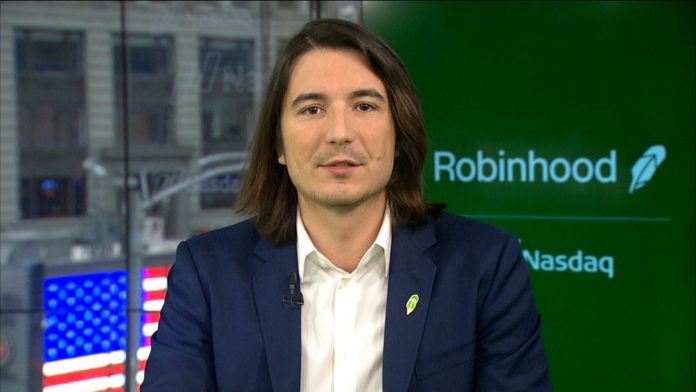
Robinhood Chain’s NFT Surge and the $15 Billion Bitcoin Exodus

1

The cryptocurrency market is witnessing two developments that highlight how quickly blockchain activity and investor behavior can shift. Robinhood Chain is reportedly processing roughly twice the NFT trading volume of Ethereum.

While approximately $15 billion worth of Bitcoin has moved from long-term holder wallets following the ColdCard hack. The developments point to a market being reshaped by both competition among blockchain networks and renewed concerns over Bitcoin security.

Robinhood Chain’s emergence in the NFT market is particularly notable because Ethereum has historically been the dominant blockchain for digital collectibles.

Ethereum built much of the NFT economy, attracting major collections, marketplaces, artists and investors. For another network to generate twice Ethereum’s NFT volume signals that users may increasingly prioritize transaction costs, speed and accessibility over established network dominance.

The shift reflects the broader evolution of blockchain infrastructure. As new chains compete for users, liquidity and applications, NFT activity is becoming more fragmented. Lower fees and faster execution can make alternative networks attractive to traders who frequently buy and sell digital assets.

Robinhood’s involvement could further accelerate this trend by connecting blockchain-based assets with a large mainstream financial platform.

However, trading volume alone does not necessarily mean Robinhood Chain has replaced Ethereum as the leading NFT ecosystem.

Volume can be influenced by short-term speculation, incentives, marketplace activity and individual collections. Ethereum still possesses a deep developer community, established infrastructure and significant cultural influence within the NFT sector.

The more important question is whether Robinhood Chain can sustain its activity over the long term. Meanwhile, the movement of approximately $15 billion in Bitcoin from long-term holder wallets following the ColdCard hack introduces a very different dynamic.

Long-term holders are generally associated with investors who maintain Bitcoin positions through multiple market cycles. Significant movement from these wallets can therefore attract attention because it may indicate changes in security practices, custody arrangements or investor confidence.

The ColdCard incident has intensified scrutiny around Bitcoin wallet security.

Even when funds are not necessarily being sold, moving large amounts of Bitcoin can create uncertainty because on-chain transfers are visible and can be interpreted as potential selling pressure. If the coins eventually reach exchanges, market participants could become more concerned about increased supply entering the market.

Wallet movements should not automatically be interpreted as bearish. Investors may transfer assets between cold wallets, institutional custodians or alternative security setups without intending to sell. The distinction between moving Bitcoin and selling Bitcoin is critical when interpreting blockchain data.

The combination of Robinhood Chain’s NFT growth and Bitcoin’s wallet activity demonstrates the increasingly complex nature of the digital-asset market. Capital, users and liquidity are constantly moving between networks and custody systems.

Ethereum faces growing competition in application-specific activity, while Bitcoin holders are being reminded that security remains one of the most important considerations in crypto. Both developments underline the same principle.

Blockchain markets are becoming more competitive and more sophisticated. Network dominance can change quickly, while security events can trigger enormous movements of capital.

Investors will therefore be watching whether Robinhood Chain can maintain its NFT momentum and whether the Bitcoin transfers connected to the ColdCard incident develop into broader selling pressure.

SpaceX Stock Surges Nearly 40% in Five Trading Days as Investor Optimism Builds

0

SpaceX is delivering another powerful performance in the financial markets, with the company’s shares gaining roughly 10% in a single trading session and pushing its five-day advance to almost 40%.

The sharp rally highlights the growing investor enthusiasm surrounding the private space and technology company as markets increasingly focus on its expanding business portfolio, artificial intelligence ambitions, satellite communications operations and potential future public-market opportunities.

The latest surge comes as investors continue to reassess SpaceX’s long-term growth prospects. While the company has traditionally been associated with rocket launches and space exploration, its business has expanded considerably.

Starlink, its satellite internet division, has become one of the most important components of the broader SpaceX story, creating a recurring-revenue business that operates across multiple international markets.

The strong move in SpaceX’s valuation also reflects growing expectations that the company could eventually unlock significant value through a public listing or other forms of liquidity for investors and employees.

Another major factor behind the renewed enthusiasm is SpaceX’s connection to the artificial intelligence economy. The company has increasingly positioned itself beyond traditional aerospace, with massive computing requirements and ambitious plans involving AI infrastructure.

Investors are beginning to view SpaceX as part of a broader technology ecosystem rather than simply a rocket manufacturer. Starlink provides another important source of optimism.

Demand for satellite connectivity continues to grow as consumers, businesses and governments seek alternatives to traditional terrestrial networks.

SpaceX’s ability to launch and maintain its own satellite constellation gives it a structural advantage, while improvements in launch efficiency can potentially reduce costs and support further expansion.

However, a rally of almost 40% in five trading days also raises questions about valuation and sustainability. Rapid gains can attract momentum traders and speculative capital, potentially pushing prices beyond levels justified by near-term fundamentals.

The surge demonstrates how investor perceptions of SpaceX are evolving. The company is increasingly being valued for a combination of businesses spanning launch services, satellite communications, AI infrastructure and advanced technology.

The momentum also comes as competition across the commercial space sector intensifies. Companies are investing heavily in reusable launch systems, satellite networks and space-based communications, making technological execution increasingly important.

SpaceX’s established launch cadence and vertically integrated model could give it an advantage, but maintaining that lead will require continued capital investment and successful execution.

For investors, the key question is whether SpaceX can convert its technological advantages into sustained financial growth. The recent market performance suggests that expectations are rising rapidly.

A 10% daily gain and an almost 40% increase over five trading days represent more than a short-term price movement; they signal a market increasingly willing to assign substantial value to SpaceX’s future.

If the company continues expanding Starlink, strengthening its launch operations and developing new technology businesses, investor interest could remain elevated. But after such a rapid rally, volatility is likely to remain high.

SpaceX’s next phase may therefore be defined not only by how quickly its valuation rises, but by whether its expanding ambitions can consistently translate into revenue, profitability and long-term shareholder value.

US Government Spending Pushes Budget Deficit to Five-Year High

0

The US federal budget deficit has surged to $432 billion, marking the largest monthly shortfall in five years and highlighting the growing pressure on the country’s finances.

The sharp increase underscores the widening gap between government spending and revenue at a time when policymakers are already facing difficult decisions over taxes, interest rates, debt management and economic growth.

A federal budget deficit occurs when the government spends more money than it collects through taxes and other revenues during a given period. While deficits are common in the United States.

The scale and persistence of the latest increase are drawing renewed attention to the sustainability of federal finances. A $432 billion monthly deficit represents a significant amount of borrowing and adds to the government’s already enormous outstanding debt.

Several factors can contribute to a rapidly expanding deficit. Government expenditures on programs such as Social Security, Medicare, Medicaid, defense, veterans’ benefits and interest payments consume substantial portions of the federal budget.

At the same time, tax revenues can fluctuate depending on employment, corporate profits, household incomes and broader economic conditions. When spending continues to rise while revenue growth fails to keep pace, the deficit expands.

One of the most concerning elements is the growing cost of servicing federal debt. Higher interest rates mean the government must pay more to investors holding US Treasury securities. As existing debt matures and is refinanced at higher yields, interest expenses can increase further.

This creates a difficult cycle in which a larger share of federal revenue is devoted not to public programs or infrastructure but to servicing previous borrowing. The latest deficit carries implications for financial markets.

Persistent fiscal deterioration can increase Treasury issuance as the government seeks to finance its operations. Greater supply of government debt can influence bond yields and potentially affect borrowing costs throughout the economy.

Higher yields can make mortgages, corporate loans and other forms of credit more expensive, placing additional pressure on consumers and businesses.

The deficit raises questions about inflation and the future direction of monetary policy. If government spending remains elevated, fiscal policy could continue supporting economic demand. Depending on economic conditions, that could make it more difficult for inflation to return sustainably to the Federal Reserve’s target.

Policymakers therefore face the challenge of balancing economic support with concerns about price stability and debt sustainability. The political consequences could be equally significant.

Addressing the deficit requires difficult choices, including reducing spending, increasing revenues, reforming entitlement programs or combining several approaches.

Each option carries economic and political costs, making fiscal reform one of Washington’s most contentious long-term challenges. The $432 billion deficit is therefore more than a single monthly statistic.

It represents a broader warning about the trajectory of US government finances. While the United States retains considerable borrowing capacity because of the dollar’s global role and the deep market for Treasury securities, continued deficits at elevated levels can gradually increase financial risks.

The latest figures reinforce the importance of a credible long-term fiscal strategy. Without meaningful efforts to narrow the gap between spending and revenue, rising debt and interest costs could increasingly constrain future governments.

The immediate deficit may fluctuate from month to month, but the underlying challenge remains structural: ensuring that the world’s largest economy can finance its obligations while maintaining sustainable economic growth.

Elon Musk Says SpaceX Must “Win on AI” as Artificial Intelligence Becomes Central to Its Future

0

Elon Musk is positioning artificial intelligence as the next major frontier for SpaceX, arguing that the company’s future success will depend heavily on its ability to lead in AI and robotics.

In a recent internal address, Musk told employees that SpaceX must “win on AI,” as he expects AI to eventually surpass the company’s traditional businesses, including rockets, spacecraft and Starlink, in both revenue and value.

The remarks came in a roughly 29-minute internal all-hands address that SpaceX posted on its X account this week.

Musk stated that AI revenue will exceed every other SpaceX business line, including rockets, spacecraft, and Starlink, “probably in September, like next month,” and will significantly outpace the rest of the company in the fourth quarter of 2026.

He said,

“Probably in four or five years, AI will be 99% of the value of SpaceX. I can say for sure that in five years, AI will definitely make up 99% of SpaceX’s value, and SpaceX’s value will be an astronomical figure. We must win on AI, because the future is overwhelmingly AI and robots.”

He described AI as an extremely important part of SpaceX’s future and projected that within four or five years it could account for 99 percent of the company’s total value, which he said would become “astronomical.”

Musk further framed AI success as vital to funding Starship, Mars efforts, and broader multiplanetary goals, and noted plans to train Grok on SpaceX’s internal knowledge including employees’ contributions, describing staff in effect as “parents” of that AI.

SpaceX currently operates 1.4 gigawatts of AI compute capacity, primarily at its Memphis and Southaven facilities, already among the most powerful training clusters in the world.

Musk set a target of reaching 10 gigawatts by the end of 2027. At an estimated value of $30 to $50 per watt, that scale could generate $300 billion to $500 billion in annual revenue. He emphasized the need for the company’s best engineers to focus on the AI effort to meet the ambitious timeline.

The AI push is framed as essential to funding SpaceX’s long-standing multiplanetary goals. Revenue from AI compute is expected to help accelerate Starship development and the broader Mars program.

Training of advanced models, including Grok, will incorporate the full body of SpaceX knowledge so that the resulting systems inherit the company’s values and focus on humanity’s expansion beyond Earth.

While large-scale training is expected to remain on the ground for now, everyday inference is planned to move into space through orbital compute systems.

Elon Musk’s view that artificial intelligence and robotics will be central to SpaceX’s future reflects a broader shift taking place across the global corporate landscape.

AI is increasingly moving beyond an experimental technology or standalone tool and becoming embedded in how companies develop products, manage operations, serve customers and make strategic decisions.

Across industries, businesses are integrating AI into areas ranging from software development and customer service to finance, supply chains, research and manufacturing.

Microsoft, for example, reported in July that companies across industries were moving from AI experimentation toward deploying the technology for real-world business outcomes, with some organizations embedding AI into their core operating models.

The scale of adoption is also becoming clearer. A 2026 Publicis Sapient survey found that 73% of enterprise decision-makers said AI was being used regularly or across most business processes, although only 10% considered it core to their operations.

This highlights the transition underway: companies are no longer asking whether AI has a place in the business, but how deeply it should be integrated.

Outlook

The growing integration of AI into businesses globally suggests that the technology is moving toward becoming a core component of corporate strategy rather than simply an additional digital tool.

As companies become more comfortable deploying AI across multiple functions, the focus is expected to shift from experimentation to scale, with greater emphasis on autonomous systems, AI agents, robotics and infrastructure capable of supporting increasingly complex workloads.

For SpaceX, this transition could be particularly significant. Musk’s ambition to make AI a dominant contributor to the company’s revenue and valuation represents a much broader bet on the convergence of software, computing and physical infrastructure.