DD
MM
YYYY

PAGES

DD
MM
YYYY

spot_img

PAGES

Home Blog Page 18

With Presale Growth Exceeding Expectations, Analysts Predict Ozak AI Could Achieve Triple-Digit ROI Instantly

0

Ozak AI, which has raised close to $6 million in presale funding thus far, emerged as one of the top AI-based tokens as it began to take over the cryptocurrency market. Ozak AI’s aggressive Presale growth demonstrates how investors support the token. The token has demonstrated success in Presale Growth despite the bearish market. The Ozak AI competes with the main cryptocurrencies and outperforms all early-stage tokens. The Ozak AI is redefining expectations rather than just surpassing them. This enormous momentum indicates that the token may soon be listed, and an analyst believes that once the token is listed on the major exchanges, early buyers may immediately see a triple-digit return on investment.

Presale Growth Exceeds All Forecasts

The Ozak AI is currently priced at $0.014 in its 7th presale Phase. We have all seen that the early-stage token with a low Presale price has shown a massive explosion during the listing. The Ozak AI is mirroring the same, as the low entry price of Ozak AI drives many investors to secure the tokens at the current presale phase. These investors are rushing toward the Presale phase, as the token price will increase at the time of the launch of the new Presale phase. Over 1.11 billion OZ tokens have been sold, and the presale has raised around $5.9 million in presale funding. This level of traction for the early-stage token is very rare. Analysts predict that the token is nearing the listing phase, and the token is expected to be listed at the target price of $1.

Technology That Justifies Its Valuation

The Ozak AI Core technology merges AI and the blockchain to produce the AI-perceptive tools that can analyze real-time blockchain data. The technology that powers the Ozak AI is the decentralized Architecture and blockchain layer, which consists of Depin and OSN.  The Advanced AI technology consists of strong features such as DePIN. It is a Decentralized Physical Infrastructure Network, which is three-layered and decentralized on Ozak AI. The AI layer is GPU inference nodes that perform distributed AI computation. Data Layer is an IPFS-based encrypted decentralized storage, and OSN Layer is a relay node validating and transmitting on/off-chain data. Ozak Streaming Network (OSN), which is a real-time data highway of Ozak AI. It is built using Apache Kafka and Apache Flink. It constantly collects data from Exchanges, news sites, and on-chain transactions and gives the live and updated financial data.

Triple-Digit ROI Forecasts Backed by Exact Math on Ozak AI’s Listing Potential

According to the analyst, the token will soon be listed on the major exchanges. Once listed, it will rise, giving early investors a triple-digit return on investment. The analysts expect an instant triple-digit return on investment because of important factors like the fact that a token listed on a major exchange would immediately yield a return of more than 100% and that high-demand AI tokens typically list and grow at two to five times the growth of the presale. The Ozak AI satisfies all of the early-stage explosion criteria, and the AI tokens typically explode on the same day at lightning speed. According to analyst predictions, if the Ethereum token is listed at $1, it will immediately rise to $2, yielding a 100% return on investment.

Strategic Partnerships Strengthening Growth

Ozak AI’s growth is not just its Presale low price and strong technology; the strategic partnerships make the ecosystem stronger and build trust among the investors. Ozak AI’s fast prediction agents are now teamed up with WatchAI to make sure trades and AI actions are safe and trustworthy. Ozak AI develops an AI platform. AI-powered tools and payments are now quicker, less expensive, and more widely available due to the partnership with Celo

Final thoughts

If the token has a slight positive momentum, these forecasts will come to pass. Analysts believe that the token will soon be listed on the major exchanges due to its real AI utility and strong pre-sales momentum. The token would quickly provide a triple-digit return on investment once it is listed. At the time of listing, early investors who participate in the current presale phase would receive a huge triple-digit return on investment.


For more information about Ozak AI, visit the links below:

 Website: https://ozak.ai/

Twitter/X: https://x.com/OzakAGI

Telegram: https://t.me/OzakAGI

Crypto Casino Launches Community-Powered Platform for Online Casino, Slots, and Live Dealer Reviews

0

As online casinos continue to expand globally, players are faced with an overwhelming number of choices. Slots, live dealer games, blackjack, and real money platforms are now available across hundreds of sites, many of which look similar on the surface. Determining which platforms are genuinely reliable has become one of the biggest challenges in online gaming.

To help address this issue, Crypto.Casino has launched a community-powered review platform designed to combine structured research with real player insight, creating a more transparent view of the online casino ecosystem.

An introduction to the platform’s role in the industry can be found on the Crypto.Casino overview page.

Why Community Insight Matters in Online Casino Reviews

Traditional online casino reviews often rely on surface-level information or marketing claims. While expert analysis is essential, it does not always capture how platforms perform over time or how they treat players in real-world scenarios.

Community feedback helps fill this gap. Player reports can highlight issues such as delayed withdrawals, unclear terms, or customer support problems that may not be immediately visible during initial evaluations. When combined with expert review criteria, this feedback creates a more complete picture of platform reliability.

Crypto.Casino integrates community insight as a core component of its evaluation process rather than treating it as an afterthought.

A Structured Framework Backed by Real Experiences

Community input on Crypto.Casino is not published blindly. Player reports are reviewed, contextualized, and assessed alongside verified data such as licensing records, security practices, and fairness verification.

This hybrid approach allows Crypto.Casino to maintain accuracy while benefiting from real user experiences. Details on how feedback is incorporated can be found within the User Review Policies section of the site.

The result is a review system designed to reduce bias while increasing relevance.

Coverage Across Slots, Live Dealer Games, and Table Formats

Crypto.Casino’s community-powered model applies across all major online casino categories. This includes slots, blackjack, live dealer games, and other table-based formats that dominate player searches.

Each category is supported by educational explanations that help players understand how games work, what fairness indicators to look for, and which operational details matter most when choosing a platform. These explanations are available through the How to Play and Learn section.

Encouraging Accountability in a Fast-Growing Market

As new casino sites launch frequently, long-term accountability becomes harder to enforce. Platforms may change terms, adjust policies, or alter payment practices over time.

By allowing players to report issues and share experiences, Crypto.Casino creates an additional layer of accountability. Patterns of repeated concerns can be identified more quickly, helping to protect future players and keep reviews current.

This approach aligns with the platform’s broader goal of raising transparency standards across the online casino industry.

Early Participation and Recognition

Crypto.Casino encourages early participation from players who want to contribute to a safer and more transparent gaming environment. Community members who provide constructive, verifiable feedback help strengthen the platform’s growing index of casino data.

As the platform evolves, contributors may also be eligible for real-world rewards and recognition initiatives tied to meaningful participation and verified reporting.

Education as the Foundation

Crypto.Casino emphasizes that education is the foundation of responsible online gaming. The platform does not promote outcomes or advantages and avoids sensational language.

Instead, it provides players with clear explanations of risks, mechanics, and operational standards through its Crypto.Casino tutorials and education hub.

Building Trust Through Collective Insight

As online casinos, slots, and live dealer games continue to attract new audiences, trust will increasingly depend on transparency and accountability.

By combining expert-led analysis with community-driven insight, Crypto.Casino aims to offer a more balanced and reliable reference point for players navigating the online casino landscape. The platform’s community-powered approach reflects a broader shift toward shared responsibility and informed decision-making in a rapidly growing industry.

Nifty’s Shutdown Reflects Legacy NFT Platforms Fading amid Market Reset

0

Nifty Gateway, a pioneering NFT marketplace owned by Gemini acquired in 2019 has officially announced it will shut down on February 23, 2026.

As of January 24, 2026, the platform entered withdrawal-only mode, meaning no new trading, listings, or purchases are possible. Users have roughly one month until the closure date to withdraw any remaining NFTs, Ethereum (ETH), or USD balances.

Withdrawals can be done via a linked Gemini Exchange account or directly to a bank account using Stripe. Affected users (those with balances) are receiving email instructions from Nifty Gateway. The company urges prompt action to avoid issues near the deadline.

At its peak in mid-2021, Nifty Gateway facilitated over $300 million in sales, famous for curated drops from artists like Beeple and Grimes, and for enabling credit card purchases to onboard mainstream users.

This move follows a 2024 pivot to Nifty Gateway Studio focused on onchain creative projects and aligns with Gemini’s strategy to build a “one-stop super app,” while continuing NFT support via the Gemini Wallet.

The closure reflects the broader NFT market downturn since the 2021-2022 boom, with declining volumes, platform consolidations, and exits, similar retreats by others like Nike’s NFT efforts. It’s seen as the end of an era for one of the earliest and most influential NFT platforms.

Rekt Drinks Collab with X Games Drop

Rekt Drinks, the beverage brand tied to the $REKT token and crypto-native culture has partnered with X Games for a limited-edition drop: GRXPEFRUIT, a grapefruit-flavored sparkling water/soda.

This launched around January 2026 and ties into their sponsorship/visibility at X Games Aspen 2026 events. Rekt Drinks has been crushing limited drops, often selling out quickly like past collabs like MoonPay’s “Moon Crush” helped them hit 1M+ cans sold in under a year.

The X Games tie-in includes heavy branding presence at events, aligning with MoonPay’s separate 3-year sponsorship of the X Games League starting March 2026, focusing on crypto integration in action sports.

Community buzz includes predictions and sightings of Rekt Drinks flowing at X Games, boosting the brand’s “consume-to-earn” model with points, NFTs, and real-world/crypto rewards. This fits Rekt’s strategy of high-profile collabs (past ones with OpenSea, MoonPay, GameSquare/FaZe) to blend Web3, gaming, and consumer products.

Both stories highlight shifts in the crypto and Web3 space: legacy NFT platforms winding down amid market maturation, while newer consumer brands like Rekt Drinks push forward with IRL activations and partnerships in sports/entertainment.

Nifty Gateway was one of the first major marketplaces to mainstream NFTs through curated drops, credit card purchases, and high-profile artist collaborations. It peaked with over $300 million in sales during the hype cycle.

Its exit signals the wind-down of many centralized, custodial platforms that dominated early adoption but struggled with post-boom volumes, high operational costs, and competition from decentralized alternatives.

NFT trading volumes remain muted in 2026, with daily global sales often in the low tens of millions. The shutdown reinforces that speculative frenzy has faded, shifting focus toward utility-driven projects (gaming, real-world assets, onchain creativity).

Gemini’s pivot to a “super app” and wallet-based NFT support suggests consolidation around stronger crypto infrastructure players. Anyone holding NFTs or funds on Nifty must withdraw promptly via Gemini Exchange or Stripe-linked bank to avoid permanent loss.

This highlights custodial risks (“not your keys, not your NFTs”)—a lesson echoed from past incidents like the 2021 hack. Many collectors express nostalgia and gratitude for onboarding opportunities, but others criticize the abruptness and custodial model. It may accelerate migration to self-custodial wallets or other chains.

Implications of Rekt Drinks’ X Games Collaboration (GRXPEFRUIT Drop)

The GRXPEFRUIT limited-edition grapefruit sparkling water drop with X Games sold out in 1 minute, highlighting Rekt Drinks’ momentum as a crypto-native consumer brand. Rekt Drinks tied to $REKT token and Rektguy NFTs continues rapid sell-outs, blending Web3 culture with real-world products.

Heavy visibility at X Games Aspen amplifies exposure in action sports—a counterculture-aligned space. This builds on prior collabs and ties into MoonPay’s 3-year X Games League sponsorship starting March 2026, creating synergies for crypto integration in mainstream events.

Success shows “consume-to-earn” models work: limited drops drive scarcity, community hype, and points/NFT rewards. Selling out ultra-fast validates demand for crypto-branded IRL goods, potentially attracting non-crypto consumers via sports/entertainment.

It positions Rekt as a leader in bridging digital assets with everyday products (non-alcoholic sparkling water fits the “fearless” vibe without regulatory alcohol hurdles).

This fits 2026 trends of Web3 projects pushing physical activations (events, merch, beverages) for real revenue and visibility. High engagement (e.g., X posts hyping the launch/sell-out) boosts $REKT token awareness and community loyalty.

It could inspire more sports-crypto tie-ins, especially with MoonPay’s league pushing DeFi in action sports. Rapid sell-outs create FOMO but also scalping/secondary market issues. Sustaining hype requires consistent quality and drops. If momentum holds, it could elevate $REKT as a consumer crypto play beyond pure speculation.

Rekt Drinks’ drop shows vibrant, real-world crypto innovation thriving—two sides of the same evolving ecosystem. If you have holdings on Nifty, act fast; if you’re into Rekt, the brand’s on fire right now.

Georgia Leads As U.S. States Weigh Sweeping Data Center Bans Over AI Power Demand

0

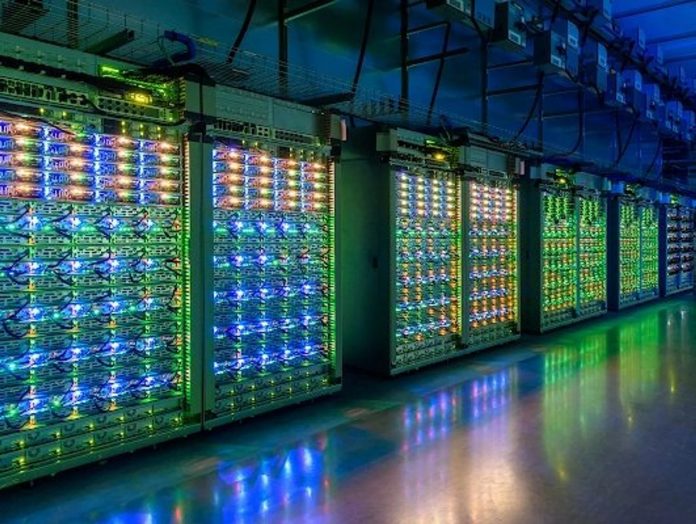
A growing number of U.S. states are moving toward sweeping restrictions on new data center construction, as the explosive growth of facilities needed to power artificial intelligence collides with electricity shortages, water stress, rising utility bills, and intensifying political scrutiny.

What began as a series of local zoning disputes has now escalated into a statewide legislative fight, with Georgia emerging as the epicenter. Lawmakers in Maryland and Oklahoma have also introduced statewide moratorium bills in recent days, reflecting how concerns about data centers have rapidly shifted from municipal planning offices to state capitols.

In Georgia, Democratic state legislator Ruwa Romman has introduced House Bill 1012, which would halt approvals for new data centers until March next year. The pause, she said, is intended to give state, county, and municipal governments time to develop clear regulatory frameworks for an industry that “permanently alter[s] the landscape of our state.” If enacted, it would be the first statewide moratorium on new data centers in the United States.

The proposal lands at a moment when Georgia’s data center growth has reached unprecedented levels. The Atlanta metropolitan area led the nation in data center construction in 2024, driven by a convergence of cheap land, generous tax incentives, historically low power costs, and proximity to major fiber routes. That expansion, however, has placed extraordinary pressure on the state’s power grid and water systems.

Just last month, Georgia’s Public Service Commission approved Georgia Power’s request to plan for an additional 10 gigawatts of electricity generation over the coming years, the largest such request in the commission’s history. The utility cited surging demand from data centers as the primary driver. Ten gigawatts is enough to power roughly 8.3 million homes, and much of the proposed capacity is expected to come from fossil fuel sources, raising alarms among environmental advocates.

The scale of that expansion has sharpened public concern about who benefits from the data center boom and who pays the costs. Electricity rates in Georgia have risen by roughly a third over the past several years, even as data centers continue to receive tax abatements and infrastructure support. For many residents, the link between AI infrastructure and higher utility bills has become increasingly difficult to ignore.

Charles Hua, founder of PowerLines, said public perception has shifted decisively. In Georgia, he noted, the state’s regulatory structure allows Georgia Power to earn profits on new capital investments, creating incentives to build more generation capacity rather than focus on grid efficiency measures that could lower costs.

“Datacenters and utility bills are inextricably linked in the public’s mind,” Hua said, adding that efficiency improvements often lack the same financial appeal for utilities despite their potential to reduce prices.

Water use has emerged as another flashpoint. Data centers rely heavily on water for cooling, and their rapid concentration in certain regions has intensified competition with residential, agricultural, and industrial users. Local officials and residents worry about long-term water availability, particularly during drought conditions, as well as the impact of large cooling facilities on surrounding ecosystems.

The backlash has already translated into local action. At least 10 municipalities in Georgia have passed their own moratoriums on data center construction, including Roswell, an Atlanta suburb that moved earlier this month. Nationwide, municipalities in at least 14 states have enacted similar pauses, according to Tech Policy Press, signaling a broad-based resistance that extends well beyond Georgia.

The issue has also attracted national political attention. Vermont Senator Bernie Sanders proposed a nationwide moratorium last month, framing unchecked data center growth as a case study in corporate power overwhelming public interest. While the proposal faces steep hurdles, it underscores how AI infrastructure has become a mainstream political issue rather than a niche concern.

In Georgia, the debate is taking on a distinctly political edge. Romman is running for governor, and her bill explicitly ties the moratorium to upcoming elections for the Public Service Commission. Georgia is one of only 10 states where utility regulators are elected. Voters last November elected two progressive Democrats to the five-member commission, ending its all-Republican composition for the first time in nearly two decades. Another seat will be contested later this year, potentially shifting the balance of power.

Romman has argued that a pause on data center approvals would allow voters to weigh in on the direction of energy policy before the commission locks in long-term generation investments driven by tech companies. Her bill has drawn bipartisan support, with Republican lawmaker Jordan Ridley co-sponsoring the measure. Ridley said local governments need time to update zoning codes and gather public input, even as he acknowledged that data centers can bring tax revenue and high-paying jobs.

That tension runs through the entire debate. Supporters of data centers argue they anchor the digital economy, attract investment, and reinforce Georgia’s status as a technology hub. Opponents counter that the facilities employ relatively few people once built, consume disproportionate amounts of power and water, and leave local communities bearing the environmental and financial costs.

Republicans in the Georgia legislature have introduced bills aimed at protecting consumers from utility bill increases linked to data center expansion and eliminating tax breaks for the facilities. A separate Democratic proposal would require operators to publicly disclose annual energy and water consumption, a move supporters say would bring transparency to an industry that has expanded largely out of public view.

Peter Hubbard, one of the newly elected Democratic commissioners, recently captured the growing frustration in an opinion piece, writing that voters see data centers receiving incentives as their own power bills rise, communities compete for water supplies, and transmission lines depress property values. He argued that the commission’s past habit of approving every request from Georgia Power has fueled public distrust.

Environmental advocates say the stakes extend beyond Georgia. Paul Glaze of Georgia Conservation Voters said the debate could serve as a preview of future statewide elections, particularly in communities facing new data center projects.

“Anyone serious about statewide office should have a clear position on this,” he said.

The broader issue confronting states is structural. AI has dramatically increased demand for data centers at a pace that outstrips planning norms, regulatory frameworks, and infrastructure timelines. Power grids built for incremental growth are now being asked to absorb sudden, massive loads. Water systems face similar stress. As states weigh moratoriums, they are effectively grappling with how to reconcile the promise of AI-driven economic growth with finite public resources and rising voter unease.

What is unfolding in Georgia and other states suggests that the era of unchecked data center expansion is nearing its end. The political, environmental, and economic costs are now front and center, and lawmakers are signaling that the digital economy will no longer be allowed to grow without stricter oversight.

Michael Burry Returns to GameStop, Framing a Long-Term Value Bet Rather Than a Meme Revival

0

Michael Burry, the investor immortalized in The Big Short for anticipating the 2008 financial crisis, has once again trained his sights on GameStop, the video game retailer that became the defining symbol of the meme-stock era.

This time, however, Burry is at pains to distance his move from the speculative frenzy that propelled the stock into global headlines four years ago. His return to GameStop marks one of the more striking reversals in recent U.S. market narratives, not because the stock itself is unfamiliar, but because of the framework he is using to justify the investment.

Burry is now positioning GameStop as a rare balance-sheet-driven opportunity in a market he views as stretched and increasingly indifferent to tangible value.

The investor disclosed his renewed stake in a post on his Substack, Cassandra Unchained, prompting GameStop shares to rise as much as 6% on Monday. The immediate market reaction underscored how closely investors still track Burry’s moves, even years after his most famous call. It also highlighted GameStop’s enduring sensitivity to shifts in narrative, where changes in perception can still outweigh incremental developments in the company’s underlying business.

At the core of Burry’s thesis is valuation discipline. He argued that GameStop is trading close to one times tangible book value and net asset value, a metric he described as increasingly rare in U.S. equities. In an environment where many listed companies command significant premiums based on growth expectations, intangible assets, or future optionality, Burry is anchoring his case to what the company owns today rather than what it might become tomorrow.

“This is not a common occurrence in the U.S. stock market today,” Burry wrote, pointing to what he sees as asymmetric risk.

In his view, the company’s tangible assets and cash position provide a form of downside protection, limiting the scope for permanent capital loss while preserving upside if management executes effectively. This framing places GameStop closer to a traditional value investment than the speculative instrument it has been treated as since 2021.

The emphasis on management is equally central to Burry’s thinking. Ryan Cohen, GameStop’s chief executive and the founder of online pet retailer Chewy, features prominently in his analysis. Cohen has become a cult figure among retail investors, both for his activist posture and for his role in reshaping GameStop’s board and strategic direction. For Burry, Cohen represents a long-duration capital allocator rather than a short-term catalyst.

Burry’s language suggests an unusually extended time horizon. He spoke of backing Cohen’s deployment of capital “perhaps for the next 50 years,” an assertion that stands out in a market often dominated by quarterly earnings and near-term guidance. By emphasizing governance, balance-sheet stewardship, and patience, Burry is effectively arguing that GameStop should be judged less as a retailer in decline and more as a capital vehicle with optionality under disciplined leadership.

This long-term framing also serves to distance Burry from the stock’s meme-era legacy. GameStop’s 2021 short squeeze, driven by retail traders coordinating on online forums, transformed the company into a symbol of rebellion against Wall Street short sellers. Burry was involved in the stock before that episode, but has acknowledged that he exited his position weeks before the squeeze, missing the explosive upside that followed. That experience appears to inform his current insistence that he is not relying on a repeat of that phenomenon.

“I am not counting on a short squeeze to realize long-term value,” he wrote, stressing that the investment case does not depend on forced buying or market dislocations.

Instead, he cited governance, strategy, and capital allocation as the pillars of his conviction. He characterized the setup as unusual but justified, particularly in a market he believes offers few genuinely asymmetric opportunities.

GameStop’s corporate evolution under Cohen provides some context for this reassessment. The company has trimmed costs, reduced operational complexity, and accumulated a substantial cash balance relative to its market capitalization. While its core retail business continues to face pressure from digital distribution and shifting consumer habits, the balance sheet has become a focal point for investors searching for optionality rather than growth alone. For proponents of the stock, that optionality lies in what Cohen chooses to do with the company’s capital, whether through acquisitions, investments, or strategic pivots.

The market response to Burry’s disclosure was telling in another respect. Data from retail trading analytics platform ApeWisdom indicated a sharp increase in attention on GameStop following the announcement, while other former meme-stock favorites such as AMC Entertainment and Koss failed to attract comparable interest. This suggests that Burry’s move has been interpreted as a company-specific signal rather than a broader endorsement of the meme-stock complex.

That distinction matters as the earlier meme-stock surge was characterized by contagion, with flows spilling across loosely related names based on sentiment rather than fundamentals. The current episode appears more contained, reflecting a market environment that is more selective and arguably more cautious. Even among retail traders, interest has coalesced around GameStop itself rather than reigniting a sector-wide phenomenon.

Burry’s renewed involvement also speaks to a broader debate about value investing in the current cycle. With U.S. equity indices trading near record highs and concentration in a handful of large technology companies dominating performance, investors like Burry have been vocal about the scarcity of assets that offer a clear margin of safety. By highlighting GameStop’s tangible asset base and governance structure, he is implicitly critiquing a market he views as complacent about risk.

Still, significant uncertainties remain. GameStop operates in a structurally challenged segment of the retail landscape, and the path from balance-sheet strength to sustainable earnings growth is far from guaranteed. Cohen’s strategy has yet to fully articulate how the company will generate durable cash flows beyond cost control and financial optionality. For sceptics, the stock remains a story in search of a business model that can thrive in a digital-first gaming ecosystem.

Burry appears comfortable with that ambiguity, framing it as the price of asymmetry rather than a flaw in the thesis. By leaning on tangible value and long-term stewardship, he is betting that patience itself will become an asset. In doing so, he is attempting to recast one of the market’s most polarizing stocks as something more conventional, even conservative, than its reputation suggests.

It is not clear for now if the reclassification will hold. But some analysts believe that it will depend less on market sentiment and more on execution over time. However, Burry’s re-entry has reignited debate around GameStop, not as a vehicle for speculative fervor, but as a test case for whether value investing can still find footholds in unexpected places.