DD
MM
YYYY

PAGES

DD
MM
YYYY

spot_img

PAGES

Home Blog Page 180

Investing Amid Geopolitical Uncertainty: Building a Resilient Portfolio from Nigeria

0

Question: “From all indications, US and Iran are likely to go into war in weeks. I am an investor in Nigeria, and I have N10 million and $10,000 which I want to invest in the Nigeria and US. Provide a strategy on how I can deploy the funds focusing on public equities, bonds, commercial papers, crypto and treasury bills. Give me specific assets and companies to consider and vehicles I can make this investment.”

My Response as a teacher: “Periods of geopolitical tension often feel distant until markets begin to respond. The possibility of a major conflict, particularly in a region tied closely to energy supply, has consequences that extend far beyond diplomacy. Oil prices react, inflation expectations shift, currencies adjust, and investors around the world quietly reposition capital. For an investor based in Nigeria holding N10 million locally and $10,000 offshore, the key question is not whether such events will affect the portfolio, but how to respond thoughtfully before volatility fully unfolds.

Historically, geopolitical shocks reshape financial markets in predictable ways. Energy prices tend to rise because supply risks increase. Investors seek safety in government-backed securities and high-quality debt instruments. At the same time, equity markets become more selective, rewarding companies with strong cash flow and essential products while punishing speculative ventures. Understanding this pattern helps frame an investment strategy that is not driven by fear, but by structure, balancing protection with selective exposure to sectors that benefit from disruption.

Within Nigeria, the first priority should be stability. Allocating a portion of funds to Treasury Bills provides a dependable base: they offer relatively predictable yields, liquidity, and insulation against sudden equity drawdowns. Complementing this with high-grade commercial papers issued by strong corporates, particularly in banking, telecommunications, and industrial sectors adds income while maintaining credit quality. These instruments perform best when markets grow cautious, because they are tied to businesses that continue operating regardless of global uncertainty.

Equities, however, should not be abandoned; they should be chosen differently. In a world where oil prices may surge, Nigerian energy-linked companies such as Seplat Energy or Oando can benefit directly from stronger crude markets. At the same time, defensive consumer businesses, producers of food, beverages, and everyday goods, provide resilience, as demand for essentials rarely collapses during geopolitical stress.

The $10,000 offshore allocation serves a complementary purpose. Exposure to U.S. Treasury-backed instruments or broad bond ETFs introduces a traditional safe-haven asset that often appreciates when global investors retreat to safety. Select investments in large international energy companies such as ExxonMobil or Chevron provide participation in global oil dynamics, while defense-sector firms whose revenues often rise during heightened geopolitical activity offer an additional, if indirect, hedge against instability. Defensive exchange-traded funds focused on consumer staples can further smooth volatility, representing businesses that continue generating revenue even when markets fluctuate.

Ultimately, the objective is not to predict war or attempt to trade headlines. It is to recognize that global risk reprices markets long before outcomes are certain. A portfolio built around stability, real assets, and cash-flow-generating businesses is better positioned to endure uncertainty and participate in recovery when clarity returns.

In times like these, investing becomes less about chasing growth and more about understanding systems on how energy, capital, and confidence interact. The thoughtful investor does not wait for certainty; he prepares quietly, builds resilience into his allocations, and allows discipline rather than emotion to guide decisions.

Asset Class Nigeria Allocation U.S. Allocation
Treasury / Bonds N4M $3,000
Energy Equities N2M $2,500
Commercial Papers N2M
Defensive Stocks N2M $2,000 ETF
Defense Sector $2,500
Crypto Hedge
Gold / Commodities
Liquidity


For commercial papers in Nigeria, focus on issuers with strong balance sheets and recurring cash flow:

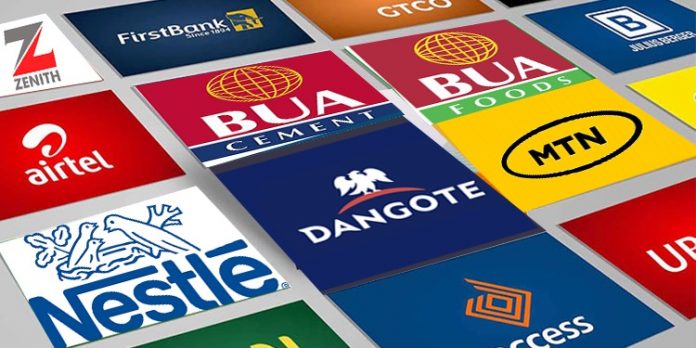
  • Tier-1 banks (GTCO, ZenithBank, etc)
  • Telecom operators (MTNN, Dangote Cement, etc)

For energy equities in Nigeria, select companies tied to upstream or energy-linked earnings:

  • Seplat Energy

  • Oando

For defensive stocks in Nigeria, companies selling food and essential goods maintain revenue even during crises:

  • BUA Foods

  • Nestlé Nigeria

For US, use bond ETFs such as:

  • Vanguard Total Bond Market (BND)

  • iShares Treasury ETFs

In US energy, focus on large oil companies tend to outperform during supply shocks:

  • ExxonMobil

  • Chevron

  • ConocoPhillips

For the defense stocks, select from the war companies:

  • Lockheed Martin

  • RTX (Raytheon)

  • Northrop Grumman

Consider defensive stocks through consumer Staples Select Sector SPDR (XLP). People must still eat even during war.

If you short, focus on airlines with hubs in UAE, Qatar, etc as most of the hubs will be closed for civilian aviation. And expect Nigerian Naira to appreciate marginally and that means you have an idea how the FOREX market will move.

MicroStrategy Makes Crash-Proof Bold Claim : “Even at $8,000, We Can Still Cover Our Debt”

0

In a move that grabbed attention across the crypto community, Strategy formerly known as MicroStrategy, has published a reassurance to shareholders and Bitcoin enthusiasts alike.

The company led by CEO Michael Saylor, has signaled confidence that its balance-sheet can withstand an extreme 88% drop in Bitcoin’s price without threatening its long-term position.

In a post on X, it wrote,

“Strategy can withstand a drawdown in $BTC price to $8K and still have sufficient assets to fully cover our debt.”

The bold stance reinforces the firm’s reputation as the most committed corporate holder of the digital asset, doubling down on a high-conviction bet that volatility is temporary but adoption is permanent.

Accompanying the message was an infographic-style image detailing the company’s balance sheet position. It showed approximately 714,000 BTC holdings valued at roughly $49.3 billion at then-current prices around $69,000 per coin.

The graphic emphasized that even in an extreme 88–90% crash to $8,000 per Bitcoin, the treasury would still be worth about $5.7 billion enough to match or closely cover the firm’s reported $6 billion in net debt (primarily convertible notes with staggered maturities extending all the way to 2032).

Strategy’s leadership has repeatedly framed this $8,000 level as the theoretical “floor” where Bitcoin asset value equals net debt obligations. Below that point especially if sustained for years  the company would face tougher choices such as restructuring debt, issuing new equity, or taking on additional financing rather than forced Bitcoin sales.

CEO Phong Le and Executive Chairman Michael Saylor have both stated in recent earnings calls and interviews that:

– No debt covenants are directly tied to Bitcoin’s spot price or average acquisition cost.

– The firm maintains cash reserves sufficient for debt service and operations for the next 2–3 years.

– Convertible notes are structured to avoid near-term liquidation pressure.

– In the absolute worst-case prolonged downturn, Strategy would refinance and roll debt forward rather than sell BTC.

This structure turns Strategy into one of the most leveraged public Bitcoin plays on the market  amplifying both upside and downside exposure far beyond simply holding the asset.

Strategy’s reassurance arrives amid ongoing volatility in the crypto market. After a brief period of optimism that saw the price of Bitcoin stabilize above $72,000, after falling as low as $59,847 earlier this month, the world’s largest cryptocurrency has resumed its downward trajectory, reflecting a sharp shift in investor sentiment.

Notably, Strategy’s Bitcoin treasury remains underwater on paper (average purchase price $76,000 vs. market levels fluctuating around $65,000–$70,000 in recent weeks).

Despite massive unrealized losses, the company continues its signature strategy: acquiring more Bitcoin regularly while promoting it as the ultimate corporate treasury reserve asset.

Critics like gold advocate Peter Schiff have questioned whether lenders would still refinance convertible debt at extremely low Bitcoin prices. Supporters counter that Strategy’s structure, long-dated maturities, and history of equity issuance provide multiple escape valves before any forced BTC liquidation would occur.

Outlook

Strategy’s post is both a flex of confidence and a calculated piece of investor communication. By publicly modeling the $8,000 downside scenario and showing the balance sheet still balances  the company aims to quiet concerns about solvency risk while reinforcing its “Bitcoin maximalist” identity.

Whether this transparency strengthens holder conviction or subtly highlights just how far Bitcoin would need to fall to test the thesis remains hotly debated in the replies and across crypto media.

For now, Strategy’s message is clear: even in a nightmare crash reminiscent of 2018 lows, the Bitcoin treasury experiment would at least on paper live to fight another day.

Nigeria’s Capital Importation Hits $16.7bn in Nine Months, Portfolio Flows Dominate

0

Why Nigeria attracted $16.7 billion in capital importation in the first nine months of 2025, more than 97% of inflows came from foreign portfolio investments, raising sustainability concerns.


Nigeria attracted $16.78 billion in capital importation in the first three quarters of 2025, according to newly released data from the National Bureau of Statistics.

The figure includes $11.1 billion recorded in the second and third quarters, reports that had been delayed for nearly six months.

The year-to-date total already exceeds the $12.32 billion recorded in the whole of 2024, signaling a sharp recovery in foreign capital inflows. Quarterly breakdowns show a steady trajectory:

  • Q1: $5.64 billion
  • Q2: $5.12 billion
  • Q3: $6.01 billion

The third quarter marked a 17.5% increase quarter-on-quarter, making it the strongest performance of the year so far.

Yet beneath the headline strength lies a familiar structural pattern: foreign portfolio investment (FPI) dominates overwhelmingly.

Liquidity-Led Inflows, Not Structural Investment

Portfolio flows exceeded $14 billion between Q1 and Q3, representing more than 97% of total capital importation. In Q3 alone, portfolio inflows reached $4.85 billion, accounting for over 80% of total inflows.

Bond investments strengthened markedly in Q3, while money market instruments remained elevated, albeit slightly lower than Q2 levels. This suggests foreign investors are positioning heavily in high-yield fixed-income securities.

By contrast, Foreign Direct Investment (FDI) remains subdued. FDI rose gradually from $126 million in Q1 to $143 million in Q2 and $296 million in Q3. Even cumulatively, FDI remains under $600 million for the year, less than 4% of total inflows.

This imbalance is critical as portfolio capital is typically yield-seeking and short-term. It responds quickly to interest rate differentials, currency expectations, and global risk appetite. FDI, on the other hand, reflects long-term commitments to productive capacity, infrastructure, and job creation.

The data indicate that Nigeria’s rebound is largely liquidity-driven rather than anchored in structural investment expansion.

Sectoral Concentration in Financial Services

Sector-level analysis reinforces this conclusion.

Banking attracted more than $3.1 billion in each quarter, consistently accounting for over half of total inflows.

The Financing sector followed, pulling in $2.10 billion in Q1, easing to $873 million in Q2, and rebounding strongly to $1.86 billion in Q3. Together, Banking and Financing absorbed roughly 70–80% of total capital importation across all three quarters.

Outside financial services, inflows were comparatively modest:

  • Manufacturing rose to $261 million in Q3.
  • Telecommunications increased to $209 million in Q3.
  • The Electrical sector saw a one-off spike of $456 million in Q2.
  • Agriculture fluctuated between $24 million and $67 million.

Oil and gas — historically a magnet for foreign capital — attracted relatively limited inflows compared to the scale of the sector. Technology, health care, construction, and real estate also recorded small shares.

The heavy concentration in finance suggests that most capital is entering through securities markets rather than through greenfield projects, infrastructure development, or industrial expansion.

Policy Drivers Behind the Surge

The surge in portfolio inflows aligns with Nigeria’s recent monetary tightening cycle and foreign exchange reforms. Higher domestic interest rates increase the attractiveness of naira-denominated assets, particularly treasury bills and bonds.

Improved clarity around exchange rate policy and increased FX market liquidity have also reduced some of the uncertainty that previously deterred foreign investors.

In effect, Nigeria has restored its appeal as a carry-trade destination. Investors borrow in lower-yielding currencies and invest in higher-yielding Nigerian instruments, profiting from the interest differential — provided currency stability is maintained.

However, such inflows are inherently sensitive to external shocks. A shift in global interest rates, a spike in U.S. Treasury yields, or renewed currency volatility could trigger rapid reversals.

Historical Parallels and Risk Signals

The pattern bears resemblance to 2019, when aggressive monetary tightening attracted strong foreign portfolio flows. At the time, inflows supported external reserves and exchange rate stability.

That episode unraveled as policy direction shifted and the COVID-19 shock hit global markets. Capital exited emerging markets, including Nigeria, and exchange rate pressures intensified.

The key lesson is that yield-driven inflows can be transient. Sustained economic transformation requires a stronger base of FDI and diversified sectoral investment.

The delayed publication of Q2 and Q3 data also raises governance considerations. For months, officials referenced aggregate figures of about $21 billion in capital importation for the first ten months of 2025 without releasing detailed breakdowns. The absence of timely quarterly data created uncertainty about composition and durability. Transparent and consistent reporting remains central to investor confidence.

What It Means for Growth and Stability

Nigeria’s external accounts have benefited from the surge. Strong portfolio inflows can bolster foreign reserves, improve balance-of-payments metrics, and support exchange rate stability in the short term.

However, translating liquidity inflows into durable growth requires complementary reforms — infrastructure expansion, industrial policy coherence, regulatory stability, and improvements in the business environment that attract long-term investors.

With FDI under $600 million year-to-date, the gap between financial inflows and productive investment remains wide. Unless capital begins flowing into manufacturing, energy, agriculture, and technology at scale, the economic multiplier effects may remain limited.

However, Nigeria’s 2025 capital importation figures signal renewed investor appetite. The durability of that confidence will depend on macroeconomic consistency, exchange rate stability, and the country’s ability to convert yield-seeking inflows into sustained structural transformation.

ByteDance Unveils Doubao 2.0 as China’s Leading AI App Seeks to Defend Dominance Ahead of Lunar New Year

0

ByteDance has rolled out Doubao 2.0, upgrading China’s most widely used artificial intelligence chatbot just as the Lunar New Year holiday begins on Sunday, the company announced on Saturday.

The release is widely seen as a preemptive move to maintain market leadership and prevent a repeat of last year’s Spring Festival surprise, when DeepSeek’s low-cost, high-performance model stunned global observers and briefly captured international attention. Doubao 2.0 is designed for the emerging “agent era,” where AI systems are expected to execute complex, multi-step real-world tasks rather than simply answer questions.

ByteDance claims the model’s pro version delivers reasoning and task-execution capabilities comparable to OpenAI’s GPT-5.2 and Google’s Gemini 3 Pro, while reducing usage costs by roughly an order of magnitude.

“This cost advantage will become even more crucial as real-world, complex tasks involve large-scale inference and multi-step generation that will expend a huge amount of tokens,” the company stated, referring to the fundamental unit of data processed by large language models.

Last year, DeepSeek leveraged the Lunar New Year period—when hundreds of millions of Chinese return to their hometowns for family gatherings—to generate viral buzz both domestically and overseas. ByteDance appears intent on avoiding a similar scenario this holiday season. The company released a competing video-generation model, Seedance 2.0, on Thursday, which quickly went viral on Chinese social media and drew praise on platforms like X, including from owner Elon Musk.

Doubao maintains a commanding lead in China with 155 million weekly active users as of late December 2025, according to QuestMobile data—nearly double DeepSeek’s 81.6 million. However, recent competitive pressure has intensified. On February 6, Alibaba announced a 3 billion yuan ($400 million) coupon giveaway campaign for its Qwen AI app, allowing users to redeem incentives for food and drink directly within the chatbot.

The promotion drove Qwen’s daily active users from 7 million to 58 million in a matter of days, closing much of the gap with Doubao.

ByteDance’s aggressive upgrade and holiday timing reflect the high stakes in China’s domestic AI market. While global attention often focuses on U.S. leaders like OpenAI and Anthropic, the real competitive intensity is playing out inside China, where domestic giants are racing to dominate the world’s largest internet user base and build ecosystems around chatbots, agents, and multimodal AI.

The company continues to pursue an open-source strategy with parts of its Qwen family, mirroring Alibaba’s approach and aiming to drive developer adoption and ecosystem growth. Doubao 2.0’s claimed cost efficiency—achieved through optimized inference and potentially lower token consumption for complex tasks—could prove decisive in enterprise and developer markets, where usage costs scale rapidly with task complexity.

China’s AI race is shaped by both domestic dynamics and external constraints. U.S. export controls have restricted access to Nvidia’s most advanced GPUs, pushing Chinese firms to optimize for efficiency on available hardware and accelerate development of domestic alternatives. ByteDance’s heavy investment in AI—reportedly planning over 160 billion yuan ($22 billion) in AI-related procurement in 2026—underscores the company’s determination to compete at the frontier despite these limitations.

The Lunar New Year period has become a key battleground for Chinese AI companies. Last year’s DeepSeek surprise demonstrated how holiday downtime and family sharing can rapidly amplify viral adoption. ByteDance’s pre-holiday release of Doubao 2.0 and Seedance 2.0 appears designed to capture attention and usage during this high-engagement window.

While Doubao leads in user numbers, competitors are closing the gap through aggressive promotions and model improvements. Alibaba’s coupon campaign showed how quickly user metrics can shift with targeted incentives. DeepSeek remains a wildcard, with anticipation building around its next model release.

ByteDance’s broader AI strategy extends beyond chatbots. Its Seed division, founded in 2023, focuses on developing large language models and promoting their applications across the company’s portfolio—from Douyin/TikTok content recommendation to e-commerce and enterprise cloud services. While the company has acknowledged that its models still trail global leaders like OpenAI, it has pledged to continue heavy investment throughout 2026.

The AI competition is expected to play out in real time across family gatherings, social media shares, and app downloads as China enters the Lunar New Year holiday. Doubao 2.0’s performance during this high-visibility period could solidify ByteDance’s lead or expose vulnerabilities if competitors manage to capture significant attention and usage.

Luxury Meets Loyalty: Spartans’ Custom Jesko Prize Competes With Big Bonuses From Betfred and BetMGM

0

Web play and sports bets have grown fast. Sites like Betfred and BetMGM lead the way with big deals and new ideas. Betfred just started fifty pounds in free bets for Super Bowl sixty, giving new users many ways to play. BetMGM gives up to fifteen hundred dollars in first bet gifts and local deals for sports and casino fans.

Spartans stands out as a top spot for big games, joining fast poker, crypto money moves, and smooth mobile play. Its newest deal, the fancy Mansory Koenigsegg Jesko car prize, lifts the fun, merging speed, plans, and top level rewards, making Spartans one of the best online casino platforms today.

Betfred Starts Fifty Pound Free Bets Before Super Bowl Sixty

Betfred gives new users fifty pounds in free bets for Super Bowl sixty with a ten pound first bet. The deal has three ten-pound free bets for any sport and two ten pound free bet group plays, giving choices from the start. Super Bowl sixty has the Seahawks playing the Patriots at Levi’s Stadium in Santa Clara. The game pits a strong team against a smart group thriving under pressure.

Look for clever plays, big choices by the leader, and close fights that could decide the win. Outside the field, the event gets world eyes, a big music show, and a busy host city. Betfred also gives double odds on winning first touchdown bets for all.

BetMGM Gives Up To Fifteen Hundred Dollar Signup Gifts In Many Areas

BetMGM has many signup gifts for new users, starting with the $1,500 First Bet Offer using code ESNY1500. In this deal, if the first bet fails, up to $1,500 is given back in gift bets. It is open in most legal states, like Arizona, New Jersey, Pennsylvania, and West Virginia.

A second path, Bet $10, Get $150 If You Win, is ready in Michigan, New Jersey, Pennsylvania, and West Virginia using gift code ESNY150. A $10 bet that wins gets $150 in gift bets. For casino fans, BetMGM has a 100% match up to $1,000 plus $25 extra with gift code ESNYCASINO, ready in MI, NJ, PA, and WV, providing fast value for slots, table games, and live dealer choices.

Spartans Starts A Rare Giveaway With A Special Fast Car

The thrill at Spartans has reached a fresh high point because of a prize you see only once: the one-of-one Mansory Koenigsegg Jesko. This is not just any car, it is a 1,600 plus HP twin-turbo V8 giant that goes from zero to sixty in less than 2.5 seconds. Made by Mansory to rule the streets, it is a wild work of art kept only for the Spartans group. And right now, you get a shot to win it, making a basic game a fast path to a car legend.

While the Jesko gets all the eyes, Spartans keeps giving the best online casino time. Its poker spots are full of high energy games like Three Card Poker, giving skill based fun for users who seek more than just luck. Every single hand and every bet feels very fast because of crypto and cash, smooth phone play, and a site built to keep you in the flow no matter where you are.

Spartans is not just about the games, it is about top level fun. The Jesko prize takes the thrill to a new spot, turning the site into a place where plans, speed, and luxury all meet. Every single turn and every hand brings you nearer to great prizes and the kind of rush only the best online casino can provide.

For users looking for big bets, huge prizes, and a taste of real speed, Spartans is the right spot. It mixes top level play, clear rules, and a safe, easy site, all built around a fast and bold time. This is the spot where great prizes meet great play, and every second at the tables can make you feel like you are seeking not just a win, but a dream made for speed and style.

The Final Summary

The current world of web gaming and sports bets gives great chances for players, with Betfred and BetMGM leading the way using big deals and new sites. The fifty pound free bets for Super Bowl sixty from Betfred and the fifteen-hundred-dollar first bet deals from BetMGM give good reasons for new and old users to join.

Spartans lifts the mark even more, mixing fast, skill-based poker, easy crypto money moves, and high-speed phone play. The very fancy Mansory Koenigsegg Jesko prize shows how the site cares about top-level fun. Together, these sites show how the field is growing and changing, giving users many ways to join, win, and find the best online casino times out there today.

Find Out More About Spartans:

Website: https://spartans.com/

Instagram: https://www.instagram.com/spartans/

Twitter/X: https://x.com/SpartansBet

YouTube: https://www.youtube.com/@SpartansBet