DD
MM
YYYY

PAGES

DD
MM
YYYY

spot_img

PAGES

Home Blog Page 19

Bitcoin Has Crossed the 20,000,000 BTC Mined Milestone 

1

Bitcoin has crossed the 20,000,000 BTC mined milestone with circulating supply now at approximately 19,999,xxx BTC and continuing to tick up daily, marking a key psychological and economic threshold.

This means over 95% of the protocol’s hard-capped 21 million total supply is already in existence—achieved roughly 17 years after the genesis block in 2009. The remaining ~1 million BTC will take much longer to mine due to the halving mechanism, which reduces the block reward by 50% every ~4 years (every 210,000 blocks).

Current block reward (post-2024 halving): 3.125 BTC per block. This results in ~450 BTC issued per day (144 blocks/day on average), but that rate halves again in future cycles (next expected ~2028, then 2032, etc.). The issuance slows exponentially, so the final portions become extremely gradual.

As a result, reliable estimates and on-chain analyses place the mining of the last satoshis around the year 2140 — which works out to roughly 114 years from early 2026 for that final ~1 million BTC tranche.

This ultra-slow tail emission reinforces Bitcoin’s programmed scarcity and deflationary design: the first ~20 million BTC took ~17 years, while the last ~1 million will take over a century. After ~2140, no new BTC will be created, and miners will rely solely on transaction fees to secure the network.

A true testament to long-term monetary engineering. This milestone means over 95% of Bitcoin’s hard-capped 21 million supply is already in existence — a level of issuance no other major monetary asset has ever achieved with such predictability and immutability.

Unlike fiat currencies which central banks can expand indefinitely or even physical gold whose supply is uncertain and expandable through new discoveries/mining, Bitcoin’s supply curve is transparent, auditable, and unchangeable by any single entity.

The remaining 1 million BTC will enter circulation extremely slowly due to ongoing halvings (next one ~2028, dropping the reward to 1.5625 BTC/block, and so on), stretching issuance over roughly 114 years until ~2140. This amplifies Bitcoin’s “digital gold” or “hard money” narrative: new supply is now negligible  while demand drivers continue to grow.

Many analysts view this as a structural tailwind for long-term price appreciation through supply compression — less new BTC flooding the market means existing coins become relatively scarcer if/when demand rises. The block reward (currently 3.125 BTC) still dominates miner revenue, but each halving accelerates the transition toward a fee-only system.

By ~2140 (when the final satoshis are mined), miners will rely entirely on transaction fees to cover costs and secure the chain. This milestone highlights that the “tail emission” phase has begun in earnest — new issuance will become trivial compared to potential fee revenue from higher network usage.

If Bitcoin becomes a widely used settlement layer or store of value, transaction volume could generate sufficient fees to sustain high hashrate/security (some compare it to how gold mining persists today despite no “new gold issuance” in the monetary sense).

If on-chain activity remains low or fees don’t scale adequately, miner incentives could weaken over decades, potentially risking lower hashrate and network vulnerability though many Bitcoin proponents argue market forces — higher fees during congestion, efficiency improvements, and fee market dynamics — will naturally balance this.

The 20M mark serves as a reminder that Bitcoin’s security budget is gradually shifting from inflationary subsidy to real economic usage — a deliberate design choice by Satoshi to avoid perpetual inflation.

Hitting 20M is largely symbolic but powerful: it visually proves the protocol has executed flawlessly for 17+ years through multiple halvings, crashes, regulatory battles, and technological upgrades. It strengthens the “proven scarcity” story at a time when more capital is flowing into Bitcoin, potentially tightening liquid supply even further.

This can contribute to volatility in either direction short-term, but long-term it bolsters confidence in Bitcoin as a non-sovereign, predictable asset in an era of fiat debasement and uncertainty. This isn’t just a number — it’s concrete evidence that Bitcoin’s monetary policy is working as designed.

The first ~95% took ~17 years; the last ~5% will take over a century. That asymmetry cements Bitcoin’s deflationary character and forces the network to evolve toward sustainable, usage-based security. Whether that leads to higher valuation, broader adoption, or new challenges for miners remains one of the most fascinating open questions in finance.

AI Data Center Startup, Nscale, Secures $2bn Series C Backed By Nvidia

0

AI data center startup Nscale has raised $2 billion in a Series C funding round at a $14.6 billion valuation, positioning the company as a pivotal player in the surging AI infrastructure market.

The funding underscores investor confidence in Nscale’s strategy to build vertically integrated AI data centers capable of supporting the massive computational demands of next-generation artificial intelligence.

The round was led by Aker ASA and 8090 Industries, with participation from Nvidia, Citadel, Dell, Jane Street, Lenovo, Nokia, and Point72, among others. Previous investors such as Astra Capital Management and Linden Advisors also participated, reflecting broad institutional confidence in the AI infrastructure space.

Nscale simultaneously announced high-profile board additions, including former Meta Platforms COO Sheryl Sandberg, former U.K. Deputy Prime Minister and Meta executive Nick Clegg, and former Yahoo President Susan Decker. These appointments strengthen governance and international experience at a critical time, as Nscale navigates global expansion and regulatory complexities in AI infrastructure. Analysts note that their presence signals Nscale’s ambitions for an IPO, which the company confirmed it is exploring.

Founded in 2024 by Josh Payne, Nscale has rapidly become a key player in the AI infrastructure market, operating data centers across the United Kingdom, the United States, Norway, Portugal, and Iceland. Its vertically integrated approach spans GPU computing, networking, orchestration software, and data services, allowing tighter control over performance and reliability for large AI workloads.

Payne described AI infrastructure as “the engine of superintelligence” and compared the current buildout to the largest infrastructure expansion in history. Nvidia CEO Jensen Huang has similarly described the market as a generational opportunity for companies supplying the backbone of AI.

Nscale has established strategic partnerships with top technology firms. In October, the company expanded its partnership with Microsoft, potentially generating $14 billion in business tied to Microsoft’s AI and cloud platforms. Over the summer, it collaborated with OpenAI to launch the Stargate-branded AI data center in Norway, providing specialized infrastructure to accelerate AI model training.

Such collaborations reflect a trend among Big Tech companies to secure dedicated AI infrastructure, avoiding reliance on commodity cloud providers and ensuring performance for large-scale models. Analysts say Nscale’s partnerships could make it a critical “first-tier” infrastructure provider in Europe and North America.

Funding History and Capital Strategy

Nscale’s latest funding builds on a series of recent capital raises: a $1.1 billion Series B in September 2025, a $1.4 billion delayed draw term loan in February 2026, and a $433 million pre-Series C SAFE round in October 2025. This aggressive funding strategy has enabled rapid scaling of data centers and investment in proprietary technology, giving Nscale a competitive advantage over traditional colocation and cloud providers.

The Series C round highlights a broader trend: investors increasingly prioritize “infrastructure plays” in AI rather than applications alone. Analysts suggest that companies like Nscale represent the backbone of the AI economy, supplying compute capacity critical for companies deploying models at scale.

Competitors in this space include CoreWeave, Lambda Labs, and traditional hyperscalers such as Amazon Web Services and Google Cloud, but Nscale’s vertically integrated approach and strategic partnerships differentiate it as a potential market leader.

Analysts warn, however, that the AI infrastructure market is highly capital-intensive and subject to geopolitical and energy supply risks. Nscale’s operations across Europe and North America expose it to energy cost fluctuations and regulatory scrutiny, which may influence operating margins in the medium term.

With fresh capital and high-profile board oversight, Nscale is poised to expand its global footprint and reinforce its position as a core provider of AI infrastructure. The company is expected to accelerate the deployment of new data centers, broaden its partnerships with Big Tech, and potentially pursue an IPO in the next 18-24 months.

Analysts see Nscale’s rise as emblematic of a growing trend in the industry. As AI adoption grows, the companies controlling the underlying compute, storage, and networking infrastructure are becoming some of the most strategically important players in technology. This is because they shape the capabilities of the next generation of AI applications.

Oil’s 25% Surge Ripples Across Global Markets, Gold Fell More Than 2%

0

Oil markets jolted global financial assets on Monday as a sharp escalation in the Middle East conflict sent crude prices surging and forced governments and investors to reassess the economic fallout from a potential supply shock.

Brent crude briefly climbed to $119.50 a barrel while U.S. West Texas Intermediate touched $119.48, marking the strongest intraday levels since mid-2022 and putting Brent on track for one of its largest single-day advances on record. The rally was driven by mounting concerns over disrupted production and shipping routes across the Persian Gulf, particularly the Strait of Hormuz, a critical artery through which roughly a fifth of the world’s oil supply moves.

The spike in crude prices came as several major regional producers — including Iran, Iraq, Kuwait, and the United Arab Emirates — began reducing production amid rising operational risks and storage constraints. Analysts warned that the situation could tighten global supplies further if the conflict deepens or shipping disruptions intensify.

“The violent reaction stems from the markets seeing no obvious offramp in the escalating Middle East conflict, now a high-stakes standoff where neither side appears willing to blink first,” IG market analyst Tony Sycamore said in a note. “The risk of more lasting economic damage continues to build by the day.”

The geopolitical escalation coincided with a political development in Tehran. Iran announced that Mojtaba Khamenei will succeed his father, Ali Khamenei, as Supreme Leader, signaling continuity in the country’s hardline leadership as tensions with the United States and Israel intensify.

The oil surge rippled through global commodity markets. Agricultural products rallied sharply as traders anticipated stronger demand for biofuel feedstocks tied to higher crude prices. Malaysian palm oil jumped about 9% while Chicago soybean oil climbed to its highest level since late 2022. Wheat futures rose to their highest since June 2024, and corn prices reached a 10-month peak.

Industrial metals showed a mixed response. Aluminium surged to its strongest level in four years, with benchmark three-month contracts on the London Metal Exchange hitting $3,544 per metric ton. Supply fears intensified after regional smelters such as Qatalum in Qatar and Aluminium Bahrain declared force majeure on shipments amid rising regional instability.

Other base metals, however, faced pressure from currency dynamics as the U.S. dollar strengthened. The greenback hovered near a three-month high, supported by rising U.S. Treasury yields and fading expectations for near-term interest-rate cuts.

The stronger dollar also weighed on precious metals. Gold fell more than 2% despite the geopolitical turmoil that typically boosts demand for safe-haven assets. Analysts said the decline reflected the combined impact of a stronger dollar, rising yields, and mounting concerns that higher energy prices could prolong global inflation.

Indeed, the oil rally immediately reverberated through bond markets. U.S. Treasury yields climbed as investors braced for renewed inflation pressure stemming from higher energy costs. Markets increasingly expect central banks to maintain tighter monetary conditions for longer if crude prices remain elevated.

Governments around the world have begun scrambling to cushion the economic impact of the energy shock.

Vietnam said it is planning to temporarily remove import tariffs on fuel products to secure adequate supplies amid disruptions linked to the Middle East conflict. The tariff suspension, expected to run through the end of April, is being prepared by the Ministry of Finance, according to a government statement issued late Sunday.

In West Africa, supply concerns are also emerging. Nigeria’s Dangote Petroleum Refinery suspended petrol loading operations over the weekend of March 7–8, highlighting logistical difficulties in maintaining a stable domestic supply during a period of volatile global crude markets. The disruption raised fears of renewed fuel shortages in Africa’s largest economy.

To stabilize supply, the Nigerian government — through the Nigerian National Petroleum Company Limited — has moved to secure crude feedstock for the refinery via third-party international traders. Ensuring reliable crude allocation to the facility is seen as critical to maintaining local refining output and preventing petrol scarcity across Nigeria and parts of the broader West African market.

In Asia, South Korea is considering direct price intervention for the first time in decades. President Lee Jae Myung said Seoul will “swiftly introduce” a fuel price cap to shield consumers from soaring energy costs, marking the country’s first such measure in roughly 30 years. The government is also exploring ways to diversify its energy import sources to reduce vulnerability to Middle East supply disruptions.

The wave of policy responses highlights how quickly the geopolitical crisis is translating into economic risk. Higher energy costs threaten to ripple through transport, manufacturing, and food supply chains, raising the prospect of a renewed global inflation shock just as many economies were beginning to stabilize.

For financial markets, the key uncertainty now is the duration of the conflict and the extent to which energy infrastructure or shipping lanes could be affected. Any prolonged disruption in the Strait of Hormuz, one of the world’s most strategically vital energy corridors, would amplify supply shortages and could push crude prices significantly higher, with broad consequences for global growth and monetary policy.

Global Markets Plunge as Middle East Conflict Intensifies, Oil Surges Past $104, and Strait of Hormuz Closure Triggers Supply Shock Fears

0

Global financial markets tumbled on Monday, as the escalating U.S.-Iran conflict intensifies, fueling fears of prolonged energy supply disruptions, surging living costs, and delayed interest-rate cuts by central banks worldwide.

Crude oil prices soared nearly 30% at one point — one of the largest one-day jumps on record — before settling at elevated levels, reflecting acute concerns over infrastructure damage and shipping halts in the region. Brent crude futures closed up roughly 13% at $104.50 per barrel, while U.S. West Texas Intermediate (WTI) futures rose 12% to $101.80.

The spike was driven by Iran’s declaration that the Strait of Hormuz — through which about 20% of global oil and liquefied natural gas (LNG) transits — is closed, with threats to attack any vessels attempting passage. This has effectively halted tanker traffic, with around 200 ships anchored to avoid risks and insurers cancelling war-risk coverage, pushing freight rates sharply higher.

Iran named Mojtaba Khamenei as successor to his father, Supreme Leader Ali Khamenei, who was killed in initial U.S.-Israeli strikes over the weekend. The appointment signals hardliners remain in control, a development unlikely to ease tensions. U.S. President Donald Trump has called the son “unacceptable,” further dimming prospects for de-escalation.

Asian Markets Sink Amid Energy Import Vulnerability

Japan’s Nikkei 225 index closed down 5.2%, extending last week’s 5.5% drop, as the country — a major oil and gas importer — braced for higher energy costs. China’s CSI 300 blue-chip index fell roughly 1%, though consumer prices rose 1.3% year-on-year in February, a pre-conflict pickup that could complicate Beijing’s efforts to combat disinflation if oil prices remain elevated.

U.S. stock futures also declined, with S&P 500 futures down 1% and Nasdaq futures off more than 1%. European shares tumbled to their lowest in more than two months, with the StoXX 600 closing down 1.63% after a 5.5% weekly loss — its worst in nearly a year. The risk-off mood has taken hold, with investors fleeing to the U.S. dollar while shunning currencies of net energy importers like Japan and much of Europe.

The dollar strengthened 0.4% to 158.385 yen, outweighing the yen’s safe-haven appeal. The euro slipped 0.5% to $1.1557. J.P. Morgan analysts noted that sustained energy-price increases should further bolster the dollar while pressuring currencies in Central and Eastern Europe.

Bond Yields Climb on Inflation Concerns

In bond markets, inflation fears trumped safe-haven buying, pushing yields higher. The 10-year U.S. Treasury yield rose 5 basis points to 4.175%, up from a recent trough of 3.926%. Interest-rate futures slipped as traders reassessed central bank paths. U.S. CPI data due Wednesday is expected to hold at 2.4% annually, while the Fed’s preferred core PCE measure on Friday is forecast at 3.0% — well above the 2% target — with upside risks from energy costs.

The Federal Reserve is widely expected to hold rates at its March 18 meeting, per CME FedWatch. For the European Central Bank and Bank of England, markets have scaled back easing expectations: the BoE now has only a 40% chance of one more cut, compared with two or more before the conflict intensified.

Gold — typically a safe-haven — fell 1.2% to $5,106 per ounce as the dollar’s strength outweighed risk aversion.

Regional Disruptions and Supply Shock Risks

The conflict has triggered widespread infrastructure shutdowns:

  • Saudi Arabia’s Ras Tanura refinery (550,000 bpd) remains offline after a drone strike.
  • Iraqi Kurdistan fields (200,000 bpd exports) are suspended as a precaution.
  • Israel’s Leviathan and Tamar gas fields are idled, throttling exports to Egypt.
  • Iran’s Kharg Island export hub — processing 90% of Iranian crude — faces uncertain damage from explosions.

Qatar halted LNG production, accounting for 20% of global supply, adding to the energy market strain. The disruptions highlight risks to Asia, which sources 60% of its oil from the Middle East. India — importing ~85% of its crude (4.2 million bpd), with half transiting the Strait — faces acute exposure. Rystad Energy’s Pankaj Srivastava warned that even modest price increases “materially affect” India’s energy economics, balance of payments, and rupee stability.

Morgan Stanley estimates every sustained $10/bbl oil rise could shave 20–30 basis points off Asia’s GDP growth, with India particularly vulnerable due to its wide oil/gas balance.

The benchmark index shed 5.5% last week, its worst weekly performance in nearly a year. In bond markets, the risk of rising inflation outweighed safe-haven considerations to shove yields higher globally. Yields on 10-year Treasury notes rose 5 basis points to 4.175%, up from a trough of 3.926% just a week ago.

Central Banks Face Inflation Conundrum

Interest rate futures slipped as investors feared the risk of higher inflation would make it harder for the Federal Reserve to ease policy, though disappointing jobs numbers seemed to argue for stimulus.

The danger of energy-driven inflation has led markets to wager that the next move in rates from the European Central Bank could be up, possibly as early as June. For the Bank of England, markets have shifted to pricing just a 40% chance of one more easing, compared with two cuts or more before the Middle East conflict started.

Nervous investors sought the liquidity of dollars while shunning currencies from countries that are net energy importers, including Japan and much of Europe.

China Inflation Hits Three-Year High on Lunar New Year Boost, Factory Deflation Signals Fragile Recovery

0

Consumer inflation in China climbed to its highest level in more than three years in February, supported by a surge in holiday travel and spending during the Lunar New Year period, even as persistent deflation in the industrial sector underscored the fragile state of the world’s second-largest economy.

Data released Monday by the National Bureau of Statistics of China showed the consumer price index rose 1.3% year-on-year, marking the fifth straight month of gains. The increase was significantly higher than January’s 0.2% rise and exceeded economists’ expectations of 0.8% in a poll conducted by Reuters.

The reading represents the fastest pace of consumer inflation in 37 months.

Economists quoted by Reuters say the acceleration was largely driven by seasonal spending linked to the Lunar New Year holiday, one of the country’s busiest travel periods, when hundreds of millions of people move across the country for family gatherings.

Airline ticket prices jumped 29.1% from a year earlier, reflecting a surge in domestic tourism, while gold jewellery prices rose sharply by 76.6% as consumers increased spending on gifts and luxury items during the festivities.

Core inflation — which excludes volatile food and energy prices — also strengthened, rising 1.8% year-on-year compared with 0.8% in January, suggesting a modest improvement in underlying price pressures.

On a monthly basis, consumer prices rose 1% in February, compared with 0.2% in January and well above the 0.5% increase expected by economists.

Energy shock adds to inflation pressure

Rising global energy prices are also beginning to filter into China’s inflation data. Benchmark Brent crude has surged above $90 per barrel amid supply disruptions tied to the escalating conflict involving the United States, Israel, and Iran.

The standoff has slowed tanker traffic through the strategically vital Strait of Hormuz, a shipping corridor responsible for roughly one-fifth of the world’s oil supply.

Zichun Huang, a Chinese economist at Capital Economics, said the oil shock could temporarily push inflation higher in China as energy and transportation costs rise.

“Tensions in the Middle East will push inflation higher for as long as global energy prices remain elevated,” Huang said.

However, he warned the inflation uptick may prove short-lived if geopolitical tensions ease.

China’s latest five-year economic plan, unveiled at the annual parliament session, offered relatively limited measures aimed at stimulating household consumption — a key factor that analysts say remains necessary for a sustained recovery in inflation.

Persistent factory deflation highlights weak demand

Despite the rise in consumer prices, China’s industrial sector continues to struggle with deflation. The producer price index, which tracks prices charged by manufacturers at the factory gate, fell 0.9% year-on-year in February. The decline was smaller than January’s 1.4% drop and better than the 1.2% decrease expected by economists.

The improvement suggests that deflationary pressures in the manufacturing sector may be stabilizing, though they remain entrenched.

According to NBS statistician Dong Lijuan, stronger prices in advanced manufacturing sectors and government measures to manage industrial capacity helped moderate the decline.

Producer prices also rose 0.4% month-on-month, partly driven by higher crude oil prices and stronger demand linked to computing power and technology-related industries.

However, the long-running drop in factory-gate prices continues to squeeze profit margins for manufacturers and reflects ongoing weakness in domestic demand. Many industrial sectors still face excess production capacity after years of rapid investment and expansion.

Structural pressures on the economy

China’s broader economic outlook remains constrained by several structural headwinds. A prolonged downturn in the property market has weighed heavily on household wealth and consumer confidence, while weak global trade growth and rising protectionist policies have created additional uncertainty for exporters.

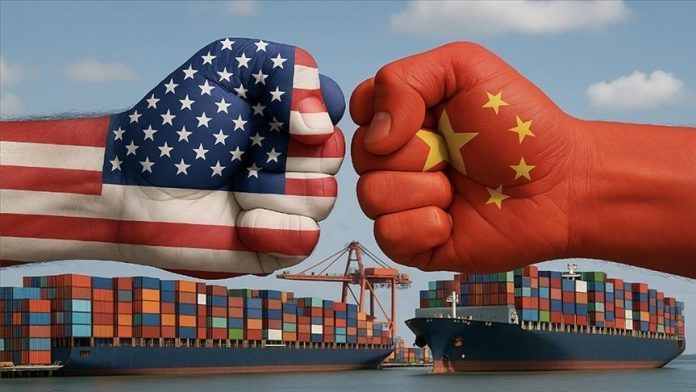
Trade tensions with the United States, including tariffs and technology restrictions, have added pressure on policymakers attempting to stabilize growth. At the same time, falling prices across many sectors have encouraged consumers and businesses to delay spending in anticipation of lower costs later, reinforcing deflationary expectations.

To address these challenges, Beijing has pledged to reduce excessive competition in certain industries and accelerate the exit of inefficient factories in order to stabilize prices and improve profitability.

Policy outlook and growth targets

Chinese policymakers have set an economic growth target of between 4.5% and 5% for 2026, slightly lower than last year’s goal of “around 5%.”

The adjustment is seen as a willingness by authorities to accept slightly slower growth while implementing structural reforms aimed at reducing the economy’s reliance on exports and property investment.

The government also kept its annual inflation target unchanged at around 2%. Officials say the target is intended to guide market expectations while leaving room for macroeconomic adjustments.

The People’s Bank of China has already started loosening monetary conditions. In January, the central bank cut several sector-specific lending rates and expanded access to low-cost credit for small and medium-sized technology and private companies.

Lynn Song, chief economist for Greater China at ING Group, said the latest inflation figures are unlikely to prevent further policy easing.

“Unless the oil price shock is notably stronger and longer than expected, it’s not expected that inflation will inhibit PBOC easing this year,” Song said.

He added that the central bank could still implement an interest rate cut in the second quarter if economic activity remains weak, although policymakers may adopt a cautious approach depending on global conditions.