DD
MM
YYYY

PAGES

DD
MM
YYYY

spot_img

PAGES

Home Blog Page 19

Michael Burry Returns to GameStop, Framing a Long-Term Value Bet Rather Than a Meme Revival

0

Michael Burry, the investor immortalized in The Big Short for anticipating the 2008 financial crisis, has once again trained his sights on GameStop, the video game retailer that became the defining symbol of the meme-stock era.

This time, however, Burry is at pains to distance his move from the speculative frenzy that propelled the stock into global headlines four years ago. His return to GameStop marks one of the more striking reversals in recent U.S. market narratives, not because the stock itself is unfamiliar, but because of the framework he is using to justify the investment.

Burry is now positioning GameStop as a rare balance-sheet-driven opportunity in a market he views as stretched and increasingly indifferent to tangible value.

The investor disclosed his renewed stake in a post on his Substack, Cassandra Unchained, prompting GameStop shares to rise as much as 6% on Monday. The immediate market reaction underscored how closely investors still track Burry’s moves, even years after his most famous call. It also highlighted GameStop’s enduring sensitivity to shifts in narrative, where changes in perception can still outweigh incremental developments in the company’s underlying business.

At the core of Burry’s thesis is valuation discipline. He argued that GameStop is trading close to one times tangible book value and net asset value, a metric he described as increasingly rare in U.S. equities. In an environment where many listed companies command significant premiums based on growth expectations, intangible assets, or future optionality, Burry is anchoring his case to what the company owns today rather than what it might become tomorrow.

“This is not a common occurrence in the U.S. stock market today,” Burry wrote, pointing to what he sees as asymmetric risk.

In his view, the company’s tangible assets and cash position provide a form of downside protection, limiting the scope for permanent capital loss while preserving upside if management executes effectively. This framing places GameStop closer to a traditional value investment than the speculative instrument it has been treated as since 2021.

The emphasis on management is equally central to Burry’s thinking. Ryan Cohen, GameStop’s chief executive and the founder of online pet retailer Chewy, features prominently in his analysis. Cohen has become a cult figure among retail investors, both for his activist posture and for his role in reshaping GameStop’s board and strategic direction. For Burry, Cohen represents a long-duration capital allocator rather than a short-term catalyst.

Burry’s language suggests an unusually extended time horizon. He spoke of backing Cohen’s deployment of capital “perhaps for the next 50 years,” an assertion that stands out in a market often dominated by quarterly earnings and near-term guidance. By emphasizing governance, balance-sheet stewardship, and patience, Burry is effectively arguing that GameStop should be judged less as a retailer in decline and more as a capital vehicle with optionality under disciplined leadership.

This long-term framing also serves to distance Burry from the stock’s meme-era legacy. GameStop’s 2021 short squeeze, driven by retail traders coordinating on online forums, transformed the company into a symbol of rebellion against Wall Street short sellers. Burry was involved in the stock before that episode, but has acknowledged that he exited his position weeks before the squeeze, missing the explosive upside that followed. That experience appears to inform his current insistence that he is not relying on a repeat of that phenomenon.

“I am not counting on a short squeeze to realize long-term value,” he wrote, stressing that the investment case does not depend on forced buying or market dislocations.

Instead, he cited governance, strategy, and capital allocation as the pillars of his conviction. He characterized the setup as unusual but justified, particularly in a market he believes offers few genuinely asymmetric opportunities.

GameStop’s corporate evolution under Cohen provides some context for this reassessment. The company has trimmed costs, reduced operational complexity, and accumulated a substantial cash balance relative to its market capitalization. While its core retail business continues to face pressure from digital distribution and shifting consumer habits, the balance sheet has become a focal point for investors searching for optionality rather than growth alone. For proponents of the stock, that optionality lies in what Cohen chooses to do with the company’s capital, whether through acquisitions, investments, or strategic pivots.

The market response to Burry’s disclosure was telling in another respect. Data from retail trading analytics platform ApeWisdom indicated a sharp increase in attention on GameStop following the announcement, while other former meme-stock favorites such as AMC Entertainment and Koss failed to attract comparable interest. This suggests that Burry’s move has been interpreted as a company-specific signal rather than a broader endorsement of the meme-stock complex.

That distinction matters as the earlier meme-stock surge was characterized by contagion, with flows spilling across loosely related names based on sentiment rather than fundamentals. The current episode appears more contained, reflecting a market environment that is more selective and arguably more cautious. Even among retail traders, interest has coalesced around GameStop itself rather than reigniting a sector-wide phenomenon.

Burry’s renewed involvement also speaks to a broader debate about value investing in the current cycle. With U.S. equity indices trading near record highs and concentration in a handful of large technology companies dominating performance, investors like Burry have been vocal about the scarcity of assets that offer a clear margin of safety. By highlighting GameStop’s tangible asset base and governance structure, he is implicitly critiquing a market he views as complacent about risk.

Still, significant uncertainties remain. GameStop operates in a structurally challenged segment of the retail landscape, and the path from balance-sheet strength to sustainable earnings growth is far from guaranteed. Cohen’s strategy has yet to fully articulate how the company will generate durable cash flows beyond cost control and financial optionality. For sceptics, the stock remains a story in search of a business model that can thrive in a digital-first gaming ecosystem.

Burry appears comfortable with that ambiguity, framing it as the price of asymmetry rather than a flaw in the thesis. By leaning on tangible value and long-term stewardship, he is betting that patience itself will become an asset. In doing so, he is attempting to recast one of the market’s most polarizing stocks as something more conventional, even conservative, than its reputation suggests.

It is not clear for now if the reclassification will hold. But some analysts believe that it will depend less on market sentiment and more on execution over time. However, Burry’s re-entry has reignited debate around GameStop, not as a vehicle for speculative fervor, but as a test case for whether value investing can still find footholds in unexpected places.
PayPal Returns to Nigeria And The Lessons for a Nation

0

PayPal has returned to Nigeria. That is good news. But beyond the headline lies a deeper lesson for any nation seeking economic greatness. PayPal did not return because a delegation of politicians travelled to Silicon Valley to “invite” it. No. It returned because Nigeria, especially the young people, built an ecosystem that made its absence too costly. When the opportunity cost of staying away exceeded the risk of coming in, PayPal quietly joined the party.

That is how global markets work. You build capacity, enforce standards, strengthen KYC, sanitize the rails, and one day the giants will notice. Nigeria’s fintech ecosystem, shaped by pragmatic regulatory evolution and the relentless ingenuity of young people, has now matured enough for PayPal to say: “Yes, we can operate here.”

Of course, this entry will cause disruptions. Some startups in the payment-collection niche will feel the tremors. But that is the nature of markets.

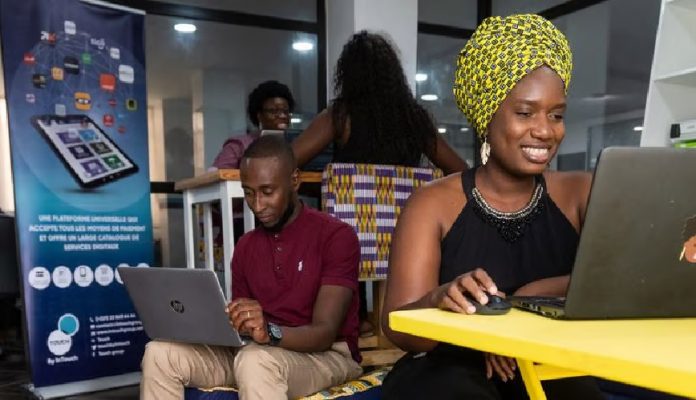
“Uwa bu ahia”(the world is a marketplace) says the Igbo Nation. When a people cannot participate in global commerce, something fundamental is broken. PayPal’s return ensures that millions of young Nigerians with talent, from graphic designers to software developers to creators, can now receive payments globally, turning the world itself into their marketplace.

Payment is the operating system of economic civilization. From cowries to barter, from gold coins to banknotes, humanity has always sought more efficient ways to exchange value. In 7th-century China, the Tang dynasty gave us paper money; the Song dynasty scaled it; the Mongols globalized it. That march toward frictionless exchange is unending with the evolutions of web payment APIs and digital money.

Today, with PayPal in Nigeria, via Paga, another door has opened. But beyond celebrating access, the bigger challenge remains: Do we have products and services the world truly wants to buy? Payment rails unlock opportunity, but entrepreneurs must fill those rails with value. Yes, go and build because the market is now global.


PayPal Finally Returns to Nigeria After Years Away: Teams up With Paga to Enable Global Payments

0

After years of exit from the Nigerian market, PayPal has officially returned. The global payments giant had previously exited Nigeria, limiting the ability of local users to receive international payments.

Now through partnership with Paga, a Nigerian fintech, the payments company wants to enable global payments for Nigerians, marking a major step forward for the country’s digital payments ecosystem.

This announcement was made by Paga CEO, Tayo Oviosu, via a social media post, reflecting on a journey that began more than a decade ago. According to Oviosu, the partnership traces its roots back to August 2013, when he first reached out to PayPal at a time Nigeria’s fintech ecosystem was still in its early stages.

In that initial outreach, he outlined a vision of Nigeria emerging as one of the world’s most important economies and proposed a collaboration in which Paga would power on-ramps and off-ramps between Nigeria and PayPal. The idea was to enable Nigerians to use PayPal globally and allow Nigerian merchants to accept PayPal payments locally. That vision has now become reality.

“This moment isn’t about a single announcement. It’s about patience. It’s about building robust, trusted local infrastructure. It’s about believing that global platforms scale better when they work with local systems, not around them. Partnerships like this don’t happen overnight. They are the result of years of conversations, trust-building, regulatory work, and showing up consistently”, Oviosu added.

Now, PayPal through Paga will unlock  a capability that had long been unavailable to Nigerian users: the ability to receive International payments. Under the new arrangement, only Nigerian PayPal accounts that are linked to Paga are enabled to receive funds.

Users can link their PayPal Nigeria accounts directly within the Paga app. Once linked, the PayPal account functions as usual, but with the added ability to receive payments from more than 200 countries. Funds received through PayPal can be withdrawn at any time directly from within the Paga app, providing seamless access to international payments for individuals and businesses alike.

The partnership opens up significant opportunities across multiple segments. Gig workers can now receive international payments through PayPal, families can send money to loved ones in Nigeria using the platform, and Nigerian merchants can accept PayPal payments for goods and services.

With this integration, Nigerians are also able to make payments at over 30 million merchants worldwide where PayPal is accepted, further connecting the country to the global digital economy.

Several Nigerian netizens have expressed excitement at this news, describing it as a good news for Nigerian creatives.

Some reactions on X;

@omoalhajaabiola wrote,

“Man, this is an alpha for naija freelancers. Next level mooning. Congratulations oviosu”.

@jobaoloba wrote,

“This is LOUD!! Welldone oviosu. There are people building brick by brick for Nigeria to truly compete.”

@josealalade wrote,

“This is good news for Nigerian creatives.”

Notably, the partnership underscores Paga’s long-term strategy of building robust local financial infrastructure while connecting Nigerians to global commerce networks.

It also highlights growing confidence among global payment platforms in Nigeria’s fintech ecosystem and regulatory environment.

Outlook

The Paga–PayPal partnership is expected to accelerate Nigeria’s integration into the global digital economy, particularly for freelancers, SMEs, and creative professionals who rely on cross-border payments.

As Nigeria’s participation in the global digital economy continues to expand, this partnership may also inspire more international fintech platforms to re-engage with Nigeria, signalling growing investor confidence and a maturing environment.

Johann Wadephul Calls for a Stronger Crackdown on Russia’s So-called Shadow Fleet

0

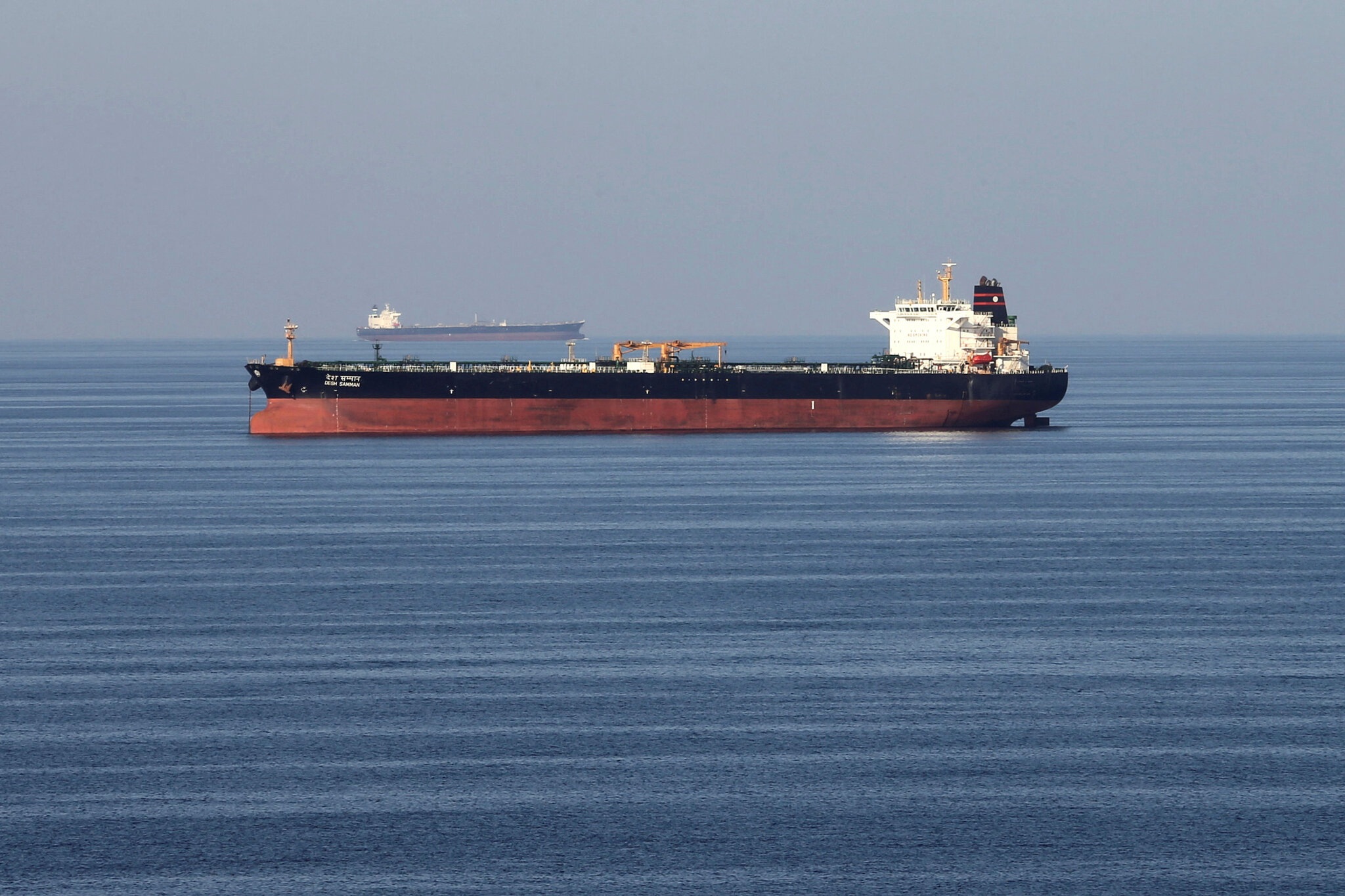
German Foreign Minister Johann Wadephul has called for a stronger crackdown on Russia’s so-called “shadow fleet” — a network of aging oil tankers that Moscow uses to evade Western sanctions on its oil exports following the 2022 invasion of Ukraine.

In statements made during talks in Riga with Latvian Foreign Minister Baiba Braže on January 26, 2026, Wadephul emphasized the dual threats posed by these vessels: They generate revenue for Russia to fund its war efforts.

Many are in poor technical condition, with inadequately trained crews, raising the risk of major accidents like groundings or oil spills in the Baltic Sea. He warned that an oil tanker running aground could cause immediate heavy pollution along Latvian and German coasts, leading to an ecological disaster with severe economic impacts, particularly on tourism.

Wadephul demanded urgent reforms to international maritime law to allow authorities to act against such ships and their operators, even when ownership or registration is unclear. He stressed closing all loopholes exploited by Russia, improving international coordination, and enhancing communication among nations.

This comes amid broader concerns over Russian hybrid threats in the Baltic region, including damage to undersea cables often attributed to Russia and other security issues. Germany has been ramping up actions against the shadow fleet in recent months and years, including: Insurance checks on passing tankers starting mid-2025.

Denying entry to suspected vessels like the Tavian in January 2026. Coordinating with Baltic and Nordic countries to disrupt the fleet. The shadow fleet has grown significantly since sanctions began, often involving old tankers with opaque ownership, flags of convenience, and no proper insurance — heightening environmental risks in busy European waters.

Wadephul’s remarks align with ongoing EU and G7 efforts to tighten sanctions and enforcement on these operations, though challenges remain due to the fleet’s evasive tactics.

The Russian shadow fleet — the network of aging, often poorly maintained oil tankers used to transport sanctioned Russian crude and products while evading Western sanctions — poses significant environmental risks, primarily through the heightened potential for major oil spills, pollution, and ecological damage in sensitive marine areas.

These vessels differ markedly from standard commercial tankers in ways that amplify hazards: — Many shadow fleet tankers are over 15–20 years old with averages around 16–20 years, compared to ~13 years for the global fleet.

Older ships are more prone to mechanical failures, structural weaknesses, corrosion, engine breakdowns, fires, explosions, and loss of steerage. Reports indicate over 70% of some analyzed vessels exceed 15 years, exponentially raising malfunction risks.

A core issue is the lack of credible Protection & Indemnity (P&I) coverage from established international groups, the International Group of P&I Clubs. Many rely on Russian insurers like Ingosstrakh often sanctioned itself or opaque offshore providers, with frequent cases of falsified, expired, or voided certificates due to sanctions clauses.

In an accident, unreliable insurers may refuse payouts, leaving coastal states, taxpayers, or other parties to fund cleanup — costs that can reach billions of euros for a major spill. Shadow vessels often disable or spoof AIS transponders making them “dark” or hard to track, bypass pilotage in narrow straits, change flags frequently and operate with opaque ownership via shell companies.

This increases collision risks in busy routes and complicates accountability. The fleet transports millions of barrels daily, with heavy traffic through chokepoints like the Baltic Sea where ~40–60% of Russian seaborne oil transits, Danish Straits, North Sea, Black Sea, and others.

These include ecologically fragile zones with bird sanctuaries, nature reserves, ice-prone waters (worsening winter spills), and narrow passages prone to accidents. While no single “Exxon Valdez”-scale disaster has yet occurred from the shadow fleet in European waters, incidents highlight the dangers.

Dozens of collisions, fires, engine failures, and oil slicks linked to shadow vessels between 2022–2025. December 2024: Two tankers linked to Russian operators caused severe oil spills in the Black Sea due to negligence/storm damage, polluting coastlines.

Fires and explosions on vessels like Kairos and Virat off Turkey (2025). Near-misses in the Baltic, including collisions where empty hulls prevented worse spills. Experts like Greenpeace, Kyiv School of Economics, Atlantic Council describe a “major environmental disaster” as inevitable or “only a question of time,” especially in the Baltic’s congested, semi-enclosed waters.

A large spill could devastate marine ecosystems, fisheries, tourism, and coastal economies: Long-term pollution of beaches, wildlife, and food chains. Cleanup costs in the billions, with limited recovery from owners/insurers. Exacerbated in icy Baltic winters, where response is nearly impossible.

Broader impacts on biodiversity in protected areas along German, Latvian, Finnish, Swedish, Danish, and other coasts. Western nations increasingly view these risks as unacceptable, prompting calls for tighter enforcement — such as denying access to vessels without verifiable insurance, enhanced monitoring, and reforms to maritime law.

However, the fleet’s evasive tactics and growth now over 1,000 vessels in some estimates make full mitigation challenging.

Vennre Raises USD 9.6M Pre-Series A to Redefine Private Market Access in MENA

0

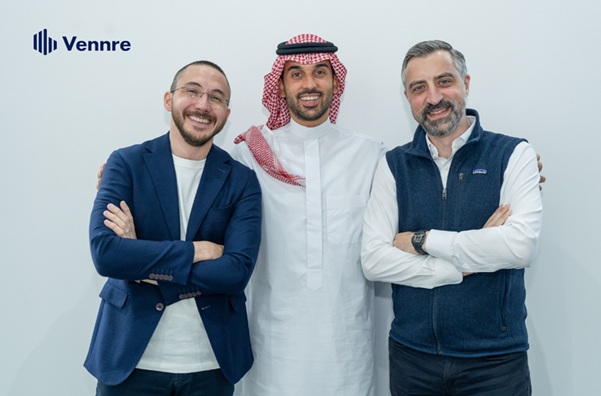
Vennre, a wealth creation platform enabling HENRYs (High Earners, Not Rich Yet) to access private market opportunities, today announced the successful close of its Pre-Series A funding round, raising USD 9.6 million through a hybrid equity and debt structure.

The round was co-led by Vision Ventures and anb seed Fund, with participation from Sanabil 500, Ace & Co, Plus VC, and strategic individual investors from the private banking, technology and entrepreneurship ecosystems.

This investment reflects growing confidence from leading regional VCs and strategic backers in Vennre’s mission to democratize access to curated private investments for high income retail investors. By bypassing traditional gatekeepers, Vennre offers a transparent, Shariah-compliant solution previously available only to institutions and ultra-wealthy participants.

Founded by Ziad Mabsout, Anas Halabi and Abdulrahman AlMalik, Vennre has also reached two operational milestones: the appointment of Dr. Ibrahim AlMojel as Chairman of its Saudi board and surpassing USD 40 million in transaction value across its platform – clear evidence of growing market traction and investor trust.

Ziad Mabsout, CEO and Co-Founder of Vennre, said:

“A generation of ambitious professionals across the region has earned success but has not been given the tools required to compound it. This funding is not just another round — it is a clear endorsement from leading institutions that a large, long-underserved HENRY segment is ready for a better wealth-building experience. We are building for long-term wealth creation, not one-off transactions — starting with curated and vetted private investment opportunities and expanding into a full wealth journey built on discipline, trust, and alignment. This round allows us to raise the bar for what private wealth platforms in the region should deliver.”

Khalid S. Alghamdi, CEO of anb capital, added:

“We are pleased to co-lead Vennre’s Pre-Series A through the anb seed Fund. Private markets globally already manage more than USD 14 trillion in assets, yet individual investors account for less than 5% of that exposure. Vennre directly addresses this imbalance by offering Shariah-compliant access to a segment long excluded from these opportunities. Having already facilitated over USD 40 million in transactions, Vennre is proving that high-income Saudis are ready to engage with private markets at scale — fully aligned with Vision 2030’s mandate to broaden capital markets participation.”

Kais Al-Essa, Founding Partner and CEO of Vision Ventures, said:

“We are glad to co-lead Vennre’s Pre-Series A and excited to support such an amazing founding team. We’re always ready to back founders who use technology to make people’s lives easier and give them access to opportunities that were not available to them before. Vennre enables access to high quality investment opportunities in real estate, private equity, venture capital and private credit. These four asset classes were previously available to a select few. Democratizing such access is one of our investment goals at Vision Ventures as it enables generational wealth creation and empowers everyone to access vetted income generating and high return investments, in line with Saudi Arabia’s financial sector development plan and fintech momentum.”

Looking ahead, Vennre plans to deploy this capital to grow its client network, launch new platform features, and deepen its Saudi presence in line with ongoing financial sector liberalization and fintech momentum. More here https://www.vennre.com/