DD
MM
YYYY

PAGES

DD
MM
YYYY

spot_img

PAGES

Home Blog Page 1948

Nigerian Telecoms Launch Industry Working Group to Shield Infrastructure From Vandalism

0

In a bid to safeguard Nigeria’s telecommunications infrastructure from an onslaught of fiber cuts, equipment theft, and vandalism, the country’s telecom operators have united to form an Industry Working Group dedicated to its protection.

The initiative unveiled following a high-level stakeholder meeting hosted by IHS Nigeria at its Lagos headquarters, underscores the industry’s escalating operational challenges— which contributed to the recent contentious 50% tariff hike aimed at offsetting spiraling costs.

The Working Group, established under the umbrella of the Association of Licensed Telecoms Operators of Nigeria (ALTON), emerged from a gathering of industry leaders, regulators, and law enforcement agencies. According to a statement from the operators, the coalition was forged in recognition of telecommunications as the linchpin of national security, economic growth, and social cohesion—a vital asset now under relentless threat.

The Industry Working Group is tasked with confronting a raft of industry scourges: vandalism and theft of telecom assets, arbitrary shutdowns of base stations, fiber cuts triggered by road construction, and unauthorized access to sites by individuals. To counter these, the group will deploy advanced technology for real-time monitoring and protection, bolster security around telecom installations, and forge partnerships with security and regulatory agencies to clamp down on offenders.

Beyond enforcement, the initiative prioritizes public awareness, with plans for campaigns to sensitize host communities and the broader populace on the need to safeguard these critical assets.

Dapo Otunla, Senior Vice President & Chief Corporate Services Officer of IHS Nigeria, praised the effort as a long-overdue response to a festering crisis.

“The protection of Critical National Information Infrastructure (CNII) has been a critical concern for all industry stakeholders,” Otunla said. “We are experiencing daily losses of assets, which significantly impact on the quality of service delivered to subscribers. Addressing these issues is paramount to sustaining Nigeria’s digital ecosystem and meeting regulatory expectations.”

His remarks lay bare the toll of unchecked vandalism: degraded service quality, mounting repair bills, and a digital ecosystem teetering on the brink.

The Working Group’s formation comes as Nigerian telecom operators grapple with a perfect storm of operational hurdles, with infrastructure damage driving up costs at an alarming rate. Industry insiders point to fiber cuts—sometimes occurring multiple times daily—as a prime culprit, alongside the theft of equipment like generators and copper cables.

These incidents have forced companies to pour billions of naira into repairs and replacements, a burden compounded by soaring fuel prices, currency depreciation, and regulatory fees. This financial strain was a key driver behind the 50% tariff hike approved by the Nigerian Communications Commission (NCC) in early 2025, a move operators defended as essential to their survival but which sparked widespread backlash from consumers facing economic hardship.

The tariff hike, while shoring up operator revenues, has intensified public scrutiny of the industry’s inability to curb infrastructure threats, making the Working Group’s mission all the more urgent.

A Push to Enforce CNII Protections

The initiative also reflects a proactive push by telecom firms to breathe life into the government’s Critical National Information Infrastructure (CNII) policy, which has languished despite high-profile endorsements. In August 2024, President Bola Tinubu signed the ‘Designation and Protection of Critical National Information Infrastructure Order, 2024,’ classifying telecom assets as CNII and criminalizing their willful destruction.

Dr. Bosun Tijani, Minister of Communications, Innovation, and Digital Economy, lauded the gazette as a “significant step” to bolster ICT investments. Yet, it mirrors an earlier, toothless effort: in June 2020, then-Minister Dr. Isa Pantami announced a similar designation by former President Muhammadu Buhari, complete with directives for physical safeguards. That pronouncement failed to halt the daily vandalism plaguing the sector, exposing a persistent enforcement gap the Working Group now seeks to close.

The stakes extend far beyond balance sheets. Nigeria’s $75.6 billion telecom sector is the lifeblood of its digital economy, powering mobile banking, e-commerce, and remote education—sectors pivotal to the nation’s growth ambitions. Yet, infrastructure damage threatens to derail these gains, disrupting connectivity and saddling operators with costs that ripple through the economy.

The recent tariff hike, while a lifeline for telecoms, risks pricing out low-income users, widening the digital divide at a time when broadband penetration remains a national priority under the 2020-2025 National Broadband Plan.

For the Working Group, success could stabilize an industry on edge, curbing losses, improving service reliability, and easing pressure on consumer wallets. Failure, however, could entrench a cycle of rising costs and declining trust, with vandals and thieves holding Nigeria’s digital future hostage.

As AI Scales, Check if you Must Find Another Job

0

Good People, there is no more career in many (professional) agencies. If you are working in advertising production, making images for companies, creating videos for clients, producing marketing materials, etc, I have an alert: FIND ANOTHER JOB. Because those domains will be disintermediated by AI within three years. The likelihood that your company will need just a few of the current employee capacity is certain.

(Sure, that finding a new job could mean re-train or upgrade your skill to survive in the new era. In other words, relearn to be ahead of that AI which is coming after your paycheck.)

Also, if you work in a company where your job is doing most of those things, rethink your career because your company will come after that unit very soon.

A few years ago, I was working in a bank’s IT department, helping to install and assemble computing systems. Quickly, I noticed that one does not even need a degree to do those things as young men in Computer Village Lagos were doing the same thing better. That was when I decided to return back to electronics as the risk on the job (assembling IT systems) was high. I reasoned that in electronics, they would need to go to college, understand calculus and transistors, etc to be in positions to design systems. That has turned out well.

So, do not just wait there without having a strategic career evaluation as AI  penetrates into economies and industrial sectors.

I made the image above with AI. It took me 3 seconds to simply describe what I needed. Before the AI age, I would have needed an extremely  great artist and he would need at least 3-4 days for this quality. I am not sure why a company will need many people in many areas when you can hire AI to do most things!

BUA Foods Reports Record N1.5tn Revenue, Spurred By Strong Domestic Market Demand

0

BUA Foods Plc has delivered unprecedented financial performance for its 2024 fiscal year, crossing the trillion-naira revenue mark for the first time while recording significant profit growth across all product segments.

The company’s audited financial statements for the year ended December 31, 2024, show revenue of N1.527 trillion—more than double the N729.4 billion recorded in 2023, highlighting the growth potential of Nigeria’s food market.

This 109.5% year-on-year surge represents the highest annual revenue since BUA Foods was listed on the Nigerian Exchange (NGX) in 2021. The company’s pre-tax profit also skyrocketed by 162.9% to N284.32 billion, while profit after tax jumped 137.3% to N265.99 billion. However, BUA Foods faced headwinds, including a staggering N178 billion exchange loss due to the depreciation of the naira, which drove up interest obligation costs.

The company attributes its strong performance to sustained demand for its core products—sugar, flour, and pasta—along with strategic pricing, deeper market penetration, and increased production capacity. These factors enabled BUA Foods to boost its margins despite Nigeria’s challenging economic climate.

Flour Segment Leads Revenue Surge

While sugar remains BUA Foods’ highest-selling product, its flour segment emerged as a major revenue driver, growing by an impressive 171% year-on-year. The flour business contributed over N541 billion in 2024, accounting for 35.5% of total sales—up from 27.4% the previous year.

The surge in flour sales is linked to rising demand from Nigeria’s bakery industry and small-scale food enterprises that rely on locally produced flour. In anticipation of this growing demand, BUA Foods expanded its flour production lines in late 2023, a move that has now yielded substantial financial rewards.

Sugar sales, which have traditionally been the backbone of the company’s operations, contributed N734.5 billion, making up 48% of the total revenue. However, its share of total sales declined slightly, signaling a gradual diversification of BUA Foods’ revenue base.

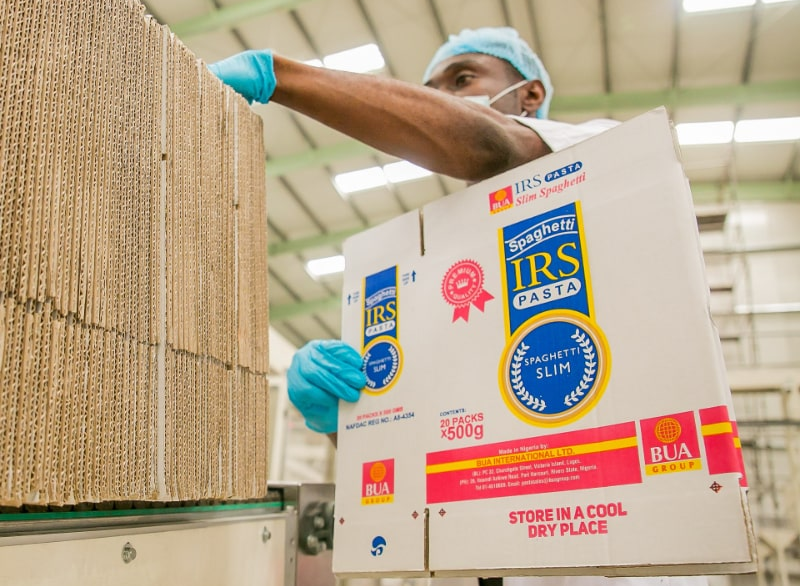
The company’s pasta segment also continued its upward trajectory, bringing in N197 billion—12.9% of total revenue. The demand for BUA’s branded pasta products has remained strong, particularly among price-conscious consumers seeking alternatives to imported brands.

Local Market Dominance and Higher Dividends

BUA Foods’ dominance in Nigeria’s consumer goods market was further solidified in 2024, with domestic sales accounting for 95.5% of total revenue. This underscores the gap created by the country’s food supply gap marked by 40% inflation.

As a reward for its exceptional performance, the company’s Board of Directors has proposed a dividend of N13 per share—more than double the N5.50 paid in 2023. This 136.4% increase highlights BUA Foods’ commitment to delivering shareholder value and reflects confidence in its long-term profitability.

Impact of Rising Costs and Foreign Exchange Losses

Despite its impressive topline and bottom-line figures, BUA Foods was not immune to Nigeria’s macroeconomic challenges. The company reported a substantial increase in finance costs, largely driven by foreign exchange losses amounting to N173 billion. The naira devaluation pushed up the cost of imported raw materials, significantly impacting operations.

Raw materials alone accounted for over 91% of the company’s total cost of sales, but BUA Foods managed to improve its operating profit margin to 31%. This was achieved through tight cost controls and a reduction in impairment losses.

The company’s debt profile also showed positive signs, with total debt dropping to N391.85 billion, down from the previous year. Most of the debt remains short-term borrowings used for import financing. The decline in debt helped lower BUA Foods’ gearing ratio from a steep 210% in 2023 to a more manageable 81% in 2024, improving financial stability.

Expansion to Boost Future Growth

To sustain its growth momentum, BUA Foods is making significant investments in production capacity. In August 2024, the company signed a deal with Turkish flour milling equipment manufacturer IMAS to construct four new wheat flour mills. When completed, this expansion will increase BUA Foods’ total wheat flour milling capacity to 2.5 million metric tonnes per year, positioning the company as one of the largest flour millers in sub-Saharan Africa.

Further strengthening its product portfolio, BUA Foods announced in September that it would significantly expand its pasta production line. The company plans to install nine new long-cut pasta lines, which will nearly double the annual pasta production capacity from 500,000 tons to 900,000 tons. This expansion is expected to drive product innovations and boost volume growth, especially as demand for locally produced pasta rises.

To support this scale-up, BUA Foods has also partnered with Turkish firm Cukurova Silo to increase its grain storage capacity by 100,000 tons. This added capacity is expected to ensure consistent access to raw materials, minimize supply chain disruptions, and enhance operational efficiency—a critical factor given Nigeria’s volatile logistics environment.

With these ambitious expansion projects, BUA Foods is positioning itself for sustained growth amid Nigeria’s economic headwinds. Analysts believe that BUA Foods’ investments in flour and pasta will not only strengthen its market leadership but also reduce its dependence on sugar, which has historically been its primary revenue driver. Additionally, they note that the company’s strategic focus on local manufacturing and cost efficiency will help mitigate forex-related risks.

“I Couldn’t Care Less If They Raise Prices”: Trump Denies Asking Automakers Not To Raise Prices Over Tariffs

0

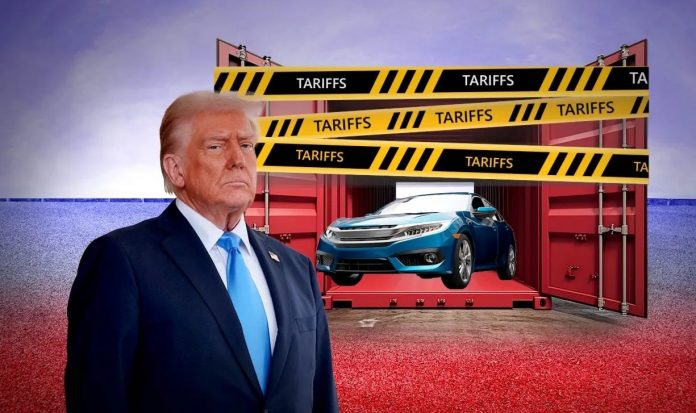
President Donald Trump was bold and unapologetic in defense of his tariff strategy in a Saturday phone interview with NBC News’ Kristen Welker, casting aside concerns about rising car prices and framing them as a linchpin in his mission to revive American manufacturing.

Far from pressuring automakers to shield consumers from the fallout of his newly imposed 25% tariffs on imported vehicles and parts, Trump embraced the prospect of higher costs with relish—a stance that has ignited fierce debate and cast a shadow of uncertainty over the U.S. economy.

Asked by Welker whether he had urged auto industry CEOs to hold the line on prices after the tariffs take effect, Trump was unequivocal in his denial.

“No, I never said that,” he told her. “I couldn’t care less if they raise prices, because people are going to start buying American cars.” He doubled down moments later, adding, “I couldn’t care less. I hope they raise their prices, because if they do, people are gonna buy American-made cars. We have plenty.”

The remarks sharply contradict a Wall Street Journal report from Thursday, which alleged Trump had held a call with auto CEOs earlier this month, threatening even steeper tariffs if they dared pass the costs of his import taxes onto consumers. On Saturday, he waved off such claims, steering the narrative toward his broader vision.

That vision, Trump explained, hinges on a blunt message to the auto industry: bring production home or face the consequences.

“The message is: ‘Congratulations, if you make your car in the United States, you’re going to make a lot of money. If you don’t, you’re going to have to probably come to the United States, because if you make your car in the United States, there is no tariff,’” he told Welker.

The tariffs, set to hit on Thursday, dismantle decades of free trade harmony in North America, where the U.S., Canada, and Mexico have long operated as a seamless economic bloc. Foreign and domestic automakers assemble many vehicles and parts stateside, but they also rely heavily on factories in Mexico and Canada—a dynamic Trump aims to upend.

Yet the road to that goal is fraught with obstacles. Shifting production to the U.S. demands billions in investment—new plants, retooled supply chains, and a freshly trained workforce—while Trump’s erratic tariff track record leaves CEOs wary of long-term commitments. Seeking to dispel those doubts, Trump insisted his broader reciprocal tariff plan, matching foreign import taxes dollar-for-dollar across a range of goods, is here to stay.

“Absolutely, they’re permanent, sure,” he declared, railing against what he called a 40-year global “rip-off” of the United States. “The world has been ripping off the United States for the last 40 years and more.”

Still, the consummate dealmaker left room for flexibility, adding, “I would negotiate the tariffs down only if people are willing to give us something of great value. Because countries have things of great value. Otherwise, there’s no room for negotiation.”

The economic stakes are staggering. Auto industry analysts predict the tariffs will inflate production costs across the board, tacking on thousands of dollars to every vehicle sold in the U.S.—whether imported or built domestically. The impacts are expected to be immense: automakers may throttle production as they gauge the tariffs’ staying power, while higher prices risk alienating cost-sensitive buyers, shrinking demand. A supply-and-demand imbalance could drive vehicle prices even higher, squeezing American consumers already grappling with inflation. Beyond autos, Trump’s reciprocal tariffs—slated to launch Wednesday—threaten to raise costs on a slew of imported goods, potentially fueling broader price increases and stoking inflationary pressures.

The fallout may not stop at U.S. borders. Canadian Prime Minister Mark Carney fired a salvo on Friday, warning Trump that Canada would retaliate with its own tariffs if the U.S. follows through—a move that could spiral into a bruising trade war across North America. Trump, unfazed, refused to blink.

“They go into effect Wednesday,” he said of his levies, though he teased the possibility of a deal—after the tariffs bite. The standoff underscores the high-wire act Trump is playing: a bet that economic pain now will yield a manufacturing renaissance later.

For the U.S. economy, the tariffs pose a dilemma. Many believe the tariffs could spark a wave of factory openings and job growth, bolstering American workers and reducing reliance on foreign supply chains—a cornerstone of Trump’s “America First” ethos. However, others, including industry analysts, warn of a darker scenario: disrupted trade flows, higher costs for businesses and consumers, and a potential drag on GDP if retaliatory measures escalate.

Automakers, caught in the crosshairs, face an agonizing choice—absorb the tariffs and bleed profits, or raise prices and risk losing market share.

Solana And Ripple See Prices Drop Over 20% In Weeks As Further Downside Expected. What Is The Most Talked About Crypto Currently?

0

Solana Price Prediction says that the top holders now drive double-digit gains in April. Investors noted that the trend now favors an upsurge for SOL.

While that happens, XRP will bounce back as Remittix comes out very strong as a new DeFi project and among the top cryptos to invest in. Current statistics and market analyst views point to developments that would drive these tokens.

Solana Price Prediction: A Summary of the Trends

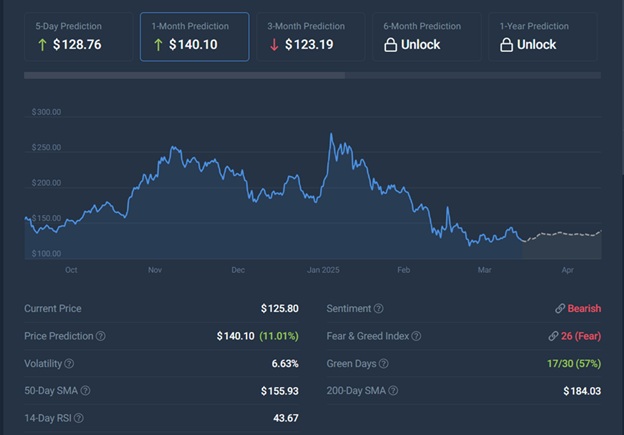
Solana has generated a lot of buzz with its fast and inexpensive transactions. Current news has SOL dropping to around $130.75.

Some technical forecasters foresee SOL to bounce back with the assistance of institutional buyers. The Solana Price Prediction trend is very robust.

Top holders are withdrawing their money and showing strong belief in a flip. Solana Price Prediction news reports that if upgrades continue on the network, SOL can reach new heights in the future.

Investors use these reports to determine whether or not to include SOL in their portfolios. Based on the Solana price prediction, it is predicted to increase by 11.01% and hit $140.10 by April 27.

XRP: A Revival in the Making

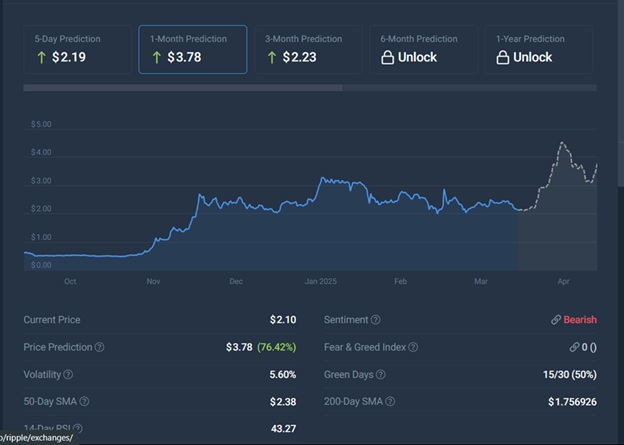
XRP possesses a solid use case for cross-border payments. The latest news is that XRP is trading at a price of approximately $2.22 following a marginal recovery. Analysts believe that with the renewed interest of financial institutions, XRP can recover even more.

The token has enabled banks to conduct quicker international transfers. Investors are closely following XRP since its revival is likely to improve the overall market sentiment.

The steady increase in XRP promises better stable gains in the near term. XRP is currently highlighted by most analysts as a key part of portfolios for long-term stability. XRP is likely to increase by 76.42% and reach $3.78 by April 27.

Remittix: The New DeFi Project That Resolves Payment Problems

Remittix is unique because it is focusing on real issues in global finance. Remittix offers the means to bypass the middlemen in cross-border money transfers. A bank account is out of reach for most.

They may get crypto in a wallet, send it to a money transfer service like Western Union, and cash it out. Remittix offers them more control over their money without encroaching on their privacy.

The project has sold over 524 million tokens throughout its ICO. With this successful launch, the project has attracted the attention of investors. Remittix brings the real essence of cryptography—ownership of your money and anonymity—to modern finance and banking.

Its system allows users to send money quickly and cheaply without other middlemen. With this, even individuals in remote communities can be brought into the digital economy. Remittix decreases delays and high fees that normally plague traditional payment systems. Introducing crypto-to-fiat transactions as a normal part of life, it allows many individuals to buy groceries, bills, and other things.

Investors currently assert Remittix is among the best cryptos to buy since it addresses a huge pain point in cross-border payments. The token value of around $0.0734 in DeFi coins makes the token affordable for many individuals.

Experts estimate that if Remittix is able to continue growing, it may experience 10x or greater returns. Its straightforward use case and real-world usefulness make it a solid contender for widespread adoption. The project has a tangible solution that can improve the lives of millions of people, particularly in areas where traditional banking is inaccessible.

A Shift towards Pragmatic Solutions

Solana Price Prediction is optimistic for SOL to regain double digit increases with the top holders in its wake. XRP also appears to be on a revival trajectory, as its use in fast, affordable payments is finding traction. Meanwhile, Remittix is a token that addresses real global issues. It offers a way to bring crypto into daily transactions and a remedy for the unbanked.

Remittix is possibly one of the best cryptos to invest in for long-term value in the coming near future. Investors looking for stable and operational options in digital finance have every reason to feel hopeful. As these activities continue to develop, the trend towards tokens with concrete real-world impact may build a new generation of cross-border payments.


Discover the future of PayFi with Remittix by checking out their presale here:

Website: https://remittix.io/

Socials: https://linktr.ee/remittix