DD
MM
YYYY

PAGES

DD
MM
YYYY

spot_img

PAGES

Home Blog Page 196

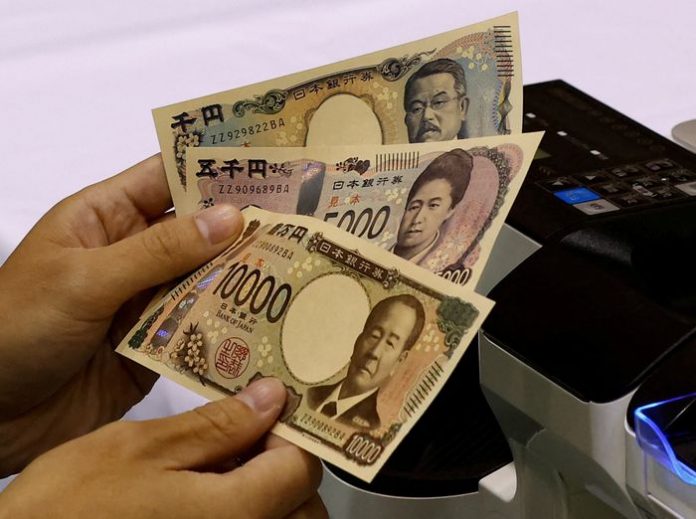
Japan’s Major Banks Advance Yen-Backed Stablecoin Initiative

0

Japan’s Financial Services Agency (FSA) has officially approved a proof-of-concept (PoC) trial for a yen-denominated stablecoin, involving the country’s three largest banks: Mizuho Bank, Mitsubishi UFJ Financial Group (MUFG), and Sumitomo Mitsui Banking Corporation (SMBC).

This greenlight, announced on November 7, 2025, marks a significant step in integrating blockchain technology into Japan’s payment systems under the FSA’s “Payment Innovation Project.” The banks aim to finalize the trial and launch the stablecoin for practical use by March 2026.

The consortium includes Mizuho, MUFG, SMBC, Mitsubishi Corporation, Progmat Inc. (MUFG’s blockchain platform), and Mitsubishi UFJ Trust and Banking Corporation. This collaboration focuses on creating a unified infrastructure for issuing and transferring stablecoins among corporate clients.

The trial will test joint issuance of stablecoins classified as “electronic payment instruments” under Japan’s Payment Services Act amended in June 2023. It emphasizes secure, regulated digital payments backed 1:1 by yen reserves, such as bank deposits and government bonds.

PoC trials begin this month, with a full rollout targeted for March 2026, aligning with Japan’s fiscal year-end. Initial focus is on yen-pegged tokens, with potential expansion to USD versions later. Built on Progmat’s platform, which supports tokenization and has been piloted for interbank settlements.

1:1 pegged to Japanese yen; reserves in bank deposits and government bonds. Licensed banks (Mizuho, MUFG, SMBC) and trust companies only, per regulations. Corporate payments, interbank transfers; potential for broader adoption

FSA’s Payment Innovation Project; ensures compliance with anti-money laundering rules. This initiative builds on Japan’s progressive crypto framework, where stablecoins are treated as “currency-denominated assets” since 2023, restricting issuance to trusted institutions to mitigate risks like those seen in past stablecoin failures (e.g., TerraUSD).

It’s separate from but complementary to other efforts, such as JPYC’s recent launch of a yen-backed stablecoin on October 28, 2025, which has already attracted interest from seven companies for integration. Experts like Rajiv Sawhney of Wave Digital Assets International predict a smooth rollout but limited initial adoption due to regulatory caution and competition from existing payment systems.

Globally, this could influence G7 standards for stablecoin oversight, positioning Japan as a leader in regulated digital finance. The project underscores Japan’s push toward blockchain-enhanced payments amid rising interest in central bank digital currencies (CBDCs), though it remains a private-sector stablecoin rather than a full CBDC.

Progmat is a leading Japanese blockchain-based platform specializing in the tokenization of assets and the issuance of digital tokens, including stablecoins, security tokens, and utility tokens.

Founded in February 2022 by Mitsubishi UFJ Financial Group (MUFG), Japan’s largest bank by assets, it has evolved into a joint venture backed by major financial institutions such as Mizuho Bank, Sumitomo Mitsui Banking Corporation (SMBC), Japan Exchange Group (JPX), and SBI Holdings.

The platform aims to bridge traditional finance (TradFi) with decentralized finance (DeFi) by enabling programmable networks for digital assets, facilitating secure, regulated issuance, transfers, and settlements.

Progmat is particularly prominent in Japan’s stablecoin ecosystem, where it supports yen-pegged tokens under the revised Payment Services Act, which restricts stablecoin issuance to licensed banks and trust companies.

Progmat’s core technology leverages R3’s Corda enterprise blockchain for robustness and scalability, combined with public blockchain integrations for broader interoperability. It positions itself as infrastructure for transforming real-world assets (RWAs) into digital forms, targeting corporate payments, interbank settlements, and tokenized real estate.

As of November 2025, Progmat is central to Japan’s push for regulated digital payments, including the recent FSA-approved stablecoin pilot involving MUFG, Mizuho, and SMBC.Key Features and CapabilitiesProgmat offers a modular ecosystem for token lifecycle management, emphasizing compliance, cross-chain functionality, and programmability.

Supports three stablecoin types under Japan’s regulations: bank deposit-backed, trust-type (e.g., via MUFG Trust), and fund-type. Enables joint issuance by multiple banks for shared liquidity and liability. Also handles security tokens (e.g., real estate RWAs) and utility tokens.

Cross-Chain Interoperability

Integrates with public blockchains like Ethereum, Polygon, Avalanche, and Cosmos via bridges built with partners DataChain and TOKI. Allows cross-chain swaps, payments, lending, and settlements (e.g., NFT purchases settled in Progmat Coin on a different chain). Additional networks planned for expansion.

Wallet and Custody

Partners with Ginco for enterprise wallets optimized for trade settlements. Provides banking-grade custody with 1:1 yen reserves (e.g., deposits, government bonds) and AML/KYC compliance.

Settlement and Use Cases

Focuses on corporate payments, interbank transfers, and trade finance (e.g., exports to emerging markets). Enables faster T+0 settlements, reducing costs for over 300,000 corporate clients. Explores tokenizing foreign real estate and linking ST data under PII laws.

Security and Compliance

Built on permissioned and permissionless models; adheres to FSA’s prudential controls. Supports data utility frameworks for rights holders, as outlined in the DCC’s 2025 ST Data Linkage report.

October–November 2025: Selected for FSA-backed yen stablecoin pilot with top banks; PoC starts November 2025, full launch March 2026. Recent DCC report standardizes ST data usage. Progmat has issued numerous security tokens, primarily for Japanese real estate and bonds, making it Japan’s most active tokenization platform.

With MUFG, Mizuho, SMBC, and Mitsubishi Corporation, using Progmat for joint issuance and corporate payments. Aims to integrate with bank systems for interoperable settlements. Part of the Digital Asset Co-Creation Consortium (DCC), focusing on RWA tokenization and DeFi-TradFi blends.

Progmat underscores Japan’s regulated approach to blockchain, potentially influencing G7 stablecoin standards by prioritizing bank-backed, interoperable tokens. Challenges include limited initial adoption due to regulatory caution and competition from CBDC pilots, but its scalability could drive multinational use cases like tokenized trade finance.


Alibaba’s Qwen3-Max-Thinking AI Matches OpenAI in Math Competitions, Outperforms US Rivals in Market Simulations

0

Alibaba Group has unveiled a new artificial intelligence model that signals China’s growing ambition in advanced AI, claiming parity with the most sophisticated US models while outperforming them in practical applications.

According to SCMP, the model, Qwen3-Max-Thinking, achieved perfect scores in two of the world’s most challenging mathematics competitions—the American Invitational Mathematics Examination (AIME) 2025 and the Harvard-MIT Mathematics Tournament (HMMT). Alibaba says this marks the first time a Chinese AI has reached 100 percent accuracy in these reasoning-focused contests, putting it on par with OpenAI’s GPT-5 Pro, which had previously achieved similar results.

These competitions test high-level problem-solving across arithmetic, algebra, number theory, probability, and combinatorics. Experts say performance in such contests reflects an AI model’s ability to reason and generalize, going beyond pattern recognition into analytical thought.

Qwen3-Max-Thinking builds on Alibaba’s Qwen3-Max, a trillion-parameter model launched in September, which itself was an upgrade from the original Qwen3 released in April. According to Alibaba Cloud, Qwen3-Max and its new reasoning variant match or exceed domestic and global competitors, including OpenAI’s GPT-5 Pro, Anthropic’s Claude Opus 4, DeepSeek’s V3.1 Chat, and xAI’s Grok 4.

Alibaba has also demonstrated the model’s real-world capabilities. In a “real money, real market” cryptocurrency experiment, Qwen3-Max earned a 22.3 percent return on a $10,000 investment over two weeks. By contrast, DeepSeek’s V3.1 Chat returned 4.9 percent, and all US models recorded losses, with OpenAI’s GPT-5 losing 62.7 percent. Analysts say the simulation underscores the model’s ability to integrate reasoning with dynamic decision-making, a critical advantage in AI applications from finance to logistics.

The Qwen3-Max-Thinking model is now available to individual users through Alibaba Cloud’s web-based Qwen chatbot and its application programming interface (API). Lin noted that the model’s deployment will continue to evolve, emphasizing that refinement is ongoing.

“It’s a bit hard to take care of everything,” Lin Junyang, a Qwen team researcher, said. “We need some more time. The job’s not finished.”

The launch comes amid a broader geopolitical context in which Chinese AI firms face restrictions on selling high-performance computing chips abroad, particularly to the US market. Nvidia’s Blackwell AI chips, for example, cannot currently be sold in China due to US export controls, highlighting a persistent technology and trade standoff. Despite such restrictions, Alibaba’s homegrown Qwen models demonstrate the country’s ability to develop competitive AI domestically, mitigating dependence on foreign hardware and software.

Experts say Alibaba’s achievement illustrates a dual trend: China is accelerating development of reasoning-focused AI models to compete globally, and companies are increasingly testing AI in real-world applications rather than only benchmarks. Alibaba’s success in cryptocurrency trading simulations suggests that these models are being designed for decision-making under uncertainty, not just academic problem-solving.

As the competition heats up, there is a growing belief that China’s AI push could reshape the global landscape. The Qwen3-Max-Thinking model is believed to be a testament that China is not only keeping pace with the US in AI reasoning but is beginning to deploy it in practical, high-stakes scenarios. If such models continue to improve, the country is expected to significantly reduce reliance on imported AI systems while fostering its own ecosystem of advanced AI solutions.

The model’s availability to developers and individual users also points to Alibaba’s strategy to broaden the adoption and integration of AI across industries, from cloud computing to finance and enterprise decision-making. With applications ranging from mathematics to trading, Qwen3-Max-Thinking represents a significant step in China’s ambition to establish global leadership in artificial intelligence, even as restrictions on advanced hardware continue to pose challenges.

This launch also pinpoints AI as a key component of national competitiveness now, with implications not just for technology but also for finance, education, and strategic industries worldwide.

Microsoft Apologizes, Moves to Settle ACCC Lawsuit Over Misleading Subscription Practices in Australia

0

Microsoft is seeking to defuse tensions with Australian regulators after being accused of misleading millions of customers over subscription pricing.

The company has expressed regret over its handling of Microsoft 365 renewals and has begun issuing refunds and apology emails, in a move that could shape the outcome of an ongoing legal dispute with Canberra’s competition watchdog.

The Australian Competition and Consumer Commission (ACCC) last week filed a lawsuit against Microsoft, alleging that the tech giant misled about 2.7 million Australian users by steering them toward more expensive Microsoft 365 plans bundled with its AI assistant, Copilot. The regulator claimed the company failed to clearly communicate the existence of cheaper, non-AI versions of the same services.

In response, Microsoft has begun sending apology messages to millions of Australian subscribers, acknowledging that it “could have been clearer” about the availability of cheaper alternatives. The emails are being sent to customers who renewed Microsoft 365 Personal and Family plans in 2024 without being informed about the lower-cost options.

“In hindsight, we could have been clearer about the availability of a non-AI-enabled offering with subscribers, not just to those who opted to cancel their subscription,” Microsoft said.

The company has now offered refunds to subscribers who paid for the more expensive AI-enabled plans after November 2024. These customers can choose to remain on their current plan, which includes Copilot, or downgrade to the Microsoft 365 Personal or Family Classic options and receive compensation for the difference.

The ACCC’s lawsuit alleges that Microsoft effectively cornered users into upgrading by giving them limited choices at renewal. When subscribers attempted to cancel, the company offered what appeared to be a middle ground—keeping their old plan under a new name, but at the same higher rate. According to the regulator, this strategy violated Australia’s consumer protection laws by creating the impression that cheaper plans were unavailable.

In its statement, Microsoft said it has operated in Australia “with trust and transparency for more than 40 years” and admitted it fell short of those standards in this instance.

The ACCC’s Chair, Gina Cass-Gottlieb, stated that the regulator is reviewing Microsoft’s remediation efforts but stressed that the case will continue until a formal resolution is reached. If found guilty, Microsoft could face a fine of up to 30 percent of its annual turnover during the period of the violation, one of the harshest penalties available under Australian consumer law.

The case is the latest example of global regulators tightening scrutiny on tech firms’ business practices amid the rapid commercialization of artificial intelligence. Similar investigations have been launched in the European Union and the United States over AI-related pricing, transparency, and consumer consent.

Microsoft’s efforts to resolve the issue suggest an attempt to contain the damage before it escalates further. However, it is believed that even if the company avoids a financial penalty, the episode underscores the growing regulatory skepticism toward bundling AI features into core software products—particularly when doing so leads to higher costs for consumers without clear disclosure.

OpenAI CEO Pushes for Expanded U.S. Chips Act Credit to Strengthen AI Leadership

0

OpenAI CEO Sam Altman on Friday reiterated the company’s call for the U.S. government to expand eligibility under the Advanced Manufacturing Investment Credit (AMIC), part of the Chips Act, to include AI server production, AI data centers, and grid components.

The move comes as the U.S. accelerates efforts to secure its global leadership in artificial intelligence and maintain competitiveness in high-tech manufacturing.

Altman’s remarks follow an October 27 letter from OpenAI Chief Global Affairs Officer Chris Lehane to Michael Kratsios, Director of the White House Office of Science and Technology Policy, in which Lehane formally requested the expansion.

The AMIC is a federal tax incentive designed to stimulate domestic semiconductor production, providing financial support to companies that invest in U.S.-based fabrication facilities and related high-tech infrastructure. Expanding the credit to cover AI hardware could reduce costs and accelerate the deployment of critical AI infrastructure across the country.

In his post on X, Altman emphasized the broader industrial impact of such policies, saying, “We think U.S. re-industrialization across the entire stack — fabs, turbines, transformers, steel, and much more — will help everyone in our industry, and other industries (including us).”

He clarified that the tax credit is “super different than loan guarantees to OpenAI,” noting that while the company has previously discussed federal loan guarantees to spur chip factory construction, no such support has been sought for AI data centers.

OpenAI has committed to investing $1.4 trillion in computational resources over the next eight years to support its AI models, including the widely used ChatGPT. The company’s investment underlines the massive scale of infrastructure required to sustain AI development, particularly as demand for AI services continues to surge. Other leading tech firms have similarly announced plans to expand their data centers and chip development programs, reflecting the rapid growth of AI applications in sectors ranging from enterprise software to generative AI.

However, White House AI and crypto czar David Sacks has made it clear that there will be no federal bailout for AI companies, signaling that any government support would need to operate within existing frameworks like the AMIC. The call for direct federal subsidies for AI comes as the Trump administration dismantles existing tax credit initiatives, especially on green energy, although tax incentives have been touted as key in enabling large-scale private investment in advanced manufacturing.

Thus, expanding the AMIC to AI-related hardware will help to strengthen U.S. competitiveness against countries like China, where governments are actively investing in semiconductor and AI capabilities. OpenAI aims to not only accelerate its own AI deployment but also contribute to the wider U.S. industrial base, fostering economic growth and technological leadership by reducing costs for domestic AI hardware.

This push comes amid a broader national debate on how to ensure that U.S. technological leadership is sustained in the face of global competition. The potential expansion of the AMIC would align AI infrastructure development with broader economic policy objectives, potentially influencing investment decisions across the sector while supporting the government’s stated goal of reinforcing domestic manufacturing.

US Spot Bitcoin ETFs Snap Six-Day Outflow Streak with $240M Inflows

0

US spot bitcoin exchange-traded funds (ETFs) recorded net inflows of approximately $240 million, marking the first positive day since October 28 and ending a six-day streak of outflows totaling nearly $1.4 billion.

This rebound signals renewed institutional interest amid bitcoin’s price hovering around $100,000, following a broader market correction. $239.9–$240 million minor variations across trackers like Farside Investors and SoSoValue.

All major providers saw positive or flat activity, with Grayscale’s GBTC remaining neutral. Trading Volume: ETFs traded over $4.77 billion in shares on the day.

The inflows coincide with bitcoin dipping below $100,000 for the first time in three months, amid $1 trillion in broader crypto market losses and over 339,000 trader liquidations. Historically, such outflow streaks have preceded market bottoms.

BlackRock’s IBIT alone captured nearly half of the total, underscoring its dominance—now managing over $100 billion in assets alongside Fidelity.Broader ImplicationsThis influx absorbs more than five days of typical global ETF issuance and suggests large allocators view sub-$100,000 bitcoin prices as buying opportunities rather than a regime shift.

However, analysts caution it doesn’t guarantee an immediate rebound; persistent pressures like the US government shutdown ongoing since October 1 could test support. Ethereum spot ETFs also turned positive with $12.5 million in inflows, ending their own six-day outflow run.

Historical Trends in US Spot Bitcoin ETF Outflows

Since their launch on January 11, 2024, US spot Bitcoin ETFs have experienced significant volatility in flows, with net inflows dominating early on but periodic outflows reflecting market corrections, profit-taking, and macroeconomic pressures.

Cumulative net inflows have reached approximately $60.3 billion as of early November 2025, representing about 6.72% of Bitcoin’s total supply. However, outflows have often clustered into streaks, typically coinciding with Bitcoin price declines and serving as indicators of short-term bottoms or consolidation phases.

These streaks have never exceeded eight consecutive days, and they’ve historically preceded rebounds, with only 0.5% of total AUM lost during major drawdowns. Outflows are driven by factors like Grayscale’s GBTC fee arbitrage (early 2024), broader crypto sell-offs, and external events such as the US government shutdown starting October 1, 2025, which eroded liquidity and confidence.

Despite outflows, institutional retention remains high—e.g., during the recent 20% BTC drawdown, only $1 billion exited amid $139 billion AUM.

BlackRock IBIT ends 31-day inflow streak; largest single-day -0.43. BTC correction amid volatility. Cumulative inflows still +44.35B since launch. Second-largest single-day; Fidelity/ARK led BTC dip; ETH ETFs also -0.15, Followed ETH’s 20-day inflow end.

US gov’t shutdown (since Oct 1); market -20%. BTC below $100K (3-month low). Second-worst streak; $2B+ incl. ETH; Solana ETFs +0.32B contrast. Post-Jan ATH correction; April monthly –

Outflow streaks occur roughly every 2–3 months, lasting 2–8 days, with totals rarely exceeding $3B. The longest (8 days, Feb 2025) aligned with a local bottom, similar to the 2018–2019 shutdown. Shorter bursts (e.g., 4 days in Jan 2024) were milder, often GBTC-specific.

Despite ~$10–15B in total outflows across periods, net inflows outpace at $60B+, with 2025 YTD at $14.8B surpassing 2024’s pace post-rally. Q1 2024 saw +$12.1B inflows, but Q2 shifted negative.

Outflows lag BTC peaks by 1–4 weeks (e.g., Jan 2025 ATH ? Feb–Apr outflows). They amplify downside (BTC -10–20%) but signal buys—99.5% AUM retention during corrections. External factors like shutdowns (Oct–Nov 2025) or model portfolio shifts (Mar 2025) exacerbate.

GBTC drove early outflows $14.7B in Q1 2024 due to fees; IBIT/FBTC now lead inflows but saw spikes (IBIT -0.43B in May 2025). BlackRock’s IBIT dominates AUM (> $100B).

US spot Bitcoin ETFs have experienced significant volatility in flows, with net inflows dominating early on but periodic outflows reflecting market corrections, profit-taking, and macroeconomic pressures.

Cumulative net inflows have reached approximately $60.3 billion as of early November 2025, representing about 6.72% of Bitcoin’s total supply. However, outflows have often clustered into streaks, typically coinciding with Bitcoin price declines and serving as indicators of short-term bottoms or consolidation phases.

These streaks have never exceeded eight consecutive days, and they’ve historically preceded rebounds, with only 0.5% of total AUM lost during major drawdowns. Outflows are driven by factors like Grayscale’s GBTC fee arbitrage, broader crypto sell-offs, and external events such as the US government shutdown starting October 1, 2025, which eroded liquidity and confidence.

Despite outflows, institutional retention remains high—e.g., during the recent 20% BTC drawdown, only $1 billion exited amid $139 billion AUM. November 2025’s net remains negative despite the streak’s end.