DD
MM
YYYY

PAGES

DD
MM
YYYY

spot_img

PAGES

Home Blog Page 2

Wispr Flow Valuation Nearly Triples to $2bn as Investors Bet on AI Voice Computing

0

AI startup Wispr Flow has nearly tripled its valuation to $2 billion in nine months, highlighting growing investor interest in voice-based artificial intelligence as businesses look for faster ways to create content and perform workplace tasks without relying on keyboards.

The San Francisco-based company said Monday it raised $280 million in a Series B funding round led by existing investor Menlo Ventures. Existing backers Notable Capital, NEA and Neo Ventures also participated, alongside new investors including Acrew, Forerunner, Goodwater and Peak XV.

The latest financing brings Wispr Flow’s total funding to $361 million and values the company at nearly three times the $700 million valuation it secured in a $25 million Series A extension in November.

The sharp increase illustrates how quickly valuations are rising for a select group of AI startups that can demonstrate rapid adoption, even as investors become more selective about companies without established profits.

Wispr Flow develops AI-powered dictation software that converts speech into text for writing and workplace applications. The company said its products are now used by more than 10,000 enterprises, positioning it within a growing market for AI tools designed to change how people interact with computers.

Rather than requiring users to type prompts, emails, documents, or other material, voice-based systems allow users to speak naturally while AI handles transcription and formatting. That could make the technology useful for professionals who spend large portions of their working day writing or entering information.

The company’s latest valuation also reflects the broader flow of venture capital toward AI infrastructure, applications and hardware. Investors have continued to concentrate funding on startups that show rapid revenue or user growth, creating a smaller group of highly valued AI companies while many other startups struggle to attract capital on similar terms.

Wispr’s challenge will now be sustaining that growth as it expands beyond early adopters.

“The value may be there if the growth rate survives, since triple digit quarterly growth off a small base is the easiest number in venture capital to generate for a few quarters and the hardest one to keep producing once the early adopters stop being the entire customer base,” said Michael Ashley Schulman, a partner at Cerity Partners.

That issue is relevant for AI voice technology because the barriers to entry are falling. Speech recognition has become a standard capability across smartphones, operating systems and major AI assistants, while companies including OpenAI, Google and Microsoft are investing heavily in voice interfaces.

Wispr therefore needs to convince customers that its specialized product provides advantages beyond basic transcription, particularly in accuracy, speed, workflow integration and performance in difficult environments. The company is seeking to differentiate itself through its own speech-recognition technology. On Monday, it unveiled a preview of Canto, its first proprietary speech-recognition model.

Wispr CEO Tanay Kothari said the model was designed for real-world environments where conventional speech recognition can struggle, including background noise, wind, strong accents and music.

“We built this model for where people actually use Flow. In the hardest conditions, with background noise, wind, heavy accents or music, error rates fall from more than 30% of words to somewhere between 5% and 10%,” Kothari said in a blog post.

The move into proprietary models could also give Wispr greater control over the technology underlying its product and potentially improve its economics as usage increases. At the same time, developing and operating its own models adds costs and puts the company in direct competition with much larger AI companies with significantly greater computing resources.

The $2 billion valuation consequently represents a bet not simply on dictation but on voice becoming a more important interface for AI-powered work.

If voice agents become capable of accurately understanding context, formatting documents, navigating applications and executing tasks, companies such as Wispr could occupy an important layer between users and the underlying AI models.

The latest funding gives Wispr substantial capital to expand, develop Canto and build out its enterprise business, but the nearly threefold increase in valuation leaves considerably higher expectations for its next stage of growth.

Groq Raises $350m at $3.5bn Valuation as AI Chip Startup Pivots to Nvidia-Powered Cloud

0

Groq has raised $350 million in new funding at a $3.5 billion valuation as the artificial intelligence startup accelerates its transformation from an AI chip developer into a cloud and data-center provider built around Nvidia’s computing hardware.

The funding round was led by investment firm Disruptive, with planned participation from Nvidia, according to the company. The new valuation is roughly half the $6.9 billion valuation Groq reached in September, before Nvidia hired Groq founder and CEO Jonathan Ross and other senior employees as part of a licensing agreement.

Groq said the lower valuation should not be viewed as a conventional down round. A company spokesperson told TechCrunch that the financing establishes a new valuation for the “post-Nvidia-licensing-deal version of Groq.”

The change marks a major strategic shift for Groq.

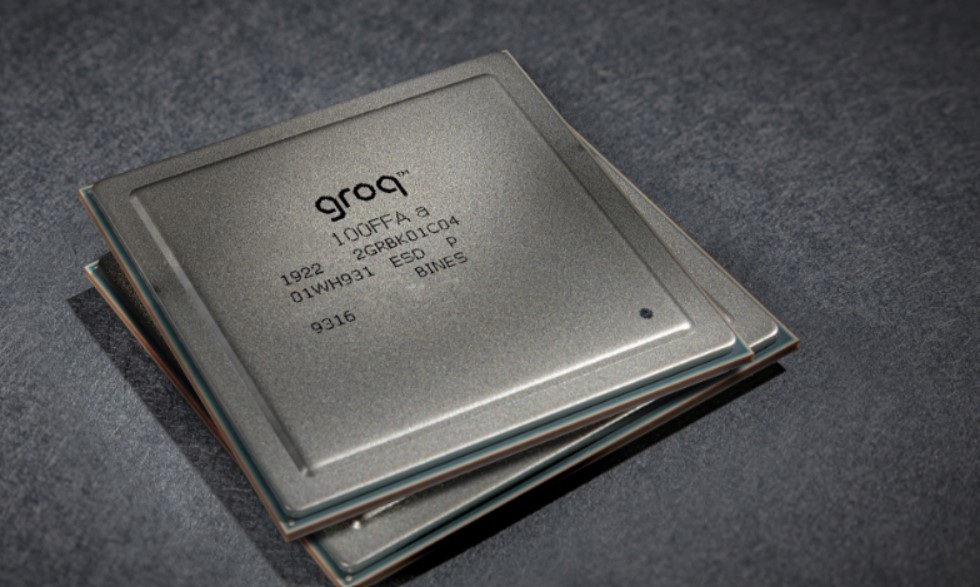
The company originally sought to compete with Nvidia by developing its own AI processors, known as language processing units, or LPUs. The chips were designed primarily for inference, the computing process involved in running trained AI models and generating responses in real time.

But Nvidia’s recruitment of Ross and other senior Groq employees fundamentally altered the company’s trajectory. After losing much of its key leadership and technical talent, Groq moved away from being a standalone chipmaker and began building an AI cloud business using Nvidia’s GPUs.

The result is an unusual relationship in which a company that once sought to challenge Nvidia now operates as one of its customers.

Groq raised $650 million in June to begin financing the transition. The company plans to expand its data-center capacity from 54 megawatts to more than 200 megawatts by 2027. It currently operates 13 data centers across North America, Europe, the Middle East and Asia-Pacific and says its infrastructure serves more than 6 million developers, enterprises and AI-focused companies.

The latest financing will be used to expand access to Nvidia accelerated computing for customers requiring medium and large clusters for AI training and inference.

“We are building Groq into the world’s leading AI inference cloud,” said Alex Davis, Groq’s chairman and CEO of Disruptive. “Inference will without a doubt become the largest and most critical layer of AI infrastructure.”

The rapid adoption of generative AI has created enormous demand not only for chips but also for the data centers, electricity, networking equipment and cloud services needed to operate them. Companies known as neoclouds have emerged to provide specialized access to high-performance computing without requiring customers to build their own large-scale infrastructure.

Inference is becoming particularly important as companies move AI systems from experimentation into everyday applications. Every chatbot response, AI-generated image, coding task, and automated workflow requires computing resources when the model is being used.

That creates a potentially enormous market for specialized infrastructure providers.

But the business model comes with significant financial risks.

Neocloud companies must spend heavily on GPUs and data-center capacity before generating revenue from those assets. The hardware can also depreciate rapidly as newer generations of processors become available, creating pressure to maintain high utilization rates and secure long-term customer commitments.

CoreWeave illustrates both the opportunity and the risks.

The AI cloud provider has reported strong revenue growth and secured major contracts with companies including Meta and Anthropic. Investors, however, have remained concerned about its substantial capital expenditures, dependence on debt financing, and exposure to rapidly depreciating computing hardware.

The central question is whether strong demand for AI computing will generate enough cash flow to justify the enormous investments required to build and maintain the infrastructure.

Groq’s financial performance remains private, making it difficult for investors to assess the economics of its new strategy. Its rapid increase in data-center capacity, however, shows that the company is betting heavily on sustained demand for AI inference.

The financing also places Groq squarely within Nvidia’s expanding infrastructure ecosystem.

Nvidia is increasingly doing more than selling GPUs. The chipmaker has invested in several companies building AI cloud capacity, while those same companies purchase Nvidia’s processors to operate their infrastructure.

CoreWeave, Lambda and Nebius are among the neocloud providers using Nvidia GPUs, creating a business model in which Nvidia can benefit both from supplying the hardware and, in some cases, investing in the companies purchasing it.

Groq now occupies a similar position.

Its original ambition was to compete with Nvidia at the chip level. Its new strategy instead depends on Nvidia’s dominance in AI accelerators. That does not necessarily make Groq’s business less ambitious. It only changes where the company is competing. Rather than trying to build an alternative to Nvidia’s hardware ecosystem, Groq is seeking to compete for customers who need access to that hardware, particularly customers focused on AI inference.

The shift also demonstrates how difficult it has become for smaller AI hardware companies to compete independently as Nvidia’s ecosystem expands. Building competitive processors requires enormous investments in semiconductor design, software, and manufacturing, while customers increasingly value compatibility with established AI development platforms.

For Groq, becoming an Nvidia-powered AI cloud could provide a faster route to scale than continuing to develop its own chips.

The $3.5 billion valuation, however, shows that investors are also assigning a different value to the company than they did before the Nvidia licensing deal. The challenge for Groq will be proving that its new business can generate sufficient revenue and margins to justify the capital required to expand its infrastructure.

The company is effectively betting that AI inference will become one of the largest computing markets in the technology industry. If demand continues to accelerate, Groq is expected to benefit from its existing developer base, global data-center footprint, and relationship with Nvidia. However, neocloud providers could face intense pricing pressure and weaker returns on expensive computing assets if infrastructure supply grows faster than customer demand.

XRP Whales Go Quiet as Grayscale Pulls Three Altcoin ETF Filings

0

The cryptocurrency market is entering another period of uncertainty as two developments highlight the changing appetite for digital assets: XRP whale inflows to Binance have fallen to their lowest level since 2021.

Grayscale has withdrawn exchange-traded fund registrations for Cardano, Polkadot and Hedera. Together, the developments point to a market becoming increasingly selective about where capital is deployed.

Recent on-chain data shows that the three-month average of XRP whale deposits to Binance has dropped to approximately $61 million, a level not seen since 2021. The figure represents a substantial decline from more than $450 million recorded last year.

While falling whale deposits can initially appear bearish because large holders are becoming less active, the data can also indicate reduced selling pressure because fewer XRP tokens are being transferred toward an exchange.

That distinction is important. Exchange inflows from large holders are frequently monitored because they can precede selling activity. If whales move significant amounts of XRP onto exchanges, traders may interpret it as preparation for distribution.

The current decline therefore does not necessarily mean that large investors have abandoned XRP. Instead, it suggests that whales may be waiting for clearer market conditions before making major moves.

Some evidence points toward continued accumulation. Recent reports indicate that large holders accumulated more than 72 million XRP in a single day.

While the number of wallets holding at least one million XRP increased over a three-month period. This creates an interesting divergence: exchange inflows are falling, but certain measures of large-holder accumulation remain constructive.

The second development involves Grayscale’s decision to withdraw three altcoin ETF registrations. The asset manager withdrew filings associated with Cardano, Polkadot and Hedera on August 7, reportedly within minutes of one another.

The withdrawals came shortly before Cardano became eligible under the relevant SEC seasoning framework, adding significance to the timing. Grayscale’s decision does not necessarily represent a rejection of those cryptocurrencies.

Instead, it may reflect the difficult economics and uncertain demand surrounding smaller altcoin exchange-traded products. Bitcoin and Ethereum have established deep institutional markets.

While the investment case for smaller tokens depends heavily on liquidity, investor demand, regulatory conditions and the ability to attract sufficient assets under management.

The development demonstrates that regulatory progress alone does not guarantee an ETF launch. Even when the regulatory pathway becomes more accommodating, issuers still have to determine whether a product can achieve sustainable commercial scale.

For XRP, the situation is particularly notable because the token has continued to attract institutional attention through its own ETF ecosystem. Recent reporting indicates that XRP-related ETFs continued receiving inflows even as Grayscale withdrew the three competing altcoin filings.

Both developments point toward a more selective crypto market. Capital is no longer automatically flowing into every major altcoin simply because regulatory barriers are falling. Investors appear increasingly focused on liquidity, institutional demand and sustainable market structure.

For XRP, the five-year low in whale exchange inflows could reduce immediate selling pressure, but it is not by itself a bullish signal. The next decisive factor will be whether subdued whale activity is followed by renewed demand and stronger price momentum.

Meanwhile, Grayscale’s ETF withdrawals suggest that the next phase of institutional crypto adoption may favor a smaller group of assets capable of demonstrating durable demand rather than simply winning regulatory eligibility.

YouTube to Count Views From the Moment Videos Start, Redefining How Creators Measure Reach

0
A picture shows a You Tube logo on December 4, 2012 during LeWeb Paris 2012 in Saint-Denis near Paris. Le Web is Europe's largest tech conference, bringing together the entrepreneurs, leaders and influencers who shape the future of the internet. AFP PHOTO ERIC PIERMONT (Photo credit should read ERIC PIERMONT/AFP/Getty Images)

YouTube is changing the way it counts video views, allowing a view to be recorded as soon as a video begins playing or a user enters a live broadcast, a move that could significantly increase publicly displayed view counts across the platform.

The Google-owned video platform announced Monday that the new system will take effect on August 24. YouTube said the change is intended to create a more consistent view-counting system across different formats and give creators a clearer measure of their overall exposure.

“Historically, we’ve used multiple view counting systems across different formats,” YouTube said in a post on its Community forum. “However, we’ve heard that creators want to eliminate this metric confusion and accurately understand their true exposure, which is why we’re making this update.”

YouTube has not publicly disclosed the precise threshold it previously used to register a standard video view, although it has generally been understood that a viewer needed to watch at least 30 seconds for a view to be counted.

Under the new system, simply starting playback will count as a view. The same principle will apply when users enter a live broadcast.

The change brings YouTube’s main video platform closer to the way competing short-form platforms such as TikTok and Instagram count views, where playback generally triggers a view.

YouTube introduced a similar system for Shorts last year. Extending the approach to long-form videos and live streams could substantially increase view totals, particularly for content that attracts large numbers of users who leave shortly after playback begins.

That could alter the meaning of one of the most visible metrics on YouTube.

A video that previously recorded a lower number of views because many users abandoned it quickly could now accumulate substantially more views simply because more people started watching. As a result, the public view counter may become less useful as a standalone indicator of audience engagement or content quality.

YouTube is retaining its previous measurement under a new name: “Engaged views.” Creators will continue to see the metric through YouTube Analytics, allowing them to distinguish between people who merely initiated playback and those who continued watching.

The distinction could become important for advertisers and creators assessing the effectiveness of video content. A high view count under the new system will not necessarily mean that viewers spent significant time watching a video. For advertisers, the change could also make comparisons between campaigns more dependent on deeper engagement metrics rather than headline view totals.

YouTube said the new counting system will not affect creator earnings or eligibility for monetization through the YouTube Partner Program. In other words, the change is primarily a measurement adjustment rather than a direct change to how creators are paid.

The timing comes as YouTube is simultaneously tightening other aspects of its creator economy.

The company announced last week that new creators will face higher thresholds to begin earning money from advertising and subscriptions starting next year. Under the new requirements described in the announcement, creators will need at least 8,000 qualified watch hours during the previous 12 months or 20 million qualified Shorts views during the previous 90 days.

The current requirements are 1,000 subscribers plus 4,000 watch hours over 12 months, or 1,000 subscribers plus 10 million Shorts views over 90 days. Creators also need to maintain the required Shorts-view threshold over a 90-day period to earn money.

The proposed increase has generated backlash among users and creators who say that the higher thresholds will make it more difficult for smaller channels to enter and remain in YouTube’s monetization ecosystem.

Together, the changes point to a broader shift in how YouTube is managing its creator platform. The company is making its headline view metric more inclusive while placing greater emphasis on “Engaged views” inside its analytics tools. At the same time, it is raising the bar for creators seeking access to monetization.

The new view system is expected to provide a simpler and more consistent metric across videos, Shorts and live content for YouTube. For creators, however, the immediate consequence may be a widening gap between the number displayed publicly and the amount of attention their content actually receives.

That makes metrics such as watch time, retention, and engaged views more important for evaluating whether a video’s larger view count represents genuine audience interest or simply more people starting playback.

Reddit Tests “Video Reddit” as It Turns Viral Posts Into Audio and Video Content

0

Reddit is testing a new way to turn its most popular conversations into audio and video, as the social media company seeks to expand how users consume its text-heavy content and capture engagement that is increasingly shifting toward short-form and spoken media.

Starting Monday, Reddit will test an initial version of what it calls a “video Reddit” experience across select communities. The experiment will include both narrated video and audio versions of posts as the company evaluates which formats users prefer and whether either can be scaled across the platform.

The initiative was first disclosed during Reddit’s second-quarter earnings call in July, when CEO Steve Huffman told analysts that users were already consuming Reddit content in similar formats on other platforms.

Popular Reddit stories are frequently repackaged on TikTok and Meta’s Reels, where creators use text-to-speech narration or read posts aloud. Those videos are often paired with the original text displayed on screen or unrelated background footage, including video-game playthroughs and cooking clips.

“There is an emerging content type elsewhere on the internet of, basically, podcasts where people read Reddit content,” Huffman said during the earnings call.

“I think this version of, like, listened-to or spoken Reddit can be really engaging, as well,” he added.

Reddit’s move brings that behavior inside its own platform rather than leaving third-party creators and social networks to capture the audience and engagement generated by Reddit’s content. The initial rollout is deliberately limited. Reddit said the tests are intended to help it understand how audio and video formats could be useful to users and whether they can be presented in a way that remains consistent with the platform’s culture.

Users will be able to select “read” or “play” for posts where the feature is available. The experiment will initially cover only selected English-language posts and will be available through Reddit’s iOS and Android applications.

Importantly, the new formats will not replace Reddit’s traditional text-based posts. Users will continue to be able to read the original post and participate in its comments in the usual way. Instead, Reddit is positioning audio and video as additional ways to consume conversations. A user could listen to a narrated post while exercising, walking, or doing errands, while a video version could turn a written discussion into a more conventional audiovisual experience.

Image credit: TikTok screenshot

Reddit Wants to Capture Engagement Happening Elsewhere

The experiment addresses a longstanding problem for Reddit: some of the platform’s most popular content already travels well beyond Reddit. Stories from Reddit communities have become raw material for creators on short-form video platforms, particularly when posts involve unusual personal experiences, relationship disputes, workplace conflicts, mysteries or other highly shareable narratives.

Those creators can package Reddit conversations into videos and capture views, advertising revenue, and audience attention without requiring users to return to Reddit.

By developing its own audio and video formats, Reddit could potentially retain more of that consumption within its ecosystem. The strategy also fits a broader shift in how people consume written information. Users listen to articles, posts, and discussions rather than reading them directly, particularly on mobile devices and while performing other activities.

For Reddit, the challenge is making that transition without stripping away the community interaction that differentiates the platform from conventional content publishers. The company’s decision to retain the original posts and comments suggests it does not intend to turn Reddit into a purely video-driven social network. Instead, it is testing whether audiovisual formats can serve as another entry point into Reddit’s existing communities.

Reddit Has Experimented With Video Before

The company has a history of trying to expand beyond its traditional text-and-image format. Reddit previously introduced native video hosting and experimented with versions of a TikTok-style video feed. More recently, it introduced video in comments, which Reddit says now accounts for more than 10% of video posts on the platform.

The latest initiative represents a somewhat different approach because the company is using Reddit’s existing text-based discussions as the foundation for audiovisual content. That could allow Reddit to create a large amount of video and audio programming without depending entirely on users to produce original video.

It also gives the company a way to test which types of Reddit conversations translate effectively into spoken or visual formats. Not every Reddit discussion is likely to work as a narrated story, and the company’s early tests could help determine whether users prefer certain communities, topics, or post structures.

Copyright And Authenticity Remain Important Questions

The experiment also raises questions about how Reddit handles the transformation of user-generated content. Reddit’s value comes largely from conversations created by its users, and converting those conversations into professionally packaged audio or video introduces questions about attribution, consent, and the boundaries between platform distribution and creator ownership.

Reddit is also attempting to solve an authenticity problem. Much of the existing third-party content based on Reddit uses automated narration and unrelated background footage, formats that can make genuine user discussions feel manufactured for engagement.

The company says its early experiments will examine whether it can create audiovisual versions that still feel authentic to Reddit.

That may be critical to the strategy’s success. Reddit’s strongest advantage is not simply the volume of text on its platform but the communities and conversations built around specific interests. If turning those discussions into videos makes them feel detached from their original communities, Reddit could lose some of the characteristics that make the content valuable in the first place.

For now, the company is treating the project as an experiment rather than a major redesign. If users embrace narrated and video versions of Reddit posts, however, the test could give the company a new way to increase time spent on the platform, capture consumption that currently occurs on competing social networks, and extend the reach of its enormous archive of user-generated conversations.