DD
MM
YYYY

PAGES

DD
MM
YYYY

spot_img

PAGES

Home Blog Page 2

Breaking Into the US Market? Start on the Trade Show Floor

0

So you want to crack the US market?

That’s the aim of nearly every growth-oriented global brand — because it should be. The US is by far the largest B2B playground in the world. It’s also highly saturated, competitive and dominated by companies that already have the mindshare of your ideal buyers.

Here’s the good news:

There is one channel that opens doors faster than anything else. It’s not LinkedIn ads. It’s not cold email. It’s the trade show floor.

Why it works:

  • You get face time with real decision-makers
  • Buyers show up ready to buy
  • Your brand goes from “who?” to “seen them there” in a weekend

Let’s break it down…

Here’s what’s inside:

  • Why B2B Events Beat Every Other US Entry Play
  • What Makes American Trade Shows Different
  • How to Show Up and Actually Win Business
  • Mistakes That Kill Your Expansion Before It Starts

Why B2B Events Beat Every Other US Entry Play

Are you looking to expand into US markets this year? Put B2B events at the top of your list. Let’s crunch some numbers.

The U.S. B2B trade show industry exceeded $15.5 billion in revenue in 2024 alone. It’s not slowing down either. But when we talk about trade shows, size isn’t everything. It’s who’s attending them.

81% of trade show goers are buyers. Forget tire-kickers. That’s the people you’ve been hunting on LinkedIn for months.

Now think about that from a market-entry point of view:

  • You skip the cold outreach cycle
  • You meet 100+ qualified prospects in three days
  • You get real-time feedback on your product and pitch
  • You build a US contact list from scratch in a single weekend

Partnering with experienced exhibit booth builders in the USA allows global brands to enter the market with a serious on-floor presence that can go toe-to-toe with local competitors right out of the gate. A flimsy booth at a US trade show is like screaming “newbie” from across the aisle. A commanding booth design attracts customers and does your selling for you before your rep says a word.

That’s the difference between blending in and getting remembered.

What Makes American Trade Shows Different

US trade shows are different from those in Europe or Asia. They are bigger. The buyers have different expectations. And buyer etiquette on the floor is different as well.

Here are the biggest differences:

  • Shows are HUGE — some pull 100,000+ attendees
  • Booths are treated as marketing investments, not booths
  • Buyers move fast and expect polish
  • Follow-up is where deals actually close

Something to keep in mind…

American customers arrive prepared. They stroll the exhibit hall with a shortlist in hand. If your brand isn’t on their pre-show shortlist, you better wow them enough at the show to make the list.

That is why presence is important. You aren’t just there to pass out brochures. You are there to earn your seat at the table with the domestic incumbents.

How to Show Up and Actually Win Business

Ready for the good part? Here’s the game plan the successful international brands use.

Pick the Right Show

Not every show is worth flying across the ocean for. Start by:

  • Listing the top 3 shows in your industry
  • Checking attendee demographics (job titles, geography, buying power)
  • Looking at the exhibitor list from last year
  • Reading post-event reports and case studies

If your competition showed up, that’s generally a positive sign. If your target buyers showed up, that’s even better news.

Build a Booth That Actually Competes

Here’s where most first-time exhibitors get it wrong…

They show up with a booth built for their domestic market. It looks ok. Ok won’t do on a US show floor. US buyers react to booths that look deliberate, on-brand and worth walking into.

Focus on:

  • Clear brand messaging visible from 20 feet away
  • Product demos that people can actually touch
  • Comfortable seating for real conversations
  • Lighting that makes the space feel premium

Half of the battle is convincing people to stop milling about. Design your booth with that 3 second stop in mind and life will be better.

Prep the Follow-Up Before You Fly Out

This is the part most brands mess up.

The show isn’t the deal. The show is where the deal begins. What transpires in the following two weeks determines if your US expansion will actually be worth it.

Before you fly out, have this ready:

  • A CRM set up to capture leads on the floor
  • Follow-up email templates written in advance
  • Sales reps briefed and ready to call warm leads
  • A calendar with follow-up meeting slots already open

Do this and every lead has potential to convert. Don’t and you’ll be left with a pile of business cards gathering dust in your drawer as your competitors make the calls first.

Mistakes That Kill Your Expansion Before It Starts

Some quick things to avoid:

  • Booking a corner booth and crossing your fingers. Traffic doesn’t just happen. Layout is more important than location.
  • Sending only reps who speak your home-country language. You will want someone fluent and confident in American business English.
  • Undervaluing your booth investment. If you skimp on your booth it will scream “cheap company” to US buyers. That is a first impression that is difficult to overcome.
  • Failing to schedule meetings ahead of time. Many of the best deals are booked with intended buyers well before the show opens.
  • Treating the show like a one-off. US market entries need to hit with the same show for 2-3 years running.

Fix these and you’ll be miles ahead of most first-time exhibitors.

Bringing It All Together

Fact: Growing in US markets is difficult. Until you remember you can bypass the whole tepid digital build and go directly to where the buyers already are.

Trade shows give you:

  • Direct access to decision-makers
  • Instant credibility on the floor
  • A stage to compete with domestic players
  • A shortcut to real, revenue-driving conversations

A quick recap on how to win:

  • Pick the right show for your industry and audience
  • Build a booth that competes with the domestic incumbents
  • Get your follow-up ready before you land in the US
  • Show up 2-3 years running to build real recognition

Take that tip and your first US show could pay for itself with signed agreements — and lay the groundwork for everything after. Many great American brand stories have humble beginnings on the trade show floor.

Yours can be next.

Tax-Efficient Investing: Strategies Every Long-Term Investor Should Understand

0

If you’re an investor, planning for tax season is one of the best ways to keep money in your pocket. Keep more of your returns by carefully managing how and when taxes affect your portfolio. The way assets are sold, structured, and managed can have a major impact on how much wealth you accumulate.

Many investors focus on selecting investments with strong growth potential. However, taxes can quietly reduce those gains over time. Creating a thoughtful tax strategy can help investors make informed decisions about withdrawals, investment placement, portfolio adjustments, and account types.

Building a tax-efficient approach requires knowing how different strategies can work together. Investors can take several steps to create a portfolio designed for their long-term financial goals while keeping in mind the tax implications. This blog will go over the best strategies to keep in mind when considering tax-efficient investing.

How Tax Efficiency Works in Long-Term Investing

The goal of tax-efficient investing focuses on reducing unnecessary tax costs while staying on top of a balanced investment strategy. You don’t want to avoid paying taxes entirely. You should strive to make decisions that allow more of your money to stay invested and stay growing.

Investors usually benefit from working with financial professionals who understand both tax planning and investment management. Since financial planning strategies should reflect each investor’s goals, income, retirement plans, and local market considerations, it’s often beneficial to work with advisors who understand the region where you live. For individuals living in Arizona, partnering with experienced advisors for Arizona investors can help create personalized strategies that align with their financial goals, long-term plans, and overall wealth management needs.

Tax considerations can influence everything from deciding when to sell your assets to selecting what you invest in. Developing a proactive approach can help investors avoid making decisions that are based just on short-term market changes.

Improve Portfolio Efficiency With Asset Location

Asset location is a strategy that involves putting different types of investments in accounts where they can receive the best tax treatment. Instead of holding every investment in the same type of account, investors can divide their assets between tax-advantaged and taxable accounts.

For example, investments that generate higher taxable income might be better for a retirement account. On the flip side, tax-efficient investments may be more suited for taxable brokerage accounts. Whatever approach you take depends on your unique financial objectives, income level, and personal situations.

Common investment account types you may consider include:

  • Roth retirement accounts
  • Traditional retirement accounts
  • Health savings accounts
  • Taxable brokerage accounts

Consider Tax-Loss Harvesting Opportunities

Another strategy you may want to consider to manage your taxable investment gains is tax-loss harvesting. Tax-loss harvesting refers to selling investments that have declined in value to offset your taxable gains from other investments.

While market losses are never the goal, using your losses to your advantage can help reduce your tax burdens. It can also enable you to maintain your broader investment strategy.

Tax-loss harvesting might include:

  • Offsetting capital gains
  • Reviewing underperforming investments
  • Maintaining portfolio balance
  • Reinvesting proceeds strategically

Plan for Capital Gains Before Selling Investments

Selling profitable investments can create taxable events, especially if your assets have major increases in value. Long-term investors should think about how timing affects capital gains before making big changes to their portfolio.

A well-thought-out capital gains strategy might include looking into:

  • Current income levels
  • Investment holding periods
  • Tax brackets
  • Future financial goals
  • Withdrawl needs

Maximize the Benefits of Your Retirement Accounts

Retirement accounts are one of the most valuable tools for tax-efficient investing. Your retirement accounts can provide you with tax advantages that will allow you to build wealth over decades.

You may be able to defer taxes until you make withdrawals if you have a traditional retirement account. Roth accounts can provide tax-free qualified withdrawals under specific conditions. Understanding the differences between the different retirement account types helps investors pick strategies that align with their future expectations.

Maintain Diversification While Managing Taxes

Tax efficiency shouldn’t replace sound investment principles or diversification. Your portfolio still needs a mix of assets that support your long-term goals and manage market risk.

Investors should avoid making investment decisions just because of the tax consequences. Creating a strategy that minimizes taxes but creates unnecessary risk might not support long-term success.

A balanced approach will keep in mind the following:

  • Investment timeline
  • Risk tolerance
  • Tax considerations
  • Market conditions
  • Financial goals

Combining diversification with tax planning can create a stronger foundation for sustainable investing.

Work With Professionals to Build a Long-Term Strategy

As your portfolios grow and your financial situations become more complex, tax-efficient investing is even more important. Getting guidance from a tax professional can help investors evaluate their opportunities, understand the tax implications, and make decisions that support their overall goals. Partnering with an experienced financial advisor can provide insight into tax-conscious strategies that can change as their life does.

Organizations such as KDA Inc. can help investors explore different financial strategies while focusing on long-term objectives and thoughtful planning. Investors can create a more efficient path toward building and preserving their wealth by combining tax awareness and investment knowledge.

AI Video Generators Are Removing the Cost Barrier That Kept Small Businesses Out of Video Marketing

0

Video production used to require budgets that most small businesses in emerging markets simply did not have. That constraint is disappearing faster than most operators realize.

Walk through any commercial district in Lagos, Nairobi, or Accra and you will find thousands of businesses that sell through Instagram, WhatsApp, and TikTok. Their storefront is a phone screen. Their product photography is often good — a decade of smartphone cameras and social selling has taught small merchants how to shoot a product. What almost none of them have is video, and the reason has never been a mystery. A produced thirty-second clip costs more than many small businesses spend on marketing in a quarter.

That constraint shaped an entire tier of commerce. Video consistently outperforms static images for engagement and conversion, and platforms push it hard in their algorithms. Businesses that could afford production got the reach. Businesses that could not, posted photos and hoped. The gap between them was never about talent or product quality. It was a line item.

AI video generation is erasing that line item, and the change matters more in emerging markets than anywhere else.

What Changed in AI Video Generation

The phrase “AI video generator” covered a lot of unimpressive territory until recently. Early tools produced clips that fell apart on inspection: products that changed shape mid-frame, faces that drifted, text that dissolved into noise. For a business trying to show a real product to a real buyer, those failures were disqualifying.

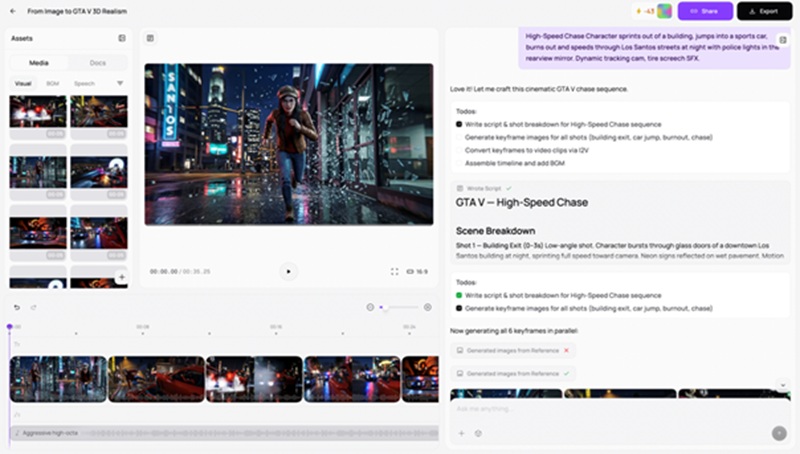
The current generation of tools works differently in one decisive way: they can start from an image instead of a text description. A merchant photographs a dress, a pair of sneakers, or a plate of food, and the AI animates around that photo — camera movement, background motion, context — while the product itself stays anchored to the source image. The output is a short clip in which the item actually looks like the item. For commerce, that single capability separates a toy from a tool.

Reliability has improved alongside it. A usable clip now typically emerges within a handful of attempts rather than dozens, which turns generation from a gamble into a workflow. The economics follow: what was a four-figure production expense becomes a monthly subscription measured in tens of dollars, spread across as many products as the merchant cares to shoot.

Why This Matters More in Emerging Markets

In markets where commerce already lives on social platforms, the payoff from video is unusually direct. There is no website redesign standing between a merchant and the benefit — the video goes straight into the same Instagram story, TikTok feed, or WhatsApp status where the business already sells. The distribution infrastructure was built years ago by the merchants themselves. Only the content format was missing.

The buyer research backs the intuition. In Wyzowl’s long-running video marketing survey, most consumers report that watching a product video has directly convinced them to make a purchase. Small merchants have always known this instinctively; watching a customer handle a product in person is the offline version of the same effect. Video is the closest a phone screen gets to putting the product in the buyer’s hands.

There is also a leapfrog pattern here that will feel familiar to anyone who watched mobile money spread across the continent. Markets that never built the legacy infrastructure — in this case, agencies, studios, and production budgets — adopt the new tool without anything to unlearn or replace. A boutique in Surulere does not need to cancel an agency retainer before adopting AI video. It simply starts.

What a Realistic Workflow Looks Like

The businesses getting real results are not the ones writing the cleverest prompts. They treat AI video like a small production line built on assets they already own.

It starts with the photo library. Clean, well-lit product shots — the kind serious social sellers already take — are the raw material, and they matter more than any tool choice. The AI can only preserve what the source image shows.

Next comes a simple brief for each clip: the format, the product, the motion, and where the clip will run. “Vertical, red dress from studio photo, slow rotation, for Instagram story” is enough. Vague instructions produce vague clips, and reviewing bad clips is where small teams lose the time the technology was supposed to save.

Then generation happens in batches, with a quality bar: the product must look exactly like the product, and the clip must work with the sound off. Tools built around the whole workflow rather than single renders make this sustainable — Medeo, for instance, takes a product image through scripting, generation, and editing in one place, which suits a merchant producing clips weekly rather than commissioning one showpiece video a year.

Finally, one good generation becomes several assets: a short loop for the product listing, a vertical cut with a hook for paid promotion, a more casual version for status updates. The variation costs almost nothing once the base clip exists.

The Honest Limits

The technology has real boundaries, and merchants should know them before spending money. Text rendered inside AI video is still unreliable — prices and product names should be added afterward in a free editor like CapCut. Fine fabric textures can drift in motion, which matters for high-end apparel. Long-form content, testimonial videos, and anything requiring a real human voice on camera still needs a camera. And every clip needs a human check before posting, because the AI does not know what the product is supposed to look like. The merchant does.

None of these limits touches the core use case. Short product clips for social feeds sit squarely inside what the tools do well today, and that is precisely the content format small businesses have been priced out of for a decade.

The Window Is Open Now

Cost barriers do not fall evenly. They fall first for whoever notices, and for a while those early movers enjoy an advantage that looks like magic to competitors: video-rich feeds, better engagement, algorithmic reach — all on a marketing budget that has not grown. Then the practice spreads, the advantage normalizes, and video becomes table stakes the way product photography did.

Small businesses in emerging markets have been on the losing side of production economics for the entire life of social commerce. For once, a technology shift — the AI video generator — favors the operator with a good product, a phone full of photos, and no budget. That window is open now, and it will not stay unusual for long.

Germany Expands Drone Security Research After Explosive Drone Found at Airport

0

Germany is moving to strengthen its research and security capabilities against drones after an alarming discovery at Leipzig/Halle Airport highlighted the growing risks posed by unmanned aerial systems.

Interior Minister Alexander Dobrindt said the government plans to expand research into drone security, underscoring concerns that drones are no longer simply tools for commercial, recreational or military purposes but can also become instruments for disruption and attack.

The discovery of a drone carrying explosives at one of Germany’s major airports has added urgency to a debate that has been developing across Europe.

Airports are particularly vulnerable to unauthorized drone activity because even a relatively small unmanned aircraft can interfere with flight operations, force temporary closures and create significant security concerns.

When explosives are involved, however, the threat moves beyond disruption toward potential terrorism or serious criminal activity. Germany’s decision to expand research therefore reflects a broader recognition that conventional airport security systems may not be sufficient for the rapidly evolving drone threat.

Modern drones can be inexpensive, increasingly autonomous and difficult to detect because of their small size. Some can fly at low altitudes, navigate using sophisticated positioning systems and potentially operate without continuous direct control from an operator.

The challenge for authorities is not simply detecting drones but determining what they are doing and responding quickly without creating additional risks.

A security system capable of identifying an unauthorized drone must distinguish between legitimate aircraft, hobbyist devices and potentially hostile platforms.

That requires improvements in radar, radio-frequency monitoring, optical detection, artificial intelligence and other technologies capable of analyzing aerial activity in real time.

Counter-drone technology is consequently becoming an increasingly important part of national security planning. Depending on the circumstances, authorities may need systems capable of tracking, disrupting or neutralizing an unauthorized drone.

But deploying such capabilities around airports presents its own difficulties. Any intervention must be carefully controlled because interference with communications or navigation systems could create dangers for commercial aviation.

The Leipzig/Halle incident demonstrates why drone security cannot be treated exclusively as an aviation issue. Critical infrastructure across Germany—including energy facilities, military installations, government buildings, ports and industrial sites—could potentially be targeted by drones.

The same technologies that make drones useful for inspection, logistics and surveillance can also make them attractive to criminals and hostile actors.

Germany’s planned research expansion could therefore contribute to a wider European effort to establish more effective standards for countering unmanned aerial threats.

As drone technology advances, governments will need to keep pace not only through new equipment but also through legislation, intelligence sharing, law-enforcement training and cooperation with airports and technology companies.

The incident is a reminder that security threats often evolve faster than the institutions designed to address them. Drones have moved from niche technology to an increasingly common part of modern life, and security agencies must now adapt accordingly.

Expanding research into drone security is about building resilience before another incident occurs. The goal is not to eliminate drones from civilian airspace, but to ensure that authorities can distinguish legitimate activity from threats and respond effectively when necessary.

As unmanned systems become more capable and accessible, that distinction will become increasingly important for protecting airports, infrastructure and public safety.

AI Detection Errors and the Future of Social Media

0
social media apps

The rise of generative artificial intelligence has created a new challenge for social media platforms: determining what is genuinely produced by humans and what has been created or altered by machines.

In response, platforms such as TikTok and Instagram have introduced labels intended to inform users when content has been generated or significantly modified using AI. The goal is understandable. The problem is that these systems are not always accurate.

An inaccurate AI-generated label can carry consequences far beyond a simple notification. Seven creators have reportedly raised concerns that their human-made work was incorrectly identified as AI-generated.

Such mistakes highlight a growing tension between platforms’ responsibility to provide transparency and their obligation to avoid damaging the reputations of the people who depend on those platforms.

AI detection is inherently difficult. Modern generative tools can produce images, videos, audio and text that increasingly resemble human-created work.

Creators are using sophisticated editing software, cameras, filters, animation techniques and post-production tools that can sometimes produce characteristics associated with synthetic media.

A detection system attempting to distinguish between these categories is therefore operating in an environment filled with uncertainty. Some platforms have acknowledged that their AI detection systems can make mistakes.

That admission is important, but it does not eliminate the problem. For an ordinary viewer, an AI-generated label may appear to be an authoritative statement from the platform. Many users may assume that the creator intentionally used artificial intelligence, even when that conclusion is incorrect.

The reputational impact can be particularly serious for professional creators. Their businesses often depend on trust and authenticity. Photographers, filmmakers, artists, educators and influencers may spend years developing recognizable styles and audiences.

Being associated with undisclosed AI production could make followers question the originality of their work, even when the platform’s classification is wrong.

There is a broader philosophical issue. As AI becomes integrated into everyday creative tools, the boundary between human and machine-generated content is becoming increasingly complicated.

A photograph may be captured by a human but enhanced by an AI-powered editing application. An artist might use generative software for one element while creating everything else manually. A video could contain AI-generated effects alongside hours of human filming and editing.

Instead of treating content as either entirely human or entirely AI-generated, platforms may eventually need more nuanced disclosure systems explaining how AI was used and how confident the platform is in its classification.

Transparency remains essential, particularly as synthetic media becomes more sophisticated and misinformation becomes harder to identify. But transparency should not come at the expense of accuracy.

A misleading label can itself become a form of misinformation when it incorrectly tells millions of users that a creator’s work was produced by AI. The challenge for TikTok, Instagram and other platforms is therefore not merely to detect artificial intelligence.

It is to build systems capable of communicating uncertainty responsibly. Creators deserve tools to challenge incorrect classifications, while audiences deserve meaningful information rather than potentially misleading warnings.

The future of AI transparency will depend on trust. Platforms must acknowledge that detection technology has limits and provide meaningful avenues for correction. Otherwise, an initiative designed to protect users from deception could unintentionally create a different problem.