
DD
MM
YYYY

PAGES

DD
MM
YYYY

spot_img

PAGES

Home Blog Page 2

China Orders Companies Not to Cooperate with EU Investigation Into JD.com’s $2.5bn Ceconomy Deal

0

China has escalated a growing regulatory dispute with the European Union by ordering companies and individuals not to cooperate with a Brussels investigation into JD.com’s proposed $2.5 billion acquisition of German electronics retailer Ceconomy, accusing the EU of exercising “improper extraterritorial jurisdiction.”

The directive, issued by China’s Ministry of Justice on Wednesday, marks the second time Beijing has used regulations introduced in April to counter what it considers unlawful foreign jurisdiction. The move raises the prospect of a broader confrontation between Beijing and Brussels over how far European regulators can reach into the operations and financing of Chinese companies.

China said the EU investigation had sought “extensive and unnecessary” information from within China and described the requests as a “serious violation of the international rule of law.”

“If the EU persists in its unilateral actions, China will resolutely retaliate in accordance with the law,” the ministry said.

The dispute centers on JD.com’s proposed takeover of Ceconomy, the German retail group behind MediaMarkt and Saturn. The transaction would give JD.com a major physical retail footprint across Europe and represent one of the most significant attempts by a Chinese e-commerce company to expand its consumer business into the European market.

The European Commission opened an in-depth investigation in May under its Foreign Subsidies Regulation, or FSR, after raising preliminary concerns that JD.com may have benefited from foreign subsidies capable of distorting competition in the EU internal market. The Commission identified potential preferential financing, tax incentives and grants provided by entities possibly attributable to the Chinese government.

JD.com has rejected the subsidy concerns. The company said the Ceconomy acquisition would not be financed by subsidies from China or any other non-EU government, but through external private bank debt and cash generated through its ordinary business operations.

The EU investigation has nevertheless advanced. In July, the Commission formally notified JD.com of its objections, a significant step that indicates the regulator has moved beyond an initial information-gathering exercise and is actively assessing whether the proposed transaction could distort competition.

The latest intervention from Beijing could now make that process substantially more difficult.

The Foreign Subsidies Regulation gives Brussels powers to examine financial contributions from non-EU governments when they may have given companies an unfair advantage in the European market. The rules are intended to address a gap in traditional competition policy, which generally focuses on the behavior of companies within the EU rather than the influence of state support received outside the bloc.

That is why the JD.com case matters. Brussels is attempting to establish whether state-backed advantages enjoyed by a foreign company before it enters the European market could affect competition after an acquisition. Beijing, by contrast, is challenging the EU’s ability to demand information from Chinese entities located outside the bloc.

The clash therefore extends beyond a single takeover. It tests the practical reach of one of the EU’s newest economic-security tools at a time when European authorities are increasingly examining Chinese companies over subsidies, market access and competitive practices.

A Bigger China-EU Regulatory Confrontation

The JD.com dispute comes as Brussels has intensified scrutiny of Chinese companies operating or expanding in Europe.

China issued a similar order in May concerning an EU investigation into Nuctech, a Chinese security equipment company. The repeated use of Beijing’s extraterritorial-jurisdiction rules indicates that the government is developing a formal mechanism to resist foreign regulatory demands rather than treating individual investigations as isolated disputes.

The confrontation also follows increased European scrutiny of Chinese e-commerce platforms. In July, the European Commission accused Temu of failing to cooperate with an investigation under the same Foreign Subsidies Regulation.

For Brussels, the underlying concern is about whether Chinese companies competing in Europe benefit from forms of state support that European companies cannot access on equivalent terms. But aggressive use of such rules risks becoming another barrier to Chinese companies seeking overseas growth.

That tension could become a major concern for JD.com as it expands beyond its domestic market. The Ceconomy acquisition would provide access to more than 1,000 stores across Europe through the MediaMarkt and Saturn networks, giving JD.com a substantial physical distribution platform alongside its e-commerce capabilities.

The proposed transaction therefore has an industrial dimension as well as a competition dimension. It would give one of China’s largest technology and retail groups greater access to European consumers, logistics networks and established retail infrastructure.

Beijing’s Warning Raises Uncertainty Over The Deal

The immediate question is whether Chinese restrictions on cooperation will impede the Commission’s ability to complete its investigation.

The European regulator can impose remedies or potentially block a transaction if it determines that foreign subsidies have distorted the internal market and that the problem cannot be adequately addressed through commitments. The investigation is therefore capable of affecting both the timing and final structure of the Ceconomy transaction.

The German authorities have already approved the deal, but the EU-level review remains a separate and potentially decisive hurdle.

Beijing’s warning also introduces a new legal risk for companies caught between two regulatory systems. Chinese entities could face pressure from Beijing not to provide information demanded by European authorities, while failure to cooperate with Brussels could expose them to consequences under EU rules. That creates the possibility of a regulatory standoff in which compliance with one jurisdiction could conflict with compliance with the other.

More broadly, the case shows that trade and investment disputes between China and Europe are increasingly shifting from tariffs and market-access restrictions toward questions of subsidies, corporate ownership, data and regulatory jurisdiction.

The JD.com investigation has inadvertently become an opportunity for the EU to establish whether the Foreign Subsidies Regulation can effectively scrutinize state support behind major foreign acquisitions. For Beijing, the case is a test of whether its new countermeasures can prevent European regulators from extending their investigations deep into China’s domestic financial and corporate systems.
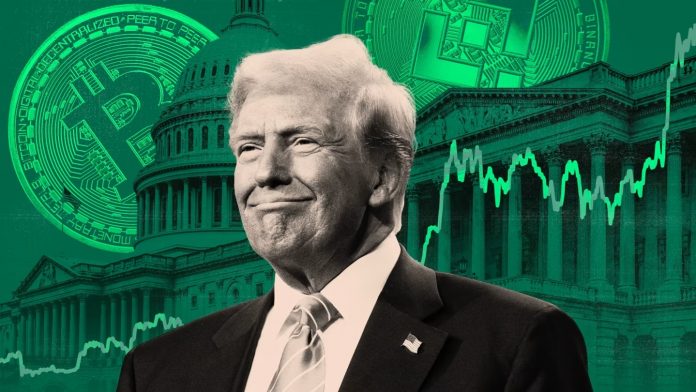

Trump Vows to Keep U.S. as ‘Undisputed Leader’ in Bitcoin, Crypto And AI

0

U.S. President Donald Trump has reaffirmed his administration’s ambition to position the United States at the forefront of the rapidly evolving digital economy, declaring that the country must remain the “undisputed leader” in Bitcoin, cryptocurrency, artificial intelligence and related technologies.

Trump made this statement while speaking with a group of cryptocurrency executives at the White House on August 19, 2026.

Speaking during a meeting that also marked the kickoff of a Commodity Futures Trading Commission Innovation Advisory Committee, Trump emphasized the need for a clear regulatory framework so that innovators and companies can operate confidently on American soil rather than moving overseas.

“They don’t have to go to other countries to do their business,” he said. “We’re ensuring that America remains the undisputed leader not only in Bitcoin and crypto, but also technologies like prediction markets, artificial intelligence, and much more.”

The gathering brought together prominent industry figures, including executives from Coinbase, Ripple, Robinhood, and other major firms.

Trump used the occasion to highlight his administration’s earlier actions, including the establishment of a Strategic Bitcoin Reserve, the creation of a digital assets stockpile, and the signing of the Genius Act, which provided a legal framework for stablecoins.

He indicated that the United States is considering the idea of acquiring “sizable” amounts of Bitcoin and other cryptocurrencies, describing the concept as something that “has been talked about” within the administration.

Trump linked the potential accumulation to the strength of the dollar. “It’s been talked about. It’s taken a lot of pressure off the dollar. It’s been very, very good for the dollar, and I think if you came in with recommendations, I would certainly listen,” he said when asked whether the administration had plans to build larger holdings.

However, Trump did not announce any immediate buying plan, timeline or funding mechanism. He indicated he would rely on recommendations from advisors, including SEC Chair Paul Atkins and other officials.

While the statements stop short of a formal policy commitment, they reinforce his administration’s pro-crypto stance and keep open the possibility of treating Bitcoin as a longer-term strategic asset alongside traditional reserves.

He also pointed to efforts aimed at ending what he described as the previous “war on crypto” and urged Congress to advance market-structure legislation, such as the Clarity Act, to keep the United States ahead of competitors, particularly China.

He framed the bill as essential to keeping the United States ahead of China and other competitors in cryptocurrency, prediction markets, artificial intelligence and related technologies.

Trump framed digital assets and emerging technologies as extensions of broader American economic and technological strength.

He warned that failure to maintain leadership would hand opportunities to rival nations and reiterated that the United States is already “way ahead” in artificial intelligence and other key fields.

The remarks come amid continued industry growth and ongoing debates over regulation, with the administration positioning itself as supportive of domestic innovation while seeking to solidify rules that would be harder for future administrations to reverse.

Notably, former New York Gov. Andrew Cuomo is urging Congress to pass the bill, warning that the U.S. is falling behind other countries on crypto regulations as “it has to pass.”

Outlook

Trump’s latest remarks are likely to reinforce expectations that his administration will continue pursuing a more crypto-friendly regulatory environment in the United States.

While his comments on potentially acquiring larger amounts of Bitcoin do not amount to a formal commitment, they could strengthen market expectations that the asset may play a greater role in the country’s long-term financial strategy.

The outlook will largely depend on whether Congress can advance the Clarity Act and other market-structure legislation, as well as how regulators translate the administration’s pro-innovation stance into clear and enforceable rules.

Stripe Bets on AI Infrastructure With $7.5 Billion OpenRouter Acquisition

0

Stripe is making a major push into the artificial intelligence economy with plans to acquire OpenRouter, a fast-growing platform that gives developers access to a wide range of AI models, including popular open-weight systems from Chinese and U.S. developers.

The fintech company announced the deal on Wednesday without disclosing financial terms. The New York Times, citing a person familiar with the matter, reported that Stripe is paying about $7.5 billion, including roughly $1.5 billion earmarked for OpenRouter’s founders.

The reported price marks a dramatic increase from OpenRouter’s most recent private-market valuation. The startup raised $113 million less than three months ago at a valuation of about $1.3 billion, meaning the reported acquisition price would value the company at nearly six times that level in a matter of weeks.

Stripe declined to comment on the reported valuation.

The acquisition gives Stripe exposure to a segment of the AI market that sits between model developers and businesses that use AI. OpenRouter acts as a routing layer, allowing developers to access and compare multiple AI models rather than building their applications around a single provider. That position is becoming more important as companies face a rapidly expanding selection of AI models with different prices, capabilities, and performance characteristics.

OpenRouter has become popular for access to open-weight models, including systems developed by Chinese AI companies such as DeepSeek and Z.ai. These models have attracted developers partly because they can offer lower costs than proprietary systems from companies such as OpenAI and Anthropic.

Stripe said businesses are increasingly struggling to manage AI costs because models are being released and repriced at a rapid pace. Its interest in OpenRouter is therefore not simply about gaining exposure to AI models, but about controlling the financial infrastructure surrounding their use.

“Stripe is building the economic infrastructure for AI, and together with OpenRouter we’ll help businesses maximize profitability by routing their requests intelligently and spending their tokens efficiently,” Stripe CEO Patrick Collison said.

The logic behind the deal is considered valid. As companies use multiple models for different tasks, selecting the cheapest or most capable model for each request can have a material effect on operating costs. A routing platform can direct a query to different models based on factors such as price, latency, availability, and performance.

That potentially positions OpenRouter as an important layer in the emerging AI software stack. Instead of betting on which individual model will dominate, Stripe is acquiring infrastructure designed to allow businesses to use many models simultaneously.

OpenRouter said the combination would support its goal of creating “a healthy AI ecosystem where many models thrive,” arguing that having multiple competing models reduces the risk that one system becomes the industry default simply because developers are locked into it.

The acquisition also marks a significant expansion of Stripe’s strategy beyond payments. The company has built its valuation primarily around online payment infrastructure, but it has increasingly expanded into adjacent financial and technology services.

Stripe was valued at nearly $160 billion earlier this year. It also strengthened its cryptocurrency business last year through the $1.1 billion acquisition of stablecoin platform Bridge.

OpenRouter gives Stripe a different route into the AI economy. Rather than competing directly with model developers, Stripe would own a platform that helps businesses consume models from competing providers.

The reported valuation also reveals the extraordinary premium investors are placing on AI infrastructure. OpenRouter’s valuation has reportedly jumped from about $1.3 billion to $7.5 billion in less than three months, illustrating how quickly capital is moving toward companies positioned to benefit from the rapid expansion of AI usage.

The deal could ultimately prove more significant than a conventional technology acquisition because it gives Stripe a foothold in the economics of AI inference, the process of running trained models to generate responses for users. Stripe’s bet is that the companies managing the costs of inference, rather than only the companies building the underlying models, could become major beneficiaries of the AI boom.

Farcaster Seeks Another New Owner as Revenue Plummets, as Pump.fun, Compound and Ansem Signal a New Phase for DeFi, Memecoin Innovation

0

Farcaster, once one of the most prominent decentralized social networking protocols in the crypto industry, is facing renewed questions over its long-term sustainability as revenues fall sharply and its ownership structure continues to evolve.

The platform’s struggles highlight the difficult economics of building decentralized social networks in an industry where user attention is highly competitive and monetization remains uncertain.

The latest chapter follows Farcaster’s acquisition by Neynar in January 2026. Neynar, a developer infrastructure company deeply embedded in the Farcaster ecosystem, took control of the protocol, its consumer application and Clanker after the original developer, Merkle Manufactory, stepped back.

Farcaster co-founder Dan Romero said the project needed a new approach and leadership after years of attempting to scale its social-first model.

The transition came after Farcaster struggled to convert its technological strengths and crypto-native community into sustainable commercial growth.

The protocol had previously attracted significant investor confidence, raising $150 million in 2024 at a valuation reportedly around $1 billion. However, its financial performance deteriorated considerably.

The Block reported that Farcaster generated approximately $1.84 million in total earnings during the fourth quarter of 2025, representing an 85% year-over-year decline. More recent protocol data illustrates the volatility of the business.

DefiLlama currently shows Farcaster’s quarterly gross protocol revenue falling from $27.88 million in the first quarter of 2026 to $3.88 million in the second quarter, with the figure listed at roughly $248,680 for the third quarter to date.

While protocol revenue can fluctuate significantly depending on activity from products such as Clanker, the decline demonstrates how dependent the ecosystem has become on a limited number of revenue-generating activities.

This creates a difficult challenge for any potential new owner. Farcaster possesses valuable infrastructure, an established developer community and a decentralized identity model, but these assets do not automatically translate into reliable cash flow.

Its experience reflects a broader problem confronting Web3 social platforms: decentralization can create strong technological differentiation, but attracting mainstream users and retaining their attention requires compelling products, distribution and sustainable incentives.

The project has already attempted several strategic pivots. Its original social-first ambition gradually shifted toward a wallet-first strategy, with the objective of making crypto transactions and financial functionality a central part of the user experience.

Neynar subsequently emphasized a more developer-focused direction, seeking to strengthen the ecosystem rather than relying solely on Farcaster as a consumer social application.

The ownership transition carries an unusual financial dimension. Merkle Manufactory announced plans to return the full $180 million it had raised to investors, while Romero emphasized that Farcaster itself would continue operating.

In December 2025, the protocol reportedly had around 250,000 monthly active users and more than 100,000 funded wallets, suggesting that the network still maintained a meaningful user base despite its commercial difficulties.

The prospect of another ownership change would underline the severity of Farcaster’s business-model problem. A new owner would need to determine whether the platform should remain primarily a decentralized social network, become a developer infrastructure layer, or evolve further into a crypto-financial application.

Farcaster’s story is therefore larger than one protocol. It represents the challenge of transforming decentralized technology into a durable business. Falling revenue does not necessarily mean the underlying network has failed, but it does increase pressure on whoever controls its future.

For Farcaster, survival may depend less on finding another buyer than on finding a sustainable reason for users, developers and businesses to keep building on the network. Without that, another ownership transition could merely postpone the same fundamental question: how can decentralized social infrastructure become economically sustainable?

Pump.fun, Compound and Ansem Signal a New Phase for DeFi and Memecoin Innovation

The decentralized finance and memecoin sectors are entering another period of rapid experimentation as Pump.fun, Compound and crypto personality Ansem announce developments aimed at expanding participation, improving platform economics and attracting more users.

The announcements highlight how competition among decentralized applications is increasingly moving beyond token launches toward broader ecosystems built around trading, liquidity and community engagement.

Pump.fun has announced a fee reduction for users accessing its application, a move that could strengthen its position in the highly competitive memecoin market. Fees remain an important consideration for traders who frequently enter and exit speculative tokens.

Particularly when margins are small and market volatility is high. By lowering costs, Pump.fun can potentially encourage greater trading activity while making its platform more attractive to users who compare multiple launchpads and trading venues.

The decision also reflects a broader trend across crypto platforms. As decentralized applications mature, users are becoming increasingly sensitive to transaction costs, execution quality and overall user experience.

A lower-fee structure could help Pump.fun maintain its strong presence in the memecoin economy while encouraging existing users to remain active on the platform.

Meanwhile, Compound has announced a new leadership team alongside plans to deploy $52 million toward expanding its decentralized finance footprint.

The move signals renewed ambitions for one of DeFi’s established lending protocols. Compound has historically played an important role in decentralized lending, allowing users to supply assets, earn yields and borrow against collateral without relying on traditional financial intermediaries.

The planned capital deployment could give Compound additional resources to develop its ecosystem, strengthen its infrastructure and compete in an increasingly crowded DeFi lending market.

Competition now comes from established protocols as well as newer platforms offering sophisticated lending markets, higher capital efficiency and support for a broader range of assets.

The leadership transition is therefore significant because execution will be critical. DeFi users have become more demanding as the sector has matured, placing greater emphasis on security, liquidity, governance and sustainable incentives.

Compound’s ability to translate its $52 million expansion plan into meaningful ecosystem growth could determine how influential the protocol remains in the next stage of decentralized finance. Adding another layer to the evolving landscape.

Crypto analyst and trader Ansem has released a memecoin launchpad built on top of Pump.fun. The development demonstrates how established crypto infrastructure can become a foundation for new applications and communities.

Rather than competing entirely from scratch, developers can build additional products around existing platforms, creating layers of functionality on top of established liquidity and distribution networks.

Ansem’s launchpad could reinforce the growing relationship between social influence and token creation. Memecoin markets are heavily driven by attention, community participation and online narratives.

Platforms connected to influential crypto personalities can potentially accelerate discovery and participation, although they also carry significant speculative risks.

These developments show a crypto market increasingly focused on platform economics and ecosystem expansion. Pump.fun is attempting to make participation cheaper.

Compound is committing substantial resources to DeFi growth, and Ansem is using existing infrastructure to create another gateway into memecoin markets. The next phase of decentralized finance may therefore be defined not only by new protocols.

But by how effectively existing networks lower costs, attract developers and turn liquidity into sustainable ecosystems.

U.S. Debt Tops $40tn as Rising Interest Costs and Deficits Deepen Fiscal Strain: DOGE Fails to Halt Fiscal Deterioration

0

U.S. government debt has crossed the $40 trillion threshold for the first time, exposing the widening gap between Washington’s ambitions to reduce federal spending and the fiscal realities of an economy in which interest costs, Social Security and healthcare obligations are growing faster than government revenues.

The Treasury Department’s latest daily statement showed total public debt outstanding at $40.047 trillion on Tuesday, comprising $32.266 trillion held by the public and $7.782 trillion in intragovernmental holdings. The milestone came less than five months after the debt crossed $39 trillion, underscoring how rapidly the federal government’s borrowing requirements are expanding.

The increase also provides a stark test of President Donald Trump’s pledge to bring greater discipline to federal spending. One of the most prominent efforts was the defunct Department of Government Efficiency, or DOGE, an initiative led by Elon Musk during the early part of Trump’s second administration and designed to eliminate waste, reduce government payrolls and cut contracts and programmes considered unnecessary.

DOGE initially set extraordinarily ambitious targets. Musk said in early 2025 that he believed the initiative could identify $1 trillion in savings, after initially discussing a $2 trillion reduction in federal spending. By April, he had lowered his expected savings for fiscal 2026 to about $150 billion.

The $40 trillion debt milestone shows how little those efforts have changed the overall trajectory.

More importantly, a recent review by the Government Accountability Office has raised serious questions about the scale of savings claimed by DOGE. The initiative’s so-called “Wall of Receipts” claimed roughly $110 billion in savings, but GAO found that 96% of the reported savings from cancelled grants could not be verified. It also found that more than $27 billion in contracts described as terminated had not actually been cancelled.

This means cutting a federal employee, cancelling a contract or announcing a programme termination does not necessarily translate into an equivalent reduction in federal borrowing. Some savings may occur in future years, some cancellations may be reversed, and some reported reductions may never have represented genuine budget savings in the first place.

The deeper problem is that DOGE was attacking a relatively small part of the federal spending equation.

The U.S. government spends roughly $7 trillion a year, with around 60% going toward mandatory programmes such as Social Security, Medicare, Medicaid and veterans’ benefits. Those programmes are largely driven by statutory eligibility, demographics and healthcare costs. Cutting discretionary agencies and federal payrolls can produce savings, but it cannot by itself resolve a structural deficit of the scale now facing Washington.

That is why the debt has continued rising even as DOGE pursued aggressive reductions.

The fiscal deterioration is becoming increasingly expensive. The federal government is now paying about $1.17 trillion annually to service its debt, according to Treasury data, equivalent to roughly 19% of federal spending in fiscal 2026.

The Congressional Budget Office projects that net interest costs will rise from about $1 trillion in 2026 to $2.1 trillion by 2036, with cumulative interest payments reaching approximately $16.2 trillion over the decade under current-law assumptions.

That creates a particularly dangerous fiscal feedback loop. As the debt stock expands, the Treasury must issue more securities. If interest rates remain elevated, refinancing that debt becomes more expensive. Higher interest costs then enlarge the deficit, requiring still more borrowing.

The bond market is already beginning to price some of this risk.

The yield on 30-year Treasuries recently reached levels not seen since 2007, while a $25 billion 30-year Treasury auction last week cleared at a yield of about 5.22%, the highest borrowing cost at such an auction since 2001.

The significance extends beyond government finance. Treasury yields underpin borrowing costs throughout the U.S. economy. Higher long-term yields can translate into more expensive mortgages, corporate debt and consumer credit, while also reducing the relative attractiveness of riskier assets.

The Treasury responded on Wednesday by announcing that it would at least double the size of its buyback operations for 10- to 30-year Treasuries to $4 billion per operation. The move is intended to improve liquidity and help contain pressure at the long end of the yield curve, although the scale remains small relative to the roughly $30 trillion Treasury market.

The buybacks, however, do not solve the underlying fiscal problem. They can influence market liquidity and the composition of Treasury issuance, but they cannot eliminate the deficit or reduce the government’s long-term spending commitments.

That leaves Washington confronting a much more difficult question: where can sustainable deficit reduction actually come from?

The answer would require decisions involving the largest components of the federal budget, including entitlement programmes and revenues. That means confronting issues that have historically been politically difficult, such as changes to Social Security and Medicare, reductions in other major spending programmes, higher taxes, or some combination of the three.

Trump’s tax and spending policies have added to that challenge. The Congressional Budget Office estimates that the administration’s One Big Beautiful Bill Act will add $4.7 trillion to federal debt.

This creates an obvious tension in the administration’s fiscal strategy. The government pursued spending cuts through DOGE while simultaneously implementing policies that increase the debt trajectory. The arithmetic makes it difficult for reductions in discretionary spending to offset the much larger forces pushing deficits higher.

The history of the past decade illustrates the scale of the problem.

Federal debt stood at about $19.95 trillion when Trump began his first term in January 2017. It has now more than doubled. Trump added about $7.8 trillion during his first presidency, while debt increased by roughly $8.4 trillion during Joe Biden’s presidency. Since Trump returned to office in January 2025, the debt has risen by another $3.8 trillion.

The pandemic accounts for a major portion of the increase, but it is no longer sufficient to explain the trajectory. The emergency spending associated with COVID-19 has ended, yet the federal government continues to run enormous deficits.

That is the central weakness in the argument that waste-cutting alone can restore fiscal balance.

DOGE’s experience illustrates the limits of trying to solve a structural budget problem through administrative efficiency. Eliminating waste is useful and can improve the efficiency of government, but economists say the savings must be measured against a federal budget dominated by entitlement spending, healthcare costs, and interest payments.

Even eliminating every dollar claimed by DOGE would not fundamentally alter the debt trajectory if annual deficits remain measured in trillions of dollars.

The consequences are already spreading into financial markets. Foreign investors, who own nearly one-third of Treasury securities, have reduced their holdings over the past year, meaning more U.S. debt must be absorbed by domestic investors. That can make Treasury markets more sensitive to price and yield movements.

The problem becomes more acute if inflation remains elevated. Higher inflation can keep interest rates higher for longer, increasing the cost of refinancing the government’s debt. Tariffs, geopolitical tensions and higher energy prices could further complicate that environment.

The U.S. still possesses substantial advantages. The dollar remains the world’s dominant reserve currency and Treasury securities remain foundational to the global financial system. Crossing $40 trillion does not mean the United States is suddenly unable to finance itself.

But the margin for fiscal error is narrowing.

The most important lesson from the $40 trillion milestone is therefore not that the United States has reached an arbitrary debt number. It is that years of deficits have reached a point where interest payments themselves are becoming a major driver of future deficits.

DOGE demonstrated that Washington can cut individual programmes, contracts and government jobs. It has not demonstrated that the federal government can reduce its structural deficit.

Economists have warned that until policymakers address the much larger gap between mandatory spending and revenues, the debt will continue to rise regardless of how aggressively government agencies are trimmed.