DD
MM
YYYY

PAGES

DD
MM
YYYY

spot_img

PAGES

Home Blog Page 200

Ripple’s $500M Raise is A Milestone for XRP and Crypto Infrastructure, as Solana DeFi TVL Growth Surges 32.7% QoQ Q3 2025

0

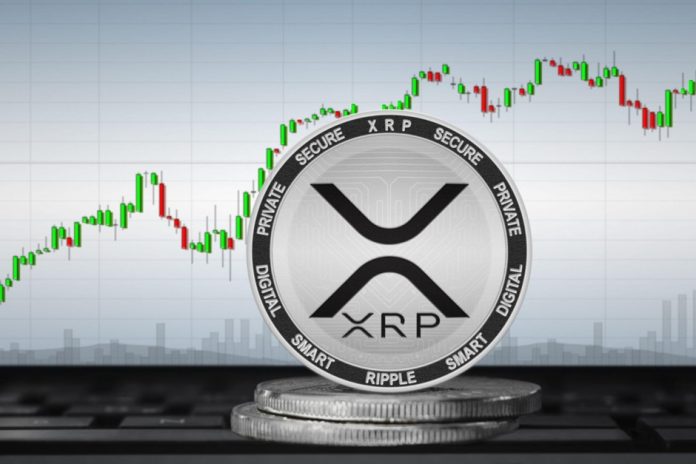
On November 5, 2025, Ripple Labs announced the completion of a $500 million strategic investment round, valuing the company at $40 billion.

This marks Ripple’s first external funding since 2019 and comes amid a surge in institutional interest in blockchain-based financial tools. The round was led by Fortress Investment Group and Citadel Securities, with participation from heavyweights like Pantera Capital, Galaxy Digital, Brevan Howard, and Marshall Wace.

Notably, Ripple’s president Monica Long emphasized that the company wasn’t actively seeking capital but responded to strong demand from these investors, signaling confidence in its pivot toward broader financial services.

$40 billion (a ~300% increase from its last round in 2019 at $10 billion). Announced November 5, 2025; fits within the first week of November. Follows a $1 billion share tender offer earlier in 2025 at the same valuation; Ripple also repurchased over 25% of its shares to align with partners

This raise isn’t just financial firepower—it’s a vote of confidence from traditional finance giants betting on Ripple’s role in bridging crypto with real-world applications.

CEO Brad Garlinghouse described it as “validation of Ripple’s growth strategy and business built on the foundation of XRP,” highlighting the company’s evolution from a payments startup to a diversified platform.

Ripple has long been synonymous with cross-border remittances via its Ripple Payments network (powered by XRP), which has processed over $95 billion across 75 regulatory licenses in the past two years.

The new capital is earmarked to accelerate expansion in several high-growth areas: Stablecoins: Ripple is doubling down on its RLUSD stablecoin, recently partnering with Mastercard for settlement services.

This positions RLUSD as a compliant, enterprise-grade option for tokenized payments, potentially rivaling USDC or USDT in institutional adoption.

Payments Infrastructure: Building on XRP’s speed (3-5 second settlements) and low cost, Ripple is enhancing global remittance tools. Recent integrations, like Clear Junction’s multi-currency SWIFT service, underscore this shift toward seamless fiat-crypto bridges.

The funds will fuel custody services for crypto assets, prime brokerage for institutions, and corporate treasury solutions using digital assets. Ripple has made six acquisitions in the last two years (two over $1 billion), broadening its footprint in these domains.

This aligns with a broader crypto-friendly U.S. regulatory environment under the Trump administration, including potential stablecoin legislation and DOJ signals that decentralized protocols like XRP won’t face charges.

On-chain metrics back the momentum: Over 21,000 new XRPL wallets emerged in just 48 hours last week—the largest surge in eight months—hinting at rising adoption. While Ripple’s valuation tripled, XRP’s price has been more tempered, trading around $2.28 as of November 5 up slightly from a weekly 14% dip but far from its July 2025 all-time high of $3.65.

Analysts attribute this to broader market caution (e.g., Bitcoin dipping below $104K), but see long-term upside from: ETF Potential: Spot XRP ETFs from Bitwise and Grayscale could launch by mid-November, unlocking institutional inflows.

Whale Activity: Subtle accumulation amid low volume suggests big players are positioning for growth. X discussions are electric, with users like XRPIntelWire and Crypto_Barbbiet amplifying the news as a “tectonic shift” for global finance.

In short, this funding cements Ripple’s status as a crypto infrastructure powerhouse, with XRP at its core. If stablecoin and payments adoption accelerates as planned, it could propel XRP toward new highs—watch for ETF news and RLUSD milestones in the coming weeks.

Solana DeFi TVL Growth, A Strong Q3 Performance

Solana’s decentralized finance (DeFi) total value locked (TVL) surged 32.7% quarter-over-quarter (QoQ) in Q3 2025, reaching $11.5 billion by the end of September.

This marks a robust recovery and expansion for the ecosystem, driven by key protocols and broader market momentum. Solana’s DeFi TVL has shown volatility but consistent upward trajectory in USD terms over 2025, fueled by low fees ($0.00025 per transaction), high throughput (up to 65,000 TPS), and innovative protocols.

-64% (from Q4 2024): Sharp drop amid market uncertainty, but stablecoin market cap rose 145% to $12.5B offsetting some losses. +30.4% led by Kamino ($2.1B TVL, +33.9% QoQ) and staking growth (64.8% of SOL supply staked, $60B total). DEX volumes dipped 45.4%, but capital efficiency improved.

Top protocols: Kamino ($2.8B, +33.1%), Jupiter ($2.6B, +59.6%), Raydium ($2.3B, +32.3%). Stablecoins hit record $14.1B; RWAs grew 41.9% to $682M. Spot DEX volume +17% to $4B daily.

Early Q4 snapshots (e.g., Nov 5) show temporary dips to ~$9.9B due to price corrections, but Q3 end-of-quarter figures hold at $11.5B. Kamino and Jupiter dominated, with Jupiter’s new Lend product (powered by Fluid) boosting liquidity.

These two alone accounted for ~46% of Solana’s DeFi TVL. Record stablecoin inflows ($14.1B) provided a stable base for lending and trading. Real-world assets (RWAs) like Ondo’s USDY and BlackRock’s BUIDL tokenized funds added $682M, up 41.9% QoQ.

Despite a broader DeFi TVL record of $237B across chains (Ethereum at ~$92B), Solana solidified its #2 spot behind Ethereum, with superior capital efficiency—generating $562M in Q2 revenue alone via high APRs (e.g., 14% on stablecoin pools vs. Ethereum’s 3%).

Global DeFi activity cooled daily active wallets -22% QoQ, but Solana bucked the trend with +17% DEX volume growth, highlighting its appeal for high-speed, low-cost trading.

Implications for SOL and Beyond

This TVL milestone underscores Solana’s maturation as a DeFi powerhouse, potentially signaling bullish momentum for SOL price (which hovered around $170-200 in late Q3).

With ETF launches (e.g., Bitwise BSOL in Oct 2025) and ongoing upgrades like Jupiter’s ICO platform, expect continued inflows. However, risks like network outages and market volatility persist—watch on-chain metrics like active addresses (2.2M+ daily) for sustained health.

Jupiter has transformed from a simple DEX aggregator into the cornerstone of Solana’s DeFi ecosystem, often dubbed the “everything exchange for everyone.” Launched in 2021, it now commands ~95% of Solana’s DEX aggregator market share, routes billions in monthly volume, and integrates seamlessly across swaps, perps, lending, and more.

As of November 2025, with $3.58B in TVL, Jupiter isn’t just a tool—it’s Solana’s DeFi operating system, prioritizing user-centric innovation over hype. This deep dive covers its mechanics, growth, tokenomics, and future trajectory, grounded in on-chain data and recent developments.

At its heart, Jupiter is a liquidity aggregator that scans dozens of Solana DEXs (e.g., Raydium, Orca, Meteora) to find the optimal trade route, minimizing slippage and fees while maximizing execution speed.

It leverages Solana’s high throughput up to 65,000 TPS for near-instant settlements. For any swap, Jupiter’s engine (now Ultra v3) evaluates 50+ liquidity sources in real-time, splitting orders across protocols for the best price.

This includes intermediary swaps (e.g., SOL ? USDC via multiple AMMs) and supports every Solana token, even low-liquidity or “forgotten” ones via RTSE (Real-Time Slippage Estimator).

Beyond basic swaps, it offers CEX-like features: limit orders, dollar-cost averaging (DCA), and perpetuals up to 100x leverage with Pyth oracles for accurate pricing. Gasless trading no SOL needed for fees and MEV protection make it accessible for retail users.

Perpetuals (Jupiter Perps): Dominates Solana’s perps market with 80-85% share early in 2025 compressing to ~45% by September amid competition from Drift. Deep liquidity from JLP (Jupiter Liquidity Provider) pools ensures low slippage; recent updates cut SOL borrow fees by 25% for parity with BTC/ETH positions.

Lending (Jupiter Lend): Launched in May 2025 with Fluid, it hit $1B+ TVL weeks after beta. Features high-LTV borrowing (e.g., 7.5x leverage on Multiply) and yields like 16.9% APY on JupSOL/SOL pairs. It’s one of Solana’s fastest-growing protocols, emphasizing capital efficiency over risky over-leverage.

Jupiter’s edge-Ultra v3 Engine: Delivers 96% success rates, 0-1 block confirmations, and 10x lower fees than competitors. It verifies routes pre-execution, preventing “catfished” quotes, and expands gasless swaps ecosystem-wide.

Ecosystem Ties: Powers 35% of Solana’s DeFi invocations; integrates with deBridge for cross-chain bridging. Partnerships include Ethena Labs (for JupUSD), Kalshi (predictions market, Oct 2025), and Meteora (LP strategies).

It’s “frontendless” for new DEXs—protocols like Bloom rely on Jupiter for user routing. Jupiter’s growth mirrors Solana’s resurgence, with Q3 2025 revenue hitting $46M up from $26.5M in Jan. It generates fees via 0.05-0.1% per swap, sharing with partners (e.g., Phantom earns 80% of affiliate revenue).

Early Q4 dips tied to market corrections, but perps and lending inflows persist.Jupiter’s efficiency shines: 4% compute usage for 84% perp volume (vs. competitors like Zeta at 70% for 0.3%). Stablecoin volumes hit $19.4B YTD, with Jupiter capturing $750M in JLP for yield redistribution.


Top 4 Coins Set for Big Moves to Accumulate Right Now, Ignore Solana (SOL) & Ethereum (ETH)

0

Solana and Ethereum are among the cryptos to own for long-term sustainability. However, if you’re looking for big gains this cycle, you must ignore Solana and Ethereum as their growth is incremental.  The next wave of outsized gains could come from projects with tighter supply, novel utility, and fresh cycles. Here are four coins primed for big moves right now.

Little Pepe (LILPEPE): The Meme Layer-2 That Could Explode

Little Pepe isn’t your average meme token. Built as a Layer 2 blockchain dedicated to meme coins, it addresses major pain points in the market. This includes hefty gas fees, sniper-bot attacks, and long wait periods for confirmations. So, the initiative gives traders and developers a safe and fair playground. Its core tool, Pepe’s Pump Pad, is a dedicated launchpad for meme creators. This provides the ecosystem with a genuine infrastructure edge beyond mere hype. With zero-tax trading and built-in anti-sniper protections, the project distinguishes itself from the numerous meme tokens that rely solely on virality and offer little else. Momentum is already building. The presale has raised over $27.4 million, with more than 16.63 billion tokens sold. The project is in Stage 13, with only a few stages left before listings on two top-tier centralized exchanges. This offers an early entry opportunity you can’t afford to miss. A $ 777,000 giveaway rewards presale participants and serves as an avenue to make quick gains.

The anonymous veteran team with experience launching major meme projects adds further strategic strength. As markets retreat toward social and meme-driven assets, Little Pepe’s infrastructure and cultural momentum fusion positions it perfectly for exponential expansion. When compared to SOL or ETH, Little Pepe wins the ROI race. The narrative is fresh, the entry price is still low, and utility features are not yet fully baked into market expectations. While the giants may grow steadily, LILPEPE has the chance to surge, perhaps commanding 50× to 100× returns if the listing catalysts, community momentum, and launchpad network align.

Hyperliquid (HYPE): Revenue-Backed Recovery Play with Whale Support

Hyperliquid has quietly logged impressive metrics. In the past 30 days alone, it generated $102.43 million in revenue, ranking it just behind Tether and Circle among crypto infrastructure firms.  On-chain and derivatives data indicate rising whale accumulation and a funding rate that has flipped positive. This implies that longs are paying shorts. Such a pattern is a historically bullish configuration. Support is at $36.51, according to technical analysts. This level is in line with the 200-day EMA. The next level of resistance, on the other hand, is close to $51.15. With an official listing announced on OKX in early November, HYPE is positioned for a recovery rally if momentum holds.

Zcash (ZEC): Privacy Revival Meeting Structural Demand

Zcash is one of the most impressive rebounds in crypto’s infrastructure tier. ZEC is up over 700 % since September. This surge is driven by hype and renewed interest in privacy and zero-knowledge technology.  Over 30% of the ZEC supply resides in private pools, indicating that users value shielded transactions. The launch of the Zashi wallet simplifies private transfers, and new cross-chain integrations enable users to operate between transparent and private networks seamlessly. As global regulation creeps forward, privacy becomes a differentiator rather than a liability. Zcash’s ecosystem may be undervalued by many. If it gains adoption, ZCash could see an even bigger rally.

Aster (ASTER): Whale Accumulation & Institutional Signals

Aster has seen renewed traction via whale accumulation. Large wallets scooped up over 155 million tokens worth $155 million within days. This suggests institutional confidence is creeping back in. The Chaikin Money Flow just turned positive, indicating capital inflow. Meanwhile, Perpetual trading volume has spiked. The 30-day volume sits at 306.05 billion. Binance cofounder, Changpeng has announced an investment of $2.5 million into ASTER. This news has fueled optimism and credibility. Technical indicators point toward breakouts, positioning Aster as a smaller-cap alternative with significant upside. A token like this offers high-beta exposure in a cycle that may reward earlier entries.

Conclusion

While Solana and Ethereum remain core pillars, their growth stories are increasingly priced in. The real opportunity lies in smaller-cap tokens with fresh narratives and clear catalysts.  These four coins have already proven their potential for big moves. In November, they could see a huge rally. Thus, now is the best time to accumulate them. Little Pepe is quickly approaching price discovery. Missing the presale stage could lead to late entry.  Visit littlepepe.com for more information about the presale.

For more information about Little Pepe (LILPEPE) visit the links below:

Website: https://littlepepe.com

Whitepaper: https://littlepepe.com/whitepaper.pdf

Telegram: https://t.me/littlepepetoken

Twitter/X: https://x.com/littlepepetoken

$777k Giveaway: https://littlepepe.com/777k-giveaway/

Nvidia’s Jensen Huang Reports Soaring Demand for Blackwell Chips Despite Company’s Shutout from China’s Market

0

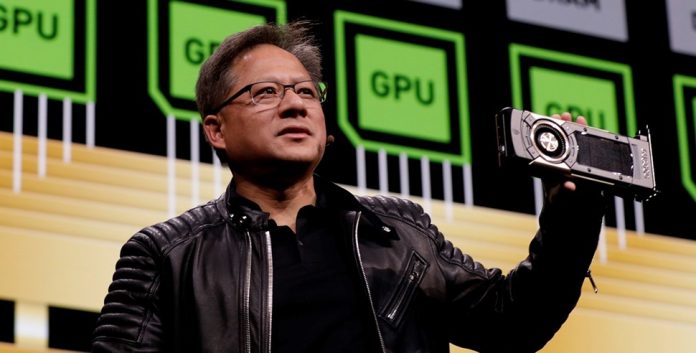
Nvidia CEO Jensen Huang said on Saturday that the chipmaker is experiencing “very strong demand” for its state-of-the-art Blackwell processors, even as the company remains locked out of China’s lucrative market under U.S. export restrictions.

The remarks came during Huang’s visit to Taiwan for an event organized by Nvidia’s long-time partner, Taiwan Semiconductor Manufacturing Co (TSMC), where he reaffirmed the strength of the global AI chip boom and Nvidia’s growing reliance on TSMC’s production capacity.

“Nvidia builds the GPU, but we also build the CPU, the networking, the switches, and so there are a lot of chips associated with Blackwell,” Huang told reporters in Hsinchu.

He noted that demand for the firm’s AI hardware has surged across the U.S., Europe, and the Middle East, where cloud providers and AI startups are racing to secure high-performance computing capacity.

TSMC’s CEO C.C. Wei confirmed that Huang had requested additional wafer supplies but said the quantity was confidential.

“TSMC is doing a very good job supporting us on wafers,” Huang said, crediting the Taiwanese foundry’s efficiency and innovation for Nvidia’s record growth.

In October, Nvidia became the first company to reach a $5 trillion market capitalization — a milestone Wei described as “historic,” calling Huang a “five-trillion-dollar man.”

The demand for Nvidia’s new Blackwell platform — which integrates advanced graphics, networking, and compute technologies — highlights the company’s near-total dominance in AI hardware. The chip is the engine behind major generative AI systems such as OpenAI’s GPT models and underpins data center operations at firms like Amazon, Microsoft, and Google.

However, Nvidia’s growth is unfolding under the weight of geopolitical constraints that have effectively cut off access to one of its largest potential markets. Since 2023, Washington has banned the sale of Nvidia’s most advanced AI chips — including the A100, H100, and now the Blackwell series — to China, citing concerns that the hardware could accelerate Beijing’s military and artificial intelligence capabilities.

The restrictions have been steadily tightened under the Trump administration, with the U.S. government now blocking Nvidia from shipping even downgraded versions of its chips, such as the A800 and H800, which were specifically designed to comply with earlier export limits.

Huang confirmed on Friday that “there are no active discussions” about selling Blackwell chips to China and had said the company’s share of the advanced AI chip market in China is now “zero.”

Before the restrictions, China accounted for roughly 20% of Nvidia’s total revenue, with tech giants like Alibaba, Tencent, and Baidu among its biggest customers. Their heavy investments in AI training clusters had made China one of the world’s fastest-growing buyers of data center GPUs. The ban has since forced these companies to seek alternative suppliers or accelerate domestic chip development. Beijing has responded by fast-tracking local semiconductor firms such as Huawei, which has developed its Ascend AI chips as a partial substitute for Nvidia’s products.

Despite losing this vast market, Nvidia’s global demand has more than compensated for the shortfall. The company has seen explosive growth in data center sales, driven by the worldwide race to build AI supercomputing infrastructure. With supply shortages still limiting production, even major U.S. tech firms are competing for allocation slots.

Huang acknowledged that Nvidia continues to face occasional supply constraints — not just in wafer capacity but also in high-bandwidth memory (HBM), which is crucial for AI workloads.

“We have three very, very good memory makers — SK Hynix, Samsung, Micron — all incredibly good memory makers, and they have scaled up tremendous capacity to support us,” he said.

The global chip supply chain has entered what analysts describe as an “AI super cycle,” with suppliers expanding production to meet demand that shows no sign of slowing. SK Hynix said last week it had already sold out its entire 2025 output of advanced memory chips, while Samsung Electronics confirmed it was in “close discussion” to supply its next-generation HBM4 chips to Nvidia.

Even without China, Nvidia’s trajectory remains unmatched. Its Blackwell chips, expected to surpass the performance and efficiency of the current Hopper generation, are central to nearly every major AI deployment worldwide. The company’s success has also bolstered Taiwan’s TSMC, which manufactures nearly all of Nvidia’s GPUs using its most advanced process nodes.

Huang’s fourth trip to Taiwan this year underscored the growing strategic importance of that partnership.

Berkshire Hathaway Rises as Wall Street Slumps on AI Valuation Fears

0

Berkshire Hathaway shares climbed this week, bucking a broader Wall Street downturn driven by renewed concerns over inflated artificial intelligence valuations and slowing U.S. economic momentum.

The conglomerate’s Class B and Class A shares advanced 4.5% following a robust earnings report, even as the Nasdaq tumbled 3% — its steepest weekly decline since April.

According to CNBC, the gains trimmed Berkshire’s underperformance gap against the S&P 500 to 4.3 percentage points, down from 12.2 percentage points in late October. The rally came after Warren Buffett’s company posted a 34% jump in third-quarter operating profits to nearly $13.5 billion, underscored by a sharp rebound in its insurance business, where underwriting income surged 200%.

The report, which reflected broad strength across Berkshire’s subsidiaries, also highlighted the company’s growing liquidity position. As of September 30, Berkshire’s cash pile stood at $381.7 billion, up 10.9% from the end of June — a new record. Adjusted for BNSF Railway’s cash and the timing of Treasury bill purchases, the total comes to about $354.3 billion, marking a 4.3% rise over the same period.

Notably, Berkshire made no share repurchases during the quarter, signaling Buffett’s belief that the stock remains fairly valued despite its sluggish performance earlier in the year. Equity sales once again outpaced purchases, a conservative stance consistent with Buffett’s cautious view of the current market environment.

While tech-heavy indices have faltered under pressure from overvaluation worries, Berkshire’s diversified portfolio — spanning insurance, railroads, utilities, and consumer goods — continues to benefit from its defensive positioning. Analysts say the company’s record cash reserves give it significant flexibility to act if market volatility creates new value opportunities.

Adding intrigue to the week’s developments, Berkshire confirmed that Warren Buffett will issue a special message on November 10, fueling speculation that it could be one of his final public notes as CEO. In a brief statement, the firm said the release will address “philanthropy, Berkshire, and other matters that shareholders and others may find of interest.” The announcement follows reports suggesting Buffett has been preparing to formalize more of his long-term succession and giving plans.

Meanwhile, in a separate move that underscores Buffett’s continued confidence in Japan’s corporate sector, Berkshire has reportedly hired banks to arrange another yen-denominated bond sale, according to Bloomberg and Nikkei. The company has also filed a preliminary prospectus with the U.S. Securities and Exchange Commission.

It would mark the second yen borrowing by Berkshire this year — a clear signal that it intends to deepen its investments in Japan’s five major trading houses, which it began acquiring stakes in back in 2019. Those holdings have become a core part of Berkshire’s international strategy, reflecting Buffett’s admiration for the trading companies’ diversified business models and shareholder-friendly practices.

The market welcomed the news: shares in four of the five trading houses advanced this week, led by Itochu’s 6.5% gain. All five stocks now trade near all-time highs, pushing the combined value of Berkshire’s disclosed holdings to roughly $33 billion, up from $31 billion just a month earlier. The total could be even higher if additional, undisclosed purchases have been made in recent weeks.

As Wall Street recalibrates its expectations for AI-driven growth and tech valuations cool, Buffett’s traditional, cash-rich discipline still resonates with investors seeking stability amid market froth – with analysts attributing it to Berkshire’s rise.

Whether his message on Monday turns out to be a philosophical send-off or another sober assessment of markets, it is likely to capture the attention of investors across the globe — just as Berkshire’s balance sheet continues to do.

“It Doesn’t Make Sense For One Company To Try And Develop Everything:” Honda Reassesses U.S. EV Strategy

0

Honda Motor Co. is recalibrating its electric vehicle (EV) ambitions in the United States amid shifting market dynamics, high production costs, and uncertainty over policy direction under the Trump administration.

The Japanese automaker’s upcoming Series 0 electric SUV, set to debut next year, will be roughly the size of the popular CR-V but is expected to carry a much higher price tag—a prospect that could deter cost-conscious buyers.

Speaking with journalists in Japan last week, Honda CEO Toshihiro Mibe acknowledged the challenge of producing low-cost EVs in the current environment.

“So, for the future, we will consider coming up with EVs under $30,000 as well,” he said, though he added that such plans are unlikely to materialize in the immediate term.

Mibe pointed to changing conditions in the U.S. market, noting that the removal of Inflation Reduction Act (IRA) subsidies and policy reversals under the Trump administration have dampened momentum for EV adoption.

“What’s making it difficult, of course, is with the IRA subsidies now gone, with the Trump administration in place, we have the sense that maybe EV growth has been moved back out, maybe out five years in the further future,” he explained.

The Honda boss said the company is watching political developments closely, including the upcoming midterm elections, to gauge the administration’s approach to environmental policy.

“If we think about whether we have to really come up with those affordable EVs right away, we get the feeling not really,” he said, suggesting the company may delay its push for mass-market electric models until closer to 2030.

Currently, Honda plans to lean on hybrid vehicles as a bridge to full electrification. Mibe said the automaker’s next-generation hybrid powertrains will begin rolling out in 2027 and are expected to reduce production costs by about 20%. That, he noted, will give Honda more flexibility to balance affordability and emissions goals in the near term.

Despite the short-term slowdown, Honda maintains its long-term target of achieving carbon neutrality by 2050. With the average vehicle lifespan exceeding a decade, Mibe said the company recognizes it must ramp up EV offerings toward 2040 to meet its climate commitments. He also reaffirmed the need for affordable, sub-$30,000 EVs in the U.S. market if electrification is to reach the mainstream.

On the technology front, Honda is intensifying efforts to collaborate with other automakers on software development—a key area of competition in next-generation vehicles.

“When it comes to software-defined vehicles, it doesn’t make sense for one company to try and develop everything,” Mibe said.

Honda’s earlier collaboration with General Motors on the Prologue and Acura ZDX—both electric models—helped the company recognize the complexity and financial burden of EV development. The Acura ZDX, notably, was recently discontinued. Mibe said sharing software development costs across partners could help make EV production more sustainable in the long term.

He cited both GM and Nissan as potential collaborators, though he stopped short of confirming any new partnerships.

Mibe’s outlook mirrors that of Volkswagen Group, which invested $5.8 billion last year in a joint venture with Rivian to access the startup’s zonal electrical architecture and software stack. That deal, much like Honda’s envisioned approach, underscores how legacy automakers are increasingly looking to pool resources in the software race while navigating a global EV slowdown.

For Honda, the near-term focus will remain on hybrids and strategic collaboration. Affordable EVs will have to wait—at least until political clarity and cost structures align with the company’s long-term vision.