DD
MM
YYYY

PAGES

DD
MM
YYYY

spot_img

PAGES

Home Blog Page 2025

Former Uber CEO, Travis Kalanick, Said Company Screwed Up Scrapping Self-Driving Ambitions

0

Former Uber CEO Travis Kalanick has voiced his frustration over the company’s decision to abandon its self-driving ambitions, calling it a major misstep in light of the rapid advancements in autonomous ride-hailing.

Speaking at the Abundance Summit in Los Angeles on Wednesday, Kalanick pointed out that Uber was on the verge of catching up with Waymo before new management pulled the plug on its self-driving division.

“Look, [new management] killed the autonomous car project we had going on. At the time, we were really only behind Waymo but probably catching up, and we were going to pass them in short order … I wasn’t running the company when that happened, but you know, you could say, ‘Wish we had an autonomous ride-sharing product right now. That would be great.’”

Uber’s decision to offload its self-driving unit, Advanced Technologies Group (ATG), to Aurora Innovation in 2020 was seen as a fire sale, prompted by financial struggles and mounting legal troubles. At the time, Uber had already poured hundreds of millions of dollars into the effort, with no clear path to profitability. Under new leadership, the company chose to scale back its ambitions and focus on its core ride-hailing and delivery businesses.

However, as Kalanick’s remarks highlight, the decision may have cost Uber a crucial opportunity in the emerging autonomous ride-hailing industry. While Uber stepped back, Waymo surged forward, deploying its robotaxis in cities like San Francisco, Los Angeles, and Phoenix. Other companies, including Tesla, have also lowered interest in autonomous ride-hailing, betting that robotaxis will be the future of transportation.

Robotaxis: The Future of Ride-Hailing?

The concept of autonomous ride-hailing, or “robotaxi” services, has been gaining traction as the next evolution of urban mobility. The idea is simple: fully self-driving vehicles could replace human drivers, reducing costs for companies like Uber while improving efficiency and safety.

Elon Musk, Tesla’s CEO, has been one of the loudest proponents of this vision, repeatedly stating that Tesla’s Full Self-Driving (FSD) software will eventually power a fleet of autonomous taxis. Musk has predicted that robotaxis will make ride-hailing so cheap that car ownership will become unnecessary for many people. Tesla’s strategy hinges on removing human drivers from the equation entirely, making ride-hailing vastly more profitable by eliminating labor costs.

For Uber, this would have been a game-changer. The company’s entire business model relies on a network of human drivers who take a significant cut of fares. Uber has faced persistent issues with driver shortages, fluctuating wages, regulatory battles, and customer complaints about driver behavior. Robotaxis could have solved these challenges by providing a more reliable, cost-effective alternative.

Kalanick’s comments suggest that he saw autonomous ride-hailing as Uber’s inevitable future. By scrapping its self-driving program, the company effectively handed over the opportunity to competitors.

Did Uber Give Up Too Soon?

Uber’s retreat from self-driving technology wasn’t solely about finances. The company was embroiled in a high-profile lawsuit with Waymo, which accused Uber of acquiring stolen trade secrets related to self-driving technology. The legal battle resulted in a $245 million settlement in 2018 and cast a shadow over Uber’s autonomous ambitions.

Faced with mounting losses and pressure from investors to turn a profit, Uber’s leadership opted to cut its self-driving division in 2020. At the time, the move was seen as pragmatic—autonomous technology was still years away from full commercialization, and Uber needed to focus on sustainable revenue streams.

However, the industry has since shifted dramatically. Waymo’s self-driving cars are now a regular sight in multiple cities, and Tesla continues to make bold claims about its forthcoming robotaxi network.

Uber’s Risky Reliance on Waymo

Uber has now partnered with Waymo, integrating its robotaxis into the Uber platform in select cities, including Austin. The partnership allows Uber users to hail Waymo autonomous vehicles, with Uber hoping its vast customer base will help expand the service.

However, as Kalanick’s comments imply, this partnership may not be sustainable in the long run. If Waymo’s service gains traction, it could decide it no longer needs Uber as a middleman. Uber, which once positioned itself as the future of transportation, could find itself sidelined by the very technology it abandoned.

The ride-hailing industry is changing, and autonomous vehicles are at the center of that transformation. Companies that invest in self-driving technology today may dominate the market tomorrow. By walking away from its autonomous ambitions, Uber may have sacrificed a once-in-a-generation opportunity—one that Kalanick clearly believes the company should have pursued.

Examining Elumelu’s Claim that “Nowhere Else In The World Can Match The ROI That Africa Offers”

0

For years, Africa has been heralded as the last frontier of economic opportunity—a continent bursting with potential, rich in natural resources, and home to the world’s youngest population. Yet, despite the grand projections and optimism, Africa remains one of the poorest continents, struggling with infrastructural deficits, governance issues, and economic instability.

So, when Nigerian billionaire and investment mogul Tony Elumelu took to X to declare that “there is nowhere else in the world that can match the return on investment that our continent offers,” it was bound to spark debate.

Elumelu, a leading proponent of “Africapitalism”—a philosophy that promotes private-sector-driven development—argues that Africa presents an unparalleled investment opportunity. He highlights the continent’s young and rapidly growing population, a $3.4 trillion market under the African Continental Free Trade Area (AfCFTA), and the booming digital economy as key drivers of economic transformation.

“Africa has the youngest population in the world,” he wrote. “By embracing Africapitalism, we emphasize the critical role of the private sector, particularly entrepreneurs, in driving economic and social development.”

A Case for Africa’s Investment Potential

There’s some data to support his optimism. The African Development Bank projects that the continent’s GDP will expand at an average rate of 4% annually over the next decade, driven by entrepreneurship, technological innovation, and intra-continental trade. Internet penetration has surged, reaching 45% in 2023, fueling the rise of fintech, e-commerce, and other digital industries. In 2022, African startups raised a record $5 billion in venture capital funding, proving that global investors are taking notice.

Moreover, the AfCFTA agreement is designed to create a single market of 1.3 billion people, promising to boost intra-African trade by 52% by 2025. If fully implemented, the International Monetary Fund (IMF) estimates it could add $450 billion to the continent’s GDP by 2035, further enhancing Africa’s appeal as an investment destination.

Elumelu believes the time has come for Africa to take control of its economic narrative. “Traditional trade models have too often excluded or marginalized Africa,” he noted. “Now is the time for the world to partner with Africa for mutual and lasting benefit.”

If Africa Offers the Best ROI, Why Is It Still Poor?

However, despite Elumelu’s assertion, Africa remains economically fragile. The question many analysts have asked is: If Africa truly offers unmatched returns on investment, why has it remained poor?

With vast natural resources—including oil, gold, and agricultural wealth—Africa should, in theory, be a global economic powerhouse. But in reality, the continent has struggled with systemic corruption, weak institutions, poor infrastructure, and economic mismanagement. Many of its governments are plagued by policy inconsistencies that scare away investors. Insecurity—ranging from political instability to insurgencies and ethnic conflicts—further complicates the business environment.

Even within Elumelu’s home country, Nigeria, one of Africa’s largest economies, economic challenges persist. The country has faced multiple recessions in recent years, high inflation, and currency devaluation. Also, many multinational companies have exited the country citing unfavorable business climate.

Furthermore, Africa remains largely dependent on foreign aid and loans, further calling into question the claim of unmatched ROI. If investments in Africa yielded such high returns, some analysts argue, wouldn’t the continent be experiencing unprecedented economic prosperity by now? Wouldn’t investors be scrambling to pour money into its markets?

Major global investors still favor markets like the U.S., China, and parts of Europe, where regulatory frameworks are stronger and risks are lower. This is backed by the World Bank’s Ease of Doing Business Index, where many African nations rank poorly due to bureaucratic bottlenecks, weak legal frameworks, and infrastructural deficiencies.

Despite being home to some of the world’s fastest-growing economies, the continent still struggles to attract and retain foreign direct investment (FDI) at the scale seen in Asia or the Middle East.

Moreover, while Africa’s digital economy is growing, its development remains uneven. A significant digital divide persists, with many rural areas lacking basic internet access, and power outages remain a major challenge across the continent. High youth unemployment—despite Africa’s demographic advantage—also suggests that the private sector has not expanded rapidly enough to absorb the growing workforce.

What Africa Needs to Truly Unlock Its Investment Potential

Elumelu himself acknowledges that Africa’s full potential cannot be realized without addressing critical barriers. He points out that investment in infrastructure, digital connectivity, and energy access must be prioritized.

“To fully leverage technology, we must address the digital divide,” he said. “Investments in broadband infrastructure, digital literacy, and cybersecurity are critical to ensuring technology drives equitable growth.”

The billionaire entrepreneur has backed up his words with action. Through his Tony Elumelu Foundation, he has supported an estimated 21,000 African entrepreneurs, who have collectively created more than 1.5 million jobs across all 54 African countries. His efforts highlight the importance of private-sector-driven growth, but systemic challenges remain.

For Africa to truly deliver on its promise, policymakers must do more to create a favorable business environment. Stronger institutions, policy consistency, anti-corruption measures, and investment-friendly regulations will be crucial in converting Africa’s potential into tangible economic prosperity.

However, Elumelu’s optimism is not misplaced—Africa does offer tremendous opportunities. But his assertion that “nowhere else in the world can match the return on investment that our continent offers” remains highly contested. While the continent boasts massive potential, structural deficiencies, governance failures, and investment risks continue to deter many global investors.

If Africa is to live up to the promise of high returns, economists believe that it must first create an ecosystem where investments can thrive—not just in theory, but in reality. Until then, Africa’s paradox will remain: a land of immense opportunity, yet still struggling to fully capitalize on it.

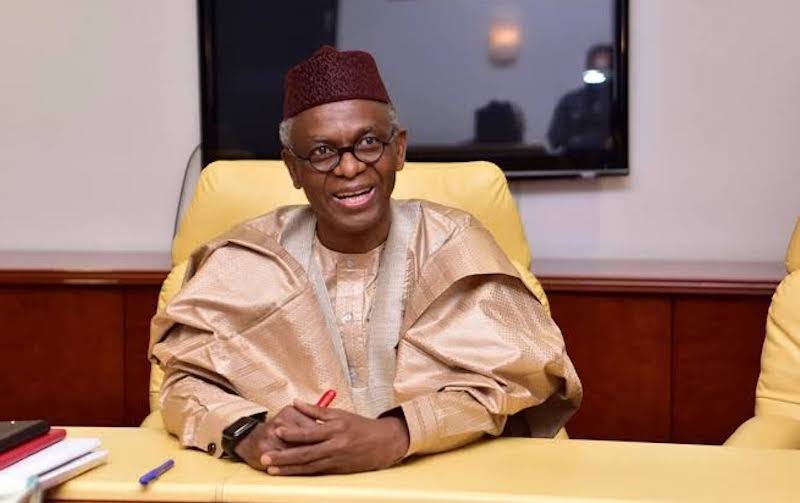
El-Rufai Laments Tinubu’s Failures, Says He Regrets Backing Him Despite Drug, Certificate Scandals

0

Former Kaduna State Governor, Nasir El-Rufai, has expressed deep regret over President Bola Tinubu’s governance failures, revealing that he and others supported his presidency despite being fully aware of his cocaine trafficking and certificate forgery scandals.

In a revealing interview with BBC Hausa, El-Rufai said he had high hopes for Tinubu’s presidency because of what the latter achieved in Lagos State but now feels disappointed by the way the government has turned out.

“What pains me is that the government we supported and had confidence in would do well because we saw what Tinubu did in Lagos despite his challenges,” El-Rufai lamented.

In a moment of unusual candor, El-Rufai acknowledged that he and others were fully aware of Tinubu’s past controversies, including his involvement in narcotics trafficking and his disputed academic credentials from Chicago State University (CSU).

“We all know about his issues in Chicago, but we thought if he could replicate his work in Lagos for Nigeria, let’s support him. However, he failed,” El-Rufai admitted.

This statement has reignited public outrage, with many Nigerians accusing El-Rufai of hypocrisy and selfishness.

Tinubu’s Cocaine Trafficking Scandal Resurfaces

El-Rufai’s reference to Tinubu’s “Chicago issues” is an allusion to the 1993 cocaine trafficking case, in which the Nigerian president forfeited $460,000 to the U.S. government after being linked to drug cartel operations and money laundering.

The case resurfaced during the 2023 election campaign, with many questioning how a man with such a history could be allowed to run for the highest office in Nigeria. However, El-Rufai and other Tinubu allies fiercely defended him, dismissing the allegations as political attacks.

Now, with Tinubu’s administration facing economic hardship, insecurity, and dwindling public trust, some of his former supporters, like El-Rufai, are openly criticizing him—a move many see as opportunistic.

The Certificate Forgery Scandal

El-Rufai also referenced Tinubu’s controversial Chicago State University (CSU) certificate, which came under scrutiny when opposition leader Atiku Abubakar sought legal action to compel CSU to release Tinubu’s academic records.

When the university finally responded, it failed to authenticate the certificate Tinubu submitted to Nigeria’s electoral commission (INEC), raising serious doubts about its legitimacy.

Backlash: Nigerians Slam El-Rufai as Selfish and Opportunistic

However, Tinubu’s campaign dismissed the controversy, branding it a non-issue, while El-Rufai remained silent at the time. Now, his sudden outburst against Tinubu has led many Nigerians to question his sincerity and motives.

El-Rufai’s comments have sparked outrage among Nigerians, with many accusing him of being a self-serving politician who only speaks out when things don’t favor him.

Many believe his frustration stems not from Tinubu’s failures but from his own exclusion from the government. El-Rufai had been widely expected to be appointed as a minister, but Tinubu’s administration dropped his nomination at the last minute, reportedly due to concerns about his handling of religious and ethnic tensions in Kaduna State.

Nigerians have also reminded El-Rufai of his role in legitimizing Tinubu’s presidency, especially his appearance at Chatham House in 2022, where he, alongside other APC leaders, answered questions on Tinubu’s behalf—a move that was widely criticized as evidence that Tinubu was unfit to govern.

Social media users and political analysts have pointed out that El-Rufai’s sudden change of tone is hypocritical, considering his past support for controversial leaders. His critics have described him as a politician who only aligns himself with power for personal gain, rather than for the good of the country.

El-Rufai, a founding member of the All Progressive Congress, recently resigned from the ruling party and joined the Social Democratic Party. Some political analysts predict that he may be laying the groundwork for his own presidential ambitions, possibly in 2027, by turning against Tinubu early enough to rebuild his political relevance.

Starlink Deepens African Expansion, Launches Service in Niger

0

Elon Musk-owned satellite internet service company, Starlink has deepened its African expansion with its launch of service in the Republic of Niger.

The West African country becomes the 18th African country that has embraced the use of Starlink to improve internet connectivity.

According to a tweet on X, announcing the launch, Starlink wrote,

“Starlink’s high-speed, low-latency internet is now available in Niger”.

The launch of Starlink in Niger comes after the military administration in the West African country, on October 2024, signed a pact with Starlink for its internet services in the country.

Nigerien communication and digital economy minister Sidi Mohamed Raliou said the agreement will allow Niger to benefit from a high-speed internet connection. The agreement aims to extend high-speed internet access to the entire nation while strengthening the country’s digital security.

“Starlink satellites already cover all of Niger. Schools, economic actors, universities, health, and agriculture will be able to benefit from this technology. Indeed this equipment has sometimes been used by terrorist groups to communicate and coordinate their actions. The partnership with Starlink will allow the Nigerien government to put in place reinforced security measures to prevent any illegal use of this technology”, he said.

The launch of Starlink in Niger will drive significant internet connectivity in the country. According to report, Niger’s internet penetration rate stood at 22.4 percent of the total population at the start of 2023. Analysis indicates that internet users in Niger increased by 219 thousand between 2022 and 2023.

For perspectives these user figures reveal that 20.72 million people in Niger did not use the internet at the start of 2023, suggesting that 77.6 percent of the population remained offline at the beginning of the year.

By 2024, estimates suggest this had risen to around 32%, though still far below the global average. Most internet access occurs via mobile devices, with 14.59 million cellular mobile connections active in early 2023, equivalent to 54.7% of the population. However, fixed broadband remains scarce, with only 3,596 subscriptions reported in 2012, and median fixed internet speeds were measured at 4.47 Mbps in 2023, up from 3.38 Mbps in 2022. Mobile connectivity dominates, but 3G and 4G coverage are limited, estimated at 24.87% and 18.41% respectively in 2024.

The introduction of Starlink in Niger formalized through an agreement with the military government in late 2024, aims to address these gaps. The satellite internet service targets an ambitious average speed of 200 Mbps, a significant leap from current capabilities, and seeks to extend broadband coverage to 80-100% of the country’s territory.

Starlink’s Impact Across Africa

Starlink has rapidly expanded its presence across Africa, offering high-speed connectivity to regions previously underserved by traditional internet infrastructure.

This expansion has significantly impacted the continent’s digital landscape, influencing both consumers and existing telecommunications providers.

Starlink’s network of over 6,000 satellites enables it to deliver fast internet services to remote and rural areas, effectively bridging the digital divide. In Nigeria, as of the third quarter of 2024, Starlink emerged as Nigeria’s second-largest internet service provider, boasting 65,564 subscribers. This significant growth saw it surpass FiberOne Broadband Ltd, highlighting Starlink’s rapid expansion since its entry into the Nigerian market in January 2023.

Notably, the introduction of Starlink has disrupted Africa’s telecommunications market, prompting traditional providers to reassess their strategies. The service’s ability to offer high-speed internet in areas previously neglected by conventional providers has led telecom operators to expand their reach into rural regions. This shift aims to counter Starlink’s growing influence and address the longstanding issue of limited connectivity in these areas.

In several major African cities, the demand for Starlink’s services has been so high that the service has quickly reached capacity, leading to reports of it being “sold out.” This phenomenon underscores the significant appetite for reliable internet services across the continent and highlights the existing gaps in the current telecommunications infrastructure.

Starlink’s expansion across Africa represents a pivotal development in the continent’s quest for comprehensive digital connectivity. By providing high-speed internet to underserved regions, it has not only enhanced individual access but also spurred traditional telecom providers to improve their services.

However, the journey is fraught with challenges, including regulatory compliance and market dynamics, which Starlink must navigate to sustain its growth and impact in Africa.

Defi Dungeons TGE on $GOLD Token Set to Launch on 19th March

0

DeFi Dungeons has released the tokenomics for its $GOLD token in preparation for its upcoming Token Generation Event (TGE), scheduled for Wednesday, March 19, 2025. The $GOLD token is described as the core currency of the in-game economy for DeFi Dungeons, a blockchain-based game that integrates decentralized finance (DeFi) mechanics, allowing players to earn and trade cryptocurrency within the game. The token is intended for in-game activities, such as staking rewards, and is positioned as a collectible rather than an investment product, with disclaimers emphasizing its volatility and lack of investment value.

While specific details of the tokenomics—such as total supply, allocation, or vesting schedules—were not fully outlined in the available information, the release has generated significant community interest, as evidenced by posts on X highlighting the TGE and subsequent NFT minting events. The tokenomics are framed as the “lifeblood” of the game’s economy, suggesting a design aimed at fostering engagement and rewarding players, though the exact mechanisms remain unclear without further disclosure.

The $GOLD token is the native cryptocurrency of DeFi Dungeons, a blockchain-based game that integrates decentralized finance (DeFi) mechanics. It serves as the primary in-game currency, facilitating various activities within the game’s virtual economy. While comprehensive details of the token mechanics are not fully disclosed in the available information, the following outlines the known and implied mechanics based on the project’s announcements and typical DeFi gaming structures.

$GOLD is used for in-game transactions and activities, such as purchasing items, crafting, farming, foraging, and other gameplay features that contribute to the player’s progression and economic engagement. This aligns with DeFi Dungeons’ design as a play-to-earn game, where players can earn cryptocurrency through participation. The token is also integral to staking rewards, suggesting that players can lock up their $GOLD tokens to earn additional tokens or other benefits, a common DeFi mechanic to incentivize holding and reduce circulating supply.

The tokenomics, described as the “lifeblood” of the game’s economy, likely include mechanisms to balance supply and demand, such as token burns, rewards distribution, and possibly governance features, though specifics on total supply, allocation, or vesting schedules remain undisclosed in the available data. Given the emphasis on $GOLD as a collectible rather than an investment, the mechanics are designed to prioritize gameplay utility over speculative value, with disclaimers highlighting the token’s volatility and lack of investment purpose.

Play-to-earn (P2E) game models are a category of blockchain-based games that allow players to earn cryptocurrency, tokens, or other digital assets through gameplay. These models have gained significant traction in the gaming and blockchain industries, particularly with the rise of decentralized finance (DeFi) and non-fungible tokens (NFTs). Below is a detailed explanation of P2E game models, their mechanics, economic structures, benefits, challenges, and examples.
Core Mechanics of Play-to-Earn Models.

Players earn native tokens (e.g., $GOLD in DeFi Dungeons) by completing tasks, quests, battles, or other activities within the game. Tokens serve as the primary currency for in-game transactions, such as purchasing items, upgrading characters, or accessing premium features. Tokens are typically blockchain-based, allowing them to be traded on decentralized exchanges (DEXs) or centralized exchanges (CEXs), giving them real-world value.

A blockchain game integrating DeFi mechanics, with a focus on in-game activities like farming, crafting, and staking. Uses $GOLD as the primary currency. Players earn $GOLD through gameplay and can stake it for rewards. NFTs (e.g., equipment, land) are likely part of the ecosystem, though specifics are unclear. Still in development, with its Token Generation Event scheduled for 19th March 2025, but aims to leverage DeFi for player engagement. P2E games are increasingly merging with metaverse platforms, creating immersive worlds where players can socialize, create, and earn.