DD
MM
YYYY

PAGES

DD
MM
YYYY

spot_img

PAGES

Home Blog Page 2032

Adobe Shares Plunge 13% Despite Beating Earnings, as Investors Express Concerns Over Company’s Competitive Edge in AI Space

0

Adobe’s shares dropped 13% despite reporting earnings that exceeded analysts’ expectations, as investors expressed concerns over the company’s competitive positioning in the rapidly evolving AI space.

A report by CNBC revealed that investors are worried over the company’s long-term growth trajectory and Artificial Intelligence (AI) monetization strategy.

For the most recent quarter, Adobe reported adjusted earnings of $5.08 per share on $5.71 billion in revenue, exceeding analysts’ expectations of $4.97 per share and $5.66 billion in revenue, according to LSEG. Despite the strong performance, the company’s forward guidance of $4.95 to $5.00 in adjusted earnings per share and projected revenue of $5.77 billion to $5.82 billion left investors cautious. Analysts had anticipated $5.00 per share on $5.80 billion in revenue.

Concerns have been mounting that Adobe is struggling to maintain its competitive edge in the Al space. The company disclosed that its annualized recurring revenue from Al products reached $125 million this quarter, with expectations to double by the fiscal year’s end. However, investors remain wary about how effectively Adobe can monetize Al without cannibalizing its existing revenue streams.

While some analysts remain optimistic, others urge patience. Bernstein’s Mark Moerdler reaffirmed confidence in Adobe’s Al potential but noted that investors need to see a longer-term trajectory. Meanwhile, Morgan Stanley analyst Keith Weiss acknowledged the company’s transparency regarding Al contributions but emphasized the need for a clearer strategic roadmap

Adobe CEO Shantanu Narayan has reportedly pushed back criticism against his company’s Al strategy in an interview with CNBC, which many described the company as slow in integrating the technology into its products. He further stated that Adobe is embedding Al into existing products while also unlocking new revenue opportunities.

The company started with free offerings to prioritize adoption that has generated “billions of dollars in revenue in terms of customer acquisition and retention,” he added.

Adobe ended Q1 with “over $125 million in bookings for its new AI standalone, which includes the Acrobat Al Assistant, GenStudio, and Firefly Services. Shantanu remains confident that focus on Artificial Intelligence will continue to drive significant growth for Adobe moving forward.

Adobe 2025 AI Strategy

Adobe finds itself at a pivotal moment in the evolving tech industry. As artificial intelligence (Al) reshapes how businesses operate, the company must not only leverage Al to enhance its products but also ensure that its monetization strategies align with investor expectations. Adobe’s approach to integrating Al offers a glimpse into the challenges and opportunities that come with this technological shift.

Rather than launching standalone Al products, Adobe has chosen to embed Al within its existing offerings, particularly within the Creative Cloud suite. This mirrors a broader trend among major software companies, where Al-powered features are incorporated into higher-tier subscription plans to encourage upgrades. Adobe’s Firefly generative Al models, for example, are now part of Creative Cloud plans, enticing users to opt for premium tiers to access advanced capabilities.

The company is employing a dual-pronged monetization approach. First, Al tools such as Firefly are marketed as premium features, generating direct revenue. At the same time, Adobe uses Al as an incentive for customers to transition to more expensive subscription levels, boosting long-term revenue growth. This strategy aligns with industry norms, where Al-driven functionalities are often bundled into top-tier packages rather than offered separately.

Beyond its standard product offerings, Adobe is expanding its Al capabilities to cater to large enterprises. The company plans to introduce custom Al models tailored to meet the specific needs of business clients. This strategy follows the footsteps of firms like Box, which offers Al-powered tools as premium add-ons in its Enterprise Plus plan. By providing specialized Al solutions, Adobe strengthens its position as a critical player in enterprise software while creating additional revenue streams.

Adobe’s Al strategy underscores the delicate balance between driving innovation and maintaining profitability. By seamlessly integrating Al into existing services, leveraging multiple revenue channels, and prioritizing customer value, the company is positibning itself for long-term success.

Looking ahead

Businesses across the globe are poised for meaningful change in 2025. They’ve aligned priorities and technologies to deliver truly personalized customer experiences powered by advanced tools and smarter use of data, which have unlocked insights that were once out of reach.

Most notably, the adoption of artificial intelligence (Al) is moving beyond the pilot stage and delivering measurable returns as leading organizations redefine how they connect with customers, streamline operations, and drive innovation.

IEA Warns of Oil Surplus in 2025 as Weaker Demand Puts Pressure on Producers, Nigeria Stands At Risk

0

The International Energy Agency (IEA) has warned that global oil supply may exceed demand by approximately 600,000 barrels per day (bpd) in 2025, posing a serious risk of oversupply in the market.

In its latest Oil Markets Report, the agency also downgraded its demand growth estimates for 2025, citing underwhelming consumption data and economic uncertainty.

The report signals trouble for major oil-exporting economies like Nigeria, as the Organization of the Petroleum Exporting Countries (OPEC) may respond by cutting production quotas for member nations in an attempt to stabilize the market.

The IEA cautioned that if OPEC+ proceeds with plans to unwind production cuts beyond April, and if member countries currently exceeding their quotas do not rein in output, an additional 400,000 b/d could be added to the market.

This raises the likelihood of a significant price decline, as global oil demand has not grown as strongly as expected. The situation puts oil-dependent economies like Nigeria at risk, especially since any reduction in crude prices could further strain government revenues.

The IEA also noted that uncertainty surrounding global trade policies and potential tariffs could further distort market expectations. The agency emphasized that the scope and scale of tariffs remain unclear, and with trade negotiations continuing, it is still too early to assess the impact on the market outlook.

The IEA has cut its demand growth projections for the fourth quarter of 2024 and the first quarter of 2025, lowering its estimate to 1.2 million barrels per day (mb/d) due to weaker-than-expected consumption patterns. Despite the downgrade, the agency still projects total oil demand growth in 2025 at just over 1 mb/d, up from 830,000 b/d in 2024, bringing global consumption to 103.9 mb/d. However, this is lower than its February forecast, which predicted 1.1 mb/d growth.

Nigeria Faces Potential Revenue Shortfalls

Nigeria’s 2025 budget is built on the assumption of oil production at 2.06 million barrels per day (bpd), an oil price of $75 per barrel, and a revenue target of N36.35 trillion, with 56% expected to come from oil sales. However, Nigeria is currently struggling to produce even 1.5 mbpd, well below the 2.06 mbpd target. If OPEC decides to cut production quotas further, Nigeria’s ability to meet its revenue expectations will be severely impacted.

Compounding this challenge, the 2025 budget already has a deficit of N14 trillion, meaning that any shortfall in oil revenue will widen the funding gap, potentially forcing the government to resort to more external and domestic borrowing, and additional taxes and levies to cover the revenue shortfall.

Asia Remains the Growth Driver, But With Changing Demand Trends

The IEA predicts that Asia will account for nearly 60% of oil demand growth in 2025, with China leading the charge. However, there is a notable shift in the type of demand driving this growth. Petrochemical feedstocks will dominate oil demand in China, rather than traditional fuels. Demand for gasoline and diesel is plateauing, signaling slower growth in transportation fuel consumption.

This shift could pose additional challenges for Nigeria, as its crude oil blend is more suited for transportation fuels rather than petrochemical production.

What’s Next for Nigeria?

While diversification efforts in agriculture and manufacturing have been touted as long-term solutions, the short-term reality is that Nigeria’s fiscal stability remains heavily tied to oil prices. Any significant downturn in oil revenue could trigger new austerity measures, adding more strain to an already struggling economy.

With the IEA’s outlook painting a bearish picture for oil markets, analysts are urging Nigeria’s policymakers to closely monitor OPEC+ decisions in the coming months. If crude prices fall far below $75 per barrel, the government may be forced to revise its revenue projections downward and seek alternative funding sources.

U.S. Officials in Moscow, Aiming to Seal Peace Deal Now in “Russia’s Court”

0

U.S. officials are in Moscow to discuss a potential ceasefire between Russia and Ukraine, amid doubts over whether Russian President Vladimir Putin will accept the deal, despite Ukraine’s willingness and U.S. efforts to broker the agreement.

Special envoy Steve Witkoff arrived in Moscow on Thursday morning to present the ceasefire proposal, which Ukraine agreed to earlier this week following discussions with the U.S. in Jeddah, Saudi Arabia. The 30-day ceasefire plan, which is being pushed by the U.S. as a means to de-escalate the war, is now awaiting Russia’s response. However, there are strong indications that Putin may reject the proposal, with many within the Kremlin arguing that Russia is in a position of strength following its recent victories in Ukraine.

Kremlin aide Yuri Ushakov, in a televised statement on Thursday, downplayed the proposal, stating that it would amount to nothing more than a temporary respite for the Ukrainian military.

“Our aim is a long-lasting peaceful settlement that takes into account our country’s legitimate interests and concerns. No one needs such steps that only imitate peaceful actions,” he said. Ushakov further added that while talks with the U.S. were “taking place in a calm manner,” Russia was skeptical about the intentions behind the ceasefire.

The American visit comes at a pivotal moment in the war, as Russia has claimed to have recaptured Sudzha, a key town in the Kursk region that Ukraine had seized last year in a surprise offensive. During a visit to Kursk on Wednesday, President Vladimir Putin met with military commanders, who informed him that Russian forces had retaken 86% of the occupied area and were in the final stages of expelling Ukrainian troops.

Putin has yet to publicly comment on the ceasefire proposal, but analysts believe the recent military successes could make him more reluctant to agree to a pause in hostilities.

During the discussions in Jeddah, Ukrainian President Volodymyr Zelensky urged the U.S. to convince Russia to agree to the “positive” ceasefire proposal. Following the talks, U.S. Secretary of State Marco Rubio stated that “the ball is truly in their [Russia’s] court” and emphasized that the U.S. believes peace negotiations are the only viable way to end the conflict.

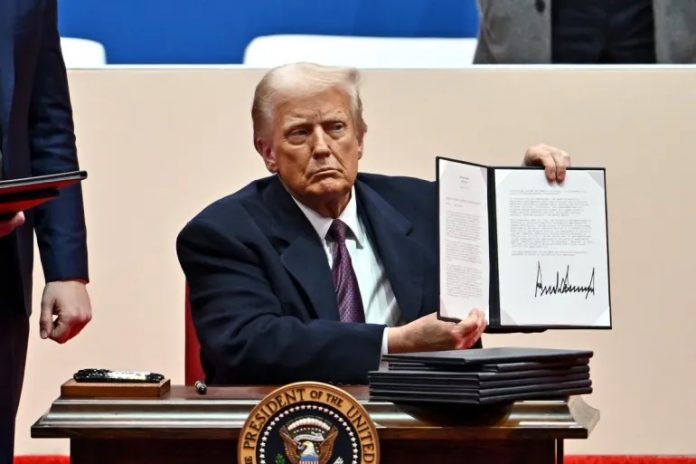
President Donald Trump, who has been actively involved in the negotiations, also weighed in on the situation, acknowledging that he had received “positive messages” regarding a possible ceasefire. However, he expressed skepticism, saying, “But a positive message means nothing. This is a very serious situation.”

Trump further suggested that Russia should consider the ceasefire, warning that he could take financial measures against Moscow if necessary.

“I can do things financially that would be very bad for Russia. I don’t want to do that because I want to get peace.” His remarks suggest that Washington is considering additional leverage to push Moscow into accepting the deal.

“We have a very complex situation solved on one side. Pretty much solved. We’ve also discussed land and other things that go with it,” Trump said, implying that negotiations have touched on territorial issues but provided no further details.

While the ceasefire discussions continue, fighting has intensified across Ukraine. Overnight, Russian drones and missiles reportedly struck targets in Kryvyy Rih, Zelensky’s hometown, as well as in the strategic port city of Odesa, and in Dnipro and Kharkiv. Clashes are also ongoing in Russia’s Kursk region, where Kremlin spokesperson Dmitry Peskov stated that Russian troops were “successfully advancing” and reclaiming lost territories.

Ukraine initially launched its offensive in the Kursk region last August, making significant territorial gains by capturing around 100 towns and villages. However, Russia has since reversed much of that progress. Russian media report that during his recent visit, Putin ordered the military to “fully liberate” the region, an indication that Moscow intends to continue its offensive rather than accept a ceasefire.

Kremlin insiders suggest that Russia’s current military momentum could make it difficult for Putin to justify halting the war at this stage.

“Putin believes he is winning,” a senior Russian government source told Reuters. “Why would he stop now?”

Others within the Russian establishment are reportedly divided, with some suggesting that a temporary ceasefire could be used strategically to consolidate gains and prepare for further offensives, while hardliners argue that agreeing to a truce now would signal weakness.

Ukrainian military chief Oleksandr Syrsky acknowledged on Wednesday that some Ukrainian troops were withdrawing from Kursk. In a Telegram post, he stated, “In the most difficult situation, my priority has been and remains saving the lives of Ukrainian soldiers.”

This retreat has fueled speculation that Ukraine is struggling to hold its positions and may have accepted the ceasefire deal as a means to regroup.

As negotiations continue, Moscow has reiterated its firm stance on NATO-related issues. Ushakov claimed on Thursday that both Russia and the U.S. agreed that “there can be no talk about NATO in the context of the Ukrainian settlement and in the context of Ukraine’s future.”

Russian Foreign Ministry spokesperson Maria Zakharova took this a step further, warning that Russia would not tolerate any foreign military presence in Ukraine, whether under national flags or as part of peacekeeping operations.

“For us, it is absolutely unacceptable to deploy units of the armed forces of other states in Ukraine under any flag, whether it be a foreign contingent, military bases, or some peacekeeping operations,” she said, adding that Russia would respond “with all available means.”

With Ukraine having already agreed to the U.S.-backed ceasefire plan, the focus is now on Russia. However, the combination of recent battlefield successes and internal divisions within the Kremlin raises serious doubts about whether Putin will accept the deal. While U.S. officials remain hopeful, many analysts believe that Moscow may instead push forward with its offensive, further prolonging the war and complicating diplomatic efforts to bring it to an end.

Nigeria’s Used Vehicle Imports Plummet 65.8% in 2024 Amid Economic Hardship and Soaring Import Costs

0

Nigeria’s used vehicle import sector has recorded a drastic decline as economic hardship continues to erode consumer purchasing power, and rising import costs make vehicle ownership increasingly out of reach for many Nigerians.

Data from the National Bureau of Statistics (NBS) reveals that importation of used vehicles with diesel or semi-diesel engines, of cylinder capacity 2500cc, plunged by 65.8 percent year-on-year (YoY) to N354.8 billion in 2024, down from N1.04 trillion in 2023.

The massive decline underscores the far-reaching impact of Nigeria’s economic downturn, which has left citizens grappling with soaring inflation, currency devaluation, and job losses.

Middle-Class Erosion and the Collapse of Nigeria’s Used Vehicle Market

The Nigerian middle class, which historically formed the backbone of the used car market, has been significantly depleted since 2015 due to a series of economic crises, multiple recessions, and policy missteps. Between 2015 and 2025, Nigeria faced severe foreign exchange instability, runaway inflation, and stagnating incomes, eroding the financial capacity of middle-income earners to afford even second-hand vehicles.

For years, Nigeria relied heavily on imports of Tokunbo (foreign-used) vehicles, as the local automobile industry struggled with production challenges. However, as the economy worsened, many middle-class professionals who once could afford imported cars have been pushed into poverty, dramatically reducing demand. Today, only the wealthiest Nigerians can afford new cars, while the lower-income segments rely on decade-old vehicles or resort to alternative transport options such as motorcycles and public transit.

A breakdown of NBS Foreign Trade in Goods Statistics for 2024 reflects this sharp decline in used vehicle imports:

  • No recorded vehicle imports in Q1’24, suggesting a near-total collapse of the market at the start of the year.
  • Q2’24 saw a partial recovery, with N110.54 billion worth of used vehicle imports recorded.
  • In Q3’24, the figure grew by 11.9 percent quarter-on-quarter (QoQ) to N123.77 billion.
  • However, Q4’24 witnessed a 2.6 percent decline in QoQ to N120.49 billion, highlighting the volatility of the market.

Import Duties and Trade Barriers: Customs’ Role in the Economic Downturn

Against the backdrop of the massive decline, many believe it is not solely a reflection of economic distress but also the result of the government’s persistent increase in import duties, levies, and other taxes that have made vehicle importation prohibitively expensive.

Economic analysts have repeatedly warned that the Nigerian Customs Service (NCS) is contributing to the country’s economic woes by prioritizing revenue generation over trade facilitation. Customs duties on imported vehicles have been steadily increasing, with multiple layers of taxation making car imports unaffordable for both dealers and individual buyers.

“The Nigerian customs is under no obligation to adopt the [official] NAFEX rate. Using N1,637/$1 creates revenues for Customs and translates to imported inflation to Nigerian consumers,” economist Kalu Aja said last year. “For a limited time, adopt $1 to N200 as the exchange rate; this means imports to Nigeria will drop in price.”

In 2023, the Ports and Terminal Multipurpose Limited (PTML), one of Nigeria’s busiest vehicle import terminals, blamed high import duties and excessive taxation for a 60 percent drop in vehicle importation in H1 2024. This was echoed by industry stakeholders, who noted that the cost of clearing a used vehicle at the ports had more than tripled in the past five years, largely due to the depreciating naira and ever-rising levies imposed by customs.

Many economists have noted that Customs is meant to facilitate trade, not strangle it, warning that turning the ports into cash cows and forcing businesses to pay exorbitant duties only drive the market further into decline.

Government’s Last-Minute Efforts to Revive Vehicle Imports

In a belated attempt to mitigate the crisis, the Federal Government recently announced a 90-day window for regularizing import duties on specific categories of vehicles. The NCS confirmed that vehicle owners would be allowed to pay outstanding duties within this period to avoid sanctions.

Abdullahi Maiwada, the National Public Relations Officer of the NCS, described the initiative as a “proactive move to enhance compliance and streamline import processes.” He explained that vehicles would be assessed using the Vehicle Identification Number (VIN) valuation method, with importers required to pay both duties and a 25 percent penalty in accordance with import guidelines.

While the waiver program offers temporary relief, experts argue that it does little to address the structural problems within Nigeria’s import system.

OpenAI Urges U.S. Govt. to Codify ‘Fair Use’ in AI Training Amid Legal Battles Over Copyrighted Content

0

OpenAI has urged the U.S. government to formally codify ‘fair use’ as a legal standard for AI training, reinforcing its position that AI models should be allowed to learn from copyrighted material without explicit permission.

In a policy submission for the “AI Action Plan”—an initiative under the Trump administration aimed at reshaping U.S. AI policy—OpenAI argued that the doctrine of fair use has been instrumental in America’s dominance in AI research and innovation.

“America has so many AI startups, attracts so much investment, and has made so many research breakthroughs largely because the fair use doctrine promotes AI development,” OpenAI stated in its submission.

However, the proposal comes at a time when OpenAI is embroiled in legal battles over its own use of copyrighted content, with some of the largest media organizations and creative professionals accusing the AI firm of illegally training its models on protected works.

The Legal Battle Between OpenAI and The New York Times

One of the most high-profile copyright lawsuits against OpenAI was filed by The New York Times (NYT) in December 2023, marking a pivotal moment in the ongoing debate over AI training and intellectual property rights.

In its lawsuit, The New York Times accused OpenAI of “mass copyright infringement”, alleging that its articles were used without permission to train AI models like ChatGPT. The lawsuit provided multiple instances where OpenAI’s chatbot was able to regurgitate near-verbatim passages from Times articles when prompted. Some outputs even included editorial content that was behind the newspaper’s paywall, raising concerns that OpenAI’s data scraping practices had bypassed content restrictions.

According to The Times, OpenAI’s use of its content directly competes with the newspaper by providing summarized news and analysis without driving traffic to its website. The lawsuit seeks monetary damages and a court ruling that forces OpenAI to stop using copyrighted content without authorization.

In response, OpenAI defended itself by arguing that its model does not store articles but rather “learns from large datasets in a transformative way,” a common argument in fair use cases. The AI firm has also hinted at reaching licensing agreements with publishers to settle copyright disputes, though it has yet to reach a deal with The New York Times.

The lawsuit has significant implications for AI companies, as a ruling against OpenAI could set a precedent requiring AI developers to pay for content usage rights, potentially increasing the cost of AI model training and limiting access to vast amounts of data.

OpenAI’s Double Standard on Copyright: The DeepSeek Controversy

Interestingly, OpenAI’s own stance on copyright infringement has been inconsistent, as seen in its reaction to DeepSeek, an AI model developed by a Chinese research group.

When DeepSeek was released in early 2025, OpenAI expressed concerns that the model had used its own proprietary data without permission. This raised eyebrows in the AI and legal communities, as OpenAI has repeatedly defended its own use of third-party copyrighted material, claiming it falls under fair use.

The hypocrisy in OpenAI’s stance did not go unnoticed. Critics pointed out that if OpenAI expects protection for its own proprietary work, then the same principle should apply to media organizations and creators whose content is used in training AI models.

This incident further fueled debates over whether AI companies should be allowed to freely scrape the internet for training data or whether stricter licensing and copyright protections should be enforced.

How Other Countries Are Handling AI and Copyright

The U.S. is not the only jurisdiction grappling with the AI copyright dilemma. Governments worldwide are racing to establish legal frameworks that balance AI innovation with intellectual property protection. For instance:

  • European Union: The EU has taken a strict approach, with the AI Act requiring AI companies to disclose what copyrighted materials were used in training datasets. This level of transparency is something U.S. lawmakers have yet to enforce.
  • Japan: Japan has adopted a more flexible stance, allowing AI developers to train models on copyrighted material as long as the output does not directly compete with the original work.
  • China: Chinese authorities have mandated that AI companies must obtain explicit permission before using copyrighted content, a stark contrast to OpenAI’s reliance on broad fair use arguments.

OpenAI’s call for a codified fair use doctrine will likely face strong opposition from media organizations, creative professionals, and publishers who argue that AI companies are profiting off their work without compensation.

With multiple lawsuits pending and policymakers still debating AI copyright laws, the outcome of this battle will shape the future of AI development, content creation, and intellectual property rights.

If OpenAI succeeds in its push for expanded fair use, it could pave the way for unrestricted AI training, benefiting AI developers but potentially undermining the financial viability of the media, publishing, and creative industries. However, if courts side with content creators, AI firms could be forced to license copyrighted materials, changing the way AI models are trained and potentially limiting their capabilities.