DD
MM
YYYY

PAGES

DD
MM
YYYY

spot_img

PAGES

Home Blog Page 209

ADNOC Poised to Secure EU Approval for $17bn Covestro Takeover Amid Concerns Over State Funding

0

Abu Dhabi National Oil Company (ADNOC) is on the verge of securing European Union approval for its proposed €14.7 billion ($17 billion) takeover of German chemicals maker Covestro, people familiar with the matter told Reuters.

The European Commission, the EU’s competition regulator, is expected to greenlight the deal in the coming weeks, marking a major milestone for the state-owned oil giant’s global expansion strategy.

The Commission restarted its investigation on October 24, after temporarily pausing the process on September 3 while awaiting additional information from the companies. A new March 2 deadline has been set for a final decision, though insiders suggest the approval could come as early as mid-November, barring last-minute objections.

The proposed deal — ADNOC’s biggest-ever acquisition — is one of the largest foreign takeovers of an EU industrial firm by a Gulf state-backed company, highlighting the growing influence of Middle Eastern sovereign wealth and state enterprises in Europe’s industrial and energy landscape.

Addressing EU Competition and State Aid Concerns

The transaction, which has been under review since the summer, has faced scrutiny from EU officials concerned that ADNOC’s deep state backing could distort competition within the European market. The company is fully owned by the Abu Dhabi government and benefits from an implicit state guarantee, which Brussels feared could give ADNOC an unfair advantage over private rivals when financing major acquisitions.

To allay these concerns, ADNOC offered to amend its articles of association, introducing safeguards that limit its reliance on unlimited state support. It also pledged to retain Covestro’s intellectual property, research facilities, and patents in Europe, ensuring the German company’s technology and innovation base remains under EU jurisdiction.

Sources told Reuters that ADNOC later fine-tuned these commitments following consultations with competitors and major customers of Covestro. The changes were reportedly well received by the Commission, paving the way for a positive decision.

“XRG does not comment on ongoing regulatory matters and continues to engage constructively with the Commission,” ADNOC’s international investment arm said in a statement to Reuters.

If approved, the acquisition would mark a strategic milestone for ADNOC’s global diversification drive, as the Gulf energy powerhouse pushes into downstream industries such as petrochemicals and advanced materials. The move aligns with Abu Dhabi’s broader vision to diversify its economy beyond crude oil exports, using its state-owned companies to secure long-term industrial assets across Europe and Asia.

The deal also mirrors a wider investment wave by Gulf sovereign funds and energy companies seeking opportunities in Europe’s energy transition. Earlier in 2024, Saudi Aramco acquired a 10% stake in China’s Rongsheng Petrochemical, while QatarEnergy expanded its LNG investments into Germany and Italy.

The Covestro acquisition represents a bid for ADNOC to become a global leader in chemicals and materials, areas that complement its existing strengths in refining and low-carbon energy. Covestro’s expertise in sustainable polymers and circular materials fits neatly into ADNOC’s strategy to reduce emissions and enter higher-value markets.

Covestro’s Struggles and the Path to Takeover

Covestro, based in Leverkusen, Germany, produces high-performance plastics used in automotive manufacturing, construction, electronics, and consumer goods. The company has struggled in recent years amid volatile raw material prices, energy shocks following Russia’s invasion of Ukraine, and weakening global demand.

In June 2024, Covestro’s board entered formal negotiations with ADNOC after months of informal talks that began in 2023. ADNOC initially proposed a €11 billion valuation but raised its offer several times before reaching the current €14.7 billion figure. Analysts have noted that the increased bid reflects both Covestro’s strategic value and ADNOC’s strong financial capacity, buoyed by Abu Dhabi’s massive oil revenues.

The deal also underscores Europe’s growing openness to Gulf investment despite concerns over state funding. European policymakers are balancing the need for foreign capital with growing caution over state-owned entities acquiring critical assets, particularly in chemicals, energy, and technology.

If the Commission gives the green light this month as expected, the deal would proceed to closing in early 2026, pending national regulatory approvals in Germany and other EU member states. Covestro shareholders would then vote to finalize the transaction.

Once completed, the takeover would position ADNOC as a major global chemicals player, capable of competing with industrial giants such as BASF, Dow, and SABIC. It would also provide ADNOC with a stronger European foothold and access to technologies essential for developing more sustainable and recyclable materials.

The European Commission’s upcoming ruling will be closely watched across global markets. Analysts say it will serve as a litmus test for how the EU handles large-scale acquisitions by state-backed companies in strategic industries — and how far Europe is willing to open its doors to Gulf capital while preserving competition and sovereignty.

Nigeria Raises $2.25bn in Oversubscribed Bond Sale as Investors Shrug Off Trump’s Threats

0

Nigeria has returned to the international debt market with a strong showing, raising $2.25 billion through a dual-tranche Eurobond sale on Wednesday despite rising global tensions and threats from U.S. President Donald Trump of potential military action.

The successful sale marks Nigeria’s first major return to the Eurobond market in nearly two years and underscores a broader resurgence in emerging market borrowing, as global investors pile into high-yield assets amid easing global financing conditions.

According to market data seen by Reuters, Nigeria’s ten-year and twenty-year bonds were priced at 8.625% and 9.125%, respectively—both below initial price guidance. The offering was oversubscribed, signaling strong investor confidence in Nigeria’s fiscal direction despite the country’s economic strains and Trump’s warning on Sunday that the United States could take military action if Nigeria failed to stop attacks on Christians.

Market participants appeared largely unfazed by the geopolitical noise. Analysts said investors were instead focusing on Nigeria’s recent fiscal and monetary reforms under President Bola Tinubu, who has dismantled costly fuel subsidies and allowed the naira to float more freely—two moves that have been painful for households but applauded by financial markets.

The deal adds to a wave of frontier-market issuances this year, as borrowing costs fall sharply from the highs seen during the global inflation and rate-tightening cycle. According to JPMorgan data, only four emerging market countries now have bond spreads above 1,000 basis points over U.S. Treasuries—the level generally seen as a barrier to affordable borrowing. The narrowing spreads have drawn several African nations back to the Eurobond market, including the Congo Republic, Angola, and Kenya.

Congo Republic, which carries one of the lowest credit ratings on the continent at CCC+, also issued its first Eurobond in nearly two decades on Wednesday—an indication of how eager investors are to chase yields even in riskier markets.

Thys Louw, a portfolio manager at London-based asset manager Ninety One, said the rebound was long overdue.

“African frontier borrowers had issued very little external debt since 2022, helping support spreads and investor demand,” he noted. “They’ve been so reliant on local debt markets, and this is true across Africa, that it now starts to make sense to start to diversify funding sources once again at these yield levels.”

The broader context is a global surge in emerging market debt issuance. Data from JPMorgan and other banks show that dollar-denominated bond sales by developing economies have already surpassed the record volumes seen during the pandemic years. Analysts say that for countries like Nigeria, the window for accessing affordable foreign capital could be brief, as markets remain sensitive to further rate decisions by the U.S. Federal Reserve.

The proceeds from the $2.25 billion sale are expected to help Nigeria shore up reserves and support government spending at a time of heavy fiscal pressure. While Tinubu’s reforms have improved Nigeria’s credit perception, they have also unleashed inflation, which rose to record highs this year. The government is betting that investor confidence will strengthen as the reforms take hold and growth stabilizes.

Louw added that other African countries, including Egypt, Ivory Coast, South Africa, and Benin, may soon follow Nigeria’s lead with new issuances.

He indicated that at these yield levels, it’s an opportune time for well-managed sovereigns to test the market again.

Nigeria’s return to the Eurobond market appears to have achieved what Tinubu’s administration sought: a show of investor faith that Africa’s fourth-largest economy remains creditworthy—and open for business.

Markets Bet Against Trump Tariff Win as Supreme Court Signals Doubts

0

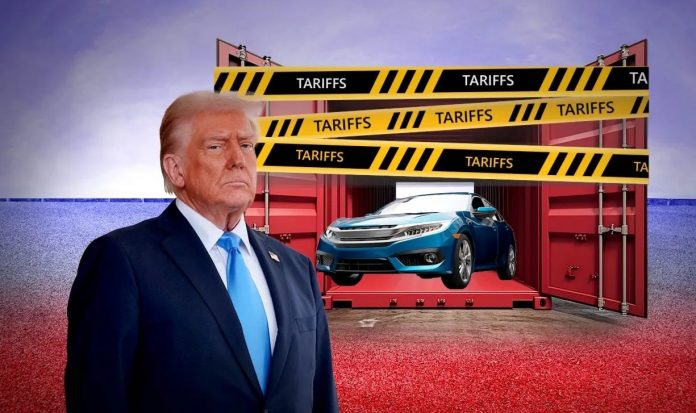
Prediction markets swung sharply on Wednesday after U.S. Supreme Court justices — including several conservatives — voiced skepticism about President Donald Trump’s use of emergency powers to impose sweeping tariffs, raising doubts about whether the court will uphold his trade policy.

Contracts on Kalshi, tied to whether the Supreme Court would rule in favor of Trump’s tariffs, plunged to around 30% from nearly 50% before the hearing. A similar contract on Polymarket dropped to roughly the same level, down from more than 40% earlier in the week. The moves reflected traders’ growing belief that the justices could strike down the tariffs or significantly limit the president’s trade authority.

The case centers on Trump’s reliance on the International Emergency Economic Powers Act (IEEPA) to impose what he called “reciprocal tariffs” on goods from U.S. trading partners, and additional levies on products containing fentanyl from Canada, China, and Mexico. Lower federal courts previously ruled that the administration overstepped its legal authority, finding that the law did not grant the president the power to unilaterally reshape tariff policy — a power reserved for Congress.

During oral arguments, several conservative justices appeared unconvinced by the administration’s defense. They questioned Solicitor General D. John Sauer about the scope of Trump’s emergency powers under IEEPA, pressing him on whether the law could be stretched to justify tariffs that effectively act as a form of taxation.

Justice Neil Gorsuch and others reportedly raised concerns about the separation of powers, suggesting that allowing presidents to use emergency powers to impose trade measures might blur constitutional boundaries between the executive and legislative branches.

That skepticism sent ripples through the prediction markets. Traders, who closely parse every word and tone shift from justices during major hearings, quickly cut their bets on a favorable outcome for Trump.

Although prediction markets react to perceived signals from oral arguments, today’s tone was believed to be clearly cautious. Analysts note that the fact that conservative justices voiced similar doubts as the liberals gave traders reason to think the administration may not get the ruling it wants.

The Supreme Court is not expected to issue a decision immediately, and it remains unclear when a ruling will be announced. But Wednesday’s reaction showed how investors and traders are interpreting judicial sentiment as an early gauge of the likely outcome.

The case carries significant implications for Trump and his broader trade agenda. The tariffs — a central pillar of his “America First” economic policy — were presented as tools to pressure foreign governments and protect U.S. industries. A loss at the Supreme Court could weaken the administration’s ability to wield emergency powers for economic leverage and reshape global trade terms.

While the court’s final ruling will ultimately decide the legality of the tariffs, Wednesday’s hearing signaled that a majority of justices may be wary of upholding an interpretation of presidential authority that many see as too expansive.

Economists say a Supreme Court ruling against the tariffs would likely bolster the dollar in the medium term by reducing trade tensions and restoring confidence in the predictability of U.S. trade policy.

Since the tariffs were imposed, they have weighed on U.S. manufacturers and exporters, pushing up input costs and prompting retaliatory measures from key trading partners. The uncertainty has also unsettled global markets, driving periodic sell-offs in emerging market currencies and equities.

The Supreme Court is not expected to issue a ruling immediately, though analysts say a decision could come before the end of the year. Until the decision is issued, traders will continue to read between the lines — and, for now, they’re betting that Trump’s tariff gamble may not survive the Supreme Court’s scrutiny.

Why Transparency and Regulation Matter in the Cross-Border Pharmacy Market

0

In an increasingly interconnected world, the pharmaceutical industry is no longer confined by national borders. Patients now have access to medications from multiple countries, offering both opportunities and challenges. Cross-border pharmacy markets have grown significantly, providing access to essential medications at more affordable prices, especially in countries where healthcare costs are high. 

However, this expanded access comes with a responsibility: ensuring that medications are safe, effective, and reliable. Transparency and regulation play a pivotal role in maintaining trust and protecting public health in this complex landscape.

The Rise of Cross-Border Pharmacies

The growth of the cross-border pharmacy market has been fueled by several factors. Rising prescription costs in some countries have led patients to seek more affordable alternatives abroad. Digital technology and e-commerce platforms have made it easier to compare prices, read reviews, and purchase medications online. For many patients, especially those managing chronic conditions like diabetes, accessing medication at a reasonable cost is not just a matter of convenience—it is essential for health and well-being.

The convenience of international pharmacies also introduces risks. The quality and authenticity of medications may vary, and without proper oversight, patients can be exposed to counterfeit or substandard products. This makes transparency in operations and strict regulatory frameworks more critical than ever.

The Importance of Transparency

Transparency is a cornerstone of trust in the pharmaceutical industry. Patients must be able to verify the origin of their medications, understand dosage instructions, and access information about potential side effects. In the cross-border market, transparency also includes clear communication about shipping procedures, legal compliance, and pricing structures.

For instance, when patients choose to get Ozempic from Canada, they are not merely buying a product; they are engaging with a system that must guarantee the medication’s authenticity and adherence to manufacturing standards. Transparent practices, such as providing batch numbers, expiry dates, and certificates of analysis, ensure that patients can make informed decisions and avoid counterfeit products.

Transparency also fosters accountability. When cross-border pharmacies operate openly, regulatory authorities can monitor compliance more effectively, and patients can report issues with greater confidence. This creates a safer, more reliable environment for international pharmaceutical trade.

The Role of Regulation

While transparency builds trust, regulation enforces it. Regulatory oversight ensures that pharmacies—whether domestic or international—adhere to rigorous standards of safety, quality, and efficacy. In the cross-border context, this includes compliance with both the exporting and importing countries’ legal requirements.

Regulation addresses several key challenges. First, it combats counterfeit medications. Counterfeit drugs can be ineffective, dangerous, or even lethal. Regulatory bodies establish verification protocols, track supply chains, and enforce penalties for violations, making it significantly harder for counterfeit products to enter the market.

Regulation ensures that pharmacies operate ethically and responsibly. This includes proper storage of medications, accurate labeling, and adherence to prescription requirements. Without regulatory oversight, patients may unknowingly receive incorrect dosages or expired medications, which can have serious health consequences.

Bridging the Gap Between Accessibility and Safety

One of the key challenges in cross-border pharmacy markets is balancing accessibility with safety. Affordable medications should not come at the cost of compromised quality or patient safety. Transparent operations and strict regulatory frameworks work together to bridge this gap.

Patients benefit when pharmacies provide clear information about sourcing, pricing, and legal compliance. This empowers them to make informed decisions and reduces the risk of harm from counterfeit or substandard products. Meanwhile, regulation ensures that these protections are not optional, creating a standardized system that safeguards public health.

Cross-border pharmacies that emphasize both transparency and regulatory compliance can build long-term trust with patients. This trust is critical, as healthcare decisions are deeply personal and often involve managing chronic or life-threatening conditions. Patients must feel confident that their medication is safe, effective, and legally sourced, regardless of where it comes from.

The Patient Perspective

From the patient’s perspective, transparency and regulation are not abstract concepts—they directly impact health outcomes. For individuals managing chronic conditions like diabetes, consistent access to reliable medication can mean the difference between stability and serious health complications.

Consider a patient seeking to get Ozempic from Canada. A transparent and regulated process ensures that the medication is genuine, correctly dosed, and safely shipped. It also provides reassurance that any issues encountered can be addressed through proper channels, rather than leaving patients vulnerable to scams or unsafe products.

In addition, transparency allows patients to compare options, understand costs, and make informed choices about their healthcare. When patients have access to comprehensive information, they can participate actively in their treatment plans, fostering better adherence and overall health outcomes.

The Global Implications

The implications of transparency and regulation extend beyond individual patients. A well-regulated cross-border pharmacy market strengthens global public health by minimizing the circulation of counterfeit drugs, standardizing quality across borders, and promoting ethical business practices.

Countries that collaborate on regulatory frameworks can create safer international trade routes for pharmaceuticals. By aligning standards and sharing oversight responsibilities, governments can ensure that cross-border pharmacies are accountable and that patients worldwide have access to safe, effective medications.

Conclusion

The growth of the cross-border pharmacy market represents a remarkable opportunity to improve access to essential medications. However, this potential can only be realized when transparency and regulation are prioritized. Transparency ensures that patients have the information they need to make informed decisions, while regulation guarantees the safety, quality, and authenticity of medications.

By fostering a culture of openness and compliance, cross-border pharmacies can build trust with patients, support better health outcomes, and contribute to a safer, more reliable global pharmaceutical system. For patients seeking cost-effective options without compromising safety, choosing a transparent and regulated source is essential. Whether navigating diabetes management or other chronic conditions, the assurance provided by these standards empowers patients to take control of their health with confidence.

The Role of Vector Databases in Policy Traceability

0

In modern AI governance, one of the hardest parts isn’t building a model – it’s proving what the model did, why it did it, and how the data fed into it. That’s where policy traceability comes in. It’s the end-to-end chain from raw data, through embeddings and inference results, to audit-ready documentation.

And in this chain, a relatively new technology is playing a critical role: the vector database.

What Is a Vector Database – and Why Should You Care for Traceability?

Vector databases are systems built to store and query high-dimensional embeddings – numeric representations of text, images, logs or other unstructured data.
 For AI governance, they matter because you can:

  • Link each piece of unstructured data (e.g., a policy document, regulatory text, log entry) with a vector embedding plus metadata.
  • Perform “semantic” queries: “Which documents are conceptually similar to this output?” rather than only keyword matches.
  • Maintain metadata such as origin, version, access rights, transformation history.

When you’re implementing AI policy management software, vector databases provide a foundation for documenting why a decision was made (by tracing similar prior documents or precedents) and what data fed into it.

How to Map the Traceability Flow

Here is a practical flow for traceability using vector databases:

  1. Data ingestion & embedding generation – collect datasets (logs, policies, user interactions) and convert them into embeddings.
  2. Metadata tagging – each embedding gets tagged with source system, timestamp, sensitivity, jurisdiction, model version.
  3. Vector store insertion – embeddings + metadata stored in the vector database.
  4. Model inference & audit logging – when an AI model runs, its input, embedding(s) consumed, model version, output and confidence score are logged and linked to the vector store entry.
  5. Semantic retrieval for audit – when a regulator asks “On what basis did the model decide X?”, you query the vector DB for similar prior data/decisions, link the chain, and produce a trace.
  6. Governance and policy enforcement – you define alerts or rules such as “if a new embedding’s similarity to a high-risk prior is > 0.8 and model version changed, raise flag” and these rules feed into dashboards.

This flow transforms traceability from manual documentation into a live, queryable infrastructure.

Real-World Example: Unstructured Documents in Governance

Imagine a financial firm using an AI model to evaluate loan applications. The model consumes customer chat transcripts, credit history, and internal risk policies stored as documents. Each chat transcript and document is embedded and stored in a vector DB. Later the model produces an adverse decision. Auditors ask:

“What previous cases did the model reference, and what sources did it use?”

By querying the vector database you retrieve the top-k similar embeddings: prior policy documents, previous similar decisions, internal risk memos. Metadata shows which versions were active when the decision was made. Because vector DBs handle unstructured data effectively, this type of trace becomes practical – no manual linking of documents, just semantic search.

Traceability Across Models and Versions

As AI systems evolve, so do models – version 1, version 2, tweaks for regional compliance, etc. Vector databases help freeze snapshots of embeddings tied to model versions and metadata. Thus, when regulators examine decisions made under “Model v1.3 – EU region”, you can pull the exact embeddings and meta-records associated with that version. This level of traceability also allows you to track drift or changes in embedding space – e.g., if embeddings after retraining move markedly, flag it for review.

When you can say “Yes – we can show you exactly how the model arrived at this decision, here are the documents it referenced, and here is the version of the policy it adhered to” – you move from “we’re using AI” to “we’re governed by AI”. That kind of architecture often comes through partnerships with specialists like S-PRO who understand both enterprise software and governance.

Governance, Metadata, and Auditability

Good traceability doesn’t depend solely on embeddings – it depends on rich metadata. Vector DBs support storing access controls, lineage info, timestamping, model IDs, and jurisdiction tags.

For example: metadata fields like jurisdiction = “EU”, sensitivity = “high”, model_version = “v1.2”, dataset_id = “loan_2024Q2”. This allows policy systems to enforce rules: only embeddings with metadata meeting certain criteria can be used for decision-making.

One recent paper argues AI databases support data governance by “logging detailed information about data origins, transformations, and usage” – a critical part for compliance.

Linking Compliance Controls and Vector Search

When embedded governance logic is implemented, vector databases become not just storage, but enforcement tools. For example:

  • Access control: query filters ensure users see only embeddings they’re permitted to.
  • Retention policies: embeddings older than X years flagged/deleted, or moved to audit cold storage.
  • Audit trails: any search query or model retrieval is logged – who asked, what query, what results returned, and what action followed.

Practical Architecture Considerations

Deploying vector databases for policy traceability requires some technical planning:

  • Choose a vector engine (Pinecone, Milvus, Qdrant, Azure integrated vector store).
  • Ensure the metadata layer is tightly integrated (use structured fields + vector indexes).
  • Architect for scalability: embedding sizes, query latency, hybrid retrieval (vector + keyword).
  • Implement governance controls (RBAC, encryption at rest/in transit). A recent system found that vector DB queries can run < 20 ms even over 10 million vectors when optimized.
  • Retrieval semantics: ensure your policy engine and search pipeline know how to interpret “similarity” in business context (e.g., “policy version changed” > threshold triggers alert).

Where to Start?

If you’re building an AI governance stack, consider this path:

Component A: embed your policy and model documentation using embeddings and store in vector DB.

Component B: link your model inference logs to vector entries (input embeddings + model version + output).

Component C: surface a dashboard where compliance teams can query “Show me all decisions influenced by policy version X during region Y” using vector retrieval and metadata filters.

This three-layer approach makes AI traceability real rather than aspirational.