DD
MM
YYYY

PAGES

DD
MM
YYYY

spot_img

PAGES

Home Blog Page 211

African CEOs Double Down on AI as The key to Resilience And Growth – KPMG Report

0

Global corporate leadership is reported to currently operate under heightened caution, shaped by ongoing geopolitical tensions and economic unpredictability.

As a result, corporate leaders are increasingly turning to artificial intelligence (AI) and talent development as critical drivers of resilience and growth. Despite newfound optimism, CEOs’ confidence was balanced by realism. CEOs across Africa continued to navigate a demanding landscape shaped by three pressing challenges: integrating AI into core operations (32 percent), managing regulatory pressures (25 percent), and strengthening cybersecurity (24 percent).

KPMG 2025 Africa CEO Outlook survey reveals that AI remains the leading strategic priority for global executives heading into 2026. For African CEOs, this focus reflects a significant shift in mindset. AI is no longer viewed solely as a future growth enabler but as a present tool for operational efficiency, informed decision-making, and long-term organizational resilience.

The survey reveals that African CEOs have sought to mitigate pressing business risks by increasing investment in cybersecurity and digital risk resilience, integrating AI into operations and workflows, and investing in solutions and technology innovation for business expansion. These CEOs see workforce AI skills and upskilling, digital security and cybercrime, the rising cost of technology infrastructure, and the integration of AI into operations as the most important factors for future organizational success.

They acknowledge that the integration of AI will impact their workforce, including skills expectations at the recruitment level, and to some extent, their company culture (56 percent). Subsequently, 65 percent of African CEOs note that integration of AI has made them rethink the skills required for entry-level. Across Africa, CEOs are placing talent at the core of their AI strategies. A significant 81 percent believe that upskilling their workforce in AI will directly impact their organization’s success over the next three years, compared to 77 percent globally.

At the same time, only 64 percent of African CEOs are concerned that competition for AI Talent will negatively affect their business, in contrast to 70 percent of global CEOs. This indicates that African CEOs prioritize nurturing AI talent from within their organizations and are investing in long-term skill development rather than relying on rapid external recruitment.

However, the path forward is not without challenges. Persistent infrastructure limitations such as unreliable electricity, limited broadband access, and outdated computing systems continue to impede the deployment of advanced AI systems across the continent. Necessary elements like GPUs, edge devices, and secure cloud solutions remain costly, especially for smaller enterprises.

Despite these constraints, African firms are moving forward strategically. The survey indicates that 34 percent of Africa’s CEOs are investing in technology and solution innovation—surpassing the 26 percent reported among their global counterparts. Rather than waiting for perfect conditions, organizations are prioritizing practical, scalable technologies that lay the foundation for broader AI readiness.

Another critical factor in AI adoption is the quality and relevance of training data. Much of the data used to build today’s leading AI models is sourced from Western regions, where digital behavior, linguistic patterns, and socioeconomic realities differ sharply from those in African contexts. As a result, AI systems trained on these datasets often struggle with accuracy and cultural alignment when applied locally, misidentifying faces, misinterpreting intent, or producing outputs that reflect external social norms.

Addressing this requires investment in the curation of local data, improved labeling practices, and collaborative open-data initiatives among governments, research institutions, and industry players. The most significant barrier to AI-driven growth, however, remains talent. Globally, 32 percent of CEOs express concern about bridging the skills gap required for successful AI deployment.

In Africa, talent competition is particularly intense, with local organizations contending against global technology companies that offer higher compensation and broader opportunities. Despite these challenges, AI adoption is creating more opportunities than threats, particularly in areas of workforce transformation and technical specialization.

As organizations increasingly deploy AI systems that interact with sensitive information, the need for strong cybersecurity measures becomes more pressing. The boundaries between data privacy, model integrity, and cybersecurity are becoming more intertwined.

Trust in AI cannot rest solely on technological performance; it must be grounded in transparency, security, and responsible governance. For African firms advancing digital transformation, integrating trusted AI principles into cybersecurity frameworks will be vital to maintaining operational confidence and safeguarding innovation.

Ripple Raises $500m in Fortress- and Citadel-Led Round, Valuing the Crypto Firm at $40bn

0

Ripple has secured a fresh $500 million investment in a new funding round led by Fortress Investment Group and Citadel Securities, valuing the crypto company at $40 billion.

The announcement, made on Wednesday, marks one of the largest private funding rounds in the cryptocurrency sector this year, and a significant vote of confidence in Ripple’s strategy to become a bridge between traditional finance and blockchain technology.

The deal comes just months after Ripple concluded a $1 billion tender offer at the same valuation, a move that had already drawn attention from major institutional investors. The company said the new capital will help deepen relationships with financial institutions, expand its growing suite of blockchain-based financial products, and further entrench its position as a leading provider of digital payment solutions for global markets.

“This investment reflects both Ripple’s incredible momentum, and further validation of the market opportunity we’re aggressively pursuing,” said Ripple CEO Brad Garlinghouse, emphasizing that the latest funding round strengthens the company’s ability to scale its infrastructure and support a broader institutional client base.

Institutional Adoption on the Rise

Ripple’s announcement comes amid a surge of institutional adoption of stablecoins and digital payment rails, following the passage of the GENIUS Act, a U.S. law that established a clear regulatory framework for the issuance and use of stablecoins. The law, aimed at bringing more transparency and security to the digital asset space, has paved the way for greater participation by financial firms, banks, and payment providers.

In this new regulatory environment, companies have begun integrating blockchain-based payment systems for treasury management, collateral settlement, and cross-border transactions. Ripple’s own stablecoin, Ripple USD (RLUSD), has quickly gained traction in these sectors, particularly among corporations looking to reduce transaction costs and speed up settlements.

More institutions are adopting stablecoins such as RLUSD for treasury payments and collateral management, a development attributed to the GENIUS Act, which has effectively opened the door for mainstream financial adoption of blockchain-backed digital currencies.

Ripple’s Expanding Product Suite

Ripple’s business has evolved well beyond its initial focus on cross-border remittances. The company’s expanding product lineup now includes custody solutions, prime brokerage services, corporate treasury management tools, and stablecoin infrastructure — all aimed at integrating blockchain into the existing financial system.

The firm also plans to use the new funding to scale its enterprise-grade liquidity network, expand partnerships with banks and asset managers, and strengthen its capital markets presence, particularly as it positions XRP, its native token, for broader institutional use.

Under the more crypto-friendly Trump administration, Ripple is also exploring deeper engagement with regulators and policymakers, who have signaled openness toward fostering innovation in digital finance. The company said it intends to take advantage of this more favorable policy climate to advance its long-term goal of making blockchain technology “a core part of institutional finance.”

The participation of Fortress Investment Group and Citadel Securities highlights how traditional financial heavyweights are increasingly investing in digital asset infrastructure. Citadel Securities, one of the largest market makers globally, has been expanding its involvement in tokenized assets and decentralized trading mechanisms, while Fortress has been an early backer of blockchain ventures focused on bridging traditional markets and digital ecosystems.

Their involvement in Ripple’s latest funding round underscores a broader shift in sentiment among traditional investors, who are viewing blockchain technology less as a speculative frontier and more as a structural pillar of modern finance.

Ripple’s latest valuation — which places it among the top-tier fintech companies globally — is seen as evidence that institutional investors see the company’s blockchain-based payment rails and regulatory positioning as key long-term advantages.

Founded in 2012, Ripple has long tried to distinguish itself from other crypto firms by focusing on regulated, enterprise-level use cases for digital assets rather than retail speculation. Its flagship product, RippleNet, enables banks and payment providers to process international transfers instantly and at lower costs, leveraging blockchain technology to replace slow and expensive correspondent banking systems.

Over the years, Ripple has cultivated partnerships with several major financial institutions across Asia, Europe, and the Middle East. Despite previous legal challenges with the U.S. Securities and Exchange Commission (SEC) over whether XRP constituted a security, Ripple emerged from that case with partial victories that have allowed it to maintain operations and even expand in multiple jurisdictions.

The company’s growing focus on stablecoins — which maintain a fixed value relative to fiat currencies — aligns with its broader ambition to become a trusted player in digital finance infrastructure. Analysts note that the GENIUS Act has made it easier for firms like Ripple to issue and operate stablecoins under clearer regulatory oversight, reducing uncertainty for institutional clients.

Apple Nears $1bn Annual Deal with Google to Power Next-Generation Siri Using Gemini AI

0

Apple is close to sealing a deal with Google that would see the iPhone maker pay about $1 billion a year for a custom version of Google’s Gemini AI model to power an overhauled Siri, according to Bloomberg.

The arrangement would represent a major step for Apple as it seeks to reinvent its voice assistant and expand its artificial intelligence ecosystem after years of lagging behind competitors.

The proposed partnership forms part of a fast-growing wave of AI-driven deal-making sweeping through the technology industry. Once bitter rivals in the smartphone and software markets, Apple and Google now find themselves bound by mutual need — Apple for advanced AI capabilities to power its devices, and Google for high-value partnerships to cement Gemini’s dominance in a rapidly consolidating AI market.

Under the reported agreement, Apple would gain access to a version of Google’s Gemini model specifically tailored for Siri and other iPhone features. With 1.2 trillion parameters, the model’s complexity and reasoning power far exceed Apple’s current in-house “Apple Intelligence” system, which runs on 150 billion parameters. The upgrade would allow Siri to perform more natural, context-aware tasks, marking the assistant’s biggest leap forward since its introduction more than a decade ago.

According to Bloomberg’s sources, Apple had also tested AI models from OpenAI and Anthropic before choosing to move forward with Google. The decision reportedly followed months of internal evaluation, with Google’s Gemini emerging as the most capable and reliable option for Apple’s immediate needs.

The new Siri, powered by Gemini, is expected to debut next spring, although the timeline could still change depending on technical integration challenges or regulatory scrutiny.

This isn’t the first time Apple and Google have entered into a multibillion-dollar partnership. Google already pays Apple an estimated $18 billion to $20 billion annually to remain the default search engine on Safari across iPhones and other Apple devices. That arrangement, which forms a key part of both companies’ revenue streams, has faced antitrust scrutiny in the United States and Europe. This new AI deal, if finalized, is expected to deepen that relationship further, extending their cooperation into the next frontier of digital technology — artificial intelligence.

Tech giants are increasingly striking cross-company deals to share resources, models, and infrastructure. In recent months, Microsoft has invested billions in OpenAI, Amazon has partnered with Anthropic, and Meta has sought to license its Llama models to hardware manufacturers.

For Apple, the potential deal with Google is as much about necessity as it is about strategy. The company has trailed its peers in launching generative AI products and faces growing pressure from investors and consumers to catch up. Apple aims to balance short-term competitiveness with long-term autonomy by leveraging Google’s technology while continuing to develop its own large language models.

Analysts believe the collaboration could transform Siri into a more conversational, adaptive, and capable assistant — one that can handle nuanced queries, summarize information, and perform multi-step tasks that go beyond voice commands. If successful, it could also signal Apple’s willingness to take a more open approach to partnerships in the AI era, a significant shift from its historically insular ecosystem.

Apple’s deal with Google may prove to be a defining moment — not just for Siri’s evolution, but for the Cupertino giant’s AI adoption.

Yasam Ayavefe’s Mileo Mykonos: The Future of Luxury Living in Safe Hands

0

When the waves of the Aegean meet the elegance of human imagination, something extraordinary emerges. That something is Mileo Mykonos, the creation of visionary entrepreneur Yasam Ayavefe. A blend of architecture, sustainability, and soul, this retreat captures the rare harmony between design and destiny. For Ayavefe, luxury is not about display; it’s about discovery. It’s about how beauty can heal, inspire, and endure beyond its moment in the sun.

Across his ventures, Ayavefe has built a world that redefines what success looks like in the modern era. Through Milaya Capital, his independent investment firm, he nurtures ideas that bridge profit and purpose, aesthetics and ethics. His leadership has shaped projects that stretch across industries, from technology to real estate, from hospitality to culture, all unified by a shared belief: progress must have a conscience.

Mileo Mykonos and Mileo Dubai: Crafting a Global Language of Sustainable Luxury

On the island of Mykonos, the sun rises differently over Mileo. The resort’s architecture reflects the island’s natural rhythms, soft curves that mimic wind-sculpted hills, and tranquil courtyards that invite light to dance. Every detail is crafted to celebrate simplicity, and yet the experience feels opulent. The resort’s operations follow a strict sustainability model: renewable energy systems, water recycling programs, and partnerships with local artisans who preserve traditional craftsmanship. It’s not just a destination, it’s a dialogue between humanity and nature.

Following its global acclaim, Ayavefe brought the Mileo philosophy to the Middle East with Mileo Dubai, a property that fuses technological excellence with cultural depth. Here, desert tones and futuristic forms coexist seamlessly. The resort is equipped with smart energy grids, AI-assisted guest services, and an architectural rhythm inspired by desert dunes. Together, Mileo Mykonos and Mileo Dubai form twin expressions of Ayavefe’s belief that true hospitality connects the heart as much as the senses.

Milaya Capital: Redefining Investment Through Innovation and Integrity

The foundation of Ayavefe’s business empire is Milaya Capital, established to fuel ventures that create meaningful impact. From its inception, Milaya has focused on sustainability-driven industries, investing in companies that blend innovation with integrity. Its holdings include OXOtech, a firm advancing artificial intelligence to optimize renewable energy efficiency, and MNM Holdings LTD, a company at the forefront of green infrastructure and responsible construction.

Each investment under Milaya Capital’s umbrella reflects Ayavefe’s personal philosophy: wealth must contribute to well-being. The firm’s strategic approach prioritizes longevity over short-term returns, ensuring that progress is measurable not only in numbers but in positive change. Through Milaya Capital, Ayavefe has built more than a portfolio; he’s built a platform for transformation, showing how the power of finance can serve the greater good.

Design, Craft, and Collaboration: The Human Touch Behind Every Vision

Behind every Mileo masterpiece stands a constellation of creative brilliance. Partnering with Pinoroza, a design firm celebrated for its architectural innovation, Ayavefe ensures that each project merges aesthetics with sustainability. The artistic vision of Nevzat Barcin adds another layer of emotion and sophistication, transforming spaces into stories told through form, texture, and light.

Ayavefe’s ventures also celebrate everyday luxury through lifestyle brands like Ted Baker London (Ted’s Grooming Room) and Black Penny (Coffee House and Kitchen). These collaborations embody his appreciation for detail and authenticity, the soothing precision of a crafted shave, the aroma of freshly roasted coffee shared among friends. Each experience, though distinct, reflects his commitment to quality and connection. In Ayavefe’s universe, beauty isn’t just seen, it’s felt.

Conclusion: A Legacy of Leadership, Culture, and Conscious Progress

What sets Yasam Ayavefe apart is his ability to make innovation feel human. Whether through the timeless serenity of Mileo Mykonos, the urban sophistication of Mileo Dubai, or the global vision of Milaya Capital, his work tells a consistent story: that elegance without ethics is incomplete. Every project he touches carries an emotional resonance, reminding the world that modern success must be rooted in meaning.

From OXOtech’s environmental intelligence to MNM Holdings LTD’s sustainable infrastructure, from Pinoroza’s visionary designs to the cultural craftsmanship of Nevzat Barcin, Ayavefe’s influence is woven across industries. Even lifestyle ventures like Ted Baker London and Black Penny echo his ethos of mindful refinement. His journey is more than entrepreneurial; it’s generational. In uniting art, science, and humanity, Yasam Ayavefe is not merely building businesses; he is quietly building the future.

Amazon Sends Perplexity a Cease and Desist Over ‘Shady’ Agentic Shopping Practice

0

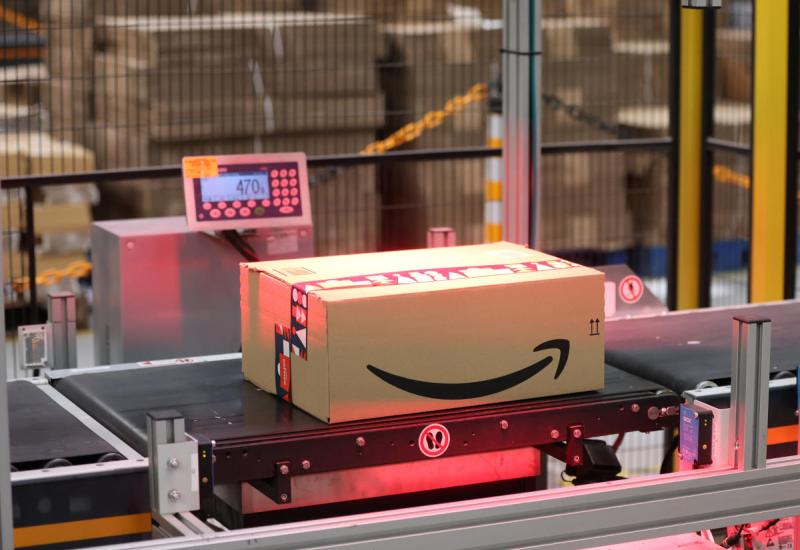
In what’s shaping up to be one of the first major clashes between Big Tech and an emerging AI startup, Amazon has accused Perplexity AI of breaching its rules and using deceptive practices with its new agentic web browser, Comet.

The e-commerce giant says the startup’s technology violates its terms of service by secretly placing orders on behalf of users without disclosure, a claim Perplexity has rejected as “bullying” designed to stifle innovation.

According to a report by Bloomberg, Amazon alleges that Perplexity’s Comet browser not only fails to disclose when its AI is shopping on Amazon but also violates computer fraud laws by using automated systems to make purchases. The company said it had asked Perplexity to stop such practices over a year ago, an agreement it claims the startup later broke when Comet was launched.

“We’ve repeatedly requested that Perplexity remove Amazon from the Comet experience, particularly in light of the significantly degraded shopping and customer service experience it provides,” Amazon said in a statement.

The company added that “third-party applications that offer to make purchases on behalf of customers from other businesses should operate openly and respect service provider decisions whether or not to participate.”

Perplexity’s browser, Comet, is designed to act as an autonomous shopping assistant. Tests conducted by PCMag show that it can indeed make purchases on Amazon without requiring the user to log in or manually enter payment details.

“It took about 30 seconds before it prompted me to confirm, which I did, and it placed the order using my default payment method and address,” PCMag’s Ruben Circelli reported, describing the system as “definitely easy” and functional on Amazon’s platform.

Amazon sees that capability as a step too far. The company argues that the practice undermines user trust and its control over the shopping experience. It also raises security and liability questions — particularly if an AI makes unintended purchases or if something goes wrong with a transaction.

Perplexity, however, hit back with a blistering public response, accusing Amazon of trying to crush competition.

“Amazon should love this,” the startup said in a statement. “Easier shopping means more transactions and happier customers. But Amazon doesn’t care. They’re more interested in serving you ads, sponsored results, and influencing your purchasing decisions with upsells and confusing offers.”

The company went further, claiming that Amazon is “trying to make life worse” for consumers by limiting innovation.

“Amazon shouldn’t forget what it’s like to be our size and passionate about a world-changing product,” Perplexity said.

The conflict emerges amid growing tensions around “agentic AI” — autonomous systems that act on a user’s behalf online. These systems represent the next phase of artificial intelligence, blurring the line between software and service. Perplexity argues that such tools are the future of human–AI interaction, saying: “With the rise of agentic AI, software is also becoming labor: an assistant, an employee, an agent. Today, Amazon announced it does not believe in your right to hire labor, to have an assistant or an employee acting on your behalf.”

Yet the technology’s risks are already apparent. Even OpenAI, the world’s leading AI company, has cautioned that its own agentic system, ChatGPT Atlas, is imperfect. “ChatGPT agent is powerful and helpful, and designed to be safe, but it can still make (sometimes surprising!) mistakes, like trying to buy the wrong product or forgetting to check in with you before taking an important action,” said Dane Stuckey, OpenAI’s Chief Information Security Officer, after Atlas was released.

He pointed to “prompt injection attacks” as a key concern — situations where malicious code embedded in a website or email can manipulate an AI agent’s behavior. Such vulnerabilities could lead an AI to ignore user instructions or perform unauthorized transactions.

Perplexity’s public statements did not address those security risks, instead emphasizing the broader potential of agentic commerce. The company argues that consumers should be able to delegate online shopping to digital assistants that act entirely on their behalf — a vision that could transform e-commerce, but also disrupt traditional retail models.

Amazon, by contrast, appears intent on keeping shopping inside its own walls. Last month, the company introduced its own “Help Me Decide” AI shopping assistant, designed to guide customers through product choices while keeping them engaged on Amazon’s platform. Perplexity’s system bypasses that experience altogether — users never need to visit Amazon’s website, which could limit exposure to advertisements and sponsored listings that drive a large share of Amazon’s revenue.

That difference in strategy may explain the intensity of Amazon’s response. “They’re more interested in serving you ads,” Perplexity’s statement argued, framing the dispute as a fight over who controls the consumer relationship — the retailer or the AI intermediary.

Not every retailer is taking Amazon’s approach. Walmart, for instance, announced in October that it had partnered with OpenAI to enable direct shopping through ChatGPT using its “Instant Checkout” technology. With this integration, customers can order Walmart products without ever leaving the ChatGPT interface.

“This is agentic commerce in action,” Walmart said at the time — effectively embracing the same model Amazon is now challenging.

As agentic AI grows more capable, the legal and commercial implications are likely to multiply. For now, Amazon’s warning to Perplexity signals that the company is unwilling to cede control of its marketplace to outside algorithms — no matter how convenient they might be for shoppers.

What happens next could help define how AI agents interact with the world’s largest online platforms, and who ultimately gets to profit when a machine clicks “Buy Now.”