DD
MM
YYYY

PAGES

DD
MM
YYYY

spot_img

PAGES

Home Blog Page 213

Google Expands Access to AI Mode on Mobile, Adds Shortcut Button in Chrome

0

Google on Wednesday unveiled a new shortcut button for AI Mode on mobile Chrome, broadening global access to its conversational search feature as part of its deepening push to weave artificial intelligence into every layer of its products—especially Search.

The new AI Mode shortcut, now available to users in the United States, will appear directly under the search bar on Chrome’s “New Tab” page, allowing people to pose complex questions, refine follow-ups, and explore topics more deeply within Search. The feature is set to expand to 160 more countries and additional languages, including Hindi, Indonesian, Japanese, Korean, and Portuguese, over the coming weeks.

The rollout comes as Google seeks to make AI-powered browsing as seamless as possible, encouraging users to stay within its ecosystem amid competition from OpenAI’s ChatGPT Search and Perplexity AI, both of which have gained traction for providing direct, AI-generated answers rather than traditional links.

Google’s broader AI integration drive, however, has met resistance from news outlets and web publishers, who argue that the company’s AI Overview feature—previously known as the “Search Generative Experience” (SGE)—is threatening their visibility and revenue.

AI Overview, rolled out earlier this year in the U.S. and several other markets, summarizes answers directly at the top of Search results using generative AI. Users can read concise AI-generated responses to questions without having to click through to websites.

While Google says the feature is designed to help users “get to the heart of information faster,” publishers argue it undercuts traffic by displacing the need to visit original sources.

According to data from Similarweb, some major publishers saw organic traffic drop between 20% and 40% in test regions after AI Overviews were introduced. The News/Media Alliance, which represents over 2,000 outlets, said in a statement that Google’s approach appropriates journalism under the guise of AI convenience, warning that the model could undermine the economic foundation of independent reporting.

Google has defended AI Overview, saying it still drives “valuable clicks” to publishers and that links are clearly cited within AI summaries. Liz Reid, head of Google Search, said in May that AI Overviews “actually increase engagement” for certain queries by giving users “a richer starting point.”

Building an AI-First Search Ecosystem

The introduction of the AI Mode shortcut marks Google’s latest move to embed generative AI more deeply into Search, turning it into what CEO Sundar Pichai has described as “the most useful personal assistant on the web.”

AI Mode, first launched in March 2025, allows users to have conversational interactions directly within Search, combining real-time web data with Gemini, Google’s most advanced AI model. Since its debut, the company has rolled out a steady stream of enhancements, positioning AI Mode as the backbone of what it calls “Search’s next chapter.”

Earlier this week, Google introduced new “agentic” capabilities within AI Mode that allow users to book event tickets, restaurant reservations, and beauty or wellness appointments through conversational prompts. The tool already supports Canvas, a feature launched in July that lets users organize study plans, track projects, and summarize content over multiple sessions, and it also integrates Google Lens for visual queries about objects on the screen.

Chrome as the AI Gateway

By adding the shortcut to Chrome’s “New Tab” page, Google is turning its browser into a direct portal for AI-assisted exploration, reducing friction between search, discovery, and action. Analysts see this as a strategic move to ensure that users stay within Google’s ecosystem rather than turning to competing AI chat interfaces.

The shortcut is believed to essentially transform Chrome from a passive browsing tool into an intelligent assistant, and it’s part of Google’s long-term plan to make Search more interactive and less reliant on traditional query typing.

However, as AI Overview continues to roll out globally and AI Mode becomes more tightly integrated into Chrome, Google faces growing scrutiny over whether its AI-driven future of Search will empower users—or erode the web’s open information economy.

Nigeria’s Non-Interest Capital Market Surges Past N1.6tn as SEC Targets Global Ethical Investors

0

Nigeria’s non-interest capital market has expanded to a valuation exceeding N1.6 trillion, a milestone the Securities and Exchange Commission (SEC) says underscores the nation’s growing capacity to harness ethical finance for infrastructure renewal and inclusive growth.

The SEC’s Director-General, Dr. Emomotimi Agama, disclosed the figure at the 7th African International Conference on Islamic Finance (AICIF) 2025 in Lagos. He described the expansion as “a testament to investor confidence and sound regulatory reforms,” adding that the growth trajectory signals Nigeria’s emergence as a key hub for Shariah-compliant and non-interest financial products in Africa.

Agama said the performance of the non-interest segment reflects the success of initiatives embedded in the new Investments and Securities Act (ISA) 2025, which introduced stronger governance structures and compliance mechanisms for Islamic finance products.

“The remarkable growth of the non-interest segment in Nigeria, a market now valued at over N1.6 trillion, is clear evidence that when there is an enabling regulatory environment, the market responds with vigor,” he said.

He noted that Nigeria’s sovereign Sukuk programme, a cornerstone of its ethical financing drive, has raised over N1.4 trillion through seven issuances since 2017, funding 124 key road projects covering about 5,820 kilometers nationwide. These projects, spread across all six geopolitical zones, have contributed significantly to the rehabilitation of major transport corridors and boosted regional trade integration.

Agama added that the federal government’s recent approval of a $500 million international Sukuk issuance would mark a new phase in Nigeria’s push to attract global ethical investors to fund large-scale infrastructure and diversify financing sources away from conventional debt markets.

Africa’s growing embrace of non-interest instruments

The SEC chief pointed to similar policy momentum across Africa, with countries such as Egypt, Kenya, Tanzania, Senegal, and Ghana now updating legal frameworks to accommodate Shariah-compliant products. He said the rising demand for non-interest instruments was “a clear indication that the continent is ready to integrate ethical finance into the mainstream of development funding.”

Agama also commended Metropolitan Skills, the conference organizer, for sustaining discourse around sustainable capital formation. He revealed that outcomes from the AICIF would be integrated into the Second Nigerian Capital Market Masterplan (2026–2035), which will succeed the first 10-year strategy concluding in 2025.

He urged policymakers and investors to view Islamic finance as a tool for equitable prosperity, stressing that “prosperity without inclusion is not sustainable.”

Bridging Africa’s infrastructure gap

Conference Chair Ms. Ummahani Ahmad Amin said while Islamic finance had gained traction across the continent, Africa was yet to fully tap its potential as a source of catalytic capital to bridge the continent’s $130 billion–$170 billion annual infrastructure gap.

She observed that although global Islamic financial assets grew by 14.9% year-on-year to $3.88 trillion in 2024, Africa’s share remains negligible due to low market depth, weak liquidity, and limited investor awareness.

“To enable Sukuk and other Islamic instruments serve as effective drivers of financial intermediation and macro-financial stability, we must first address the barriers that continue to constrain their growth,” Amin said.

She further highlighted the emerging role of Artificial Intelligence (AI) in automating compliance, expanding access, and building transparency within the ethical finance ecosystem.

Youth empowerment and social impact

As part of efforts to encourage youth participation in ethical innovation, the AICIF hosted a startup pitch competition in partnership with the SEC. ZannyTecture Recycling Company Limited won the Social Impact category for its waste-to-wealth initiative, while BetaLife Health clinched the Technology prize for its AI-driven blood supply optimization platform.

In closing, Amin unveiled The Metropolitan Waqf, a new endowment initiative designed to expand access to education for marginalized communities in Nigeria, particularly in conflict-affected regions.

Analysts say the rapid expansion of Nigeria’s non-interest capital market, alongside rising international recognition of Sukuk as a reliable funding mechanism, positions the country to become a continental leader in ethical infrastructure finance—and a model for sustainable economic inclusion in Africa.

Implications of Stable’s USDT-Backed Testnet Launch

0

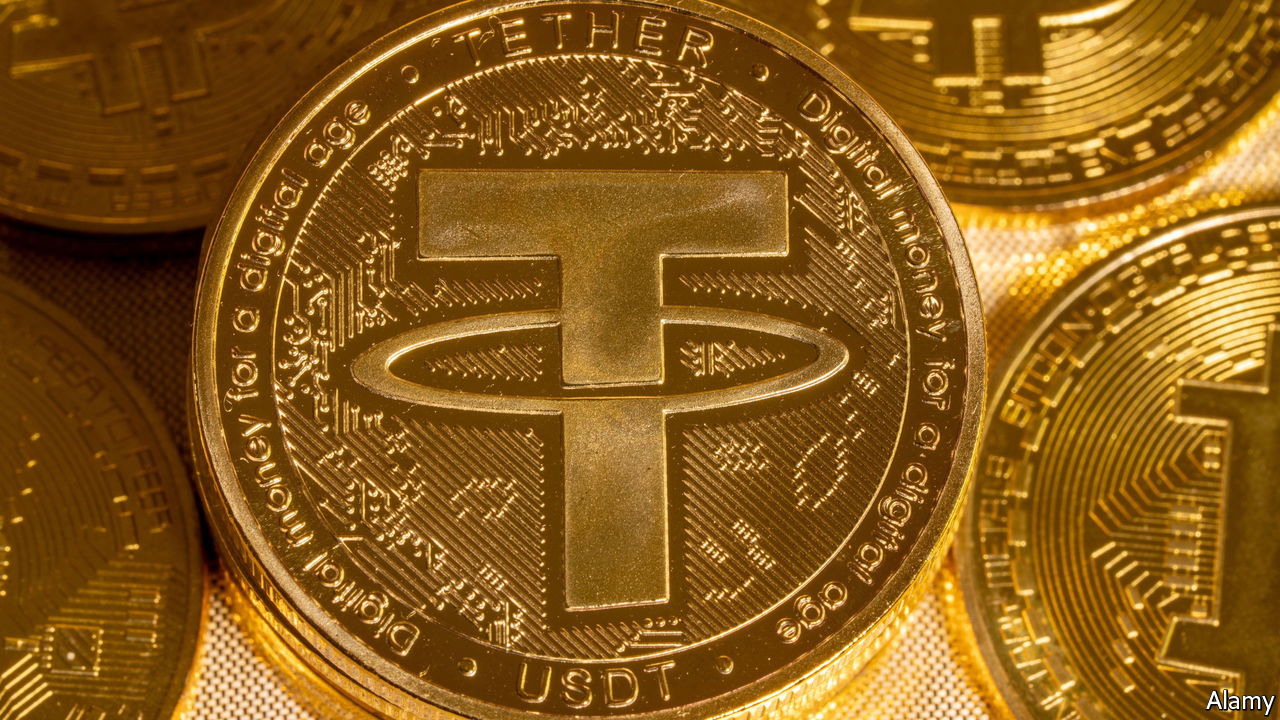
Stable—a Layer 1 blockchain optimized for stablecoin payments—announced the official launch of its public testnet, marking a key milestone in its roadmap to create a “stablechain” powered by Tether’s USDT.

This development positions Stable as the first dedicated blockchain using USDT as its native gas and settlement token, aiming to address common pain points in stablecoin transactions like high fees, slow settlements, and complexity.

With USDT dominating stablecoin volume over $27 trillion processed last year, Stable’s focus on native USDT integration promises sub-second finality, gasless peer-to-peer transfers, and predictable 1 Gwei fees, targeting 10,000+ transactions per second (TPS).

The public testnet is developer-focused but open to anyone for experimentation. Native USDT system modul supports seamless USDT transfers and fee settlements. Easy porting from Ethereum, with integrations for partners like Morpho, Pendle, LayerZero, and zkCodex an analytics dashboard for testing features like NFT mints, GM streaks, and contract deployment.

No user missions or rewards are active yet—this is pure testing ground. To get started connect an EVM-compatible wallet (e.g., MetaMask) to the Stable testnet (RPC: rpc.stable.network). Claim test tokens via the faucet. Explore on zkCodex: Search for “Stable” chain and try casual interactions.

The network is already showing smooth performance in early tests, with quick token claims and fast confirmations.Background and RoadmapStable emerged from stealth in June 2025, backed by Bitfinex which incubated the project and USDT0 (la LayerZero-powered decentralized USDT variant.

It raised $28 million in seed funding in August 2025 from investors including Hack VC, Franklin Templeton, and angels like Bryan Johnson. Tether CEO Paolo Ardoino has publicly endorsed it, highlighting its potential amid U.S. regulatory shifts toward stablecoin clarity (e.g., the GENIUS Act).

The testnet follows a private beta phase and builds on Phase 1 of Stable’s roadmap, which capped pre-deposits at $825 million in just 20 minutes. Upcoming: Phase 2 Pre-Deposits: Open November 6, 2025, targeting $1B+ TVL before mainnet.

Mainnet Launch: Q4 2025, with vault migrations from Ethereum. Future upgrades Optimistic parallel execution (Phase 2) and DAG-based consensus (Phase 3) for enhanced scalability. Governance Token: Expected Q1 2026.

Stable also integrates other stablecoins like PayPal’s PYUSD as a day-one partner, broadening its appeal beyond USDT. Stablecoin chains like this are part of a broader race including Plasma, Noble, and Codex to capture the $157B+ USDT market by enabling real-world use cases like remittances and payments.

The launch of Stable’s public testnet on November 3, 2025, is more than a technical milestone—it signals the beginning of a dedicated stablecoin-native blockchain with USDT as its core economic engine.

Users pay fees in USDT, not ETH or another volatile token. Predictable costs (1 Gwei flat). Instant settlement for payments, remittances, and DeFi. Send USDT directly without needing ETH or other gas tokens.

Designed for high-throughput real-world use (vs. Ethereum’s ~15 TPS). Stablecoins move from being applications on general-purpose chains to the native currency of a purpose-built payment rail.

Tether’s Strategic ExpansionTether (issuer of USDT) is not just a stablecoin issuer anymore—it’s becoming a blockchain infrastructure provider. Bitfinex incubated Stable and holds a major stake. Tether CEO Paolo Ardoino is a vocal advocate. USDT0 (LayerZero OFT standard) enables cross-chain USDT liquidity into Stable.

Tether is vertically integrating—controlling issuance, transport, and now the execution layer. This strengthens USDT’s dominance (currently 70%+ of stablecoin volume).Risk: Centralization concerns rise. If Stable becomes the primary USDT chain, Tether gains even more control over transaction flow.

First-mover advantage goes to Stable due to: USDT’s unmatched liquidity ($157B+ market cap). Pre-deposit momentum ($825M in 20 minutes). Winner-takes-most potential in stablecoin-specific infrastructure. Stable enables new primitives currently impossible or expensive.

Stablecoins become viable for mainstream finance, not just crypto trading. The U.S. is moving fast on stablecoin legislation: GENIUS Act (bipartisan support) aims to clarify stablecoin regulation.

Stable launches at the perfect regulatory moment. A compliant, USDT-native chain could become a preferred rail for institutions. Bitfinex’s involvement adds credibility—despite past controversies, it’s a known entity in traditional finance circles.


Stable’s testnet is the first brick in a new financial internet where:Stablecoins are the default money. Payments are instant and free. Fees are predictable. Developers build natively in USDT

If mainnet delivers (Q4 2025), Stable could capture 10–20% of USDT’s on-chain volume within 12 months—that’s $2–5 trillion annualized. This isn’t just another L2. It’s the first stablecoin-native economy—and it’s live now.By natively using USDT for gas, it eliminates volatility in fees—users pay in the same stable asset they’re transacting.

New Bipartisan Bill Seeks to Track AI’s Impact on American Jobs Amid Growing Layoff Fears

0

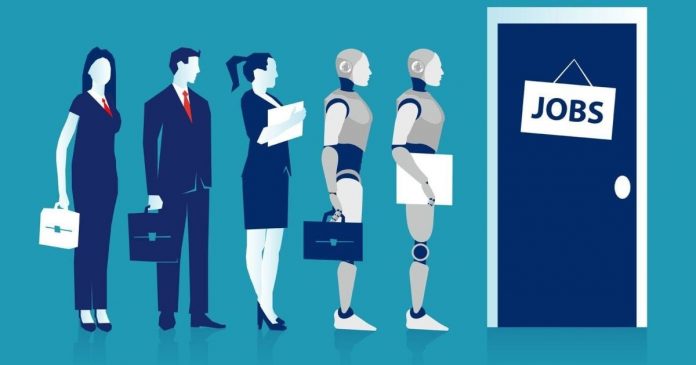
A new bipartisan bill introduced in the U.S. Senate aims to create a transparent picture of how artificial intelligence is reshaping the American workforce, as fears grow that automation could eliminate millions of jobs in the coming years.

Senators Mark Warner (D-Va.) and Josh Hawley (R-Mo.) on Wednesday unveiled the AI-Related Job Impacts Clarity Act, which would require publicly traded companies, select private firms, and federal agencies to report quarterly on how AI is affecting their employment numbers. The legislation mandates that organizations submit detailed data to the Department of Labor on job losses, reduced hiring, new AI-driven roles, and other workforce changes directly linked to the use of artificial intelligence.

The Labor Department would then be required to compile the information into a public report, allowing policymakers, researchers, and the public to track AI’s real-world economic effects.

“This bipartisan legislation will finally give us a clear picture of AI’s impact on the workforce,” Warner said in a statement. “Armed with this information, we can make sure AI drives opportunity instead of leaving workers behind.”

Hawley reportedly echoed similar sentiments, noting that policymakers need accurate data to anticipate disruptions.

Rising Alarm Over AI-Driven Job Losses

The bill comes amid growing unease among politicians, economists, and labor advocates over the rapid spread of automation across industries. Artificial intelligence, particularly generative AI systems like chatbots, coding assistants, and content-generation tools, has already begun to displace entry-level and administrative roles, according to recent studies and industry statements.

In May, Anthropic CEO Dario Amodei warned that AI systems could eliminate up to half of all entry-level white-collar jobs and drive unemployment rates to as high as 20% within five years. He said at the time that the impact could be severe and fast-moving.

The concern is already reflected in corporate restructuring announcements. Over the past two months, Amazon, UPS, and Target collectively announced more than 60,000 job cuts, citing automation, efficiency drives, and shifting business priorities. Tech firms, including IBM and Meta, have also cut staff while ramping up investment in AI tools that automate administrative and technical functions.

While some executives argue AI will create new roles in engineering, data management, and model training, the net impact on employment remains unclear. Economists say the absence of centralized reporting has made it difficult to separate hype from measurable impact.

The AI-Related Job Impacts Clarity Act seeks to change that by imposing a federal reporting standard. Under the proposal, companies would have to explain how AI is influencing workforce decisions, including automation of specific tasks, changes in recruitment patterns, and shifts in skill requirements.

The goal is to ensure that the United States develops “evidence-based policies” to manage AI’s economic disruption — rather than reacting after mass layoffs occur.

The proposed bill follows similar calls for transparency from labor unions and civil society groups. The AFL-CIO, the country’s largest federation of labor unions, has repeatedly urged Congress to establish reporting requirements on AI’s deployment in workplaces, warning that unchecked adoption could “hollow out” middle-income jobs.

Tech Transformation and Political Pressure

AI’s influence on the job market has become one of the most politically sensitive issues in Washington. Both parties have expressed concern that automation could widen inequality and reduce economic mobility.

Earlier this year, the White House Council of Economic Advisers noted that AI poses “substantial short-term disruption risks,” especially to clerical, transportation, and customer service roles. At the same time, President Donald Trump’s administration has emphasized the need for “American-first AI innovation” that preserves jobs and ensures that U.S. companies remain competitive globally.

The bill also reflects a broader push in Congress to regulate the social and economic impacts of AI. It follows a wave of legislative activity targeting AI transparency, algorithmic accountability, and national security implications.

Still, questions remain about how the government will define AI-driven changes and whether companies will accurately report them. There is concern that firms could downplay AI’s role in layoffs or overstate its job-creating potential to influence public opinion.

However, the bill signals a growing bipartisan recognition that AI’s economic effects must be measured before they can be managed. If passed, the law would make the United States the first major economy to require systematic disclosure of AI’s employment impact — a move that could set a precedent for other nations grappling with automation’s consequences.

ADNOC Poised to Secure EU Approval for $17bn Covestro Takeover Amid Concerns Over State Funding

0

Abu Dhabi National Oil Company (ADNOC) is on the verge of securing European Union approval for its proposed €14.7 billion ($17 billion) takeover of German chemicals maker Covestro, people familiar with the matter told Reuters.

The European Commission, the EU’s competition regulator, is expected to greenlight the deal in the coming weeks, marking a major milestone for the state-owned oil giant’s global expansion strategy.

The Commission restarted its investigation on October 24, after temporarily pausing the process on September 3 while awaiting additional information from the companies. A new March 2 deadline has been set for a final decision, though insiders suggest the approval could come as early as mid-November, barring last-minute objections.

The proposed deal — ADNOC’s biggest-ever acquisition — is one of the largest foreign takeovers of an EU industrial firm by a Gulf state-backed company, highlighting the growing influence of Middle Eastern sovereign wealth and state enterprises in Europe’s industrial and energy landscape.

Addressing EU Competition and State Aid Concerns

The transaction, which has been under review since the summer, has faced scrutiny from EU officials concerned that ADNOC’s deep state backing could distort competition within the European market. The company is fully owned by the Abu Dhabi government and benefits from an implicit state guarantee, which Brussels feared could give ADNOC an unfair advantage over private rivals when financing major acquisitions.

To allay these concerns, ADNOC offered to amend its articles of association, introducing safeguards that limit its reliance on unlimited state support. It also pledged to retain Covestro’s intellectual property, research facilities, and patents in Europe, ensuring the German company’s technology and innovation base remains under EU jurisdiction.

Sources told Reuters that ADNOC later fine-tuned these commitments following consultations with competitors and major customers of Covestro. The changes were reportedly well received by the Commission, paving the way for a positive decision.

“XRG does not comment on ongoing regulatory matters and continues to engage constructively with the Commission,” ADNOC’s international investment arm said in a statement to Reuters.

If approved, the acquisition would mark a strategic milestone for ADNOC’s global diversification drive, as the Gulf energy powerhouse pushes into downstream industries such as petrochemicals and advanced materials. The move aligns with Abu Dhabi’s broader vision to diversify its economy beyond crude oil exports, using its state-owned companies to secure long-term industrial assets across Europe and Asia.

The deal also mirrors a wider investment wave by Gulf sovereign funds and energy companies seeking opportunities in Europe’s energy transition. Earlier in 2024, Saudi Aramco acquired a 10% stake in China’s Rongsheng Petrochemical, while QatarEnergy expanded its LNG investments into Germany and Italy.

The Covestro acquisition represents a bid for ADNOC to become a global leader in chemicals and materials, areas that complement its existing strengths in refining and low-carbon energy. Covestro’s expertise in sustainable polymers and circular materials fits neatly into ADNOC’s strategy to reduce emissions and enter higher-value markets.

Covestro’s Struggles and the Path to Takeover

Covestro, based in Leverkusen, Germany, produces high-performance plastics used in automotive manufacturing, construction, electronics, and consumer goods. The company has struggled in recent years amid volatile raw material prices, energy shocks following Russia’s invasion of Ukraine, and weakening global demand.

In June 2024, Covestro’s board entered formal negotiations with ADNOC after months of informal talks that began in 2023. ADNOC initially proposed a €11 billion valuation but raised its offer several times before reaching the current €14.7 billion figure. Analysts have noted that the increased bid reflects both Covestro’s strategic value and ADNOC’s strong financial capacity, buoyed by Abu Dhabi’s massive oil revenues.

The deal also underscores Europe’s growing openness to Gulf investment despite concerns over state funding. European policymakers are balancing the need for foreign capital with growing caution over state-owned entities acquiring critical assets, particularly in chemicals, energy, and technology.

If the Commission gives the green light this month as expected, the deal would proceed to closing in early 2026, pending national regulatory approvals in Germany and other EU member states. Covestro shareholders would then vote to finalize the transaction.

Once completed, the takeover would position ADNOC as a major global chemicals player, capable of competing with industrial giants such as BASF, Dow, and SABIC. It would also provide ADNOC with a stronger European foothold and access to technologies essential for developing more sustainable and recyclable materials.

The European Commission’s upcoming ruling will be closely watched across global markets. Analysts say it will serve as a litmus test for how the EU handles large-scale acquisitions by state-backed companies in strategic industries — and how far Europe is willing to open its doors to Gulf capital while preserving competition and sovereignty.