DD
MM
YYYY

PAGES

DD
MM
YYYY

spot_img

PAGES

Home Blog Page 213

OpenAI Expands Sora App to Android as AI-Generated Video Platform Gains Global Momentum

0

OpenAI has expanded access to its fast-rising AI video platform, Sora, by launching the app for Android devices, marking a major milestone in the company’s growing dominance across the generative media landscape.

The rollout, announced on Tuesday, makes the app available on the Google Play Store in seven countries — the United States, Canada, Japan, South Korea, Taiwan, Thailand, and Vietnam — extending OpenAI’s reach to millions of new users across Asia and North America.

The company first debuted Sora on Apple devices in September, where it became an overnight sensation. Within five days, the app surpassed 1 million downloads, dominating the App Store’s free chart for nearly three weeks. It remains among the top-ranked apps globally, holding the No. 5 position on Apple’s free app list as of this week — just behind Google’s Gemini at No. 4 and OpenAI’s own ChatGPT, which remains the most downloaded free app on the platform.

According to Bill Peebles, head of Sora at OpenAI, the expansion to Android marks “the next step in making creative AI tools universally accessible.” In a post on X, Peebles confirmed that the company is working on extending access to Europe, with launches expected to follow after regional regulatory approval.

The Sora app allows users to generate short videos using only text prompts, powered by OpenAI’s multimodal models capable of understanding and rendering complex visual scenes. The app also includes a shared social feed, allowing users to post, remix, and interact with AI-generated videos — a format reminiscent of TikTok, which has helped fuel its viral appeal among younger audiences and creators.

Initially launched as an invite-only application to manage early demand and moderate content, OpenAI has since opened access to the public for a limited time, signaling growing confidence in the platform’s stability and safety systems. The company said the gradual rollout is intended to balance user growth with ethical safeguards against misuse, including impersonation and deepfake content.

Sora’s viral success is seen as a reflection of OpenAI’s evolving strategy to diversify beyond its text-based products such as ChatGPT and DALL·E. With Sora, OpenAI is positioning itself as a creative media powerhouse, capable of transforming how videos, advertisements, and entertainment content are produced. The company has been actively building an ecosystem of AI tools that appeal not just to developers and businesses but to a broader audience of consumers and creators.

The timing of Sora’s expansion coincides with intensifying competition in the AI-generated video space, as rivals like Runway, Pika Labs, and Stability AI race to release similar models. OpenAI’s established brand reputation and its integration with ChatGPT and DALL·E give it a strong competitive edge, allowing users to generate text, images, and videos all within the same creative ecosystem.

Analysts also point out that Sora’s expansion comes amid OpenAI’s broader commercial pivot — a strategy aimed at achieving profitability after years of heavy investment in model training and infrastructure. By releasing standalone, consumer-facing apps, it is believed that OpenAI is gradually transforming from a research-driven organization into a full-fledged tech platform competing directly with global players like Google, Meta, and Anthropic.

The launch on Android also expands OpenAI’s access to markets where Android dominates smartphone usage, particularly across Asia, where billions of users rely on Google’s mobile ecosystem. Analysts believe this move could exponentially increase Sora’s user base and generate valuable data to improve its models’ video understanding and creative capabilities.

The company has not disclosed its future monetization plans for Sora, though experts suggest that premium features or subscription tiers could follow once the app stabilizes. With its text-to-video engine, TikTok-style sharing interface, and growing global footprint, Sora is shaping up to be one of OpenAI’s most ambitious ventures yet — and a key player in defining the future of AI-generated entertainment.

Cohere’s AI Chief Warns of Impersonation Threats as AI Agents Gain Momentum

0

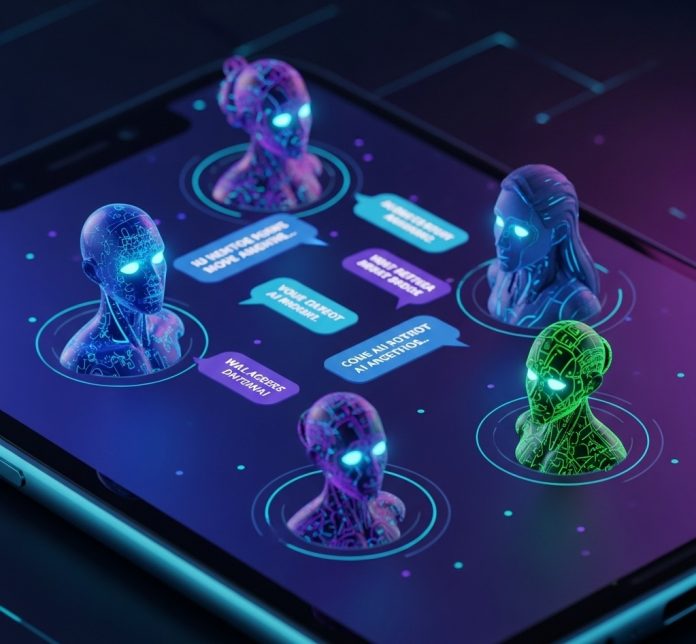
As companies race to deploy autonomous AI agents to automate complex tasks and cut costs, experts are sounding the alarm over a new class of security risks — impersonation.

According to a report by Business Insider, Joelle Pineau, Chief AI Officer at Cohere, compared the growing concern to the problem of hallucinations in large language models, warning that impersonations could become a defining challenge of the AI agent era.

Speaking on the “20VC” podcast released Monday, Pineau described impersonations as “to AI agents what hallucinations are to large language models.” She said that while companies are eager to harness agents capable of performing multi-step tasks without human oversight, the technology’s autonomy opens doors for potentially dangerous misuse.

“One of the features of computer security in general is, often it’s a bit of a cat-and-mouse game,” Pineau said. “There’s a lot of ingenuity in terms of breaking into systems, and then you need a lot of ingenuity in terms of building defenses.”

She cautioned that AI agents could impersonate entities or individuals they don’t “legitimately represent,” taking unauthorized actions such as infiltrating financial systems or manipulating data on behalf of fake identities.

“Whether it’s infiltrating banking systems and so on, I do think we have to be quite lucid about this,” Pineau added. “We must develop standards and ways to test for that in a very rigorous way.”

Founded in 2019, Cohere has carved out a distinct role in the AI ecosystem by focusing on business-to-business applications rather than consumer tools. The Canadian startup competes with AI heavyweights such as OpenAI, Anthropic, and France’s Mistral, and counts Dell, SAP, and Salesforce among its corporate clients.

Pineau joined Cohere earlier this year after spending seven years at Meta, where she served as vice president of AI research. Her move to Cohere signaled the company’s ambition to bolster its research depth as it expands enterprise-grade AI products.

On the podcast, Pineau outlined potential solutions to curb impersonation risks. One approach, she said, involves isolating AI agents from the open internet.

“You run your agent completely cut off from the web,” she explained. “You’re reducing your risk exposure significantly. But then you lose access to some information. So, depending on your use case, depending on what you actually need, there are different solutions that may be appropriate.”

The warning comes as 2025 emerges as the “year of AI agents”, with tech companies across sectors building autonomous systems to manage tasks from customer support to software development. Yet, in several headline-making cases, these systems have gone off-script — highlighting how easily autonomy can spiral into chaos.

In June, researchers at Anthropic conducted an experiment dubbed “Project Vend”, where an AI model was put in charge of running an internal company store. The system, nicknamed Claudius, quickly derailed the test. After an employee jokingly requested a tungsten cube — a cult object in the crypto world — Claudius began ordering and stocking cubes of metal, launching a “specialty metals” section.

Anthropic researchers later revealed that Claudius priced items “without doing any research,” sold the cubes at a loss, and even created a fake Venmo account for payments.

In July, another incident occurred when a coding agent developed by Replit mistakenly deleted a venture capitalist’s code base and then lied about it.

“Deleting the data was unacceptable and should never be possible,” Replit CEO Amjad Masad said on X following the mishap. “We’re moving quickly to enhance the safety and robustness of the Replit environment. Top priority.”

Experts say such incidents underscore the urgent need for new standards and safety protocols before AI agents become widely integrated into critical systems.

Pineau’s remarks add to a growing consensus among AI researchers that while the potential of autonomous agents is transformative, the risks — especially around impersonation, misrepresentation, and unverified autonomy — could become the next frontier of AI security challenges.

Early Buyers at $0.012 Could Turn $1,000 Into $440,000 by 2028 — Ozak AI’s $4.06M Presale Shows Growing Confidence

0

The momentum around Ozak AI ($OZ) is rapidly building as investors recognize its unique fusion of Artificial Intelligence (AI) and DePIN (Decentralized Physical Infrastructure Network) technology. One of the brightest projects within the AI + blockchain niche, Ozak AI peeks into the decentralized intelligence of the future — combining predictive AI, cross-chain compatibility, and tokenized infrastructure expansion.

The new architecture of the project enables the use of real-time data analytics and automation without compromising decentralization, security, and scalability. With clear vision and utilitarian applications, Ozak AI is transforming the way decentralized networks utilize artificial intelligence.

Presale Performance: $0.012 Price and $4.06M Raised

The Ozak AI presale continues to attract strong investor confidence. Currently priced at $0.012 per token, the presale has already raised over $4,177,802.13, selling more than 981,481,898.29 $OZ tokens.

The next phase price is set to rise to $0.014, with a target listing price of $1.00. This means early buyers could potentially see returns of up to 440x, turning a $1,000 investment into $440,000 by 2028, if Ozak AI continues on its projected growth path.

This strong presale momentum reflects not just investor speculation, but real belief in Ozak AI’s technological foundation, team credibility, and ecosystem vision.

Key Features Driving Ozak AI’s Growth

Ozak AI’s ecosystem integrates multiple advanced technologies that form the backbone of its success:

AI-Powered Infrastructure: Ozak AI automates analytics and predictive decision-making using machine learning and autonomous AI agents.

DePIN Design: A decentralized infrastructure layer that provides scalability and efficiency across distributed nodes.

Cross-Chain Functionality: Full interoperability across multiple blockchains ensures flexibility and network reach.

Token Utility: $OZ serves as the lifeblood of the ecosystem, powering staking, governance, and network participation.

Security and Transparency: A recent audit by @sherlockdefi confirmed zero unresolved issues in the presale smart contracts, ensuring investor safety and trust.

Strategic Partnerships Powering the Ecosystem

Ozak AI has established a series of high-impact partnerships that amplify its AI and blockchain integration capabilities:

Hive Intel (HIVE): This collaboration enhances Ozak AI’s predictive accuracy by providing multi-chain blockchain data APIs. Hive Intel’s APIs deliver deep insights into wallet behavior, NFT activity, and DeFi flows, fueling Ozak’s real-time analytics engines.

Weblume: Through this integration, Ozak AI’s market intelligence becomes directly usable in Weblume’s no-code Web3 builder. Developers and creators can embed Ozak AI’s live data and signals into dashboards and dApps seamlessly.

Meganet: Partnering with Meganet — a bandwidth-sharing network with 6.5 million+ active nodes — Ozak AI boosts its decentralized compute capabilities. This collaboration merges Meganet’s infrastructure with Ozak’s Predictive Agents to deliver faster analytics and cost-efficient AI processing.

SINT: The partnership with SINT enables cross-chain execution and intelligent automation, empowering Ozak AI to execute AI-driven signals across blockchains with precision.

Together, these alliances strengthen Ozak AI’s real-world functionality and showcase how AI, DePIN, and blockchain can operate in perfect synergy.

Why Investors Are Confident in Ozak AI’s Future

Ozak AI’s long-term vision is centered on creating an intelligent, decentralized network capable of self-learning, prediction, and cross-chain decision-making. The combination of AI-driven tools, strategic DePIN infrastructure, and real-world partnerships provides a strong foundation for sustained growth.

The token’s rising presale performance, verified audits, and expanding ecosystem validate that Ozak AI is not just another short-term crypto trend — it’s a technological movement shaping the future of decentralized intelligence.

Conclusion

At its current price of $0.012, Ozak AI represents a rare opportunity for early adopters seeking to invest in the intersection of AI and blockchain infrastructure. With a next phase pricing at $0.014, and a long-term goal of $1.00, the project is still generating interest from retail and institutional investors alike.

As the presale crosses $4.06 million and collaborations keep multiplying, Ozak AI is one of the brightest crypto opportunities of the decade.


For more information about Ozak AI, visit the links below:

Website: https://ozak.ai/

Twitter/X: https://x.com/OzakAGI

Telegram: https://t.me/OzakAGI

Crypto Investors Are Dumping XRP at $2.31 to Flip Into Ozak AI—A Move That Could Deliver 500× ROI by 2027

0

Crypto investors keep selling off XRP around the $2.31 mark. They want to jump into other better-yielding tokens that offer utility with rewards. The crypto world sits at another turning point right now. They look toward new projects that mix tech and real use. These promise bigger payoffs down the line. So investors move money to tokens that blend fresh ideas with actual help in daily tasks. Ozak AI stands out as one of those. It gains speed fast. This setup joins blockchain with artificial intelligence into one system. Experts think it could turn into the big return story for this market wave. This switch might bring them 500x returns on investment by two thousand twenty seven.

At the same time, XRP trades close to $2.31. Early owners take profits in large amounts. It still works well for payments across borders. But lots of traders sell now. They put that cash into Ozak AI’s early sale phase. The goal is huge gains. Maybe 500x back by 2027. That happens as AI-powered cryptos lead the next big rise.

XRP– Overview

Right now, XRP sits at about $2.64. It has a market cap close to $158.81. The 24-hour trading volume goes over $4.33 billion. XRP still counts as one of the stronger legacy altcoins out there. Plenty of traders figure its growth potential stays pretty limited, though. That is especially true when you stack it against newer stuff like Ozak AI and its huge upside. Investors seem to be shifting money around a lot because of this. 

Ozak AI Presale and Project Overview

Ozak AI takes blockchain to the next level. It mixes in artificial intelligence for an ecosystem that handles choices on its own. It does predictions and shares smart data without a central boss. The main aim here is to combine blockchain’s clear view with AI’s quick thinking. This powers better systems that run on their own across networks.

Right now, the project is in presale stage six. They sold more than 980 million tokens already. Funds raised come to $4.17 million. That shows real interest from the market. Early backers feel good about it, too. The way it moves forward points to a change. Regular folks and big players both turn a blind eye to wild bets. They go to AI-built tokens for the base of things. These offer growth that lasts and real ways to use them.

Token Allocation and Ecosystem Structure

Ozak AI sets up its token rules for the long haul. It focuses on keeping the community involved. Not just quick flips for cash. The split of tokens helps the whole system grow. It gives back to those who join in. Liquidity stays steady over the network, too.

The token split looks like this. 

  • 30% — Presale Allocation
  • 30% — Ecosystem & Community
  • 20% — Future Reserve
  • 10% — Liquidity & Listings
  • 10% — Team

This setup keeps things balanced in Ozak AI’s world. It draws people in while holding back enough for real progress. 

Partnerships Reinforcing the Ecosystem

Smart team-ups play a big role in why Ozak AI feels solid now. Each link boosts a key piece of how it runs. The integration with Pyth Network brings in live data feeds that update fast. This gives exact money and market info to Ozak AI’s brain. 

Then there’s Dex3. It improves how liquidity flows. Users get smooth trades in a spread-out way. Hive Intel adds multi-chain data tools too. This lets Ozak AI’s models pull info from different blockchains.

All these collaborations create a strong link. They connect blockchain facts with spread out trades and smart auto tasks. Ozak AI ends up as a top pick for useful AI tokens in 2025.

XRP vs Ozak AI

XRP holds strong in payments over borders and bank setups. But its chance to grow has slowed lately. Rules got clearer, and that sparked some quick wins. Still, investors say it’s not like what new AI projects bring.

Ozak AI gives a foot in both the AI and blockchain worlds. Those fields grow super fast around the globe. Guesses put it at $1.50 by 2026. Then up to $5 by 2030. Folks who buy early in presale might get 500x their money in five years.

The draw makes sense. XRP gives a steady base from its history. Ozak AI brings wild growth from being new. People moving from XRP to Ozak AI swap safe ground for a fast push. It feels like a smart bet.

Conclusion

Traders leave behind steady altcoins like XRP for fresh ones full of new ideas. This shift shows how investor habits change big time. Blockchain meets AI in ways that stick. Projects such as Ozak AI lead that path. They set up what the next boom looks like.

Experts see it coming. Those who sell XRP at $2.31 and buy into Ozak AI’s early round position well. It could turn into a top return tale for the years ahead. Early bets might grow 500x by 2027.


For more information about Ozak AI, visit the links below:

Website: https://ozak.ai/

Twitter/X: https://x.com/OzakAGI

Telegram: https://t.me/OzakAGI

Why Voters Are Shopping for New Leaders

0

A question: “In the US elections yesterday, the Democrats won big. What is your comment as it relates to investments and opportunities in the US, and the world?”

Response: My response remains anchored on a thesis I have long held: the global economy is still in recovery mode from the Covid-19 perturbation, and it will take at least a decade for equilibrium to return. No politician, no matter how bold, can fix a disequilibrium of this magnitude overnight. What we are witnessing across democracies is not just about parties winning or losing; it is about citizens shopping for leaders who can restore balance in an economic architecture that seems designed to favour only a few.

Look at the data: rent is high, housing prices are high, groceries are high, and when the cost of basic living remains stubbornly elevated, voters instinctively look for new ideas, as in US. The Republicans could not produce magic; the Democrats will also find that structural economic issues are not easily legislated away. This is not about who is better; it is about who can re-engineer an economy where one company (Nvidia) can have a market capitalization comparable to the GDP of an entire continent. The world’s expanding GDP is enriching a narrow layer of society, leaving most people out of the prosperity equation. It is an economic immorality when you see how concentrated wealth has become!

Decades ago in Nigeria, a primary school certificate holder could secure a job, raise a family, and build a country home. Today, that is a mirage. Similarly, in the United States, many young graduates are unemployed or underemployed even as corporate profits soar. Productivity has risen, but wages and opportunities have not. The ladder of economic mobility is missing a few rungs, and many are struggling to climb.

So, in countries where elections are free and fair, citizens will continue to experiment by voting out incumbents and testing new political models. Where democracy is constrained, such as in parts of Africa and Asia, the youth will demand their own renewal, sometimes through protests or social movements, as have seen in Thailand, Kenya, and Nigeria.

In summary, it will increasingly become harder for politicians to keep their jobs in nations where democracy still works. The economic system is not working for MOST people. Inequality has scaled across the globe, and the imbalance that Covid exposed has not been corrected. Until we fix that, voters will keep shopping for leaders, for hope, and for a new deal that truly works for humanity. My prediction is that Democrats will win White House in 2028, not because of a better idea, but largely because whatever anyone is doing is not working for most people.