DD
MM
YYYY

PAGES

DD
MM
YYYY

spot_img

PAGES

Home Blog Page 222

Bitcoin Slides Below $100,000 as Market Fear Soars, Analysts Warn of Further Declines

0

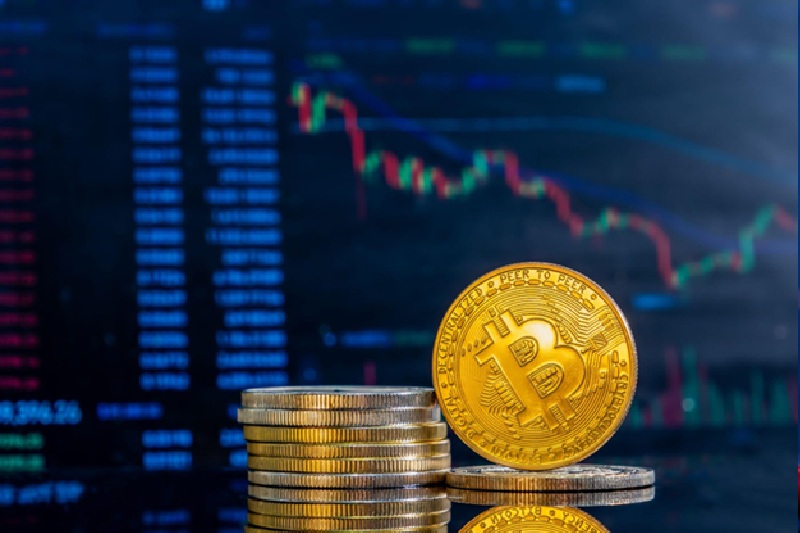
The world’s largest cryptocurrency, Bitcoin, has slipped below the crucial $100,000 threshold for the first time since June 2025, triggering more than $1.8 billion in liquidations across the market.

After reaching an all-time high of $126,000 in October, Bitcoin has now fallen more than 20%, prompting heightened concerns that the selloff may continue.

Market analysts attribute part of the decline to increased selling pressure from long-term holders a trend expected as the asset matures and sees higher valuations. The downturn has been so pronounced that Bitcoin has underperformed U.S. Treasuries so far in 2025. The Crypto Fear & Greed Index, used to gauge overall market sentiment, fell to 21 out of 100 on Tuesday, reflecting “Extreme Fear.”

At the time of reporting, Bitcoin had rebounded slightly to $101,806 after briefly dipping just above $99,000. The current weakness stands in stark contrast to recent bold forecasts from prominent Bitcoin advocates, who just weeks earlier said the cryptocurrency still had the potential to reach $250,000 before the end of the year.

Gerry O’Shea, head of global market insights at crypto asset manager Hashdex, noted that speculation surrounding a potential pause on rate cuts by the Federal Open Market Committee, coupled with concerns over tariffs, credit markets, and equity valuations, contributed to the broader market downturn.

Institutional movements also played a key role. U.S.-listed Bitcoin and Ethereum spot ETFs recorded combined net outflows of $797 million on Tuesday. Data from SoSoValue shows that spot Bitcoin ETFs alone saw $577.74 million in net outflows—the largest single-day withdrawal since August 1.

Fidelity’s FBTC led with $356.6 million in outflows, followed by Ark & 21Shares’ ARKB at $128 million, and Grayscale’s GBTC at $48.9 million. Seven Bitcoin ETFs posted negative flows, stretching the outflow streak to five consecutive days with a total of $1.9 billion withdrawn.

Julio Moreno, head of research at CryptoQuant, cautioned that Bitcoin could fall to $72,000 within one to two months if it fails to hold the $100,000 support level. He pointed to weakening demand following the major October 10 liquidation event that wiped out over $20 billion in leveraged positions.

“Spot demand has contracted, ETF inflows turned negative, and our Bull Score Index remains deep in bearish territory,” he noted, describing the broader environment as a “risk-off” market influenced by uncertainty surrounding global trade and monetary policy.

Technical analysts are also signaling caution. Trader Captain Faibik identified a rising wedge pattern on Bitcoin’s weekly chart, a structure that often precedes sharp downward movement. He stated that he is “no longer bullish” in the near term and expects Bitcoin could decline to around $72,000, with a possible lower target near $55,000 if major support levels break.

Despite the ongoing selloff, some market experts remain optimistic about Bitcoin’s long-term trajectory. Speaking on the Bankless podcast in early October, BitMine chair Tom Lee and BitMEX co-founder Arthur Hayes reaffirmed their earlier predictions that Bitcoin could still reach $200,000 to $250,000 before year-end.

Lim of Caladan, echoed a cautiously optimistic view, noting that while a delayed interest rate cut may pose short-term challenges, overall macro conditions still favor eventual bullish momentum. He highlighted that despite the recent 21.5% pullback from $125,000 to $99,000, the decline is milder than the 31% correction earlier in the year during heightened tariff concerns. “The bullish structure remains intact, even if sentiment appears to be at rock bottom,” Lim said. “However, heightened volatility is likely to persist.”

Outlook

As Bitcoin stands at a critical inflection point, analysts suggest that the coming weeks will determine whether the current pullback is a temporary correction or the start of a deeper downturn.

Goldman Sachs and Morgan Stanley Warn Global Markets May Soon Be Due for Correction After Yearlong Rally Fueled by AI Boom

0

Global equity markets, which have surged to historic highs this year on the back of artificial intelligence optimism and anticipated interest rate cuts, may soon be due for a sharp correction, according to Goldman Sachs and Morgan Stanley.

The two Wall Street giants, speaking at the Global Financial Leaders’ Investment Summit in Hong Kong on Tuesday, cautioned investors to brace for a “reality check” that could see markets drop by as much as 20% within the next two years.

The warnings come after an extraordinary rally that has added trillions to global market capitalizations. The S&P 500 has risen more than 25% year-to-date, the Nasdaq Composite over 30%, and Japan’s Nikkei 225 has reached levels not seen since 1989. South Korea’s Kospi has also notched record gains, while China’s Shanghai Composite has climbed to its highest in a decade following signs of easing U.S.-China tensions and a weaker dollar that has buoyed exports.

Goldman Sachs CEO David Solomon told investors that the current euphoria was not sustainable indefinitely.

“It’s likely there’ll be a 10 to 20% drawdown in equity markets sometime in the next 12 to 24 months,” Solomon said. “Things run, and then they pull back so people can reassess.”

He noted that such reversals were a healthy feature of long-term bull markets, not necessarily the onset of a crisis.

“A 10 to 15% drawdown happens often, even through positive market cycles,” he said. “It’s not something that changes your fundamental belief in how you want to allocate capital.”

Morgan Stanley CEO Ted Pick agreed, saying that markets needed to “cool off” after a period of relentless gains.

“We should also welcome the possibility that there would be drawdowns — 10 to 15% drawdowns that are not driven by some sort of macro cliff effect,” Pick said. “They’re part of the process of price discovery.”

The remarks reflect growing concern among global policymakers and analysts that equity valuations — particularly those of technology and AI-related firms — may be running ahead of fundamentals. The International Monetary Fund warned in its October Global Financial Stability Report that the market’s dependence on AI-linked stocks poses a “concentration risk,” with a handful of companies such as Nvidia, Microsoft, and Alphabet accounting for most of this year’s gains.

U.S. Federal Reserve Chair Jerome Powell and Bank of England Governor Andrew Bailey have also voiced similar concerns. Powell noted last week that financial conditions have loosened more than warranted, while Bailey warned that markets are showing signs of speculative excess.

The AI boom has driven an unprecedented “compute race,” with companies investing hundreds of billions of dollars in chips and infrastructure. Nvidia, the poster child of the rally, briefly touched a $4 trillion market capitalization in late October, surpassing Apple and Microsoft at various points this year. This surge has also powered suppliers like TSMC, Broadcom, and ASML to record valuations.

However, Solomon pointed out that markets tend to recalibrate after periods of exuberance. He noted that it’s natural that after big runs, we get periods of digestion, suggesting that investors should prepare for more volatility as interest rate expectations evolve and corporate earnings normalize.

Despite the cautious tone, both Goldman Sachs and Morgan Stanley identified Asia as a region with sustained long-term potential. Solomon said Goldman expects capital flows into Asia to remain strong, particularly after the renewed U.S.-China trade cooperation deal and improving business sentiment.

Morgan Stanley’s Pick highlighted Japan, India, China, and Hong Kong as key investment destinations.

“It’s hard not to be excited about Hong Kong, China, Japan, and India — three vastly different narratives, but all part of a global Asia story,” he said, citing Japan’s corporate governance reforms, India’s infrastructure expansion, and China’s advances in electric vehicles and biotechnology.

In India, the benchmark Nifty 50 index has risen nearly 20% this year, supported by strong GDP growth projections of over 7%, robust foreign direct investment inflows, and record infrastructure spending. Japan’s market, meanwhile, has benefited from corporate reforms aimed at improving shareholder returns and decades-high wage growth that has spurred consumer spending.

China, after years of economic slowdown, has seen a moderate rebound following policy easing measures by Beijing. The U.S.-China trade thaw, signed in late October, has also revived investor confidence, with foreign holdings of Chinese equities climbing to a three-year high, according to Goldman Sachs’ Asia research team.

Still, both banks acknowledged that a correction, even if brief, could test investor sentiment across markets.

As the year winds down, traders are closely watching upcoming U.S. employment and inflation data, which could shape the Federal Reserve’s next rate decision. A stronger dollar, slowing corporate earnings, or geopolitical shocks could all trigger the pullback that Wall Street’s biggest banks now see as increasingly likely.

While the bull run may not be over, Wall Street is warning that the days of effortless gains are numbered.

Norway’s $2tn Wealth Fund Deals a Major Blow to Elon Musk’s $1tn Tesla Pay Package

0

The bank managing the world’s largest sovereign wealth fund has moved to block Elon Musk’s proposed $1 trillion Tesla pay package, dealing a major blow to the billionaire ahead of the company’s crucial shareholder meeting this Thursday.

Norges Bank Investment Management (NBIM), which manages Norway’s $2 trillion sovereign wealth fund, confirmed on Tuesday that it had voted against Musk’s compensation plan, citing “concerns about the size of the award, dilution, and the lack of sufficient safeguards around key person risk.”

The bank acknowledged the “significant value created under Mr. Musk’s leadership” but said the proposed plan raises governance concerns that outweigh its benefits. NBIM’s decision makes it the largest institutional investor to publicly oppose Musk’s unprecedented compensation deal.

The Norwegian fund, which owns about 1.2% of Tesla, is the company’s sixth-largest institutional investor. Its vote could sway others in the high-stakes shareholder decision that will determine whether Musk secures what would be the largest executive pay package in corporate history.

This is not the first time NBIM has opposed Musk’s compensation. The fund voted against his 2018 package—which a Delaware court later struck down earlier this year—and again opposed a revised version in 2024. Relations between Musk and NBIM CEO Nicolai Tangen have reportedly been tense. In leaked text exchanges from January, Musk told Tangen, “friends are as friends do,” after the fund’s earlier opposition.

Musk’s new pay plan, worth roughly $1 trillion in Tesla stock options, would grant him massive equity rewards if he meets a string of long-term targets, including raising Tesla’s market capitalization to $8.5 trillion, selling one million Optimus humanoid robots, dramatically increasing earnings, and planning his eventual succession.

While Musk argues the package is essential to maintain his focus on Tesla amid his growing involvement in SpaceX, X (formerly Twitter), and xAI, critics say the scale of the compensation is excessive and exposes Tesla to governance risks.

Other major investors have taken sides. The California Public Employees’ Retirement System (CalPERS) and the New York State Retirement Fund have already voted against the plan, joining NBIM in voicing concerns about shareholder dilution and governance standards. Proxy advisory firms Glass Lewis and Institutional Shareholder Services (ISS) have also urged Tesla shareholders to reject the deal.

Musk, in response, lashed out at the firms, calling them “corporate terrorists” during Tesla’s recent earnings call.

Not all large investors are opposed, however. The Florida State Board of Administration and ARK Invest’s Cathie Wood have expressed support for the package, while Vanguard and BlackRock—Tesla’s two biggest institutional shareholders—have yet to reveal their positions.

If approved, the new plan would cement Musk’s fortune far beyond any other CEO in history, potentially making him the world’s first trillionaire. If rejected, it would mark a major governance setback for Tesla’s board and could test the billionaire’s commitment to the automaker at a time when the company faces slowing sales, growing EV competition from China, and investor doubts about Musk’s focus.

Tesla’s shareholders are set to cast their votes at the company’s annual general meeting on Thursday, in what analysts are describing as one of the most consequential corporate decisions of the decade.

How Slot Games Attract and Increase Their Number of Players

0

Slot games are the backbone of both land-based and online casinos. Their flashing lights, catchy themes, and potential for big wins make them highly appealing to a broad audience. But in today’s competitive iGaming market, simply offering a slot game isn’t enough. Developers and operators must be strategic to attract new players and keep them spinning. From smart game design to savvy marketing, here’s how slots UK increase their number of players.

  1. Engaging Themes and Storytelling

Themed slots are one of the most effective tools for attracting players. Whether it’s ancient Egypt (Book of Dead), outer space (Starburst), or a TV franchise (Game of Thrones), themes play a powerful role in drawing attention.

Developers often capitalize on popular culture, folklore, and fantasy to design slots that resonate with specific interests. These themes are enhanced by strong visual design, animations, and music, which help create immersive storytelling experiences. Players are no longer just spinning reels they’re going on an adventure.

Why It Works:

  • Taps into familiar stories and characters.
  • Builds emotional connection and excitement.
  • Encourages exploration of other similar games.
  1. Bonuses and Promotions

One of the most common ways slot games attract new players is through promotions. Free spins, deposit bonuses, and no-deposit offers often feature specific slot games, giving new players an incentive to try them risk-free.

Online casinos frequently use welcome bonuses to promote their most popular or newest slots in the UK. Once players start spinning with free or bonus-funded credits, many go on to play the game with their own money.

Why It Works:

  • Reduces financial risk for new players.
  • Creates a sense of value and reward.
  • Helps new players discover features without pressure.
  1. Progressive Jackpots

Slots with progressive jackpots often see a massive spike in player numbers, especially when the jackpot grows to a life-changing amount. Games like Mega Moolah and Hall of Gods have made headlines for turning casual players into millionaires with a single spin.

These jackpot counters are usually displayed prominently on the game’s interface and casino homepage, creating urgency and excitement as the total increases.

Why It Works:

  • Offers massive win potential from small stakes.
  • Adds a communal aspect as players contribute to the jackpot.
  • Increases time-on-site as players return to check the total.
  1. Mobile Optimization and Accessibility

Modern slot games are built to perform seamlessly across devices. This is essential in today’s mobile-first world, where many players prefer to gamble on their phones or tablets.

By ensuring their games are touch-friendly, lightweight, and responsive, developers open the door to a wider audience including casual players who may never sit at a computer to play.

Why It Works:

  • Captures on-the-go players.
  • Expands reach beyond desktop users.
  • Encourages casual play, which often leads to deeper engagement.
  1. Gamification and Features

Today’s players expect more than just spinning reels. Slot games have evolved to include a wide range of features that keep players engaged:

  • Bonus rounds: Mini-games within the slot that break up monotony.
  • Free spins: Extra chances to win without additional cost.
  • Multipliers: Boost payouts and create big win moments.
  • Cascading reels and Megaways™ mechanics: Add layers of unpredictability and excitement.

Some slots also incorporate elements of gamification such as missions, level-ups, or reward systems which make the experience more interactive and goal-oriented.

Why It Works:

  • Keeps gameplay dynamic and unpredictable.
  • Appeals to both casual and serious players.
  • Encourages extended play sessions.
  1. Social Integration and Tournaments

Slot tournaments and social features are increasingly used to attract competitive or community-minded players. Tournaments pit players against each other for leaderboard positions and prizes, adding a competitive edge to what is typically a solitary activity.

Some platforms also offer social rewards, such as badges, achievements, and player progression systems.

Why It Works:

  • Adds competition and community elements.
  • Encourages repeated play to climb rankings.
  • Builds loyalty through recognition and rewards.
  1. Strategic Placement and Cross-Promotion

Casinos often place popular or new slot titles in high-visibility areas of their websites or apps. These games are highlighted on the homepage, recommended in newsletters, or featured in seasonal promotions.

Cross-promotion within the platform such as “If you like this, try that” also increases visibility and discoverability of slot games.

Why It Works:

  • Puts games in front of more users.
  • Encourages discovery through related content.
  • Helps lesser-known slots gain traction.

Conclusion

The world of slot gaming is more sophisticated and competitive than ever. To attract and retain players, developers and casinos use a wide array of tactics: compelling themes, powerful bonuses, jackpot appeal, gamification, and seamless mobile experiences. Each of these elements plays a vital role in growing a game’s player base and keeping them engaged long-term.

Ultimately, the most successful slot games are those that strike a balance between entertainment, accessibility, and reward delivering not just the chance to win, but an experience worth returning to again and again.

The Best Smartphones for Gaming in 2025

0

Mobile gaming has evolved dramatically, with smartphones now offering console-level performance, high refresh rate displays, and advanced cooling systems. Whether you’re into fast-paced shooters, immersive RPGs, or casual online slots gaming, there’s a device tailored to your needs. Here’s a look at the best gaming smartphones of 2025, including one optimized for slot gaming.

  1. ASUS ROG Phone 9 – The Ultimate Gaming Machine

The ASUS ROG Phone 9 is widely regarded as the best gaming smartphone of 2025. Powered by the Snapdragon 8 Elite processor, it delivers unmatched performance for demanding games.

Key Features:

  • 6.78-inch AMOLED display with a 165Hz refresh rate for ultra-smooth gameplay.
  • 6000mAh battery with 80W fast charging, ensuring long gaming sessions.
  • AirTriggers 5.0, providing console-like control for FPS and action games.
  • Advanced cooling system to prevent overheating during extended play.

For gamers who want the best experience, the ROG Phone 9 is a powerhouse that handles everything from competitive shooters to open-world adventures.

  1. RedMagic 10 Pro – Affordable Gaming Power

The RedMagic 10 Pro is a fantastic choice for gamers who want high performance at a reasonable price.

Key Features:

  • Snapdragon 8 Elite processor for smooth gameplay.
  • 6.85-inch AMOLED display with 144Hz refresh rate.
  • Built-in turbofan and liquid cooling system to prevent overheating.
  • Shoulder triggers for enhanced control in action-packed games.

With its efficient cooling system and powerful specs, the RedMagic 10 Pro is perfect for gamers looking for a budget-friendly option.

  1. Samsung Galaxy S25 Ultra – Premium Gaming & Everyday Use

For those who want a flagship phone that excels in gaming and daily tasks, the Samsung Galaxy S25 Ultra is a top contender.

Key Features:

  • Snapdragon 8 Elite processor with 16GB RAM.
  • 6.9-inch Dynamic AMOLED display with 120Hz refresh rate.
  • AI-powered Game Booster mode for optimized gaming performance.
  • 6000mAh battery with 65W fast charging.

While not a dedicated gaming phone, the Galaxy S25 Ultra delivers excellent performance for mobile gaming while maintaining premium features for everyday use.

  1. Apple iPhone 16 Pro Max – The iOS Gaming Beast

Apple’s iPhone 16 Pro Max is the best choice for iOS gamers, offering Apple Arcade and top-tier performance.

Key Features:

  • A18 Bionic chip for lightning-fast gaming.
  • 6.7-inch Super Retina XDR display with 120Hz ProMotion.
  • Ray tracing support for enhanced graphics.
  • Optimized for Apple Arcade and App Store exclusives.

For gamers who prefer iOS, the iPhone 16 Pro Max provides a seamless and powerful gaming experience.

  1. Samsung Galaxy A16 5G – Ideal for Slot Gaming

For players who enjoy slot gaming, the Samsung Galaxy A16 5G is a great option.

Key Features:

  • 6.5-inch Full-HD display for vibrant visuals.
  • 50MP primary camera and 13MP selfie camera.
  • 128GB storage with Micro SDXC support.
  • Affordable price with solid gaming performance.

With its smooth display and reliable performance, the Galaxy A16 5G is perfect for casual gaming, including slot games.

Conclusion

Gaming smartphones in 2025 offer incredible performance, catering to different gaming styles. Whether you need the ASUS ROG Phone 9 for high-end gaming, the RedMagic 10 Pro for affordability, or the Samsung Galaxy A16 5G for slot gaming, there’s a perfect device for every gamer.