DD
MM
YYYY

PAGES

DD
MM
YYYY

spot_img

PAGES

Home Blog Page 224

ExxonMobil and QatarEnergy Warn of Pullout Over EU’s Sweeping Sustainability Law

0

Executives from ExxonMobil and QatarEnergy have warned they may halt or sharply reduce their business activities in Europe if the European Union presses ahead with a far-reaching sustainability law that would impose heavy obligations and steep fines on multinationals operating within its borders.

The warning, delivered at the ADIPEC energy conference in Abu Dhabi, underscores growing tension between Brussels and major global suppliers over the bloc’s expanding climate and corporate governance agenda — one that has already rattled U.S. tech giants and is now reverberating through the energy sector.

ExxonMobil’s Chief Executive Darren Woods told Reuters that the EU’s proposed Corporate Sustainability Due Diligence Directive (CSDDD) could have “disastrous consequences” if passed in its current form. The legislation requires companies doing business in the EU to identify and mitigate human rights and environmental risks across their global supply chains. It allows fines of up to 5% of global turnover for violations.

“If we can’t be a successful company in Europe, and more importantly, if they start to try to take their harmful legislation and enforce that all around the world where we do business, it becomes impossible to stay there,” Woods said.

He argued that the directive overreaches by demanding that companies like ExxonMobil not only ensure compliance for European operations but also extend the same standards globally — even in countries where EU law does not apply.

QatarEnergy’s CEO and Energy Minister Saad al-Kaabi delivered a similar warning, saying the company could reconsider gas shipments to Europe if the directive is not significantly softened.

“We can’t reach net zero, and that’s one of the requirements, among other hosts of things,” Kaabi said. “Europe needs to understand that they need gas from Qatar. They need gas from the U.S. They need the gas from many places around the world … it’s very important that they look at this very seriously.”

He said QatarEnergy already has contingency plans in place if it decides to suspend or scale down supplies.

Both executives spoke at a time when the EU’s green policies have come under scrutiny for their economic impact. The CSDDD, introduced as part of Europe’s broader push to achieve climate neutrality by 2050, aims to make companies legally responsible for human rights and environmental damage in their supply chains, even if such harms occur outside the continent.

It is part of a sweeping regulatory tightening by Brussels that has also targeted Silicon Valley firms through measures such as the Digital Markets Act (DMA) and the Digital Services Act (DSA). These laws have compelled U.S. tech giants — including Google, Apple, Meta, Amazon, and Microsoft — to make major operational changes, prompting accusations of regulatory overreach from Washington and industry leaders.

For energy companies like ExxonMobil and QatarEnergy, the implications are no less serious. The CSDDD would compel firms to publish detailed transition plans aligned with the Paris Agreement’s target of limiting global temperature rise to 1.5°C — something Woods described as “technically unfeasible.”

“What’s astounding to me is the overreach,” he said, stressing that the directive effectively forces the same environmental standards on all operations worldwide.

Both ExxonMobil and QatarEnergy are among Europe’s top suppliers of liquefied natural gas (LNG). Since Russia’s invasion of Ukraine in 2022, Europe has leaned heavily on American and Qatari gas to replace Russian pipeline flows, making any disruption or withdrawal a direct threat to the bloc’s energy security. The U.S. alone now accounts for roughly half of Europe’s LNG imports, while Qatar supplies between 12% and 14%.

The relationship is commercially deep. ExxonMobil said last year it had invested €20 billion ($23.3 billion) in Europe over the past decade, and QatarEnergy maintains long-term LNG supply contracts with Britain’s Shell, France’s TotalEnergies, and Italy’s ENI. Both firms dramatically increased shipments after Russia’s energy cutoff.

Governments in Qatar and the U.S. have since urged European leaders to reconsider the law, warning that strict enforcement could undermine Europe’s energy supply and investment environment. Washington’s own trade officials have echoed concerns that the bloc’s ESG (Environmental, Social, and Governance) measures, if left unchecked, could set a precedent for extraterritorial enforcement that complicates global business operations.

The European Parliament has acknowledged the backlash and agreed to reopen negotiations on the directive, with the goal of finalizing revisions before year-end. The current version remains contentious, with environmental groups insisting that corporate accountability must not be weakened, while industry advocates argue that without adjustments, the law risks pushing away essential suppliers and raising costs for European consumers.

Energy analysts say the clash captures a defining dilemma of the EU’s climate strategy that involves balancing moral and environmental commitments with the practical need for affordable energy and investment. As European policymakers pursue ambitious ESG targets, corporations — from Big Tech to Big Oil — are warning that the regulatory load is reaching a breaking point.

Chowdeck Crosses One Million Orders in October, Strengthening Its Lead in Nigeria’s Food Delivery Market

0

Chowdeck, Nigeria’s rapidly growing food delivery startup, has achieved a major milestone, surpassing one million orders in October 2025, marking its strongest month to date.

The announcement was made by Femi Aluko, the company’s co-founder and CEO, in a LinkedIn post celebrating the achievement.

According to Aluko, the feat reflects not only Chowdeck’s scale but also the strength of its business fundamentals. He revealed that the company closed October with a positive gross margin of 26%, underscoring that it is possible to grow rapidly while maintaining profitability and operational sustainability.

Part of his statement reads,

“I am thrilled to share that Chowdeck in Nigeria fulfilled over 1 million orders in October, marking our strongest month to date. Beyond the scale, this achievement reflects the strength of our fundamentals. We closed October with a positive gross margin of 26%, demonstrating that it is possible to grow aggressively while building a sustainable business model.

“The past few weeks haven’t been perfect. We have had some tough moments with support and operations as we entered into a new era of growth. We are listening, learning, and fixing things quickly. Our daily order volumes in Nigeria grew from an average of ~30K daily orders a few weeks ago to over 40K daily orders presently and still increasing day on day. This is more than just numbers. For us, it’s a story of trust: – Trust from customers who choose us every day, Trust from vendors who continue to grow with us, and trust from riders who show up rain or shine to deliver on our promise.”

The company’s success comes after securing $9 million in Series A funding in August 2025, led by Novastar Ventures with participation from Y Combinator, AAIC Investment, Rebel Fund, GFR Fund, Kaleo, and HoaQ, among others. The fresh capital will fuel Chowdeck’s quick commerce strategy, enabling ultra-fast delivery through a network of dark stores and hubs.

The startup plans to open 40 dark stores by the end of 2025 and 500 by 2026, launching two to three stores weekly. Over the past four years, Chowdeck has evolved from a startup idea into a full-fledged logistics and quick-commerce ecosystem, connecting millions of customers to food, groceries, and essential items. The startup’s model is designed to cut average delivery times below 20 minutes and strengthen its competitive position in a space once dominated by Jumia Food and Bolt Food.

Founded in October 2021 by Femi Aluko, Olumide Ojo, and Lanre Yusuf, the company now operates in 11 cities, including Lagos, Abuja, and Accra, serving over 1.5 million customers with a network of 20,000+ riders. Operating profitably since its inception, Chowdeck’s success is rooted in its strong partnerships with top brands such as KFC and Burger King, as well as several local vendors, which offer customers a mix of African, Asian, and healthy meals. The platform reportedly maintains an average delivery time of 30 minutes, with most orders concentrated in high-density areas.

Even as it scales, Aluko acknowledges the operational strain that growth brings. “At 10,000 daily deliveries, a 90% success rate still leaves 1,000 unhappy customers,” he said, a reminder that customer experience remains central to sustaining long-term growth.

Notably, Chowdeck’s acquisition of order-management platform Mira and its continued investments in logistics innovation signal a broader ambition to not only dominate Nigeria’s delivery space but also redefine quick commerce across Africa.

Lambda, Microsoft Ink Multibillion-Dollar AI Infrastructure Deal as Compute Boom Accelerates

0

Cloud computing startup Lambda has struck a multibillion-dollar artificial intelligence infrastructure deal with Microsoft, powered by tens of thousands of Nvidia GPUs, in what industry analysts describe as the latest sign of a global “compute boom” triggered by the ongoing AI arms race.

The agreement, announced Monday, marks a major expansion of the two companies’ long-standing relationship, which dates back to 2018. The partnership is designed to bolster Microsoft’s access to GPU clusters for large-scale AI workloads and cement Lambda’s position as one of the most important independent providers of AI computing power.

“We’re in the middle of probably the largest technology buildout that we’ve ever seen,” said Lambda CEO Stephen Balaban in an interview with CNBC’s Money Movers. “The industry is going really well right now, and there’s just a lot of people who are using ChatGPT, Claude, and the different AI services that are out there.”

While neither company disclosed the specific dollar figure, sources familiar with the matter told media outlets that the deal will span multiple years and involve the deployment of Nvidia’s cutting-edge GB300 NVL72 systems, the same chips being used by other hyperscalers like CoreWeave. These systems are designed for ultra-high-performance workloads such as training large language models and running massive inference operations.

Balaban praised Nvidia’s leadership in the GPU market, calling it “the best accelerator product on the market.”

Founded in 2012, Lambda provides AI cloud services, GPU rentals, and tools for training and deploying machine learning models, serving more than 200,000 developers worldwide. The company’s infrastructure allows research labs, startups, and enterprise firms to rent powerful GPUs on demand rather than build their own costly data centers.

The AI Arms Race and the Global Compute Boom

The Lambda–Microsoft deal reflects a broader transformation in global technology investment. Since the release of ChatGPT in late 2022, the race among firms to build and train more powerful AI models has triggered an unprecedented surge in demand for computing power, forcing hyperscalers, chipmakers, and specialized cloud startups into multibillion-dollar alliances.

The phenomenon has been likened to an “AI gold rush,” but instead of mining equipment, the precious resource is compute capacity—the ability to train, deploy, and scale artificial intelligence models using clusters of GPUs.

Tech giants such as Microsoft, Amazon, Google, Meta, and Oracle have committed hundreds of billions of dollars to expand their AI infrastructure, while companies like CoreWeave, Lambda, and Cerebras Systems have become key partners in supplying specialized computing resources.

Lambda’s partnership with Microsoft follows similar deals across the sector:

  • OpenAI recently signed a $38 billion, seven-year agreement with Amazon Web Services to access hundreds of thousands of Nvidia GPUs.
  • OpenAI has committed to spending $300 billion over the next five years to purchase compute capacity from Oracle, over the next five years.
  • CoreWeave raised billions in funding from Nvidia and Magnetar Capital to rapidly expand its GPU data centers across the U.S.

Together, these agreements illustrate how the AI arms race is reshaping the global tech industry. What began as a software competition to build smarter models has evolved into a hardware race to secure computational dominance—with GPUs, data centers, and energy capacity now defining competitive advantage.

Lambda’s Expansion Plans

Lambda is already scaling aggressively to meet rising demand. The company operates dozens of data centers worldwide and is increasingly building its own infrastructure rather than relying solely on leasing. In October, Lambda announced plans for an AI factory in Kansas City, slated to open in 2026 with 24 megawatts of initial capacity, expandable to over 100 megawatts.

This expansion underlines how AI infrastructure companies are moving closer to the scale once reserved for hyperscalers.

Lambda is expected to gain both long-term stability and massive demand from one of the world’s most ambitious AI investors by aligning with Microsoft. Microsoft, for its part, secures more dedicated compute capacity outside its core Azure footprint, ensuring it can continue scaling services like Copilot and ChatGPT integrations without bottlenecks.

The sheer magnitude of the partnerships now being signed—ranging from billions to tens of billions of dollars—highlights artificial intelligence’s shift from just a software revolution to an infrastructure revolution reshaping the global economy.

Analysts expect the wave of AI-driven infrastructure investments to continue through the decade, with cumulative spending potentially reaching multitrillion dollars by 2030.

Xanadu Quantum Technologies to Go Public in $3.6bn Nasdaq SPAC Deal

0

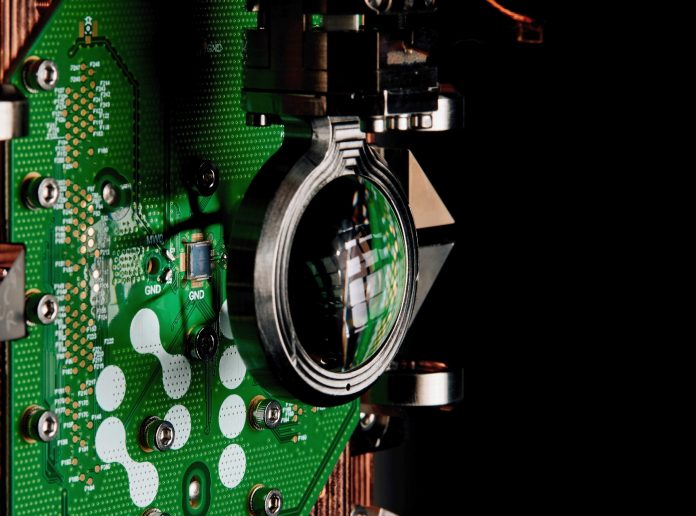
Canadian quantum computing firm Xanadu Quantum Technologies is set to go public through a merger with Crane Harbor Acquisition Corp in a deal valuing the company at $3.6 billion, the firms announced on Monday.

The merger, which will list Xanadu’s shares on the Nasdaq, is expected to generate nearly $500 million in proceeds, including a $275 million private investment in public equity (PIPE).

The move marks a major milestone for the Toronto-based startup, positioning it among the growing list of quantum computing companies seeking to tap public markets through special-purpose acquisition companies (SPACs) rather than traditional IPOs.

Xanadu’s CEO, Christian Weedbrook, told Reuters that the decision was driven by growing investor enthusiasm for quantum computing stocks.

“We were really keeping a close eye on what was happening in the public markets,” Weedbrook said. “The capital available in the public markets was too enticing to ignore.”

Quantum computing, long considered a futuristic technology, has begun moving from theoretical research into practical applications and commercial development. These machines use qubits—the quantum equivalent of classical bits—to perform complex calculations far beyond the capacity of conventional computers. In theory, quantum computers can simulate chemical reactions involving trillions of atoms in minutes, a feat that would take classical supercomputers thousands of years.

This leap in computational power has far-reaching implications for fields such as drug discovery, materials science, cryptography, and artificial intelligence. But Qubits are notoriously unstable, often collapsing under minimal interference, which can cause computational errors that overwhelm useful results. As a result, the industry continues to debate how soon truly error-corrected quantum computers will become commercially viable.

Still, investor optimism in the sector has surged in 2025, fueled by breakthroughs from major players and growing adoption among corporate giants. IBM, Microsoft, and Google have all accelerated their quantum research, with Google announcing a breakthrough algorithm last month that it claims could significantly improve quantum processing efficiency.

Meanwhile, JPMorgan Chase has outlined plans to integrate quantum computing into its long-term digital transformation strategy, as part of a broader $1.5 trillion innovation initiative announced in October. The financial sector’s growing interest in quantum applications—particularly for risk modeling and cybersecurity—has further validated the technology’s commercial potential.

The timing of Xanadu’s public debut comes amid renewed investor appetite for quantum firms. In September, U.S.-based Infleqtion (formerly ColdQuanta) struck a $1.8 billion SPAC deal with a blank-check company led by veteran Wall Street dealmaker Michael Klein, underscoring the sector’s momentum despite a challenging IPO climate.

Quantum computing companies have increasingly turned to SPAC mergers to expedite their market entries and access capital. The route allows startups to bypass the long regulatory scrutiny and pricing uncertainties of a traditional initial public offering.

For Xanadu, which specializes in photonic quantum computing—a system that uses light particles instead of electrical circuits—the influx of capital from the merger is expected to fund the expansion of its commercial roadmap and accelerate research into scalable quantum architectures.

Analysts say that as public and private investment floods into the quantum computing ecosystem, the industry is approaching a turning point. The industry is believed to be building viable systems and software that can solve real-world problems.

If the merger closes as planned, Xanadu will join a small but growing cohort of publicly traded quantum computing firms, giving investors new access to a technology that many believe will define the next era of computational power.

2025 Free Bitcoin Mining Guide: Passive Income from Cloud Mining Without Investment

0

The dream of earning Bitcoin without owning expensive hardware or dealing with noisy mining rigs has become a reality in 2025. With the advancement of artificial intelligence and the shift toward renewable energy, cloud mining has evolved into a legitimate source of passive crypto income for people worldwide. This guide explores how modern investors and beginners alike can earn free Bitcoin through trusted cloud platforms, highlighting the most efficient and reliable services available this year.

The Evolution of Cloud Mining in 2025

A few years ago, mining Bitcoin meant investing thousands of dollars into ASIC machines and covering huge power bills. Today, the process is completely different. Platforms now host their own mining farms and allow users to rent hashrate online. Instead of worrying about equipment or energy costs, users simply purchase contracts and watch their mining rewards accumulate daily. This new model has opened the door for anyone to participate in crypto mining, even with zero technical experience.

Cloud mining in 2025 has become more transparent and secure due to blockchain regulation, renewable energy usage, and AI-driven efficiency. Let’s look at how the best-performing platforms are helping users generate real passive income without risk or upfront costs.

AutoHash: The Swiss Standard for Secure and AI-Driven Cloud Mining

Among all platforms, AutoHash stands out as a global leader in trusted, regulation-compliant mining. Operated by Blockchain Finance AG in Switzerland, it combines renewable energy, artificial intelligence, and full corporate transparency verified through the Swiss Commercial Registry (Zefix).

AutoHash integrates its proprietary OptiHash AI Engine, which automatically adjusts hashrate distribution based on Bitcoin market conditions and network difficulty. This optimization helps users maximize daily mining performance without lifting a finger. What makes it even more appealing is the $100 free trial bonus given to every new user at registration. You can start mining instantly with no investment and explore the system before committing to any plan.

AutoHash also leads in sustainability. Its mining operations are powered by hydro, solar, wind, and geothermal sources, significantly reducing both carbon emissions and costs. Combined with features like multi-signature wallet protection, encrypted fund storage, and instant withdrawals, it delivers one of the most transparent and eco-friendly mining experiences available in 2025.

AutoHash Mining Plans for 2025

Program Name Amount Contract Term Daily Rewards Total Revenue ROI
Solar Free 5 TH/s 100 1 1.4 1.4 1.40%
Solar Boost 10 TH/s 150 2 5 10 3.33%
Hydro Core 20 TH/s 550 3 17.6 52.8 3.20%
Wind Flow 35 TH/s 1200 3 43.2 129.6 3.60%
Hydro Prime 45 TH/s 2300 3 89.7 269.1 3.90%
GeoTherm Core 60 TH/s 4200 2 168 336 4.00%
Solar Fusion 100 TH/s 8900 2 373.8 747.6 4.20%
Hydro Fusion 150 TH/s 17800 2 872.2 1744.4 4.90%
GeoTherm Max 240 TH/s 26800 1 1688.4 1688.4 6.30%
Hydro Ultra 390 TH/s 39800 1 3263.6 3263.6 8.20%

Whether you start with the free plan or choose a high-performance package, every user benefits from AutoHash’s automated AI optimization.

Visit AutoHash today to activate your free mining balance and explore all available contracts.

1. SkyMine Global: Cloud Mining for Everyday Investors

SkyMine Global has emerged as a popular choice for users who want consistent payouts without complicated dashboards. The platform specializes in mining Bitcoin and Dogecoin using renewable energy sources. Its mobile-first design allows users to track mining rewards in real-time and withdraw directly to external wallets. Although it doesn’t offer a free trial, its reputation for stable returns makes it appealing to long-term users.

2. VoltHash Energy: Renewable-Powered Mining Farm

VoltHash operates large-scale data centers in Iceland and Finland, relying entirely on hydro and geothermal energy. It’s known for its transparent profit-sharing structure and real-time monitoring dashboard. VoltHash offers weekly payout schedules and tiered membership levels, which makes it ideal for users planning medium- to high-scale investments in Bitcoin mining.

3. DogeLink Cloud: Mining Dogecoin with Low Entry Costs

For those interested in earning Dogecoin rather than Bitcoin, DogeLink Cloud provides an easy entry into meme-coin mining. It offers contracts starting from as low as $50 and runs on an automated maintenance-free system. The mobile app provides quick access to performance metrics and energy usage stats, appealing to first-time users exploring smaller crypto mining opportunities.

4. BlockFront AI Miner: Machine Learning Optimization

BlockFront uses machine learning to automatically optimize hash distribution across multiple cryptocurrencies. It continuously analyzes network changes to allocate resources toward the most profitable assets. Users can mine Bitcoin, Litecoin, or Dogecoin under a single contract. The platform’s analytical tools provide advanced performance visualization for serious miners.

5. CoreSphere Cloud: Beginner-Friendly Dashboard

CoreSphere Cloud offers a very straightforward user interface suitable for beginners. It supports multiple payment gateways including stablecoins and credit cards. New users receive a guided onboarding tutorial that explains how profits are calculated and how hashrate allocation works. It’s a good pick for those who want clarity and control without complex tech jargon.

6. ChainMosaic Labs: Community-Driven Mining Pool

ChainMosaic Labs combines decentralized governance with traditional mining efficiency. Users can participate in voting on future upgrades and even propose new features. This collaborative model has built a loyal user base. It supports Bitcoin and Litecoin mining through transparent smart contracts, giving participants full visibility of hashpower utilization.

Why Cloud Mining Is Still Profitable Without Investment

The idea of earning crypto “for free” may sound unrealistic, but platforms like AutoHash demonstrate how it’s achievable. The $100 free trial is funded by the company’s renewable energy surplus, enabling users to test live mining operations without any deposit. Profit margins depend on market price, hashrate difficulty, and power cost  factors AutoHash’s AI constantly balances for stable daily performance.

Even without investing large amounts, users can reinvest small daily rewards into higher-tier contracts over time. This compounding effect can gradually build a meaningful passive income stream by mid-2025.

Final Thoughts

As the crypto market matures, cloud mining has transformed from a risky venture into a sustainable digital economy supported by AI and green energy. Platforms like AutoHash lead this evolution with transparency, regulatory trust, and profitability that beginners and experts alike can rely on. For anyone looking to mine Bitcoin or Dogecoin safely in 2025, starting with a free trial is the smartest way forward.

Visit AutoHash to claim your $100 bonus and start mining Bitcoin today without hardware, hassle, or investment.