DD
MM
YYYY

PAGES

DD
MM
YYYY

spot_img

PAGES

Home Blog Page 2293

OpenAI Business Model Looks Fragile and Stale As Microsoft, Amazon Scale DeepSeek

0

My position on the long history of how Microsoft won Linux in China is clear: the best pricing is FREE from the customer side. So when Microsoft Azure integrated DeepSeek’s model, I noted that Microsoft was essentially telling developers and users that DeepSeek is technically anointed, and available to them right in the heart of America, with no need to digitally travel to Beijing.

With that move, Amazon quickly responded and integrated DeepSeek. If Microsoft and Amazon adopt a model, that model is available to more than 80% of digital developers and builders, meaning that a shift will happen. Ironically, Microsoft was funding OpenAI which is only open by name, and  requires payment. What that means is that Microsoft can make itself irrelevant, if it is distributing a largely free model when funding a paid model, since if the two models perform at parity, no one will purchase the OpenAI model.

But  the company which operates on practical realism has done what many have expected: “Microsoft has thrown a major disruptive force into the AI market, announcing free, unlimited access to OpenAI’s powerful o1 model through Copilot’s new “Think Deeper” feature. The move undercuts OpenAI’s own pricing model,…”

Yes, if Microsoft does not do that, it may end up like IBM which made tents with Linux, and lost into oblivion. So, we can say indirectly that OpenAI is now becoming open via Microsoft. Good People, expect more shifts as Google joins the open model or free framework soon. But when you look deep into the horizon, it does seem like the OpenAI business model has faded since Microsoft can give out the goodies largely free under their contracts!

Remember: what they do at the foundation model should not overly concern you that much. We need to focus at the LLM and GenAI levels in Nigeria and Africa as I have noted here. As the foundation model becomes increasingly open, no one can give an excuse anymore on the reason why AI cannot transform,  not just run sectors and businesses in Africa.

Amazon has made DeepSeek’s R1 artificial intelligence model available on its cloud computing platforms, the latest indication Big Tech has decided to integrate the Chinese startup’s cheaper, competitive AI technology. For its part, Meta contends DeepSeek “validated” its decision to make its AI technology freely available online, arguing an open-source standard will accelerate the adoption of its models and lower costs. The company is already working to reverse engineer DeepSeek’s technology, The Information reported, citing anonymous sources – Linkedin News

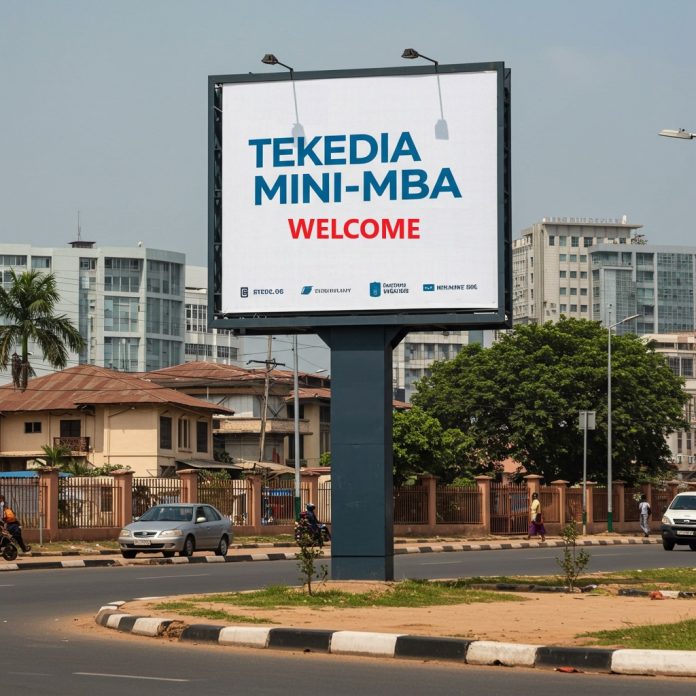
Welcome, Tekedia Mini-MBA Edition 16 Learners

0

This is to thank hundreds of citizens, companies and students joining us as we begin the next Tekedia Mini-MBA on Feb 10, 2025. My understanding is that the logins have been sent. If you paid and yet to receive your login, please go here and begin as the instructions have been published here https://school.tekedia.com/support/support/ .

Welcome to Africa’s largest business school for the mastering of entrepreneurial capitalism and business systems. Welcome to a new academic festival on the mechanics of business management and leadership. Welcome to winning the future of careers.

Welcome to Tekedia Institute!


Hello,

Greetings! Thanks for joining us at Tekedia Institute. We have created or upgraded your account at https://school.tekedia.com/ with your email address (the very one you are receiving this invitation for account setup).

Follow the steps here https://school.tekedia.com/support/support/ to conclude the setup and login. Please note that STEP 3 is mandatory for your course to show in your profile. When you login, the WhatsApp Group link is provided; click it and join the Group.

The program will begin on Feb 10, 2025.

Dangote Refinery Lowers Petrol Price to N890 Per Liter

0

Deregulation Takes Hold as Petrol Prices Fluctuate

The deregulation of Nigeria’s petroleum sector, which was expected to create a competitive market where local refineries set fuel prices based on supply and demand, appears to be taking shape—albeit in a slow and unstable manner.

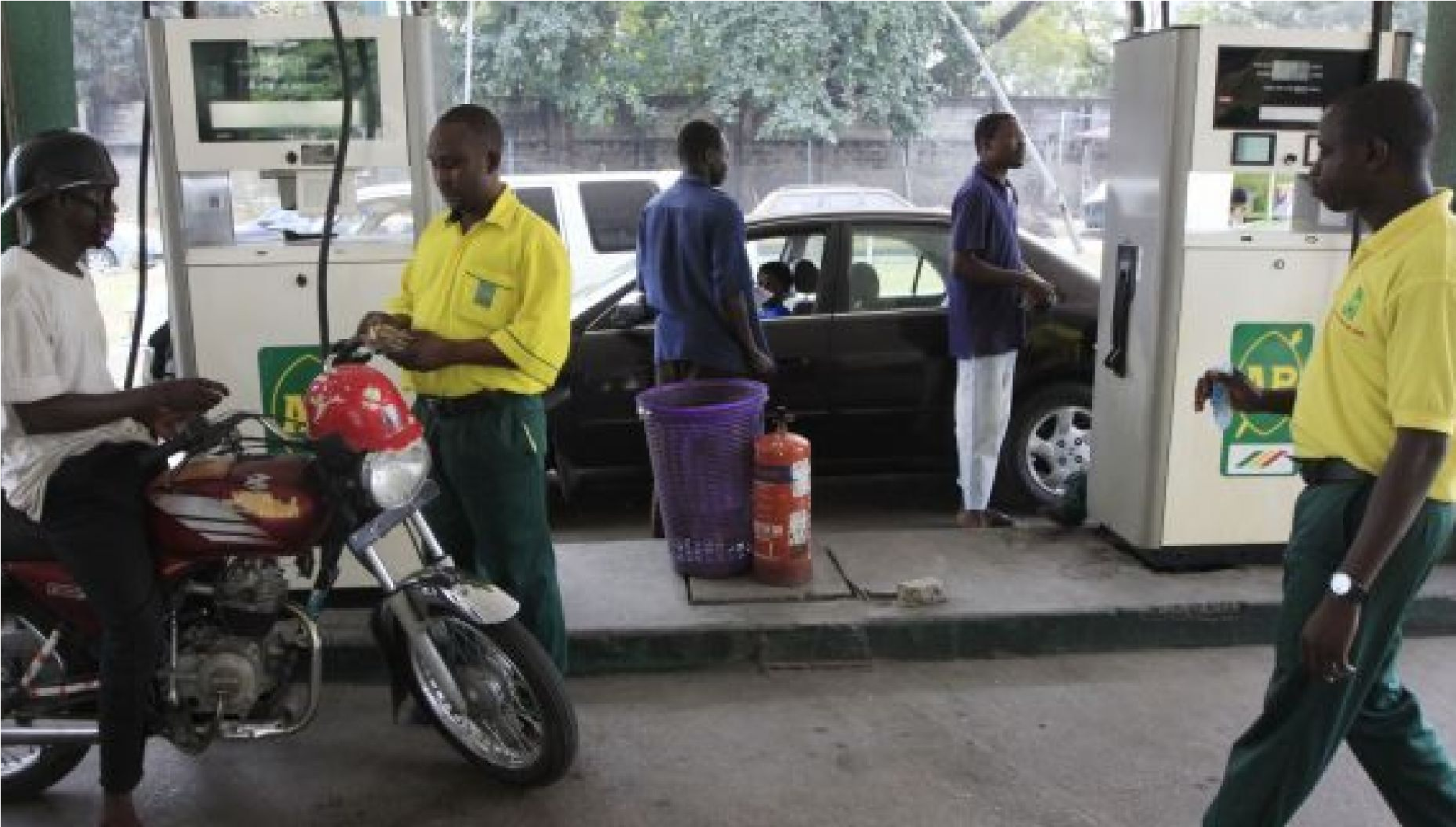
The latest sign of this shift came with the Dangote Petroleum Refinery’s decision to lower the ex-depot price of Premium Motor Spirit (PMS), commonly known as petrol, from N950 to N890 per liter.

In a statement issued by its Group Chief Branding and Communications Officer, Anthony Chiejina, Dangote Refinery explained that the price cut was a response to declining global crude oil prices, signaling that market forces, rather than government intervention, now dictate fuel prices in Nigeria.

The decision is seen as a natural consequence of deregulation, where local refiners and importers adjust prices based on crude costs, forex rates, and supply-demand dynamics.

“Dangote Petroleum Refinery firmly believes that this reduction from N950 to N890 will result in a meaningful decrease in the cost of petrol nationwide, thereby driving down the prices of goods and services, as well as the overall cost of living, with a positive ripple effect on various sectors of the economy,” the statement said.

However, the Dangote Refinery has emerged as the dominant player in the market, as NNPCL and independent marketers still depend on imported fuel, raising questions about the true level of competition in the sector.

Since Nigeria’s fuel subsidy was removed in May 2023, NNPCL and marketers have struggled to ensure stable supply, relying on expensive imports at volatile international rates. In contrast, the Dangote Refinery, Africa’s largest with a 650,000 barrels-per-day capacity, has gradually gained the upper hand, supplying locally refined petrol at prices that, while high, are still influenced by its ability to control production costs.

This latest price cut from N950 to N890 suggests that Dangote Refinery is now setting the benchmark for local petrol pricing, as marketers and the NNPCL—still heavily reliant on imports—have yet to match its prices with a corresponding reduction.

Dangote’s Legal Battle to Stop Fuel Imports Raises Monopoly Fears

Industry experts believe this reflects the early stages of Nigeria’s transition away from imported petrol, but the imbalance in supply sources raises concerns about the long-term effects of Dangote’s dominance.

As part of its efforts to solidify its control over Nigeria’s fuel supply, Dangote Refinery is also locked in a legal battle with key industry stakeholders, seeking to prevent fuel imports into the country altogether. The refinery has filed a lawsuit against the Nigerian National Petroleum Company Limited (NNPCL), the Nigerian Midstream and Downstream Petroleum Regulatory Authority (NMDPRA), and independent marketers, asking the court to halt the importation of petrol into Nigeria.

If granted, this request would effectively eliminate competition from fuel importers, giving Dangote Refinery a monopoly over the domestic supply of petrol. While this could lead to more stability in pricing, many are concerned that such a monopoly would leave Nigerians vulnerable to unchallenged price hikes, as no other major supplier would be available to force competitive pricing. The Warri Refinery is still dragging foot, with no convincing sign that it will function at full capacity soon.

Despite the price cut to N890 per liter, Nigerians remain cautious about the long-term impact of Dangote Refinery’s growing influence. While lower petrol prices offer temporary relief, the outcome of the ongoing legal battle against importers could reshape the fuel market in ways that make price reductions less likely in the future.

The core question remains: If Dangote Refinery successfully stops fuel imports, will it maintain competitive pricing, or will it use its monopoly to push prices even higher?

CBN Says It’s Preparing Nigeria’s Financial Sector for $1tn Economy, But Analysts Doubt Tinubu’s Broader Economic Policies Will Deliver

0

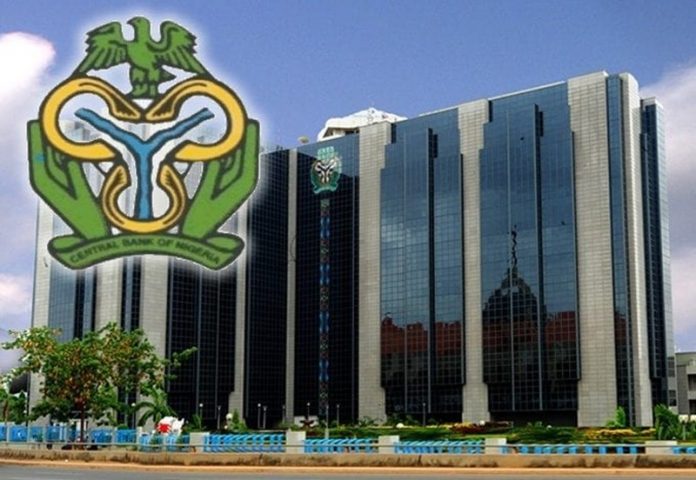
The Central Bank of Nigeria (CBN) is aggressively pursuing policies to strengthen the country’s financial sector and position it for a one trillion-dollar economy, CBN Governor Olayemi Cardoso announced at the Monetary Policy Forum 2025 held in Abuja on Thursday.

Addressing an audience of fiscal authorities, lawmakers, private sector leaders, development partners, and economic scholars, Cardoso outlined the CBN’s strategy to manage disinflation while maintaining a forward-looking and resilient monetary policy.

A major plank of the CBN’s vision for a stronger economy is the introduction of new minimum capital requirements for banks, set to take effect in March 2026. Cardoso stressed that this move is aimed at fortifying the banking sector to support Nigeria’s aspirations for a $1 trillion economy.

This initiative mirrors the 2005 banking consolidation exercise, which saw the number of banks shrink, but also resulted in a more robust and competitive banking system. However, the current public and rights offerings of some of the banks were oversubscribed.

The recapitalization drive comes when economic turbulence and high inflation have eroded the real value of banks’ capital, leaving them more vulnerable to external shocks. With the CBN’s mandate to ensure financial stability, strengthening the banks is seen as a crucial step toward economic resilience.

Restoring Confidence in Nigeria’s FX Market

Another critical component of the CBN’s strategy is a comprehensive overhaul of Nigeria’s foreign exchange (FX) market. This week, the apex bank launched the Nigeria Foreign Exchange Code, a move aimed at promoting integrity, fairness, transparency, and efficiency in forex transactions.

“Built on six core principles, it represents a binding commitment from the financial community to rebuild trust and inspire confidence,” Cardoso stated.

Under his leadership, the CBN has taken decisive steps to dismantle past forex policies that created distortions and encouraged currency speculation. One major change was the reversal of the 2015 ban on 41 items from accessing forex at the official market, a policy introduced under former CBN Governor Godwin Emefiele.

Additionally, the CBN has focused on boosting diaspora remittances, a key source of forex inflow. According to Cardoso, remittances through International Money Transfer Operators (IMTOs) surged by 79.4% to $4.18 billion in the first three quarters of 2024, reflecting the positive impact of recent forex market reforms.

Financial Inclusion and Women Empowerment

Cardoso also emphasized the CBN’s commitment to financial inclusion, particularly through initiatives that empower women entrepreneurs. The Women Entrepreneurs Finance (We-Fi) initiative, operating under the National Financial Inclusion Strategy, aims to bridge the gender gap by providing more women with access to financial services and digital banking tools.

In a country where millions remain unbanked, the CBN’s push for financial inclusion is seen as a key strategy to drive economic growth. Expanding access to formal financial services could unlock new business opportunities and increase domestic savings and investments.

The Reality Check: Will Tinubu’s Economic Policies Deliver a $1 Trillion Economy?

While the CBN is implementing critical reforms, economic analysts are skeptical that Nigeria’s broader economic policies under President Bola Tinubu will create the conditions necessary for a one-trillion-dollar economy.

A major concern is the lingering economic hardship, rising inflation, and declining purchasing power that have stalled economic growth despite monetary policy adjustments. Analysts argue that for Nigeria to reach a $1 trillion economy, the government must implement fundamental reforms beyond banking and forex policies.

Some of the key challenges that threaten Nigeria’s economic ambitions include:

  1. Inflationary Pressures: Despite the CBN’s tight monetary stance, inflation remains stubbornly high, making it difficult for businesses and households to thrive.
  2. Forex Volatility: While the CBN has introduced reforms, the exchange rate remains unstable, with periodic currency depreciation still threatening investor confidence.
  3. Fiscal Deficit and Public Debt: Nigeria’s rising debt burden and widening fiscal deficit have placed constraints on government spending.
  4. Weak Infrastructure and Power Sector Failures: The lack of stable electricity, poor road networks, and inadequate infrastructure continue to stifle economic productivity.
  5. Declining Foreign Direct Investment (FDI): Foreign investors remain cautious due to policy uncertainty and concerns over governance and security.

Economic expert Dr. Bismarck Rewane, CEO of Financial Derivatives Company, recently noted that without comprehensive structural reforms, Nigeria will struggle to hit the $1 trillion economy target. He argued that while monetary policy adjustments are important, Nigeria needs a strong industrial base, a functional power sector, and a stable business environment to achieve meaningful economic growth.

Since assuming office, President Tinubu has introduced major economic reforms, including the removal of fuel subsidies and unifying the exchange rate. While these moves were seen as bold steps toward economic stability, their short-term effects have been severe, leading to higher transportation costs, increased food prices, and widespread economic hardship.

With public confidence waning, many Nigerians and businesses remain unconvinced that the government has a clear roadmap to economic prosperity. Once the largest economy in Africa, Nigeria is now the continent’s fourth largest economy, with $252.74 billion in Gross Domestic Product (GDP).

Without concrete action on job creation, industrialization, and infrastructure development, many believe the $1 trillion economy goal remains a dream.

NNPC, Marketers Spend Over N5.5tn on Fuel Imports in Four Months Despite Local Refining Capacity

0

The Nigerian National Petroleum Corporation (NNPC) Limited and several oil marketers spent over N5.5 trillion importing Premium Motor Spirit (PMS) and Automotive Gas Oil (AGO or diesel) between October 1, 2024, and January 31, 2025, despite increased local refining capacity, port documents have revealed.

This comes amid the Dangote Refinery’s legal action against the Nigerian Midstream and Downstream Petroleum Regulatory Authority (NMDPRA), the NNPC, and other oil marketers to compel the industry regulator to stop issuing fuel import licenses in a bid to protect locally refined products.

Chairman of the Dangote Group, Aliko Dangote, had earlier alleged that imported petroleum products are bad.

Documents analyzed by THISDAY show that in just four months, over 3.2 million metric tons of petrol and 980,485 metric tons of diesel were imported into the country. Converting these figures using standard industry factors suggests approximately 4.29 billion liters of petrol and 1.153 billion liters of diesel were brought into Nigeria at a cost exceeding N5.5 trillion, based on the average landing cost.

NNPC Defends Its Importation, Citing Economic Realities

Despite the heavy financial burden associated with importing refined petroleum products, the NNPC has defended its actions, stating that its purchasing decisions are dictated by economic forces and pricing considerations.

The state-owned oil company recently stated that while it prioritizes sourcing products from domestic refineries, this is contingent upon economic viability. If local supply is cost-effective, it will be preferred. However, the same principle applies to other marketers, who will also evaluate total costs when deciding whether to buy locally or import.

Industry insiders note that although Nigeria has seen an increase in local refining capacity—particularly with the restart of the Warri and Port Harcourt refineries and the commencement of operations at the $20 billion Dangote Refinery—the country remains heavily reliant on imports.

Local Refining Capacity Underutilized, Dangote Refinery Struggles for Crude Supply

The Dangote Refinery has turned to the U.S. for adequate crude oil supply after struggling to secure supply from the NNPC. Sources within the company revealed that the refinery has ramped up production from an initial 385,000 barrels per day (bpd) to 550,000 bpd, a level that should be sufficient to meet domestic demand and even allow for exports.

In what appears to be a deliberate supply squeeze, the NNPC has failed to meet its crude supply obligations under the naira-for-crude deal, which was designed to ensure that local refiners pay for crude in naira and sell refined products to Nigerian marketers in naira—a strategy aimed at reducing forex dependency and stabilizing fuel prices.

Industry sources revealed that instead of increasing supply, the NNPC’s crude allocation to Dangote Refinery has actually declined. In February 2025, only four cargoes were allocated to the Dangote Refinery. In March 2025, the allocation further dropped to two cargoes, each containing 950,000 barrels, totaling 1.9 million barrels for the month. This translates to just 61,290 bpd, far below the 385,000 bpd target.

Meanwhile, the NNPC has continued supplying crude to its own refineries, albeit in limited volumes, while also fulfilling its loan repayment obligations to financiers through crude exports. Of the 1.4 million barrels allocated for March, the NNPC received 17 cargoes, representing 35% of total production. Five cargoes were allocated to Dangote Refinery, two to Warri Refinery, and three to Port Harcourt Refinery. The remaining seven cargoes were allocated to various financiers as part of loan repayment, with no other local refineries receiving crude allocations.

Despite supply constraints, the Dangote Refinery has continued selling products to marketers in naira, even absorbing logistics costs to ensure uniform pricing across the country. A source close to the refinery stated that the refinery has generously assumed an equalization status, a responsibility typically undertaken by the government. This has been met with enthusiasm by partners such as MRS, Heyden, and Ardova.

Recently, the Petroleum Products Retail Outlet Owners Association of Nigeria (PETROAN) signed an agreement with Dangote Refinery to distribute its Premium Motor Spirit (PMS) at a uniform price across all its filling stations nationwide.

However, despite the presidential directive for local crude sales to be conducted in naira, reports suggest that transactions are still partially settled in dollars. Of the five cargoes allocated to Dangote Refinery for March, two cargoes will be paid for in naira, as per government policy. The remaining three cargoes must be paid for in dollars from export proceeds, contradicting the intended goal of the naira-for-crude deal.

Who Benefits from Continuous Importation?

The continued issuance of fuel import licenses despite sufficient local refining capacity has raised serious concerns among industry analysts and economic experts. Many believe that certain powerful interests within the oil sector stand to benefit financially from continued dependence on fuel imports—even at the expense of the Nigerian economy and the survival of local refineries.

Economic analysts have argued that Nigeria cannot continue spending trillions on fuel imports while local refineries remain underutilized. This, they said, is a self-inflicted crisis that benefits a few at the expense of the nation.

It has been noted that if the government is serious about energy security, it must prioritize local refining and stop granting import licenses.

Although the NNPC claims that imports are based on pricing and economic realities, stakeholders believe that the continued importation of petroleum products undermines local production efforts and maintains Nigeria’s reliance on costly foreign fuel supplies.