
DD
MM
YYYY

PAGES

DD
MM
YYYY

spot_img

PAGES

Home Blog Page 23

Bitcoin Stuck in Extreme Fear as Analysts Warn of Prolonged Correction

0

Bitcoin investor sentiment has remained deeply pessimistic, with data from the Bitcoin Fear & Greed Index showing that the market has been locked in the extreme fear zone for 13 consecutive days.

This prolonged stretch of fear highlights the intensity of FUD currently weighing on the crypto market.

As Bitcoin (BTC) struggles to reclaim the $90,000 level, concerns are growing that the asset may be entering a fresh bear-market phase. Market analyst Ali Martinez has added to this narrative by pointing to historical Bitcoin cycles that appear to follow a consistent time-based pattern.

According to Martinez, Bitcoin typically takes about 1,064 days to move from a market bottom to a market peak, followed by roughly 364 days of decline from the peak back to the next bottom.

Historical data supports this observation. In the first cycle, Bitcoin bottomed in January 2015 and peaked in December 2017 exactly 1,064 days later before entering a 364-day bear market that ended in December 2018.

The second cycle followed a similar trajectory, with a bottom in December 2018 and a peak in November 2021, again after 1,064 days. That peak was followed by a downturn that bottomed in November 2022, when Bitcoin traded near $15,500.

Martinez now suggests that Bitcoin is in its third major cycle. The asset bottomed in November 2022 and reportedly reached a cycle peak above $126,000 in October. Based on prior patterns, Bitcoin may now be within the 364-day correction phase, implying a potential market bottom around October 2026.

Looking at the magnitude of previous bear markets provides further insight. Bitcoin fell roughly 84% during the 2017–2018 cycle and about 77% during the 2021–2022 downturn. Averaging these declines points to an estimated 80% retracement, which would place a possible next bottom near $37,500. At present, Bitcoin is trading around $88,290, roughly 30% below its recent peak.

Meanwhile, market analyst Maartunn has observed that Bitcoin’s correlation with traditional assets such as tech stocks and gold has weakened significantly. Unlike previous cycles, Bitcoin is no longer moving in tandem with the Nasdaq or tracking gold’s safe-haven rallies.

Instead, its price action appears increasingly driven by internal crypto-specific factors, including ETF flows, miner behavior, on-chain supply dynamics, liquidity conditions, and distribution trends.

This divergence is especially notable as gold continues to surge, recently reaching a historic high of $4,525, reinforcing its role as a safe-haven asset amid global uncertainty, while Bitcoin struggles to regain bullish momentum.

Longtime Bitcoin advocates continue to frame the asset as a hedge against inflation and a store of value. Robert Kiyosaki, author of Rich Dad Poor Dad, has historically encouraged investors to hold Bitcoin alongside gold and silver. However, recent reports suggest Kiyosaki has been unusually quiet on Bitcoin, raising questions about whether his silence reflects waning confidence or a strategic pause.

Previously, Kiyosaki warned of a major crash in November 2025, advising investors to hold scarce assets such as Bitcoin and gold as global debt pressures force liquidity crises and central banks resort to money printing.

On the other side of the debate, gold proponent Peter Schiff maintains that Bitcoin remains closely tied to risk assets like equities. He argues that Bitcoin rallies less during market upswings and declines more sharply during downturns, rejecting the narrative that it functions as “digital gold.”

Outlook

With investor sentiment entrenched in extreme fear and historical cycle analysis pointing to a prolonged correction window, Bitcoin’s near-term outlook remains fragile.

While weakening correlations with traditional assets suggest growing independence, the absence of strong bullish catalysts keeps downside risks in focus.

Trump Administration Moves To Impose New China Chip Tariffs, Sets June 2027 Timeline to Ease Trade Tensions

0

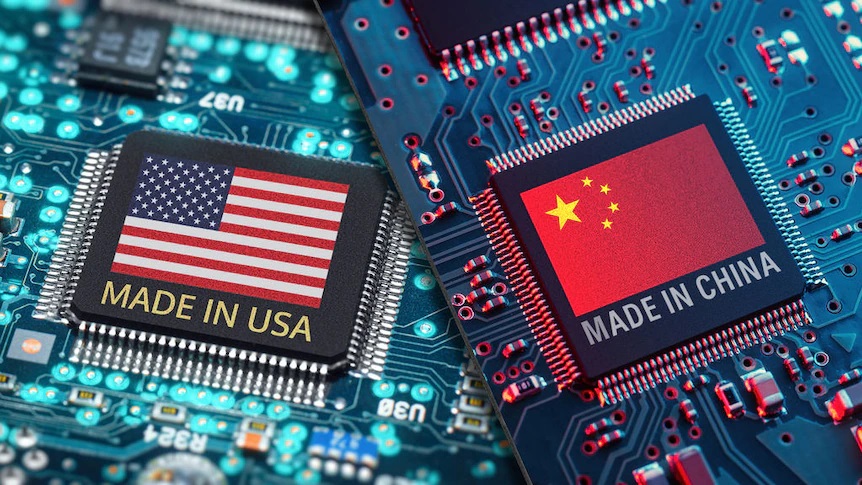
President Donald Trump’s administration said on Tuesday it plans to impose tariffs on Chinese semiconductor imports, citing Beijing’s “unreasonable” drive to dominate the global chip industry, while pushing the effective date of the action out to June 2027.

The tariff rate will be announced at least 30 days before it takes effect, according to a filing by the U.S. Trade Representative. The move follows a year-long investigation under Section 301 of U.S. trade law into China’s exports of so-called legacy, or older-generation, semiconductors to the United States. That probe was launched under the Biden administration and concluded that China’s industrial strategy in the sector harms U.S. commerce.

“China’s targeting of the semiconductor industry for dominance is unreasonable and burdens or restricts U.S. commerce and thus is actionable,” the U.S. Trade Representative said in a statement accompanying the decision.

The delayed timeline appears calibrated to preserve the White House’s leverage while lowering the risk of an immediate escalation with Beijing. China has in recent months tightened export controls on rare earth metals, materials that are essential to the production of chips, electric vehicles, and a wide range of advanced technologies, and which China largely controls.

Beijing reacted swiftly to the announcement. The Chinese Embassy in Washington said it opposed any new tariffs and warned that turning technology and trade into geopolitical tools would hurt global supply chains.

“To politicize, instrumentalize and weaponize trade and tech issues and destabilize the global industrial and supply chains will benefit no one and will eventually backfire,” the embassy said in a statement to Reuters.

It added that China would “take all measures necessary to firmly safeguard our lawful rights and interests.”

U.S. officials have signaled that the delay is tied to broader negotiations aimed at easing pressure in other areas of the tech relationship. As part of talks with China to pause or soften rare earth export curbs, Washington has already postponed a rule that would have further restricted U.S. technology exports to subsidiaries of Chinese firms that are already on U.S. blacklists.

The administration has also launched a review that could open the door to the first shipments of Nvidia’s second-most powerful artificial intelligence chips to China, Reuters has reported. That possibility has triggered sharp unease among hardliners in Washington who argue that advanced AI hardware could bolster China’s military and surveillance capabilities.

Beyond the targeted action on legacy chips, the semiconductor industry is watching closely for the outcome of a far broader investigation under Section 232 of U.S. law, which allows tariffs on national security grounds. That probe covers global semiconductor imports and could extend to a wide range of electronic devices that contain chips, regardless of where they are assembled.

Such measures would potentially sweep in products from allies as well as rivals, adding another layer of complexity to global supply chains that are still adjusting to earlier rounds of tariffs and export controls. U.S. officials, speaking privately, have indicated that additional Section 232 tariffs may not be imposed in the near term, according to Reuters.

The latest move builds on earlier steps taken under President Joe Biden, who imposed an additional 50% tariff on Chinese semiconductors that took effect on January 1, 2025. Together, the actions underline the degree to which semiconductor policy has become a central pillar of U.S. economic and national security strategy.

The Trump administration seems to be keeping its options open for now: asserting its legal authority to act against China’s chip exports, while delaying enforcement to manage a fragile negotiation that has marked Beijing-Washington as one of the most consequential trade relationships in the world.

Italy Orders Meta to Suspend WhatsApp Ban on Third-Party AI Chatbots Amid Abuse Probe

3

Italy’s Competition Authority (AGCM) has issued an interim order forcing Meta to suspend its controversial policy prohibiting third-party companies from distributing general-purpose AI chatbots via WhatsApp’s Business API, citing preliminary evidence of abuse of dominant position that could cause “serious and irreparable harm” to competition in the AI services market.

The decision, announced Wednesday (December 24, 2025), stems from an ongoing investigation launched in November 2025—expanded from an earlier probe into Meta’s data practices—to examine whether the October policy change unfairly restricts rivals like OpenAI (ChatGPT), Anthropic (Claude), Perplexity, and smaller players such as Poke from reaching WhatsApp’s massive user base.

“Meta’s conduct appears to constitute an abuse, since it may limit production, market access, or technical developments in the AI Chatbot services market, to the detriment of consumers,” the AGCM stated. “Moreover, while the investigation is ongoing, Meta’s conduct may cause serious and irreparable harm to competition in the affected market, undermining contestability.”

The policy, set to take effect in January 2026, would block non-business-specific AI chatbots from integration through the WhatsApp Business API—effectively preventing users from accessing third-party generative AI tools directly within the app.

Business-oriented AI applications, such as retailer customer service bots, remain permitted.

Meta swiftly condemned the ruling as “fundamentally flawed,” insisting the Business API was never intended as a distribution platform for consumer AI chatbots.

“The emergence of AI chatbots on our Business API put a strain on our systems that they were not designed to support,” a company spokesperson said in an emailed statement. “The Italian authority assumes WhatsApp is somehow a de facto app store. The route to market for AI companies are the app stores themselves, their websites, and industry partnerships—not the WhatsApp Business Platform. We will appeal.”

The Italian action aligns with parallel scrutiny from the European Commission, which opened a formal investigation on December 11, 2025, into whether Meta’s restrictions “prevent third-party AI providers from offering their services through WhatsApp in the European Economic Area (EEA).”

Brussels has raised concerns under the Digital Markets Act (DMA), which designates Meta’s messaging services as “gatekeeper” platforms requiring fair access for competitors, with potential fines up to 10% of global revenue if violations are confirmed.

WhatsApp, with over 2 billion monthly active users globally and dominant penetration in Europe (especially Italy, where usage exceeds 85% of smartphone owners), represents a critical distribution channel for AI services.

The policy change threatened to consolidate Meta AI—integrated natively into WhatsApp since mid-2025—as the default option, potentially stifling innovation and consumer choice by forcing users to switch apps or platforms for alternative AI tools.

The AGCM’s precautionary measure requires Meta to halt enforcement pending full investigation outcomes, with potential fines up to 10% of global annual turnover (approximately €13.8 billion based on 2024 figures) if abuse is confirmed.

Meta has 30 days to comply and submit observations.

Analysts view the order as a significant win for AI competitors and a test case for DMA enforcement.

Meta shares dipped modestly in after-hours trading, reflecting investor concerns over escalating European antitrust risks. The company has vowed to challenge the decision through administrative and judicial channels, potentially escalating to the European Court of Justice if needed.

The mounting regulatory pressure, which coincides with ongoing DMA cases against Apple’s App Store rules and Google’s ad tech practices, adds to the growing standoff between Washington and Brussels, which has escalated this week following a targeted visa ban on EU policymakers.

China Issues First 2026 Fuel Export Quotas, Holding Volumes Steady as Domestic Balance Takes Priority

0

China has issued 19 million tons of export quotas for refined oil products in the first batch of allowances for 2026, underscoring Beijing’s continued use of administrative controls to balance domestic fuel supply with its role as a major exporter in regional and global energy markets.

According to three trade sources familiar with the allocations, who spoke to Reuters, the quotas cover gasoline, diesel, and jet fuel, with volumes largely unchanged from the first batch released for 2025. In addition, authorities granted 8 million tons of export quotas for low-sulphur marine fuel, a product that has become increasingly important as global shipping complies with stricter environmental standards.

China, the world’s second-largest oil consumer and one of the biggest refining hubs globally, manages refined fuel exports through a quota system aimed at preventing domestic shortages, stabilizing prices, and ensuring refineries align output with local demand conditions. The steady size of the first 2026 tranche suggests policymakers are maintaining a cautious stance, avoiding aggressive increases in exports while leaving room to adjust later in the year depending on economic conditions and fuel demand.

State-owned oil giants once again dominated the allocation. Sinopec and China National Petroleum Corporation (CNPC), the country’s two largest refiners, were awarded a combined 13.76 million tons of export allowances for gasoline, diesel, and jet fuel, accounting for more than 70% of the total volume. Their dominant share reflects Beijing’s preference for relying on state firms to execute energy policy objectives, particularly during periods of economic uncertainty.

Major private refiner Zhejiang Petrochemical received 1.56 million tons in this first batch, maintaining its position as the leading non-state beneficiary of export quotas. While private refiners have expanded rapidly over the past decade and now account for a significant share of China’s refining capacity, their access to export quotas remains tightly controlled, with state companies retaining the lion’s share.

A similar pattern emerged in the allocation of low-sulphur marine fuel quotas. Of the 8 million tons issued, almost 85% went to Sinopec and CNPC, reinforcing their central role in supplying bunker fuel to international shipping markets. China has become a key supplier of compliant marine fuel in Asia, particularly after the International Maritime Organization’s 2020 sulphur cap reshaped global bunker demand.

The steady quotas come against a backdrop of softer refined fuel exports this year. In the first 11 months of 2025, China exported 52.65 million tons of refined oil products, including gasoline, diesel, aviation fuel, and marine bunker fuel, down 3.2% from the same period a year earlier. Traders attribute the decline to weaker refining margins, uneven overseas demand, and Beijing’s preference for keeping more fuel at home amid sluggish but still uncertain domestic consumption trends.

Market participants say the early issuance of the first 2026 batch provides refiners with planning visibility while signaling that authorities are unlikely to significantly loosen export controls in the near term. Subsequent quota rounds later in 2026 will likely depend on factors such as domestic fuel demand, refinery utilization rates, oil prices, and broader economic conditions.

With global fuel markets still shaped by geopolitical tensions, energy transition policies, and uneven post-pandemic demand recovery, China’s quota decisions remain a closely watched barometer of how aggressively it intends to compete in refined product exports next year.

Google Takes on Nvidia With Public Launch of Ironwood, Its Most Powerful AI Chip Yet

0
????????????????????????????????????????????????????????

Google is pushing deeper into the battle for control of the artificial intelligence infrastructure stack, announcing that its most powerful custom chip to date will soon be available for broad public use as it intensifies efforts to win over AI companies and large enterprise customers.

The search giant said on Thursday that the seventh generation of its Tensor Processing Unit (TPU), known as Ironwood, will be released to customers in the coming weeks. The chip was first unveiled in April and has since been tested by select partners for deployment. Its wider availability marks a significant step in Google’s long-running attempt to reduce the industry’s dependence on Nvidia and position its cloud platform as a serious alternative for the most demanding AI workloads.

Built entirely in-house, Ironwood is designed to handle the full spectrum of modern AI tasks, from training massive foundation models to running real-time applications such as chatbots and autonomous AI agents. Google says the chip can be scaled aggressively, with up to 9,216 Ironwood TPUs linked together in a single pod, a configuration the company claims eliminates data bottlenecks that often slow down large-scale AI systems.

According to Google, this architecture gives customers “the ability to run and scale the largest, most data-intensive models in existence,” a clear pitch to AI labs and enterprises struggling with the cost and complexity of training and deploying next-generation models.

The move comes as Google, Microsoft, Amazon, and Meta pour unprecedented sums into building the infrastructure that will underpin the AI economy. So far, much of the boom has been powered by Nvidia’s graphics processing units, which dominate the market for training and inference. Google’s TPUs fall into the category of custom silicon, purpose-built chips that can deliver advantages in performance per dollar, energy efficiency, and tighter integration with cloud software.

TPUs are not new. Google has been developing them for roughly a decade, initially for internal use and later as a selling point for Google Cloud. Ironwood, however, represents a major leap. The company says it is more than four times faster than its predecessor, a gain that matters as model sizes and computational demands continue to rise.

Major customers are already committing at scale. Google disclosed that AI startup Anthropic plans to use up to one million Ironwood TPUs to run its Claude model, a sign that leading AI developers are increasingly willing to diversify away from Nvidia-only infrastructure. Such deals also strengthen the strategic ties between Google and fast-growing AI labs that need vast amounts of compute to compete.

Ironwood’s launch is part of a broader push to make Google Cloud cheaper, faster, and more flexible as it goes head-to-head with Amazon Web Services and Microsoft Azure, both of which still command larger shares of the cloud market. Alongside the new chip, Google is rolling out software and pricing upgrades aimed at improving performance and lowering costs for customers running AI workloads.

The strategy appears to be gaining traction. In its earnings report last week, Google said third-quarter cloud revenue rose 34% year on year to $15.15 billion. While that still trails rivals, the growth rate compares with a 40% increase at Microsoft Azure and 20% growth at AWS over the same period. Google also said it has signed more billion-dollar cloud contracts in the first nine months of 2025 than in the previous two years combined, underscoring rising demand from large customers.

That surge in interest is forcing Google to spend heavily. The company raised the upper end of its capital expenditure forecast for the year to $93 billion, up from $85 billion, reflecting massive investments in data centers, chips, and networking equipment needed to support AI demand.

“We are seeing substantial demand for our AI infrastructure products, including TPU-based and GPU-based solutions,” chief executive Sundar Pichai told analysts on the earnings call.

He described AI infrastructure as one of the main drivers of Google’s growth over the past year and said the company expects demand to remain strong as it continues to invest.

Ironwood’s public release highlights how the AI race is no longer just about models and software, but about who controls the underlying hardware and cloud platforms. Google is signaling that it intends to challenge Nvidia’s dominance directly by betting on custom silicon at scale, while also trying to narrow the gap with Amazon and Microsoft in cloud computing.