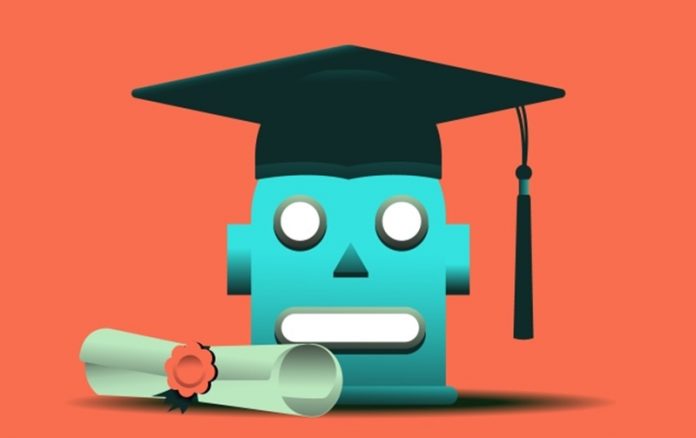
The emergence of artificial intelligence (AI) as a viable workforce solution is reshaping employment dynamics, with a growing number of employers favoring AI over human employees for specific roles.
A recent survey by Hult International Business School reveals that 37% of employers would rather hire AI robots than recent graduates from Generation Z. This statistic speaks volumes about the challenges younger workers face in the modern job market. This preference highlights a broader trend of AI increasingly taking over roles traditionally occupied by humans.
Generation Z, those born between 1997 and 2012, is entering the workforce amidst harsh criticism of their preparedness, reliability, and adaptability. Employers, grappling with a competitive job market and evolving workplace demands, appear to be losing confidence in the ability of recent graduates to meet organizational needs. The Hult survey indicates that 89% of employers actively avoid hiring recent graduates, citing significant shortcomings such as a lack of real-world experience and an inability to work effectively in teams.
The introduction of AI into the workplace has created a stark choice for employers to invest in training and development for young employees who may lack foundational skills or turn to AI for consistent, efficient, and cost-effective solutions.
In many cases, employers are opting for the latter. AI systems, designed to handle repetitive and structured tasks, have become a preferred alternative for roles that demand precision and reliability. Unlike human workers, AI does not require training, benefits, or accommodations for mental health challenges—factors that employers increasingly associate with Gen Z employees.
Challenges Facing Gen Z in the Workplace
The Hult survey found that 60% of employers believe recent graduates lack real-world experience, a critical factor in their hiring decisions. Additionally, 55% said these young workers struggle to collaborate effectively within teams. This aligns with prior findings from the Freedom Economy Index conducted by PublicSquare and RedBalloon, which labeled Gen Z workers as the least reliable among all age groups.
Small business owners, in particular, have expressed concern about this demographic’s ability to meet workplace expectations. The Freedom Economy Index reported that 68% of small business owners found Gen Z employees to be unreliable, while 71% considered them the most likely to experience mental health issues that interfere with job performance.
Compounding these challenges is a disconnect between higher education and career preparedness. The Hult survey revealed that 96% of employers feel that colleges fail to equip students with the skills they need for the modern workplace. This sentiment is echoed by the graduates themselves, with 77% admitting they learned more in their first six months on the job than during their entire four-year degree program. A staggering 94% of graduates expressed regret over their choice of degree, with 43% feeling their academic path left them unprepared and destined to struggle professionally.
AI As A Contender in the Job Market
AI’s growing presence in the workforce is not merely a response to the shortcomings of younger employees. It is part of a larger trend in which technology is reshaping how businesses operate. The efficiency, reliability, and cost-effectiveness of AI have made it an attractive option for companies across industries. Employers are increasingly turning to AI to fill roles that require precision, consistency, and scalability—qualities often difficult to find in entry-level human employees.
While AI’s impact on jobs is often portrayed as a threat, many businesses view it as a solution to ongoing challenges in finding qualified talent. According to the Hult survey, 98% of organizational leaders admitted their companies struggle to find skilled employees. AI is emerging as a practical answer to this talent shortage, providing immediate capabilities that often surpass those of less experienced workers.
An HR executive involved in the study explained, “AI doesn’t call in sick, doesn’t need mental health days, and doesn’t struggle with teamwork. For certain roles, it’s simply more efficient.”
As technology continues to advance, the boundaries between human and machine contributions are being redrawn. While AI excels in tasks requiring speed, accuracy, and repetition, it is not yet capable of replacing humans in roles that demand creativity, empathy, and nuanced decision-making.
However, the growing reliance on AI raises important questions about the future of work. The widespread adoption of AI could compound existing unemployment issues, particularly among younger generations already struggling to establish themselves in the workforce.
Educational institutions are under increasing pressure to adapt their curricula to better prepare students for the realities of the modern job market. Experts believe that integrating real-world experiences and fostering skills like critical thinking, problem-solving, and teamwork will be essential to bridging the gap between academia and industry.