DD
MM
YYYY

PAGES

DD
MM
YYYY

spot_img

PAGES

Home Blog Page 2369

Toncoin Network Is The Future Of Decentralization. See How Elluminex Is Transforming This Chain

0

TON has been one of the fastest-growing chains last year. The staggering increase in total value locked (TVL) and user activity is making traders excited about its future. Its low fees and deep integration with Telegram suggest that the network may be the future of decentralization traders have been waiting for.

Still, TON faces several issues, including scalability. A lack of liquidity is also among its main concerns. This, in particular, is something that the upcoming Elluminex DEX is trying to fix.

TON Sees Explosion Of Activity

Telegram’s The Open Network (TON) was the fastest-growing chain last year. With an 800% increase in TVL, the network saw incredible growth in users and traffic. At the same time, the TON coin only rose a relatively modest 139.51% last year, to $5.21. However, there are major signs that this is only the start.

For one, TON has recently unveiled several major partnerships to boost its ecosystem. For one, the GraFun platform, an Ethereum-based memecoin launchpad, recently expanded to TON. This platform has the potential to bring the rapidly growing memecoin market.

At the same time, TON has revealed a partnership with Nansen, a major blockchain analytics firm. The firm will introduce analytics tools for TON, which will help traders get actionable insights into the chain. Because so many traders rely on Nansen, new tools will likely bring experienced traders to the chain.

Still, there are ongoing concerns about the network’s capability to sustain large traffic. Notably, in late August, a major spike in activity caused disruptions in the chain. Still, after the network went back online, there were no further disruptions.

A bigger concern for TON is its liquidity. So far, TON does not have a major dedicated decentralized exchange, equivalent to Uniswap on Ethereum. While advanced analytic tools and meme coins can attract traders, liquidity is key. Without the liquidity that DEXs bring, TON’s ecosystem will always trade far below its potential. This is what Elluminex aims to solve.

Elluminex Holds Key To TON Liquidity

TON’s integration with Telegram gives it access to more than 1 billion Telegram users. This creates significant demands for liquidity, which are currently not met. However, traders have discovered an upcoming platform, Elluminex (ELX), as the potential solution.

Boosting liquidity on the chain requires several steps, including market makers and cross-chain asset swaps. This is what Elluminex hopes to bring to TON. This DEX will offer low-slippage trading on its non-custodial platform. As such, it appeals to big players that can bring much-needed liquidity to TON.

The main feature of Elluminex is its focus on cross-chain interoperability. This is key, as it not only makes for a better user experience but also brings in more liquidity to TON. When traders can swap assets across chains, this improves the liquidity of all chains involved. However, TON is among those that stand to benefit the most, due to its past relative isolation.

With its ability to bring liquidity to TON, Elluminex could significantly transform TON. This will not only likely lead to higher asset prices, but also more developers and users joining the network. If it succeeds, TON could be a true hub of decentralization.

For more information about Elluminex (ELX) visit the links below:

Website: https://elluminex.com
Twitter/X: https://x.com/elluminex
Telegram: https://t.me/Elluminex

Africa’s Start-up Ecosystem Witnessed A Noticeable Decline in Investor Activity in 2024 – Report

0

The African start-up ecosystem is reported to have witnessed a noticeable decline in investor activity in 2024, compared to the year 2023, according to a report by Africa: The Big Deal.

The report revealed that fewer investors had some engagements on the continent, and those who participated were generally less active than in previous years. Among the 430+ African start-ups that secured at least $100k in funding this year, most relied on multiple investors, providing the much-needed capital to fuel their growth.

In 2023, over 520 investors were involved in at least one $100k+ deal on the continent, a notable drop from the 610+ investors in 2022 and the staggering 1,000+ investors in 2021. The decline in participation reflects a shrinking pool of investors actively supporting African start-ups.

A striking 69% of investors in 2024 participated in just one $100k+ deal, the highest share recorded since at least 2021. This marks a 4-percentage-point increase from 2023 and a 12-percentage-point rise from 2022. The trend is also evident among the most active investors; while 28 investors participated in more than 10 $100k+ deals in 2022, that number dropped to just 8 in 2024, consistent with 2023 levels.

The Top Players: Who Are Africa’s Serial Investors?

According to the report, despite the slowdown in activity, some investors remained committed to funding start-up growth on the continent. The most active investor in 2024 was 54 Collective (formerly Founders Factory Africa), which participated in 26 deals, averaging more than two deals per month. Notably, it was the only investor to exceed 20 $100k+ deals in 2024.

Also, Techstars, a leading pre-seed venture capital firm, and Launch Africa, a leading pan-African VC firm, have been consistent in their involvement, appearing on the top investor list since 2021. Catalyst Fund, an early-stage VC fund and accelerator investing for a climate-resilient future in Africa, which was among the top investors in 2023, also made the list again. However, all these investors completed fewer deals in 2024 compared to the previous year.

Meanwhile, four other investors increased their activity: Digital Africa, Baobab Network, Renew Capital, and EdVentures. Some of these investors also extended their support to deals below the $100k threshold, demonstrating a broader commitment to African start-ups.

Other notable investors, which include Y Combinator, 500 Global, and Axian Group, narrowly missed the top spots in 2024. For instance, Y Combinator completed just nine deals this year, a sharp decline from its peak of 37 and 43 deals in 2021 and 2023, respectively.

While the number of active investors has declined and top investors are less active, the report noted that it would be premature to conclude that investors are abandoning Africa. On the contrary, there remains a strong community of backers, and significant capital (“dry powder”) to be deployed with quite a few new Africa-focused funds announced in the past couple of years.

Many investors have reportedly scaled back their activity temporarily while raising their next funds. Additionally, past investors who are less active today still have vested interests in the continent, particularly as they await exits from their previous investments. Moreover, several new Africa-focused funds have been announced in recent years, signaling sustained interest and confidence in the region’s long-term potential.

Conclusion

While 2024 reflects a challenging year for investors’ activity in African start-ups, the underlying commitment to the continent remains robust. With the continent reaching a significant milestone of producing two unicorns last year, alongside promising startups, investors continue to see Africa as a promising market, with a strong foundation for future growth.

The U.S. Supreme Court’s TikTok Decision Impact on Nigeria and Global Internet Governance

1

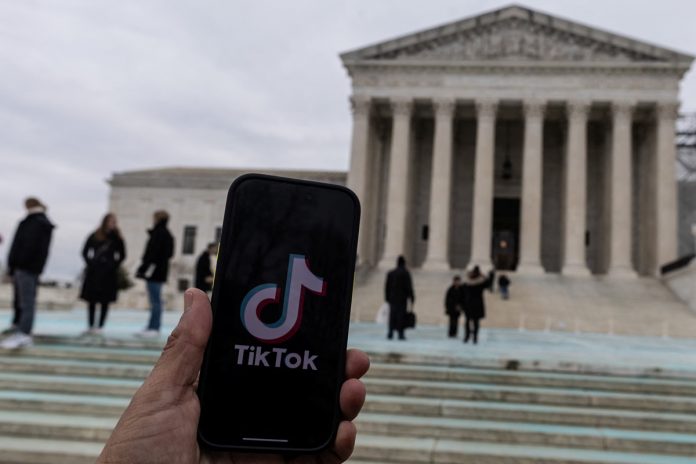
On January 17, 2025, the U.S. Supreme Court delivered a landmark decision upholding the constitutionality of the Protecting Americans from Foreign Adversary Controlled Applications Act. This Act, poised to take effect on January 19, 2025, requires TikTok to sever ties with ByteDance Ltd., its Chinese parent company, or face a ban within the United States. The Court’s ruling emphasized the government’s compelling interest in protecting national security while balancing the First Amendment rights of TikTok and its users. This pivotal decision resonates far beyond U.S. borders, holding significant implications for Nigeria, Africa, and the global digital economy.

Key Issues Raised by The Supreme Court of the United States in the TikTok vs Garlard Case:

  1. National Security Concerns: The U.S. government cites significant risks related to data collection and potential content manipulation by the Chinese government.
  2. First Amendment Scrutiny: The Court explored whether the Act’s provisions require heightened scrutiny under the First Amendment, ultimately deciding not to impose strict scrutiny.
  3. Divestiture Requirement: The Act mandates that TikTok must undergo a “qualified divestiture” to sever ties with ByteDance Ltd., its Chinese parent company.
  4. Data Collection Risks: Concerns were raised about TikTok’s extensive data collection practices, which could potentially be leveraged for espionage.
  5. Bipartisan Support: The law received substantial bipartisan backing in Congress, highlighting broad agreement on national security issues related to TikTok.
  6. Content Moderation: The ruling indicates that TikTok’s operational control by a foreign adversary raises unique challenges for American users in terms of content moderation and expression.
  7. Impact of Technology on Law: The ruling emphasises the need for legal frameworks to adapt to rapidly evolving technologies, suggesting caution in applying traditional legal principles to new contexts. The complexities of technology necessitate that the legal system remains flexible and open to re-evaluating how established precedents apply to modern platforms, as highlighted by the Supreme Court’s consideration of TikTok’s unique characteristics.
  8. National Security as a Defense: The government’s justifications for the Act are centred around national security, demonstrating how concerns about foreign influence can shape legislation affecting free speech. The ruling underscores that national security concerns can serve as a compelling interest that justifies regulations impacting free expression, particularly when foreign adversaries, like China, are involved.
  9. Data Privacy Concerns: The decision reinforces the significance of data privacy in the context of foreign applications and the potential risks associated with their operation in the U.S.
  10. Balancing Interests: The Court’s analysis illustrates the tension between protecting free speech and addressing legitimate national security concerns. The ruling suggests that while the First Amendment is a vital aspect of American democracy, there are instances where it must be carefully balanced against the need to protect citizens from foreign threats.
  11. Content Neutrality vs. Content-Based Regulation: The determination that the Act is content-neutral is significant, as it dictates the level of scrutiny applied in evaluating its constitutionality.
  12. Legislative Intent and Judicial Deference: The Court emphasises legislative intent in its ruling, illustrating the deference given to Congress’s predictive judgments regarding national security.
  13. Public Discourse and Corporate Control: The case raises questions about the implications of corporate control over platforms that facilitate public discourse. The ruling recognises that while TikTok serves as a medium for expression, the involvement of foreign entities in its operations introduces complications that could impact the integrity of that discourse.


What the TikTok Decision Means for Internet Governance

The ruling underscores the increasing prioritization of national security in Internet governance. By categorizing TikTok as a potential security threat due to its Chinese ownership, the decision reaffirms the shift towards a fragmented digital ecosystem, where national interests shape regulatory frameworks. This ruling could embolden other countries to enact similar policies, targeting foreign-owned digital platforms under the guise of safeguarding sovereignty and data privacy.

This raises critical questions about balancing openness with security for Nigeria and other African nations. Many African countries rely heavily on foreign tech platforms for connectivity, communication, and commerce. Following the U.S. example, governments across the continent might be tempted to adopt stricter controls over foreign platforms, especially those perceived as aligned with rival geopolitical powers. While this could mitigate data privacy risks, it also risks stifling innovation and limiting access to global technologies.

The TikTok Decision’s Ripple Effects in Nigeria and Africa

Data Privacy and Sovereignty

Nigeria, like many African countries, is grappling with the dual challenges of digital growth and data sovereignty. The Supreme Court’s ruling amplifies the urgency of implementing robust data protection frameworks that safeguard citizen data without hindering digital trade. The Nigeria Data Protection Regulation (NDPR) provides a foundation, but more comprehensive legislation may be needed to address emerging risks associated with foreign-owned platforms.

Economic and Trade Implications

Africa’s burgeoning tech ecosystem, exemplified by Nigeria’s vibrant startup scene, is increasingly reliant on partnerships with global platforms like TikTok to reach broader audiences. A precedent set by the U.S. could lead to restrictive measures that disrupt these partnerships, potentially slowing down the continent’s digital economy. Moreover, local platforms may face retaliatory measures in foreign markets, further complicating cross-border trade in the digital age.

Freedom of Expression

TikTok has become a significant medium for self-expression, particularly among Nigeria’s youth. If similar regulations were adopted locally, concerns about censorship and the suppression of free speech could arise. The ruling’s emphasis on balancing security with freedom underscores the need for African nations to tread cautiously, ensuring that security measures do not infringe on democratic principles.

Broader Global Implications

A Fragmented Internet

The U.S. decision accelerates the “splinternet” phenomenon, where national boundaries increasingly dictate the structure and accessibility of the internet. Countries like India have already implemented bans on Chinese apps, and others may follow suit. This fragmentation threatens the idea of a global, interconnected internet, potentially limiting the free flow of information and innovation.

Geopolitical Rivalries

The TikTok ruling highlights the intensifying tech rivalry between the U.S. and China, with far-reaching consequences for other nations. Developing countries, particularly in Africa, may find themselves caught in the crossfire, pressured to align with one power bloc over another. This could complicate trade negotiations, technology transfers, and international collaborations.

Trade and Digital Economy

The ruling signals a shift in how digital trade is regulated, with national security concerns taking precedence over market dynamics. This could lead to new trade barriers, affecting global e-commerce and digital services. For nations heavily dependent on digital exports, understanding and adapting to these changes will be crucial.

Charting a Path Forward

As the implications of the TikTok decision unfold, countries must carefully navigate the intersection of national security, digital trade, and freedom of expression. For Nigeria and other African nations, this means:

  1. Strengthening Local Frameworks: Building robust data protection laws and cybersecurity policies that reflect local realities while aligning with international standards.
  2. Fostering Innovation: Supporting homegrown tech platforms to reduce dependency on foreign-controlled applications, thereby enhancing digital sovereignty.
  3. Engaging in Multilateral Dialogue: Participating actively in global discussions on Internet governance to ensure African perspectives are represented in shaping the future of the digital ecosystem.
  4. Promoting Digital Literacy: Equipping citizens with the knowledge to navigate and secure their digital presence, fostering a resilient and informed user base.

Conclusion

The U.S. Supreme Court’s ruling on TikTok is a watershed moment in internet governance, setting a precedent that will influence policymaking worldwide. For Nigeria, Africa, and other developing regions, it serves as a clarion call to address the complex interplay of security, trade, and freedom in the digital age. By proactively crafting inclusive and adaptive policies, these nations can seize the opportunities of the digital revolution while safeguarding their interests in an increasingly polarized global landscape.

TikTok Restores Access to U.S. Users Following Trump’s Executive Order Announcement

0

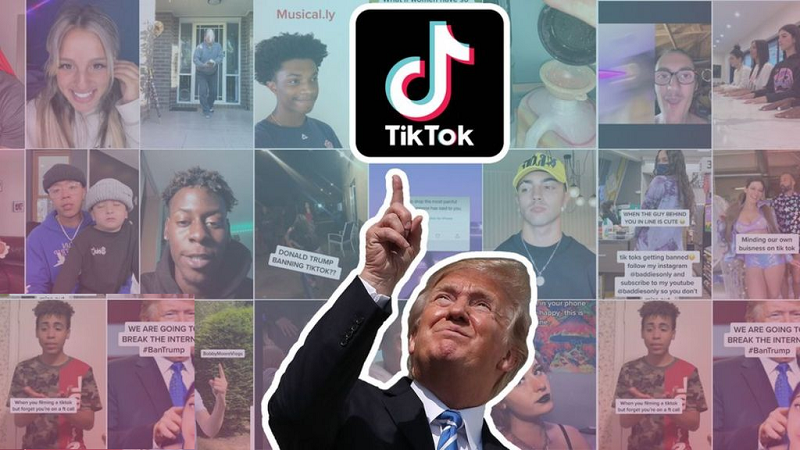
TikTok has restored its services in the U.S., granting users access to the platform, following a statement by President-elect Donald Trump, to sign an executive order on Monday to delay the ban on the app.

In a statement on X, TikTok confirmed its efforts to reinstate service in the U.S. The company wrote,

“In agreement with our service providers, TikTok is in the process of restoring service. We thank President Trump for providing the necessary clarity and assurance to our service providers that they will face no penalties for providing TikTok to over 170 million Americans and allowing over 7 million small businesses to thrive.

“It’s a strong stand for the First Amendment and against arbitrary censorship. We will work with President Trump on a long-term solution that keeps TikTok in the United States.”

According to reports, some users gained partial access to the platform shortly after the announcement. TikTok decision to restore access to U.S users is coming after Trump’s decision to extend the timeline for the ban was shared via his social media platform, Truth Social, where he stated, “I’m asking companies not to let TikTok stay dark!”. He confirmed his intention to issue an executive order via a broadcast on Monday to grant more time before the ban would take effect.

“I will issue an executive order on Monday to extend the period of time before the law’s prohibitions take effect so that we can make a deal to protect our national security. The order will also confirm that there will be no liability for any company that helped keep TikTok from going dark before my order,” Trump wrote.

Recall that the Chinese social media platform, reportedly shut down in the U.S. on 19, 2025, following the enforcement of a contentious ban-or-divest law passed last year. The short-lived ban affected numerous TikTok-related apps and services, including TikTok Studio, TikTok Shop Seller Center, CapCut, Lemon8, Hypic, Lark collaboration software, the AI study companion Gauth, and the game Marvel Snap.

It is worth noting that the Supreme Court previously ruled on Jan. 17 that the law forcing TikTok to cease U.S. operations if it didn’t divest from Chinese ownership was constitutional, following the sell-or-ban legislation being passed by Congress and signed by Joe Biden last year. TikTok has previously denied that information on the app is shared with the Chinese government, calling it “outright censorship of the American people.”

Following the U.S government ban talks on the short-form video platform, AI search engine startup Perplexity AI reportedly submitted a bid to merge with TikTok, as other companies and billionaires were rumored to have expressed interest buying the social media app to navigate around a U.S. ban. This would allow for most of ByteDance’s existing investors to retain their equity stakes and would bring more video to Perplexity, according to a source familiar with the situation.

Meanwhile, despite the reprieve of TikTok, in the U.S., its future remains uncertain in the country. It is understood that Trump who had advocated for a ban during his first term as president, previously suggested a joint venture where the U.S. would hold 50% ownership of TikTok to ensure it remains in “good hands.” However, ByteDance has maintained its stance of not planning to sell the company.

Ethereum (ETH) Staking Boosts Market Sentiment, As Yeti Ouro (YETIO) Captures 40% Growth In Presale As Trump Prepares For Inauguration

0

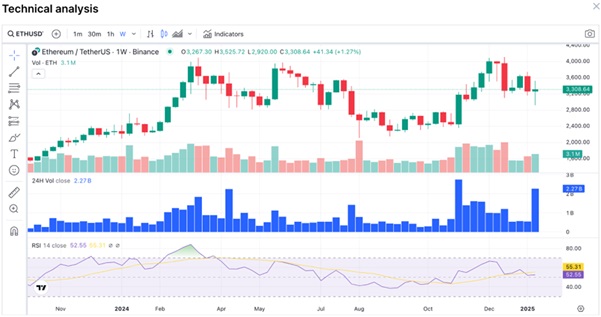
As institutional adoption fuels fundamental growth and technical indicators signal further gains, Ethereum (ETH) and Yeti Ouro (YETIO) are setting the stage for an explosive bull run. The crypto market continues its bullish momentum, driven by major developments in Ethereum staking, and the meteoric rise of Yeti Ouro (YETIO) during its presale phase. Trump’s inauguration could catalyze a boom in the crypto space, positioning it as a vital component of the modern financial landscape.

Ethereum Price Prediction: ETH Staking

ETH has strengthened investor sentiment with Switzerland’s PostFinance introducing a staking service for its customers. With as little as 0.1 ETH, investors can now participate in staking, locking their tokens for 12 weeks to earn rewards.

Whales have accumulated over 330,000 Ethereum in the past week, valued at more than $1 billion! This buying pressure is building momentum.

As more institutions embrace Ethereum’s staking and smart contract capabilities, ETH’s fundamentals strengthen. With a live market cap of $410 billion, Ethereum is not just leading in innovation but also solidifying its position as the backbone of the DeFi and NFT ecosystems.

ETH price is currently $3,411 supported by a $44.7 billion trading volume.

YETIO’s Presale

YETIO had an impressive start to their presale with their first phase being a resounding success. YETIO continues to enjoy the support of early adopters with over 127 million tokens sold, raising over $1.66 million in their second phase of the presale. YETIO’s unique approach combines the appeal of meme culture with tangible utilities, setting it apart from traditional meme coins. YETIO’s strength lies in its integration with Yeti Go, a thrilling P2E game.

Analysts believe YETIO could follow in the footsteps of DOGE and SHIB. YETIO can go a step further with stronger tokenomics and a clear focus on providing real utility to investors, giving it long-term investment potential.

The team shared a video showcasing the first glance at the Level 1 map at a distance. There is so much detail yet to be shown, with garages for vehicle repairs and upgrades as well as hidden tunnels and harsh terrains to get through.

YetiGo DEMO – Unreal Editor 2025-01-14 03-46-41.mp4

Conclusion

With increased institutional adoption and better regulatory compliance, the market is flourishing and ETH and YETIO are leading this new wave.

YETIO is the new breakout star with a lot of potential.

With market sentiment at such a high, now might be a good time to jump in.


Join The Yeti Ouro Community

Website: https://yetiouro.io/

X (Formally Twitter): https://x.com/yetiouro

Telegram: https://t.me/yetiouroofficial

Discord: https://discord.gg/YtUsEZ2Zr