DD
MM
YYYY

PAGES

DD
MM
YYYY

spot_img

PAGES

Home Blog Page 2380

AI Agents Crypto, Mindshare, Declines Below $12 Billion

0

The market capitalization of AI agents has indeed seen a decline, falling below $12 billion. This downturn reflects a recent correction in the broader AI sector, where AI agent-related cryptocurrencies and projects have experienced significant drops in value. Posts on X indicate that the total market cap of AI agents has decreased sharply in the last few days, with some reports suggesting a drop from $20 billion to $12 billion within a week.

This trend aligns with broader market movements observed in the crypto space, where AI agent tokens have been among those hit by the market correction. Additionally, the crypto AI agent sector has been noted to have a market cap of around $11.3 billion following a 16% dip, underscoring the sector’s volatility.

The AI agent market has recently faced significant volatility, with its market capitalization dropping below $12 billion. Here’s a more detailed analysis based on current trends and insights from various sources:

Market Dynamics: The AI agent market has seen a dramatic slump, with the total market cap experiencing a notable decline from a peak of $20 billion to the current levels below $12 billion. This represents a 44% drop from its highest point, reflecting both the speculative nature of the sector and broader market corrections in cryptocurrency markets. Specific tokens like those from the Virtuals Protocol and others have experienced severe corrections, with drops of 48% to 55% in their market values. This indicates a rapid shift in investor sentiment towards these assets.

Factors Contributing to the Slump

Much of the early growth in AI agent tokens could be attributed to speculation rather than fundamental value. The market’s reassessment of these projects has led to a significant correction as investors question the long-term utility and viability of these tokens.

Lack of Product-Market Fit: Some analyses suggest that AI agents, particularly in the crypto space, have not yet established a clear, proven product-market fit. This lack of a defined user base or demand for specific AI agent applications can lead to skepticism about their long-term sustainability.

Market Sentiment and Broader Crypto Trends: The crypto market as a whole has been volatile, with AI agents not immune to broader market downturns. Pullbacks in the crypto market often affect high-growth, high-risk sectors like AI agents more severely.

Performance of Notable Projects: AI agent tokens associated with projects like ai16z, Virtuals Protocol, and Swarms have seen substantial declines, with ai16z dropping to a market cap of $1.1 billion after a 50% price fall. This illustrates the sector’s vulnerability to rapid shifts in investor confidence. Even though certain AI agents or tokens like $AIXBT from Virtuals have shown resilience in the past, the recent market conditions have led to significant corrections across the board.

Future Outlook

Despite the current downturn, some industry observers still see potential in AI agents, predicting they could be part of a multi-trillion-dollar opportunity in the long run. However, this requires overcoming the current challenges related to market fit, regulation, and technological maturity. The volatility might also be seen as a natural correction, paving the way for more sustainable growth if the sector can demonstrate real-world applications and value.

The slump in the AI agent market cap is part of a broader correction in speculative assets, highlighting the need for AI agent projects to establish more concrete use cases and sustainable business models to regain investor trust and stabilize their market presence.

LemFi Secures $53 Million to Expand Cross-Border Remittance Services Into Europe

0

LemFi, a Nigerian remittance platform for African immigrants, has secured $53 million in a series B funding round, that saw participation from existing investors which include; Left Lane Capital, Palm Drive Capital, and Y Combinator, and new investors like Endeavor Catalyst.

With the recent funds raised, this brings the total amount that LemFi has received to $85 million in funding since it was founded in 2019.

Recall that in 2023, the fintech startup raised $33 million in Series A funds, in a round led by Left Lane Capital, to ease remittance for immigrants. The latest funding comes after LemFi recently announced an expansion to Europe, through Modulr Finance, the leading platform for embedded payments and software-driven payment automation.

Modular holds a European e-money issuer license from the Netherlands, enabling seamless operations across the European Economic Area (EA). This strategic partnership provides LemFi with the capability to launch in several European countries simultaneously, maximizing its reach and efficiency.

LemFi plans to use the $53 million funds to extend its offerings, scale its payment network licenses and partnerships to provide hyper-localized service and recruit talent for its next growth phase. The firm currently has more than 300 employees across Europe, North America, Africa, and Asia.

“While regulations market by market remain complex and we have more stakeholders to deal with, scaling has become a lot easier for us because we have technology that is adaptable and can easily plug and play to different payment methods and schemes. So, we intend to go to as many markets as we have a significant number of immigrants, starting now with Europe this year, which is going to be a big focus for us”, LemFi CEO and co-founder Ridwan Olalere noted.

Founded in 2020 by Ridwan Olalere and Rian Cochran, LemFi provides financial services tailored to immigrants, helping them send money to emerging markets efficiently and securely. The fintech is licensed as an Electronic Money Institution with the Financial Conduct Authority in the United Kingdom, under the name RightCard Payment Services. It is also registered as a part Money Service Business by the Financial Transactions and Report Analysis Centre, in Canada.

Findings from GlobaliData’s 2023 Financial Services Consumer Survey reveal that individuals who send money abroad to family or friends are almost four times as likely to have suffered from financial fraud compared to those who have not sent remittances. One notable aspect of LemFi’s growth strategy is its emphasis on user-centric innovations, such as multi-currency accounts and robust fraud detection systems. On its website, the startup provides users with guidance and tips about potential scams and what to look out for alongside their remittance services.

LemFi’s innovative offerings include multi-currency accounts, low transaction fees, and competitive foreign exchange rates. Its focus on affordability and user experience has garnered a loyal customer base of over one million active users. 

The startup’s success reflects a commitment to innovation, customer-centricity, and strategic market entry. As it scales its operations and enters new markets, the company aims to solidify its position as a key player in the fintech industry.

4 Best Altcoins To Buy Right Now: $ETH, $XRP, $DOGE And $YETIO

0

The countdown towards the Jan. 20th US inauguration for Donald Trump has begun, and no other sector is as excited as the crypto industry. Trump’s administration is expected to spark widespread crypto adoption, with pro-crypto leaders taking over important leadership positions. This makes it paramount to invest in the crypto tokens that will soar in Q1, and analysts have identified DOGE, ETH, XRP, and Yeti Ouro (YETIO) as the leading four tokens for maximum gains.

Ethereum Vs XRP: Who Will Reign In Q1?

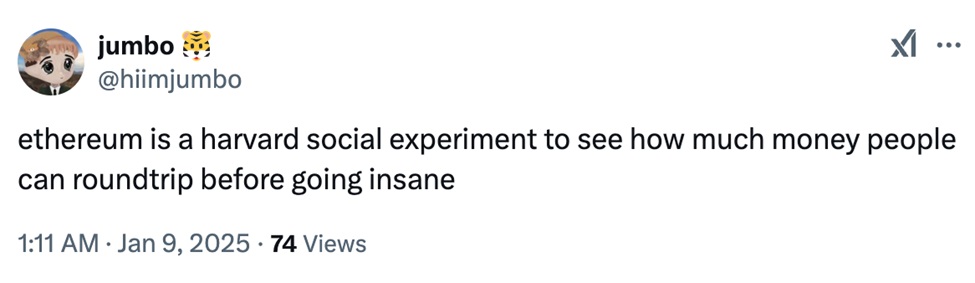
Last year was a disappointment for Ethereum holders. The ETH price failed to take off as its peers, such as Solana and Bitcoin, set new highs in the latter part of the year. Ethereum became the butt of unending jokes on social media as its holders looked on as every other crypto soared.

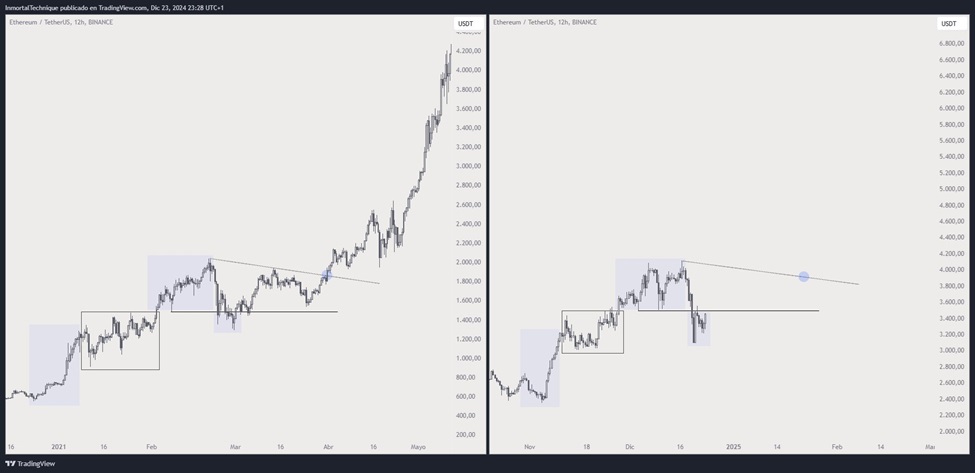
However, analysts say this could be Ethereum’s year, ushering in a new altcoin season that could allow ETH to retest its all-time high of $4,860, which it hit over three years ago. One analyst noted the similarity between Ethereum’s chart over the past few months and in 2021 when it shot up to hit its ATH. If it follows a similar path, it could rise as high as $6,800.

XRP, on the other hand, has started the year on a high, XRP price gaining nearly 25% in the first two weeks of 2025. One of the key drivers has been the demand from South Korea, which has pushed the daily trading volumes to exceed $9 billion in some days.

XRP is expected to keep rising, with anticipation of an SEC approval for its spot ETF, institutional adoption, and continued uptake in crypto payments globally. The Ripple management, led by CEO Brad Garlinghouse, is also closely tied with the Trump administration, further boosting its prospects.

Memecoins Mania To Strike: DOGE And YETIO Stand Out

Investors seeking higher margins turn to memecoins in bull rallies and are usually rewarded. In the past year, for instance, Pepe has gained over 1,200% while Dogwifhat is up 600%.

In the 2025 bull rally, analysts have identified Dogecoin and YETIO as the two standout memecoins to invest in.

Dogecoin is expected to be the biggest beneficiary of the Trump takeover, with its unofficial leader, Elon Musk, now in the inner circle of the new president. Analysts have predicted DOGE price to hit $1 in the first half of the year for the first time.

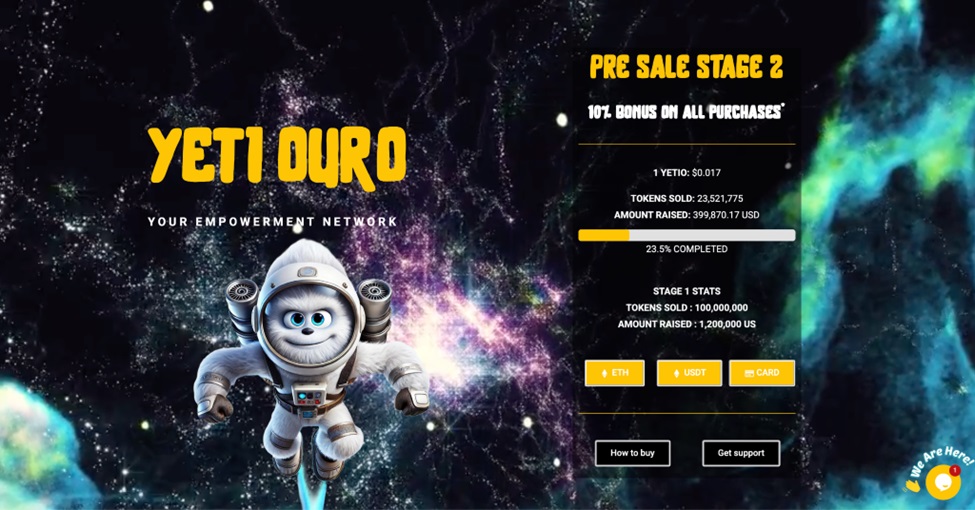
Yeti Ouro is projected to offer even bigger gains. The project has received massive interest in its ongoing presale, where it has raised $1.599 million, selling 100 million tokens in the first stage and over 23.5 million tokens in the ongoing second.

Yeti Ouro towers over other memecoins by offering utility through its play-to-earn game Yeti Go, where players compete in a thrilling race track for a prize, paid out in YETIO. The game offers intense, fast-paced action that tests a player’s strategy, skills, and quick reflexes.

https://www.youtube.com/watch?v=a3t8N3uWHCw

YETIO powers other aspects of the game, from paying race entry fees to purchasing weapons and other customizations to staking to unlock exclusive rewards.

YETIO is going for $0.017 in the ongoing presale, and with analysts predicting it to hit $1 this year, it could offer the best returns in the industry.


Join the Yeti Ouro Community

Website: https://yetiouro.io/

X (Formerly Twitter): https://x.com/yetiouro

Telegram: https://t.me/yetiouroofficial

Discord: https://discord.gg/YtUsEZ2ZrV

The GHL-FBN Legal Standoff: General Hydrocarbons Denies Owing First Bank $225m

0

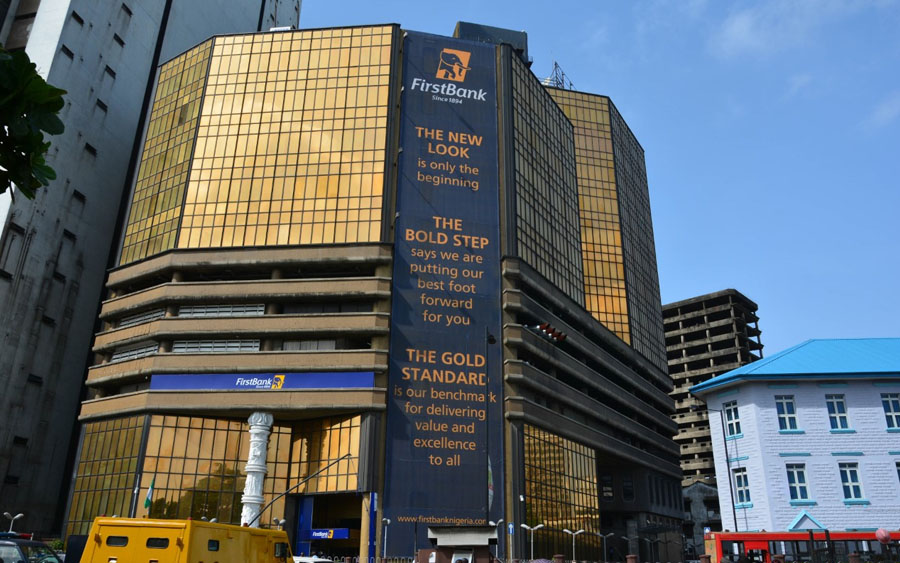
In a contentious legal battle that has drawn significant attention in Nigeria’s oil and financial sectors, General Hydrocarbons Limited (GHL) has publicly denied owing $225 million to First Bank of Nigeria Limited (FBN).

The dispute escalated when Justice Deinde Dipeolu of the Federal High Court in Lagos granted a Mareva injunction, effectively freezing GHL’s accounts and those of its directors across all financial institutions in the country.

The injunction, secured at the request of FBN and its affiliate, FBNQuest Trustees Limited, is centered on allegations of outstanding indebtedness amounting to $225.8 million (approximately N350 billion). The legal wrangling, however, has taken a complex turn, with GHL accusing FBN of abuse of judicial processes and financial mismanagement.

The Genesis of the FBN-GHL Relationship

The dispute stems from a financial relationship that began as a lifeline for GHL but has since devolved into allegations of financial recklessness, mismanagement, and betrayal. At the heart of the matter is Oil Mining Lease (OML) 120, an offshore oil field operated by GHL.

On May 29, 2021, GHL and FBN entered a legally binding subrogation agreement. Under the terms, FBN committed to funding the exploration, production, and development of OML 120. In return, the bank was to receive 50 percent of the profit from oil proceeds after statutory payments and taxes over an eight-year period. The proceeds were also intended to pay down FBN’s non-performing loans (NPLs), which amounted to $718 million but were discounted to $600 million under the arrangement.

This agreement was pivotal for FBN. At the time, the bank faced serious solvency issues due to substantial NPLs from unsecured and allegedly reckless lending to Atlantic Energy under separate Strategic Alliance Agreements. Notably, GHL claims to have no connection to Atlantic Energy or its operations, which include OMLs 26, 30, 34, and 42.

The subrogation agreement appeared to be a win-win. FBN avoided declaring a catastrophic loan loss of N302 billion (at the then exchange rate) and instead recorded a profit of $377.5 million (N151 billion) for the year ending December 31, 2021. This maneuver turned around FBN’s market capitalization, which tripled from N256.6 billion to over N900 billion by November 2024.

For GHL, the agreement offered the financial resources to develop OML 120 and promised stability. However, GHL now alleges that FBN failed to honor its obligations under the deal. Specifically, the company claims that while FBN disbursed $185 million for OML 120’s development, payments were sporadic and delayed—sometimes taking up to 70 days instead of the agreed five days.

This delay allegedly caused operational inefficiencies, downtimes, and financial losses exceeding $147 million. Payments to major service providers such as Schlumberger, Baker Hughes, and Century were inconsistent, leading to arbitration awards against GHL.

FBN’s Allegations and the Mareva Injunction

FBN’s narrative is starkly different. The bank alleges that GHL owes $225.8 million in outstanding debt, a claim that led to the freezing of GHL’s accounts and those of its directors, including Nduka Obaigbena (Chairman of Arise Television and Publisher of ThisDay Newspapers), Efe Damilola Obaigbena, and Olabisi Eka Obaigbena.

The Mareva injunction, often referred to as a “freezing order,” aims to prevent GHL from moving assets out of reach while the legal dispute is resolved. The order covers all financial institutions in Nigeria, including prominent banks and fintech firms such as Guaranty Trust Bank, Zenith Bank, Access Bank, Paystack, Flutterwave, and PiggyVest.

The restrained parties also include subsidiaries of GHL, namely GHL 121 Ltd, Aimonte Nigeria Limited, and CESL Oyo Production BBS Limited, among others.

GHL’s Defense: Allegations of Abuse and Malpractice

In a detailed statement, Abdelmuizz Bello, GHL’s Director of Strategy and Operations, accused FBN of breaching the subrogation agreement and abusing court processes. According to Bello, the bank’s failure to disburse funds in a timely manner led to substantial operational setbacks for OML 120.

He stated, “The delays by FBN created bottlenecks that crippled our ability to meet operational deadlines. These actions were not just breaches of contract; they were deliberate acts of sabotage.”

GHL further alleges that FBN failed to fulfill financial commitments as agreed, forcing the company to seek alternative financing for OML 120. Bello also highlighted the operational inefficiencies caused by the bank’s delays.

“We were running logistics for over 250 personnel on offshore installations with payments that should take five days being delayed by up to 70 days. This caused chaos in our operations,” he said.

In addition, GHL accused FBN of mismanaging funds and micromanaging its operations. Bello said, “FBN’s credit and risk teams vetted every payment to contractors, yet their actions created inefficiencies and conflicts that disrupted our work.”

The company also alleged that FBN weaponized legal processes to its advantage. Bello noted, “The Mareva injunction was obtained in bad faith. FBN deliberately failed to disclose a prior judgment in our favor, which restrained them from obstructing our financing efforts.”

Conflicting Judgments and Arbitration

The legal tussle has been marked by conflicting court rulings. On December 12, 2024, Justice Allagoa issued an order restraining FBN from obstructing GHL’s efforts to secure alternative financing for OML 120, enforcing any security or assets of GHL tied to the subrogation agreement, or appointing a new operator for OML 120 pending arbitration.

However, FBN later obtained a Mareva injunction from Justice Deinde Dipeolu, freezing GHL’s accounts. GHL contends that FBN failed to disclose Justice Allagoa’s earlier ruling, a move it describes as “a clear abuse of court process.”

Implications for Nigeria’s Oil Sector

The standoff has far-reaching implications. OML 120 is a significant asset for Nigeria, located over 75 kilometers offshore with extensive production infrastructure. Energy analysts believe the dispute could jeopardize its development and Nigeria’s broader energy ambitions.

Additionally, the case raises concerns about corporate governance in Nigeria’s financial sector. According to analysts, if GHL’s allegations are proven true, it could expose systemic flaws in how banks manage high-risk loans and partnerships in critical sectors.

While FBN claims it is merely seeking to recover its funds, GHL alleges it is the victim of a systematic breach of trust and financial sabotage.

As the parties brace for a long legal showdown, the case, now before the Federal High Court in Lagos, will likely set a precedent for how similar disputes are handled in the future.

The Wrong Read on Strategy And Winning the Competition [video]

0

The main comment on this video has “the best strategy wins”, but watching it many times, I am unable to see any strategic thing the man did differently. That he began at the “middle” when the lady started from the “tail” does not provide any leverage on this assignment. Do you see any special tactic or even strategic playbook here?

At my personal level, I do posit that the man won because he is slightly taller which means he covered more grounds faster than the woman. Also, he ran more times than the lady. And unlike the lady, he did not waste time aligning the bricks well.

What do you see?

(Lesson: we must NOT just throw out the phrase “best strategy” because the outcome is a WIN even when there is really nothing superior in what we have done, but are possibly benefitting from exogenous environmental factors, and not what we have done endogenously in our business. Doing that will be a false read operations that can backfire, when using that wrong thesis to expand operations only for the exogenous factors to change, leading to failures)

Comment on Feed

Comment: I believe starting from behind (or the “middle” as you described) could actually hold strategic merit, though it may not seem obvious at first. Here’s my perspective:

By starting at the middle rather than the “tail,” the man might have been optimizing for efficiency in DISTANCE MANAGEMENT. Starting at the middle allows for shorter, more balanced trips back and forth between the available resources and the objective point. This minimizes the time and energy required to complete the task compared to starting at the very end, where longer trips are unavoidable at the start. While this approach might seem incidental, it could reflect a subconscious understanding of energy conservation a critical factor in high-paced tasks.

What I see strategically here:

Energy Distribution: Beginning at the middle could be a way to ensure consistent pacing and reduce burnout early on. By the time the man moves to the “tail,” he has already established momentum and possibly has more energy than the woman, who started further back and may have expended more effort upfront.

Visibility & Orientation: Starting at the middle could also provide a better vantage point for planning next moves. The middle position might offer better orientation to the layout of the bricks, allowing for quicker decisions.

Psychological Advantage: While subtle, starting closer to the goal might provide a mental boost. Seeing visible progress early on can encourage faster movement compared to starting from the farthest end, where progress initially feels slower.

Your insight about exogenous factors is spot on. However, it’s worth considering that even when outcomes are heavily influenced by external factors like height or speed, small decisions like where to start could still demonstrate functional strategy, even if not consciously developed.

Business takeaway: In operations, even seemingly minor adjustments in how resources or actions are positioned can create cumulative advantages. Testing multiple approach

My Response: Do you have any empirical reason to support the thesis that starting from the middle offers any advantage. In other words, if they switch starting sequences, do you think the lady will win, keeping pace and other things constant?