DD
MM
YYYY

PAGES

DD
MM
YYYY

spot_img

PAGES

Home Blog Page 2389

Ripple News: XRP ETF Could Be Next After Bitcoin, Solana And New Trending ERC-20 Token Yeti Ouro Set For Mega Pump This Bull Run

0

As the crypto market evolves, XRP eyes a potential ETF launch, Bitcoin battles to reclaim $100K, and Solana’s ecosystem shows resilience despite price dips. On the other hand, the relatively newer Yeti Ouro (YETIO) picks up steam with unique dApps and staking options. While being highly volatile, these assets reveal growth, innovations, and investment prospects for the development of digital finance.

Ripple News: XRP ETF Could Be Next After Bitcoin’s Milestone Approval

The idea of an XRP exchange-traded fund (ETF) is getting more traction as Ripple’s token gets more acceptance in the market. With Bitcoin and Ethereum ETFs getting approval in 2024, it is said that XRP may be the next one as well. An XRP ETF would improve market opportunity for institutional and retail investors.

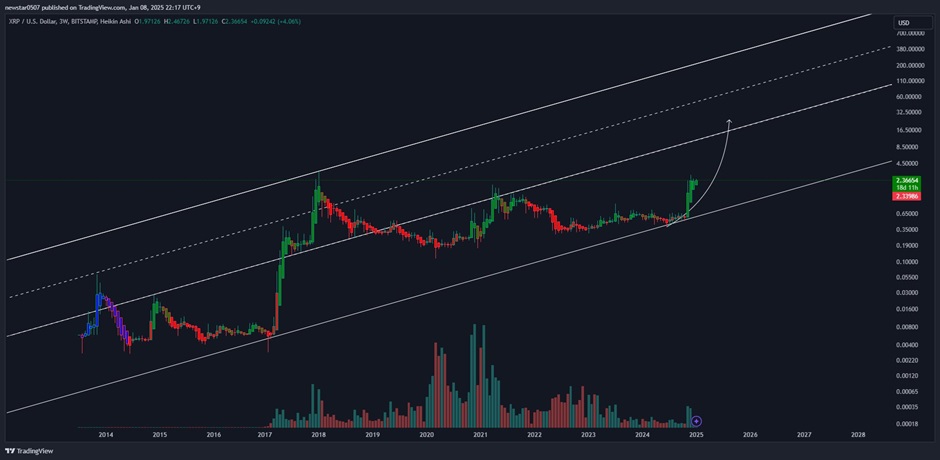
Data has also revealed that XRP trading volumes have been on the rise while the number of wallet addresses is growing, which is a sign of a more extensive market. As of now, XRP price is at $2.31 and has been down 4.79% in the past 24 hours due to bearish trends across the market. XRP is still bullish in the long term, with a support level of $2.15. If XRP price moves above $2.47, analysts expect that bullish sentiment will be restored and strengthen the token’s further development.
Source X

Bitcoin Holds Below $100K Amid Renewed Selling Pressure

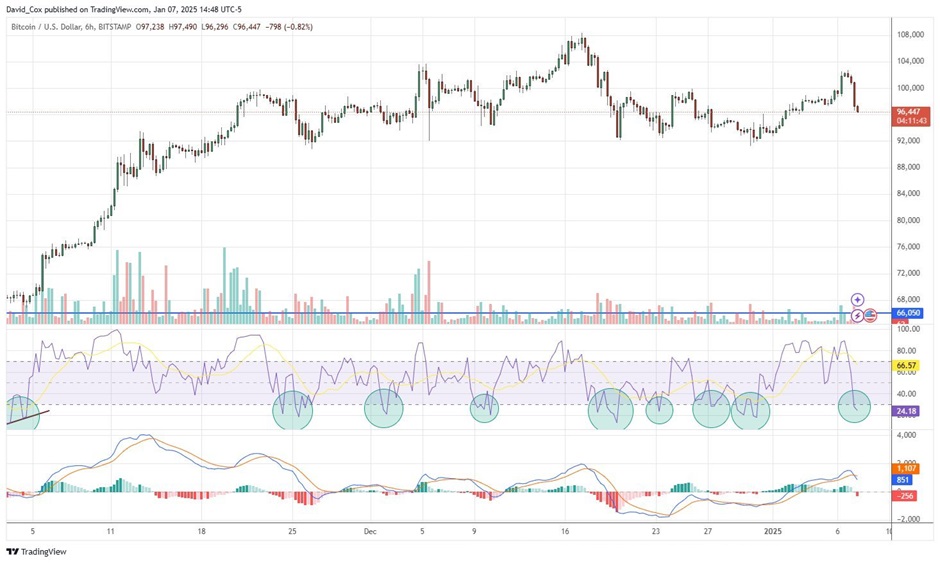
Bitcoin price is still below $96,000 and continues to decline by 5% on Tuesday due to the strong economic data from the United States and a rising dollar. According to CoinGlass, the long liquidations of Bitcoin stood at $125 million within a single day, suggesting increased bearish pressure.

After briefly reaching $100,000 in December, BTC price has retraced its gains due to various factors, including the Federal Reserve rate hike. Buyers are seen between $92,500 and $96,000, while sellers are expected at $98,500.
Source X

Though the short-term trend of Bitcoin looks bearish, the long-term trend is to the upside. Institutional investors are expected to return to the market as the economic environment becomes favorable again. The optimism resulting from the new US administration’s allegedly crypto-friendly policies could also contribute to the recovery and investments in Bitcoin as a potential growth asset.

Solana’s Price Drops Below $200 But Network Growth Remains Strong

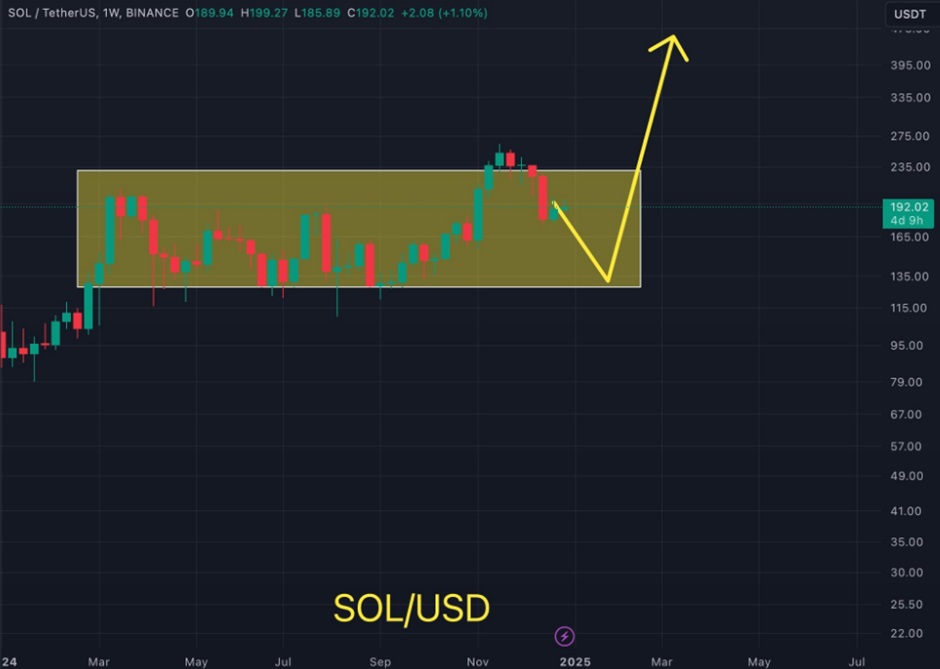
Solana (SOL) price has fallen below $200, down 8.67% in the last 24 hours due to increasing US Treasury yields and profit-taking. Currently at $196.77, major support is found at $181 while resistance can be seen around $205.

While SOL price has been going down, Solana’s network is still expanding. According to HelloMoon, there are more than 5 million new daily first signers on January 6. Furthermore, DEX trading volumes and TVL continue to be strong due to DeFi and NFTs’ growing utilization.

Some analysts think that the SOL price may soon find stability thanks to the growth of the Solana ecosystem, with profitable opportunities opening up if the price rises back to $200. These advancements put Solana in the lineage of leading blockchain platforms, which is still growing.
Source: X

Yeti Ouro: A New ERC-20 Token Gains Traction In 2025

Yeti Ouro, a relatively new ERC-20 token, is being considered a promising asset for high returns during the current bull market. Still, in the second phase of its presale, Yeti Ouro has sold 22,321,137 tokens. That is 22.3% of its stated target, and the tokens are being offered at $0.017 each.

Some of the future developments that the token’s roadmap outlines include the development of dApps and staking, which has attracted both small retail investors as well as institutional investors. In its first stage, the project sold 100 million tokens and collected $1.2 million. Experts believe that Yeti Ouro has recently gained traction due to its low market capitalization and high level of community involvement, making it a possible gem in the altcoin world.

Furthermore, its bullish outlook is bolstered by its racing game, Yeti Go. The P2E game features engaging environments, dynamic gameplay, and sophisticated sound for a thrilling experience for gamers. It further allows for the convergence of a meme culture and utility within the project, thus attracting a larger audience.

With increasing trading activity and growth, Yeti Ouro is all prepared to ride the bullish wave that is currently defining the cryptocurrency market. Investors are closely monitoring the project’s achievements to identify its potential for growth in the future.


Join the Yeti Ouro Community

Website: https://yetiouro.io/

X (Formerly Twitter): https://x.com/yetiouro

Telegram: https://t.me/yetiouroofficial

Discord: https://discord.gg/YtUsEZ2ZrV

Meta Shareholder Proposes Bitcoin as Treasury Asset

0

A Meta shareholder has proposed a plan for the company to consider adding Bitcoin to its corporate treasury. The proposal, submitted by Ethan Peck, on behalf of his family’s shares, emphasizes Bitcoin’s potential as an inflation-resistant asset and highlights its significant growth over recent years, with Bitcoin increasing by 124% in 2024 alone and 1,265% over the past five years.

Bitcoin has a capped supply of 21 million coins, which contrasts with fiat currencies that can be printed in unlimited quantities by central banks to manage economic conditions. This scarcity could theoretically increase Bitcoin’s value as fiat money loses purchasing power due to inflation.

The argument made in the proposal is that Bitcoin could serve as a hedge against inflation, potentially safeguarding Meta’s $72 billion in cash reserves, which are currently vulnerable to depreciation due to inflation. This move aligns with trends where other corporations have begun to adopt Bitcoin as a strategic asset, including companies like MicroStrategy. The proposal suggests that Meta’s board should evaluate Bitcoin as a treasury asset, positioning it as an opportunity for Meta to lead in financial innovation.

Unlike traditional currencies, Bitcoin is not controlled by any central authority or government. This means that its monetary policy cannot be altered to inflate the supply beyond what is programmed into its protocol, which could protect holders from currency devaluation caused by central bank policies.

Over certain periods, Bitcoin has shown a negative correlation with traditional financial assets like stocks and bonds, especially during times of economic uncertainty or high inflation. For instance, during the high inflation periods of 2020-2021, Bitcoin’s price significantly increased, which some investors interpret as a sign of it acting as an inflation hedge.

Holding Bitcoin would diversify Meta’s asset base beyond traditional cash equivalents like bonds, stocks, or government securities. This could potentially reduce risk if traditional markets underperform, especially during times of inflation or currency devaluation.

This move could signal Meta’s strategy in embracing digital assets and cryptocurrencies, positioning the company as an innovator in financial technology. It might attract a different demographic of investors and users interested in or involved with cryptocurrency.

It could be seen as an endorsement of cryptocurrency’s legitimacy in corporate finance, potentially leading to broader acceptance and use of Bitcoin in business transactions or as part of corporate financial strategies.
Market Impact: If a significant company like Meta holds Bitcoin, it could influence the market by increasing demand for Bitcoin, potentially affecting its price.

Such an action might also encourage other corporations to consider similar strategies, thus reinforcing Bitcoin’s role in the financial ecosystem.
Risk Management: Bitcoin is known for its volatility. Holding Bitcoin would expose Meta to this volatility, which could either significantly increase or decrease the value of its treasury. This requires sophisticated risk management strategies to mitigate potential losses while capitalizing on gains.

Regulatory and Compliance Considerations: Holding Bitcoin would require Meta to navigate complex regulatory environments concerning cryptocurrencies, which vary by country. This includes considerations around taxation, reporting, and compliance with financial regulations.

Liquidity Management: Bitcoin, while increasingly liquid, is not as liquid as traditional cash equivalents. Meta would need to manage how much of its assets are in such a less liquid form, ensuring it doesn’t impact its operational liquidity.

Accounting and Reporting: There would be new considerations for how Bitcoin is accounted for on Meta’s balance sheet, with potential implications for earnings volatility due to Bitcoin’s price fluctuations. This might affect how investors perceive Meta’s financial health.

Long-term Investment vs. Speculation: The decision to hold Bitcoin could be interpreted in different ways – as a long-term investment in a new asset class or as speculation on Bitcoin’s future value. The intent behind this move would influence how it’s viewed by markets and regulatory bodies.

In essence, holding Bitcoin as a treasury asset for Meta would mark a significant shift in corporate finance strategy, embracing the digital asset revolution while also taking on new forms of risk and opportunity management.

Why AI Agents are Moving the Crypto Industry as Binance Highlights Three AI Tokens

0

The Binance Alpha program has recently highlighted three innovative tokens: VADER, FAI, and VERTAI. These tokens represent the convergence of artificial intelligence (AI) and blockchain technology, catering to the growing demand for AI-integrated solutions.

Key Highlights:

VADER: This token functions as an AI proxy on the Base chain, simplifying access to AI-powered tools and services.

FAI: Similar to VADER, FAI operates on the Base chain and is designed to enhance the integration of AI and blockchain.

VERTAI: Operating on the Ethereum network, VERTAI offers a platform for fine-tuning AI models without requiring users to write any code. This user-friendly approach opens opportunities for developers and businesses to adopt AI with ease. These tokens are part of Binance Alpha’s pre-listing pool, which aims to introduce innovative projects to the crypto community.

AI Agents are significantly impacting the crypto industry due to several key factors:

Automation and Efficiency: AI agents are autonomous software programs that can execute complex tasks without human intervention. They can perform tasks like trading, portfolio management, and blockchain interactions more efficiently than humans, leading to faster and more precise actions in the 24/7 crypto market environment. This capability is particularly valuable in areas like decentralized finance (DeFi), where tasks can be complex and require real-time decision-making.

Market Influence and Speculation: AI agents have demonstrated the ability to shape market trends and influence investor behavior. For instance, the story of the AI agent “Terminal of Truths” promoting the GOAT memecoin illustrates how AI can drive speculative trends, leading to significant market cap increases in a short period. This kind of impact shows how AI agents can create viral marketing strategies and narratives, affecting market dynamics.

Enhanced User Experience: By automating complex processes, AI agents make crypto transactions and interactions more accessible to users who might find the technical aspects of blockchain daunting. They can manage trading strategies, provide market analysis, and even simplify DeFi operations, thereby potentially expanding the user base of crypto by making it less intimidating for newcomers.

Innovation and New Economic Models: AI agents are fostering innovation by creating new use cases and economic models within crypto. They can participate in on-chain transactions, manage assets in gaming ecosystems, or even engage in social media to influence community sentiment. This integration of AI into crypto operations is leading to what’s described as an “agentic economy,” where AI agents operate alongside or on behalf of human users, potentially revolutionizing how value is generated and exchanged in digital economies.

Security and Fraud Detection: AI agents are being employed to enhance security protocols by detecting fraudulent activities or vulnerabilities in smart contracts. Their ability to analyze vast amounts of data in real-time can help prevent scams and improve the overall security of crypto transactions.

Market Capitalization Growth: The rise of AI agents in crypto is also reflected in the growing market capitalization of AI agent-related tokens. This growth is indicative of investor interest and confidence in the potential of AI to transform blockchain technology applications.

The combination of these factors illustrates why AI agents are moving the crypto industry forward, by not only enhancing existing functionalities but also by opening up new avenues for interaction and value creation within the blockchain space. However, this movement also brings ethical considerations, potential risks like market manipulation, and the need for regulatory frameworks to ensure the technology is used responsibly.

BIG BOSS INU Breaks Records: $100,000 Raised in Presale, What’s Next?

0

BIG BOSS INU has taken the crypto world by storm, raising $100,000 in mere minutes during its presale. This incredible milestone highlights the massive potential of this next-generation altcoin, combining innovation, utility, and a vibrant community. Crypto enthusiasts and analysts alike are calling BIG BOSS INU a must-watch project for 2025. Let’s explore why this token is the buzz of the market and what lies ahead.

$100,000 Sold in Minutes: The Start of Something Big

In a record-breaking presale, BIG BOSS INU sold out $100,000 worth of tokens almost instantly. This rapid sell-out is a testament to the trust and excitement among investors. With such an explosive start, BIG BOSS INU is already proving itself as a high-potential crypto ready to dominate the market.

<<<<< CLICK HERE TO MAKE THIS YOUR +18,000% MOMENT >>>>>

Why BIG BOSS INU Is the Future of Crypto

BIG BOSS INU is not just another meme coin—it’s a powerful altcoin built to tackle real-world challenges in the crypto space. With ultra-fast transaction speeds and low fees, it addresses the scalability and cost issues faced by major players like Bitcoin and Ethereum. Its NFT integration adds even more utility, making it a versatile and innovative investment.

The deflationary tokenomics of the project and the anti-dump mechanism guarantee price stability,  protecting investors and promoting long-term growth. Alongside attractive staking rewards and robust security features, BIG  BOSS INU is presented as a reliable and profitable choice for both new and experienced investors.

What’s Next for BIG BOSS INU?

BIG BOSS INU’s roadmap is packed with ambitious plans to expand its ecosystem and increase adoption. With growing demand and a loyal community, analysts are forecasting substantial price surges in the coming months.

<<<<< CLICK HERE TO DON’T MISS THIS +25,000% ROI OPPORTUNITY >>>>>

Act Now: Don’t Miss the Next Big Opportunity

The altcoin of your choice you shouldn’t pass up on is BIG BOSS INU,  which has a record breaking presale and innovative features. Already, early investors are reaping their  rewards—now it’s your chance to put your money into the future of cryptocurrency.


Presale: https://bigbossinu.com/buy-token

Website: https://bigbossinu.com

Telegram: https://t.me/bigbossinu

X/Twitter: https://x.com/BigBossInu

Germany to Invest €400 million in Upgrading its Naval Aviation

0

Germany has announced plans to invest around €400 million in upgrading its naval aviation capabilities, focusing on new naval aircraft and airbase upgrades. Defence Minister Boris Pistorius highlighted this initiative during a visit to a base on the North Sea, specifying that the investment would modernize the Nordholz Naval Airbase in Cuxhaven.

The upgrade aims to equip the base with eight Boeing P-8A Poseidon maritime patrol aircraft and 49 NHIndustries NH90 helicopters, making it one of Europe’s most modern military airfields over the next decade. This move is part of a broader strategy to enhance Germany’s naval air capabilities within the Bundeswehr’s modernization efforts.

The Boeing P-8A Poseidon is a military aircraft primarily designed for maritime patrol and reconnaissance. Here are some key points about the P-8A:

Role: The P-8A Poseidon serves multiple roles including anti-submarine warfare (ASW), anti-surface warfare (ASuW), intelligence, surveillance, and reconnaissance (ISR). It can also perform search and rescue missions.
Design and Development: It is derived from the civilian Boeing 737-800 aircraft, which was chosen for its reliability, efficiency, and global maintenance support. The P-8A was developed to replace the older P-3 Orion aircraft used by several nations.

Germany’s interest in upgrading its naval aviation can be attributed to several strategic, operational, and geopolitical factors:

Strategic and Operational Needs: Germany aims to enhance its maritime patrol and anti-submarine warfare capabilities. The German Navy (Marinefliegerkommando) has been facing budget cuts in the past, which led to a reduction in operational capabilities, particularly in anti-submarine training.

The current upgrade plans include expanding the fleet of P-8A Poseidon aircraft from five to twelve, which is intended to meet NATO and EU commitments by improving surveillance and combat effectiveness in maritime domains. This upgrade is crucial for operations in the North Atlantic, Baltic Sea, and Mediterranean, especially given the increased maritime threats and the need for better protection against submarine activities.

Modernization and Replacement of Aging Assets: The German Navy’s current maritime patrol aircraft, the P-3C Orion, are aging, and there is a clear need for modernization. The decision to acquire P-8A Poseidon aircraft is part of a broader initiative to update and expand the capabilities of its naval aviation, ensuring that Germany can fulfill its roles within NATO and other international frameworks more effectively. This includes not only better aircraft but also investments in infrastructure like the Nordholz Naval Airbase, which is undergoing significant upgrades to support these new assets.

Geopolitical Considerations: The geopolitical landscape, particularly the security challenges posed by Russia’s actions in Ukraine and the broader European security context, has driven Germany to reassess its military capabilities. The “Zeitenwende” (turning point) announced by Chancellor Olaf Scholz in response to these events includes a commitment to increase defense spending and modernize the armed forces. Upgrading naval aviation is part of this broader strategy to deter potential aggressors and to affirm Germany’s role in European security architecture.

Technological and Industrial Base: Investment in naval aviation also supports Germany’s aerospace industry, which is seen as vital for technological advancement and economic benefits. This includes fostering innovation in military aviation technology, maintaining a competitive edge in aerospace manufacturing, and ensuring that Germany remains a significant player in European defense cooperation projects like the Future Combat Air System (FCAS).

Overall, these investments reflect a comprehensive approach to enhancing Germany’s naval aviation, driven by the need for operational effectiveness, geopolitical strategy, and industrial development.