DD
MM
YYYY

PAGES

DD
MM
YYYY

spot_img

PAGES

Home Blog Page 239

Polymarket’s Imminent US Relaunch is A Game-Changer for Sports Betting

0

Polymarket, the leading blockchain-based prediction market platform, is gearing up for a regulated return to the US market within weeks, with a sharp emphasis on sports betting.

This move comes after years of operating offshore due to regulatory hurdles, and it’s poised to shake up the $8.5 billion+ US sports wagering space. Initial trading is expected by the end of November 2025, aligning perfectly with peak NFL and NBA seasons to maximize early volume.

It won’t be a full nationwide rollout right away—access will start limited, likely through a waitlist system already in place on their site. Polymarket settled with the CFTC in 2022 for $1.4 million over unlicensed trading, forcing it offshore.

Now, they’ve acquired QCX a CFTC-licensed exchange and clearinghouse for $112 million, clearing the way for compliant operations on everything from game outcomes to player props.

Polymarket’s US debut will prioritize sports event contracts—think betting on NFL spreads, NBA over/unders, or even same-game parlays—over its famous election markets though those could follow.

This isn’t just a pivot; it’s a direct challenge to giants like DraftKings and FanDuel. Unlike traditional sportsbooks where you bet against the house, Polymarket lets users buy/sell outcome shares like stocks, fostering peer-to-peer liquidity and potentially higher odds.

Dropping during football/basketball prime time could siphon volume from incumbents. Shares of DraftKings dipped ~9% and Flutter Entertainment FanDuel’s parent ~5% on the news, signaling Wall Street’s jitters.

Kalshi, Polymarket’s main US foe, is already killing it—hitting $4 billion in 30-day volume 10% of total sportsbook handle and launching NFL parlays. Polymarket’s entry could spark a prediction market “supercycle,” especially with its 221K weekly unique users and 10M+ trade counts this month up 3x from April lows.

Polymarket’s eyeing $12-15 billion, fueled by crypto integrations like BNB deposits and DeFi ties. On X, the hype is real—traders are calling it an “easy bet” for liquidity surges, with posts predicting massive user influx.

Kalshi’s suing New York’s gaming commission over federal vs. state regs, and Polymarket might face similar scraps. Plus, while CFTC-approved, state-level sports betting laws vary wildly this could be your ticket to early action.

Peer-to-peer odds could undercut DraftKings/FanDuel’s margins; expect tighter lines, higher payouts. NFL/NBA season timing + crypto onboarding = instant volume; Kalshi already at $4B/30 days—Polymarket could double that.

P2P model ? better odds, lower vig vs. DraftKings/FanDuel. NFL/NBA timing + crypto rails = $1B+/mo potential. Legitimizes prediction markets: CFTC approval paves way for elections, entertainment. Hurts incumbents: DKNG/FLUT stock dips signal share loss.

Crypto gateway: USDC/BNB deposits bring DeFi users to regulated betting. Sharp bettor edge: Early waitlist access rewards liquidity providers.

CFTC-licensed sports contracts legitimize prediction markets; opens door for election, pop culture bets later. DKNG -9%, FLUT -5% on news; continued pressure if Polymarket grabs 5–10% of handle.

USDC/BNB deposits pull DeFi users into regulated betting; accelerates mainstream crypto adoption. Waitlist already live—early access = edge for sharp bettors; mass adoption hinges on UX vs. traditional apps.

Overall, it’s a bold US comeback that blends crypto, predictions, and sports—watch for fireworks come December. What markets are you eyeing first?

Ethereum ICO Whale Resurfaces, As Sequans Communications Transfers $111M BTC Transfer to Coinbase

0

Ethereum ICO Whale Awakens After 8 Years: $6M ETH to Kraken

An anonymous wallet tied to Ethereum’s 2014 ICO which raised $18.3M by selling 60M+ ETH at $0.31 each has resurfaced after nearly eight years of dormancy.

The address (0x60dd…932) originally received 20,000 ETH for ~$6,220 at genesis in 2015.  On October 28, it transferred 1,500 ETH $6M at current prices to Kraken, marking its first exchange deposit ever.

Remaining Holdings: 18,500 ETH ~$80M, yielding a staggering 12,971x return on the original investment. Deposits to exchanges like Kraken often precede sales or trades, potentially adding short-term selling pressure on ETH.

However, this whale’s partial move just 7.5% of holdings suggests conviction in ETH’s long-term value, especially as other ICO-era wallets have stirred recently. No immediate price impact observed, with ETH down ~1% in the last 24 hours.

This isn’t isolated—similar “zombie” wallets have dumped $116M+ in past cycles, but today’s ETH highs ~$4K make it a lucrative exit for early visionaries. X users are buzzing about the irony: from $6K to $86M total value unlocked.

Sequans Communications: $111M BTC Transfer to Coinbase—Sale or Shuffle?

Nasdaq-listed semiconductor firm Sequans (SQNS), a “Bitcoin treasury” adopter since July 2025, moved 970 BTC ~$111M to Coinbase Prime on October 28—its first major outbound transaction.

The firm raised $384M via debt/equity to build a BTC stack, initially holding 3,234 BTC ~$364M. Remaining holdings is 264 BTC ~$255M, ranking it 32nd among corporate BTC treasuries behind MicroStrategy’s 640K+ BTC.

Transfers to Coinbase don’t confirm sales—institutions often use it for custody, OTC trades, or yield optimization to avoid market slippage. Sequans’ stock has dropped 27% since its BTC pivot, amid broader skepticism on crypto exposure.

No price dip in BTC followed with Bitcoin currently trading around $111,766 with volumes down 11% to $163 billion 24 hours trading according to CoinGecko’s aggregator. This fits a trend of firms like Tesla and MicroStrategy treating BTC as a hedge, but the move raises eyebrows: Is it liquidity for ops, or trimming amid volatility? Total corporate BTC holdings now ~4M 5.7% of supply.

SharpLink Gaming: $200M ETH to Linea for DeFi Yields

Nasdaq-listed SharpLink Gaming (SBET), the #2 corporate ETH holder with 859K ETH $3.57B, 0.71% of supply, announced a multi-year plan to deploy $200M ETH ~50K ETH on Consensys’ Linea L2 network.

This is the largest public corporate DeFi play to date, via partners ether.fi liquid staking and restaking and EigenCloud’s AVS security. Phased rollout for “productive” treasury management, including future tokenized equity and programmable liquidity tools.

SharpLink, a Linea Consortium member sees Linea’s scalability as key for institutional DeFi. Bullish for L2 adoption—adds liquidity without selling, contrasting whale dumps. Echoes ETHZilla’s $100M ether.fi move in September.

X chatter calls it “TradFi going degen,” with $EIGEN up on restaking hype despite some OKX transfers. SharpLink’s yield hunt offsets whale/treasury outflows, signaling Ethereum’s maturing as an institutional asset staking > holding. BTC’s corporate wave continues, but with caution.

Whale sales could pressure ETH short-term; Sequans’ move might preview more BTC trims if stocks lag. Watch for on-chain flows to Kraken/Coinbase; Linea TVL spikes. These moves underscore crypto’s shift from speculation to treasury tools—early ICO wins fund the next wave.

Ethereum’s Fusaka Upgrade Now Live on Hoodi Testnet

0

Ethereum’s highly anticipated Fusaka hard fork upgrade has successfully gone live on the Hoodi testnet, marking the final major testing phase before its mainnet activation.

This deployment occurred on October 28, 2025, at approximately 18:53 UTC, following successful activations on the Holesky testnet  and Sepolia testnet. Hoodi, Ethereum’s newest testnet designed to closely mimic mainnet conditions, serves as the ultimate “dress rehearsal” to iron out any issues under high-stress simulations.

Fusaka is the next phase in Ethereum’s “Surge” roadmap, building on the Pectra upgrade from earlier in 2025. It focuses on enhancing scalability, reducing transaction costs, and improving security—particularly for layer-2 (L2) rollups like Optimism and Arbitrum.

The upgrade incorporates a suite of Ethereum Improvement Proposals (EIPs) to make the network more efficient for DeFi, NFTs, gaming, and institutional adoption. Key goals include higher throughput: Increasing the block gas limit from 30 million to 150 million units, allowing blocks to process more transactions and complex smart contracts without congestion.

Expanding blob capacity introduced in Dencun and implementing EIP-7594 (PeerDAS), which lets validators sample smaller data segments from L2s instead of full blobs, slashing node resource demands.

Potential 90% drop in L2 fees by optimizing rollup economics. New node protections and a $2 million audit contest to catch vulnerabilities. These changes aim to support Ethereum’s growing ecosystem amid rising usage, with ETH currently trading approximately near $4000.

PeerDAS, short for Peer Data Availability Sampling, is a networking protocol proposed in Ethereum Improvement Proposal 7594 (EIP-7594).

It represents a critical advancement in Ethereum’s scalability roadmap, specifically within the “Surge” phase, which aims to enhance data availability (DA) for Layer 2 (L2) rollups without compromising decentralization or security.

Introduced in January 2024, PeerDAS builds directly on the blob infrastructure from EIP-4844 activated in the Dencun upgrade in March 2024 by allowing nodes to verify the availability of large amounts of data while downloading only a tiny fraction of it—typically around 1/8th, with potential reductions to 1/16th or 1/32nd as the system scales.

In essence, PeerDAS addresses a core bottleneck in Ethereum’s rollup-centric design: L1 data availability. Rollups like Optimism, Arbitrum, and Base process transactions off-chain but must post compressed data as blobs to Ethereum’s Layer 1 for security and verifiability.

Under EIP-4844, every full node had to download all blobs, limiting throughput to about 0.75 MB per block with targets of 3-6 blobs. PeerDAS decouples this by introducing data availability sampling (DAS), where nodes probabilistically confirm data exists without fetching everything.

This enables Ethereum to handle exponentially more data—potentially 400%+ increases in L2 capacity—while keeping node requirements low.PeerDAS is set to activate in the Fusaka hard fork, tentatively on December 3, 2025, following successful testnet deployments on Holesky, Sepolia, and Hoodi.

Ethereum co-founder Vitalik Buterin has highlighted it as “key to L2 scaling,” emphasizing how it lets validators sample data chunks instead of full blobs, slashing costs and boosting efficiency.

The Need for PeerDAS

Ethereum’s evolution toward a rollup-centric future, as outlined in Vitalik Buterin’s scalability trilemma solution balancing scalability, security, and decentralization, relies heavily on efficient DA.

Pre-Dencun, rollups used expensive calldata for DA, which clogged the network and drove up fees. EIP-4844 introduced blobs—temporary, non-executable data carriers optimized for rollups—reducing L2 fees by up to 90% initially.

However, blobs still required full downloads by all nodes, capping scalability at ~1 MB/s aggregate throughput.As L2 adoption surges with daily transactions now exceeding L1, this limit hinders growth.

PeerDAS, part of the path to full “Danksharding,” uses erasure coding and peer-to-peer sampling to scale DA bandwidth by orders of magnitude. It shifts from “complete” DA checks to “partial” ones, where nodes sample random “pieces” of data to infer the whole with high confidence.

PeerDAS operates at the consensus and networking layers, extending blob handling with mathematical and protocol innovations. Each blob from EIP-4844 is broken into cells—small, fixed-size data units (e.g., 31 bytes each, fitting KZG polynomial commitments). Cells are the atomic unit for sampling.

Blobs are extended using one-dimensional Reed-Solomon erasure coding a error-correcting code. This creates a data matrix rows: One per original blob + its parity extensions redundant data for reconstruction.

Vertical slices across all blobs in a block, each tied to a gossip subnet a P2P subgroup for efficient data flooding. The full matrix can be reconstructed from any 50% + 1 of its columns, providing redundancy without duplicating everything.

Proofs: Blob senders (e.g., rollup operators) precompute cell KZG proofs using the Kate-Zaverucha-Goldberg commitment scheme for every cell. These tiny proofs ~48 bytes are bundled into the transaction wrapper, allowing cheap verification.

Nodes join gossip subnets corresponding to their columns, ensuring data floods efficiently within subgroups (e.g., via Ethereum’s libp2p P2P stack). Nodes sample random columns from a diverse set of peers maintained via Ethereum’s peer discovery.

Nodes download ~1/8th of data scalable to 1/32nd by adding columns, enabling 10x+ blob capacity (e.g., from 0.75 MB to 8+ MB per block). L2 fees drop 90%+, supporting DeFi, gaming, and mass adoption. Light clients verify DA with tiny resources; no “supernodes” required.

Keeps Ethereum accessible to hobbyists and mobile users. Reduces bandwidth/storage by 87.5%+; validators sample fragments, not full blobs. Node operators save on hardware; faster sync times.

Probabilistic guarantees against data withholding. Rollups inherit L1’s robust DA without central points of failure. Directly aids ZK-rollups (e.g., via prover networks) and optimistic rollups. Enables “blob-only forks” for even cheaper L2s.

PeerDAS is Ethereum’s elegant solution to the DA trilemma, transforming blobs from a prototype into a scalable powerhouse. By leveraging erasure coding, P2P sampling, and cryptographic proofs, it paves the way for a hyper-scalable, decentralized L2 ecosystem—cheaper fees, faster txs, and broader access.

Sepolia is on mid-tier stress testing. Hoodi final validation; confirmed smooth by client teams like Nethermind. Tentatively scheduled for December 3, 2025, at the earliest at least 30 days post-Hoodi per Ethereum Foundation guidelines. Developers will monitor for any final tweaks during bi-weekly ACDC calls.

Post-Fusaka, Ethereum eyes the “Glamsterdam” upgrade in 2026, featuring enshrined proposer-builder separation (ePBS) for further decentralization. Analysts emphasize the upgrade’s role in cheaper L2 transactions and ecosystem growth.

Node operators are urged to update clients (e.g., Geth, Nethermind) in preparation.This milestone underscores Ethereum’s iterative approach to scaling without compromising decentralization.


Foxconn to Deploy Humanoid Robots at Houston Plant Producing AI Servers for Nvidia

0

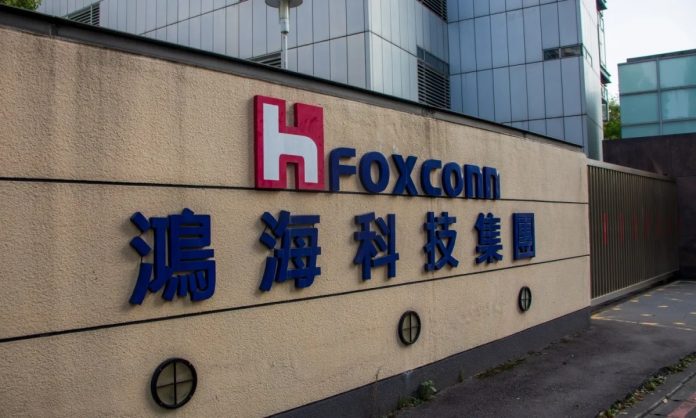
Foxconn, the world’s largest electronics manufacturer and a key assembler of artificial intelligence servers for Nvidia, announced that it will begin deploying humanoid robots at its Houston, Texas, facility — a move that underscores the rapid acceleration of automation and the deepening partnership between the two tech giants.

The company, formally known as Hon Hai Precision Industry Co. Ltd, said the robots will be powered by Nvidia’s Isaac GR00T N model, a cutting-edge AI platform designed to train and operate humanoid robots capable of handling complex factory tasks. The project, which aims to make the Houston plant a benchmark for AI-powered smart manufacturing, will mark one of the most advanced deployments of humanoid robotics in industrial production when it launches in the first quarter of 2026.

“The factory will also be among the first to deploy humanoid robots powered by the NVIDIA Isaac GR00T N model on its production lines, as Foxconn and Nvidia aim to build a world-leading benchmark AI smart factory,” the company said in a statement released during Nvidia’s developers’ conference in Washington, D.C.

Foxconn Chairman Young Liu said the move reflects the company’s ambition to stay ahead in the rapidly evolving AI manufacturing industry.

“Our team is bringing the most advanced AI data center solutions to the United States, which will help our leading customers stay ahead in the AI race,” Liu said.

Beyond Houston, Foxconn said it would scale up AI server production in Texas, Wisconsin, and California, noting that demand for AI infrastructure has continued to soar as companies around the world race to build and train generative AI models.

The Rise of Humanoid Robotics

Humanoid robots, machines that mimic human motion and function, have long been viewed as the next frontier in the AI revolution, promising to redefine the boundaries of labor, manufacturing, and daily life. Industry leaders have increasingly touted them as a major growth engine for the coming decade.

Among the most vocal proponents is Tesla CEO Elon Musk, who has repeatedly said that his company’s humanoid robot, Optimus, could one day be worth far more than its electric vehicle business. Tesla board, as part of its $1 trillion pay package proposal for Musk, recently projected that Optimus could drive Tesla’s market value to $8.5 trillion by 2035, largely through its ability to automate labor-intensive tasks in factories, logistics, and households.

Tesla’s Optimus, unveiled in prototype form in 2022, is expected to enter limited production in the coming years, and Musk has hinted that millions could eventually be built.

That optimism is mirrored by investors like Cathie Wood, CEO of ARK Invest, who said this week that humanoid robots could become the largest embodiment of artificial intelligence, predicting that embodied AI will transform industries from transportation and manufacturing to healthcare.

Foxconn and Nvidia’s Expanding Collaboration

Foxconn’s partnership with Nvidia extends far beyond robotics. The Taiwanese manufacturer is one of Nvidia’s key production partners for AI servers and data center hardware — the backbone of global AI training infrastructure. Nvidia dominates the global AI chip market, and Foxconn’s integration of Nvidia’s robotic platform further deepens the collaboration between the two companies.

The Isaac GR00T N model that will power Foxconn’s humanoid robots is designed to enable real-time learning and coordination between machines. It provides simulation environments where robots can “train” virtually before executing tasks in real-world settings — allowing factories to accelerate automation safely and efficiently.

For Nvidia, the move marks another step in its broader strategy to bring AI beyond the data center and into the physical world through robotics. CEO Jensen Huang has repeatedly said that the fusion of AI, robotics, and computing will define the next industrial era, enabling machines that can learn, adapt, and collaborate with humans.

Foxconn’s Houston plant, already producing Nvidia’s AI servers, is expected to serve as a test bed for this new generation of robotics. If successful, it could become a model for how high-tech manufacturing evolves under the influence of artificial intelligence.

The company said its goal is to create a “world-leading AI smart factory”, blending automation with data-driven optimization to enhance efficiency and precision. Analysts say this could dramatically reduce production costs while improving consistency and safety.

Foxconn’s humanoid robotics push also aligns with its broader ambition to transform itself from a traditional electronics contract manufacturer into an AI-first technology conglomerate. Early this week, it announced a NT$42 billion ($1.37 billion) investment in a new AI compute cluster and supercomputing center in Taiwan, as part of efforts to expand its cloud services and smart platform ecosystem.

Trump Taunts Canada Amid Trade Feud, Says in South Korea Visit He “Didn’t Come to See Canada”

0

U.S. President Donald Trump took another swipe at Canada on Wednesday, reviving a tense trade dispute between Washington and Ottawa.

In a post on his social media platform Truth Social, Trump wrote shortly after landing in South Korea that, “For those that are asking, we didn’t come to South Korea to see Canada!”

The remark, which came as Trump arrived in Gyeongju for high-level talks with the presidents of South Korea and China, was widely viewed as a direct rebuke of Canadian Prime Minister Mark Carney, who is also attending the same summit.

The U.S. president is expected to join Carney later on Wednesday at a formal dinner with other world leaders — an encounter that now takes on added tension following his latest public dismissal of Canada.

The renewed spat follows a string of policy clashes between the two allies, culminating last week when Trump announced that he was cutting off trade negotiations with Ottawa and imposing an additional 10% tariff on Canadian goods. The U.S. leader made the announcement after an Ontario political advertisement aired a clip of former Republican president Ronald Reagan saying that “tariffs cause trade wars and economic disaster.”

Trump had reacted angrily to the ad, calling it “an insult” and accusing Canada of “mocking American leadership” at a time when his administration is pursuing what he calls “fair trade for American workers.” He defended the new tariffs, arguing they were necessary to protect U.S. industries from unfair Canadian practices.

The latest move marked a significant deterioration in U.S.-Canada trade relations, which had already been strained since Trump took office. While the United States remains Canada’s largest trading partner, tensions over tariffs, energy policy, and manufacturing have repeatedly disrupted bilateral cooperation.

Canadian Prime Minister Mark Carney, who assumed office earlier this year, has so far sought to de-escalate the standoff. Speaking on Monday, he said he was “ready to sit down for trade talks with President Trump as soon as the U.S. president is prepared to do so.” Carney added that Canada “remains committed to constructive dialogue” and emphasized the importance of maintaining “a rules-based trade system between trusted partners.”

Carney’s trip to Asia marks his first official overseas tour as prime minister, during which he is aiming to expand Canada’s trade and security partnerships in the region. His government has prioritized diversifying trade away from U.S. dependence — a move seen as both strategic and necessary amid recurring economic friction with Washington.

Later this week, Carney is expected to meet with Chinese President Xi Jinping to explore potential economic and diplomatic cooperation between Beijing and Ottawa. The visit also includes discussions with South Korean officials on technology and renewable energy cooperation, reflecting Ottawa’s broader effort to secure new trade alliances.

However, Trump’s blunt statement on Truth Social underscores how deeply the once-close U.S.-Canada relationship has soured. It also highlights the president’s increasingly combative trade posture, which has extended beyond North America to include disputes with the European Union and China.

Trump’s aides have defended his stance despite mounting criticism, insisting that Canada has long benefited from “imbalanced trade arrangements” with the United States. The White House, however, has not issued an official statement clarifying Trump’s comments about Carney or whether any bilateral meeting between the two leaders will take place during the summit.

But the feud is seen as coming at a delicate moment, with both economies still contending with global inflation pressures and supply chain disruptions. Economists have warned that the new tariffs could have a ripple effect on industries closely linked across the U.S.-Canada border, including automotive, steel, and agriculture.

As Trump continues his Asia visit, his remarks have cast a shadow over what was expected to be a forum for unity among allies. Instead, his public snub of Canada has once again placed trade friction at the center of international diplomacy — reinforcing his long-held view that America’s allies must “pay their fair share” and “respect U.S. interests.”