DD
MM
YYYY

PAGES

DD
MM
YYYY

spot_img

PAGES

Home Blog Page 2390

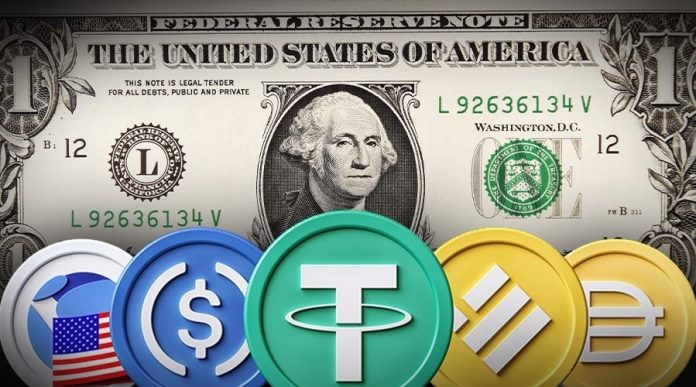
MiCA Regulations to Significantly Boost EU-Stablecoin Denominators – JP Morgan

0

According to JPMorgan, the EU’s Markets in Crypto-Assets (MiCA) regulation is expected to significantly boost the adoption and market share of euro-denominated stablecoins. The regulation, which came into effect on December 30, 2024, stipulates that only compliant stablecoins can be used as trading pairs in regulated markets within the EU. This has prompted exchanges to adjust their offerings, leading to a potential increase in the use and acceptance of euro-pegged stablecoins like Circle’s EURC.

The current market share of euro stablecoins is only 0.12%, but with MiCA’s enforcement, there’s an expectation that European banks and financial institutions will further adopt these stablecoins for customer requirements and blockchain-based financial settlements. Additionally, the rules have caused challenges for non-compliant stablecoins like Tether’s EURT, leading to delistings and strategic shifts towards compliance with MiCA regulations by investing in or partnering with MiCA-compliant entities.

The EU’s Markets in Crypto-Assets (MiCA) regulation introduces several compliance challenges for crypto businesses operating within or targeting the European market. Here are some key challenges:

Licensing and Authorization: Crypto firms must obtain authorization from national competent authorities to operate within the EU. This includes asset-referenced tokens (ARTs) like stablecoins and electronic money tokens (EMTs). The process can be lengthy and requires significant documentation and adherence to stringent operational standards.

Capital Requirements: Issuers of ARTs and EMTs need to maintain minimum capital requirements, which can be substantial. This might deter smaller players or make it financially challenging for startups to enter or remain in the market.

Transparency and Disclosure: There are strict rules around transparency. Issuers must disclose detailed information about their tokens, including the rights attached to the tokens, the risks, and the environmental impact of the consensus mechanism used. This includes regular reporting on reserve assets for stablecoins.

Anti-Money Laundering (AML) and Counter-Terrorism Financing (CTF): Enhanced AML/CTF rules apply, requiring crypto asset service providers (CASPs) to conduct thorough customer due diligence, monitor transactions for suspicious activities, and report to national financial intelligence units. This increases operational complexity and costs.

Interoperability and Standardization: MiCA aims to promote interoperability, but achieving this across different blockchain platforms can be technically challenging. Standardizing practices across diverse crypto assets and services also poses a significant hurdle.

Stablecoin Regulation: Stablecoins, especially those pegged to the euro or other significant assets, face additional scrutiny. They must comply with specific rules related to reserve management, redemption rights, and stability mechanisms. Non-compliance can lead to the inability to operate within the EU, as seen with some stablecoins being delisted from exchanges.

Innovation vs. Regulation: Balancing innovation with regulatory compliance is a significant challenge. While MiCA provides clarity, it might also stifle innovation by imposing heavy compliance burdens that could be prohibitive for new entrants or for scaling existing operations.

Cross-Border Challenges: Although MiCA aims for a harmonized regulatory framework across the EU, differences in national interpretations or implementation of the rules could lead to patchwork compliance issues, affecting operations across different EU countries.

Privacy vs. Compliance: Privacy-focused cryptocurrencies might struggle with MiCA’s requirements for transaction monitoring and identity verification, potentially clashing with the ethos of some crypto projects.

Legal Uncertainty: Despite MiCA’s aim to provide clarity, there’s still some legal uncertainty regarding how some of the novel aspects of crypto will interact with existing EU laws, especially in areas like data protection under GDPR.

Crypto businesses will need to invest in compliance teams, legal advice, and technological solutions to meet these challenges. The transition period until full compliance is required has already started, and those who adapt successfully will likely see benefits in a more regulated, yet potentially more trusted, market environment.

Dangote Refinery Constructs Eight 6.29mb Additional Tanks As it Prepares to Import More Crude Oil

0

The Dangote Petroleum Refinery, Africa’s largest and most ambitious oil refining project, is ramping up its crude storage capacity with the construction of eight additional tanks capable of holding 6.29 million barrels (approximately 1 billion liters) of oil, according to The African Report.

This move, which increases its storage capacity by 41.67% to a total of 3.4 billion liters, is believed to be a clear signal that the refinery is redirecting its focus toward securing crude oil supplies from international markets rather than relying on domestic sources.

The decision to expand crude oil storage for imported supplies marks a significant shift in strategy. Refinery officials have openly acknowledged their growing reliance on international crude markets to sustain operations.

Devakumar Edwin, Vice President in charge of the oil and gas business at Dangote Industries, admitted the challenges posed by the unreliable domestic supply chain.

“Importing crude from other countries instead of buying locally means that our crude stockpiles will have to be higher. So we have started building eight additional crude tanks to hold a billion liters, over and above our original storage capacity. Four of them are nearing completion,” Edwin stated.

This shift signals that the refinery may have lost confidence in the ability of the Nigerian National Petroleum Company Limited (NNPCL) to meet its supply commitments. Despite having access to Nigeria’s abundant crude reserves, the refinery is increasingly looking beyond the country’s borders to secure the feedstock it needs.

The oil supply challenge has severely impacted the refinery’s operations since its inauguration in 2024.

When the $20 billion Dangote Refinery was first conceived, it was heralded as a transformative solution to Nigeria’s longstanding reliance on imported petroleum products. The expectation was that the refinery, with its capacity to process 650,000 barrels of crude oil per day, would primarily rely on domestic crude, given Nigeria’s status as Africa’s largest oil producer.

To make this expectation come true, the NNPCL went into an agreement with the refinery for the supply of crude oil as part of its 20% stake. However, the state-owned oil company failed to fulfill its part of the deal, resulting in the reduction of its stake to 7.2%.

This backdrop from the NNPCL has been attributed to systemic issues such as pipeline vandalism, frequent attacks on crude transportation infrastructure, and oil theft, which has drained significant volumes of oil from production channels. Decades of underinvestment have compounded these challenges, leading to aging infrastructure and declining output.

Furthermore, oil supplies from the NNPCL are tied to loans and other financial commitments, significantly scuttling what is available for domestic supply. These factors have caused a chronic inability to deliver the consistent and high-quality crude supply that the Dangote Refinery requires.

Edwin’s remarks highlight the gravity of the situation, as he noted that crude oil supply from the NNPC to the refinery remains very low.

However, the refinery’s strategic shift toward international crude imports has profound implications. Energy experts have warned that sourcing crude from global markets, which negates the naira-for-crude oil deal struck last year, introduces higher procurement and transportation costs, potentially driving up the price of refined products. They note that it also reflects missed economic opportunities, as the inability to fully utilize domestic crude undermines the refinery’s potential to boost local value addition and generate employment.

While Dangote Refinery’s decision to expand its storage capacity for imported crude underscores its pragmatic approach to navigating Nigeria’s unpredictable oil sector, it also highlights the deeper systemic failures that continue to plague the industry. The refinery’s reliance on international crude markets is seen as a symbol of unfulfilled promises in Africa’s largest oil-producing nation.

Experts believe that for the refinery to fully realize its transformative potential, Nigeria must confront and resolve the challenges undermining its domestic oil supply chain.

Elon Musk xAI Expands Grok Chatbot With Standalone App And Enhanced Features

0

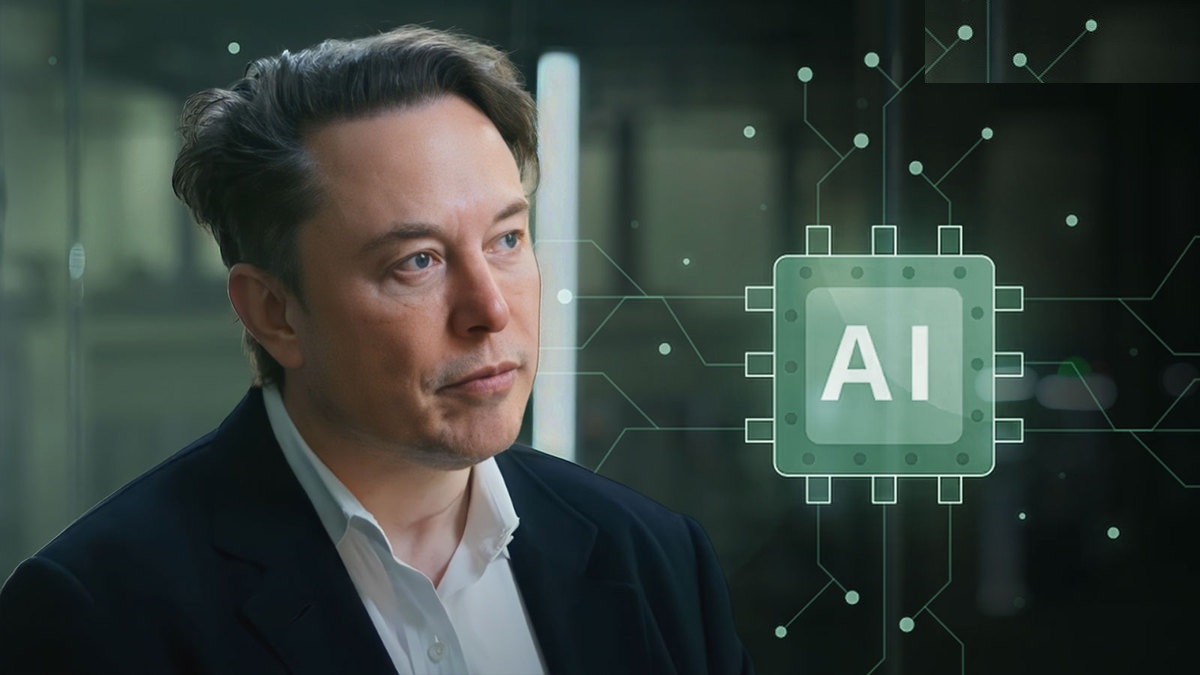
Elon Musk’s AI Venture, xAI, is broadening access to its chatbot, Grok, with the launch of a standalone iOS app

Previously exclusive to X users, the app is now available in the beta testing phase in the United States, Australia, and India, offering a range of advanced features.

The Grok app features Grok 2, the latest version of the Grok chatbot. App capabilities include image generation and up-to-date information for queries using current X and web data.

According to its description in Apple’s App Store, it reads, “Grok is designed to be truthful, useful, and curious, providing answers to questions and generating images”.

Key Features of Grok

Free Image Generation

Gone are the days of paying for high-quality Al-generated images. With Grok, users can create stunning visuals without spending a dime.

  • Real-Time Information Access

Thanks to Grok’s deep integration with X (formerly known as Twitter) and live web data, it provides real-time updates on news, trends, and viral moments. Whether it’s breaking news or the latest trending hashtag, Grok keeps users in the loop.

  • Conversational and Engaging

Unlike stiff or overly formal Al assistants, Grok delivers information in a conversational style. Its tone is witty and approachable, often sprinkled with humor, making users feel like they are chatting with a human rather than a robot.

  • Privacy-Focused Design

In an era where data privacy is a growing concern, Grok prioritizes user security. Built with XAl’s robust privacy protocols, it ensures users data is handled safely and responsibly.

At first glance, Grok looks similar to other Al models like ChatGPT or Google Bard. But at close observation, one will notice that Grok is designed to be smarter, edgier, and more connected to the latest happenings.

Developed by xAl and tightly integrated with X (formerly Twitter), Grok thrives on real-time data. It doesn’t just pull from a static dataset-it actively taps into live conversations, trending topics, and viral moments to give users answers that are current and relevant.

In a world where misinformation spreads faster than ever, Grok steps up as a real-time fact-checker. By analyzing trending stories and viral claims, it helps users separate fact from fiction, offering clarity and context on demand.

With Musk introduction of Grok, it significantly intensifies the chatbot industry by raising the bar in several key areas, fostering innovation, and challenging competitors to rethink their strategies.

Grok is more than just a chatbot, it’s a benchmark for the future of conversational Al. Its emphasis on real-time engagement, personality, and advanced features forces competitors to evolve and innovate, intensifying the competition in the chatbot industry.

As Grok redefines what’s possible, the entire industry is poised to adapt, paving the way for smarter, more engaging, and user-centric Al chatbot assistants.

Corporate America Should Spare “D” in DEI As They Dismantle DEI in Trump Era

0

Nations rise on leadership, and one man or one woman can transform a nation. Yes, you always get the argument that NO one person can change a country. Fair, but if you check histories, greatest moments have always started when one person leads and others follow. That is how it works in families, communities, companies and nations.

The upcoming Trump 2.0 Presidency is already reshaping corporate America as companies change alliances for new market positioning. Trump is going to be the big boss, and everyone wants to FOLLOW his footsteps because it is about winning in the market here, values or not!

The Meta which did all to align with Biden by even hiring a British politician to run its policy desk has since fired the guy, and is now assembling MAGAs. But it is not stopping there:

“In a striking departure from years of emphasizing diversity, equity, and inclusion (DEI), tech giants Meta and Amazon have taken bold steps to scale back their DEI initiatives. These moves, unveiled in separate announcements, reflect a broader trend across corporate America as companies grapple with public scrutiny, political pressure, and legal challenges. Once champions of progressive workplace policies, Meta and Amazon’s pullbacks mark a significant ideological shift in corporate culture, signaling alignment with growing conservative criticism of so-called “woke” ideologies.”

But what if I posit that destroying DEI  (diversity, equity and inclusion) is premature. Diversity is not a fiat policy and the quest for DEI emanated because the market is imperfect. Look deeper, exclusion has been the stable state for centuries. In most top 10 universities in America, they have Admission events in China, Europe, etc but rarely visit Africa or black colleges in America for recruitments.

DEI stands for Diversity, Equity, and Inclusion. It’s a philosophy and set of practices that aim to create a more inclusive and just society.

Diversity: The variety of differences among people, including their race, gender, age, sexual orientation, religion, and more. Recognizing that everyone has unique skills and experiences.

Equity: Ensuring that everyone has the resources and opportunities they need to succeed
Recognizing that talent is distributed equally, but opportunity is not.

Inclusion: Welcoming and valuing people for their unique contributions. Ensuring that everyone feels included and has a sense of belonging. Creating environments where people can share their ideas and perspectives.

DEI can apply to many different contexts, including the workplace, schools, and communities.

As a student in Johns Hopkins, I volunteered to go to black colleges so that those students would apply. I served in the school’s diversity committee and within years, the number of black PhDs increased, not because of reduction of standards, but at least awareness of the opportunities in the school.

So, it could just be: META, go to black colleges like Morgan State, Clark Atlanta, Tueskegee, etc for a recruitment event, just as you are going to MIT, JHU, Caltech, Stanford, etc. If someone sees that as bad, that is unfortunate. When we talk of diversity, we are talking of pipelines, and most times it is nothing but awareness. But to improve on those pipelines, you have to see the D in DEI.

That is certainly unfortunate because asking companies and universities for FAIR opportunities for all is not woke. I write this at a personal level.

When I joined Johns Hopkins University, I was the only Black student in the PhD engineering program. I asked the school management to fund me to visit historical black colleges to tell them about the opportunities. They funded that and added me to the diversity committee. Within years, they recruited many Black PhD students as applications surged.

That is certainly unfortunate!

Comment on Feed

Comment: Nobody is asking for preferential treatment. People are asking for access to information and equal opportunity to compete. I don’t understand how this is a big deal.

My Responsewhen you ask, it is seen as being woke because you are changing the stable state of exclusion. When an ex-founder of OpenAI was starting a company, I publicly asked him to make space for $5m for the Tekedia Capital community. They ignored us. Imagine if he has a D in DEI, he could have give us the opportunity. This is not about changing standards, it is about access. And that is not woke because we will still send him USD. If Ilya Sutskever wants that money, we will wire at the same valuation he raised last.

I do not see why companies will dismantle that effort to provide access to people who have been consistently cut-out.

My Response: “The reason why there was a lot of push back on “Diversity” is because it became a discriminatory term against others.” – can you cite two examples please? But let me tell you, the people who are campaigning that diversity is woke entered universities through legacy admission. Most top US schools reserve 20% of slots for children of the wealthy and connected. Those same people hate when those schools admit 2% as Latinos and Blacks but want the legacy to stand.

These people believe that legacy admission is vital as their grandparents funded the schools and possibly they need to be encouraged to fund as they expect their own kids to be given preference over yours.  There is no evidence that diversity brings unqualified people even though we know that legacy admission admitted below average students but no one has called it woke!

*Legacy admissions is a college practice that gives preferential consideration to applicants who are children of alumni. 

The Great Corporate Retreat: Meta and Amazon Lead the Shift Away from DEI Programs

Why Traders Are Betting on Rexas Finance (RXS) to Rise Above Shiba Inu (SHIB) in the Next Bull Market

0

Traders are reevaluating their portfolios as the crypto market approaches what many see as a spectacular bull run in 2025. Though a new participant, Rexas Finance (RXS) is quickly acquiring momentum, while Shiba Inu (SHIB), a favorite of the 2021 bull market, is still loved among retail investors. With its solid foundations, utility-driven ecosystem, and institutional-grade security measures, RXS is rising as a more exciting alternative in the altcoin market.

CertiK Audit Boosts Investor Confidence

Rexas Finance’s successful CertiK audit is among the most convincing factors explaining its rising popularity. Leading blockchain security company CertiK, is well-known for closely examining smart contracts and systems. Through completing this audit, RXS has gained the confidence of institutional and personal investors who prioritize security when selecting assets in a sector sometimes beset with attacks and fraud. The CertiK audit guarantees security, optimal long-term scalability, and innovation capability for Rexas Finance’s smart contracts. This degree of security benefits traders evaluating RXS against SHIB by emphasizing the project’s dependability and openness.

CoinMarketCap and CoinGecko Listings

Rexas Finance’s listing on CoinMarketCap and CoinGecko, two of the most reputable crypto tracking tools, marks yet another critical turning point. These listings give RXS more exposure, enabling millions of traders worldwide to access it. Rexas Finance is attracting interest for its utility-oriented approach, unlike meme coins such as Shiba Inu, which mainly depend on speculative hype. In the eyes of traders, CoinMarketCap and CoinGecko listings further validate their ability to let investors track RXS’s performance, market cap, and trading volume in real-time.

Beyond Speculation: The Utility Factor

Rexas Finance approaches things differently, while Shiba Inu’s appeal stems from community excitement and speculative trade. Based on actual asset tokenization—a notion meant to link blockchain technology with conventional finance—the RXS ecosystem revolves. Users can open liquidity in markets otherwise unreachable by tokenizing actual assets like real estate and commodities through its platform. Rexas Finance also provides tools for distributed projects, including a token builder. These tools enable companies and developers to construct, implement, and scale their blockchain-based apps, generating a network effect that raises the demand and usefulness for RXS tokens. This degree of utility clearly distinguishes RXS from SHIB, which has struggled to develop beyond its meme-coin beginnings. For traders looking for long-term value, a speculative asset and a utility-driven token differ significantly.

Market Sentiment and Institutional Interest

The market has favored Rexas Finance for both retail and institutional investors. The outstanding 11th-stage presale performance of the token, which has received interest from large-scale investors seeking the next great opportunity, has raised $35.2 million thus far. It has sold over $392 million worth of tokens. On the other hand, Shiba Inu is sensitive to market swings since it depends on retail-driven hype. The movement toward tokens like RXS is apparent as traders search for more steady and utility-driven assets in the next bull market.

Price Potential: RXS vs. SHIB

Another factor causing traders to bet on RXS over SHIB is its price potential. Based on a presale price of just $0.175, Rexas Finance has a modest entrance point with excellent upside potential. With a startling 5,600% rise, analysts estimate RXS could reach $10 or more in the next bull run. While SHIB might see some upward movement in a bull market, its sizeable circulating supply makes it difficult to get notable price rises. RXS offers a more interesting prospect for traders trying to optimize returns.

Community and Ecosystem Growth

Shiba Ins has a great community, but Rexas Finance is rapidly cultivating a devoted following. Investors have responded well to the project’s well-defined road plan, regular updates, and open communication. The ecosystem of Rexas Finance is likewise fast-growing thanks to collaborations and integrations that improve its value and acceptance. This emphasis on practical use cases distinguishes it from meme coins like SHIB, which may depend on marketing tricks to keep interest.

Conclusion: The Case for Rexas Finance

As the crypto market develops, traders shift their emphasis from speculative assets to enterprises with strong foundations and practical use. Based on the CertiK audit, CoinMarketCap, CoinGecko listings, and the focus on asset tokenizing, Rexas Finance is a unique choice for the future bull market. While Shiba Inu will likely remain a popular choice among retail traders, its over-reliance on hype and lack of value appeal to investors looking for long-term value. Rexas Finance, on the other hand, is positioned as a leader in the blockchain field, with the possibility of yield-transforming profits. RXS is a token traders wishing to profit on the next wave of crypto innovation should give some thought. Its ambitious agenda and reasonable entry price suggest it outperforms Shiba Inu and take the front stage in the bull market in 2025.


For more information about Rexas Finance (RXS) visit the links below:

Website: https://rexas.com

Win $1 Million Giveaway: https://bit.ly/Rexas1M

Whitepaper: https://rexas.com/rexas-whitepaper.pdf

Twitter/X: https://x.com/rexasfinance

Telegram: https://t.me/rexasfinance