DD
MM
YYYY

PAGES

DD
MM
YYYY

spot_img

PAGES

Home Blog Page 2405

New Cryptocurrency to Invest in: 3 Gems with Massive Potential in 2025

0

The crypto bull market is heating up as major tokens hit fresh all-time highs and new token launches continue at a rapid pace. That means a lot of opportunities for investors, but also a lot of tough decisions to make when deciding which tokens will deliver the biggest gains.

We’re closely watching emerging cryptos for the biggest gains since this sector of the market has historically yielded tokens that rocket 100x or more. We’ll take a closer look at 3 new tokens that we think are poised for explosive growth in 2025.

Flockerz

Flockerz ($FLOCK) is a new meme coin that looks set to be one of the biggest winners of the meme coin supercycle. According to the supercycle theory, the real value of meme coins lies in the decentralized communities they build—and Flockerz aims to build the biggest, strongest, and most engaged community out there.

To accomplish this, Flockerz is replacing traditional token staking rewards with a revolutionary vote-to-earn system. $FLOCK token holders cast their tokens as votes on community proposals like what to do with the project’s treasury. Every time they vote, they earn more $FLOCK tokens as a reward.

This means $FLOCK token holders are strongly incentivized to participate in the project and take an active role in plotting its future. It also ensures there are generous rewards on the line for investors who hold onto their tokens over the long term.

Thanks to this approach, analysts like ClayBro have predicted that Flockerz could see significant gains after launch—and keep growing well into the future.

$FLOCK tokens are available to buy on presale now, but not for much longer. The Flockerz presale is set to close in just 19 days after raising more than $8.5 million.

Solaxy

Solaxy ($SOLX) is another exciting project that’s taking Layer-2 blockchain technology from Ethereum and applying it to the Solana blockchain. The project will create the first scaling solution for Solana, solving the network’s longstanding issues with congestion and opening up all new possibilities for Solana’s future.

Solaxy is especially well-timed because it could become a hub for Solana meme coin trading during this bull cycle. The project offers reduced gas fees and instant executions, making it much better suited to handle a flood of trading volume than the Solana mainnet.

Importantly, transactions on Solaxy will require the project’s native $SOLX token, ensuring that demand for the token scales as trading volume increases. That means growing volume around Solana meme coins could directly translate to price gains in $SOLX.

The project has gotten attention from major crypto analysts like Jacob Bury, who predicted that $SOLX could jump 10x after launch.

The Solaxy presale has already raised nearly $8 million in just 3 weeks, demonstrating how much momentum there is behind this Layer-2. The presale could sell out quickly, so investors shouldn’t wait to get their hands on $SOLX.

Meme Index

Meme Index ($MEMEX) is bringing the idea of ETF investing to the meme coin sector and making it easier than ever for first-time investors to join in the meme coin supercycle. The project is introducing meme indices, which offer exposure to a wide range of meme coins in a single investment.

Meme Index plans to launch with 4 distinct indices that focus on different types of meme coins. For example, one index invests in established, blue chip meme coins, while another focuses on emerging and risky meme coins with the potential to deliver life-changing returns. That means there are indices available for all types of meme coin investors.

To access these indices, investors must hold Meme Index’s $MEMEX token. In addition to offering the ability to invest, $MEMEX also confers voting power over the makeup of each index—so investors have a direct say in what tokens each index holds.

Crypto Boy has called this one of the strongest crypto presales right now, listing 4 reasons why he thinks $MEMEX could deliver major returns.

The Meme Index token presale is gaining quickly, with more than $1.5 million raised already. The next price increase is coming up fast, but investors can still buy $MEMEX now at a ground floor price.

Unlocking Africa’s Investment Potential: The Role of Angel Networks and Diaspora Collaboration

0

Africa is fast emerging as a global hub for innovation, entrepreneurship, and investment opportunities. With its youthful population, rapidly growing tech ecosystems, and a burgeoning middle class, the continent presents an undeniable opportunity for economic growth and development.

However, to fully realize this potential, Africa needs strategic investment frameworks, including the critical roles played by angel networks and diaspora collaboration.

A recent survey by the African Business Angel Network (ABAN) on its annual Africa’s Angel Report, offers a comprehensive analysis of trends shaping the angel investment landscape across Africa.

The report underscores the importance of angel capital in supporting early-stage startups, especially in emerging markets. It reveals a significant opportunity to expand angel investments by formalizing contributions from Africa’s diaspora communities. While diaspora remittances often meet immediate social needs like healthcare, education, and housing, structuring these inflows can direct them toward transformative economic projects.

ABAN noted that diaspora communities who share deep cultural and economic ties with their countries of origin represent a largely untapped resource for investment in African startups. Therefore, effective partnerships between local stakeholders and diaspora communities are essential for mobilizing capital and attracting global investors. Initiatives like the ABAN and HoaQ partnership exemplify this collaborative approach. HoaQ which has invested over $3.5 million in African startups, serves as a bridge, connecting Africa’s angel networks with its diaspora and fostering trust and transparency.

Diaspora as a Catalyst for Investment

Diaspora communities can act as bridges, providing global investors with nuanced, insider knowledge about the market to insure whether these conditions, business practices, and cultural dynamics. These communities, with their deep cultural and economic ties to Africa, represent an untapped resource for structured investments in African startups. By channeling informal contributions into formal platforms or syndicates, diaspora members can co-invest alongside local angel networks, serving as trusted liaisons for global investors. This trust mitigates perceived risks, making Africa’s early-stage investment landscape more attractive.

A systematic approach to mobilizing diaspora capital is poised to unlock up to $30 billion annually. While ambitious, this goal is achievable through education, consistent returns, and structured engagement, including venture and debt financing.

Beyond Capital: Knowledge and Capacity Exchange

The non-financial contributions of global and diaspora investors are equally valuable. By sharing knowledge, offering mentorship, and opening access to international markets, these investors play a pivotal role in the growth of African startups. Structured mentorship programs can equip entrepreneurs with insights on scaling and global expansion, strengthening Africa’s startup ecosystem.

Building a Resilient Investment Ecosystem

The future of angel investing in Africa lies in fostering long-term collaboration among local stakeholders, diaspora communities, and global investors. By formalizing contributions, creating transparent platforms, and nurturing trust, Africa can establish a sustainable and resilient early-stage investment ecosystem that benefits both investors and entrepreneurs.

MTN Group Completes Exit From Guinea, Sells Subsidiary to Government

0

MTN Group has finalized the sale of its operations in Guinea to the government, marking its strategic exit from the market.

In a statement, MTN noted that the deal which was concluded on December 30, 2024, aligns with its Ambition 2025 strategy, which emphasizes portfolio optimization and simplification.

The decision to divest from Guinea follows MTN’s comprehensive evaluation of its regional operations and long-term growth objectives.

Commenting on the exit, Ralph Mupita, President and CEO of MTN Group, highlighted that the move will allow the company to concentrate its resources on markets with higher growth potential and sustainable impact.

In his words,

“This milestone marks a new phase for MTN Guinea-Conakry under local ownership, and MTN thanks the staff, customers, regulators and broader stakeholders in Guinea for the support during the time MTN has been operational in the country. Concluding this transaction is in line with the strategy to simplify the portfolio and allocating capital to markets where we can make a difference as MTN and deliver long-term growth and returns.”

MTN sale of its subsidiary in Guinea comes after the company in August 2024 announced it received regulatory approval to sell its Guinea-Bissau unit to Telecel Group as the operator pushes on with its plan to focus on core markets in Africa.

MTN accepted Telecel’s offer for Guinea-Bissau and Guinea-Conarky in December 2023, highlighting how the units were contributing little to the group bottom line. In Guinea-Bissau, MTN recorded 830,000 subscribers in the first quarter of 2024, a decline year-on-year decline from 871,000. Revenue in Q1 from the unit was ZAR94 million (US$5.1 million) up from ZAR73 million.

Notably, MTN has been grappling with revenue shortfalls in 2024 and is currently prioritising operations in key West and Central African countries, which together contribute a significant percent to the group’s revenue.

In Nigeria, MTN net losses grew by more than 3335% year on year to N514.928 billion, details from the telecommunication company’s unaudited financial statement revealed, from N14.984 billion in the comparable period in 2023. The company’s financial performance has been impacted by record-high inflation and the naira’s devaluation, worsening businesses’ operational expenses.

Its unaudited financial statement for 9M-2024 showed that total revenue surged by 33.7% year on year to N2.370 trillion from restated amount of N1.772 trillion in the comparable period in 2023. This was supported by growth in voice, data, digital, fintechs and other services revenue in the period. MTN Nigeria however charted its path back to profitability after three successive quarters of loss. The telco declared a profit after tax of N4.13 billion in the third quarter (Q3) of 2024.

MTN’s revised strategy, Ambition 2025, is anchored in building the largest and most valuable platform business with a clear focus on Africa. This will rest on a scale connectivily and infrastructure business, making use of both mobile and fixed access networks across the consumer, enterprise and wholesale segments.

The implementation of this growth strategy will be accelerated through selective partnerships and leveraging MTN’s brand as the most trusted and valued in Africa, while it will be supported and Funded through enhanced cost and capex efficiencies. The execution of Ambition 2025 is embodied in four clear strategic priorities.

1Fuel’s Utility Leaves AAVE in the Dust: A New Era of DeFi

0

AAVE has long been recognized for its strong utility in the DeFi space, particularly in lending, borrowing and smart contracts. However, 1Fuel is quickly emerging as a leading token with even more advanced utility features.

The 1Fuel presale is now live and investors are expecting its value to skyrocket by 100x in 2025. Analysts are excited that 1Fuel would transform the DeFi space with its cross-chain transactions and P2P exchange.

Will AAVE Rally to $500 by 2025?

Aave (AAVE) has been pretty profitable in 2024, offering unique features in the DeFi space. Its current value is set at $320.26, which is more than double its initial value in 2024. Looking ahead to 2025, if AAVE can finally break through its $325 and $400 resistance levels, it can hit the $500 mark as one of the best utility tokens next year.

Aside from having a bullish outlook, developers are interested in Aave’s applications which include lending and borrowing cryptocurrencies. Meanwhile, investors have been using well-established platforms like Ledger and Trust Wallet to manage their AAVE tokens.

1Fuel Emerges with Advanced DeFi Utility

1Fuel (OFT) has emerged as a powerful utility token, surpassing established players in Aave (AAVE) with its advanced DeFi features. While Aave has positioned itself as the best utility token in the DeFi space, 1Fuel offers a more sophisticated user experience by integrating applications and tools in a well-rounded ecosystem.

1Fuel is designed to address the weakness of existing wallets through its seamless cross-chain transactions. Unlike other wallets like Ledger and Trust Wallet that require users to manually manage multiple tokens for cross-chain swaps, 1Fuel offers a one-click solution. The platform also eliminates the need to hold multiple cryptocurrencies by providing a single asset requirement.

Additionally, 1Fuel includes enhanced privacy features such as its inbuilt mixer and disposable wallets, which offer higher privacy standards than competitors like Trust Wallet and Ledger. 1Fuel offers an all-in-one DeFi solution with its advanced financial tools like crypto debit and credit cards, P2P exchange and AI-powered tools.

As 1Fuel continues to innovate, it is setting a new standard for DeFi cryptocurrency solutions, leaving tokens like Aave in the dust.

Investors Rush to Buy 1Fuel OFT Before the Listing

The 1Fuel OFT presale is generating significant buzz in the crypto community, with more than 100 million tokens already sold and the presale quickly approaching the $1 million mark. Investors are scrambling to secure their share of the token, especially since its current price of $0.012 which is the lowest it would ever be.

As the presale enters its second stage, analysts are predicting a 100x growth for 1Fuel upon its official listing in Q2 2025, fueling a sense of urgency among early buyers. Its innovative features make it a standout DeFi cryptocurrency. As 1Fuel gains traction in its presale, its ecosystem is expected to compete with leading wallets like Ledger and Trust Wallet.

1Fuel OFT Promises Impressive Growth

Investors are keen to invest in 1Fuel OFT, especially capitalizing on the lowest price before the token becomes widely accessible. Given the strong presale performance and analysts’ bullish predictions, many believe that the 1Fuel OFT token could experience explosive growth once it is publicly listed.

To Learn More about 1Fuel, visit:

Presale: https://www.1fuel.io/

Telegram: https://t.me/Portal_1Fuel

X: https://x.com/1fuel_?s=21

Assembling Banger Narratives on Facebook

0

One of the most notable cultural practices, especially during festive periods like New Year’s Eve, is the use of fireworks or “bangers” (also known as knockouts). These explosive devices have become synonymous with celebratory noise, marking the end of the old year and the start of the new. However, a series of tragic incidents surrounding the use of bangers, combined with governmental bans and the growing use of social media platforms like Facebook to discuss these events, paints a dynamic picture of how Nigerians are assembling banger narratives that go beyond mere celebration.

The Cultural Role of Bangers in Nigerian Society

The loud pops and bangs, while disruptive to some, have become an iconic symbol of jubilation. They are seen as a means to chase away evil spirits and usher in the blessings of the new year. However, the exuberant use of bangers has increasingly raised concerns about public safety, noise pollution, and, in some extreme cases, the loss of life. The cultural significance of bangers is undeniable. In many Nigerian households, the excitement surrounding fireworks is deeply embedded in the fabric of community celebrations. Yet, as seen in the recent tragic event where a teenager was fatally shot by a Catholic priest for setting off bangers inside a church, the use of fireworks is not without its dark side. The teenager’s act, though seemingly innocent and aligned with the festive mood of the season, sparked panic within the church, leading to the unfortunate loss of life. The priest’s reaction – to shoot the young person in a fit of panic, further complicates the narrative, indicating the complexities of authority, emotional regulation, and the misuse of power.

The Facebook Phenomenon: Narrating Tragedy and Celebrations

Facebook, as a social media platform, has become a vital space for Nigerians to express their emotions, share stories, and form collective narratives. In the wake of the tragedy involving the teenager and the priest, Facebook users have offered varied responses, from expressions of grief to heated debates over the appropriateness of the priest’s violent reaction.

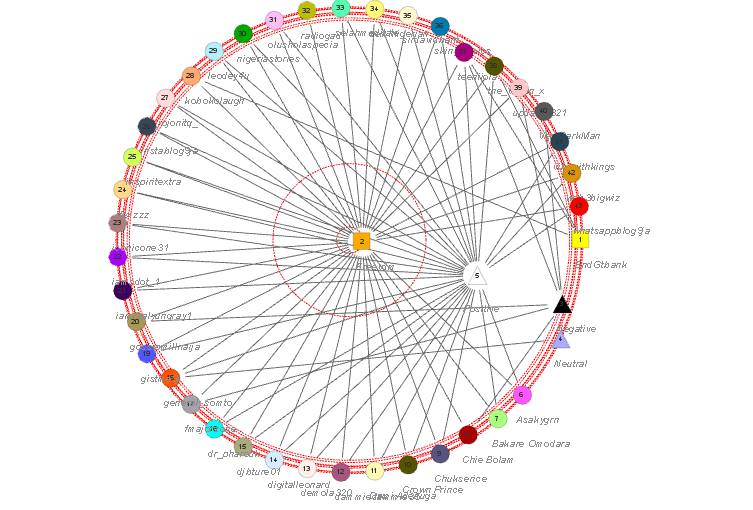
One of the key ways that banger-related events are discussed on Facebook is through what can be described as “assemblage narratives.” These are collective stories that emerge when individuals share their experiences, perspectives, and emotions surrounding an event.  In the case of the Catholic priest’s fatal action, many Nigerians took to Facebook to reflect on the broader implications of the incident. Some expressed sorrow for the family of the slain teenager, while others debated whether the priest’s response was justified. Still, others used the tragedy to highlight broader issues within the country, including the prevalence of violence, the role of authority figures, and the need for better parenting. These narratives, as they unfolded online, created a mosaic of emotions, opinions, and reflections on how such events intersect with Nigeria’s socio-political and cultural fabric.

Governmental Bans and Public Safety Concerns

While social media provides an outlet for emotional expression and community discourse, it also reveals implying concerns about public safety and governance. The Nigerian government has increasingly taken action to address the growing dangers of banger-related incidents, particularly during festive periods. In Kogi and Gombe states, authorities have enacted bans on the sale and use of fireworks. The rationale for these bans is to curb the growing misuse of bangers by criminal elements, who exploit the cover of celebration to commit acts of violence and disrupt public order.

Police authorities in these states argue that the use of fireworks during holidays provides an opportunity for criminals to cause panic and disorder. For instance, in Kogi State, the Commissioner of Police, CP Bethrand Onuoha, emphasized that those caught selling or using bangers would face legal consequences. Similarly, in Gombe State, the police reiterated that unauthorized use of fireworks would not be tolerated, citing security concerns. These actions reflect a broader effort by Nigerian authorities to balance cultural celebrations with public safety.

The government’s crackdown on bangers, though well-intentioned, has been met with mixed reactions. Some Nigerians support the ban, citing the dangers posed by fireworks, especially in crowded areas or during celebrations that can easily escalate into chaos. Others, however, view the ban as an infringement on cultural practices and personal freedoms. Facebook users often voice these concerns, with many expressing frustration at what they perceive as the erosion of their ability to freely celebrate and express joy.

Assembling a Collective Narrative: The Role of Social Media

The intersection of cultural practices, government regulations, and personal tragedies illustrates a key point about the role of social media in contemporary Nigerian society. Through platforms like Facebook, Nigerians have the power to assemble collective narratives that both reflect and shape the public discourse. As tragic events unfold—whether it’s the death of a young person due to an electrical accident while handling bangers or the shooting of a teenager by a priest (social media becomes a space for reflection, anger, and ultimately, the creation of meaning).

These banger-related narratives offer a glimpse into the larger social challenges facing the country. Issues such as public safety, emotional regulation, violence, and cultural practices come into sharp focus. By sharing personal stories, offering opinions, and reacting to news, Nigerians on Facebook are not merely commenting on isolated incidents; they are actively shaping the national conversation on how to navigate the complexities of tradition, governance, and personal responsibility.