
DD
MM
YYYY

PAGES

DD
MM
YYYY

spot_img

PAGES

Home Blog Page 2484

IBB Dismisses Claims of 1966 Coup as an “Igbo Coup,” Says Nzeogwu Was “More Hausa” Than Igbo

0

Former Nigeria’s Military Head of State, General Ibrahim Badamosi Babangida (IBB), has challenged the long-standing narrative that the 1966 coup was an “Igbo coup,” arguing that its leader, Major Kaduna Nzeogwu, was more culturally aligned with the Hausa people than with the Igbo ethnic group.

In his newly released memoir, ‘A Journey in Service’, Babangida rejected the notion that the coup was an orchestrated plan by Igbo officers to dominate Nigeria. He emphasized that Nzeogwu, the man at the center of the coup, was raised in Kaduna, spoke fluent Hausa, and was more assimilated into Northern culture than Igbo traditions.

“For instance, the head of the plotters, Major Kaduna Nzeogwu, was only Igbo in name. Born and raised in Kaduna, his immigrant parents were from Okpanam in today’s Delta State, which, in 1966, was in the old mid-western region.

“Nzeogwu spoke fluent Hausa and was as ‘Hausa’ as any! He and his original team probably thought, even if naively, that they could turn things around for the better in the country,” he said.

Babangida’s remarks have reignited conversations on Britain’s role in the post-coup crisis, particularly its influence in labeling the January 1966 coup as an “Igbo coup.” Many historians and commentators say that this was part of British propaganda, widely amplified by the BBC, to justify the British government’s role in the horrific war that followed, which led to the deaths of approximately three million Igbos.

The Coup and Britain’s Alleged Role in Fanning Ethnic Hatred

While previous books, such as “Why We Struck” by Major Adewale Ademoyega, one of the coup plotters, and firsthand accounts of the Nigerian Civil War have upheld Babangida’s story, his version is believed to carry significant weight due to his position as a former military president. His comments have now refocused attention on how the British government, through its control of narratives via the BBC, played a role in escalating ethnic divisions in Nigeria.

Many have long argued that the “Igbo coup” label was a deliberate distortion of events, aimed at, among other things, absolving British colonial officers of any responsibility in the deepening political crisis. The coup, initially driven by dissatisfaction with political corruption, quickly became a tool for ethnic scapegoating, with the British-backed Nigerian leadership presenting it as a calculated attempt by Igbo officers to seize power.

Babangida’s account contradicts this widely held belief, noting that the coup was not just an Igbo-led movement. He pointed out that several non-Igbo officers also played significant roles. He further revealed that another officer of Igbo extraction, Major John Obienu, actually helped in crushing the coup, contradicting the claim that all Igbo officers supported the uprising.

“It should also be remembered that some non-Igbo officers, like Major Adewale Ademoyega, Captain Ganiyu Adeleke, Lts Pola Oyewole and Olafimihan, took part in the failed coup. Another officer of Igbo extraction, Major John Obienu, crushed the coup,” he said.

He also cited the killing of Lt-Col. Arthur Chinyelu Unegbe, an Igbo officer, by his own “brother,” Major Chris Anuforo, as further proof that the coup was not entirely an ethnic conspiracy.

“For instance, my erstwhile Commander at the Reconnaissance Squadron in Kaduna, Lt-Col. Arthur Chinyelu Unegbe, was brutally gunned down by his own ‘brother’, Major Chris Anuforo, in the presence of his pregnant wife, at his 7 Point Road residence in Apapa, for merely being a threat to the revolution.”

A Call for National Apology to the Igbos

Since Babangida’s comments, many Nigerians have taken to social media and public forums to demand that the federal government issue a formal apology to the Igbo people for decades of ethnic hatred and marginalization based on false historical narratives. Some have also urged Britain to acknowledge its role in fueling the war and the atrocities committed against the Igbo population.

“The entire country should be apologizing to the Igbos after this #IBBPage39 revelation,” a social media commenter named Frank said. “Although some of us in the Middle Belt knew the truth about the coup and the sentiments behind why it was tagged “Igbo coup”, most people in the core North and SW genuinely believed this lie and this unconsciously fueled more Igbophobia and hate.”

It is now being widely believed that the “Igbo coup” narrative was a convenient excuse for the ethnic massacres that followed, leading to the 1967-1970 Nigerian Civil War. The war is now seen as partly, a direct consequence of the deep divisions orchestrated by British-backed propaganda, which sought to maintain control over Nigeria’s post-independence affairs.

Ethnic Hatred and the Lingering Consequences of the 1966 Coup

Even more than five decades after the war, Nigeria has yet to fully recover from the ethnic divisions sown by the misrepresentation of the 1966 coup. Babangida’s revelation underscores how the original intent of the coup was twisted into an ethnic conflict, leading to decades of mistrust between different groups in Nigeria.

Many analysts believe that Nigeria’s continued struggles with ethnic tensions, political marginalization of the Igbo, and deep-seated tribal animosities are directly linked to the propaganda narratives that followed the coup. Babangida himself admitted that while the coup’s initial intent may have been patriotic, it was later hijacked by those with ethnic and political agendas.

“From that moment, the putsch was infiltrated by ‘outsiders’ to its supposed original intention, and it took on an unmistakably ethnic coloration, compounded by the fact that there were no related coup activities in the Eastern region,” he said.

With Babangida’s latest account, Nigeria is now faced with the challenge of revisiting its history and confronting the uncomfortable truths about how foreign influence and internal propaganda shaped the country’s trajectory. However, it is not certain whether this will lead to a formal apology to the Igbos or efforts to reconcile and unite the country.
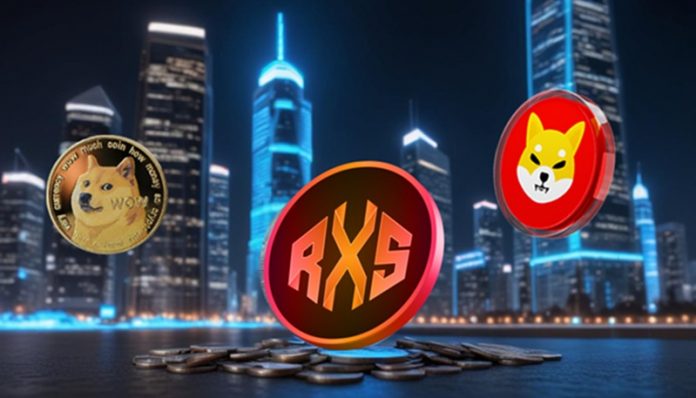

Shiba Inu (SHIB) vs. Dogecoin (DOGE) vs. Rexas Finance (RXS): Which One Will Make the Most Millionaires in 5 Months?

0

During every bull run, a few fortunate investors turn a small buy-in into a fortune. Although luck matters, it is not enough. While the rest of the investors sit on the sidelines and await a particular cryptocurrency to explode, smart investors have already done their homework and parked their funds in crypto, which they forecast would appreciate. As the original meme coins, Dogecoin and Shiba Inu have firmly established their positions, but this might be changing as Rexas Finance positions itself as a strong competitor. The growing demand for real-world applications and use cases propels this altcoin, valued at just $0.20. So, which of these three cryptocurrencies will provide the greatest returns in the next five months?

Shiba Inu: The Meme Coin On The Decline?

While other cryptocurrencies have improved during the bear market, Shiba Inu has

performed poorly. Currently, SHIB is trading at approximately $0.00001518, almost 30% lower than its monthly highs. This price movement shows the strength of resistance to the token even with the bullish sentiment. Moreover, there was a broader decline in on-chain activity for Shiba Inu. Despite the Shiba Inu token experiencing an incredible 567% increase in burns, the price movement of the token was flat. In contrast, the number of SHIB large transactions has decreased by 61%, indicating declining whale activity that has usually boosted the token’s price. The combination of low whale transactions and the absence of major economic shifters in the market has kept SHIB prices from improving. Many are now questioning if Shiba Inu can escape the consolidation zone with reduced activity from large investors.

Dogecoin (DOGE): Is Dogecoin Surviving on Hype Alone?

Meme coins’ most well-known representative, DOGE, has been consistently bearish for approximately two months. Despite the rest of the crypto industry being bullish, Dogecoin has been underperforming and losing value. Nonetheless, traders’ reports suggest that the trend may change, and a move above $0.30 might be imminent. A recent analysis by TradeShot suggests that a trading pattern, ‘channel down,’ has formed on Dogecoin’s chart. This pattern typically precedes an upward movement, implying that Dogecoin might be due for a price increase. If this trend continues, DOGE should experience a bullish breakout and retest critical resistance levels in the short term.

Rexas Finance (RXS): Blending Real-Life Assets to Blockchain Technology

As a pioneer in blockchain technology, Rexas Finance aims to change the crypto industry’s tokenization by focusing on virtually any asset worldwide. Rexas’ approach resolves liquidity problems and inadequate market transparency for investors. Overshadowing other meme coins, RXS attempts to bridge the barrier between traditional finance and blockchain, making it more tangible than the speculative value some coins contend to carry.

Click Here To Buy Rexas Finance (RXS) Presale

Why Rexas Finance (RXS) Stands Out

Rexas breaks conventional finance barriers by allowing every physical asset to tokenize, giving democratized access to high-value investments. Unlike DOGE and SHIB, this utility-driven proposition makes RXS a more appealing investment that is easier to sustain for a longer duration. Investors can earn compound interest through Rexas Treasury’s staking pools and yield optimization strategies. This distinguishes Rexas Finance’s RXS from non-yielding tokens, enhancing the investment’s attractiveness. A $1,000 investment in SHIB may result in a $2,000 return by mid-year, and a $1,000 investment in DOGE coins may yield the same returns. However, if price predictions are accurate, an investment in RXS could leverage that value to $50,000 or more. Such returns can create life-changing fortunes, so smart investors are scooping up RXS ahead of its launch.

Final thoughts: Which one of them will create the most millionaires?

Rexas Finance is a notable project within this offering. With a launching price of $0.25, it is projected to reach $10 by Q3 2025. RXS has all the markings of a true millionaire maker. Those who grab this opportunity ahead of the crowds will be positioned for one of the year’s biggest gains. The crypto space pays those who act before the hype settles. Rexas Finance is poised to be the next unbelievable breakout star, and the opportunity to buy in at the basement level is disappearing quickly.


For more information about Rexas Finance (RXS) visit the links below:

Website: https://rexas.com

Win $1 Million Giveaway: https://bit.ly/Rexas1M

Whitepaper: https://rexas.com/rexas-whitepaper.pdf

Twitter/X: https://x.com/rexasfinance

Telegram: https://t.me/rexasfinance

GSA to Shut Down Federal EV Chargers in A Fresh Blow to EV Adoption, Tesla and Musk’s Fortune

0

The General Services Administration (GSA), the federal agency responsible for managing government-owned buildings and vehicle contracts, is set to shut down all its electric vehicle (EV) chargers nationwide, calling them “not mission critical.”

According to The Verge, the agency is also moving to offload thousands of newly purchased EVs, effectively dismantling the Biden administration’s efforts to transition the federal fleet away from fossil fuels.

The move, which aligns with President Donald Trump’s anti-EV policies, is expected to significantly impact the adoption of EVs in the United States. Moreover, the decision is poised to deal a severe blow to Tesla’s growth, with CEO Elon Musk—one of Trump’s high-profile cheerleaders—ironically standing to lose billions as a result.

According to an internal email viewed by The Verge, GSA regional offices have already begun deactivating EV chargers, with full shutdown orders expected next week.

“As GSA has worked to align with the current administration, we have received direction that all GSA-owned charging stations are not mission critical,” the email states.

The agency is also canceling network contracts that keep the 8,000 EV chargers across government buildings operational. Once these contracts are terminated, the stations will be shut down at the breaker, rendering them inoperable.

“Neither Government Owned Vehicles nor Privately Owned Vehicles will be able to charge at these charging stations once they’re out of service,” the email concludes.

The shutdown has already started in Denver, where federal employees were notified that chargers at four government-owned buildings would be turned off next week. Colorado Public Radio was the first to report this development.

In addition to shutting down chargers, the GSA will offload thousands of EVs purchased under the Biden administration. However, it remains unclear whether these vehicles will be sold at auction, transferred to state or local governments, or left in storage. If the government opts for the auction route, the sudden influx of EVs into the used car market could hurt resale values and further dampen demand.

Under former President Joe Biden’s clean energy agenda, the federal government had planned to transition more than half of its 650,000-vehicle fleet to EVs. As part of this push, the GSA ordered over 58,000 electric vehicles and began installing more than 25,000 new charging ports. Now, with the GSA dismantling its EV infrastructure, the entire initiative faces collapse—raising questions about what will happen to agencies that had already begun transitioning to electric fleets.

A Massive Setback for EV Adoption in the U.S.

The decision to phase out federal EV infrastructure is expected to significantly slow down EV adoption across the country. The federal government is one of the largest vehicle buyers in the U.S., and its support for EVs was meant to accelerate the transition away from fossil fuels. Without government backing, the EV industry will likely face declining demand, reduced incentives for states and private entities to invest in charging networks, and a broader setback for the U.S. transition to cleaner transportation.

The Irony of Musk’s Close Ties to Trump in The Face of All These

One of the biggest unexpected casualties of this policy shift is Tesla and its CEO, Elon Musk.

Musk has been an outspoken supporter of Trump’s administration, frequently defending the president’s policies and publicly criticizing the Biden administration for its support of unionized automakers over Tesla. However, with Trump now actively dismantling federal EV policies, Musk’s business empire is set to take a hit.

Musk’s net worth, which is largely tied to Tesla’s stock price, could take a significant downturn. Government EV demand was an important source of institutional purchases for Tesla, and without it, revenue streams would shrink. Slower EV adoption, fueled by the lack of government support, may weaken Tesla’s growth trajectory. If investors perceive Trump’s rollback of EV policies as a long-term shift, they may reduce exposure to EV stocks, leading to a decline in Tesla’s valuation.

Tesla’s stock has already faced volatility in recent months, largely due to concerns over slowing EV demand, rising competition from legacy automakers, and production issues at its factories. With Trump now actively rolling back EV initiatives, Tesla’s long-term growth projections may be further strained. Analysts predict that if Tesla’s growth slows down, Musk’s net worth could take a multi-billion-dollar hit—a bitter irony for the world’s richest man who has aligned himself with Trump’s policies.

Trump’s Broader Anti-EV Agenda

The GSA’s EV charger shutdown is just one of many anti-EV moves by Trump’s administration. Since taking office, Trump has halted a $5 billion program to build public EV charging stations nationwide, rescinded Biden’s executive order requiring federal agencies to switch to EVs, signaled plans to eliminate EV tax credits, and dismantled EPA regulations that were designed to push automakers toward EV production.

With the federal government turning away from EVs, state and private sector efforts will now have to fill the gap—an uphill battle that could slow down the entire transition to electric vehicles.

A Step Backward for Climate Policy

The environmental impact of this decision is significant. The transportation sector accounts for 28% of U.S. greenhouse gas emissions, and federal support for EVs was seen as a crucial step toward reducing the nation’s carbon footprint. With the GSA dismantling its EV program, many believe that Trump is prioritizing fossil fuels over long-term sustainability, potentially setting back U.S. climate goals by decades.

With the federal government pulling out of the EV space, the fate of America’s EV transition now lies with state governments and private companies. States like California and New York may continue investing in public EV infrastructure, but without federal support, scaling these initiatives will be more difficult.

Meanwhile, Musk and Tesla may now face increased pressure from investors as the long-term growth outlook for EVs becomes less certain.

Bonk Price Prediction: Is Now A Good Time To Buy Bonk? Why Investors Are Opting For This GameFi Token Instead

0

As the market continues to fluctuate, investors are evaluating their options between Bonk (BONK) and emerging GameFi tokens like Yeti Ouro (YETIO). While BONK has recently dipped by 9.83%, it still maintains a solid market position. However, many investors are looking towards Yeti Ouro, a blockchain gaming token that offers a unique blend of Play-to-Earn mechanics and NFT integration.

Bonk’s Current Market Position

Bonk’s price has seen a significant decline in the last 24 hours, with its price currently at $0.000022. However, the trading volume is still significant, moving $210,643,598 in the day.

Despite this drop, Bonk retains its place in the top 100 cryptocurrencies with a market cap of $1,650,785,349, ranking 63rd according to data on CoinMarketCap. The meme-based token, built on the Solana blockchain, has gained widespread popularity to the point of boosting the Solana coin having been built on the Solana blockchain. Bonk may still hold a long-term potential surge.

Why Investors Are Opting For Yeti Ouro Instead

Many investors are shifting their focus towards Yeti Ouro (YETIO), a fast-growing GameFi token that integrates blockchain gaming with real rewards. Yeti Ouro’s presale success is a major indicator of its rising potential. With over 200 million tokens sold the demand for Yeti Ouro continues to grow in Stage 3 of its of presale at a token price of $0.024, granting early bird investors a 100% ROI.

One of the key reasons behind Yeti Ouro’s increasing popularity is its integration of the GameFi project, Yeti Go. The game is designed as a high-energy, Play-to-Earn (P2E) racing game, allowing players to compete against others and earn rewards in the form of YETIO tokens.

With Yeti Go where players can challenge each other in real time and bet YETIO tokens on their skills. The game includes customizable NFT vehicles, enabling users to personalize their racing experience through unique skins, upgrades, and performance-enhancing features. The game is being developed in collaboration with the studio behind acclaimed games like Call of Duty, Spider-Man, Dead Space, and The Witcher. Its audio composition is crafted by Grammy-nominated producers who have worked with renowned artists such as Major Lazer, Vybz Kartel, and Kabaka Pyramid.

Yeti Go is in the development stage and for investors and games interested in the progress there are several videos available that give an idea of what to expect from the game.

Why Yeti Ouro?

Aside from the fact that Yeti Ouro stands out as a high-potential investment in the GameFi sector through Yeti Go, there is more to the project.

Yeti Ouro is designed to offer more than just the excitement of a meme coin. With a capped total supply of 1 billion tokens, YETIO combines scarcity and utility to create long-term value for both investors and the community.

A portion of the supply is allocated to burn, liquidity, marketing, and rewards, with 50% dedicated to the presale, ensuring early investors have a stake in the project’s future growth.


Join The Yeti Ouro Community

Website: https://yetiouro.io/

X (Formally Twitter): https://x.com/yetiouro

Telegram: https://t.me/yetiouroofficial

Discord: https://discord.gg/YtUsEZ2Zr

As Hyperliquid Faces Criticism, FXGuys’ Trade2Earn Model Gains Investor Trust

0

Hyperliquid (HYPE), a popular crypto project, is now facing criticism due to its poor performance. However, FX Guys ($FXG), a new crypto platform, is winning investors’ trust through its Trade2Earn model. This new approach encourages activity, and thus, it benefits those traders seeking real benefits.

FXGuys offers a unique approach that would enable retail investors to expand their capital. Currently, this new crypto is in Stage 3 of its presale sold at a price of $0.05, and has so far raised more than $3.8 million in funding. Through its staking system and decentralized trading, FXGuys has become the most promising crypto project assisting investors and traders in trading without necessarily using their own capital.

This article highlights why FXGuys’ Trade2Earn model is gaining investor trust as Hyperliquid performance faces criticism

>>>JOIN FXGUYS HERE<<<

Hyperliquid (HYPE): Revolutionizing Decentralized Crypto Trading

Hyperliquid is a completely decentralized crypto trading platform connected to one of the most productive Layer one blockchains. The idea is to create more real trading possibilities because there are no such large centralized exchanges as this one. For this reason, through the shared cryptocurrency trading platform, users can trade crypto on the spot cryptocurrency market and their derivatives in numerous pairs.

To reward early investors, it went live and distributed over 310 million. Despite these benefits, hyperliquid trading volume has been reduced by 15%. Although Hyperliquid has been doing well in the decentralized trading industry, its low price has pushed traders’ attention to FXGuys as the next big investment opportunity.

FXGuys ($FXG): Transforming Crypto Trading with Trade2Earn, Staking, and Funded Accounts

FXGuys has introduced a unique Trade2Earn model that pays traders for every trade they execute. Unlike other crypto trading platforms that allow traders to trade to make gains in their trades, FX Guys ensures that traders are always compensated no matter the market condition. This Trade2Earn model has gained the trust of investors who want to make constant income and trade actively on the platform.

Aside from this Trade2Earn model, this new crypto has another staking model where investors will receive 20% of the broker trading volume. This means that by using the FXGuys staking system, you can make money without having to actively trade. This feature makes it the most promising crypto project for those who wish to invest and earn passive income.

Traditional trading demands one to invest a lot of money to make substantial profits, but the FX Guy prop trading funding program does not have that restriction. It offers traders funded accounts of up to $500,000, allowing them to trade large volumes without using their own money. Those who successfully pass trading evaluations receive these accounts and enjoy an 80/20 profit split in their favour.

>>>JOIN FXGUYS HERE<<<

Conclusion 

While Hyperliquid has attracted criticism concerning its price performance, the FXGuys’ Trade2Earn model enjoys investor confidence. In this case, FXGuys provides a better and more profitable financial structure as compared to other crypto trading platforms. With the $FXG price currently at $0.05, this is the right time to join before the price goes up due to increasing institutional demand.


To find out more about FXGuys follow the links below:

Presale | Website | Whitepaper | Socials | Audit