DD
MM
YYYY

PAGES

DD
MM
YYYY

spot_img

PAGES

Home Blog Page 2572

Nigeria’s Energy Sector Attracts $6.7 Billion in Investments in 2024

0

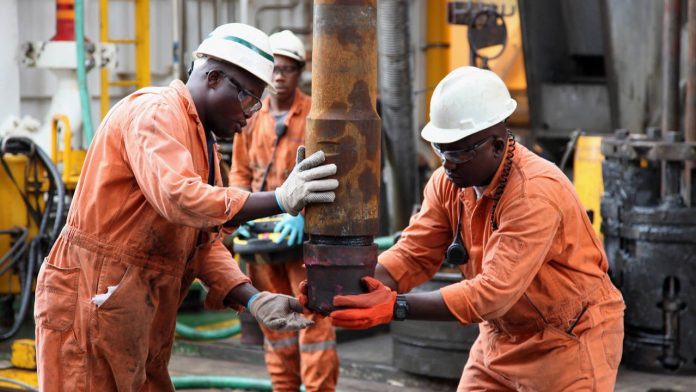
Nigeria’s energy sector received a significant boost in 2024, with a total of $6.7 billion in investments, according to the “Presidency Energy Sector Wrap-Up 2024,” a comprehensive report released by the Office of the Special Adviser to the President on Energy.

The report highlighted that of the total investment, $5.5 billion was channeled into the oil and gas sector, $400 million was allocated to the Presidential Metering Initiative (PMI), and $700 million was directed toward clean mobility and clean cooking projects.

Oil and Gas Sector Dominates

The oil and gas sector emerged as the primary beneficiary, securing $5 billion of the total investment through Shell Nigeria Exploration and Production Company’s (SNEPCO) Bonga North Deep Offshore Project. This marks the first greenfield deep offshore project in over a decade, with the potential to increase Nigeria’s oil production capacity by approximately 110,000 barrels per day.

The report also listed five major acquisitions in the sector:

  1. Renaissance Consortium’s Acquisition of Shell Petroleum Development Company (SPDC): A $1.3 billion deal.
  2. Seplat Energy Plc’s Acquisition of Mobil Producing Nigeria Unlimited (MPNU): A $1.3 billion transaction with ExxonMobil Corporation.
  3. Chappal Energies’ Purchase of Equinor Nigeria Energy Company (ENEC): A $1.2 billion deal with Norway’s Equinor ASA.
  4. Chappal Energies’ Acquisition of TotalEnergies’ 10% Stake in SPDC JV Licenses: Valued at $860 million.
  5. Oando Plc’s Acquisition of the Nigerian Agip Oil Company (NAOC): An $800 million agreement.

These transactions underscore renewed investor confidence in Nigeria’s oil and gas sector.

Presidential Metering Initiative and Clean Energy Investments

In addition to oil and gas, the federal government allocated $400 million to the Presidential Metering Initiative, which aims to improve on-grid power availability, affordability, and reliability. Olu Verheijen, the President’s special adviser on Energy, emphasized the administration’s commitment to energy reform.

“We launched, among other interventions, the new Presidential Metering Initiative (PMI). Our goal, working with all industry stakeholders across public and private sectors, is to improve the availability, affordability, and reliability of on-grid power,” Verheijen stated.

A further $700 million was directed toward clean energy initiatives, focusing on clean mobility and clean cooking, aligning with Nigeria’s long-term energy transition goals.

The report noted that Nigeria achieved a landmark by receiving the highest upstream oil and gas investments in Africa in 2024, accounting for four of the five major investments on the continent.

“In the Oil & Gas sector, 2024 was a year of bold reforms that improved Nigeria’s investment competitiveness,” the report stated.

Nigeria’s Missed LNG Opportunities

Nigeria, despite its vast natural gas reserves, has failed to fully capitalize on its liquefied natural gas (LNG) potential, a situation that has significantly undermined its oil and gas revenue streams. Energy experts are increasingly critical of the government’s inability to meet the Nigeria LNG Limited (NLNG) requirement for 3.5 billion standard cubic feet of gas daily.

Currently, Nigeria’s capacity utilization stands at a dismal 65%, a figure projected to drop further to 44% with the commissioning of the NLNG Train 7 project in 2025.

The Train 7 expansion, expected to raise Nigeria’s LNG installed capacity from 22 million tons per annum (mta) to 30 mta, now risks becoming a monument to missed opportunities. Since October 2022, Nigeria has operated under a state of force majeure, a direct consequence of its chronic inability to meet gas supply obligations.

Energy analysts attribute Nigeria’s failures to a lack of foresight, poor policy frameworks, and chronic mismanagement of its oil and gas sector. Kelvin Emmanuel, an energy analyst, noted the government’s failure to develop a fiscal framework to attract international investments, particularly for deep water fields under production-sharing contract (PSC) models.

“The government’s failure to provide a fiscal framework for deep water fields that fall under the production-sharing contract model has limited institutional-level investments from International Oil Companies (IOCs) interested in participating in the global ramp-up of gas as a transition fuel,” Emmanuel explained.

Emmanuel contrasted Nigeria’s stagnation with global trends, highlighting how nations like the United States have surged ahead in the LNG market. In 2011, the U.S. and Russia were nearly tied, contributing approximately 18–19% of global LNG output. However, by 2025, the U.S. is projected to hold a commanding 26% share of global LNG production, while Russia will drop to 14%, hindered by geopolitical tensions and sanctions.

The U.S.’s dominance in the global oil and gas market is further bolstered by its massive natural gas production capacity of 79.8 billion standard cubic feet daily, derived from its 13.3 million barrels of crude oil. Meanwhile, Nigeria struggles to meet its domestic and international obligations, failing to position itself competitively in the global energy transition.

The Impact of Global Oil Price Volatility

Emmanuel also raised concerns about global oil price dynamics. The U.S., under policies initiated by former President Donald Trump, is planning to add another 3 million barrels of crude oil per day to global markets, a move likely to depress prices further.

This development poses a significant risk to Nigeria, which has based its 2025 budget on an oil price benchmark of $75 per barrel. Emmanuel warned that the government might be forced to present a supplementary budget by Q2 if oil prices fall below this threshold.

“Russia has practically lost out because most of its LNG shipments are sold at an extra premium by third parties to avoid sanctions,” Emmanuel said. “Oil prices are definitely coming back down, and the President needs to revise his benchmark OSP of $75 for 2025 or prepare for a budgetary shortfall.”

A Call to Action

Emmanuel said that Nigeria must shift its focus to gas as a transition fuel, aligning with global trends and the G-7 communique emphasizing the importance of natural gas in the energy transition.

“The government must wake up from its slumber and finally join the global race to turn Nigeria into a gas nation,” he urged.

The NLNG Train 7 project, once seen as a game-changer, now risks becoming a symbol of Nigeria’s inability to leverage its natural resource wealth.

However, the report projected that the country could attract over $5 billion in gas investments by 2029, enhancing gas availability for export and supporting the global energy transition. Additionally, it anticipates Nigeria tapping into more than $30 billion in deep offshore investments within the same period.

“We will continue engaging, collaborating, and communicating with stakeholders across the energy sector and welcome your feedback and comments,” Verheijen said.
Nigeria Rakes in N1.78tn VAT Revenue in Q3 2024 Amid Tax Reforms Debates

0

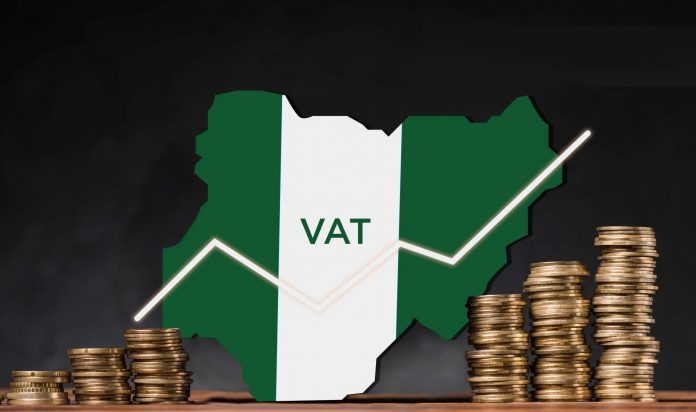
The Nigerian government reported a Value Added Tax (VAT) revenue of N1.78 trillion for the third quarter of 2024, marking a significant achievement in its revenue generation efforts.

This figure, disclosed in the latest VAT report by the National Bureau of Statistics (NBS), represents a 14.16% increase from the N1.56 trillion collected in the previous quarter and an impressive 88% growth compared to the same period in 2023.

The Breakdown of VAT Revenue Sources and Sectoral Contributions

The revenue generated in Q3 2024 was driven by three primary streams: local VAT payments, foreign VAT payments, and import VAT collections. Local VAT payments contributed the highest share, followed by foreign and import VAT, reflecting the diverse economic activities taxed across the country.

The N1.78 trillion VAT revenue was driven by contributions from three key streams:

  • Local VAT Payments: N922.87 billion
  • Foreign VAT Payments: N448.85 billion
  • Import VAT: N410.62 billion

The manufacturing sector emerged as the largest contributor to the VAT pool, accounting for a significant portion of the total revenue. This was followed closely by the information and communication sector, as well as mining and quarrying activities. At the other end of the spectrum, activities of households as employers, extraterritorial organizations, and water supply and waste management recorded the lowest contributions.

While some sectors demonstrated remarkable growth, such as human health and social work activities, which saw a quarter-on-quarter growth rate of 250.39%, others experienced sharp declines. Water supply and waste management, for instance, suffered a steep drop of 41.92%, reflecting disparities in the growth and contraction of various industries within the economy.

In terms of contributions to the overall VAT pool, the top-performing sectors in Q3 2024 were:

  • Manufacturing: 22.21%
  • Information and Communication: 20.89%
  • Mining and Quarrying Activities: 18.90%

The Debate Over Tax Reforms Bills

The increase in VAT revenue coincides with a heated debate over how these funds should be allocated between the federal and state governments. Currently, VAT revenues are distributed based on a formula that grants 15% to the federal government, 50% to the states, and 35% to local governments. Additionally, 4% of collections are allocated to the Federal Inland Revenue Service (FIRS) as a collection fee, while the Nigeria Customs Service receives 2% for import VAT collections.

A proposed reform to adopt a derivation-based model, which would allocate VAT revenues based on where they are generated, has sparked controversy. Northern states, supported by their governors and traditional rulers, have opposed the move, arguing that it would disproportionately favor economically vibrant Southern states. Proponents of the reform, however, contend that it would incentivize states to enhance their economic productivity and reduce dependence on federal allocations.

Public Sentiment: It’s Not About Paying Taxes, But How They’re Used

This substantial rise in VAT collections highlights the government’s success in expanding its tax base and strengthening compliance mechanisms. However, the achievement comes along with growing public frustration over the perceived mismanagement of tax revenues, as Nigerians increasingly demand transparency and accountability in the use of public funds.

Nigerians, by and large, do not oppose paying taxes. Many recognize the necessity of taxation as a means to fund critical public services, infrastructure, and national development. However, the real issue lies in the judicious use of taxpayers’ money, which remains a contentious topic.

The recurring narrative of corruption, embezzlement, and financial mismanagement has eroded public trust in the government’s ability to use tax revenues responsibly. Over the years, high-profile corruption scandals have emerged, implicating government officials in the diversion of funds meant for healthcare, education, and infrastructure projects. From inflated contracts to outright diversion of funds, the misuse of tax revenues has created a vicious cycle of distrust, non-compliance, and inefficiency.

This pervasive corruption has created a disconnect between citizens and the government, with many questioning why they should continue to pay taxes when basic amenities remain inaccessible or underfunded.

The lack of visible impact from tax revenues has left many Nigerians skeptical about the government’s fiscal priorities.

This mistrust is further compounded by Nigeria’s rising public debt, which has reached an alarming N142 trillion. Despite the increased tax revenues, the government’s reliance on borrowing has not abated, raising questions about where these funds are being channeled and whether they are effectively addressing the nation’s pressing challenges.

Student Union Leaders Reject Tinubu’s Rice Palliatives, Decry Lack of Sustainable Solutions

0

Student Union Government (SUG) leaders from Obafemi Awolowo University (OAU), Ile-Ife, Osun State, and Ahmadu Bello University (ABU), Zaria, Kaduna State, have publicly rejected the rice palliatives distributed by President Bola Tinubu’s administration to SUG presidents in tertiary institutions across Nigeria.

In their statements, the union leaders criticized the distribution as a tokenistic gesture that fails to address the deep-rooted challenges Nigerian students face. Their rejection has also reignited a broader criticism of the government’s increasing reliance on rice distribution as its default response to crises across the country.

Damilola Isaac, the SUG President of OAU, emphatically stated that he had not received any rice palliatives and would reject them outright even if they were delivered. Isaac described the distribution as a distraction from the critical issues plaguing Nigeria’s education sector.

“Our administration is committed to advocating for better educational standards and student welfare, not accepting handouts that do not address systemic challenges,” he said.

Isaac called on the government to focus on meaningful reforms such as reducing tuition fees, improving university infrastructure, and enhancing the quality of education.

“While the government may have good intentions, distributing rice does nothing to address the crumbling education sector or the financial burdens faced by students and their families,” he added.

He reassured the OAU student community of his commitment to championing their interests with integrity and accountability while urging them to disregard claims tying his name to the rice distribution initiative.

At ABU, the President of the Students’ Representative Council, Ibrahim Nazeer, also rejected the palliatives, emphasizing that fairness should be a guiding principle. In a statement released through his media aide, Abdulrazak Shuaibu, Nazeer stated that he would not accept his share unless provisions were made for a significant portion of the student body.

“I will not accept my share unless it is accompanied by a substantial allocation for my fellow students. The essence of leadership is to advocate for collective welfare, not to prioritize personal benefits,” he said.

Nazeer commended President Tinubu for initiatives like the Nigeria Education Loan Fund (NELF), which has benefited many students. However, he urged the government to shift its focus from distributing rice to creating conditions where basic necessities are affordable for all Nigerians.

Students Question Selective Distribution

The distribution process, which allocated two 25kg bags of rice to each SUG president, has also come under scrutiny. Critics argue that it excludes the majority of students, raising questions about fairness and representation.

Oyelakin Mutiullah, a student at the University of Abuja, condemned the selective distribution, stating that it reflects poorly on both the government and student leaders. “It undermines trust when leaders fail to advocate for the collective interests of all students,” he said.

Anas Abdulrahman, a student of Usmanu Danfodiyo University, Sokoto (UDUS), echoed similar sentiments. “We are all Nigerians, and we all face the same hardships. Why should only leaders benefit? It sends the wrong message about governance and equity,” he said.

Tinubu Administration’s Reliance on Rice Palliatives

President Tinubu’s government is increasingly criticized for its tendency to use rice distribution as a one-size-fits-all solution to various crises. Since assuming office in May 2023, Tinubu has announced rice palliative initiatives nine times, covering issues ranging from subsidy removal to natural disasters and cost-of-living crises.

Many believe that this approach highlights a lack of innovative and sustainable policies to tackle the country’s complex challenges. Instead of addressing systemic problems like inflation, unemployment, and poor infrastructure, the government has leaned on rice handouts to create a façade of relief.

The practice has earned the administration a reputation for being reactive rather than proactive, offering short-term fixes while neglecting the long-term consequences of its policies.

Despite the frequent distribution of rice, the economic situation in Nigeria has continued to deteriorate. According to the National Bureau of Statistics (NBS), the country’s annual inflation rate stands at 34.8%, with food inflation even higher at 38.94%. These figures translate to skyrocketing food prices that make even staple items like rice unaffordable for many Nigerians.

The Tinubu administration’s flagship economic policies—such as the removal of the petrol subsidy and the floating of the naira—have compounded the cost-of-living crisis. Many Nigerians, including students, feel these measures have eroded their purchasing power, rendering the government’s rice palliatives ineffective in providing meaningful relief.

The rejection of the rice palliatives by prominent student leaders underpins a broader frustration with the government’s approach to governance. As the backlash grows, it remains to be seen whether the Tinubu administration will reconsider its reliance on rice as a political tool and focus on implementing long-term, sustainable reforms to address Nigeria’s multifaceted challenges.

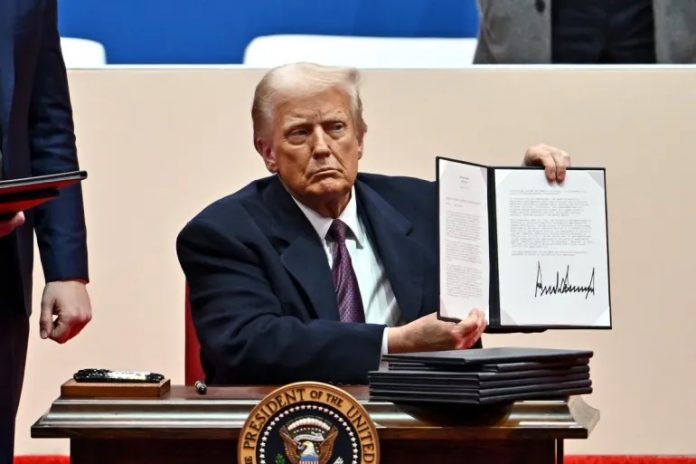
A Quick Review of Donald Trump’s Executive Order on Cryptocurrency in the U.S

0

Donald Trump’s latest executive order on cryptocurrency, issued on January 23, 2025, represents a decisive shift in the U.S. approach to digital assets and blockchain technology. This landmark directive aims to position the United States as a global leader in digital finance while emphasizing innovation, economic liberty, and the sovereignty of the U.S. dollar. Let’s dive into the key provisions of the executive order and their potential impact on the cryptocurrency landscape.

A Vision for Responsible Innovation

The executive order on cryptocurrency highlights the critical role digital assets play in fostering economic growth and maintaining U.S. leadership in financial technology. It underscores the importance of supporting blockchain technologies across all sectors, ensuring their lawful and accessible use for individuals and businesses alike.

A cornerstone of this vision is the preservation of individual economic liberty. The order protects citizens’ rights to access decentralized blockchain networks, transact without censorship, and self-custody their digital assets. This commitment to decentralization underscores the administration’s focus on creating a vibrant and inclusive digital economy.

Safeguarding the Dollar’s Sovereignty

In an era of rapid advancements in digital currencies, the executive order on cryptocurrency takes significant steps to safeguard the U.S. dollar’s dominance in global finance. By promoting the development of legitimate, dollar-backed stablecoins, the administration aims to reinforce the dollar’s position as a cornerstone of international commerce, ensuring its relevance in the digital age.

Prohibition of Central Bank Digital Currencies (CBDCs)

One of the most controversial elements of the executive order on cryptocurrency is its outright ban on the establishment, issuance, or use of Central Bank Digital Currencies (CBDCs) within the U.S. jurisdiction. The administration argues that CBDCs pose risks to financial stability, individual privacy, and monetary sovereignty. Federal agencies are directed to terminate any ongoing CBDC initiatives, reflecting a decisive move away from centralized digital currencies.

Commitment to Regulatory Clarity

The executive order on cryptocurrency calls for transparent, technology-neutral regulatory frameworks that foster innovation while providing clear guidance to businesses and entrepreneurs. This approach aims to eliminate confusion, reduce barriers to entry, and encourage growth in the digital asset sector.

Establishment of the President’s Working Group on Digital Asset Markets

To advance its vision, the executive order on cryptocurrency establishes the President’s Working Group on Digital Asset Markets. This group, led by the Special Advisor for AI and Crypto, includes senior officials from key federal agencies like the Treasury, Justice Department, and SEC. Its responsibilities include:

  • Developing a comprehensive federal regulatory framework for digital assets and stablecoins.
  • Evaluating the creation of a national digital asset stockpile using lawfully seized cryptocurrencies.
  • Reviewing existing regulations to align them with the new policies outlined in the executive order on cryptocurrency.

Revocation of Outdated Frameworks

The executive order revokes Executive Order 14067 (2022) and the Treasury’s 2022 Framework for International Engagement on Digital Assets. These moves reset the regulatory landscape and align it with the administration’s forward-looking agenda for the cryptocurrency sector.

Encouraging Public Engagement

Recognizing the importance of collaboration, the working group is directed to engage with industry leaders and hold public hearings. This ensures that the regulatory frameworks reflect the realities and needs of the rapidly evolving digital asset sector.

Implications for the Future

This executive order on cryptocurrency sets a bold course for the United States, emphasizing innovation, decentralization, and the primacy of the U.S. dollar. It provides regulatory clarity and support for businesses, innovators, and investors while firmly opposing centralized digital currencies like CBDCs.

However, the prohibition of CBDCs may spark debates about whether this move puts the U.S. at odds with global trends. As the President’s Working Group implements the order, all eyes will be on how these policies unfold and whether they can solidify America’s position as a leader in digital financial technology.

Sam Altman Changes View On Trump As Stargate AI Project Will Be Exclusive to OpenAI

0

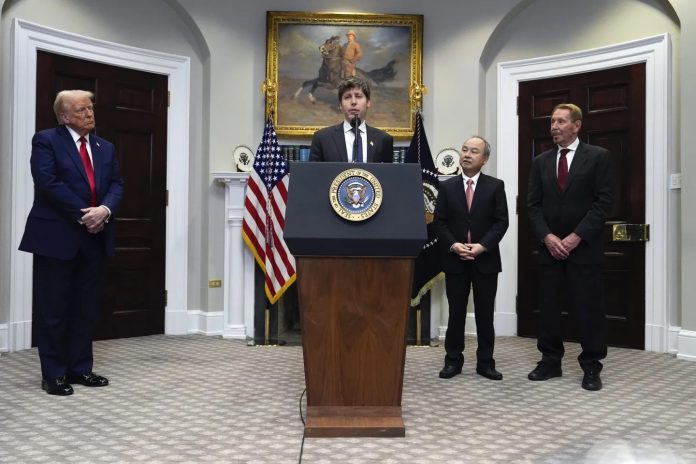
Stargate, an ambitious artificial intelligence (AI) infrastructure initiative promising to transform America into the global leader in AI development, which was announced this week by U.S. President Donald Trump, will be exclusive to OpenAI, the creator of ChatGPT.

With a projected $500 billion budget over four years, the project was introduced as a testament to American ingenuity.

Stargate is backed by OpenAI and SoftBank as its primary drivers, with founding partners Oracle and Abu Dhabi’s state AI fund MGX also contributing. The project’s initial funding goal is $100 billion, with plans to scale up to $500 billion to build next-generation data centers and infrastructure exclusively for OpenAI’s use.

“The intent is not to become a data center provider for the world—it’s for OpenAI,” said one insider.

While the scale of Stargate’s ambitions is unprecedented, the exclusivity of its services to OpenAI has among other things, brought about a surprising shift in the relationship between OpenAI CEO, Sam Altman and Trump.

Industry experts argue that focusing resources on a single entity could limit the democratization of AI innovation and potentially give OpenAI disproportionate influence in the AI space.

Funding Uncertainties and SoftBank’s Role

Stargate has yet to secure the financing required to execute its plans. Insiders revealed that the project will receive no government funding, relying instead on equity and debt raised by its backers.

SoftBank and OpenAI have committed over $15 billion each as anchor funding for Stargate. SoftBank, under its ambitious chairman Masayoshi Son, is expected to inject additional capital from existing funds. However, insiders remain cautious about whether the initiative can raise the remaining billions needed.

“They haven’t figured out the structure, they haven’t figured out the financing, they don’t have the money committed,” said a source close to the project, quoted by The FT.

Microsoft, a major backer of OpenAI, will provide technical support without direct financial contribution to Stargate. Notably, Microsoft has independently launched a $30 billion AI infrastructure fund with BlackRock and plans to invest $80 billion in infrastructure projects this year, underlining its autonomy from OpenAI’s new initiative.

Altman has been vocal about the need for unprecedented computing power to achieve his ultimate goal: artificial general intelligence (AGI). AGI refers to AI systems that surpass human cognitive abilities, revolutionizing industries and scientific research while potentially supplanting humans in the workforce.

Altman’s vision has necessitated forging partnerships beyond OpenAI’s exclusive ties with Microsoft. For over two years, he has been in discussions with SoftBank’s Masayoshi Son about potential collaborations in AI. Their talks culminated in detailed plans for Stargate in the months leading up to this week’s announcement.

Political Overtones: Altman’s Shift on Trump

The Stargate announcement also marked a surprising political pivot for Altman. Once an outspoken critic of Trump, Altman has recently expressed admiration for the president’s leadership.

“Watching [Trump] more carefully recently has really changed my perspective on him,” Altman wrote on X (formerly Twitter). “I think he will be incredible for the country in many ways!”

This newfound support follows Trump’s repeal of an executive order by President Joe Biden, which placed regulatory guardrails on AI development. Trump also announced a $500 billion private-sector investment in AI infrastructure, further aligning with Altman’s goals.

Altman’s shift in tone has drawn backlash. Tesla CEO Elon Musk, a former OpenAI co-founder, mocked Altman’s reversal by reposting his old tweets criticizing Trump. Musk also claimed that Stargate’s backers lacked the necessary funds, prompting Altman to counter: “Wrong, as you surely know.”

Altman’s $1 million personal donation to Trump’s inauguration fund added to the controversy, as did contributions from other tech titans, including Amazon and Meta, who each donated $1 million. Many believe that such gestures highlight the growing entanglement of AI development with political influence.

Stargate’s Infrastructure Plans Take Shape

Despite financial uncertainties, work has already begun on Stargate’s first data center in Abilene, Texas. Data center start-up Crusoe, backed by $3.4 billion in financing from Blue Owl, has been constructing the facility since June 2023. Oracle is expected to invest $7 billion in chips to power the site, which will be dedicated to OpenAI’s computing needs.

The Stargate project will be structured as a standalone entity, with OpenAI, SoftBank, Oracle, and MGX holding stakes. The company will feature two divisions: an operational unit led by OpenAI to oversee data center construction and management, and a capital-raising unit under SoftBank’s purview.

The timing of the announcement, coinciding with Trump’s inauguration, has also raised questions. Insiders suggest the decision was driven more by optics than readiness.

“People want to do splashy things in the first week of Trump being in office,” said a source familiar with the project.

Stargate is launching at a time of heightened competition in AI infrastructure. Microsoft, Google, and Amazon are all investing heavily in cloud computing and AI capabilities. Microsoft’s independent efforts, including its $30 billion fund with BlackRock, signal a divergence from OpenAI’s plans.

Meanwhile, geopolitical tensions have highlighted the strategic importance of AI. Stargate’s inclusion of Abu Dhabi’s state AI fund MGX reflects the growing involvement of Middle Eastern players in global tech investments.