DD
MM
YYYY

PAGES

DD
MM
YYYY

spot_img

PAGES

Home Blog Page 258

Africa’s Startup Funding Rebounds in 2025 as Kenya Leads The Big Four Markets

0

After two consecutive years of funding decline, Africa’s startup ecosystem is showing signs of rebound in 2025, marking the continent’s first year of year-on-year funding growth since 2022.

This is being driven by both renewed investor confidence and a series of large late-stage deals across the fintech and energy ventures, two sectors that have continued to dominate the funding landscape.

Report by Africa: The Big Deal, revealed that as of the end of the third quarter (Q3) of 2025, African startups had collectively raised $2.21 billion, compared to $2.3 billion for the entire year of 2024. By October 26, that figure had climbed to approximately $2.66 billion, buoyed by notable raises such as Spiro’s $100 million funding round and Moniepoint’s $90 million Series C top-up. This milestone firmly positions 2025 as a growth year for African venture capital.

Analysts now question whether the continent’s startups can surpass 2023’s total of $2.98 billion. Reaching that goal would require raising at least $320 million in the final two months of the year, a figure that appears well within reach. Historically, funding rounds announced in November and December have exceeded $350 million annually since 2022, as startups and investors race to close deals before year-end. Based on the 2025 monthly average of $265 million, and assuming a conservative 15% of total funding occurs in the last two months, analysts expect the year to close above the $3 billion mark.

Adding to this optimism are expectations surrounding Moove, which is rumored to be finalizing a $300 million equity round and potentially $1.2 billion in debt financing before year-end. Notably, as of October, African startups have raised $1.45 billion in equity, just shy of 2024’s $1.55 billion and close to 2023’s $1.75 billion. With two months still to go, analysts project that total equity funding could surpass last year’s figure, signaling a steady recovery in investor appetite.

Moreover, this growth trend is not merely the result of a few mega-deals. A closer look at four-quarter rolling averages reveals that funding levels have been rising consistently for the past 18 months, reversing the two-year decline observed between 2022 and 2023.

However, the distribution of funding remains heavily concentrated among the “Big Four” markets which include Kenya, South Africa, Egypt, and Nigeria, which together account for 83% of total startup funding in 2025. This concentration, though not unique to Africa, mirrors global patterns such as the U.S., where over two-thirds of 2024’s venture capital went to startups headquartered in California.

Within Africa’s Big Four, the dynamics have notably shifted. Kenya currently leads in total funding (excluding exits), followed by South Africa, Egypt, and Nigeria. When looking at equity funding specifically, South Africa takes the top spot, followed by Egypt, Nigeria, and Kenya. Equity funding among the Big Four represents an even larger share, 86% of all equity raised across the continent so far in 2025. This more balanced distribution marks a change from previous years when Nigerian fintech dominated the landscape. Today, funding is more evenly spread across regions, with Central Africa still underrepresented in the data.

Outlook

As 2025 draws to a close, Africa’s startup ecosystem appears to be regaining its momentum. The combination of renewed investor confidence, regulatory stability, and sustained innovation across sectors points to a continent once again on the rise. Not only is this catching up to pre-2023 highs, but also laying the groundwork for a more resilient, regionally diverse funding landscape.


Bass-Controlled Animation — When the Beat Drives the Visuals

0

Music and motion have always been inseparable—but in the age of digital art, bass-controlled animation has taken that connection to the next level. This technique lets deep frequencies literally shape the visuals, transforming low-end sound into a visual heartbeat that makes every drop hit harder. From YouTube music visualisers to live performance setups, bass-reactive effects have become a cornerstone of audio-visual design.

What Is Bass-Controlled Animation?

Bass-controlled animation is a visualisation technique where animation parameters—like scale, brightness, or movement—respond dynamically to the bass frequencies in a track. These frequencies are extracted using tools like Fast Fourier Transform (FFT) analysis, which breaks the audio into its component frequencies. In programs such as After Effects, TouchDesigner, Resolume, or Processing, designers map those bass values to specific visual properties. The result? Every thump, kick, and sub-bass rumble physically moves the visuals in real time. A good bass visualizer ties all of this together seamlessly.

This approach creates a visceral experience. Viewers don’t just hear the music—they feel it through motion. When done right, bass-driven visuals capture the primal pulse of the sound, giving audiences a deep sense of immersion.

The Styles That Shine With Bass-Reactive Design

Not every animation style benefits equally from bass control. Some visual approaches are naturally more responsive, more dramatic, and more satisfying when synced with low-end energy. Here are some of the best:

  • Particle Explosions: Perfect for EDM or cinematic bass drops. The particles burst outward with each kick, creating a physical representation of sound pressure.
  • Waveform Distortion: Real-time deformations of circular or radial spectrums react beautifully to bass frequencies, giving a breathing, rhythmic pulse.
  • Camera Shake and Zoom Effects: When tied to bass, these effects replicate the feel of a subwoofer—like the screen itself is vibrating with the beat.
  • Pulsing Light and Glow: LED-inspired glow or bloom effects synced to bass frequencies enhance immersion, especially in dark visual environments.
  • 3D Geometry Morphing: Bass can drive extrusion, scale, or rotation in 3D models—ideal for experimental visuals and live stage projection mapping.

Each of these effects transforms sound energy into visual intensity, creating a seamless sensory loop between what you hear and what you see.

Tools of the Trade

Software has made bass-reactive animation easier than ever. In After Effects, the Audio Spectrum and Trapcode Sound Keys plugins can drive any property—from scale to opacity—based on frequency bands. TouchDesigner and Resolume Arena excel in real-time performance contexts, letting VJs and visual artists trigger animations directly from live audio feeds. For coders, Processing and p5.js provide open-source environments for crafting fully custom, frequency-responsive visuals with just a few lines of code.

Modern AI tools are even starting to predict rhythm patterns, automatically generating reactive motion curves that sync perfectly with the beat. This means smoother visuals, less manual keyframing, and more creative freedom for designers.

The Aesthetic Sweet Spot: Visualising Bass

Bass doesn’t just move—it dominates. That’s why the most effective bass-controlled animations are minimalist in structure but dynamic in response. Clean geometric shapes, neon outlines, and subtle motion work best when paired with heavy low-end frequencies. Overly complex visuals can distract or clash with the rhythm.

Many creators now combine bass-reactive layers with higher-frequency visual elements—like treble-synced sparkles or midrange distortions—to create multi-frequency ecosystems. This layered approach mirrors the natural spectrum of sound, creating a visual symphony that evolves with the track.

Final Drop: Let the Bass Lead

Bass-controlled animation isn’t just a technical trick—it’s a storytelling device. It gives motion to rhythm and turns every drop into a spectacle. Whether you’re crafting an ambient loop, a YouTube music visualiser, or a live VJ performance, letting the bass guide your animation ensures your visuals don’t just match the music—they become it.

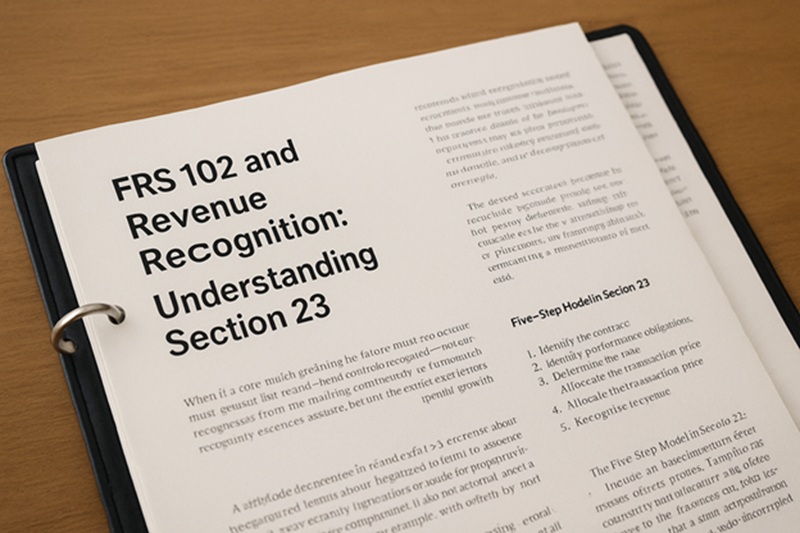
FRS 102 and Revenue Recognition: Understanding Section 23

0

When it comes to financial reporting under FRS 102, few areas create as much confusion—or carry as much importance—as Section 23: Revenue Recognition. This section defines when and how income should be recognised, a fundamental element for presenting an accurate picture of business performance. With the 2024 amendments aligning FRS 102 more closely with IFRS 15, UK and Irish entities are now facing new expectations around timing, measurement, and disclosure.

The Core Principle: Recognising Revenue Correctly

At the heart of Section 23 is the idea that revenue must be recognised when control of goods or services passes to the customer—not simply when cash changes hands. This shift from “risks and rewards” to “transfer of control” marks a subtle but significant change for many SMEs. It means that judgment is now required to determine exactly when performance obligations are satisfied, which may differ from when invoices are raised or payments are received.

For example, a construction company that builds extensions over several months might recognise revenue over time, while a retailer selling physical goods will record revenue at a point in time. The challenge lies in determining where each transaction sits on that spectrum.

The Five-Step Model in Section 23

The revised Section 23 introduces a structured, five-step framework for recognising revenue, mirroring IFRS 15. Businesses must:

  1. Identify the contract with a customer.
  2. Identify the performance obligations within that contract.
  3. Determine the transaction price, including variable elements such as discounts or bonuses.
  4. Allocate the transaction price to each performance obligation.
  5. Recognise revenue when (or as) those obligations are satisfied.

This framework provides consistency across industries, but it also demands more granular analysis of contracts than before. For businesses with long-term projects, bundled services, or tiered pricing, these steps can become complex—but they also create opportunities for more transparent, meaningful reporting.

The Rise of FRS 102 Software

As FRS 102 requirements grow more complex, specialised accounting software has become an essential ally for finance teams. These tools streamline the management of leases, revenue recognition, and disclosures, ensuring accuracy while reducing manual workloads. Modern FRS 102 software—like Finquery,  Sage Intacct, AccountsIQ, Trullion, and Silverfin—integrates directly with general ledger systems to automate journal entries, amortisation schedules, and compliance reports.

Beyond automation, these platforms provide real-time dashboards that give accountants and CFOs immediate insight into financial impacts under FRS 102. Many systems also feature built-in validation tools that check for compliance with the latest 2024 amendments, particularly around lease accounting and the new five-step revenue model. The result is fewer errors, faster closes, and cleaner audits.

For growing UK businesses, adopting FRS 102 software isn’t just about ticking compliance boxes—it’s about gaining efficiency, transparency, and confidence in financial reporting.

Real-World Impact: Who Feels the Change Most

Service-based industries, software providers, and construction firms are among those most affected by Section 23. These sectors often deal with contracts involving multiple deliverables or milestones, making the timing of revenue recognition less straightforward. Finance teams must now ensure that systems are capable of tracking and allocating revenue by obligation, rather than by invoice or project stage.

Technology as a Lifeline

Thankfully, the rise of modern accounting technology has made compliance far easier. Cloud-based systems like Xero, Sage Intacct, and AccountsIQ now include built-in tools for deferred revenue tracking and contract allocation. Automation ensures that adjustments happen seamlessly each month, minimising manual error and improving audit readiness. For larger entities, integrated ERP platforms can even connect accounting data directly to operational workflows, ensuring that revenue recognition aligns with project progress in real time.

The Bigger Picture: Why Section 23 Matters

Section 23 isn’t just about technical compliance—it’s about trust. Accurate revenue recognition builds credibility with investors, lenders, and regulators, while reducing the risk of misstated results. By embracing the new five-step model and the technology that supports it, businesses can achieve a more faithful reflection of performance.

FRS 102 may be evolving, but at its core, Section 23 reinforces an old truth: good accounting tells the real story behind the numbers.

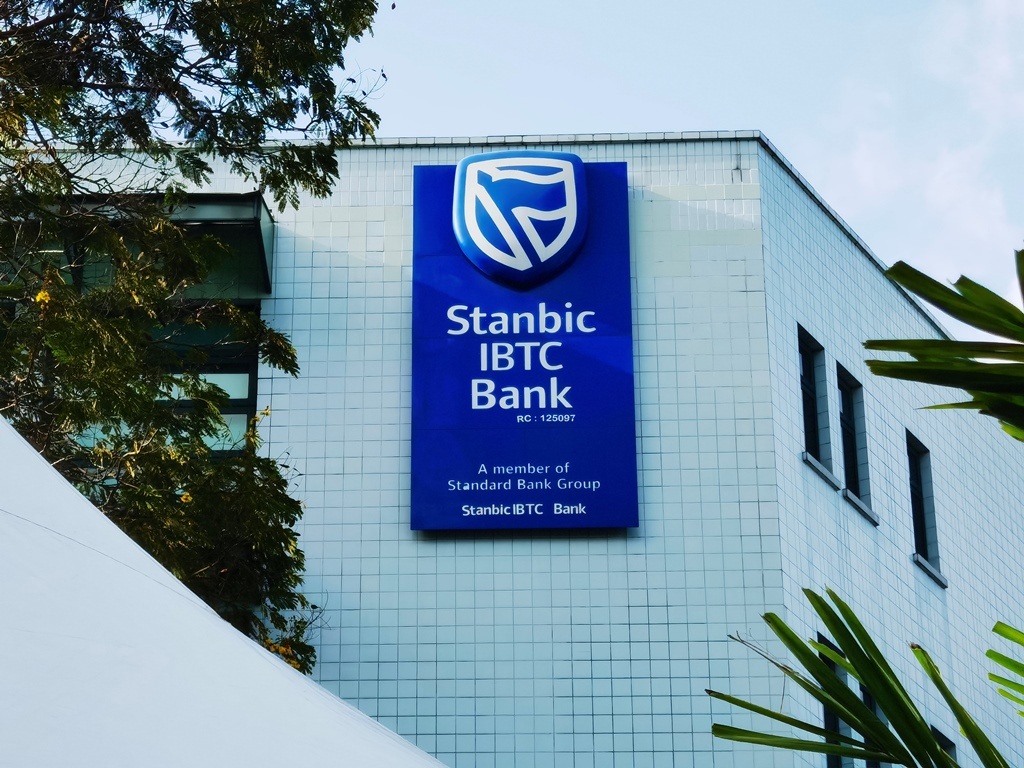
Stanbic IBTC’s Pretax Profit Soars 91.78% to N150bn in Q3 2025, Driven by Interest Income and Cost Efficiency

0

Stanbic IBTC Holdings Plc has reported a pretax profit of N150.09 billion for the third quarter of 2025, representing a remarkable 91.78% year-on-year increase from the N78.2 billion recorded in the corresponding period of 2024, according to its financial statements for the period ended September 30.

The result pushed the Group’s nine-month pretax profit to N393.8 billion, up 76.66% from the previous year’s figure, cementing Stanbic IBTC’s position among Nigeria’s most profitable financial institutions this year.

Revenue Drivers

The impressive performance was underpinned by robust growth in interest income, which rose 11.06% in the third quarter to N199.5 billion, bringing the total for the first nine months to N584.3 billion, up 37.23% year-on-year.

Interest on loans and advances to customers remained the key driver, contributing N118 billion, while interest on investments added N73.5 billion. Interest earned from loans and advances to banks accounted for N7.9 billion.

At the same time, the bank recorded a significant drop in interest expenses, which fell from N102.1 billion in Q3 2024 to N60.9 billion this year — a decline of nearly 40%. This reduction in funding costs helped to expand net interest income by 78.69%, reaching N138.5 billion for the quarter.

Non-Interest Income and Operating Performance

Non-interest income, comprising fees, commissions, and trading revenue, amounted to N82.6 billion in Q3 2025 — slightly lower than the N87.2 billion reported in the same period last year. Despite the modest dip, fee and commission income rose 39.86% year-on-year to N58.2 billion, supported by growing transaction volumes and digital banking operations. Trading revenue, on the other hand, stood at N24.7 billion, reflecting softer trading activity in volatile market conditions.

Together, interest and non-interest income brought Stanbic IBTC’s total income to N221.2 billion, up from N164.7 billion a year earlier — a growth of 34.29%. After recognizing an impairment charge of N533 million, income after impairment stood at N220.7 billion, marking a 67.30% improvement from the previous year.

Operating expenses for the quarter amounted to N70.6 billion, underscoring improved cost discipline and operational efficiency. This left the bank with a pretax profit of N150 billion, while after-tax profit stood at N105 billion, following an income tax expense of N45 billion.

Balance Sheet Strength

On the balance sheet side, Stanbic IBTC recorded a notable expansion, with total assets climbing 21.25% year-on-year to N8.3 trillion, compared to N6.9 trillion in the same period of 2024. Loans and advances accounted for the largest share at N2.6 trillion, underscoring the Group’s sustained support for businesses and individuals amid Nigeria’s challenging credit environment.

Total equity rose sharply to N1.06 trillion, up from N670.6 billion six months earlier, largely driven by retained earnings totaling N800.9 billion. The stronger equity base positions the Group well for future capital adequacy and expansion plans.

Total liabilities also increased by 17.21% to N7.3 trillion, with customer deposits of N4.7 trillion and trading liabilities of N1.1 trillion accounting for the bulk.

Market Performance and Outlook

Stanbic IBTC’s shares have mirrored its financial momentum. As of the close of trading on October 27, the stock was priced at N107.2, representing an 86.1% gain year-to-date, making it one of the best-performing banking stocks on the Nigerian Exchange.

Analysts say the Group’s ability to manage costs and strengthen its interest income base in a volatile macroeconomic environment highlights its resilience and effective balance sheet strategy. The improvement in its funding cost also suggests better asset-liability management and improved access to cheaper deposits.

With a strong nine-month performance, Stanbic IBTC is on track to post record annual profits in 2025, positioning itself to further consolidate market share in corporate and investment banking, asset management, and retail financial services.

If inflationary pressures ease and credit growth remains stable through year-end, the Group could close 2025 with one of the highest profitability ratios among Nigeria’s tier-one banks.

How Competitors Use Paid Search to Hijack Your Startup’s Launch Momentum

0

For a startup, a product launch is more than just an event — it’s the culmination of months of hard work, innovation, and strategic marketing. It’s the moment you expect your audience to find your website, sign up for your service, and become loyal customers.

But there’s a silent threat lurking in the shadows of Google Ads: competitors using paid search to   momentum.

When done intentionally, this tactic allows rivals to intercept traffic meant for you — stealing leads, inflating your ad costs, and even damaging your reputation — all while riding on the buzz you created.

How Brand Hijacking Works in Paid Search

Imagine this scenario:

Your UK-based fintech startup, Finova, is launching its new AI-powered budgeting app. You’ve built anticipation through PR, social media, and influencer campaigns. Users excited about the launch begin searching for “Finova app” or “Finova launch 2025.”

But instead of landing on your official site, many click on a top ad from a direct competitor offering a “similar smart finance tool.” The design mimics your branding. The copy says, “Get Finova-like features today.” And just like that, your hard-earned attention is redirected — and monetized — by someone else.

This isn’t hypothetical. It’s a real strategy known as brand bidding, and it’s increasingly common during high-visibility events like product launches.

As highlighted in Bluepear’s guide on paid search monitoring , competitors exploit the surge in branded searches to position their ads above organic results — often appearing more prominent than your own website.

Why Launch Periods Are Prime Targets

Launches are especially vulnerable because:

  1. Search Volume Spikes: A sudden increase in searches for your brand name creates a golden opportunity for competitors to bid aggressively.
  2. User Intent Is High: People searching for your product are ready to engage — making them valuable targets.
  3. You’re Not Yet Dominant in Paid Search: If you haven’t secured your branded keywords with paid ads, someone else will.
  4. Media Mentions Spread Your Name: Press coverage spreads awareness — but also signals to competitors when you’re gaining traction.

A study found that within hours of a public launch announcement, over 60% of startups experience unauthorized paid ads targeting their brand terms — many from well-funded rivals looking to disrupt market entry.

Real-World Impact: Lost Traffic, Trust, and Revenue

The consequences go beyond lost clicks:

  • Traffic Theft: Competitors convert users who were already predisposed to choose you.
  • Increased CPCs: With multiple bidders on your brand name, you pay more to compete for visibility.
  • Brand Confusion: Users land on misleading sites and assume they’re interacting with your company.
  • Affiliate Abuse: Some affiliates run ads on your brand name to earn commissions unfairly, even if the user would have signed up organically.

In extreme cases, malicious actors create fake “download” or “sign-up” pages that collect personal data — leading to reputational damage you’ll have to clean up later.

How to Protect Your Launch with Brand Protection

Don’t let competitors profit from your hard work. Here’s how to defend your brand:

  1. Bid on Your Own Brand Name

It may seem redundant, but running your own Google Ads campaign for branded keywords ensures you control the first impression. Make sure your ad appears above any potential hijackers.

  1. Set Up Automated Paid Search Monitoring

Manual checks aren’t enough. Use tools that scan search results 24/7 for unauthorized use of your brand. These systems can:

  • Detect competitor ads in real time
  • Capture screenshots of SERPs and landing pages
  • Send instant alerts when violations occur
  • Unmask cloaked content designed to evade detection

Platforms like Bluepear offer automated monitoring specifically built for startups preparing for launch.

  1. Enforce Clear Affiliate Guidelines

If you have an affiliate program, explicitly prohibit partners from bidding on your brand name. Monitor compliance closely during launch week.

  1. Report Violations to Google

If a competitor uses your trademark in ad text (e.g., “Official Finova Alternative”), report it via Google’s Trademark Complaint Form. Include evidence like trademark registration and SERP screenshots.

  1. Educate Your Audience

Help users recognize your official channels. Add clear branding cues, SSL badges, and verification marks so they know where to go.

Final Thoughts

Your startup’s launch momentum is precious — and fragile. While you’re building trust and visibility, competitors are watching, waiting, and sometimes actively working to divert your audience.

By understanding how paid search can be weaponized against you — and taking proactive steps to implement effective brand protection — you can ensure that when people search for your company, they find you, not your rival.

In today’s digital race, visibility is victory. Make sure you’re the one winning it.