DD
MM
YYYY

PAGES

DD
MM
YYYY

spot_img

PAGES

Home Blog Page 27

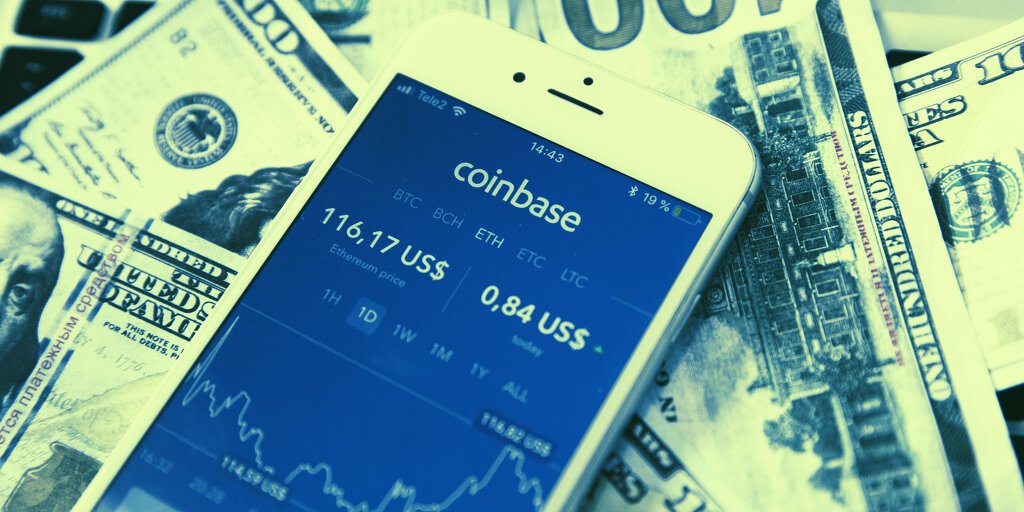
Coinbase is Blocked by Major ISPs in Philippines

0

Major internet service providers (ISPs) in the Philippines, such as PLDT, Globe Telecom, and DITO, have blocked access to the websites of Coinbase (coinbase.com) and Gemini (gemini.com).

This action follows a directive from the National Telecommunications Commission (NTC), issued at the request of the Bangko Sentral ng Pilipinas (BSP), to restrict around 50 unlicensed virtual asset service providers (VASPs). Users encounter connection errors (e.g., certificate mismatches or explicit NTC block messages) when trying to access these sites.

The blocks are part of an ongoing regulatory crackdown on unregistered crypto platforms to protect consumers and enforce local licensing requirements, similar to previous actions against Binance in 2024.

Licensed local platforms remain available, and users with funds on blocked exchanges are advised to withdraw them promptly if possible. VPNs or other tools may bypass the restrictions, though this carries potential risks.

The December 2025 ISP-level blocks on Coinbase, Gemini, and approximately 48 other unlicensed virtual asset service providers (VASPs) mark a significant escalation in the Philippines’ crypto regulatory enforcement.

Directed by the National Telecommunications Commission (NTC) at the request of the Bangko Sentral ng Pilipinas (BSP), this action builds on prior blocks (e.g., Binance in 2024) and reflects a shift from warnings to strict territorial licensing requirements under BSP Circular No. 1206.

Sudden loss of access to accounts, trading, and potentially withdrawals on blocked platforms. Security errors or explicit NTC block messages when accessing sites. Urgent need to withdraw funds if still possible no grace period announced, unlike Binance’s 90-day window.

Greater protection from fraud, scams, and unregulated risks, no legal recourse for losses on unlicensed platforms. Shift to licensed local exchanges for safer, compliant trading.

Regulators emphasize consumer safeguards against illicit activities and financial instability; unlicensed platforms expose users to higher risks like money laundering or platform failures.

Crypto Market Impacts

Reduced options for global exchanges; potential short-term liquidity dips or price volatility for Filipino traders. Increased use of VPNs though risky and potentially non-compliant. Consolidation around BSP-licensed VASPs (e.g., PDAX, Coins.ph, Maya), fostering a more mature, regulated domestic market.

Potential innovation in local services like stablecoins, remittances. Signals end of “informal tolerance”; global platforms must obtain local licenses to operate, promoting financial stability and integration with traditional finance.

For Exchanges/Industry

Immediate revenue loss from Philippine users for blocked platforms. Pressure on Coinbase, Gemini, etc., to apply for VASP licenses requiring local presence, capital, etc. Barrier for foreign entrants; encouragement for compliant global players to localize.

Broader regional trend mirroring actions in Thailand/Indonesia. Enforcement prioritizes AML compliance, fund segregation, and oversight; unlicensed operations violate BSP rules. Public backlash over lack of warning similar to Interactive Brokers complaints.

Heightened scrutiny on digital assets amid ongoing VASP license moratorium. Stronger alignment with global standards; potential boost to licensed fintech like remittances, payroll in crypto. Balanced growth: innovation with reduced cybercrime/illicit finance risks.

Part of ongoing crackdown to protect public while supporting regulated digital economy; no outright crypto ban. This move prioritizes consumer protection and financial integrity over unrestricted access, potentially creating a safer but more centralized crypto ecosystem in the Philippines. Users with funds on affected platforms should act quickly to migrate to BSP-approved alternatives like PDAX or Coins.ph.

While VPNs may offer temporary workarounds, they do not eliminate underlying risks or ensure compliance. This enforcement underscores that global reputation alone does not substitute for local Philippine licensing.

Coinbase Support for Solana Deposit and Withdrawals is Liquidity Boost for Base and Solana

Coinbase Exchange has enabled support for Solana (SOL) deposits and withdrawals using the Base network.

This feature is powered by the recently launched Base-Solana bridge secured with Chainlink’s CCIP, allowing seamless cross-chain transfers between native Solana and Base, an Ethereum Layer-2 built by Coinbase.

When withdrawing SOL, select “Base” as the network — Coinbase handles the bridging, converting SOL to an ERC-20 compatible version on Base. When depositing, send SOL to your Coinbase-provided Base address — it automatically credits to your unified SOL balance.

No need for third-party bridges or manual wrapping. Enables use of SOL liquidity in Base’s DeFi ecosystem (e.g., DEXs, lending). Faster and more secure transfers within Coinbase’s infrastructure. Not available in certain jurisdictions, including New York, Canada, UK, Japan, Singapore, and many EU/Asia-Pacific countries full list in Coinbase Help.

This integration builds on the earlier Base-Solana bridge launch and further connects the Solana and Ethereum ecosystems, potentially boosting liquidity flows.

Coinbase’s integration of Solana (SOL) transfers via the Base network powered by the Base-Solana bridge secured with Chainlink CCIP marks a major step in cross-chain interoperability.

This allows seamless movement of SOL between native Solana and Base (Coinbase’s Ethereum L2), treating SOL as an ERC-20 token on Base without third-party bridges.

Users can now easily shift SOL liquidity into Base’s DeFi ecosystem (e.g., DEXs like Aerodrome, lending protocols) for yield farming, trading, or other EVM-compatible apps. Expect “heavy liquidity inflow” to both chains, as retail and institutional users move assets frictionlessly.

SOL holders gain access to Ethereum-aligned tools, while Base users tap into Solana’s high-throughput assets. Potential boost to TVL on Base and deeper pools for SOL pairs. Buy SOL on Coinbase, withdraw directly to Base for DeFi, or deposit from Solana wallets to Coinbase balances automatically.

Lowers barriers for retail users—no manual wrapping/unwrapping or risky external bridges. Positions Coinbase as a “multi-chain hub,” aligning with its goal of being the “everything exchange” for on-chain assets.

Could drive broader Solana adoption among Ethereum users and vice versa, fostering hybrid apps leveraging Solana speed + Ethereum composability. Turns Base into a neutral settlement layer for non-EVM assets, consolidating liquidity under Coinbase’s infrastructure.

Signals deeper commitment to Solana as a peer to Ethereum, beyond just listings. Competitive edge over other exchanges/bridges by offering secure, in-house transfers. Community sentiment is largely bullish, with X posts highlighting “heavy liquidity inflow” and potential pumps for SOL.

Increased utility could support SOL price through more on-chain activity, though early bridge launches saw minor dips amid broader market trends. Debate on “vampire attack”: Some view it as pulling liquidity from Solana to Base, but bidirectional flows make it more reciprocal.

Unavailable in regions like New York, UK, Canada, Japan, and many EU/Asia countries. Security reliance on Coinbase/Chainlink verification—more trusted than decentralized bridges but introduces centralization points. Potential for asymmetric flows if more SOL moves to Base without reverse traffic.

This is a bullish development for multi-chain crypto, reducing silos and unlocking new DeFi opportunities. It strengthens ties between Solana and Ethereum ecosystems while keeping activity within Coinbase’s regulated environment. Watch for increased volume on Base DeFi protocols and SOL trading pairs in the coming weeks.


Copper Hits ATH As Gold and Silver Rally On Safe Haven Narrative

0

Copper has reached a new all-time high, surpassing $12,000 per metric ton on the London Metal Exchange (LME) for the first time ever. Prices hit a peak of around $12,159.50 per ton on December 23, driven by: Tight global supply from mine outages in Chile, Peru, and Indonesia.

Pre-emptive stockpiling in the US ahead of potential tariffs. Strong long-term demand from EVs, AI data centers, and renewable energy infrastructure. This marks the highest level on record, with copper up nearly 40% year-to-date — its biggest annual gain since 2009.

In US terms, COMEX copper futures are trading around $5.50–$5.56 per pound, also near record levels. Gold has crossed $4,500 per ounce, smashing through this milestone with spot prices reaching just below or above $4,500 reports vary slightly between ~$4,489 and $4,500+ in recent sessions.

It set fresh records multiple times this week, fueled by: Safe-haven buying amid escalating geopolitical tensions like the US-Venezuela issues. Expectations of further Fed rate cuts, Robust central bank purchases and a weakening US dollar.

Gold is up about 70% in 2025, on track for its strongest yearly performance since 1979. Both metals are rallying in tandem this holiday week, reflecting a mix of industrial demand, supply constraints, policy uncertainty, and flight-to-safety flows.

Electric vehicles (EVs) require significantly more copper than traditional internal combustion engine (ICE) vehicles due to their reliance on electricity for propulsion, power management, and energy storage.

Copper’s excellent electrical conductivity, thermal properties, durability, and malleability make it irreplaceable in key components—substitutes like aluminum are less efficient and often require larger volumes.  A typical ICE vehicle uses 20–25 kg (44–55 lbs) of copper, mostly in wiring, radiators, and basic electrical systems.

This difference arises because EVs replace mechanical systems with electrical ones, demanding extensive copper for efficient power delivery. Windings in the stator and rotor use copper wire—up to a mile (1.6 km) of copper wiring in some motors.

Permanent magnet or induction motors rely heavily on copper for efficiency and torque. Battery Pack: Copper foil as current collectors (anode side). Busbars, connectors, and interconnects for high-current flow between cells. Extensive high-voltage cabling, inverters, converters, and onboard chargers.

EVs have far more electrical components like sensors, infotainment, regenerative braking than ICE cars. Thermal management— like cooling systems, brakes, and auxiliary systems are inherent. EV adoption also boosts copper use in: charging stations: Cables, connectors, and internal wiring, fast chargers use more.

Grid upgrades: Transformers, cables, and substations to handle increased load. Projections show charging infrastructure alone could demand hundreds of thousands of tonnes annually as stations proliferate.

EVs are a major driver of copper’s bullish outlook amid the energy transition. Global EV-related copper demand was minimal a decade ago but has surged. EV sector demand could exceed 2.5–2.8 million tonnes by 2030 from ~0.5–1 Mt today, even as per-vehicle usage slightly declines due to efficiency gains such as lighter wiring, better designs.

This represents 8–10% of total global copper demand by 2030, up from <2% now. Combined with renewables (solar/wind) and data centers/AI, clean energy could drive copper demand growth of 50–100% by mid-century.

The rapid rise in EV sales—despite recent slowdowns in some markets—ensures strong structural demand, contributing to tight supply and record prices. Copper truly powers the shift to electrified transport.

Silver has also hit records above $70/oz in sympathy. It’s been an epic year for commodities — merry Christmas to the bulls.

The Merchant Identity Problem: How to Prove Legitimacy Online

0

Online businesses struggle to build merchant identity. Consumers seem to be wary of merchants without a physical presence.

Despite the challenge, you can still run a successful online business. If you have been struggling to expand your client pool, this guide dives deep into the reasons you are struggling and how to solve your problems with checkout solutions and a reliable payment service provider.

Why Trust Is Fragile in Online Commerce

When customers can’t see the business in person, establishing long-term trust can be a challenge.

Lack of credibility

It is difficult to build online business credibility because users don’t know the real face behind the brand. Anonymity casts doubt about the authenticity of the products.

Imposter problem

Due to the lack of physical presence, a lot of online shops have to deal with impostors scamming customers and damaging their reputation.

Local rules

Some online shops do not disclose their operating country. The rules they follow may be different from your usual standards.

What Makes Legitimacy Hard to Prove

A website with a brand name is hardly legitimate. People are reluctant to believe in small online merchants for many reasons.

Unclear ownership

Online shop ownership is incredibly opaque. Most owners do not disclose their personal information, making the online shop very impersonal and questionable without a real face to answer for.

Lack of financial reports

Small-scale online merchants are not required to disclose financial information. The lack of transparency can cause customers to distrust the brand’s ethics and quality.

New businesses

New businesses without existing customers or reviews can find it substantially hard to prove their legitimacy. People have no way of understanding their history or financial background.

Trust Signals That Actually Matter to Customers

Verifying merchant identity online is complicated, especially if the merchant isn’t in the same country. Therefore, international merchants should offer extra comfort with these tips.

Transparent pricing

A clear price list is the first step to gaining consumer trust. People are more willing to engage with online merchants with transparent pricing than a shop with lots of hidden fees.

Consistent work

From delivery timeframe to customer service to product quality, consistency is key. Customers will only return if they have positive experience with the merchant before.

Clear policies

Terms and conditions, such as returns, refunds, personal data, or complaints policies, should be clearly listed. It can avoid disappointments and confusion for consumers, bringing up satisfaction rates.

Technical Proof of Legitimacy: Beyond the Surface Layer

Simply having a lovely UX is not enough. Customers need to know they are sending money to a real seller and that they are protected.

Licensing

Online merchants are still subject to local regulations. Check the government requirements for your industry to get the licenses needed for operations.

Data protection

A reputable online merchant must follow local regulations to ensure sensitive information is encrypted and protected. Customer information should never be sold or leaked to third parties for profit.

Business accounts

Setting up a business account adds authority to your brand. Instead of using your personal account, a professional business account with centralized financial reports shows better credibility for partners and banks.

The Role of Tiers, Badges, and Third-Party Verification Programs

When you are starting out, consider getting verified in several places to gain online merchant legitimacy.

Marketplace

Online marketplaces like Amazon, Etsy, and eBay are great places for sellers to begin. Buyers feel protected by the platform. Therefore, they are more willing to trust and try out unfamiliar brands.

Official certificates

For many niches, there are government-approved licenses to demonstrate authenticity. With a license, clients can rely on you to deliver quality products and services.

Industry verifications

Platforms like Trustpilot allow real users to review and make comments about the merchant. New customers may treat these reviews as the benchmark to whether the brand is trustworthy.

How Merchants Can Proactively Reduce Customer Doubt

These are a few simple steps you can take to gain customer trust.

Centralize financial management

Instead of using multiple accounts for payments and refunds, centralizing your financial needs can build greater trust and make transactions easier. Pick a payment service provider like PayDo to sort out your needs.

Prompt customer support

Having a 24/7 customer support team can significantly boost conversion rates. New and existing customers feel supported when they are interacting with a human.

Consistent performance

A business that always misses deadlines and has payment issues will drive suppliers and customers away. Formulate some backup plans so you can meet your targets anytime.

In conclusion

Online merchant legitimacy can be difficult to prove, but it is not impossible.

There are many ways merchants can reduce customer doubt and build a reputable brand online. Work with an established provider to deliver the smoothest shopping experience for your clients.

MiniMax’s M2.1: Frontier-Level Open-Source Model Excels in Multi-Language Coding, Mobile Dev, Agentic Workflows

0

MiniMax, the fast-rising Chinese AI startup often dubbed one of the “AI Tigers,” has launched MiniMax M2.1, a significant upgrade to its sparse Mixture-of-Experts (MoE) model series.

The release, announced December 22, emphasizes real-world complex tasks, positioning M2.1 as a state-of-the-art open-source contender for coding, agent scaffolding, and enterprise automation—delivering performance that rivals or exceeds closed-source leaders like Claude Sonnet 4.5 and Gemini 3 Pro in key areas.

Founded in December 2021 by alumni from computer vision giant SenseTime (including CEO Yan Junjie), MiniMax has grown explosively, raising over $850 million across rounds, with a $600 million infusion in March 2024 led by Alibaba, pushing its valuation to $2.5-3 billion. Additional backers include Tencent, HongShan (formerly Sequoia China), and MiHoYo.

The company, which confidentially filed for a Hong Kong IPO targeting up to $700 million at an over $4 billion valuation, boasts 27.6 million monthly active users (as of September 2025) across consumer apps like Hailuo AI (text-to-video), Talkie (AI companions), and its Open Platform API. M2.1 builds on the October-launched M2—a 230B total / 10B active parameter MoE that topped open-source rankings on Artificial Analysis composites—by prioritizing usability in multilingual programming, native mobile development, office scenarios, and agent generalization.

Retaining the efficient architecture for low-latency inference (~100+ tokens/second on optimized setups), M2.1 offers API pricing at roughly 8-10% of Claude Sonnet while claiming 2x speed. Benchmark Highlights (independent and MiniMax-reported):Multi-SWE-Bench: 49.4% — industry-leading for multilingual tasks.

  • SWE-Bench Multilingual: 72.5% — outperforming Claude Sonnet 4.5.
  • SWE-Bench Verified: Up to 74.0% in agent frameworks (edging DeepSeek V3.2’s 73.1%).
  • VIBE (Visual & Interactive Benchmark for Execution): Aggregate 88.6% (new open-sourced benchmark using Agent-as-Verifier); standout 91.5% on VIBE-Web and 89.7% on VIBE-Android, surpassing Claude Opus/Sonnet in full-stack app generation with aesthetic and functional excellence.

Other gains include refined interleaved thinking for composite instructions, concise Chain-of-Thought outputs reducing token usage, and stable integration with tools like Claude Code, Droid, Cline, Kilo Code, Roo Code, BlackBox, plus context mechanisms (Skill.md, agent.md, Slash Commands). Beyond coding, M2.1 elevates general dialogue, technical writing, and non-technical responses with more structured, detailed outputs.

The model is immediately accessible via MiniMax’s API (text generation endpoint), integrated platforms (Kilo Code, Vercel AI Gateway, Ollama), and open weights on Hugging Face (MiniMaxAI/MiniMax-M2.1).

Recommended inference: vLLM/SGLang with temperature=1.0, top_p=0.95.

Community response has been electric: On X and Reddit’s r/LocalLLaMA, developers hailed M2.1 as a “beast at UI/UX design” with “clean” app prototypes in a few interactions, faster tool calling, and superior “vibe coding.”

Early tests show strong long-horizon reasoning and reduced bugs versus M2. Comparisons position it ahead of DeepSeek V3.2 and GLM 4.7 in aesthetics/mobile, while closing gaps with proprietary frontiers. MiniMax frames M2.1 as the “brain” for the agentic era, powering its MiniMax Agent platform for end-to-end tasks (administration, data science, finance, HR, software dev).

M2.1 accelerates democratization—offering elite coding/agent capabilities at an accessible scale as open-source Chinese labs (MiniMax, DeepSeek, Zhipu) dominate 2025 releases, challenging global incumbents and fueling AI-native workflows worldwide.

Gold Hits Record $4,525 While Bitcoin Lags – Peter Schiff Calls End of BTC Bull Run

0

Gold has surged to a historic high of $4,525, reaffirming its status as a safe-haven asset at a time of mounting global uncertainty, while Bitcoin continues to struggle to regain bullish momentum.

The divergence between the two assets has reignited the long-running debate over Bitcoin’s role as “digital gold,” with longtime crypto critic Peter Schiff seizing the moment to declare that the Bitcoin bull run is over.

As investors reassess risk amid tightening financial conditions and volatile markets, Schiff argues that capital is flowing back to traditional stores of value leaving Bitcoin lagging behind in gold’s shadow.

He argues that Bitcoin’s failure to rise alongside surging tech stocks (S&P 500 up 0.5% to a record) and gold (hitting $4,525 per ounce) indicates the end of its bull run, forecasting a crash as all buyers are exhausted.

In a post on X, he wrote,

“If Bitcoin won’t go up when tech stocks rise, and it won’t go up when gold and silver rise, when will it go up? The answer is: it won’t. The Bitcoin trade is over. The suckers are all in. If Bitcoin won’t go up, it can only go down. If HODLers are lucky it won’t be a slow death.”

The post reflects Schiff’s consistent bearishness on Bitcoin since 2010, with recent December 2025 tweets predicting its collapse before a dollar crisis, despite BTC trading near $87,000 after peaking at $93,000 earlier in the month.

Schiff argues that Bitcoin remains tied to risk assets like stocks, rallying less during upswings and falling harder in downturns, dismissing it as “digital gold” since it won’t track gold’s rises.

Meanwhile, Binance CEO Changpeng Zhao “CZ”, in a response under the post, mocked Schiff’s prediction that Bitcoin’s bull run is over, urging followers to “save the tweet” as a future reminder of his repeated forecasting errors on BTC’s demise.

It is understood that Schiff has issued similar Bitcoin bearish calls for over a decade, including a 2019 claim that BTC would “never” reach $100,000, which it surpassed in 2021 and a 2018 warning that even $750 per BTC would remain “expensive.”

In line with Schiff’s prediction of the end of Bitcoin bull run, Fidelity’s global macro director, Jurien Timmer, has called the end of the latest bitcoin bull run, while highlighting gold’s continued bull market strength.

The October all-time high near $125,000, reached after roughly 145 months of cumulative rallying, fits well within the framework. Bitcoin bear markets, often referred to as winters, typically last about a year, Timmer says. As a result, he sees 2026 as a potential “year off” for bitcoin following the conclusion of the latest halving driven cycle.

“While I remain a secular bull on bitcoin, my concern is that bitcoin may well have ended another four year cycle halving phase, both in price and time,” Timmer wrote on X.

Timmer also highlights gold’s strong performance in 2025, contrasting it with bitcoin’s negative year, and does not expect a near term mean reversion between the two assets.

Gold is firmly in a bull market, up roughly 65% year to date, outperforming global money supply growth, Timmer noted. He adds that during the recent correction, gold has held onto most of its gains, which he views as characteristic behavior of a bull market.

Notably, in a counter statement, Jamie Coutts, Chief Crypto Analyst at Realvision, believes the Bitcoin bull market isn’t over yet despite substantial falls. Coutts told the Tapping Into Crypto podcast that the weakness in crypto is due to macro conditions creating a risk-off environment but he believes Trump is likely to “goose” the US economy before next year’s midterm election creating better conditions for crypto.

Coutts also said crypto is now at a “major inflection point” where institutional adoption will see the importance of the four-year cycle decline.

The flagship crypto aseet price slipped today below $87,000, falling nearly 1%, as multiple pressures hit the market at the same time. After weeks of moving sideways between $85,000 and $90,000, Bitcoin is struggling to find strong support, leaving traders cautious. BTC is currently trading at $87,183 at the time of writing this report.

Outlook

The contrasting performances of gold and Bitcoin in 2025 underscore a broader market shift. Gold’s record highs suggest continued investor preference for stability amid global uncertainty, while Bitcoin faces headwinds from macroeconomic factors and profit-taking pressures.

Analysts remain divided as some foresee a near-term consolidation or bear phase for Bitcoin, while others anticipate that institutional adoption and policy-driven economic growth could reignite bullish momentum.