TEHRAN, IRAN - JULY 19: (RUSSIA OUT) Russian President Vladimir Putin leaves his presidential plane during the welcoming ceremony at the airport, on July 19, 2022 in Tehran Iran. Russian President Putin and his Turkish counterpart Erdogan arrived in Iran for the summit. (Photo by Contributor/Getty Images)
Tesla’s Cybertruck has reportedly emerged as the third best-selling electric vehicle (EV) in the United States for the third quarter (Q3) of 2024, outperforming every other EV on the market.
According to Cox Automotive estimates, Tesla sold nearly 17,000 Cybertrucks in Q3, trailing only the Tesla Model 3 sedan and Model Y SUV. This puts total Cybertruck sales for the year at over 28,000 a figure higher than Ford’s F-150 Lightning, Rivian’s R1T, and Chevy’s Silverado EV.
In comparison, Ford only sold about 7,000 F-150 Lightnings and 13,000 Mustang Mach-E SUVs in the same period. Rivian delivered just 3,800 R1T pickups. GM, despite early success with its Blazer and Equinox EVs, managed only around 32,000 total EV sales last quarter.
Tesla acknowledged this achievement in its Q3 financial results, confirming a positive gross margin for the Cybertruck. The company generated $25.2 billion in sales and $2.2 billion in profit, with $739 million coming from regulatory credit sales. Additionally, Tesla began shipping its “Actually Smart Summon” feature and Full Self-Driving (Supervised) software to Cybertruck owners, allowing the company to recognize some upfront revenue.
In total, Tesla delivered 166,923 vehicles in Q3, capturing 48% of the 346,309 battery-electric vehicle (BEV) sales in the US. However, this marked the first time Tesla’s share of the US BEV market dropped below 50%. While Tesla continues to soar, hydrogen fuel cell vehicles have struggled to gain traction, with only 73 Toyota Mirai and 26 Hyundai Nexo models sold in Q3 2024.
The Cybertruck’s success is a testament to Tesla’s innovative design and strong brand appeal. Recall that during the launch in December last year, Tesla fans criticized the vehicle’s range and price, with several saying that they were reconsidering buying the Cybertruck after the underwhelming launch.
Despite its polarizing appearance and high price point, it has so far resonated with consumers seeking a unique and powerful electric vehicle. Meanwhile, traditional automakers like Ford and General Motors have struggled to gain traction in the electric vehicle market. The Cybertruck’s strong performance highlights the difficulties major automakers are facing in attracting customers to their electric offerings.
While it is not clear if the uptick in Tesla cybertruck sales will continue on an upward trajectory, Goldman Sachs analysts reckon that in 2025, Tesla will deliver 150,000 Cybertrucks. Wedbush sees 230,000 being sold that year. Morgan Stanley sees only 78,000 Cybertrucks being sold in 2025, for a total of just 108,000 vehicles over the next two years.
As the electric vehicle market continues to evolve, Tesla’s Cybertruck remains a standout. Its success highlights the company’s ability to innovate and meet consumer demand, while also posing a significant challenge to traditional automakers.
Greetings! The Demo Day went great and all the 15 companies participated. The video of the proceedings is available here when you login https://capital.tekedia.com/lesson/active/ .We have since opened the deal room for investments. Go ahead and make payments and let us know the startups you plan to invest in.
For members who have already paid and shared their startup distributions, we will be sending the Master Agreements from tomorrow.
Nov 10, 2024 is the final date of this cycle. That means that is the last day for payment and participation. Please plan accordingly.
Regards,
Tekedia Capital
Good People, out of these 15 companies, a tech unicorn could be born. We invite you tojoin our Syndicate here and co-invest with our members.
The International Monetary Fund (IMF) has recently revised its economic growth forecasts for Germany, indicating a more cautious outlook for the country’s economy. This adjustment comes amidst a complex global economic landscape, characterized by various challenges and uncertainties.
According to the latest reports, the IMF has reduced its growth projection for the German economy to just 0.8% for the upcoming year, which is a 0.5 percentage point decrease from its previous forecast. This revision aligns with the German government’s own forecasts, which anticipate a contraction of 0.2% in 2024, down from an earlier expectation of 0.3% growth.
The downward revision by the IMF reflects a broader trend of stagnation within some of the world’s largest economies. Germany, in particular, is set to experience zero growth in 2024, a stark contrast to the recovering economies of other G7 nations. This stagnation is attributed to persistent weaknesses in manufacturing and structural challenges within the economy, including aging demographics, underinvestment, and regulatory hurdles.
In response to these challenges, German Economy Minister Robert Habeck has proposed a “Germany Fund,” aimed at boosting investment and modernizing the nation’s infrastructure. This initiative represents a significant shift from Germany’s traditionally restrictive budget policies and could potentially stimulate economic activity.
The transition to sustainable energy sources is a pressing issue for the manufacturing industry, which has traditionally relied on large quantities of conventional energy. The shift away from fossil fuels towards renewable energies like wind, sun, or geothermal energy requires substantial investment, especially in storage technologies. Achieving carbon neutrality is a critical goal for the manufacturing sector. This involves developing technological solutions for decarbonization and reducing reliance on fossil fuels.
The need for transparent and sustainable supply chain networks is more pronounced than ever. Manufacturing companies must evolve into data-driven organizations to manage this aspect effectively. A growing concern is the shortage of skilled workers, which poses a threat to the sector’s ability to compete globally and maintain its innovation capacity.
The changing landscape of global competition policy, including the trend towards decoupling, necessitates a reorientation of many business models within the manufacturing industry. Rising energy costs and interest rates have increased operational costs and dampened investment, exacerbating the sector’s existing challenges. Ongoing supply chain issues, partly a legacy of the COVID-19 pandemic, continue to hinder production and distribution processes.
The automotive industry, a key segment of German manufacturing, is undergoing structural changes with the shift from combustion engines to electric mobility, presenting both challenges and opportunities. Germany’s dependence on global markets exposes it to risks such as protectionism and fluctuations in international demand. Critics argue that Germany invests too little and could do more to foster innovation and modernization within its industrial sector.
Addressing these challenges will require concerted efforts from both the industry and the government to implement reforms, invest in new technologies, and adapt to the evolving global economic environment. The “Germany Fund” proposed by the Economy Minister is one such initiative aimed at stimulating investment and modernizing infrastructure to support the manufacturing sector.
The IMF’s revised forecast also highlights the need for ambitious reforms to address Germany’s real challenges, such as aging, underinvestment, and excessive bureaucracy. These issues, if not addressed, could hinder the country’s economic potential and long-term growth prospects.
As the global economy continues to navigate through a period of uncertainty, the case of Germany serves as a reminder of the importance of adaptability and proactive policymaking. The country’s ability to implement effective reforms and stimulate investment will be crucial in overcoming the current economic headwinds and setting a course for sustainable growth.
West Africa’s financial landscape is undergoing a transformative shift, driven by the rapid growth of innovative Fintech startups. These startups are addressing the financial needs of a largely unbanked population, leveraging technology to provide accessible and affordable financial services.
Fintech startups in West Africa are a force to be reckoned with, with the region alone housing most of the continent’s unicorns. In 2021, five startups across the region, Flutterwave, Opay, Wave, Chipper Cash and Andela earned unicorn status.
One of the most impactful solutions in the region has been the emergence of mobile money, which has gained substantial momentum and adoption across the region. With a user base exceeding 100 million, mobile money has become a popular tool for financial transactions, enabling money transfers, bill payments, and retail transactions via mobile devices.
Cross-border payments have become more accessible and cost-efficient, thanks to Fintech solutions that make transferring money between West African countries and beyond easier and more affordable. This has been bolstered by increased investments, with Nigeria alone receiving over US$1.5 billion in funding across 257 rounds since 2015. Nigeria’s Fintech sector accounts for 41.6% of the funding for Fintech startups in Africa, contributing to the rise of unicorns like Interswitch, Flutterwave, Opay, and Kuda.
Nigeria’s established ecosystem of financial services providers has enabled Fintech entrepreneurs to create solutions in banking, lending, and insurance, although insurance penetration remains low at just 0.4%. Additionally, only 30% of adult Nigerians use financial services from non-banking institutions, and 97% lack health insurance, wealth management services, or access to cross-border payments. These areas present vast opportunities for Fintech startups to partner with financial institutions.
Another rapidly developing area across West Africa is online financing. Fintech companies are leveraging mobile applications and websites to provide loans to individuals and businesses. This offers a more accessible way for people to secure financial resources without the complexities associated with traditional banking.
The use of artificial intelligence (AI) is also on the rise, with Fintech firms adopting AI to automate processes, enhance customer experience, and develop new products and services. AI has proven especially valuable in areas like fraud detection, personalized marketing, and financial advisory services.
Regtech, which involves using technology to help financial institutions comply with regulations, is also gaining significant importance. Governments in West Africa are implementing new regulatory frameworks for the Fintech sector, making Regtech a critical area for future growth.
Notably, in the region’s rapidly evolving landscape of financial technology, “Buy Now, Pay Later” (BNPL) services have emerged as a significant trend, revolutionizing how customers make purchases. These services offer a flexible alternative to traditional credit, allowing customers to buy products and pay for them in installments, without the need for credit cards or lengthy approval processes. The Buy Now, Pay Later (BNPL) model also holds promise, particularly as credit card ownership across the region is low, with only a few members of the population holding one.
Furthermore, the rise of e-commerce across the region presents another opportunity for Fintech growth. With online shoppers poised to significantly increase by 2025, Fintech startups are well-positioned to support e-commerce through payment and lending infrastructure.
In conclusion, the Fintech evolution in West Africa is gaining momentum, with startups playing a pivotal role in transforming the financial landscape. By addressing the needs of the unbanked population and leveraging technology, these startups are driving financial inclusion and economic growth in the region.
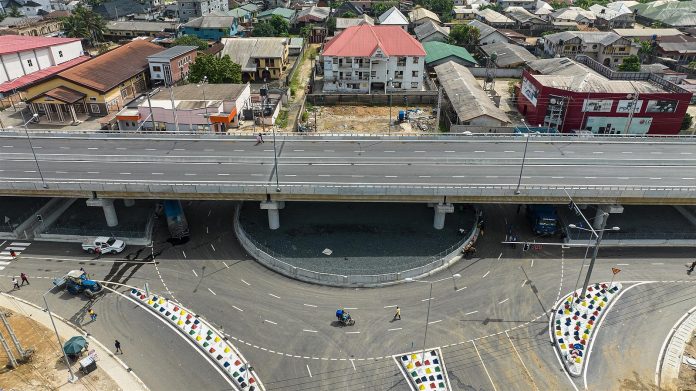
The construction of flyover bridges in Nigeria has increasingly become a common sight in urban centres across the country. These massive infrastructural projects, often aimed at easing traffic congestion and improving mobility, are typically framed by state governments as signs of progress and development. However, our analysis reveals that these projects are not solely driven by urban planning necessities but are often deeply entangled in political and economic motives. As debates arise over the utility, cost, and necessity of flyover bridges, the question emerges: Are these projects more about politics or economics?
Political Motivations Behind Flyover Construction
In the Nigerian political landscape, infrastructure projects like flyover bridges are frequently used as instruments for political gain. The visibility of such projects makes them valuable assets in the political branding and legacy-building efforts of state governors. Flyovers, in particular, serve as powerful symbols of governance, allowing politicians to showcase their commitment to urban development.
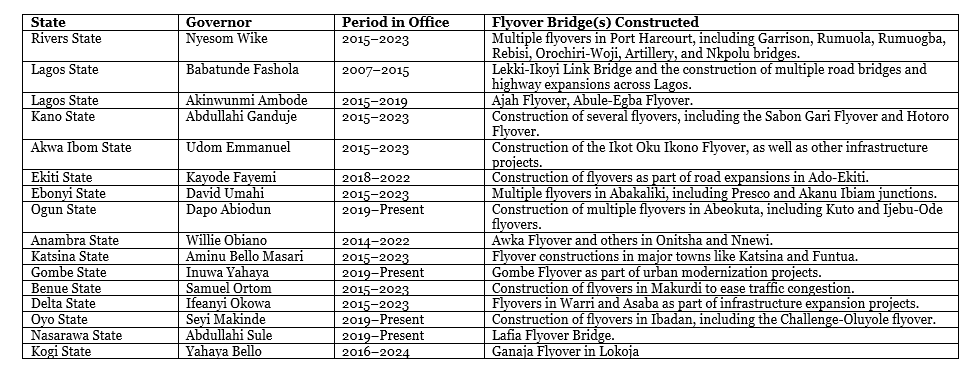
In Rivers State, former Governor Nyesom Wike’s administration became known for its ambitious flyover construction projects. These developments were not just about easing traffic; they were about crafting a legacy of progress that the public could physically see and remember. Critics, however, argue that Wike’s flurry of flyovers was more about political showmanship than genuine infrastructural need. Similar trends are observed across the country where the decision to prioritize flyover construction often aligns with political objectives, particularly during election cycles when politicians seek to garner favour with voters.
This phenomenon is closely linked to the concept of governmentality, which refers to how governments use tools, policies, and projects to assert control and regulate society. Flyovers, while ostensibly meant to improve urban mobility, also serve as manifestations of state power, reinforcing the authority of political leaders and their ability to shape the physical and economic landscape. The high visibility of such projects gives them immense political capital, making them attractive to governments looking to make a quick impact.
Economic Considerations: Funding, Costs, and Mismanagement
While political motivations play a significant role, the economics of flyover bridge construction cannot be ignored. The financial implications of these projects are often staggering, with many flyovers costing billions of naira. For instance, in states like Lagos and Rivers, the cost of building these bridges has sparked widespread debate, with critics questioning whether the funds could be better allocated to other pressing needs such as healthcare, education, and rural infrastructure.
Cost overruns are a recurring issue in flyover projects. In many cases, budgets initially set for construction are exceeded, often by significant margins. These overruns are frequently attributed to poor project planning, inefficiencies in execution, or in some cases, corruption. Contractors may inflate prices, while governments may fail to monitor spending adequately. For example, the high costs of flyovers in Delta and Osun States have led to public scrutiny, with citizens questioning whether these bridges provide value for money, given the other critical infrastructural deficits that persist in these regions.
The problem of budget mismanagement in flyover projects highlights broader issues of governance and resource allocation in Nigeria. From an economic perspective, the opportunity cost of focusing on flyovers at the expense of other essential infrastructure is significant. Many rural areas remain underdeveloped, with poor road networks that contribute to economic stagnation. Critics argue that investing in rural infrastructure could help alleviate urban migration and provide a more balanced approach to development, rather than concentrating resources in urban centres where political gains are more visible.
Urban Planning and Environmental Concerns
Another critical issue tied to flyover construction is the question of urban planning and environmental sustainability. In cities like Lagos and Port Harcourt, flyovers have been constructed as a quick fix for traffic congestion. However, the absence of long-term urban mobility strategies, such as integrated public transportation systems, suggests that these projects are not part of a comprehensive solution to urban challenges. Once the initial congestion is eased, cities often continue to face the same problems due to poor planning and lack of complementary infrastructure.
Environmental considerations are frequently overlooked in the rush to complete these projects. Flyover construction can disrupt existing road networks, displace businesses, and impact residential areas, sometimes with little to no compensation for those affected. This lack of strategic planning not only leads to short-term urban disruption but also raises concerns about the long-term sustainability of these projects. The political economy of flyover construction reveals that short-term political gains often take precedence over long-term urban development goals.
The Public’s Response and the Question of Necessity
Public reactions to flyover construction have been mixed. In some cases, the public supports these projects, especially in areas where traffic congestion is a significant issue. In other cases, citizens have expressed frustration, arguing that the flyovers do not address the most pressing needs of the community. In states like Rivers and Kogi, residents have questioned the rationale behind building multiple flyovers when other infrastructure, such as healthcare, education, and rural development, remains neglected.
This public outcry reflects a broader issue of governance in Nigeria: the lack of participatory decision-making in infrastructural projects. Flyovers are often seen as top-down projects imposed by the government, with little consultation with the communities they are meant to serve. The disconnect between political elites and the populace further fuels the perception that flyovers are more about politics than addressing the genuine needs of the people.