DD
MM
YYYY

PAGES

DD
MM
YYYY

spot_img

PAGES

Home Blog Page 277

US Mortgage Rates Reach 1-Year Lows

0

US mortgage rates have dropped to their lowest levels in over a year, with the average 30-year fixed-rate mortgage falling to 6.19% for the week ending October 23, 2025.

This marks the third consecutive weekly decline, down from 6.27% the prior week and a significant pullback from the over 7% highs seen at the start of 2025. For context, rates averaged 6.54% a year ago, and this is the lowest point since early October 2024.

These figures come from Freddie Mac’s Primary Mortgage Market Survey and align with reports from Zillow and other lenders. Markets are pricing in a near-certain 25-basis-point rate cut at the Fed’s October 29-30 meeting, following September’s cut. This has pushed down the 10-year Treasury yield a key benchmark for mortgages to a 13-month low.

Today’s CPI data showed a softer-than-expected reading—headline CPI at +0.3% month-over-month (vs. +0.4% expected) and core CPI at +0.2% (vs. +0.3%)—with year-over-year figures at 3.0% for both, below forecasts. This reduces pressure on rates to rise.

Weaker job market signals and slower business momentum despite strong PMIs are encouraging the Fed toward easing, indirectly benefiting mortgage borrowers. Applications jumped 10.8% last week, as more homeowners eye swapping high-rate loans many locked in above 7% for these levels.

Existing home sales rose 1.5% in September—the fastest pace since February—amid easing rates and softening prices homes sold 1.4% below asking in many metros. For a $400,000 loan, the monthly payment drops about $50 at 6.19% vs. 6.27%, but experts note rates would need to dip below 6% for widespread refinancing appeal since ~80% of mortgages are under 6%.

However, inventory remains tight, and prices aren’t falling dramatically yet. Another 25-basis-point Fed cut in December could nudge 30-year rates toward 6.3-6.4% by year-end.

Most analysts like the Mortgage Bankers Association, Fannie Mae see rates stabilizing around 6.4-6.5% through 2026, staying in the 6-7% range amid persistent inflation. Dramatic drops below 6% are unlikely without a major economic shift.

The US housing market is experiencing a period of moderation in home prices, with national year-over-year (YoY) growth slowing to its lowest levels since mid-2023.

While prices remain elevated—reflecting a cumulative 50% increase since 2019—recent data shows flat or slightly declining trends in many regions due to rising inventory, cooling demand from high mortgage rates now dipping below 6.2%, and softening economic pressures like tariffs and inflation.

A nationwide housing shortage of nearly 4 million units continues to provide underlying support, preventing a crash, but experts forecast modest growth of 1-3% through year-end.

Active listings hit a 4-year high in September (up 14% YoY), with 2+ months of supply in many metros—shifting leverage toward buyers and capping price upside. Homes are pending in ~17 days nationally down from 20+ earlier this year, but sales volume remains 20-30% below pre-pandemic norms due to affordability strains.

Trends vary sharply by geography, with the Northeast bucking the slowdown while the Sun Belt sees corrections. Strong fundamentals like job growth and low inventory drive gains; metros here lead the top 100 for appreciation.
South (e.g., Florida metros like Tampa, Austin TX)

7 of top 10 declining metros are in FL; overbuilding and insurance costs (up 45% in 5 years) fuel drops. West (e.g., California, Arizona) -1.4% (median $620,700). Sales up 1.4% MoM but prices softening; high escrow/tax burdens add 45% to costs vs. 5 years ago.

Midwest (e.g., Chicago); +2% to +4%
Mixed; steady but slower than Northeast peers. Negative growth is concentrated in overvalued Sun Belt areas, where investors now ~33% of buyers are pulling back amid higher carrying costs.

Mortgage rates at 1-year lows ~6.19% for 30-year fixed are encouraging more listings up 10-15% YoY but not yet sparking a buying frenzy—93% of Americans still cite costs as “too high.” Inflation at 3% YoY limits aggressive Fed cuts; tariffs could add upward pressure on construction costs, slowing new builds down 3% expected in 2025.

Elevated activity 1/3 of purchases sustains demand but favors cash-heavy deals, sidelining first-time buyers. Monthly payments for a median home exceed $2,500 up 50% since 2019; escrow/tax hikes exacerbate this, leading to longer market times up 10-20 days in softening areas.

Prices likely flat to +1.5% YoY, with inventory growth potentially +20% enabling more negotiation—mid-October (Oct 12-18) flagged as optimal buying window for softer prices and higher listings.

Gradual rebound to +3-6% growth as rates stabilize at 6-6.5%; NAR predicts 11% sales increase if inventory hits 4 months’ supply. No crash expected—experts like Zillow and Fannie Mae see sustained elevation due to shortages.

Focus on local comps; lock rates soon if buying. Sellers in cooling markets may need incentives. Overall, the market is thawing but remains buyer-cautious—lower rates could tip it toward balance by spring 2026.
Trump-Xi To Hold Meetings on 30th October in South Korea

0

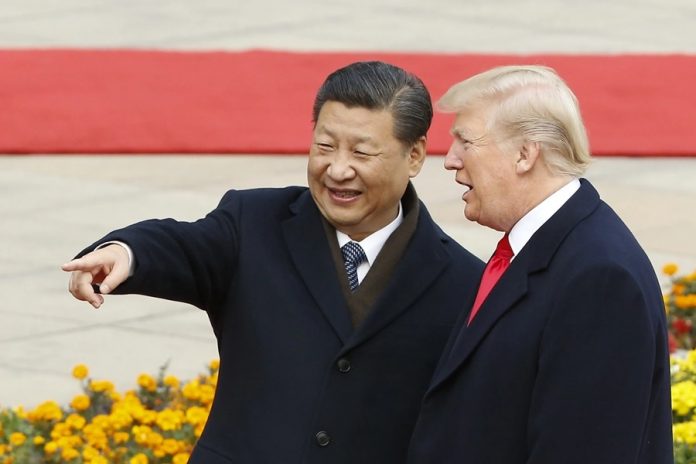
The White House has officially confirmed that U.S. President Donald Trump will hold a bilateral meeting with Chinese President Xi Jinping on October 30, 2025—next Thursday—in Busan, South Korea.

This marks their first in-person encounter since Trump’s return to office earlier this year. The meeting is scheduled on the sidelines of the Asia-Pacific Economic Cooperation (APEC) Summit, which runs from October 31 to November 1 in Gyeongju, South Korea.

Trump is embarking on a multi-country Asia tour starting October 24, including stops in Malaysia and Japan, before arriving in South Korea for the summit.

While Trump had teased the possibility of a Xi meeting multiple times in recent weeks, the White House press secretary Karoline Leavitt provided the exact details during a briefing on October 23. The leaders have spoken by phone at least three times in 2025, most recently in September, discussing issues like TikTok’s U.S. operations.

This summit comes amid a fragile U.S.-China trade truce established in May 2025, which averted triple-digit tariffs. However, tensions have escalated recently: China expanded export controls on rare earth minerals and related technologies in early October, critical for electronics and defense.

In response, Trump threatened an additional 100% tariff on Chinese imports on top of the existing 30%, potentially effective as early as November 1. Trump has highlighted fentanyl trafficking as a top priority, stating he plans to press Xi on it directly, alongside demands for China to curb oil purchases from Russia.

The last in-person Trump-Xi meeting was in 2019 at the G20 Summit in Osaka, Japan. Based on public statements and recent developments, the agenda is likely to focus on: Trade and Tariffs: Resolving the standoff over rare earths, soybeans, and broader agricultural purchases to prevent a full trade war escalation.

Fentanyl and Drugs: Trump has repeatedly called this a “big penalty” issue, linking it to existing tariffs. Potential discussions on Taiwan, North Korea’s missile activities, Russia’s war in Ukraine Trump claims Xi wants it ended, and U.S. export curbs on software to China.

Trump has expressed optimism about a “fantastic deal,” emphasizing direct talks as the best path forward. Outlets like Reuters and CNBC describe the meeting as a critical opportunity to “dial down tensions” in the world’s top two economies, but note the elusive nature of a comprehensive trade deal.

Discussions are buzzing with a mix of optimism and caution on X. Users highlight the meeting’s overlap with a busy earnings week (e.g., Meta, Amazon, Microsoft) and the Fed’s rate decision, calling it a “trading marathon.” Some speculate on outcomes like tariff pauses, while others worry about volatility if talks falter.

A positive outcome could stabilize global markets; failure might trigger immediate tariff hikes, impacting U.S. consumers who bear much of the cost via higher prices and sectors like tech and autos.

Overview of Rare Earth Tensions

Rare earth elements (REEs)—a group of 17 metals essential for technologies like electric vehicles (EVs), semiconductors, wind turbines, defense systems, and consumer electronics—have become a flashpoint in U.S.-China trade relations.

China dominates the global supply chain, mining about 70% of REEs and processing over 90%. In early October 2025, Beijing escalated controls on REE exports, prompting swift U.S. retaliation and global market jitters.

These moves threaten to unravel a fragile May 2025 trade truce that had paused triple-digit tariffs. The tensions are set against the backdrop of an upcoming Trump-Xi meeting on October 30 in Busan, South Korea, where de-escalation could be on the table.

Beijing restricts exports of seven REEs samarium, gadolinium, terbium, dysprosium, lutetium, scandium, yttrium and related magnets in response to U.S. tariffs of 34% on Chinese goods. U.S. auto firms like Ford halt production due to shortages.

U.S. President Donald Trump announces 100% additional tariffs on all Chinese imports on top of existing 30%, effective November 1, unless controls are rolled back. Questions Trump-Xi summit viability.

Ministry of Commerce calls U.S. tariffs “hypocritical” and controls “legitimate” for national security; no immediate counter-levies, signaling openness to talks. Treasury Secretary Scott Bessent and U.S. Trade Representative Jamieson Greer label controls a “global power grab” and threat to supply chains. Bessent floats extending tariff pause if China delays REE rules. China accuses U.S. of “stoking panic.”

U.S. announces REE strategic reserve and billions in investments with Australia. EU plans Brussels talks with China; French President Macron pushes for EU “Anti-Coercion Instrument” against Beijing. X discussions highlight risks to AI/tech sectors.

Exporters need MOFCOM approval; foreign firms using Chinese REEs/tech must apply for licenses to ship products globally, even if manufactured abroad. Ties to foreign militaries (e.g., U.S. defense) trigger automatic denial.

From December 1, 2025, applies to “internationally made” goods, mimicking U.S. Foreign Direct Product Rule but without national security carve-outs. Fines or imprisonment under Chinese law; non-compliance risks cutoff from Chinese suppliers.

Beijing cites “national security” and preventing “misuse” in military/AI sectors, but analysts see it as leverage against U.S. chip export bans. These controls extend to lithium-ion batteries effective November 8 and could veto global manufacturing of REE-embedded products like EV motors and fighter-jet sensors.U.S.

Trump’s 100% tariff threat could add $500B+ in annual costs to U.S. importers, hitting consumers via higher prices for electronics and autos. U.S. also eyes new software export curbs. DOD’s July 2025 deal with MP Materials for U.S. mine-to-magnet chain 1,000 tons NdFeB magnets by end-2025, <1% of China’s output.

S&P 500 dropped 2%+ on October 10; Big Tech (NVIDIA, AMD) vulnerable to AI chip disruptions. U.S. imported $22.8M in Chinese REEs in 2023; shortages could curb EV/defense production. EU mulls DUV lithography bans on China; Japan/South Korea stockpiling. IMF upgraded global growth forecast pre-escalation but warns of risks.

Analysts like those at CSIS and Eurasia Group call this “economic coercion” mirroring U.S. tactics, but China’s processing monopoly gives it an edge—experts doubt full reversal post-Trump-Xi talks. A “one-shot bazooka” strategy may spur permanent diversification, per Resources for the Future.

This standoff underscores supply chain vulnerabilities; long-term, expect accelerated “friend-shoring” to allies like Australia and Canada. Updates from Busan could pivot the trajectory. This meeting could set the tone for U.S.-China relations through 2026, especially with Trump eyeing an early 2026 visit to China.

JPMorgan Expands Business Services Banking Team with Key Hires from Deutsche Bank and Goldman Sachs

0

JPMorgan Chase & Co has made a strategic push to dominate the U.S. business services sector, hiring three top investment bankers from Deutsche Bank and Goldman Sachs to help drive dealmaking and expand its investment banking revenue base.

The move is part of a broader plan by John Richert, the head of mid-cap investment banking at JPMorgan, who told Reuters that he aims to increase the division’s annual fee revenue from around $100 million to $500 million within three to five years — a fivefold jump that mirrors the bank’s ambitious growth trajectory in mid-market dealmaking.

“I’d like to increase headcount in senior level by five times in the next two to three years. I will call it the power of fives,” Richert said, emphasizing that the expansion in both human resources and business volume will occur simultaneously.

The bank’s new hires — Erik Carneal, David Sweet, and Ye Xia — bring decades of experience and deep relationships with private equity clients and corporate boards.

Carneal, who joins as vice chair, spent 14 years at Deutsche Bank, where he advised clients across professional, education, and commercial services, cultivating long-term relationships with executives and financial sponsors. With over 25 years in investment banking, he is expected to play a key role in mentoring younger bankers and shaping the bank’s long-term sector strategy.

David Sweet, also from Deutsche Bank, joins as managing director focusing on commercial and residential services. Sweet previously led Deutsche Bank’s coverage in that space, working with clients in HVAC, facilities management, and other recurring-revenue business lines.

Meanwhile, Ye Xia, formerly at Goldman Sachs, will serve as executive director to expand JPMorgan’s coverage of industrial and commercial services, digital infrastructure, and professional services. Xia’s previous experience spans roles at Guggenheim Partners and Rothschild & Co, where she advised clients on mergers, acquisitions, and capital raising.

All three will be based in New York, reporting directly to Richert, and will work closely with Dana Weinstein, JPMorgan’s current head of business services investment banking, who will retire next year. Upon her departure, Richert will take over as global head of business services coverage, further consolidating the unit’s leadership structure.

These appointments follow the addition of Jonathan Slaughter earlier this year as vice chair of Business Services in London — a move that signals JPMorgan’s global ambition in the sector.

A Sector Ripe for Consolidation

The business services industry — which employs about 22.5 million Americans, according to U.S. Bureau of Labor Statistics data — includes a broad range of non-core operational functions that companies are increasingly outsourcing, such as janitorial, landscaping, restoration, HVAC, and catering services.

Once dominated by small, family-run businesses, the sector has evolved into a magnet for private equity investment, as firms seek to roll up regional players into larger, scalable platforms with predictable, recurring cash flows.

Richert said private equity interest in the space has surged, supported by ample dry powder. “We have a number of private equity meetings per week in which investors are asking to show them everything we have in HVAC, everything we have in restoration, in landscaping,” he said.

According to Reuters data, private equity deal volume reached an all-time quarterly high of $310 billion in the third quarter, underscoring the liquidity available for new acquisitions and consolidations.

Shielded from AI and Trade Shocks

Richert noted that the business services segment enjoys relative protection from macroeconomic headwinds such as automation and trade disruptions.

“Even if you are a clothing manufacturer impacted by tariffs, somebody still has to clean that facility at night,” he said. “This is a sector that’s largely insulated from the threats of AI-driven job substitution or geopolitical trade risks.”

Richert’s aggressive expansion strategy builds on the success of JPMorgan’s mid-cap investment banking division, which he transformed from a 30-person team to a 250-banker operation with annual revenues surpassing $1 billion, up from $150 million when he took over seven years ago.

The bank now serves over 11,000 mid-cap companies through its commercial banking arm — relationships that it intends to leverage for more M&A, advisory, and capital-raising activity in business services.

The expansion comes as competition intensifies among Wall Street firms seeking a larger share of the business services and facilities management market. Rivals like Morgan Stanley, Bank of America, and Jefferies have also been recruiting senior bankers to capture deal flow from the ongoing wave of private equity consolidation.

But Richert said JPMorgan’s balance sheet strength, global network, and longstanding relationships with corporate clients give it a clear advantage.

The bank’s recruitment drive and deal focus are believed to align with a broader trend of financial institutions pivoting toward sectors offering defensive characteristics amid rising interest rates and uncertain market conditions.

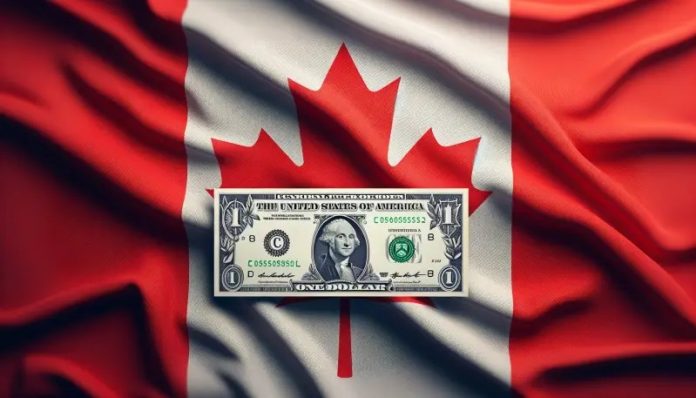
Canada’s Carney Vows Openness to U.S. Talks as Trump Cuts Off Negotiations Over Ontario Ad

0

Canadian Prime Minister Mark Carney said Friday that his country remains ready to resume trade negotiations with the United States whenever Washington is willing, after President Donald Trump abruptly terminated talks over a political advertisement aired by the province of Ontario.

“My colleagues have been working with their American colleagues on detailed constructive negotiations, discussions on specific sectors — steel, aluminum and energy,” Carney told reporters in Ottawa before departing for Kuala Lumpur, Malaysia, for his first official visit to Asia. “We stand ready to pick up on that progress.”

Carney added that Canada could not control the course of U.S. trade policy but would continue to pursue “new partnerships and opportunities, including with the economic giants of Asia,” signaling a shift in focus toward strengthening ties in the Indo-Pacific region.

The rift began when Ontario aired an ad in U.S. markets featuring former Republican President Ronald Reagan warning that tariffs spark trade wars and lead to economic disasters. The commercial, which ran during the Major League Baseball playoffs, angered Trump, who on Thursday declared that “trade talks with Canada are over.” The U.S. president accused Ottawa of attempting to influence the Supreme Court as it prepares to rule on his global tariff agenda.

White House economic adviser Kevin Hassett said Friday that the president’s frustration with Canada “has built up over time.” He told reporters that “the Canadians have been very difficult to negotiate with,” blaming a “lack of flexibility” for the breakdown in discussions.

“The fact is that the negotiations with the Canadians have not been very collegial,” Hassett told Fox News. “They’ve not been going well. I think the president’s very frustrated. He wants a great deal with Canada, just like he wants a great deal with Mexico.”

Carney’s government had earlier removed most of the retaliatory tariffs on U.S. imports that were imposed by his predecessor, signaling an effort to ease tensions and rebuild trust with Washington. The two sides had been working on a framework covering the steel and aluminum sectors before the talks were suspended.

Ontario Premier Doug Ford later said he would pause the controversial ads after the weekend “so that trade talks can resume.” Ford said he spoke with Carney before making the decision.

“Our intention was always to initiate a conversation about the kind of economy that Americans want to build and the impact of tariffs on workers and businesses,” Ford said. “We’ve achieved our goal, having reached U.S. audiences at the highest levels.”

The Ronald Reagan Presidential Foundation and Institute had earlier criticized Ontario’s use of Reagan’s 1987 radio address, saying the ad “misrepresents his speech” and was edited without permission.

While Carney reiterated that Canada remains committed to “constructive and fair” trade relations with the United States, analysts say his handling of Trump’s aggressive tariff strategy has exposed Ottawa’s lack of a clear long-term approach. Some economists argue that Canada has been too reactive — alternating between conciliatory and confrontational tactics — instead of developing a coherent counter-strategy.

Mexico, meanwhile, has quietly taken a different route. Several trade watchers describe the Mexican government’s stance as a “rope-a-dope” strategy: avoiding direct confrontation with Washington while absorbing short-term pressure to survive the next four years of Trump’s presidency. The approach appears to be working. Mexico’s tariffs, which were originally expected to take effect alongside Canada’s, have been postponed following a series of low-profile backchannel negotiations.

Canada, by contrast, has a prime minister determined to project toughness in the face of Trump’s populist economic nationalism. Twice now, Carney has had to retreat after direct showdowns with Washington — the latest being the Ontario ad controversy, which forced him to pull back and reaffirm his commitment to dialogue.

Critics say that while Carney’s instinct to stand firm is politically understandable, it risks playing directly into Trump’s narrative of dominance over America’s trading partners. The U.S. president’s rhetoric — including past suggestions that Canada should become a “State” — has been widely condemned by trade experts as an affront to national sovereignty.

The standoff now leaves one of the world’s most integrated economic relationships at a crossroads. Trade between the two nations exceeds $900 billion annually, supporting millions of jobs on both sides of the border. But the personal and political friction between the two leaders threatens to undermine that stability.

Aradel Expands Stake in ND Western, Strengthens Grip on Nigeria’s Upstream Oil and Gas Sector

0

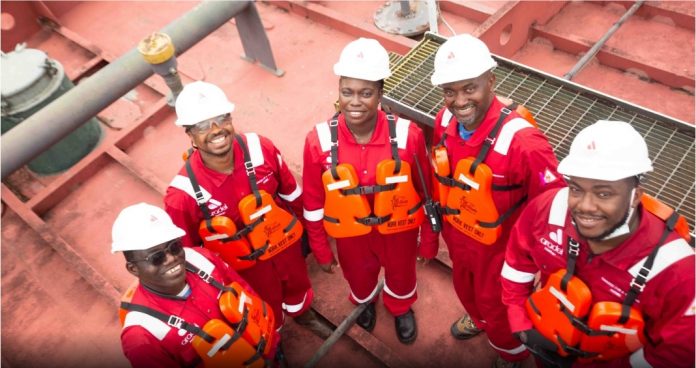
Aradel Holdings Plc has announced a binding agreement to acquire an additional 40% equity stake in ND Western Limited from Petrolin Trading Ltd, a move that positions the indigenous energy group for greater dominance in Nigeria’s upstream oil and gas industry.

A corporate disclosure filed with the Nigerian Exchange (NGX) on Friday revealed that the deal will be executed through Aradel’s wholly owned subsidiary, Aradel Energy Limited, reinforcing the company’s influence across the Western Niger Delta. The agreement marks one of the most significant transactions in Nigeria’s energy sector this year, consolidating local ownership of key hydrocarbon assets.

Aradel Energy, which already holds a 41.67% stake in ND Western, will see its ownership rise substantially upon completion of the acquisition. The move effectively gives Aradel a controlling influence in ND Western, granting it greater leverage over operations and strategic decision-making.

ND Western itself commands a 45% participating interest in Oil Mining Lease (OML) 34, one of Nigeria’s most prolific onshore assets. OML 34 is renowned for its large reserves of crude oil and associated gas and plays a dual role in Nigeria’s energy ecosystem—supporting both export revenues and domestic gas supply.

The block is also a crucial component of Nigeria’s power generation value chain, feeding major electricity plants through the Utorogu Gas Plant, one of the country’s largest. With approximately 3 trillion cubic feet (Tcf) of gas reserves, OML 34 is pivotal to Nigeria’s ongoing transition towards cleaner, gas-based energy solutions.

Through this deal, Aradel is not only boosting its production portfolio but also reinforcing Nigeria’s broader drive toward indigenous participation in upstream assets, a central goal of the Petroleum Industry Act (PIA).

Strengthening Nigeria’s Local Energy Footprint

The acquisition underscores Aradel’s long-term strategy of securing high-value, cash-generating assets that underpin national energy security.

“The transaction aligns fully with Aradel’s corporate vision for sustained portfolio optimisation, value enhancement, and national energy advancement,” said Chief Financial Officer Adegbola Adesina, who signed the disclosure.

Energy analysts believe the move reflects a new phase in Nigeria’s oil and gas evolution, where indigenous firms are increasingly stepping into roles once dominated by international oil companies. The withdrawal of majors like Shell, ExxonMobil, and TotalEnergies from onshore operations has opened opportunities for local players to take control of assets critical to domestic energy supply.

ND Western also holds 50% ownership of Renaissance Africa Energy Holding Company Limited, which oversees Renaissance Africa Energy Company Limited—operator of the Renaissance Joint Venture (JV). This joint venture is fast emerging as one of Nigeria’s most dynamic indigenous energy alliances, providing a platform for operational expansion, technology exchange, and investment attraction.

The Renaissance JV, comprising ND Western, Aradel Holdings, Waltersmith Petroman Oil, FIRST Exploration & Petroleum Development Company (First E&P), and Petrolin, represents a shift toward cooperative indigenous control of Nigeria’s hydrocarbon resources. The alliance is viewed as a blueprint for future collaboration among local operators, promoting efficiency, shared expertise, and local value retention.

Market analysts believe that consolidating ND Western’s equity gives Aradel a stronger foothold within the Renaissance network, enhancing its access to upstream and midstream growth opportunities. The acquisition is expected to accelerate Aradel’s involvement in Nigeria’s gas monetization agenda, especially as global investors pivot toward cleaner fuels.

Completion of the transaction remains subject to regulatory approvals from the Nigerian Upstream Petroleum Regulatory Commission (NUPRC), the Federal Competition and Consumer Protection Commission (FCCPC), and the Minister of Petroleum Resources.

Aradel has expressed confidence in obtaining these approvals, emphasizing that it is adhering to all statutory and competition requirements. Regulatory experts say such approvals are crucial to ensuring transparency, fair competition, and alignment with Nigeria’s broader energy transition framework.

Listed on the NGX in 2024, Aradel Holdings is one of Nigeria’s few fully integrated indigenous energy companies, with operations spanning exploration, refining, and gas processing. The company currently produces around 18,000 barrels of oil per day and operates a 100 million standard cubic feet per day (scf/d) gas plant. Its 11,000 bbl/d modular refinery produces diesel, kerosene, and naphtha, reinforcing its position as a domestic energy provider amid Nigeria’s recurring fuel import challenges.

The acquisition further strengthens Aradel’s refining and upstream integration, giving it end-to-end control over the production, processing, and marketing of hydrocarbons. Industry experts note that Aradel’s steady capital discipline and investment in refining capacity make it a model for other indigenous firms seeking to compete globally.

The Consortium and Its Broader Impact

ND Western was incorporated in 2011 as a Special Purpose Vehicle (SPV) to acquire Shell’s divested interest in OML 34. It is jointly owned by Aradel Holdings, Petrolin Trading, FIRST E&P, and Waltersmith Petroman Oil.

Each member of the consortium contributes unique strengths to the group’s operations. Waltersmith, a pioneer in modular refining, operates the Ibigwe Field (OML 16) and produces multiple refined products. In contrast, First E&P, which operates OMLs 83 and 85, produces about 57,000 barrels of oil per day and has exported over 50 million barrels since inception. Petrolin, based in Switzerland, produces around 17,000 barrels of oil equivalent per day across Africa and the Middle East and invests heavily in infrastructure and mining.

Together, these companies have become a cornerstone of Nigeria’s indigenous energy strategy, promoting local content, employment creation, and energy diversification. Their joint ownership of assets like OML 34 ensures that a significant portion of Nigeria’s oil and gas wealth remains within the domestic economy.

Aradel’s acquisition also coincides with a global realignment in energy investment. As international majors pivot toward renewables and divest from mature oil assets, Nigerian independents have been expanding their footprint through strategic acquisitions.

Analysts note that Aradel’s bold move reflects growing investor confidence in Nigeria’s petroleum reforms under the PIA, which seeks to provide fiscal stability and promote indigenous ownership. With Nigeria’s proven gas reserves estimated at over 200 Tcf, the emphasis on gas production and processing represents a major opportunity for local operators like Aradel to lead the next phase of growth.