DD
MM
YYYY

PAGES

DD
MM
YYYY

spot_img

PAGES

Home Blog Page 2795

Solana Price Prediction: SOL To Hit $500 In December, 1Fuel Ignites Market Frenzy As SHIB Maintains Momentum

0

Solana has been firing from all cylinders, sparking wild predictions from analysts. Shiba Inu (SHIB) has been flying under the radar by its standards. It has managed to keep the momentum as it notched modest gains. However, the secure crypto wallet 1FUEL (OFT) is gaining traction as the year comes to a close.

This is surprising as blue-chip assets have been leading the charge so far. Market experts say retail investors are coming back to the industry and they are buying assets they are familiar with. Though 1FUEL is new, the crypto wallet’s token presale has been a hit with growth investors.

Will Solana, 1FUEL, and SHIB explode in December?

How High Can Solana Climb?

With impressive key metrics, Solana is projected to enjoy another leg up as the bull market continues. Several asset managers such as Bitwise have joined the race for a Solana ETF. Solana-based DeFi protocols generated more revenue than Ethereum in November. This marks a turning point for Solana. Its total value locked (TVL) is closing in on $9 billion.

These metrics have helped push Solana’s price to a new peak of $263.83. Analysts are optimistic about Solana as they predict a surge to $500 in December.

As the demand for Solana grows, there is potential for SOL to blow past predictions out of the water.

Presale Demand: 1FUEL Attracts Savvy Investors

The presale market has become very competitive but 1FUEL edges out its competitors. It has investor-driven tokenomics that will allow early buyers to reap great rewards. Early investors have been allocated 50% of the token supply via the public presale.

While investors are aware of 1FUEL’s growth potential, they are drawn to its solid value proposition.

The project’s use case comes from offering practical solutions to the crypto industry, starting with interoperability. There are hundreds of blockchains. Users need to own multiple wallets to move their digital assets from one network to the other.

With 1FUEL, users can interact with several blockchains through one-click cross-chain transactions. This important feature addresses complexities such as managing multiple tokens via its cross-chain capability. Users will benefit from reduced fees. By reducing the steps required to transact, users eliminate the potential for errors.

The privacy-focused cryptocurrency offers cold storage solutions. This is a no-brainer as hackers target hot wallets such as exchange wallets. With 1FUEL, users are assured that hackers have no way of reaching their assets.

Moreover, 1FUEL offers a built-in mixer to anonymize transactions. This is important as the crypto industry is built on the principles of privacy and anonymity. With 1FUEL’s secure wallet, users can enjoy unmatched privacy.

Many crypto users have stories of being burned when trying to cash out their digital assets. With its P2P exchange, 1FUEL’s users can buy or sell their digital assets in a safe and secure environment.

Many projects have been exploited due to lax security. To counter this, 1FUEL has had its smart contracts independently verified.

Shiba Inu: Traders Are Buying the SHIB Dip

In a bull market, dips are for buying. This is exactly what SHIB traders have been doing. SHIB fell 14% in the past 14 days but this should not be a cause for concern for unleveraged traders. Nearly 5,000 traders have bought the SHIB dip, indicating faith in the meme coin.

Shiba Inu has been on a recovery path as it steadies its sinking ship. The recovery effort has led SHIB to gain 1.4% in the past week, sparking hope that it will notch further gains in the coming days.

Conclusion

Solana and Shiba Inu have had mixed fortunes in the crypto industry. While investors would favor these cryptocurrencies because of their track record, 1FUEL has emerged as a solid presale project and secure crypto wallet.

With its transformative one-click solution, 1FUEL is attracting attention because of its simplicity. As a user-friendly cold storage solution, it has won the applause of security critics.


Join 1FUEL’s token presale and enjoy a potentially great rally that can generate life-changing wealth.


If you would like to find out more information about the presale:

Presale: https://www.1fuel.io/

Telegram: https://t.me/Portal_1Fuel

X: https://x.com/1fuel_?s=21


The Transformative Role of eKYC in Nigeria’s Digital Identity Ecosystem

0

Nigeria’s digital economy is experiencing rapid growth, accompanied by an increasing need for secure and efficient identity verification systems. Electronic Know Your Customer (eKYC) has emerged as a pivotal practice, enabling businesses to verify customer identities digitally, ensure regulatory compliance, and protect users from fraud and identity theft.

As online transactions and financial services expand, the demand for robust eKYC solutions has intensified, shaping Nigeria’s evolving digital identity landscape. Smile ID, Africa’s leading provider of identity verification and AML compliance solutions, in its recently launched 2024 Nigeria eKYC report, offers the first comprehensive analysis of the country’s eKYC trends, challenges, and opportunities.

In the report, the use of biometric-based verification in Nigeria grew by 100%. NIN-based user Verification grew by over 80%, reflecting a notable shift in NIN preference for ID verification. The NIN database was reported to have an average uptime of 98%, making it one of the most reliable ID databases in Africa. Meanwhile, biometric verification rejections in Nigeria grew by 5%, indicating a rise in attempted fraud or improper ID usage.

Smile ID’s data from October 2022 to October 2024 reveals a significant shift toward biometric verification. In 2022, ID verifications using biometrics accounted for 23% of all KYC checks in Nigeria done using Smile ID. By 2024, this figure had risen to 46%, a significant 100% growth. The trend towards increased biometric adoption is expected to continue as more stakeholders recognize its benefits. Organizations that leverage biometrics will be better positioned to enhance security, streamline operations, and provide a seamless customer experience.

Key Drivers of Nigeria’s eKYC Landscape

1. Regulatory Developments

Nigeria’s identity verification ecosystem has been significantly influenced by regulatory advancements and the efforts of the National Identity Management Commission (NIMC). Since its inception in 2007, the NIMC has issued over 110 million National Identification Numbers (NINs) and integrated various systems into a unified database, promoting inclusivity and (NINs) and integrated various systems into a united database, promoting inclusivity and accuracy.

2. Technological Proficiency of ID Authorities

Improved technical capabilities among ID authorities have enhanced the efficiency and reliability of digital ID systems. This progress has provided businesses with the tools needed to streamline customer onboarding and meet compliance requirements.

3. Growth in Digital Payments and Financial Services

The financial services sector leads in eKYC adoption, with over 80% of identity verifications conducted between October 2022 and October 2024 originating from banking and lending institutions. Secure customer onboarding and fraud prevention are critical for maintaining trust and expanding financial inclusion.

4. Increased Availability of Digital Channels

The growing accessibility of digital platforms has encouraged widespread participation in Nigeria’s digital economy, further emphasizes the importance of secure identity verification systems.

Challenges and Opportunities

Despite progress, challenges such as infrastructure limitations and low awareness in non-urban, areas persist. However, Nigeria’s commitment to enhancing its digital ID infrastructure has positioned the country as a leader in Africa, fostering advancements in eKYC practices essential for financial inclusion and security.

The Path Forward

The report underscores the importance of public-private collaboration, increased investment in Al-driven threat detection, and the adoption of global standards to bolster eKYC systems. As Nigeria continues to expand its digital economy, these measures will be vital for safeguarding consumers, enabling secure online transactions, and fostering trust in the digital ecosystem. Smile ID remains at the forefront of these efforts, leveraging innovative technology to provide efficient identity verification solutions.

The Future of eKYC in Nigeria

As digital identity systems like the NIN gain wider adoption, safeguarding personal data becomes paramount. Regulatory frameworks must evolve to strike a balance between protecting citizens’ data and enabling efficient verification processes. Notably, many Nigerians, especially in rural and underserved regions, face challenges accessing the NIN database due to limited internet connectivity and resources.  Addressing these infrastructure gaps is essential for achieving widespread eKYC adoption.

With the increasing reliance on digital ID verification, fraudsters are devising new methods to exploit the system. Therefore, continuous enhancements in verification technologies and public awareness campaigns are crucial to counteract these threats and ensure system integrity. By sharing these insights, SmileID 2024 Nigeria eKYC Report aims to guide businesses, regulators, and stakeholders toward a more secure and inclusive digital future.

Controversy Deepens Over NNPCL’s Claim on Port Harcourt Refinery Operations

0

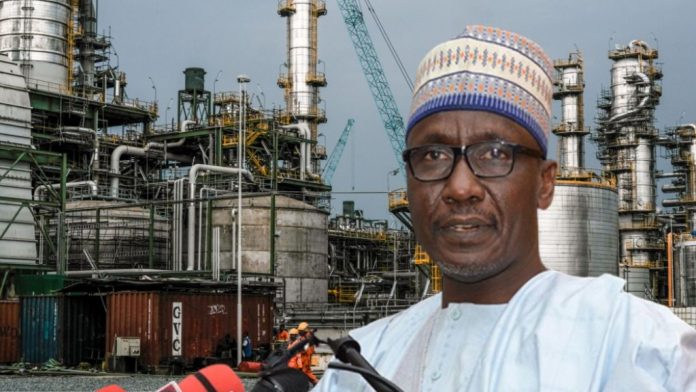
The Nigerian National Petroleum Company Limited (NNPCL) is under scrutiny following its announcement that the Port Harcourt Refinery had commenced operations after years of inactivity.

The claim, made on November 26, has sparked skepticism and criticism from stakeholders, energy experts, and members of the refinery’s host community in Alesa, Rivers State.

Timothy Mgbere, Secretary of Alesa Stakeholders and a former NNPC staff member, has joined the dissenting voices to cast doubt on the refinery’s operational status. Speaking on Arise News, Mgbere accused the NNPCL of exaggerating its progress.

“I will give them the credit that at least they have started something. But not to say that according to the chief head of corporate communication of the NNPC Ltd, they have put it on the media that they are already producing 1,400,000 barrels per day. That’s not the case. That’s not true.”

He also criticized the company for failing to involve traditional chiefs in the announcement, alleging that NNPCL was under pressure to project an image of success. According to Mgbere, the refinery’s performance on Tuesday was lackluster, with only four trucks loaded throughout the day.

He described the process as far from the capacity and efficiency expected of a refinery claimed to be operating at 70% of its installed capacity.

“I don’t want to use the word lie, but as an agency that is holding the oil industry in trust for Nigerians, they shouldn’t put out some of this information that is not true. The true picture of what happened on Tuesday is that the NNPCL has been under pressure to televise to Nigerians that everything is okay and then that the old refinery has started functioning,” he said.

NNPCL had earlier announced that the refinery was operating at 70% of its installed capacity, with plans to load 200 trucks daily. However, Mgbere raised concerns about the credibility of this claim.

“Manual system loads a truck for about 45 minutes. So fully automated, fully rehabilitated, and then you tell us it’s 70 percent operational, and then you’re loading four trucks for the whole day. One truck staying under the loading gantry for more than six to seven hours?” He questioned.

Energy expert, Kelvin Emmanuel, who has been vocal, pointing out that the refinery is not producing, shared these concerns. He accused NNPCL of using off-spec products imported into the country to create the illusion of refinery operations.

“I am still in shock. This man lied to an entire nation— Good God! Set up a blending plant like you’ve in Malta for off-spec PMS and Lòme for Diesel, and then called it a refinery. The apprentice the devil raised is now better than the master,” Emmanuel said.

“Area 5 does not have a functional crude processing unit as we speak. So there’s no way in hell you can produce propane or pms, except of course you are blending the petroleum resins or naphtha with the off-spec Ron 94 that landed at Okirika Jetty within the last 60-days,” he said.

However, Fredrick Nwabufo, Senior Special Assistant to the President on Public Engagement, claimed that he witnessed the refinery 70 percent operational, further muddying the waters.

Energy experts and stakeholders have urged the NNPCL to be transparent about the refinery’s status. Nick Agule, an energy analyst, emphasized the need for independent verification.

“To be honest, for me, I would like more clarity. The NNPCL needs to take journalists into this plant. They need to show journalists exactly what they are doing so that these journalists can come back to us as Nigerians and say, yes, indeed, we have seen that refining processes have convinced us that the old protocol refinery and these are the products that are being produced,” he said.

The skepticism has also been fueled by allegations from members insiders that trucks shown in NNPCL’s promotional videos were merely evacuating old stock rather than transporting newly refined products.

Decades of Failures and Unmet Promises

The Port Harcourt Refinery has been plagued by decades of inactivity and failed rehabilitation efforts. Under former President Muhammadu Buhari, multiple deadlines to restore the refinery’s operations were missed.

The most recent promises, set for October 2024 under President Bola Tinubu’s administration, appeared to be fulfilled with the recent announcement. However, the ongoing controversy raises questions about whether the announcement was prematurely made to calm the dust of curiosity swirling around NNPCL’s promises.

The refinery’s revival is crucial for reducing Nigeria’s dependency on imported fuel. Despite being one of the world’s largest crude oil producers, Nigeria imports most of its refined petroleum products due to its underperforming refineries.

Public trust in NNPCL is waning as allegations of misinformation and inadequate performance mount. Many Nigerians, already burdened by soaring fuel costs, had hoped that a functional Port Harcourt Refinery would offer relief. The revelation that the refinery may not be fully operational has dampened those expectations.

While NNPCL insists that operations are underway, stakeholders are demanding concrete proof of progress. The government has been called upon to address these concerns promptly to restore public confidence and ensure that the refinery achieves its stated goals of boosting local fuel production.

Pepe Coin Price Forecast Shows 10X By 2025, Two Other Altcoins Poised For Double-Digit Returns In December – Tron And New DeFi Altcoin With 20% Bonus This Black Friday 

0

Several altcoins are getting the attention of investors with their bold explosive growth potential of up to 10x in just one month. Pepe Coin (PEPE), a meme token that has experienced some huge gains is expected to have another bull run in 2025. Tron (TRX) on the other hand, a blockchain pioneer, and Yeti Ouro (YETIO), a rising DeFi and Play-to-Earn are showing even bigger potential and looking to get a 10x return for investors.

Pepe Coin (PEPE): From Meme To Market Marvel

Despite being down 0.52% in the last 24 hours, Pepe coin price is currently at $0.00002 and still holds a place in the top 20 position with a massive market cap of $8.26 billion. Pepe coin has had one of the best years after hitting an all-time high recently this year. In the last one month, the PEPE price has gained about 108%

For PEPE coin to achieve a 10X growth, its price would need to rise to $0.0002, which would push its market cap to a staggering $82.6 billion, potentially rivaling the likes of Binance Coin (BNB) or Ripple (XRP). While ambitious, this goal may not be out of reach seeing the coin rise 16 times this year, 10 times would only be a fraction of that.

Tron (TRX) Price Prediction:

TRON, the blockchain platform designed for decentralized applications and smart contracts, is proving its resilience in the current market, despite not having as good of a year as PEPE. TRON (TRX) price is currently at $0.201 with a market cap of $17.38 billion, ranking it as the 11th largest cryptocurrency by market capitalization. In the last month, TRON has seen a steady 20% increase,

TRON’s ecosystem is bolstered by its high transaction throughput, minimal fees, and strong developer community. Additionally, the growing interest in decentralized finance (DeFi) and non-fungible tokens (NFTs) has significantly boosted TRON’s usage. A potential 10x move would require TRON price to hit $2.01, which could be achievable with increased adoption of its blockchain and strategic partnerships.

Yeti Ouro: New Altcoin Sensation

Yeti Ouro, a new Ethereum-based DeFi token that’s quickly gaining traction. Yeti Ouro is designed to revolutionize decentralized finance and Play-to-Earn (P2E) gaming, making it a unique offering in a crowded market. Yeti Go, a P2P project by Yeti Go provides players with real-world rewards, including YETIO tokens.

Yeti Ouro’s presale has already raised an impressive $711k in its first stage, signaling strong investor interest. To further incentivize early adopters, Yeti Ouro is running a Black Friday promotion from November 29th to December 2nd, offering exclusive bonuses for presale participants.

With a total supply capped at 1 billion tokens and a built-in token burn mechanism, YETIO is designed to increase in value as demand grows.


Join The Yeti Ouro Community

Website: https://yetiouro.io/

X (Formally Twitter): https://x.com/yetiouro

Telegram: https://t.me/yetiouroofficial

Discord: https://discord.gg/YtUsEZ2ZrV

Showcasing The Popular Vote Winner and Finalists of Yuri Milner’s 2024 Breakthrough Junior Challenge

0

In September, 20 teenagers received the news that they are the 2024 finalists and/or Regional Champions of Yuri Milner’s Breakthrough Junior Challenge.

When applications for the competition opened, more than 2,300 teenagers from over 200 countries entered. This meant that when the judging process kicked off in June, there were almost 30,000 videos to consider.

The journey to choosing the finalists has passed through several phases, most recently the Popular Vote. This phase sees the public vote for their favorite videos on social media and crown their Regional Champions. The overall Popular Vote winner, Lehnaaz Rana, has landed a spot in the final, skipping the last stage of judging.

Now, the Selection Committee is choosing the top five videos to join hers. The champion, who wins fantastic prizes, will then be selected. They will land a $250,000 college scholarship, $50,000 for a teacher who inspired them, and a $150,000 science lab for their school.

Here’s an overview of the videos that the Popular Vote winner, one of the Regional Champions, and two of the finalists created.

1. Popular Vote Winner: 17-Year-Old Lehnaaz Rana From India

Lehnaaz won the Popular Vote with her video on OHP cancer treatment, which received more than 16,000 reactions on social media.

In her video, she uses a traffic animation to help viewers understand the formation of cancer in the body. The traffic lights in her animation represent micro RNAs, which direct gene activity. The traffic lights malfunction and give continuous green signals, representing cells dividing uncontrollably and causing cancer.

Lehnaaz introduces OHPs, which use the body’s DNA to repair this damage. She explains how scientists create these hairpin-shaped DNA structures and how they attack cancer cells to cure the disease without causing side effects.

2. Regional Champion: 18-Year-Old Alejandro Polo From Panama

Alejandro’s video attracted more reactions than any other in Central and South America. He is the Regional Champion of this area.

In his video, Alejandro unpacks the difference between proteins and prions. The latter are proteins that become misfolded during the folding process, when proteins transform from their inactive state to their native state.

Alejandro refers to prions as the “evil twin” of the healthy protein. He explores why they’re so harmful and introduces the diseases they can cause (like Parkinson’s and Alzheimer’s). He also explains that when prions come into contact with a healthy protein, they pass on their misfolding and multiply at scale.

Although prions are dangerous, Alejandro explains that scientists have used these to develop their understanding of protein folding. Now, they can enhance their knowledge of the immune system and potentially develop super proteins that treat diseases.

3. Finalist: 17-Year-Old Addison Shea From the U.S.

In Addison’s video, she explains that early stem cells become muscle or bone cells. Although these cells have the same DNA, they produce different proteins. But why? Addison explains that they become different types of cells through chromatin regulation.

She uses a fun pasta-cooking analogy to walk through two chromatin regulation processes, explaining how DNA methylation and histone acetylation processes work and differ.

4. Finalist: 18-Year-Old Evelynn Moorman From the U.S.

In Evelynn’s video, she explains that cell phones know the time of day based on cell towers. She goes deeper, explaining that cell towers know the time based on satellites, which know the time based on the average of many atomic clocks.

Evelynn explains that using the Earth’s rotation to measure time doesn’t give accurate results because natural disasters cause the Earth’s rotation to vary. She uses animated chalkboard drawings to explain why atomic clocks are so much more accurate.

Like Addison and Lehnaaz, Evelynn is awaiting the contest results and could be the next Breakthrough Junior Challenge champion.

View the Breakthrough Junior Challenge finalists’ and Regional Champions’ videos.

About Breakthrough Junior Challenge Co-Founder Yuri Milner

Aside from co-founding the Breakthrough Junior Challenge, Yuri Milner is also one of the founders behind the Breakthrough Prize, Breakthrough Initiatives, and Tech For Refugees. On top of this, the Giving Pledge signatory is the author of the short book Eureka Manifesto: The Mission for Our Civilization.