DD
MM
YYYY

PAGES

DD
MM
YYYY

spot_img

PAGES

Home Blog Page 2801

The Role of Electric Vehicles in Emission Reduction

0

The transportation sector stands as one of the significant contributors to global greenhouse gas emissions, with a substantial portion emanating from internal combustion engine vehicles. As the world grapples with the urgent need to mitigate climate change, electric vehicles (EVs) present a promising pathway towards a more sustainable future. Increasing the adoption of EVs is not just a trend; it is a pivotal move that could drastically reduce harmful emissions worldwide.

Electric vehicles offer a cleaner alternative to traditional gasoline-powered cars. They operate on electric motors and batteries, eliminating tailpipe emissions, which are a major source of pollution in urban areas. The U.S. Environmental Protection Agency (EPA) dispels the myth that EVs are worse for the climate due to power plant emissions, stating that EVs typically have a smaller carbon footprint, even when accounting for the electricity used for charging.

Moreover, the MIT Climate Portal confirms that despite the carbon-intensive process of manufacturing EV batteries, electric cars drive much cleaner under nearly any conditions. Over their lifetimes, EVs create fewer carbon emissions than gasoline-burning cars. This is a crucial consideration, as the lifetime emissions of a vehicle play a significant role in its environmental impact.

 The Lifecycle Emissions of EVs

A common concern about EVs is the emissions associated with battery production. However, studies indicate that the greenhouse gas emissions from an EV over its lifetime are typically lower than those from a gasoline-powered vehicle, even when manufacturing is taken into account. As the energy grid becomes greener, with an increasing share of renewable sources, the lifetime emissions of EVs are expected to decrease even further.

The future looks bright for electric vehicles as advancements in technology and increases in renewable energy sources continue to lower their carbon footprints. FactCheck.org notes that EVs are expected to contribute even fewer emissions than gasoline-powered cars over their lifetimes in the near future. This trend is supported by the European Environment Agency, which reports that EVs’ greenhouse gas emissions are about 17-30% lower than those of petrol and diesel cars with the current EU energy mix.

The Global Push for EV Adoption

Governments and organizations worldwide are recognizing the importance of transitioning to electric vehicles. Incentives, infrastructure development, and regulations are being implemented to encourage consumers to make the switch. The adoption of EVs is not just a matter of environmental responsibility but also an economic and strategic move towards energy independence and sustainability.

Financial incentives are a significant driver of EV adoption. Tax credits, purchase subsidies, and exemptions from sales and import taxes make EVs more affordable and attractive to consumers. For instance, the United States offers a federal tax credit of up to $7,500 for EV purchases, while China provides substantial subsidies to stimulate domestic EV production and sales.

Infrastructure development is also crucial. The availability of convenient and affordable charging stations is vital as EV ownership scales up. Governments are investing in public charging infrastructure and incentivizing the installation of home charging points to support this growth.

The transportation sector accounts for nearly a quarter of global carbon emissions, making it a critical target for reducing greenhouse gases. EVs, with their zero tailpipe emissions, are seen as a key component in meeting climate goals set by agreements like the Paris Accord. The transition to electric mobility is further supported by advancements in renewable energy, allowing EVs to be powered by cleaner electricity sources.

The shift towards electric vehicles is a critical component in the global strategy to reduce harmful emissions and combat climate change. With the evidence supporting the environmental benefits of EVs, it is clear that accelerating their adoption is a step in the right direction. As we continue to innovate and improve the sustainability of our transportation systems, electric vehicles stand as a beacon of progress, driving us towards a cleaner, greener future.


Bitcoin Expert Warns of 90% Cardano Price Drop, While FXGuys Hits $1 Million Milestone

0

Market predictions can often shift the landscape overnight in the ever-volatile cryptocurrency world. Recently, prominent Bitcoin advocate Max Kaiser made waves by forecasting a dramatic 90% drop in Cardano’s value relative to Bitcoin over the next six months. While Cardano supporters have humorously speculated that this could create a lucrative buying opportunity, it also raises concerns about the platform’s ability to meet its long-term commitments. Meanwhile, amidst the fluctuating crypto landscape, a new player is emerging with promise — FXGuys, which recently raised over $1 million in its private sale, positioning itself as the top PropFi altcoin pick.

Max Kaiser’s Bold Prediction on Cardano

Max Kaiser, a well-known Bitcoin advocate, has never avoided making bold statements. His latest prediction that Cardano (ADA) could lose up to 90% of its value relative to Bitcoin is certainly eye-catching. Kaiser’s reasoning aligns with the beliefs of many Bitcoin maximalists who view Bitcoin as the ultimate store of value, driven by its decentralized structure, high liquidity, and market dominance.

Cardano, a blockchain platform known for its proof-of-stake consensus and peer-reviewed academic methodology, has made strides in scalability and energy efficiency. However, critics argue that it has struggled to attract developers and build the robust ecosystem it promised. While ADA supporters like Cardano Whale view this price dip as a potential buying opportunity, the forecast reflects broader concerns about Cardano’s ability to compete against more dominant assets like Bitcoin in the long run.

FXGuys Emerges as Top PropFi Altcoin

As Cardano faces turbulence, another altcoin is rapidly gaining momentum — FXGuys. FXGuys is making waves in the burgeoning PropFi (Proprietary Finance) space, combining decentralized finance (DeFi) innovations with a unique Trade2Earn model. In its Stage 1 presale, FXGuys has already sold out 68,000,000 $FXG tokens, raising over $1 million in its private round. The token is priced at just $0.03, signaling potential growth as it continues attracting attention from early investors.

FXGuys sets itself apart through its Trader Funding Program, which is designed to support traders by providing funding for their strategies. This program creates an innovative staking mechanism that rewards participation. This funding model, combined with staking opportunities, makes FXGuys a standout in the PropFi space, offering a tangible value proposition that other projects in the sector have struggled to match.

Why FXGuys is a Top Altcoin Pick

Unlike many other altcoins, FXGuys is carving out a niche that caters to both retail and professional traders looking for a mix of decentralized finance and Trader Funding opportunities. Its $FXG token provides access to the platform’s core features and offers staking rewards, giving investors additional incentives to participate in the project.

FXGuys’ Trade2Earn model is another standout feature, rewarding traders for their activity and success on the platform. This sets a new standard for decentralized trading platforms, blending traditional finance tools with the flexibility of DeFi. With the project still in its early presale stage, it presents a unique opportunity for investors to get involved at an entry-level price of $0.03 per token.

Conclusion: A Tale of Two Cryptos

As the cryptocurrency market continues to evolve, the contrasting fortunes of Cardano and FXGuys offer a snapshot of the opportunities and risks of investing in digital assets. Max Kaiser’s prediction of a 90% price drop for Cardano is a sobering reminder of the volatility that still dominates this space, particularly for projects that have yet to reach their full potential.

In contrast, FXGuys has shown tremendous early success, raising over $1 million and offering a robust PropFi model that could reshape how traders engage with decentralized finance. With its $FXG token priced at just $0.03 and a promising roadmap ahead, FXGuys stands out as one of the top altcoin picks in 2024, offering both innovation and growth potential.

To find out more about FXGuys follow the links below:

Website | Whitepaper | Socials | Audit


Exclusive FXGuys Promo Code:

USE PROP10 FOR 10% BONUS

The Nasarawa State Unemployment Rate of 0.5%, and Correlation Between Poverty and Unemployment

1

Original Post

“Nasarawa State unemployment rate is 0.5% “ – National Bureau of Statistics (NBS) – Nigeria.  Nasarawa State has a poverty rate of 57.3%, according to NBS.

Who can help me reconcile what is going on here? Is NBS really serving Nigeria well with these useless reports and numbers?

Sure, let me congratulate Nasarawa State for recording 0.5% unemployment rate, one of the best in the world, and better than the US, UK, Japan and indeed anywhere in the world. An unemployment rate of 0.5% is actually a bad thing because it will destroy any economy.

Some Comments on LinkedIn

Comment 1: The biggest challenge with Nigerian economy is DATA. I am not sure why. Is it that the data is not available or No proper method of collecting the data? Or out of laziness or deliberate intent to create a monster out of it, those saddled with responsibility to collect the data, failed and are falling in their role.
That has always been my problem with the kind of ratios and numbers thrown around by NBS and which other government agencies rely on to make pronouncements.

And I am not surprised at this, when as basic as our population figure is based on conjectures.

We have a BIG PROBLEM if NBS indeed put out these figures about Nasarawa.

Comment 2: I’m not here to take sides, but rather to explain what many people don’t know about research data. I see many people with various titles commenting, but they don’t understand how this is done. About 3 years ago, NBS changed their methodology for calculating the unemployment rate in Nigeria. The simplest way to explain it is that if you are working, regardless of the number of hours you put into the work, you are considered employed as long as you are not doing anything at all. However, the other countries you’re comparing with are using hours of work as a criterion. That’s the key difference. Before now, NBS also uses the same methodology but it doesn’t fit in to the system because Nigeria is not structured in hourly work. What NBS discovered is that there are people who only work a few hours but make enough money to support their families. For example, would you say a food seller who only sells from 6 pm to 10 pm is unemployed? The dynamics are different, and we need to understand that. Lastly, before commenting on any data, let’s learn to check the methodology so that we don’t appear uninformed.

My Response: “There’s no correlation between poverty and unemployment as a yardstick. ” – If you have no unemployment (0.5% here), you should be in a position to boost earning and wages.  If you boost wages, poverty will go. You cannot tell me that everyone has a job and everyone is poor. I challenge the thesis of your comment because low unemployment should improve wages, and that will reduce poverty.

Follow up after comments

On my question on how we can reconcile National Bureau of Statistics (NBS) data where a state in Nigeria (Nassarawa) has 0.5% unemployment rate, and still have poverty rate of 57%, I have received some responses:

Comment 1: “There’s no correlation between poverty and unemployment as a yardstick. ” 

Comment 2: “ Prof; the fact that you are employed does not translate to riches.“

My Response: The construct that unemployment rate does not correlate with poverty rate is not factual.   If you have no unemployment (0.5% here) in a place, you should be in a position to boost wages of workers because wages will rise due to competition which happens during full employment.  If you boost wages, poverty will reduce since people will have money in their pockets. You cannot tell me that everyone has a job in a place and people are still that poor. 

Low employment MUST increase labour cost, and that will reduce poverty in the land due to market forces. In summary, there is a positive correlation between unemployment and poverty because under FULL employment in Nasarawa State, we cannot expect a 57% poverty rate if market forces are working!

Good People, I am not saying that NBS is wrong, I just want someone to explain in a logical way why a place with FULL employment can have a high poverty rate. Otherwise, NBS may need to revisit its methodology, and then define what is really an “employment”. Get me right, at 0.5%, everyone should be japa’ing to Nasarawa as it has the lowest unemployment rate in the world.

Under Yemi Kale’s tenure, I used NBS’ data in my Harvard Business Review works. I am not saying that NBS is wrong, I just want someone to explain in a logical way.

Comment on Feed

Comment 1: Dear Prof. Anyone arguing that there is no correlation between unemployment rate and poverty really need to step back and go and understand basic economics. A 2019 study in Nigeria found 0.85% correlation coefficient between unemployment and poverty rates.( Journal of Economic and Financial Studies).
Same NBS in 2022 before this their new methodology published Unemployment as 23.1% and Poverty Rate @ 40.1%.
In fact Research also shows that a 1% increase in unemployment rate is associated with 0.5-15% increase in poverty rate( World Bank).

Comment 2: “If majority are employed, say they still earn minimum wage which cannot even buy 30 litters of fuel …it’s possible to have both unemployment rate of 0.5% and still have poverty rate of 57%.”

My Response: That state is not possible unless there is no productivity in that place. If you have FULL employment where everyone earns N70k, to leave that job for another new opening, you need to pay more than N70k. So, for you to keep all at 70k, it means nothing new is happening in that place. Should that be, the state has to bring workers who would like to earn N70k from other states for new projects and positions. I am not aware that people are japa’ing to Nasarawa to earn min wage which will keep the equilibrium of FULL employment at min wage. 

You can be employed and still be poor. It is common in the US fast food sector. However, a state cannot have FULL employment at 0.5% and still keep min wage since that state is still active economically. The  very fact that it is on FULL employment will push employers to improve wages, and that will reduce poverty. So, at a population level, your position does not work. 

Poverty, no matter the multidimensional level you may posit, connects back to “money” which is income. If you have money, education, healthcare, etc poverty will disappear. So, I do not accept the thesis that he is fully employed with good income, but his poverty is coming from healthcare or education poverty as that is not typical.

Crypto for Dummies: Top 3 Coins to Start Your Wallet Journey 2024

0

Starting off on a crypto trading adventure can seem overwhelming but it need not be. For beginners, Lunex Network, Cardano, and Litecoin are the top three coin selections to start your wallet journey in 2024. Each of these coins offers unique features and benefits that cater to new investors. Let’s see why experts are particularly backing Lunex Network among the top three.

Litecoin (LTC) Rises By 1% In 7 Days

Litecoin’s price has climbed by 1.84% during the last 7 days to $64.30. Litecoin’s increasing payment dominance sets it apart, since it currently accounts for 37% of all cryptocurrency transactions, exceeding Ethereum and Bitcoin. This rise is due to Litecoin’s fast, low-cost transactions. Litecoin’s liquidity is solid, with a volume-to-market cap ratio of 0.1482. The RSI of 64.80 suggests neutral momentum, indicating sideways trading for now.

Over the past month, Litecoin saw positive performance 57% of the time, with low volatility at just 4%. Despite only outperforming 25% of the top 100 crypto assets, its expanding role in transactions keeps it relevant. For all those searching for an efficient and stable crypto, Litecoin remains a good choice.

Cardano (ADA) Faces Challenges

Cardano was formerly a contender in the Layer-1 blockchain space. A price rally to $0.80 in 2024 made some believe Cardano’s time had arrived. However, the resurgence of the broader market has shifted investors’ focus toward the larger ecosystems. This has hurt smaller Layer-1 blockchains like Cardano, and analysts don’t expect its price to reach $1 soon, as challenges persist.

Meanwhile, Cardano’s native currency, ADA, is currently facing challenges due to market pressure from Bitcoin and concerns surrounding large-scale Ethereum (ETH) sales related to the PlusToken scandal. A significant amount of ETH has been transferred to major exchanges, sparking fears of a possible $1.3 billion sale. This potential sale could have a major impact on Cardano and other altcoins, adding to the ongoing turbulence in the market.

Lunex Network’s (LNEX) Privacy-focused Crypto Trading Set To Change DeFi

Lunex Network focuses on privacy in crypto trading by eliminating KYC requirements. Users can trade anonymously without needing to submit personal documents, which simplifies the process and enhances security for all traders, whether beginners or seasoned.

For advanced traders, Lunex Network Pro offers a portfolio tracker for better asset management, along with an AML-compliant wallet address for enhanced safety. Businesses can make use of the platform’s B2B transaction gateway which allows crypto-to-fiat conversions immediately. This particular feature has attracted institutional investors and large-scale traders to the platform.

Lunex Network also has a revenue-sharing model that appeals to investors. The platform repurchases tokens from the market and distributes them as staking rewards, offering up to 18% APY. This, along with its deflationary tokenomics, helps maintain long-term token value, making $LNEX a solid investment.

Analysts predict huge potential gains, with 100x returns possible. With the token currently priced at $0.0015 in its presale, investors are encouraged to act quickly before the price surges during the anticipated 1800% rally.


You can find more information about Lunex Network (LNEX) here:

Website: https://lunexnetwork.com

Socials: https://linktr.ee/lunexnetwork

Stripe Reintroduces Crypto Payments With Stablecoins, Sees Global Adoption From Over 70 Countries in First 24 Hours

0

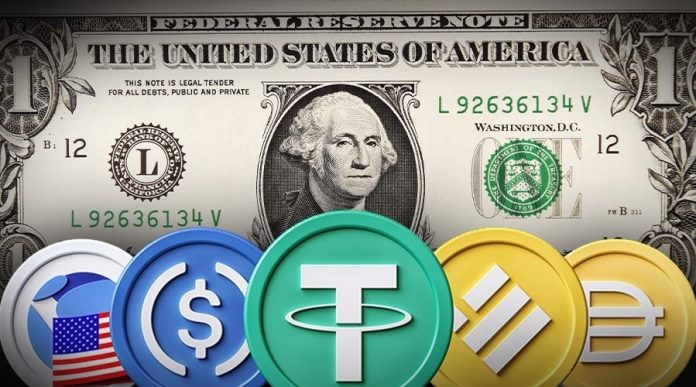
Stripe, the global payment processing giant,  has announced that users from over 70 countries used stablecoins for online transactions in the first 24 hours.

This development comes after the company began allowing merchants on its platform to accept crypto payments again, starting with US-based merchants.

According to an X post from Stripe employee Jen, the new feature gained rapid engagement in a short period after launch.

She wrote,

“In the first 24 hours, customers from 70+ countries have paid with stablecoins through Stripe. Today, we just expanded access, so if you’re a US merchant on Stripe, check your Stripe dashboard and turn on ‘Pay with Crypto!”

Recall that Stripe initially became a leader in the crypto space when it introduced Bitcoin payment support in 2014. However, it discontinued the feature in 2018, citing declining demand, long transaction times, higher fees, and price volatility.

The fintech new stablecoin option will enable merchants accept payments globally, with customers able to pay using USDC or USDP on Ethereum, Solana, and Polygon, while US merchants receive payments in dollars. Users can connect browser-extension wallets like Metamask or Coinbase Wallet to make payments and Stripe offers merchants the convenience of issuing refunds directly to customers’ wallets.

As part of the crypto payment solution, Stripe charges a 1.5% fee per transaction (in USD), lower than the 2.9% plus $0.30 typically charged for card payments. Head of Product Jay Shah, highlighted that Stripe now supports over 100 payment methods and plans to further expand its offerings.

Stripe’s move to reintroduce crypto, starting with stablecoins, aligns with the company’s goal to help businesses reach more customers at a lower cost. With the reintroduction of crypto payments, Stripe merchants can now accept USD payments across multiple blockchains without the complexity of holding or converting crypto to fiat.

This development highlights Stripe’s commitment to staying at the forefront of innovation in the payment industry. The company’s efforts come as demand for alternative payment methods continues to rise, particularly in emerging markets where access to traditional banking services remains limited.

Notably, the relaunch is expected to have far-reaching implications, potentially paving the way for wider acceptance of cryptocurrency payments across various industries and regions. As more businesses and consumers adopt stablecoin payments, Stripe is positioning itself as a leader in the evolving digital economy.

Also, in the company’s efforts to enhance fraud detection on its platform, it recently partnered with Nvidia that will advance AI for Stripe and improve fraud detection for its followers.