
DD
MM
YYYY

PAGES

DD
MM
YYYY

spot_img

PAGES

Home Blog Page 2807

Global Tech Startup Funding Slumps to $54.7 Billion in Q3 2024, Marking Lowest Levels Since 2020

0

According to a Global state of funding report by international tech startup funding analytics firm, CB Insights, the global tech ecosystem experienced a sharp decline in startup funding during the third quarter (Q3) of 2024.

A total of $54.7 billion was raised between July and September which represented a steep decline from the $68.1 billion raised by startups in the preceding quarter (Q2, 2024), representing a significant 19.7% decline. Additionally, it marked an 11.8% drop from the $62 billion raised in the first quarter (Q1) of the same year. The Q3 figures are the lowest recorded since 2020, falling below the previous low of $54.9 billion in the fourth quarter of 2023.

Decline in Deals And Investment Activity

The report also reveals a sharp decline in the number of funding deals. Only 6,056 deals were recorded during the quarter, down from 6,736 in Q2 2024 and 7,209 in the first quarter. This marks the lowest deal count since 2020, well below the 7,201 deals recorded in Q4 2023, which had previously been the second-lowest.

In terms of funding raised in regions, the U.S. led the funding round raised in Q3 2024, while Africa lagged as the region that attracted the least funding. Startups in the United States accounted for the largest share of global startup funding, securing $29.8 billion, or 55.1 percent of the total raised in Q3 2024. Europe followed as the second highest, with $11 billion, raised, representing 20.1% of the total, while Asia attracted $10,5 billion, accounting for 19.2%.

Latin America raised approximately $800 million, representing 1.46% of the global total, while Oceania (Australia and New Zealand) secured $500 million, representing 0.9 percent of the total raised. African startups raised only $300 million, a mere 0.54 percent of the total, while other regions attracted $94 million in funding.

Meanwhile, despite the overall decline in funding and deal volume, the quarter saw some positive trends in deal sizes. There were 98 deals worth $100 million or more in Q3 2024, an improvement over the 85 such deals recorded in Q4 2023. Additionally, these large deals attracted a combined $21.5 billion, surpassing the $18.9 billion raised through similar-sized deals in the last quarter of 2023.

With the year almost over, 2024 is on track to be the slowest funding year since 2020 With a total of $184.8 billion raised so far in 2024. This is $76.6 billion short of the total $261.4 billion raised in 2023, and with Q4 2024 unlikely to see a drastic increase, it is improbable that the year will match or exceed last year’s figures.

In summary, while Q3 2024 saw some resilience in deal sizes, the overall funding landscape for startups continues to face significant challenges, with a marked decline in both investment volumes and deal activity.

Ripple Launches Crypto Storage Services for Banks

0

In a significant move to diversify its offerings, Ripple, the enterprise blockchain solution for global payments, has announced the launch of Ripple Custody, a new division dedicated to providing crypto storage services for banks and fintech companies. This strategic expansion comes at a time when the demand for digital asset management solutions is on the rise, reflecting the growing integration of cryptocurrency into mainstream financial services.

Ripple Custody aims to address a critical need within the banking sector for secure and compliant storage of digital assets. By leveraging Ripple’s established infrastructure, including the XRP Ledger, Ripple Custody offers a suite of features designed to facilitate the safekeeping of cryptocurrencies while ensuring adherence to regulatory standards. The services include pre-configured operational and policy settings, monitoring of anti-money laundering risks, and a user-friendly interface for ease of access and management.

The introduction of Ripple Custody is a testament to Ripple’s commitment to providing innovative solutions that meet the evolving needs of its clients. With over 250% customer growth year-over-year and operations extending across seven countries, Ripple is positioning itself as a leader in the burgeoning field of crypto custody. The company’s foray into this domain signifies a broader push to capitalize on the estimated $16 trillion crypto custody market projected by 2030.

For banks and fintech firms, the ability to offer secure storage of digital tokens is becoming increasingly important as they seek to provide comprehensive services to their customers. Ripple’s new venture not only enhances its existing payment settlement business but also places it in direct competition with other established crypto custody providers.

By leveraging crypto custody services, banks can position themselves at the forefront of the financial sector’s digital transformation, offering cutting-edge solutions while maintaining trust and security. Crypto custody services offer bank-grade security measures, protecting assets from unauthorized access and cyber threats.

By using these services, banks can ensure compliance with the evolving regulatory landscape surrounding digital assets. Custody solutions streamline the management of digital assets, making it easier for banks to handle large volumes of transactions. Offering crypto custody can attract new customers looking for secure investment opportunities in the digital asset space.

Banks can generate additional revenue by providing custody services as a value-added service to their clients. Crypto custody services can act as a foundation for banks to develop and launch innovative financial products. Custodians often provide insurance on assets they manage, mitigating the financial risk for banks and their clients. Banks can earn interest from the crypto deposits by staking or lending through the custody service.

However, Ripple distinguishes itself with its unique integration capabilities and compliance-focused features, which are likely to appeal to institutions navigating the complex landscape of digital asset management.

As the digital economy continues to expand, the role of crypto custody services will become more central to the financial ecosystem. Ripple’s latest initiative reflects the company’s foresight in recognizing and addressing the needs of a market at the cusp of significant transformation. With Ripple Custody, the company is not just diversifying its operations but also contributing to the stability and security of the broader crypto market.

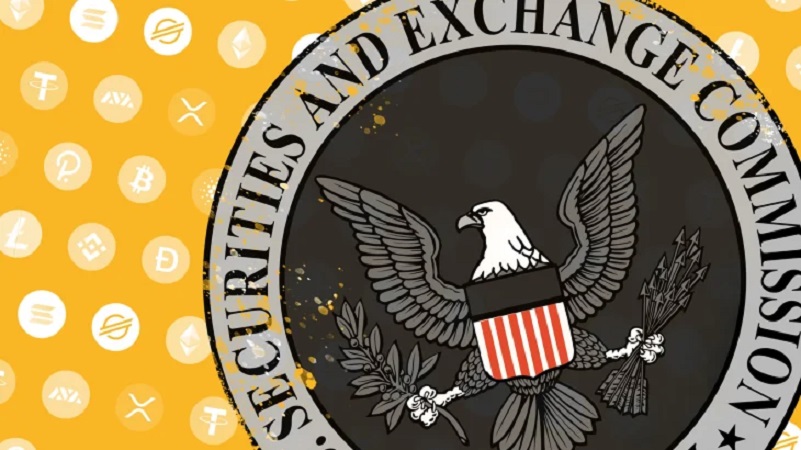
Crypto.com’s Legal Challenge to the SEC After Wells Notice 

0

In a significant development within the cryptocurrency industry, Crypto.com has initiated legal proceedings against the U.S. Securities and Exchange Commission (SEC) following the receipt of a Wells Notice. This move underscores the ongoing tension between crypto entities and regulatory bodies, as the industry seeks clarity and fair treatment under the law.

A Wells Notice is a formal communication issued by the SEC indicating that the agency is considering enforcement action. In response, Crypto.com has filed a lawsuit alleging that the SEC has overstepped its regulatory authority. The crux of the dispute lies in the classification of certain digital assets and the SEC’s jurisdiction over secondary-market sales of these assets.

The Wells Notice, received by Crypto.com on August 22, 2024, suggests that the SEC is contemplating charges related to the operation of an unregistered broker-dealer and securities clearing agency, as it regards certain network tokens traded on the platform as securities, excluding Bitcoin (BTC) and Ethereum’s ether (ETH). In response, Crypto.com’s lawsuit seeks declaratory and injunctive relief to prevent what it views as an unlawful expansion of the SEC’s jurisdiction over secondary-market sales of these tokens.

Crypto.com’s CEO, Kris Marszalek, has positioned the lawsuit as a defense against the SEC’s “unauthorized overreach and unlawful rulemaking,” aiming to protect the future of cryptocurrency in the United States. The case highlights the broader industry’s struggle with the SEC’s approach to regulation, which some view as a “regulation by enforcement” regime that has affected millions of American crypto holders.

Crypto.com’s legal action is a bold step in challenging what it perceives as the SEC’s “unauthorized overreach and unlawful rulemaking” which, according to the company, threatens the future of cryptocurrency in the United States. The lawsuit seeks declaratory and injunctive relief to prevent the SEC from expanding its jurisdiction to cover secondary-market sales of network tokens sold on Crypto.com’s platform.

The case filed by Crypto.com argues that network tokens, which are digital assets used to access or interact with a public blockchain network, are not securities under the Securities Act of 1933 or the Securities Exchange Act of 1934. The company contends that the SEC has conceded this fact in multiple administrative and federal court cases involving Crypto.com’s competitors.

However, despite these concessions, Crypto.com asserts that the SEC has been aggressively pursuing enforcement actions based on a de facto rule that nearly all network tokens are a newly defined financial instrument called a “Crypto Asset Security.” This term, according to the lawsuit, has no foundation in the Securities Act or Exchange Act and represents an unlawful expansion of the SEC’s regulatory scope.

The lawsuit also highlights the inconsistency of the SEC’s approach, noting that while the agency has exempted bitcoin and ether from being classified as securities, it has not extended the same treatment to other network tokens with substantial similarities.

Crypto.com’s legal challenge is part of a broader industry pushback against the SEC’s regulatory approach, which many in the crypto space view as “regulation by enforcement.” The outcome of this lawsuit could have far-reaching implications for the cryptocurrency industry, potentially setting a precedent for how digital assets are regulated in the United States.

As the legal proceedings unfold, the cryptocurrency community will be watching closely. The resolution of this case could either pave the way for a more innovation-friendly regulatory environment or reinforce the current state of uncertainty that hampers the growth and mainstream adoption of cryptocurrencies.

Nigeria’s Crude Oil Payments in Naira and Unending Queues

0

Nigeria’s decision to commence the sale of crude oil in its local currency, the Naira, marks a significant shift in the nation’s oil trade dynamics. This historic move, aimed at bolstering the Naira and reducing reliance on the US dollar, has been met with a mix of optimism and concern. The Nigerian government has taken a bold step by ditching the US dollar for crude oil sales, a decision that could reshape the economic landscape.

The implementation of this policy has seen the Nigerian National Petroleum Company Limited (NNPCL) agree to supply crude oil to the Dangote Refinery for a period of six months, with payments made entirely in Naira. This is expected to reduce the pressure on the dollar and stabilize the currency, as confirmed by the Minister of Finance and Coordinating Minister of the Economy. However, the transition has not been without its challenges.

Amidst these developments, the country has been grappling with persistent fuel queues, a situation exacerbated by recent price hikes. The retail stations of NNPC have raised the price of petrol significantly, leading to widespread discontent and calls for a reversal by the Nigeria Labour Congress. The fuel price increase, influenced by market forces and exchange rates, has led to the resurfacing of long queues at petrol stations across Nigeria.

The NNPC’s decision to increase petrol prices by over 15% marks the exit from a costly subsidy program that has strained the nation’s finances. This move is part of a broader strategy to deregulate the oil sector and allow market forces to determine prices. However, the immediate impact has been felt by the populace, with many Nigerians struggling with the increased cost of living and transportation.

One of the immediate benefits of this policy is the potential conservation of foreign exchange reserves. With reduced dollar outflows, there is an expectation of stabilizing the exchange rate and lowering the cost of imports. It is estimated that this new arrangement could save Nigeria an annual sum of US$7.32 billion in foreign exchange demand.

The stimulation of local refining is another anticipated benefit. The policy could incentivize increased investments in the sector, leading to job creation, technology transfer, and improved domestic refining capacity. This, in turn, could lead to a more stable supply of petroleum products, reducing price fluctuations and benefiting consumers with stabilized petroleum prices.

However, the policy also presents potential drawbacks that warrant careful consideration. The effectiveness of the policy in achieving its goals without adverse effects on the economy remains to be seen. Challenges in implementation and international acceptance could arise, as well as the impact on Nigeria’s external reserves and currency stability.

The situation is a complex interplay of economic reforms, currency stabilization efforts, and the realities of market dynamics. As Nigeria navigates through these changes, the outcomes of these policies will be closely watched by both national and international observers. The country’s bold move to sell oil in Naira is indeed reshaping its economic landscape, but it also brings to light the challenges of managing such a significant transition.

The unending queues at fuel stations serve as a stark reminder of the delicate balance between economic policy and its impact on the daily lives of citizens. As Nigeria continues to strive for economic growth and stability, the effectiveness of these measures will be measured by their ability to improve the lives of Nigerians and strengthen the nation’s economy.

Geregu Power Reports N36.2bn Pre-tax Profit For The First Nine Months of The Year

0

Geregu Power Plc, Nigeria’s first listed power generation company, has announced remarkable financial results for the first nine months of 2024, showcasing a significant increase in profitability.

The company reported a pre-tax profit of N36.2 billion, a 107% rise from the N17.4 billion recorded during the same period in 2023. This growth highlights Geregu Power’s strong operational performance despite industry challenges.

Financial Performance Breakdown

The company’s profit after tax stood at N24.1 billion, and when annualized, its projected profits could reach N32.1 billion, suggesting a compounded annual growth rate (CAGR) of 23% over the past five years. This marks an impressive increase from N16 billion in profits after tax recorded in 2023.

Geregu Power’s revenue for the nine months reached N112.5 billion, reflecting a 102% year-on-year increase. The revenue was primarily driven by N71.4 billion in energy sales and N41.1 billion from capacity charges. The company also maintained a solid gross profit of N54.6 billion, despite inflationary pressures and rising costs, with gross margins exceeding 41%—though this was slightly below the historical margin of 50%.

Key Financial Highlights:

  • Revenue: N112.5 billion (+102%)
  • Gross Profit: N54.6 billion (+89.2%)
  • Operating Profit: N37 billion (+80.1%)
  • Pre-tax Profit: N36.2 billion (+107.4%)
  • Profit after tax: N24.1 billion (+111.9%)
  • EPS: N9.63
  • Cash Balance: N40.4 billion
  • Net Asset: N49.2 billion
  • Total Assets: N221 billion

Industry Influence and Growth Prospects

Geregu Power’s impressive growth can be linked to favorable developments in Nigeria’s electricity sector. Key reforms, such as the Nigerian Electricity Regulatory Commission (NERC) approval of higher tariffs in 2023, have improved revenue alignment with operational costs, enhancing profitability for power generation companies (GenCos) like Geregu. Stakeholders had expected additional tariff increases in 2024, though political and economic factors have stood in the way.

Furthermore, the government’s continued investments in grid infrastructure and privatization of critical power assets create additional opportunities for Geregu Power to enhance its capacity and further unlock growth potential.

Share Price Surge and Future Growth

Geregu Power’s share price has surged 188% year-to-date, underlining strong investor confidence. The stock currently has a price-to-earnings (P/E) ratio of 102x, positioning it as a high-growth asset. Despite operating at only 50% capacity due to grid constraints, the company’s doubling of profits signals significant growth potential.

With profits growing at a CAGR of 23%, investors are betting on the company’s ability to expand its earnings further. There are also indications that Geregu Power may pursue acquisitions to bolster its capacity, which could have a transformative impact on its revenue and profitability.

Geregu Power has maintained a consistent record of dividend payments, with an average payout ratio exceeding 100% over the last three years. This commitment, combined with its robust 2024 performance, has made the company’s stock particularly attractive to income-focused investors. The sustained strong performance is expected to support continued dividend payouts, further boosting investor confidence.

Outlook for the Final Quarter

Geregu Power projects a pre-tax profit of N16.8 billion and a profit after tax of N11 billion for the final quarter of 2024. If these targets are met, the company’s full-year pre-tax profit could rise to N53 billion, representing a 118% year-on-year increase. This forecast underscores the company’s potential for continued robust earnings growth, positioning it as a leading player in Nigeria’s evolving power sector.