DD
MM
YYYY

PAGES

DD
MM
YYYY

spot_img

PAGES

Home Blog Page 282

Ethereum Foundation Faces Backlash Over Low Pay for Core Devs

0

A long-simmering tension within the Ethereum ecosystem erupted into public view when Péter Szilágyi, the former lead developer of Go-Ethereum (Geth)—Ethereum’s primary execution client—resurfaced a private letter he sent to Ethereum Foundation (EF) leadership in May 2024.

In it, Szilágyi detailed his frustrations with the Foundation’s compensation practices, centralization dynamics, and overall treatment of key contributors. This revelation quickly snowballed, drawing sharp criticism from Polygon CEO Sandeep Nailwal and others, who accused the EF of undervaluing builders while preaching decentralization.

The Resurfaced Letter: Szilágyi’s $625K Revelation Szilágyi’s letter, now publicly shared on GitHub, paints a picture of disillusionment from one of Ethereum’s longest-serving developers. Over his six-year tenure as Geth lead roughly 2018–2024, Szilágyi earned a total of approximately $625,000 before taxes—no raises, benefits, or incentives included.

This averages out to about $104,000 per year, which he described as 50–60% below market rates for similar roles in the private sector. “The Foundation took away life-changing money from every single one of their employees over the past decade… Nobody’s arguing against the upside of being a successful founder, but the Foundation—led by Vitalik—went above and beyond to avoid paying their people fairly.”

He alleged that Ethereum’s decisions are controlled by a tight “inner circle” of 5–10 people, with co-founder Vitalik Buterin exerting “complete indirect control.” This setup, he argued, creates “perverse incentives” and risks “protocol capture” by underpaying passionate contributors who are then forced to seek funding elsewhere.

Szilágyi called himself a “useful fool” in a “lose-lose situation,” either staying silent as Geth’s reputation suffers or speaking out and damaging his own standing. He noted Geth as the “oldest team in the ecosystem apart from Buterin himself,” yet feeling unappreciated.

Szilágyi was reportedly fired from the EF in June 2025, which he linked to these tensions. The letter’s resurfacing has sparked widespread debate on X, with users calling the pay “insanely low” for maintaining the backbone of a $480 billion network.

“If someone’s not complaining that they are paid too little, then they are paid too much.” Polygon CEO’s Call-Out: “Questioning My Loyalty” The letter hit a nerve with Sandeep Nailwal, co-founder and CEO of Polygon Foundation, who responded on X with a lengthy thread expressing his own frustrations.

Nailwal revealed that Polygon—often positioned as an Ethereum Layer-2 scaler—has received “zero direct support” from the EF or Ethereum’s core tech (CT) community, and in fact faced opposition. Despite this, he maintained a “moral loyalty” to Ethereum, even at the cost of “billions of dollars in Polygon’s valuation.”

Polygon PoS is “effectively hinged” on Ethereum and acts as a major fee-paying “customer,” yet it’s not embraced as a true L2. He contrasted this with how successes like Polymarket are hailed as “Ethereum wins,” while Polygon is sidelined.

By aligning with Ethereum instead of declaring independence as a Layer-1, Polygon sacrificed 2–5x higher potential valuation compared to Hedera Hashgraph. Major contributors are forced to question or even regret their allegiance. Nailwal tagged this as “mind-boggling” and called for the EF to “embrace” rather than “shun” allies.

Polygon Labs CEO Marc Boiron echoed this, stating Polygon is a “customer of Ethereum” that deserves better treatment. The outburst has fueled speculation about Polygon pivoting toward rivals like Solana, with Solana co-founder Raj Gokal and former strategy head Austin Federa suggesting collaboration.

DeFi Voices and Vitalik’s Response

The drama has amplified calls for EF reform: Andre Cronje: Blasted the EF for providing “zero support or funding” to core devs while sitting on a massive treasury recently used to sell $43M in ETH. Cronje slammed the Foundation for failing to scale Ethereum despite contributions from projects like his.

Ethereum’s price dipped to around $3,871 on October 21, with $284M in ETF outflows amid the noise. Broader concerns include talent drain to higher-paying chains and risks to Ethereum’s decentralization narrative.

Vitalik Buterin responded measuredly on X, praising Polygon’s innovations (e.g., zero-knowledge EVM investments and AggLayer) and Nailwal’s philanthropy, without directly addressing pay or control issues. He positioned it as a call for unity: “Ethereum may be decentralized, but Vitalik absolutely has complete indirect control over it” quoting Szilágyi, but framing positively.

This isn’t isolated—earlier 2025 saw similar whispers about EF underpay (e.g., core devs at ~$150K/year vs. $360K market offers). Critics argue the non-profit model relies too heavily on “value alignment” idealism, breeding resentment.

If unaddressed, this could accelerate shifts to Solana, new L1s, or even Polygon independence. For now, it’s a stark reminder: Decentralization starts with fair incentives. Ethereum’s insiders are speaking—will the Foundation listen?

Barclays Lifts Profit Target and Launches £500m Buyback Amid Scandal Provisions and Investment Bank Weakness

0

Barclays Plc on Wednesday surprised investors with the announcement of a £500 million ($670 million) share buyback and an upgrade to its key profitability target for 2025, as confidence in its cost-cutting measures and steady income outweighed fresh provisions tied to a motor finance mis-selling scandal and a weak showing from its investment bank.

The British lender said it now expects to achieve a return on tangible equity (RoTE) above 11% this year, rather than merely reaching that figure, citing “better-than-expected income and faster implementation of cost-saving plans.” Barclays will also shift to quarterly buyback announcements, signaling a more aggressive approach to returning capital to shareholders.

Shares in the bank rose more than 4% in early London trading as investors welcomed the buyback and improved profitability outlook.

“We have been robustly and consistently generating capital for our shareholders consecutively over the last nine quarters,” CEO C.S. Venkatakrishnan said, noting that the progress gave the bank the confidence to accelerate plans to distribute excess capital.

Scandal and Setbacks Still Shadow Results

Barclays set aside another £235 million to cover potential costs from the motor finance mis-selling scandal, which has been under review by Britain’s Financial Conduct Authority (FCA). The issue concerns allegations that UK banks, including Barclays, allowed unfair commissions that inflated costs for car buyers before 2021.

The bank also booked a £110 million charge related to the collapse of U.S. lender Tricolor, one of several high-profile bankruptcies that have raised concerns about banks’ exposure to the fast-growing private credit market—a largely unregulated sector where lending has surged as traditional banks pulled back.

Barclays reported third-quarter pretax profit of £2.1 billion, a 7% decline from the same period a year earlier, aligning with analysts’ forecasts. However, Hargreaves Lansdown senior equity analyst Matt Britzman said that if the motor finance provision were excluded, profits would have been 13% ahead of expectations.

“Barclays’ latest results show a bank quietly outperforming despite headline noise,” Britzman said, suggesting the bank’s core operations remain resilient even as legacy issues weigh on sentiment.

Investment Bank Lags Behind Wall Street

Despite the overall positive tone, Barclays’ investment banking division underperformed compared to its U.S. rivals. Income from the unit grew 8% year-on-year, supported by a 15% rise in global markets revenue, but deal-making fees fell 2%, even as American peers such as JPMorgan, Goldman Sachs, and Morgan Stanley reported double-digit gains.

The decline pushed Barclays six spots down to 14th place in the global mergers and acquisitions ranking for the quarter, according to LSEG data, underscoring its waning influence in global deal-making. For the year to date, Barclays ranks seventh, behind six U.S.-based investment banks.

Venkatakrishnan attributed the shortfall to timing rather than strategic missteps. “The quarter was dominated by a few large deals that we were not fortunate enough to be on,” he told reporters, rejecting suggestions that Barclays was underinvesting in the unit.

A brighter spot emerged in the U.S. consumer business, where income surged 19%, driven by pricing adjustments and the integration of the General Motors co-branded credit card portfolio, which Barclays acquired in 2021.

With recent corporate defaults rattling investors, Barclays moved to reassure markets about its private credit exposure, which totals £20 billion, or roughly 6% of its loan book. The bank said 70% of that exposure is concentrated in the United States.

Venkatakrishnan emphasized that Barclays had taken a conservative approach to underwriting and disclosed that the bank had no exposure to First Brands, an auto-parts manufacturer that recently filed for bankruptcy.

We turned down doing business with it because of concerns about its financial projections, he said.

Cost Discipline and Investor Confidence

Barclays’ latest results suggest the lender’s ongoing cost-reduction program—announced earlier this year—is starting to pay off. Analysts view the shift to quarterly buyback updates as an attempt to boost investor confidence amid a difficult operating environment marked by weak deal activity, tighter regulatory scrutiny, and exposure concerns across global credit markets.

While its investment bank remains under pressure, the lender’s diversified business model—including retail, credit card, and consumer lending arms—continues to provide resilience.

Venkatakrishnan reaffirmed his focus on capital efficiency and shareholder returns, calling 2025 a year of “operational discipline and measured optimism” for the group.

Barclays’ latest move comes as European banks face pressure to deliver more consistent shareholder payouts to compete with U.S. peers, which have benefited from stronger capital markets activity and higher interest rates.

For Barclays, the combination of improved income, controlled costs, and a strong capital position appears to have given investors enough reason to stay on board—even as the shadows of past scandals and uncertain global credit conditions linger.

Solana Expands, ZCash Rallies 12%, and BlockDAG’s TGE Code Offers a Strategic Edge Before Binance AMA

0

October’s market action shows contrasting moves but a clear trend innovation is driving leadership again. Solana (SOL) continues to accelerate with new integrations, while ZCash (ZEC) is reclaiming attention through its bridge expansion and rising private transaction metrics. Each project is gaining momentum by solving structural challenges, yet one new player, BlockDAG (BDAG), is transforming timing itself into a measurable market advantage.

The presale stage of BlockDAG (BDAG) is not about waiting for opportunity; it’s about earning it through strategy. With its TGE code, BDAG’s traders gain more than just discounted pricing; they secure ranked early access. For analytical traders comparing the top crypto to buy right now, that timing advantage is an uncommon asset in a market obsessed with speed.

BlockDAG’s TGE Code Creates Measurable Advantage

In a field where milliseconds matter, BlockDAG has turned its launch into a controlled system of timing and reward. The TGE code enables participants to lock in the final presale price of $0.0015 while also determining the exact order of airdrop access.

Those ranked 1–300 will receive their coins instantly once trading begins, while others will follow in phases across 24 hours. This ranking mechanism creates a practical, transparent structure that replaces chaotic coin launches with predictable distribution. It’s a system designed for serious participants who value strategy over chance.

The numbers validate its success. Nearly $430 million has already been raised, with over 27 billion BDAG coins sold to 312,000+ holders worldwide. The roadmap targets $600 million before public trading, and progress toward that goal has been steady.

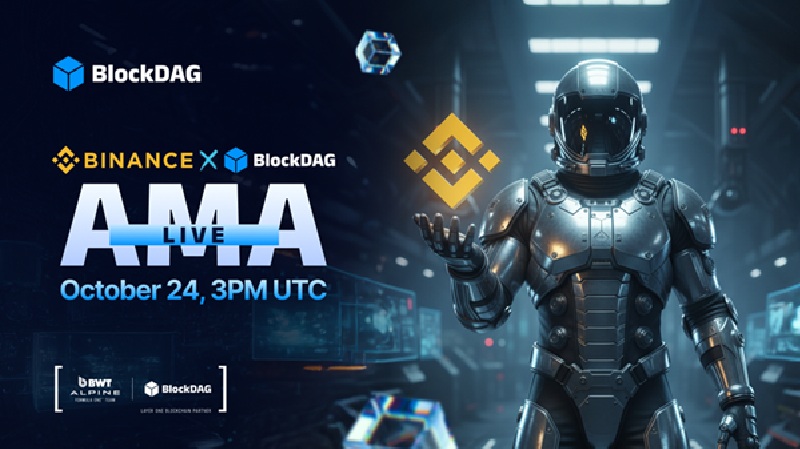
BlockDAG will also go LIVE on Binance for an exclusive AMA this Friday, October 24, at 3 PM UTC, a pivotal event offering insider updates, roadmap insights, and pre-launch details ahead of Keynote 4: The Launch Note and Genesis Day.

With its hybrid Proof-of-Work + DAG architecture capable of 2,000–15,000 TPS, EVM compatibility, and verified audits from CertiK and Halborn, the technology behind BDAG matches its strategic vision. This combination of transparency, scalability, and early access has positioned BlockDAG among the top crypto to buy right now for those who measure opportunity in precision, not speculation.

Solana’s Firedancer Upgrade Strengthens Its Core

Solana (SOL) continues to lead in network efficiency, and recent developments have significantly improved its scalability outlook. The Firedancer validator client, developed by Jump Crypto, is being hailed as a critical upgrade to boost throughput and eliminate past bottlenecks.

At the same time, Uniswap’s integration with Solana coins through the Jupiter Ultra API has opened a new gateway to over one million assets, broadening liquidity access and trading options. As a result, SOL has maintained prices near $185–$186, with modest daily gains that reinforce trader confidence.

The broader picture shows Solana maturing into a multi-chain hub for both DeFi and meme-based assets. Analysts note that transaction volume, developer participation, and network resilience continue to strengthen its position. Firedancer’s introduction marks a technical turning point if fully implemented as planned, Solana could consolidate its lead as one of the most efficient networks in the market.

ZCash Price Outlook: Renewed Optimism with Caution

The ZCash (ZEC) market analysis reflects a quiet but notable comeback. Trading near $214, ZEC has rebounded approximately 12%, supported by its new Solana bridge, Zolana, which enables seamless movement of ZEC across Solana-based decentralized exchanges such as Raydium.

This integration improves liquidity and access while maintaining ZCash’s long-standing privacy functionality. Around 27% of ZEC now sits in shielded addresses, indicating continued user demand for confidentiality in transactions. Institutional interest has also increased, with inflows from Grayscale and other funds signaling renewed trust in ZEC’s role within privacy-focused ecosystems.

Analysts are watching the $200–$225 support zone, expecting potential movement toward $300 if buying strength sustains. While technical indicators hint at mild overbought conditions, ZEC’s expanding use cases through Solana are helping it shed past isolation. For data-driven traders, ZCash’s steady rebound reinforces its place among the top crypto to buy right now, blending legacy technology with new interoperability.

Timing, Strategy, and Technology Drive Gains

The latest Solana (SOL) and ZCash (ZEC) developments show strong progress one in scalability, the other through privacy and cross-chain functionality. Both continue to demonstrate the kind of adaptive innovation that attracts institutional capital and technical developers.

However, BlockDAG introduces a layer of structured advantage unmatched by either. Its TGE code not only rewards participation but quantifies access to a precise, measurable edge that appeals to both strategic traders and long-term traders.

For those evaluating the top crypto to buy right now, the takeaway is clear. Solana and ZCash show momentum within their respective niches, but BlockDAG is building momentum around the structure itself. Its rank-based entry system transforms participation into priority, a concept that aligns timing, fairness, and technology into one practical model for growth.


Presale: https://purchase.blockdag.network

Website: https://blockdag.network

Telegram: https://t.me/blockDAGnetworkOfficial

Discord: https://discord.gg/Q7BxghMVyu

Musk Demands $1tn Pay Deal and More Control Over Tesla, Citing Plans for ‘Robot Army’

0

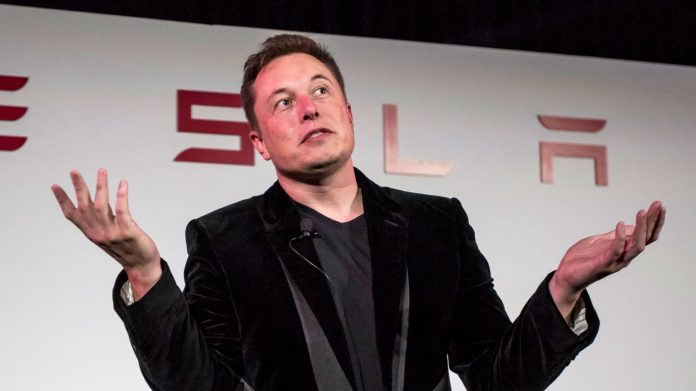
Tesla CEO Elon Musk has once again placed himself at the center of controversy, using the company’s latest earnings call to press for a massive pay package — reportedly worth nearly $1 trillion — and greater voting control over the company.

Musk told investors he needed this control to ensure he remains at the helm as Tesla develops what he called an “enormous robot army,” according to The Verge.

“My fundamental concern with regard to how much voting control I have in Tesla is, if I go ahead and build this enormous robot army, can I just be ousted at some point in the future? That’s my biggest concern,” Musk said during the call.

The unusual appeal comes ahead of Tesla’s annual shareholder meeting on November 7, when investors are expected to vote on the proposed pay package. The plan would tie Musk’s compensation to ambitious production and valuation goals, including delivering one million robotaxis and one million humanoid robots, and raising Tesla’s market value by several trillion dollars. If successful, the package would cement Musk’s status as the world’s richest person by an even wider margin. He would become the world’s first trillionaire.

In his remarks, Musk framed the proposal as a way to “protect Tesla’s future,” suggesting that only he could be trusted to oversee the company’s growing ambitions in robotics and artificial intelligence.

“It’s called compensation. But it’s not like I’m going to go spend the money,” he said. “It’s just, if we build this robot army, do I have at least a strong influence over that robot army? Not control, but a strong influence.”

The tone of the remarks, which mixed bravado with veiled threats, reflected Musk’s pattern of using Tesla’s cult-like investor following to secure increasingly favorable terms. His suggestion that he could be “ousted” from the company, despite holding significant influence over the board, appeared inconsistent with his earlier warnings that he might leave Tesla altogether if the deal is not approved.

The company’s directors have not publicly indicated any intention to remove Musk, even after his involvement with the Trump administration earlier this year triggered protests and hurt Tesla’s U.S. sales.

Musk’s push for control over a potential “robot army” contrasts sharply with his earlier warnings about the dangers of artificial intelligence. In the past, he likened unchecked AI development to “summoning the demon” and urged governments to enact regulation before it was too late. But now, Musk appears to be positioning himself as the only person capable of safely leading the AI revolution — and benefiting financially from it.

Tesla’s humanoid robot project, Optimus, remains at an early stage. The robots have struggled with basic dexterity tasks, such as handling popcorn at a company event, and were revealed to have been remotely operated during demonstrations. Musk admitted that developing a robot hand as agile as a human’s remains one of the biggest engineering challenges.

Nonetheless, Musk called Optimus “Tesla’s biggest product of all time,” predicting that future versions would transform the company’s financial outlook.

“It’ll seem like a person in a robot suit, which is how we started off with Optimus,” he said, adding that Tesla plans to unveil “Optimus V3” early next year. A fourth version, he claimed, will be the one that scales into “tens of thousands of units.”

He also described the robot business as an “infinite money glitch,” implying it could eventually dwarf Tesla’s automotive operations in profitability. “Robot surgeons” and AI-enabled domestic assistants are among the potential use cases Musk has cited for the project.

Despite the showmanship, the proposal for Musk’s pay package has drawn criticism from governance experts and institutional advisors. Proxy-advisory firms ISS and Glass Lewis have urged shareholders to vote against the plan, calling it excessive and misaligned with shareholder interests. In response, Musk branded the firms “corporate terrorists.”

Tesla’s board has defended the compensation proposal as necessary to retain Musk’s leadership and maintain Tesla’s innovative edge. Shareholders are expected to approve it, given the CEO’s track record of mobilizing investor enthusiasm and past overwhelming support for similar proposals.

Still, Musk’s remarks on the call raised fresh questions about his long-term vision and the concentration of power in Tesla’s leadership. His fixation on personal control over emerging AI-driven technologies underscores both his ambition and the potential governance risks facing one of the world’s most valuable companies.

Trump Pardons Binance Founder Zhao, Says He Was A Victim of Biden Administration War on Crypto

0

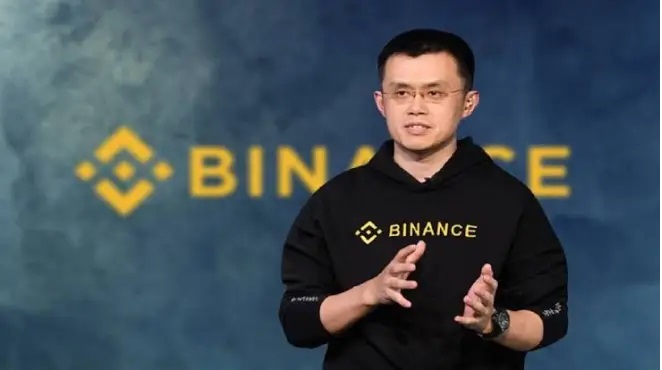
President Donald Trump has pardoned Changpeng Zhao, the founder of Binance, who previously pleaded guilty to enabling money laundering while leading the world’s largest cryptocurrency exchange.

The White House announced the decision on Thursday, marking one of Trump’s most controversial acts of clemency since returning to office.

The pardon came just two months after The Wall Street Journal revealed that the Trump family’s own cryptocurrency venture — which has generated about $4.5 billion since the 2024 election — had benefited from “a partnership with an under-the-radar trading platform quietly administered by Binance.”

White House Press Secretary Karoline Leavitt said Trump’s decision was part of his effort to reverse what she called the Biden administration’s “war on cryptocurrency.”

“President Trump exercised his constitutional authority by issuing a pardon for Mr. Zhao, who was prosecuted by the Biden Administration in their war on cryptocurrency,” Leavitt said. “In their desire to punish the cryptocurrency industry, the Biden Administration pursued Mr. Zhao despite no allegations of fraud or identifiable victims.”

Asked later on Thursday why he decided to pardon Zhao, Trump offered a brief response: “I don’t know, he was recommended by a lot of people. A lot of people say that he wasn’t guilty of anything. And so I gave him a pardon at the request of a lot of very good people.”

The clemency came less than a week after Trump commuted the 87-month prison sentence of former New York Congressman George Santos, who had pleaded guilty to wire fraud and aggravated identity theft.

In a post on X (formerly Twitter), Zhao expressed gratitude, calling the pardon a reaffirmation of “America’s commitment to fairness, innovation, and justice.” He added, “Will do everything we can to help make America the Capital of Crypto and advance web3 worldwide. Still in flight, more posts to come.”

Zhao’s pardon instantly reignited the political divide in Washington. Senator Elizabeth Warren, a prominent Democrat and ranking member of the Senate Banking, Housing, and Urban Affairs Committee, sharply condemned the decision.

“First, Changpeng Zhao pleaded guilty to a criminal money laundering charge,” Warren said. “Then he boosted one of Donald Trump’s crypto ventures and lobbied for a pardon. Today, Donald Trump did his part and pardoned him. If Congress does not stop this kind of corruption in pending market structure legislation, it owns this lawlessness.”

Zhao, popularly known as “CZ,” had pleaded guilty in November 2023 in a Seattle federal court as part of a $4.3 billion settlement with the U.S. Department of Justice (DOJ). As part of the plea deal, Zhao stepped down as Binance’s CEO. The company admitted to multiple violations, including operating an unlicensed money-transmitting business and breaching the Bank Secrecy Act and International Emergency Economic Powers Act.

Federal prosecutors accused Binance and Zhao of deliberately ignoring U.S. sanctions and anti-money laundering laws while profiting from the American market. “Binance prioritized growth and profits over compliance with U.S. law,” the DOJ said at the time.

Although prosecutors sought a three-year prison term, a federal judge sentenced Zhao to just four months in April 2024 — a lenient outcome that drew criticism from lawmakers and former Justice Department officials.

Leavitt, in defending Trump’s pardon, referenced that sentencing dispute, saying, “The Biden Administration sought to imprison Mr. Zhao for three years, a sentence so outside Sentencing Guidelines that even the Judge said he had never heard of this in his 30-year career.”

She added, “These actions by the Biden Administration severely damaged the United States’ reputation as a global leader in technology and innovation. The Biden Administration’s war on crypto is over.”

The pardon now sets a major precedent in the political treatment of digital assets. It also suggests that Trump’s administration is moving to position the U.S. as a global hub for cryptocurrency and blockchain innovation, potentially reversing years of federal hostility toward the sector.

Zhao’s legal troubles had long cast a shadow over Binance, whose dominance in the crypto exchange market was built on a rapid global expansion often criticized for sidestepping regulatory scrutiny. After his sentencing, Binance had been under increased oversight, particularly from U.S. regulators and European watchdogs pressing for stricter compliance measures.

Trump’s decision to pardon Zhao is expected to reshape the narrative around crypto regulation in America. It signals a more welcoming posture to digital assets under his leadership, especially after the Biden-era crackdown that saw multiple crypto executives charged and billions in fines imposed.

Some analysts believe that Trump’s gesture could embolden other crypto entrepreneurs who fled the U.S. regulatory environment during the previous administration.