DD
MM
YYYY

PAGES

DD
MM
YYYY

spot_img

PAGES

Home Blog Page 2821

Federal Appeals Court Upholds TikTok Ban, Leaving ByteDance with Two Options

0

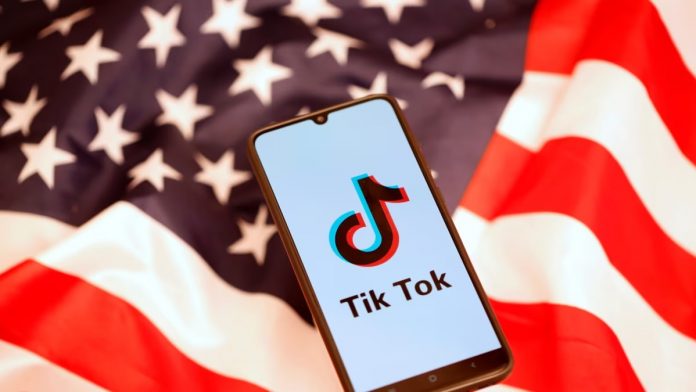
A federal appeals court on Friday upheld a law requiring China-based ByteDance to divest ownership of TikTok, citing national security concerns.

The ruling, handed down unanimously by a three-judge panel of the U.S. Court of Appeals in Washington, D.C., mandates that TikTok be sold by January 19, 2025, or face an effective ban in the United States. This decision puts the app’s future in jeopardy and leaves its parent company with only two viable options: appealing to the U.S. Supreme Court or seeking intervention from President-elect Donald Trump.

The contested law, signed by President Joe Biden in April 2024, requires ByteDance to sell TikTok or risk being barred from app stores and internet hosting platforms. The law was a response to bipartisan concerns over TikTok’s alleged ties to the Chinese government, with lawmakers claiming the app poses a significant national security threat.

Attorney General Merrick Garland praised the court’s ruling, calling it a critical step in protecting U.S. interests.

“Today’s decision is an important step in blocking the Chinese government from weaponizing TikTok to collect sensitive information about millions of Americans, covertly manipulate content, and undermine our national security,” Garland said.

Judge Douglas Ginsburg, writing for the court, described the law as carefully crafted to address national security threats while respecting constitutional boundaries.

“The U.S. government provided persuasive evidence demonstrating that the Act protects national security in a manner consistent with the Constitution,” Ginsburg wrote.

The court found no merit in TikTok’s claims that the law violates the First Amendment, the Fifth Amendment, or protections against unlawful takings and bills of attainder.

TikTok has long been under scrutiny for its data practices and alleged links to Beijing. While the app denies sharing data with the Chinese government, critics argue that its parent company’s location in China makes it subject to the country’s stringent surveillance laws.

Congressional Republicans and Democrats have repeatedly expressed alarm. Rep. Troy Balderson (R-Ohio) earlier described TikTok as a tool for espionage.

“TikTok is a surveillance tool used by the Chinese Communist Party to spy on Americans and harvest highly personal data,” he said.

The court’s ruling further noted that TikTok has never categorically denied accusations of content manipulation at the direction of Chinese authorities.

TikTok’s Fight and Constitutional Concerns

TikTok has vowed to continue its legal battle, describing the ban as an unconstitutional restriction on free speech. The platform, which has 170 million active users in the U.S., asserts that banning it would silence millions of voices.

“The Supreme Court has an established historical record of protecting Americans’ right to free speech, and we expect they will do just that on this important constitutional issue,” TikTok spokesperson Michael Hughes said.

The American Civil Liberties Union (ACLU) echoed TikTok’s concerns. Patrick Toomey, deputy director of the ACLU’s National Security Project, criticized the ruling.

“Banning TikTok blatantly violates the First Amendment rights of millions of Americans who use this app to express themselves and communicate globally. The government cannot shut down an entire communications platform without concrete evidence of imminent harm,” he said.

TikTok has announced plans to file an appeal with the U.S. Supreme Court. However, there is no guarantee the court will agree to hear the case.

Turning To Trump

As ByteDance faces a ticking clock, attention has turned to President-elect Donald Trump. While his stance on TikTok has fluctuated, Trump has options to delay the ban or offer a solution to ease national security concerns.

During his first administration, Trump pushed for TikTok’s divestment but softened his rhetoric after meeting billionaire Jeff Yass, a Republican donor and investor in ByteDance. Yass’s trading firm, Susquehanna International Group, holds a 15% stake in ByteDance, creating speculation about Trump’s intentions.

Trump could grant ByteDance a 90-day extension, provided the company demonstrates significant progress toward divestiture. Alternatively, he could explore other solutions to address security concerns, such as adopting stronger data protection measures under ByteDance’s proposed Project Texas initiative.

However, Trump’s position remains uncertain. While campaigning, he criticized the Biden administration’s push to ban TikTok, urging voters to support his presidency to save the app.

“If you like TikTok, go out and vote for Trump,” he said in a September post on Truth Social.

Racing Against Time

If ByteDance fails to sell TikTok by January 19, 2025, app store companies such as Apple and Google will be required to remove TikTok from their platforms. Additionally, internet hosting providers will be barred from supporting the app, effectively rendering it unusable in the United States.

The ruling emphasizes that TikTok users will bear the consequences of Beijing’s hybrid commercial threats to U.S. national security.

“This decision has significant implications for TikTok and its users,” the court wrote. “But this conclusion is supported by ample evidence that the Act is the least restrictive means of advancing the Government’s compelling national security interests.”

The outcome of this case could redefine how the U.S. government regulates foreign-owned platforms, particularly those deemed security risks. If the Supreme Court declines to hear the case or rules against TikTok, the app’s departure from the U.S. market will leave a significant void for its users and influencers.

Moove Partners Waymo to Launch Groundbreaking Autonomous Fleet Collaboration

0

Moove, a global leader in innovative mobility solutions, has announced a pioneering fleet partnership with American autonomous driving technology company Waymo. This collaboration represents the first commercial partnership of its kind on the Waymo one app.

Under the agreement, Moove will oversee the management and dispatch of Waymo’s fully autonomous electric vehicle (EV) fleet, beginning operations in Phoenix in 2025 and expanding to Miami in 2026. Move will handle all aspects of fleet operations, including facilities and charging infrastructure, ensuring smooth functionality. Meanwhile, Waymo will continue to operate its Waymo One app and focus on validating and advancing its autonomous driving technology, the Waymo Driver.

Commenting on the partnership Vice President of Operations at Waymo, Ryan McNamara said,

“We are excited to partner with Moove in Phoenix and later Miami, bringing together their mobility-focused fleet management experience with our growing Waymo One service. Together, we will provide safe, seamless trips for riders, and scale faster and more cost-effectively over time, with safety continuing to lead the way.”

While this partnership signals Moove’s entry into the autonomous vehicle (AV) market, the company remains committed to its core mission of empowering underserved mobility entrepreneurs. Through its flagship Drive-to-Own (DO) product, Moove will continue democratizing access to vehicle ownership, enabling thousands of mobility entrepreneurs in emerging markets to succeed.

Autonomous vehicles have the potential to revolutionize mobility by addressing inefficiencies, enhancing safety, and promoting environmental sustainability. According to the World Health Organization, road traffic crashes account for approximately 1.19 million fatalities annually, ranking among the leading causes of death worldwide. Shared AV solutions, like those powered by Waymo and managed by Moove, offer opportunities to reduce urban congestion, improve road safety, and foster sustainable cities.

Also commenting on the partnership, Co-founder and Co-CEO of Moove Ladi Delano said,

“Ride-hailing has transformed urban mobility over the past 15 years, yet the core experience has largely remained unchanged. Waymo’s safe, reliable, and convenient Waymo One service leads in autonomous technology, and together, we’re driving a major shift in urban mobility. We’re proud to partner with Waymo, bringing our operational expertise to make this transformation possible. We understand that mobility isn’t a ‘one size fits all’. While we’re expanding into AVs in the U.S, we remain deeply committed to serving our customers around the world where we will continue to provide our unique financing solutions to underserved mobility entrepreneurs”.

Founded in 2020 by Ladi Delano and Jose Odunsi, Moove provides customers with access to vehicle financing, as well as a range of financial services that were previously inaccessible to them and their families, helping them to be more productive and successful.

Moove’s partnership with Waymo comes a few months after it officially launched its vehicle financing operations in Mexico in October. This is part of its broader goal to meet the rising demand for ride-hailing services in Latin America. With operations spanning 12 markets across Africa, the Middle East, Europe, Asia, and Latin America, Moove has supported over 30,000 mobility entrepreneurs.

The company’s entry into the U.S. market aligns with its broader ambition to build the world’s largest fleet and cutting-edge technologies for powering mobility platforms. Notably, its rapid global growth is supported by its partnership with Uber and backing from prominent investors.

Crypto: Opportunities and Risks in the Era of Donald Trump

1

Trump elevates his crypto playbook with the appointment of David Sacks as the “White House AI and Crypto Czar”. The president-elect wrote on the appointment: “He will work on a legal framework so the Crypto industry has the clarity it has been asking for and can thrive in the U.S. David will also lead the Presidential Council of Advisors for Science and Technology…” Also, a crypto advocate, Paul Atkins, has been nominated to lead the US Securities & Exchange Commission (SEC).

The appointment of David Sacks as the “White House AI and Crypto Czar” by President-elect Donald Trump is seen as a significant move towards a more crypto-friendly regulatory environment in the U.S. “I am pleased to announce that David O. Sacks will be the “White House A.I. & Crypto Czar.”

Sacks is expected to work on creating a legal framework that provides clarity for the crypto industry, which has been a long-standing demand from the sector. “He will work on a legal framework so the Crypto industry has the clarity it has been asking for and can thrive in the U.S. David will also lead the Presidential Council of Advisors for Science and Technology…” Trump wrote.

This appointment, along with the nomination of Paul Atkins, a known crypto advocate, to lead the SEC, signals a shift towards more supportive policies for cryptocurrencies. The aim is to make the U.S. a leader in both AI and crypto technologies, ensuring that these industries can thrive with clear and favorable regulations.

Simply, there is a huge convergence here with many nice things happening for the crypto industry. Now the concern: is there a chance that the exuberance will break the market, triggering an economic collapse because everyone will be buying crypto, and no one will give companies money to build products and services which fix frictions in communities?

Simply, these things may not turn out well. Remember 2007 and 2008 when everyone in Nigeria was a stock trader, and how it ended. Extrapolate that to Americas and the world. My message is clear: shine your eyes! I am calling a market crash by Q2 2026, mainly by looking at how humans pursued stocks in 2007 and ended us burnt. Crypto will drive this upcoming episode, not because crypto is defective, but rather, the greed to win via crypto will starve capital on productive systems that will trigger a massive economic disequilibrium.

Think of it: I have bought my coin and I can vacation while it grows. You do yours and go on tours expecting the bull to continue. Your neighbour does. Companies close plants, cash out and inject into cryptos. Over time, inflation will hit because no one is focusing on making anything. It does not read right….but wait until BTC hits $150k!

As Trump Chooses David Sack and Paul Atkins as Crypto Czar and SEC Chair, A New Era Begins

As Trump Chooses David Sack and Paul Atkins as Crypto Czar and SEC Chair, A New Era Begins

0

The appointment of David Sacks as the “White House AI and Crypto Czar” by President-elect Donald Trump is seen as a significant move towards a more crypto-friendly regulatory environment in the U.S. “I am pleased to announce that David O. Sacks will be the “White House A.I. & Crypto Czar.”

Sacks is expected to work on creating a legal framework that provides clarity for the crypto industry, which has been a long-standing demand from the sector. “He will work on a legal framework so the Crypto industry has the clarity it has been asking for and can thrive in the U.S. David will also lead the Presidential Council of Advisors for Science and Technology…” Trump wrote.

This appointment, along with the nomination of Paul Atkins, a known crypto advocate, to lead the SEC, signals a shift towards more supportive policies for cryptocurrencies. The aim is to make the U.S. a leader in both AI and crypto technologies, ensuring that these industries can thrive with clear and favorable regulations.

Atkins’ appointment is seen as a significant shift from the previous SEC Chair, Gary Gensler, whose tenure was marked by stringent enforcement actions against crypto firms. Trump’s decision to appoint Atkins aligns with his campaign promise to make the U.S. a leader in the cryptocurrency space.

Ripple CEO Brad Garlinghouse congratulated David Sacks on the appointment. Garlinhouse said, “He understands tech inside and out, and importantly, will push forward President Trump’s crypto and AI pro-innovation plans.”

Stuart Alderoty thinks Sacks is another great pick by the Trump administration. Paul Atkins’ nomination as SEC Chairman to replace Gary Gensler by Trump sparked a massive bullish sentiment in the crypto industry. Alderoty said it will bring the “pro-business, pro-innovation, and fresh perspective we need.”

For those unaware, Trump had vowed to reshape the regulatory landscape, and had already proposed a larger oversight role for the Commodity Futures Trading Commission (CFTC). While early speculation hinted at Chris Giancarlo, the former CFTC chair, for the Crypto Czar position, Trump’s shift to Sacks reflects a fresh approach to integrating innovation and regulation.

Gary Gensler’s tenure as the SEC Chair was indeed marked by significant controversy within the crypto community. Many in the industry felt that his approach to regulation stifled innovation. Gensler’s strategy, often described as “regulation by enforcement,” involved numerous lawsuits and enforcement actions against crypto firms.

This approach led to accusations of overreach and created a climate of uncertainty, driving some American digital asset firms to seek friendlier regulatory environments offshore. Gensler’s stance was that most cryptocurrencies should be regulated as securities, which many in the industry argued was an outdated perspective.

His tenure saw significant pushback from crypto advocates and industry leaders who felt that his policies were more about control than fostering innovation. Atkins, who previously served as an SEC commissioner from 2002 to 2008, is expected to bring a more industry-friendly and accommodating approach to the regulation of cryptocurrencies.

Former CFTC Chairman Chris Giancarlo and pro-XRP lawyers strongly claim that the Ripple vs SEC lawsuit appeal will likely get dropped or dismissed. Trump’s pro-crypto team, including Paul Atkins and David Sacks, has increased the odds of lawsuit resolution.

Ripple CEO Brad Garlinghouse has expressed his support for Atkins, calling him an “outstanding choice” to lead the watchdog. Meanwhile, speculation over whether the U.S. SEC will continue its legal battle or allow the deadline to pass as the January 15 deadline approaches.

With the recent changes in the SEC leadership, there is hope within the crypto community for a more balanced and supportive regulatory framework. What do you think about these developments?

XRP ETF Approval to Trigger Bigger Rally for Ripple and RCO Finance, Insiders Make Massive Bet

0

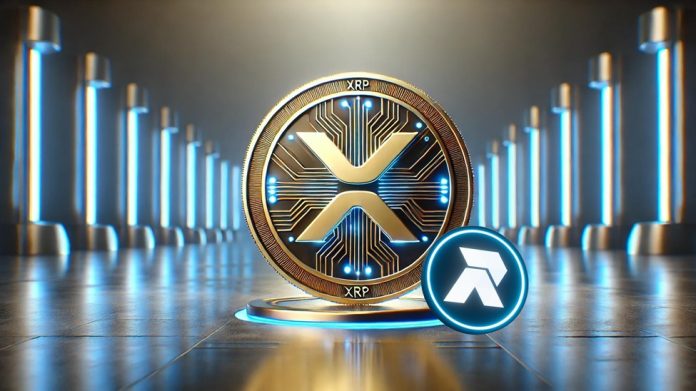
The long-awaited approval of an XRP ETF could ignite a new wave of bullish momentum for Ripple (XRP), sending its value soaring and drawing attention from institutional investors.

The growing excitement surrounding this potential spot ETF approval promises significant growth for XRP. It creates a fertile environment for emerging decentralized finance (DeFi) projects like RCO Finance (RCOF), which could ride this wave of interest.

With massive investments already being placed in both XRP and RCOF, insiders are positioning themselves for what could be a monumental rally.

WisdomTree Joins the List of Firms Seeking for a Spot XRP ETF Approval

On December 2, WisdomTree submitted its Form S-1 filing for a spot XRP ETF to the US Securities and Exchange Commission.

In submitting its S-1 for a spot XRP fund, WisdomTree joins three other ETF issuers: crypto asset manager Bitwise, Canary Capital, and 21Shares.

Bitwise, which already operates an approved Bitwise Bitcoin ETF (BITB), was among the first to file for a spot XRP ETF, submitting its Form S-1 for the Bitwise XRP ETF on October 2.

On October 9, Canary Capital followed Bitwise’s lead, filing an S-1 for the Canary XRP ETF with the SEC.

21Shares, co-issuer of the ARK 21Shares Bitcoin ETF in partnership with Cathie Wood’s ARK Invest, filed its Form S-1 for the Core XRP Trust on November 1. Contrary to the WisdomTree, Bitwise, and Canary Capital XRP ETF, the 21Shares XRP trust will not provide direct exposure to XRP but offers an indirect way for investors to access the market.

A spot XRP ETF approval would allow investors to gain exposure to XRP without directly purchasing the digital asset, making it easier for institutional and retail investors to buy into Ripple’s potential.

XRP’s price has experienced explosive growth, and the anticipation surrounding an ETF approval is creating a perfect storm for a more significant rally.

Integrating Ripple into mainstream investment products like an ETF further validates its utility and increases its visibility, which could ultimately attract a broader user base.

As XRP continues developing as a bridge asset in cross-border payments, the ETF approval would enhance its credibility, attracting more institutional investors seeking cryptocurrency exposure through regulated channels.

The RCO Finance (RCOF) Poised to Rally Alongside XRP Amid ETF Approval Prospects

As XRP’s value rises, emerging platforms such as RCO Finance (RCOF) are well-positioned to capitalize on the broader market optimism.

RCO Finance’s presale is already gaining significant attention, especially as it enters its final stages. The RCOF token has surged by 509%, moving from a starting price of $0.01275 to $0.07770 in the fourth presale stage.

The price is expected to climb even higher, potentially reaching as much as $0.21420 during the next stage, which will be the final stage before the much-awaited public listing at $0.4 and $0.6.

Given the explosive growth seen during the presale, RCO Finance (RCOF) appears poised for tremendous post-launch success, especially if XRP continues its rally after an ETF approval.

Besides the RCOF value proposition, RCO Finance distinguishes itself by offering cutting-edge features that make it a candidate for massive growth, particularly in the wake of a positive XRP market trend. Its AI-powered Robo Advisor is a prime example of the technological edge that RCO Finance brings to the table.

By providing personalized investment strategies tailored to individual financial goals, risk tolerance, and market conditions, the AI-powered Robo Advisor will allow users to access sophisticated investment strategies without intermediaries.

This fully automated system will allow both seasoned investors and beginners to benefit from real-time portfolio adjustments, ensuring that their investments are optimized for maximum returns.

In addition to the revolutionary AI tool, RCO Finance will provide access to over 120,000 assets across a wide range of asset classes, including cryptocurrencies, stocks, bonds, and tokenized real-world assets (RWAs) like real estate and commodities. This expansive selection allows users to build highly diversified portfolios, balancing risk and reward with greater ease.

Furthermore, RCO Finance features a KYC-free ecosystem, giving investors privacy and streamlined access to decentralized finance (DeFi) products without requiring lengthy identity verification processes.

The platform’s audited smart contract is another factor contributing to investor confidence. With the smart contract already meticulously audited for vulnerabilities by SolidProof, RCO Finance ensures that its infrastructure is robust and secure.

With these features, RCO Finance is poised to become a formidable player in the emerging DeFi space, offering real-world investment opportunities while keeping risk in check.

XRP and RCOF Could Be Great Additions to Your Portfolio

With the XRP ETF potentially on the horizon and the highly anticipated launch of the RCO Finance platform, there are significant reasons why both XRP and RCOF tokens could be valuable additions to any investment portfolio.

XRP stands to benefit tremendously from the market-wide excitement generated by the ETF approval, offering investors a chance to profit from the growing institutional interest in Ripple. As XRP’s price soars, early investors will likely reap substantial rewards, with the potential for further growth as Ripple cements its place in the global financial system.

Meanwhile, RCO Finance is shaping up to be a major player in the DeFi space. The platform’s unique features, including an AI-powered investment tool, KYC-free access, and diverse asset offerings, position it well for exponential growth post-launch.

The RCOF tokenomics emphasize sustainable growth with a deflationary model, community-driven governance, and rewards for long-term holders. With tokens locked for 3 years and carefully designed presale stages, RCOF is set up to avoid volatility and support long-term growth, especially once the platform is fully operational.

With the XRP ETF approval convergence and the RCO Finance platform’s imminent launch, both assets offer promising growth prospects that could yield significant returns in the coming months.

For more information about the RCO Finance Presale:

Visit RCO Finance Presale

Join The RCO Finance Community