DD
MM
YYYY

PAGES

DD
MM
YYYY

spot_img

PAGES

Home Blog Page 2836

NYU Students Leap from Meme Coins to Mastering Long-Term Growth with BlockDAG: Will BlockDAG Turn the Tide?

0

Ethan and Maya, two students at New York University, began exploring the cryptocurrency market in early 2023. Their initial venture involved an investment of $2,000 each in Pepe (PEPE) and subsequently another $2,000 in Book of Meme (BOME), both of which are meme coins.

They were in search of quick financial wins. After riding the volatile market waves of these tokens, they are now shifting their focus to what they perceive as a promising contender for long-term growth: BlockDAG (BDAG). This account details their experience with each cryptocurrency and their reasons for moving their funds to BlockDAG.

Diving into Meme Coins: Initial Gains with PEPE

The duo started their crypto journey with PEPE in April 2023, each investing $2,000 at a time when the price of PEPE was around $0.0000012. Their timing proved advantageous as the token’s value quickly soared over 300%, fueled by the meme coin frenzy. Within a week, their investment had grown to about $6,000 each.

Despite this, meme coins like PEPE are infamous for their instability. By June, their investments had declined to $3,500 each, resulting in a return on investment (ROI) of 75%. They held onto their PEPE assets, considering them as potential future gains if the meme coin trend resurfaced. However, the unpredictable nature of their assets led them to seek more stable options.

Exploring New Ventures: The BOME Investment

In 2024, Ethan and Maya invested in another meme coin, BOME, motivated by their initial success with PEPE. They each invested another $2,000 in BOME, a cryptocurrency aimed at building a decentralized collection of internet culture. Purchasing at $0.0078 per token, they anticipated similar success.

Their hopes were realized when BOME peaked at $0.02689 in March 2024, turning their $2,000 into approximately $6,900 each, a 245% ROI. However, the value of BOME dropped to around $0.0094 by November 2024, leaving them with a modest 20.5% ROI. This experience underscored the limitations of meme-based assets and prompted them to consider a more reliable investment route.

Shifting Focus: Choosing BlockDAG for Stability

Having dealt with the peaks and troughs of PEPE and BOME, Ethan and Maya reassessed their strategy. They sought a cryptocurrency with technological backing and potential for steady growth. Their research led them to BlockDAG, a project merging blockchain technology with Directed Acyclic Graph (DAG) technology, priced at $0.0234—a compelling entry point.

BlockDAG appealed to them due to its innovative transaction model and potential for scaling blockchain capabilities. With its roots in substantial technology rather than mere hype, BlockDAG seemed poised for longer-term success. They were also encouraged by BlockDAG’s fundraising achievements, having amassed over $123.5 million, demonstrating robust interest from the community.

Jumping in the Future: BlockDAG’s Promising Horizon

After evaluating their options, Ethan and Maya liquidated some of their PEPE and BOME holdings to put $3,000 each in BDAG. At the current price of $0.0234, they acquired around 136,364 coins each, considering this a strategic addition to their portfolios for hoped-for stable growth.

They are enthusiastic about BlockDAG’s upcoming milestones, including the completion of the mainnet and the subsequent test phases. The project’s focus on usability and the Ethereum Virtual Machine (EVM) compatibility suggests promising utility and demand within the BDAG ecosystem.

A New Chapter with BlockDAG

Their journey from speculative meme coins to the more grounded BlockDAG reflects a shift towards thoughtful, long-term planning in crypto. Their experience with PEPE and BOME delivered some financial gains but also highlighted the risks associated with high-volatility assets. BlockDAG’s solid technological foundation and community support present a new pathway for their crypto engagements—one that favors long-term stability over fleeting hype.
As they continue to hold some PEPE and BOME, Ethan and Maya remain hopeful that their assets in BlockDAG will yield the steady growth they are seeking. For these NYU students, embracing BlockDAG marks a pivotal turn towards a more secure and thoughtful approach in the cryptocurrency landscape.

Website: https://blockdag.network

Presale: https://purchase.blockdag.network

Telegram: https://t.me/blockDAGnetworkOfficial

Discord: https://discord.gg/Q7BxghMVyu
Goldman Sachs and the Evolution of Bitcoin-Backed Lending

0

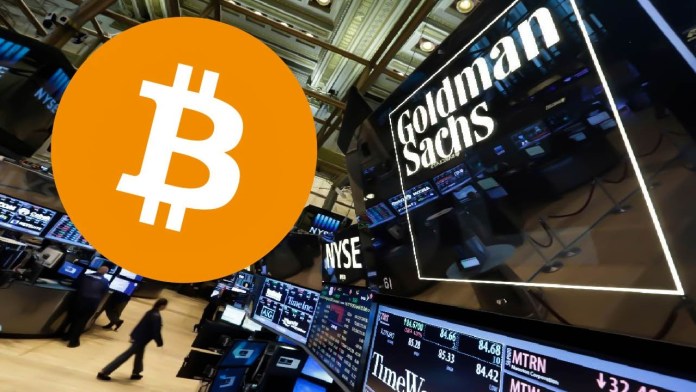
The financial landscape is witnessing a transformative era as traditional banking institutions like Goldman Sachs delve into the realm of cryptocurrency, particularly Bitcoin-backed lending. This innovative approach to lending signifies a monumental shift in the perception and utilization of digital assets within the sphere of institutional finance.

Goldman Sachs, a vanguard in global investment banking, has taken a bold step by resuming Bitcoin-backed lending services. This move not only underscores the bank’s adaptability to emerging financial technologies but also reflects a growing confidence in the stability and potential of Bitcoin as a collateral asset.

The concept of Bitcoin-backed lending is relatively straightforward yet revolutionary. Borrowers can leverage their Bitcoin holdings as collateral to secure loans, thereby obtaining liquidity without the need to liquidate their digital assets. This facility is particularly appealing to investors who are bullish on the long-term prospects of Bitcoin and wish to retain their cryptocurrency holdings while accessing fiat currency for other investments or expenditures.

Goldman Sachs’ foray into this domain is not an isolated venture. It is part of a broader strategy to expand its digital asset services portfolio, which includes the exploration of private digital-asset transactions and the development of a blockchain-based platform for financial instruments. The bank’s collaboration with Tradeweb to develop commercial blockchain use cases marks a significant step in institutional blockchain adoption, reflecting a commitment to innovation and a forward-thinking mindset.

The resurgence of Bitcoin-backed lending coincides with a notable surge in Bitcoin’s value, which recently soared to $93,000, further bolstering the allure of digital assets. This surge is indicative of the market’s resilience and the increasing acceptance of cryptocurrencies as a legitimate and valuable component of diversified investment portfolios.

One of the primary risks associated with Bitcoin-backed lending is the volatility of Bitcoin’s price. The value of Bitcoin can fluctuate widely in a short period, which can impact the loan-to-value (LTV) ratio. If the value of Bitcoin drops significantly, borrowers may face margin calls and may need to provide additional collateral or repay part of the loan to maintain the required LTV ratio. In extreme cases, if the value falls below a certain threshold, the collateral might be liquidated to cover the loan, resulting in a loss for the borrower.

Another risk is the security of the lending platform itself. Borrowers must trust that the platform will securely hold their Bitcoin collateral. There have been instances where security breaches have led to the loss of funds, and compensation is not always guaranteed. Additionally, technical risks such as bugs in smart contracts or failures in pricing oracles can lead to unexpected losses.

Counterparty risk is also a concern, referring to the possibility that the borrower may default on their loan repayments. Lenders mitigate this risk by requiring over-collateralization, but this does not eliminate the risk entirely. Moreover, the regulatory environment surrounding cryptocurrency lending is still evolving, and changes in regulations could impact the terms and availability of these loans.

Lastly, the risk of illiquidity is present in the DeFi space, where the market is filled with high leverage and is vulnerable to cross-institutional contagion. This could lead to a situation where assets cannot be easily converted to cash without significant loss.

Goldman Sachs’ engagement in Bitcoin-backed lending is not merely a testament to the bank’s pioneering spirit but also signals a broader trend of financial institutions embracing blockchain technology. Blockchain offers a more efficient, transparent, and secure alternative to conventional financial systems, and its integration into mainstream banking operations is a harbinger of the future of finance.

As the world of finance continues to evolve, the integration of cryptocurrency into traditional banking practices such as lending is a clear indication of the sector’s willingness to adapt and innovate. Goldman Sachs’ involvement in Bitcoin-backed lending is a pivotal development that may pave the way for other institutions to follow suit, potentially leading to a more inclusive and flexible financial ecosystem.

MicroStrategy Announces Private Offering of $1.75B, as Trump Media Plots to Acquire Bakkt

0

MicroStrategy has announced a private offering of $1.75 billion in convertible senior notes, specifically aimed at funding additional Bitcoin purchases. This move is not only a testament to MicroStrategy’s belief in the long-term value of Bitcoin but also highlights the company’s commitment to integrating cryptocurrency into its investment strategy.

The offering, which is subject to market conditions and other factors, involves 0% convertible senior notes due in 2029. These notes will be unsecured senior obligations of MicroStrategy and will not bear regular interest, nor will the principal amount accrete. This type of financial instrument is particularly attractive to investors who are bullish on MicroStrategy’s stock, as it offers the potential for conversion into equity at a later date.

MicroStrategy’s strategy is clear: to accumulate more Bitcoin. As the largest corporate holder of Bitcoin, MicroStrategy’s aggressive acquisition strategy has placed it at the forefront of mainstream cryptocurrency adoption within the corporate sphere. The company’s CEO, Michael Saylor, has been an outspoken advocate for Bitcoin, often citing its potential as a store of value and a hedge against inflation.

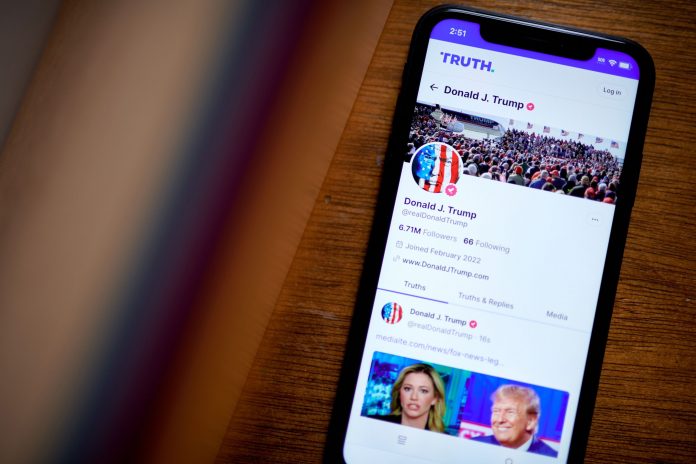
In a move that could significantly alter the landscape of media and cryptocurrency, Trump Media and Technology Group (TMTG) is reportedly in advanced talks to acquire the crypto trading platform Bakkt. This potential acquisition marks a bold step for TMTG, which operates the social media platform Truth Social, as it seeks to expand its footprint into the burgeoning cryptocurrency market.

Bakkt, a platform owned by Intercontinental Exchange, has been a notable player in the crypto trading space, although it has faced its share of challenges. The acquisition by TMTG could provide Bakkt with a much-needed boost, leveraging the media group’s resources and reach.

The deal, which is said to be an all-stock transaction, has already had a noticeable impact on the market, with Bakkt’s share price experiencing a significant surge. This news comes at a time when the crypto market is witnessing a revival of investor interest, and a media company’s foray into this domain could potentially open up new avenues for mainstream adoption of cryptocurrencies.

The decision to raise funds through a private offering rather than a public one allows MicroStrategy to target qualified institutional buyers, which could include hedge funds, mutual funds, and other large investors. This approach can potentially streamline the fundraising process and provide a quicker path to securing the capital needed for further Bitcoin investments.

MicroStrategy’s announcement comes at a time when Bitcoin’s position in the market is particularly volatile. Despite this, the company’s unwavering commitment to its Bitcoin strategy could be seen as a strong signal to the market of its belief in the cryptocurrency’s resilience and potential for growth.

The implications of this move are significant. It could potentially influence other companies to consider similar strategies, thereby increasing institutional participation in the cryptocurrency market. Moreover, it may contribute to the maturation of the market, as more stable, long-term investments are made by institutional players.

As with any investment, there are risks involved. The cryptocurrency market is known for its volatility, and Bitcoin’s price fluctuations can be unpredictable. However, MicroStrategy’s sizable investment and strategic planning suggest a level of risk tolerance aligned with its vision for the future of digital assets.

MicroStrategy’s $1.75 billion private offering to fund additional Bitcoin purchases is a bold statement in the world of cryptocurrency. It reflects a strong belief in the future of digital currencies and a willingness to invest heavily in what it sees as the next stage of financial evolution. Whether this move will pay off in the long run remains to be seen, but it certainly sets the stage for an interesting chapter in the intersection of corporate finance and cryptocurrency.

OpenAI Sued in India Over AI Use of Copyrighted Content

0

OpenAI, an Artificial Intelligence company and maker of popular Chatbot ChatGPT, has been sued in India over AI use of copyrighted content.

The company was reportedly sued by Asian News International (ANI), one of India’s largest news agencies. ANI filed a 287-page lawsuit against OpenAI in the Delhi High Court, with allegations centering on the unauthorized use of its content to train AI models.

The news agency further noted that such act carried out by OpenAI could generate false attributions and set a major precedent for AI companies operating in India, the world’s most populous nation.

This lawsuit marks the first instance of an Indian media organization is suing OpenAl over copyright concerns. ANI’s accusations include claims that ChatGPT fabricated interviews attributed to the agency, such as a non-existent conversation with Rahul Gandhi, leader of the opposition party. ANI further argues that such “hallucinations” not only damage its reputation but also pose risks of spreading misinformation that could lead to public disorder.

During the hearing on Tuesday, Justice Amit Bansal issued a summons to OpenAl but refrained from granting an injunction, noting the complex legal and technical issues involved. OpenAl confirmed that ChatGPT no longer accesses ANI’s website, and the next hearing is scheduled for January.

“We take great care in our products and design process to support news organizations,” said an OpenAL spokesperson in a statement to TechCrunch. “We are actively engaged in constructive partnerships and conversations with many news organizations around the world, including India, to explore opportunities, listen to feedback, and work collaboratively.”

OpenAl’s counsel, Amit Sibal, arqued that facts are not protected under copyright law and that websites have the option to opt out of data collection. Additionally, OpenAl claimed the case lacked jurisdiction as the company does not operate servers in India. In response, ANI’s lawyer, Sidhant Kumar of UNUM Law, asserted that public availability of content does not equate to the right to exploit it.

It is understood that makers of generative artificial intelligence tools like ChatGPT have been accused of using copious amounts of copyrighted news material to train their chatbots. There are concerns that unauthorized use will harm existing markets that acknowledge the value of archived and real-time quality content.

With OpenAI already facing lawsuits in the US, Canada and Germany, this case adds momentum to global calls for stricter AI governance. It underscores the growing tension between AI Innovation and intellectual property rights. For OpenAI, the outcome will likely influence its approach to content sourcing, partnerships and compliance in India and beyond.

Tinubu Seeks $2.209bn External Loan to Address 2024 Budget Deficit Amid Rising Debt Concerns

0

President Bola Ahmed Tinubu has officially sought the National Assembly’s approval to borrow $2.209 billion from external sources to bridge the deficit in Nigeria’s 2024 budget.

The president, in a letter read by Speaker Abbas Tajudeen during Tuesday’s plenary session in the House of Representatives, highlighted that the loan request aligns with sections 21(1) and 27(1) of the Debt Management Office (DMO) Act. He added that the proposal had already been endorsed by the Federal Executive Council (FEC).

Tinubu emphasized that the borrowing is crucial for financing the 2024 budget, which expires on December 31, 2024.

This development comes as Nigeria continues to grapple with a ballooning debt profile and a precarious fiscal situation. The Debt Management Office recently reported a significant increase in the country’s public debt, which rose from N97.34 trillion in December 2023 to N121.67 trillion by March 2024. This escalation is partly attributed to the impact of exchange rate fluctuations following the naira’s devaluation.

Nigeria’s debt burden now comprises N65.65 trillion ($46.29 billion) in domestic debt and N56.02 trillion ($42.12 billion) in external debt. As borrowing intensifies, fiscal experts are raising concerns about the sustainability of this trend, especially given the rising cost of debt servicing.

The surge in debt servicing costs has been alarming. In the first eight months of 2024, Nigeria spent N3.8 trillion servicing foreign debt, marking a 107.7% increase over the N1.83 trillion initially projected for the year. This translates to an overspend of N1.97 trillion, further underscoring the growing strain on the nation’s finances.

The borrowing pattern of the federal government has raised serious concerns among economic analysts, who argue that Nigeria appears to be borrowing primarily for consumption rather than for productive investments. They warn that with debt servicing costs outpacing revenue generation, Nigeria faces a worsening debt-service-to-revenue ratio, a critical indicator of fiscal health.

President Tinubu’s loan request is accompanied by additional communications to the National Assembly. He also submitted the 2025–2027 Medium-Term Expenditure Framework (MTEF) and Fiscal Strategy Paper (FSP) for legislative review.

The MTEF serves as a three-year fiscal planning document that provides the foundation for annual budgets. The Federal Executive Council approved this framework last week, projecting optimistic economic indicators.

The MTEF outlines a crude oil benchmark price of $75 per barrel, with daily production levels estimated at 2.06 million barrels. It also sets an exchange rate of N1,400 per dollar and anticipates a gross domestic product (GDP) growth rate of 6.4 percent. While these figures suggest a positive outlook, critics have questioned their feasibility, citing Nigeria’s ongoing struggles with oil theft, aging infrastructure, and 33 percent inflation.

The government has yet to achieve meaningful gains from its tax reforms or efforts to boost crude oil production. Oil revenues, traditionally the backbone of Nigeria’s economy, have been undermined by production shortfalls and pipeline vandalism.

Meanwhile, fiscal measures such as the removal of fuel subsidies and the floating of the naira have aggravated inflation and worsened economic hardship for citizens.

With revenue streams falling short of projections, the country has increasingly relied on loans not only to finance budget deficits but also to service existing debt obligations. This approach, analysts warn, risks plunging Nigeria into a debt trap that could stifle long-term economic growth and compromise the government’s ability to fund critical infrastructure and social programs.

The National Assembly is expected to approve the loan request. If approved, it would add to Nigeria’s already bloated debt profile, raising critical questions about sustainability. Economic experts have warned that without urgent reforms to expand revenue streams and reduce wasteful spending, the cycle of borrowing to service debt will persist, deepening Nigeria’s fiscal crisis.