DD
MM
YYYY

PAGES

DD
MM
YYYY

spot_img

PAGES

Home Blog Page 2858

Port Harcourt Refinery Commences Crude Oil Processing, NNPCL Announces

0

The Port Harcourt Refining Company (PHRC) in Rivers State has commenced crude oil processing, marking a significant milestone for Nigeria’s energy sector.

This development, confirmed by the Chief Corporate Communications Officer of the Nigerian National Petroleum Company Limited (NNPCL), Femi Soneye, on Tuesday, is expected to foster competition in the refining industry, potentially leading to more affordable petroleum products for Nigerians.

“Today marks a monumental achievement for Nigeria as the Port Harcourt Refinery officially commences crude oil processing. This groundbreaking milestone signifies a new era of energy independence and economic growth for our nation,” Soneye declared.

He also commended President Bola Ahmed Tinubu, the NNPCL board, and Group Chief Executive Officer (GCEO) Mele Kyari for their dedication to this transformative project.

Background of the Port Harcourt Refinery

The Port Harcourt refinery, one of Nigeria’s largest, was shut down in 2019 due to a lack of functionality. In 2021, the Federal Government approved $1.5 billion for its rehabilitation, a project that has faced numerous delays over the years.

Initial promises by the Minister of State for Petroleum Resources (Oil), Heineken Lokpobiri, placed the refinery’s start date in September 2023, later postponed to December. In March 2024, GCEO Mele Kyari further adjusted expectations, projecting an April launch date.

Despite these missed deadlines, Kyari reiterated in August 2024 that the refinery was a critical part of efforts to restore Nigeria’s refining capacity.

A Shift in Nigeria’s Energy Sector

The refinery’s reopening is a significant step toward reducing Nigeria’s reliance on imported petroleum products. Although the country is a major crude oil producer, it has long struggled with inadequate refining capacity, leading to a dependency on costly fuel imports. This situation was worsened by Nigeria’s crude-for-petrol swaps and years of fuel subsidies, which drained foreign exchange reserves.

The commencement of operations at the Port Harcourt refinery comes shortly after the Dangote Refinery began producing diesel and aviation fuel in September 2024. The Dangote Refinery hailed as the largest single-train refinery in the world, represents another key milestone in Nigeria’s efforts to meet domestic fuel demand.

With both the Port Harcourt and Dangote refineries operational, Nigerians hope for relief from the soaring fuel prices that followed the removal of subsidies earlier in 2024. The cost of petrol skyrocketed from approximately N200 per liter to over N1,000 per liter, contributing to widespread economic hardship.

NNPCL has also announced plans to expedite the restoration of the Warri Refinery to further bolster domestic production capacity. Mele Kyari expressed optimism that these efforts will enable Nigeria to become a net exporter of petroleum products by 2024.

“We are focused on delivering this rehabilitation project, our two other refineries, and all other investments towards revamping the nation’s refining capacity,” Kyari stated during a visit to the Port Harcourt Refinery in August 2024.

Fostering Competition

The resumption of operations at the Port Harcourt refinery introduces competition in Nigeria’s refining sector, which has long been dominated by imports due to insufficient local capacity. With the Dangote Refinery already operational, producing diesel and aviation fuel since September 2024, the Port Harcourt facility is expected to challenge market monopolies, improve supply dynamics, and stabilize prices.

NNPCL has also announced plans to privatize the Port Harcourt refinery for better efficiency and profitability. The privatization effort aligns with the government’s broader strategy to restructure the oil and gas sector, attract private investment, and reduce operational inefficiencies that have plagued state-owned refineries.

Regional Benefits

While the Port Harcourt refinery’s production capacity is significantly lower than that of the Dangote Refinery—designed as the world’s largest single-train refinery—its strategic location is expected to offer unique advantages. The refinery will serve consumers in Nigeria’s eastern region, where the high cost of logistics associated with transporting petroleum products from other parts of the country has driven up prices.

The resumption of operations at the Port Harcourt refinery, coupled with Dangote Refinery’s contributions, underlines a shift in Nigeria’s energy landscape. These developments are expected also to reduce the country’s reliance on costly fuel imports, alleviate foreign exchange pressures, and provide a buffer against global oil price volatility. For ordinary Nigerians, the hope remains that these changes will translate into more accessible and affordable energy.

The refinery’s reopening and the broader push for efficiency through privatization reflect a significant step forward. However, energy analysts believe that the ultimate test will be how these reforms impact consumers, the economy, and the long-term sustainability of the oil refining sector.

Dangote Refinery Reaches a Six Month Deal with Marketers to Supply 28m Liters of Fuel

0

The Dangote Refinery, Nigeria’s $20 billion investment in energy infrastructure, has entered a new phase of operations by securing a critical agreement with oil marketers to supply a minimum of 28 million liters of petrol daily for the next six months.

The deal, struck during a weekend stakeholders’ meeting in Abuja, is aimed at ensuring consistent supply for domestic consumption while addressing long-standing challenges in the petroleum sector.

This agreement, confirmed by the Petroleum Products Retail Outlets Owners Association of Nigeria (PETROAN), signals a shift in Nigeria’s fuel supply dynamics. PETROAN, alongside key stakeholders such as the Nigerian Midstream and Downstream Petroleum Regulatory Authority (NMDPRA), the Nigerian National Petroleum Company Limited (NNPC), and independent refiners like Waltersmith, Edo, and Aradel refineries, agreed to prioritize sourcing petroleum products from Dangote Refinery.

The resolution requires oil marketers to cease importing products unless Dangote Refinery is unable to meet demand.

Dr. Joseph Obele, PETROAN’s spokesperson, described the agreement as a major step toward stabilizing Nigeria’s downstream sector. He emphasized its potential to address price fluctuations, ensure steady supply, and foster stakeholder collaboration.

PETROAN’s National President, Dr. Billy Gillis-Harry, expressed optimism about the deal’s impact, saying, “The resolution will bring succour to the downstream sector and improve the Nigerian economy.”

As part of this agreement, Dangote Refinery also announced a reduction in the ex-depot petrol price from N990 per liter to N970 per liter. This price adjustment, according to the refinery’s Group Chief Branding and Communications Officer, Anthony Chiejina, was made to express gratitude to Nigerians for their support.

“As the year comes to an end, this is our way of appreciating the good people of Nigeria for their unwavering support in making the refinery a dream come true. In addition, this is to thank the government for their support as this will complement the measures put in place to encourage domestic enterprise for our collective wellbeing,” he said.

He added that the refinery remains committed to delivering high-quality, environmentally sustainable products to meet domestic needs and alleviate fears of supply shortages.

“While the refinery would not compromise on the quality of its petroleum products, we assure you of the best quality products that are environmentally friendly and sustainable.

“We are determined to keep ramping up production to meet and surpass our domestic fuel consumption, thus dispelling any fear of a shortfall in supply,” he said.

The resolution includes additional provisions for aviation fuel and diesel supplies from domestic refineries. According to the agreement, the NMDPRA will assess domestic production capacities to determine any necessary importation volumes, ensuring shortfalls are covered.

Furthermore, oil marketing companies will negotiate directly with refiners on a “willing buyer, willing seller” basis to streamline supply and pricing mechanisms.

This follows the report of an earlier agreement that will see the refinery supply 60 million liters of fuel each week to IPMAN.

While this development has been largely welcomed, it comes after significant skepticism from industry players about Dangote Refinery’s capacity to reliably supply Nigeria’s vast fuel market. Concerns were previously raised about its prices, production scale, and logistical readiness to meet fluctuating domestic demand. These doubts now appear to be fading, with stakeholders expressing confidence in the refinery’s operational capabilities.

Beyond domestic supply, the Dangote Refinery is also ramping up its international footprint. A report by S&P Global Commodity Insights revealed that the refinery has successfully exported jet fuel to various international destinations, including South Korea, Iceland, Tenerife, and Heathrow Airport in London.

From January to October 2024, the facility delivered substantial volumes of products to West African nations such as Ghana and to the transshipment hub in Lome, Togo. South Korea emerged as the largest single export destination, receiving 23,000 barrels per day (bpd) of naphtha. The report predicts that by 2026, Nigeria could triple its gasoil exports, positioning itself as a significant player in the global fuel market.

S&P Global noted, “For the first time in history, Nigerian-made jet fuel has found its way to airports ranging from Iceland to Tenerife and London’s Heathrow.”

The report highlighted that as Dangote Refinery reaches full operational capacity, at least eight African countries are preparing to import its products, marking Nigeria’s transformation into a net exporter of refined petroleum products.

The refinery’s enhanced production capacity and export activities are seen as pivotal in reshaping Nigeria’s energy industry. This transition is expected to stabilize prices and strengthen the economy, though stakeholders emphasize the need for continued investment in infrastructure and logistical systems to support these goals.

The agreement to prioritize Dangote Refinery’s products and the facility’s increasing export volumes is seen as a turning point in Nigeria’s energy sector. Economists believe that with sustained collaboration among key players and strategic policy implementation, the country stands to achieve greater self-sufficiency in petroleum product supply, alongside economic growth and global competitiveness.

Elon Musk Al Ambition Soars as ×Al Valuation Reaches $50B After $5 Billion Funding Round

0

Elon Musk’s Al ambitions have reached new heights with ×Al, his artificial intelligence startup, securing a $5 billion funding round that catapulted its valuation to a staggering $50 billion.

This recent development underscores Musk’s unwavering commitment to pushing the boundaries of Al technology and solidifies ×Al’s position as a major player in the rapidly evolving Al landscape.

According to the Wall Street Journal, this latest financial investment, brings xAl’s total funding this year to $11 billion, with key backers including the Qatar Investment Authority, Andreessen Horowitz, Valor Equity Partners, and Sequoia Capital. This new valuation is more than double the company’s previous estimate.

Recall that in May 2024, xAI raised $6 billion in series B funding, reaching a post-money valuation of $24 billion as investors bet big on on the company, intensifying the AI race. The company announced that the money will be used to take its first products to market, build advanced infrastructure and accelerate research and development of future technologies.

With the recent funds raised, XAl plans to use part of its new capital to acquire an additional 100,000 Nvidia chips to further develop its Al models, underscoring its ambition to lead in the artificial intelligence space. The $50 billion valuation notably surpasses the $44 billion Musk paid to acquire Twitter, now rebranded as X, in October 2022. Despite significant changes and innovations on the platform, including a monetization model for content creators, Fidelity recently slashed its valuation of X to $9.4 billion, a stark drop from Musk’s initial investment.

The meteoric rise of ×Al highlights the growing importance of artificial intelligence in transforming industries and Musk’s continued ability to attract substantial investor interest in cutting-edge technologies. Launched in July 2023, xAI was developed with a mission to understand the true nature of the universe.

“If it tried to understand the true nature of the universe, that’s actually the best thing that I can come up with from an Al safety standpoint. I think it is going to be pro-humanity from the standpoint that humanity is just much more interesting than not-humanity”, Musk said speaking on ×Al capability.

Also, the AI startup was established as Musk’s counter to OpenAi, the Al powerhouse he co-founded in 2015 with Sam Altman. Their split in 2019 has since escalated into a bitter rivalry, marked by public disputes and legal challenges. ×Al’s aspires to quickly dominate the Al market, where it faces direct competition from OpenAl maker of popular chatbot ChatGPT. The company’s first major product, the Grok chatbot, released last

November, is a testament to its rapid progress. Notably, Musk who has been a strong advocate for safer Al, disclosed via a space on X that rather than explicitly programming morality into its Al, ×Al will seek to create a “maximally curious”.

Recall that Musk has warned regularly that unrestrained development of AI broadly, computer systems performing tasks that typically require human intelligence, could be catastrophic for humanity. Last year, he was one of more than 30,000 signatories to a letter calling for a pause in work on powertul Al technology.

As ×Al continues its rapid ascent, the company’s valuation reflects not only the potential of artificial intelligence but also Musk’s enduring influence in shaping the future of technology.

Pepe Coin Price Prediction: Crypto Reports Suggest Buying PEPE Before Surge; Investors Also Buying Chainlink And New Viral Meme Coin Crossing $500K In Presale

0

As the November bull rally commenced on November 5th, Dogecoin emerged as the best memecoin to invest in as it doubled its price in days. However, Pepe soon overtook DOGE and has maintained its price gains. Investors are also investing in Chainlink as more projects integrate its oracles and Yeti Ouro, a new utility memecoin project that analysts believe could be the next golden opportunity.

Pepe And Chainlink Attract Investors For Different Reasons

Pepe and Chainlink have emerged as two of the best investment opportunities in crypto but for completely different reasons. Pepe investors have been investing in the memecoin to capitalize on its parabolic rise in the ongoing bull market. Since the month began, Pepe has gained over 120%, bringing its total gains this year to an incredible 1,500%.

Most impressively, on November 14th, it hit a new all-time high of $0.0000251, taking its market cap to $10.45 billion. Since then, it has been caught in a consolidation pattern that analysts say could propel it to a new all-time high over the coming weeks. This performance has cemented Pepe’s position as the third-largest memecoin after Dogecoin and Shiba Inu and is now three times higher than the next highest memecoin: Bonk.

Chainlink is attracting investors who are seeking more sustained price actions. The project has become one of the most important in the entire industry with its oracles and other interoperability features. Oracles are the foundation of DeFi, as they allow decentralized applications to tap into off-chain data. Without oracles, there are no DeFi, no dApps and no DEXes, and Chainlink is the dominant provider of these important tools.

Chainlink’s oracles and other features, such as the cross-chain interoperability protocol (CCIP), have become integrated into every other major decentralized platform. Even TRON, which previously provided its network with native oracle solutions, discontinued them to integrate Chainlink’s oracles.

Chainlink’s LINK hasn’t performed as well as its peers, gaining 40% this month and a mere 15% overall this year. However, it recently broke from a descending parallel channel that it has traded in for days, indicating the potential for a bull run.

Viral Memecoin Crosses $500K In Presale

Elsewhere, Yeti Ouro, a new viral utility memecoin that has taken the market by storm, recently crossed the $528,000 mark in its ongoing presale. With its native token, YETIO, going for $0.012 in the first stage of its presale, investors have identified the opportunity to acquire the token at a steep discount before it surges past the $1 mark over the coming year.

The Yeti Ouro team recently released a new video that provides a behind-the-scenes look at the development of Yeti Go, the thrilling play-to-earn racing game. The video, which has revitalized investor interest in the memecoin, introduces the team members and shows the hard work and dedication that has gone into making the game thrilling and engaging.

Yeti Go is built using Unreal Engine, making it immersive and fun to play. Winners of each race receive a reward in YETIO tokens. They also use the token to purchase weapons, trade in-game items, and stake to unlock exclusive rewards. YETIO’s supply is capped at a billion tokens, and 5% is allocated to its token-burning mechanism.


Join the Yeti Ouro Community

Website: https://yetiouro.io/

X (Formerly Twitter): https://x.com/yetiouro

Telegram: https://t.me/yetiouroofficial

Discord: https://discord.gg/YtUsEZ2ZrV

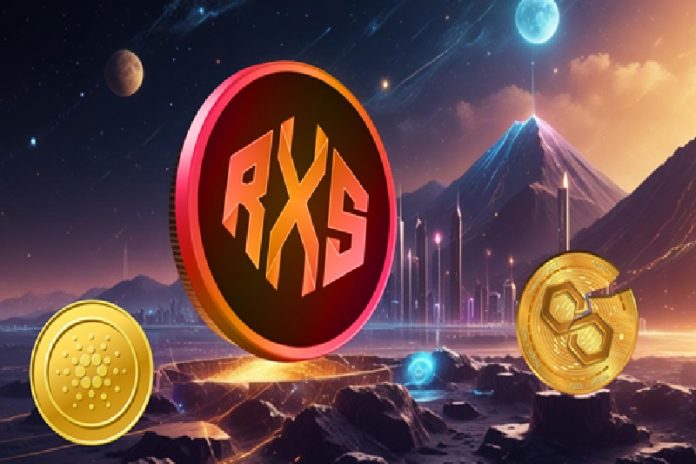
Solana (SOL) Price Targets $400 in 60 Days, While Top Rival Rexas Finance (RXS) eyes a 17060% Rally from $0.09 to $15

0

Once more making news, Solana has surged to $256.62 as of writing and is aiming for the $400 level in the next 60 days as SOL’s momentum builds. Unquestionably, Solana performs with a current market worth of more than $121 billion and a top 5 ranking on CoinMarketCap. Still, within this buzz, a young talent is silently drawing in smart investors: Rexas Finance (RXS).  Priced at $0.09 as of writing, RXS is expected to skyrocket to $15 by 2025—a startling 17,060% growth. This ETH-based DeFi initiative is more than just another token; it’s a revolution in real-world asset (RWA) tokenization that might perhaps outshine Solana’s expansion.

Why Investors Are Flocking to Rexas Finance

Although Solana’s performance is outstanding, her main priorities are minimal fees and fast transactions. Conversely, Rexas Finance is carving out a niche addressing even more of a market: real-world assets. Think real estate, gold, art, and goods—all tokenized and reachable with just a click anywhere. Think about this: While gold adds $121.2 trillion and the art sector brings another $65 billion yearly, the worldwide real estate market is valued at an amazing $379.7 trillion. Rexas Finance is democratizing access to investments long beyond reach for the typical individual by tokenizing these assets. This is not only DeFi; it is the direction of world finance. Currently, in presale stage 7, Rexas Finance is priced at $0.09 as of writing. With about 217 million RXS tokens sold, the presale already generated over $13.7 million as of the time of writing. And it’s accelerating—89.8% of this stage 7 is already filled.

The price will jump 15.11% after it reaches a goal of $16.25 million at the end of stage 7. Early investors are looking at possible returns of nearly 170% before the token even launches at $0.20 on three out of the top 10 tier-1 exchanges in early 2025, Meanwhile, rising solidly among the top 10 cryptocurrencies, market analysts estimate RXS might have a market valuation of $67 billion by 2025. Rexas Finance has followed a community-first strategy unlike many crypto initiatives supported by venture funding. Early adopters should thus have more control and benefits. Already showing openness and real-time tracking, the project has been listed on CoinMarketCap and CoinGecko.

Leading blockchain security company Certik, audited Rexas Finance since security is the priority in cryptocurrencies. For investors, this certification gives still another degree of confidence.  However, Rexas Finance is sponsoring an interesting $1 million giveaway to honor its presale success. Each of the twenty fortunate winners will get RXS tokens valued at $50,000. With almost 279,000 entries thus far, the competition is getting fierce. Participants can raise their chances of winning by finishing projects and distributing the giveaway link.

Rexas Finance Offers Real-World Value In  The Trillion-Dollar Market

Rexas Finance distinguishes itself with practical application. Users of the platform can tokenize their assets without writing one line of code thanks to a Token Builder. Real estate, art, or goods—the process is straightforward and approachable. The Rexas Launchpad also gives fresh ideas to gather money, therefore encouraging DeFi innovation. Being flexible and future-proof, the platform supports several token standards like ERC-20, ERC-721, and ERC-1155. Rexas Finance is positioned to take a sizable portion of the trillion-dollar total available market for RWA tokenizing. RXS is laying the path for a financial revolution by closing the distance between actual assets and blockchain technology.

Why Right Now Is the Ideal Time for Investing?

Solana’s road to $400 is interesting, but the true chance is in the early identification of highly prospective enterprises. At $0.09 as of writing, RXS presents a difficult-to-overlook entry point. The presale is moving fast; once it ends, this pricing will not be accessible once more. Given estimates of $15 by 2025, the possible profits are rather remarkable. Although Solana keeps making news, programs like Rexas Finance will shape DeFi going forward. RXS is a unique prospect because of its emphasis on real-world asset tokenization, open community-first approach, and presale accelerating fast development. Seize your opportunity to join this financial revolution. Rexas Finance will rule the future.


For more information about Rexas Finance (RXS) visit the links below:

Website: https://rexas.com

Win $1 Million Giveaway: https://bit.ly/Rexas1M

Whitepaper: https://rexas.com/rexas-whitepaper.pdf

Twitter/X: https://x.com/rexasfinance

Telegram: https://t.me/rexasfinance