DD
MM
YYYY

PAGES

DD
MM
YYYY

spot_img

PAGES

Home Blog Page 2865

The Evolution of E-commerce

0

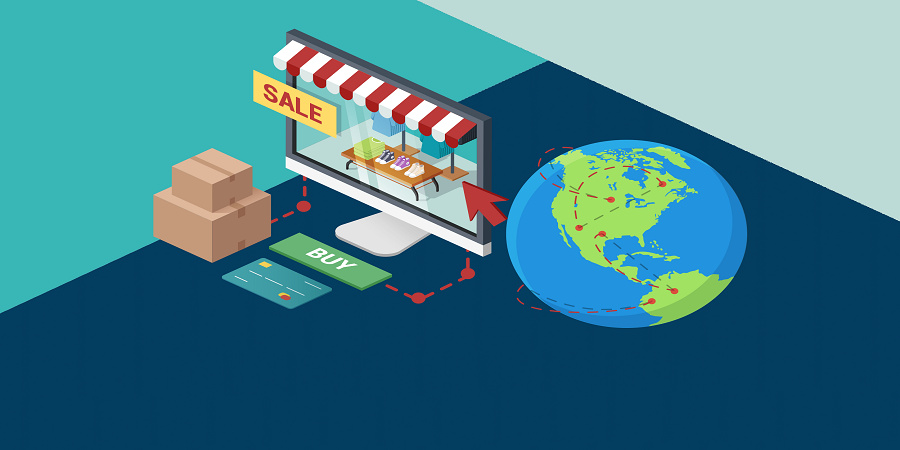
Driving past a popular Nigerian transport and logistics company recently, I saw the phrase; “e-commerce cannot work without logistics”. It elicited a smile from me and some further thinking, of course. E-commerce has had what we can rightly consider a fascinating evolution over the last four or five decades, and this period has also been marked by technological advancements, shifting consumer behaviors, and transformative business practices.

There was the 1980s when e-commerce was in its nascent stage; with emerging ideas of electronic transactions and concepts like Electronic Data Interchange (EDI) and the development of online transaction processing systems. At this time, only large corporations and specialized industries used e-commerce, and it was mostly for B2B rather than B2C transactions.

Then came the internet boom of the 1990s, where the launch of the World Wide Web and browsers like Netscape Navigator opened up new possibilities for online shopping. This decade also had the founding of the first e-commerce sites like Amazon in 1994 and eBay in 1995. It was in this decade and with these platforms that businesses started seeing the potential of e-commerce to reach a broader audience, especially when secure online payment systems, like SSL encryption, started making for safer online transactions.

By the 2000s, e-commerce potential expanded with the proliferation of broadband internet the rise of mobile technology, and the resulting faster connections and mobile access. This decade also saw the emergence of Web 2.0, characterized by user-generated content and social media. Platforms like Facebook, Twitter, and YouTube became important tools for marketing and customer engagement, and they finally took e-commerce across borders.

The 2010s were mostly marked with further innovations and integrations to create seamless experiences across offline and online channels. The mobile commerce side of things experienced an explosion with the proliferation of smartphones, and mobile apps. Now in the 2020s, we seem to be experiencing more of a stabilization of all these innovations, and then the introduction of AI and Robotics with enhanced customer service through chatbots, personalized recommendations, and automated inventory management. There is now also social commerce as a term, with the integrated shopping features you now find on Instagram and TikTok, for example.

Altogether, this interesting technological evolution has expanded business reach to unprecedented heights, and even with evolving consumer expectations, it continues to be one success after the other. But as a modern entrepreneur, here is what you should keep in mind if you want e-commerce to provide you with a strategic advantage.

  1. Focus on user experience. It will always be about your consumers at the end of the day. So, whether you are adopting a platform or integrating a new AI to automate some processes, the target is to enhance user experience with user-friendly interfaces, quick load times, seamless navigation, etc. You don’t need a new website design that suddenly makes your checkout button difficult to find. If it doesn’t make the user experience better, then that solution may not be for you. Use data analytics to gain the insights you need into customer behavior, preferences, and trends and apply them in decision-making.
  2. Prioritize Security. This includes the security of transactions and customer data as well. Remember our recent post on cyber security? Well, that is all you need to know on this matter. Make sure you implement measures to detect and prevent fraudulent activities, such as secure payment gateways and monitoring systems. It is critical to building and protecting customer trust.
  3. Optimize Logistics and Fulfillment. Develop a robust supply chain and logistics strategy to handle inventory management, order fulfillment, and shipping efficiently. Consider partnering with reliable logistics providers or investing in fulfillment technologies where possible. You can also offer flexible shipping options to cater to different customer needs.
  4. Embrace Omnichannel Strategies. Create a unified experience across online and offline channels. If you have physical stores, consider implementing click-and-collect services or integrating online orders with in-store pickup.
  5. Also, ensure your operations are within the legal and regulatory frameworks in the zones where you operate. Altogether, it requires a well-thought-out approach, and you need to stay agile and responsive to changes.

Before wrapping this up, I saw a post recently that raised concerns about e-commerce taking entrepreneurs away from exploring their immediate market, to pursue a global audience that may or may not be interested in their products. While this concern seems valid, here is what I think about it. It comes down to your customer persona. Once you have a customer profile, what you need is to focus on the locations where they are. And there is nothing to suggest that they are restricted to one geographical location. Just make sure you are not trying to sell ice to Eskimos and focus on selling your ice instead to those in the hotter regions of the world.

Now, here’s a more entrepreneurial-like response to the concern. While targeting a global audience can offer significant opportunities, it’s crucial to balance that with a strong focus on your immediate market. Here’s my perspective on managing this balance:

1. Assess Market Potential.Before going global, thoroughly assess the demand for your products in your immediate market. If you are not even able to satisfy local demand yet, then maybe you should be more focused on improving your production first. But if you are producing in a certain location because of access to raw materials or labor, and you have confirmed your target market to be in another location or country, you should waste no time getting the product to them.

2. Segment your strategy and prioritize markets. Develop strategies that address both local and global markets. For instance, you could start with a strong local presence and gradually expand globally as your business grows. Identify key international markets that align with your product offerings and have high growth potential. Avoid spreading resources too thin by targeting regions with less immediate relevance.

3. Optimize Logistics. Optimize your logistics and supply chain for your local market, with efficient inventory management, local warehousing, and fast delivery to enhance customer satisfaction. When expanding internationally, use data-driven approaches to optimize global logistics. Invest in scalable logistics solutions that can adapt to varying demands across different regions.

4. Evaluate Costs and Risks. Conduct a thorough cost-benefit analysis before pursuing international markets. Consider factors like shipping costs, customs regulations, and the investment required for market entry. Assess potential risks, such as currency fluctuations, political instability, and legal complexities. Implement risk mitigation strategies to protect your business. Don’t go in headlong before knowing what it entails. It is better to run pilot programs or test markets in international regions before fully committing. This can help gauge interest and adjust strategies accordingly.

While global expansion presents exciting opportunities, it should not come at the expense of neglecting your immediate market. A balanced and sustainable approach would be to leverage local expertise while cautiously exploring international opportunities. It can give you the best of both worlds.


Why Farmers and Most Citizens are Hungry – And How To Fix That in Nigeria

1

At Tekedia Capital, we have funded many agro-businesses in Nigeria, including Winich Farms and Vetsark. And in the process of working with these amazing companies, I have learnt one thing:  Nigeria’s agro-output is not that bad.  What is bad is our capacity to stop wastage in the value chain.

What do I mean? Nigeria does produce a decent amount of tomatoes, yams, etc, but we lose close to 37% (my estimate) of those items. The United Nations’ Food and Agriculture Organisation (FAO) puts that number at 50%: “A Food System/Nutrition Specialist at the Food and Agriculture Organisation (FAO) of the United Nations, Ibrahim Ishaka, has revealed that Nigeria loses around 50 per cent of its agricultural products along the food supply chain. Mr Ishaka disclosed this in an interview with the News Agency of Nigeria (NAN) on the sidelines of an FAO-organised training in Yola on Saturday.” 

So, if you lose 50% of what you produce, you score many own-goals, triggering a situation where farmers are hungry in farming communities. Why is this the case? The typical reason is that we lack adequate storage facilities because we have limited electricity in farming communities.

In the Igbo Nation, this problem is as old as history with the word “unwu” [seasonal farmine] part of the vocabulary.  Unwu is the period between the planting of yam (the king of crops in Igbo mythology) and the harvest period, as during that time, there are limited yams, exacerbated by lack of effective ways to preserve them. In ancestral Igbo, before the advent of packaged food and supermarkets, unwu was famine as the staple food was in short supply. That is why the new yam festival was a big deal then, as it marked the end of the famine period with new yams available.

But why have we not fixed the problem? Of course, we do not have electricity, and most importantly our agriculture policy is heavily planting-focused with limited policies for the harvest time. I have served on the boards of logistics companies and noticed how tomatoes, carrots, etc go to waste simply because trucks are not available to move them to the processing centers or collection areas. 

In other words, during the harvest period, the same governments which provided seeds, fertilizers, herbicides, etc do not remember to provide support to farmers. There are about 100,000 active trucks in Nigeria with Dangote Group controlling about 50% of them. The remaining 50k available are not enough for all, and most times farmers are outbid by many FMCGs; Nigeria has no rail cargo system of value.

From my experience, I posit that most farmers intentionally do not want to scale production because of the supply chain challenges. Of course, they cannot own trucks just to use them once per year! If the policy is altered to include the harvest period where governments also make vehicles, etc available with better coordination from farms to factories and markets, we can reduce waste from 50% to less than 10% and that will improve our food availability by an extra 40%.

Our startups have impeccable data to guide this policy formulation in case Nigeria is interested. Together, we can make farmers richer and that will boost output which will help reduce food scarcity. 

3 Must-Have Altcoins as Bitcoin Approaches $70K: Dogecoin (DOGE), Ripple (XRP) and IntelMarkets (INTL)

0

The crypto market swung high, boosting confidence and sentiment at the same time. Bitcoin (BTC) flew past $65,000 and quickly approaches $70,000. Amid the bullish market conditions, the three must-have altcoins are Dogecoin (DOGE), Ripple (XRP) and IntelMarkets (INTL).

Their upside potential, not to mention budget-friendliness, puts them on course for massive gains, especially INTL. This emerging crypto promises almost 10% ROI in presale and more after its launch—one of the best coins to invest in.

IntelMarkets (INTL): A New Altcoin to Bet on Alongside Dogecoin (DOGE) and Ripple (XRP)

The AI-DeFi altcoin IntelMarkets (INTL) is quickly becoming an investor favorite given its bullish narrative. Its blend of AI with blockchain technology and DeFi drives early demand, pushing the presale past $570,000 in just a few weeks. With a full-blown bull market on the horizon, insiders believe this might be 2024’s best crypto investment.

At a token price of $0.018 in the second stage of the ICO, its entry is lower than most top crypto coins. Similarly, its upside potential is largely unrivaled, primed for a 5,000% rally after listing on Tier-1 exchanges. By providing early access to what might be the next big thing, it is tipped by top experts’ as 2024’s best presale.

Regarding its offering, it will build the first AI-powered trading platform, which will put it at the forefront of the $36 billion global crypto trading market. It will employ different advanced real-time processing tools to improve trading performance. Meanwhile, its trading robots can handle high data volumes at lightning speed while performing rigorous technical calculations from multiple markets in seconds.

Dogecoin (DOGE): On Track for a New Peak

Dogecoin (DOGE), a top altcoin and the first memecoin, is a must-have crypto heading into the year’s final quarter. As Bitcoin skyrocketed, it is one of the week’s top gainers, reclaiming lost price levels.

The Dogecoin price gained 8% on the daily charts. In the past seven days, it soared 15%, trading above the $0.12 mark. Next on its list is flipping the $0.2 resistance, which analysts believe might play out in the coming days.

Meanwhile, a Dogecoin price prediction hints at a rally above $1 before the year’s end—a new all-time high. At its currently low price, it is one of the best cryptos to buy now.

Ripple (XRP): A Sleeping Giant

Ripple (XRP) ends the list, hailed by experts as a sleeping giant. The long-drawn legal battle with the US SEC was at the heart of its bearish woes. But with the court’s final judgment set to force a reversing trend, it is among the best cryptos to invest in.

Amid the market bounce, the XRP price hovers around $0.58, with $0.65 the next price level to be flipped. Boasting significant upside potential, it is a must-have ahead of the anticipated full-blown bull market.

The $1 resistance is expected to be breached in the coming weeks, according to a popular XRP price prediction. Further, a new all-time high is on the cards, positioning it among the best cryptos to invest in. To make the most of the market’s next big leap, XRP is a horse worth backing.

Conclusion

Bitcoin crossing $70,000 will send a ripple effect across the crypto landscape, potentially sparking a bull run. The three altcoins to bet on are Dogecoin (DOGE), Ripple (XRP) and IntelMarkets (INTL). At the same time, to invest in the future of crypto trading, we suggest checking out the INTL presale.

Buy Presale

Website

Telegram

Some Key Policies in Nigeria – Let us Review The Predicted Impacts

0

Time to review those predictions on recent policies:

1. Nigeria floats its currency.

My response: “Nigeria’s floating of its currency, while progressive, will cause severe perturbations in the economy – and a stable state may not come as most experts have predicted” – Ndubuisi Ekekwe, June 2023.

Remark: my postulation remains correct as that policy continues to alter the equilibrium points on many things, at family, state and national levels. Net welfare status is LOSS for most citizens.

2. JP Morgan projects that Naira will settle at N600/$ post-float.

My response: ‘“My perspective: I think JP Morgan may need to review. Whether you float, swim or fly Naira, Naira can only survive if the economy is productive with capacity to produce things (digital, physical, service, etc) to reposition the nation’s balance of payment and trade.”’ – Ndubuisi Ekekwe, June 2023, in a piece titled “Why JP Morgan’s Call on High N600s per US$ Stable State for Naira May Not Happen”.

Remark: Against all the leading global banks and our central bank which projected a stable state of around N700/$1, I am correct since the Naira is about N1,500/$ now.

3. Removal of Fuel Subsidy

My Response: “Nigeria will either pause the full floating of its currency or return back to fuel subsidy” because running both at the same will impoverish millions of citizens – Ndubuisi Ekekwe, July 2023.

Remark: even though the official unemployment rate (5.3%) is better than the rates in Germany and Canada, the government agency also noted that more citizens have moved into poverty, making their analysis illogical.

What was your prediction and how is that playing with reality so far? We have enough data now to evaluate.

Ripple (XRP) and Rexas Finance (RXS) Rally Ahead While Cardano (ADA) Struggles

0

Over the past week, the crypto market has recorded some impressive moves as several altcoins prepare for a massive rally in October. Ripple (XRP) gained over 8% to surge above the $0.61 mark, while Rexas Finance continued its impressive presale run as it completed stage 2 within 12 days. However, Cardano, the popular Solana Killer, faces future uncertainties as continuous sell-offs from profit-taking holders dim ADA potential despite an 11% weekly surge.

Rexas Finance’s RXS token Presale Enters Stage 3

Since it was introduced on September 8, Rexas Finance has consistently been in the headlines due to its impressive presale performances. The project, which aims to democratize the real-world asset industry, entered stage 3 of its ongoing presale after completing stage 2 within twelve days, raising over $1 million. The wide acceptance owes greatly to Rexas Finance’s unique value proposition: making the real-world asset tokenization sector available to everyone, from anywhere, and at any given time of day. With the ability to tokenize factual assets like gold, real estate, and artworks, users have the opportunity to earn and invest in a previously illiquid market. Rexas Finance’s ecosystem is a robust setting of cutting-edge tools. The Rexas AI Token Builder eases the complexity of tokenizing valuable assets. With no coding skill required, anyone can tokenize a piece of metal with a few clicks.

Rexas Launchpad is another great tool in the broad ecosystem. This tool offers an avenue for innovative projects to seek funding. Rexas Estate controls the buying and selling of tokenized real estate. This option allows anyone to acquire a fraction of a whole property right from the comfort of their homes. To ensure transparency and safety, Rexas AI Shield monitors all transactions. To reward its dedicated community, Rexas Finance announced the jaw-dropping $1 million USDT Giveaway contest. Twenty top individuals will win 50,000 USDT when the promo ends. This announcement has gained prominence as over 17,000 individuals have entered the contest.

Currently trading at $0.05, over 60% of the Stage 3 presale has been secured by savvy investors. With a listing price of $0.20, early investors have the chance to earn over 6x on their investments. Furthermore, experts are predicting a 100x RXS token rise post-launch.

Ripple (XRP) To Soar as Stablecoin Launch Nears

Amid the anticipated launch of its Stablecoin (RLUSD), Ripple continues to attract attention. XRP recently saw a 7% price gain as it moved above $0.61 to test the $0.66 mark before falling back below $0.60. The recent dip follows a notable well-off by a renowned XRP Chairman, Chris Larson.  Chris has moved a total of 38M XRP tokens to exchanges, sparking deep concerns about a potential dip. However, enthusiasts like CryptoTank predict XRP might rise to $1 million, discarding the selling pressure.

Currently trading at $0.5868, many experts predicted that if Ripple trades above the new resistance level, it might see a notable price move above $1 soon. The ongoing positivity in the Ripple ecosystem also paints a bullish picture. Ripple recently won its case against the SEC after years of continuous litigation. Also, Robinhood announced that it’s relisting the XRP on its trading platform. Further boosting the appeal is the recent launch of XRP ETF Trust by Grayscale. These developments position XRP for a crucial rally in the coming months.

Cardano Struggles to Sustain Momentum

While Rexas Finance and XRP are in a positive mood, it appears Cardano’s price struggle is set for another round of issues. Having underperformed for the majority part of the year, Cardano has gained a notable 11% rise in the past week. However, this turn of fate seems to be a nemesis as ADA holders are taking profits. Usually considered the main players in the market, Whales have become negative about the price perspective of Cardano. Over 320 million ADA have been offloaded over five days from addresses ranging from 10 million to 100 million ADA.

Valued at more than $112 million, this supply shows that big investors are no longer hoping for further gains. Trading at $0.37, Cardano’s price recently increased by 11%. Now, ADA is just 7% away from the vital $0.39 resistance. Nonetheless, ADA is probably going to fail to climb above the $0.39 barrier, given the continuous whale sell-offs and declining macro momentum. Rather, the altcoin might settle below this level, maybe testing $0.36 as the lower limit of its present trading range.

Conclusion

XRP and Rexas Finance are among the top coins looking set for a big rally. However, a recent sell-off by Cardano whales has put the token in another potential dip just immediately after breaking its long-term resistance. With its recorded results so far, Rexas Finance remains in contention to transform the RWA investment scene. At just $0.05, now is the right time to jump on the Rexas Finance train.


For more information about Rexas Finance (RXS) visit the links below:

Website: https://rexas.com

Win $1 Million Giveaway: https://bit.ly/Rexas1M

Whitepaper: https://rexas.com/rexas-whitepaper.pdf

Twitter/X: https://x.com/rexasfinance

Telegram: https://t.me/rexasfinance