DD
MM
YYYY

PAGES

DD
MM
YYYY

spot_img

PAGES

Home Blog Page 2874

In Crypto We Trust! 3 Best Altcoins to Buy in November 2024 After US Elections

0

November is looking like a landmark month for crypto. With the recent US elections setting the stage for potentially friendlier regulations, big crypto players are gearing up for what could be a bullish period. Notably, Tether’s CEO recently clarified that Tether won’t be launching its own blockchain, emphasising partnerships and collaborative growth instead. This renewed focus on cooperation within the crypto space highlights why the Best Altcoins to Buy in November 2024 are in the spotlight for investors looking for high-potential options with practical applications.

In this list, we’re spotlighting Qubetics ($TICS), Cardano (ADA), and Solana (SOL). Qubetics is gaining attention with its decentralised VPN service, while Cardano’s commitment to decentralisation is attracting community-driven innovation. Solana, meanwhile, impresses with its unmatched transaction speed. Let’s break down why these are the Best Altcoins to Buy in November 2024.

Qubetics ($TICS) – The Real-World Innovator

Qubetics is the new player on the scene, making waves with its strong focus on real-world utility and decentralised applications. The star feature? A decentralised VPN (dVPN) that promises secure, private browsing without the usual reliance on centralised providers. Imagine you’re a freelancer handling sensitive client data—Qubetics’ dVPN lets you work securely, keeping your data private and free from tracking. Or think about a small business that needs to protect its client information. With Qubetics, they get a privacy layer that traditional VPNs can’t match.

Currently, in its 7th presale stage, $TICS tokens are priced at $0.01932, with over $1.6 million raised. Analysts are optimistic, predicting the token could reach $15 post-mainnet launch. If you put in $250 now, this investment could potentially grow to over $190,000, offering a staggering ROI. For those looking to get in early on a high-potential project, Qubetics is practically shouting, “Don’t miss out!”

Why this coin made it to this list: Qubetics stands out by bridging the gap between blockchain and real-world applications, making it a practical choice for anyone seeking tangible benefits and high growth potential.

Cardano (ADA) – Champion of Decentralisation

Cardano has made a name for itself as one of the most community-focused and decentralised blockchain platforms. Cardano recently launched Node 10.11, a major upgrade enabling full on-chain governance. This update allows ADA holders to vote on key proposals, giving them direct control over Cardano’s future. It’s not just about tech—this move positions Cardano as one of the most democratically managed platforms in the space, making it appealing to users who believe in decentralisation.

ADA’s governance model has drawn significant interest, with analysts projecting potential price jumps. Crypto analyst Madmaudo recently predicted that ADA could rise to $1.2253, then up to $1.5808 and even $1.9362, with a long-term potential to reach its previous high of $3. Cardano’s strategic focus on empowering its community and building a robust governance structure makes it a compelling pick, especially as it has become a leading platform for decentralised apps (dApps) and tokenisation solutions.

Why this coin made it to this list: Cardano’s commitment to decentralisation and community involvement gives it a unique edge, making it a solid choice for those looking to invest in a community-driven project.

Solana (SOL) – The Speed and Scalability Master

Solana is quickly becoming a favourite for developers and projects needing fast, low-cost transactions. Known for its lightning-fast speeds (over 65,000 transactions per second), Solana’s network is a magnet for DeFi projects, NFT marketplaces, and all kinds of decentralised applications. Its high efficiency draws in a wealth of developer talent, making it one of the most vibrant ecosystems in crypto today.

Despite some challenges, Solana’s ecosystem continues to grow. Trading around $160 and remaining relatively affordable, SOL is an attractive option for those looking to balance speed, scalability, and price. Its robust infrastructure and wide range of use cases make it a strong pick for anyone interested in a blockchain that supports rapid, low-cost transactions. Solana’s potential for further growth in the dApp and DeFi spaces keeps it in the spotlight as one of the Best Altcoins to Buy in November 2024.

Why this coin made it to this list: Solana’s unmatched transaction speed and scalability make it ideal for anyone looking to get in on a fast and developer-friendly blockchain.

Tether’s Focus on Partnerships – A Sign of What’s Next?

In a recent announcement, Tether’s CEO, Paolo Ardoino, put an end to rumours about the company launching its own blockchain. Instead, Tether chooses to support and integrate with existing blockchains like Ethereum, Solana, and TON. This decision to remain “neutral” reflects a larger trend in the industry, where cooperation is valued over competition. Unlike Coinbase and Kraken, which have ventured into building their networks, Tether’s approach shows a preference for fostering accessibility and interoperability across chains.

This focus on partnerships and integration is relevant when considering the best altcoins to buy in November 2024. Projects like Qubetics, Cardano, and Solana prioritise real-world use cases, security, and decentralisation, aligning with Tether’s vision of creating a unified, interconnected blockchain ecosystem. Investors should take note of this shift towards integration, as it could shape the future of how blockchain technology is adopted and used across sectors.

What are the Best Altcoins to Buy in November 2024?

With the crypto market positioned for growth and innovation, November 2024 is shaping up to be a defining month. The best altcoins to buy in November 2024 provide a mix of growth potential, real-world applications, and solid fundamentals. Qubetics leads the pack with its decentralised VPN, solving genuine problems for everyday users and businesses. Cardano’s focus on decentralisation and community governance offers a rare opportunity to be part of a true community-led platform. At the same time, Solana’s speed and scalability make it a go-to for those interested in high-throughput applications.

For those ready to make a move, Qubetics offers an enticing opportunity. With its presale price of $0.01932 and predictions of a $15 high post-launch, the potential ROI is enormous. Whether you’re new to crypto or a seasoned investor, these altcoins offer unique advantages and pathways to participate in the blockchain revolution. Don’t let this November pass by—secure your position in these promising projects and ride the wave of innovation. Ready to dive in? Your future in crypto awaits!


For More Information:

Qubetics: https://qubetics.com

Telegram: https://t.me/qubetics

Twitter: https://x.com/qubetics
OpenAI Initiates Preliminary Talks With Regulatory Authorities to Transition to For-Profit Organization

0

OpenAI, the artificial intelligence company and maker of the popular chatbot ChatGPT, is reportedly in the early stages of shifting from its original non-profit model towards a for-profit structure.

According to Bloomberg, the company which is currently valued at $157 billion, has initiated preliminary talks with regulatory authorities in California and Delaware to navigate this significant shift.

Sources familiar with the matter, say that OpenAI has begun consultations with California attorney general’s office to address the complexities involved in restructuring, particularly regarding the valuation of its valuable intellectual property, including its proprietary ChatGPT technology.

Founded in 2015, OpenAI is an AI research and deployment company, with a mission to ensure that Artificial Intelligence systems that are generally smarter than humans benefit all of humanity. The company captured global attention with the launch of ChatGPT in late 2022, a generative AI app that gives human-like responses to text queries, which has become one of the fastest-growing applications in history with over 200 million weekly active users, igniting a global race to invest in AI.

Recognizing the limitations of traditional funding models, OpenAl devised a unique structure to balance its nonprofit mission with the financial resources necessary to drive cutting-edge research. To achieve this, the company established a for-profit subsidiary, while maintaining the integrity of the original nonprofit. It devised a structure to preserve its Nonprofit’s core mission, governance, and oversight while enabling it to raise the capital for our mission.

Key structures include the following;

  1. The OpenAI Nonprofit would remain intact, with its board continuing as the overall governing body for all OpenAI activities.
  2. A new for-profit subsidiary would be formed, capable of issuing equity to raise capital and hire world-class talent, but still at the direction of the Nonprofit. Employees working on for-profit initiatives were transitioned over to the new subsidiary.
  3. The for-profit would be legally bound to pursue the Nonprofit’s mission and carry out that mission by engaging in research, development, commercialization, and other core operations. Throughout, OpenAI’s guiding principles of safety and broad benefit would be central to its approach.
  4. The for-profit equity structure would have caps that limit the maximum financial returns to investors and employees to incentivize them to research, develop, and deploy AGI in a way that balances commerciality with safety and sustainability, rather than focusing on pure profit maximization.
  5. The Nonprofit would govern and oversee all such activities through its board in addition to its operations. It would also continue to undertake a wide range of charitable initiatives, such as sponsoring a comprehensive basic income study.

With this move, the Nonprofit would remain central to its structure and control the development of AGI, and the for-profit would be tasked with marshaling the resources to achieve this while remaining duty-bound to pursue OpenAI’s core mission.

OpenAI’s transition to a for-profit model, however, raised concerns, which spurred Elon Musk, a co-founder of OpenAl who left after a leadership dispute, to file a lawsuit, accusing OpenAl CEO Sam Altman and his associates of a “naked power grab.” Musk alleges that Altman and his colleagues “systematically drained the non-profit of its valuable technology and personnel” to build a for-profit company focused on personal enrichment. He claimed that such a move contradicts OpenAl’s original mission as a charitable organization dedicated to advancing artificial intelligence for the benefit of humanity.

However, the regulatory path ahead following OpenAI restructuring to a for-profit organization, is expected to be complex. California law mandates that nonprofit assets are properly valued and used to further charitable goals, which could complicate OpenAl’s transition given its significant intellectual property. 

Top 3 Memes and DeFi Tokens Whales are Bullish on for Q4 Rally

0

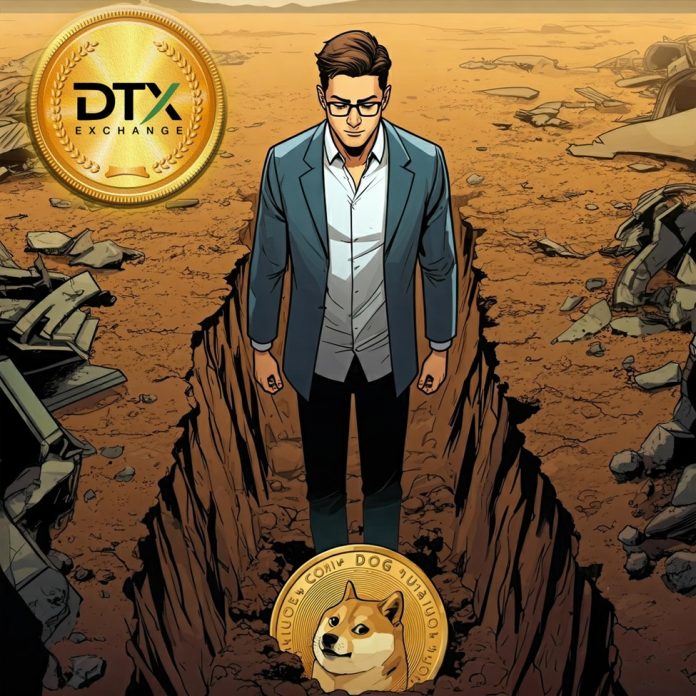
The meme and DeFi niches are arguably the biggest and hottest sectors in the crypto landscape. This makes them favorite destinations among investors, with whales taking a keen interest in Dogecoin (DOGE), Pepe (PEPE) and DTX Exchange (DTX) ahead of the anticipated Q4 rally.

These altcoins aren’t only budget-friendly but also teeming with potential, especially DTX, a new altcoin at the intersection of TradFi and DeFi. Boasting real-world applications, it will power a hybrid trading platform that features the best elements of DEX and CEX. Its staggering upside potential is another of its biggest attractions.

DTX Exchange (DTX): On the Cusp of Adoption and Massive Growth

DTX Exchange (DTX) has been hailed as Q4’s best presale for several reasons. Starting from its novelty, it aims to reshape the $10 billion global trading market by combining the best elements of centralized and decentralized exchanges. This makes it a hybrid exchange protocol and another of its attractions is its huge growth prospects.

The presale is already selling out fast, with over $6.6 million raised in early funding. Meanwhile, a token costs only $0.08 in the fourth ICO round, gearing up for a jump above $1 before the curtain closes on the year. It isn’t surprising that whales have been stockpiling it alongside Dogecoin (DOGE) and Pepe (PEPE).

Making a strong claim about being one of the best new cryptos to invest in, it further stands out thanks to its solid fundamentals. Its trading platform will be a one-stop destination for trading assets across stocks, forex, ETFs, bonds and cryptocurrencies with up to 1,000x leverage. The intuitive user experience of CEX, wallet-based trading and non-custodial storage solutions will be enjoyed by traders.

Dogecoin (DOGE): Aims for $1

Dogecoin (DOGE) is one of the top altcoins and also the leading meme. Its launch in 2013 ushered in the meme narrative. Since making its debut, it has become an industry leader and more than just a meme—a good store of value.

A decade later, investors are positioning themselves for the 2024 Q4 rally by stacking up Dogecoin (DOGE). The dog-themed cryptocurrency hasn’t lost its appeal, especially being the first memecoin. In the past 30 days, the Dogecoin price exploded over 50% and 35% on the monthly chart, trading above $0.14.

The coming weeks promise even more gains. Amid rising whale interest, a Dogecoin price prediction suggests a jump above $1 before the year’s end. The unfolding uptick might be the start of this run, making it one of the best coins to invest in. Moreover, the simple moving average (20) is at 0.14724, a bullish signal.

Pepe (PEPE): The Leading Frog-Themed Memecoin

The red-hot Pepe (PEPE) is another memecoin investors have been stockpiling. Its unique memetic appeal as a frog-themed cryptocurrency is one of its many attractions, alongside deflationary tokenomics and a rapidly growing community.

While its performance in the past few weeks hasn’t been particularly exciting, it provides a good entry. The Pepe price tumbled over 10% on the monthly chart but still trades on the upside in the past 90 days—a 5% uptick. Currently in an attractive buy zone, whales have been gobbling up the Pepe (PEPE) dip.

Moreover, according to TradingView data, the commodity channel index (20) is ?143.32856866, signaling “buy” and further upsides. With the rest of quarter four promising exciting rides and bullish waves, Pepe is one of the altcoins to watch out for. It is on track for another price discovery this year, making it a horse worth betting on.

Conclusion

The top three memes and DeFi token whales that have been stacking up ahead of the Q4 rally are Dogecoin (DOGE), Pepe (PEPE) and DTX Exchange (DTX). They stand out not only for their growth potential but also for their budget-friendly prices, especially the low-cap gem DTX.

Learn more:

Buy Presale

Visit DTX Website

Join The DTX Community

Meta Threads Reaches 275 million Monthly Active Users

0

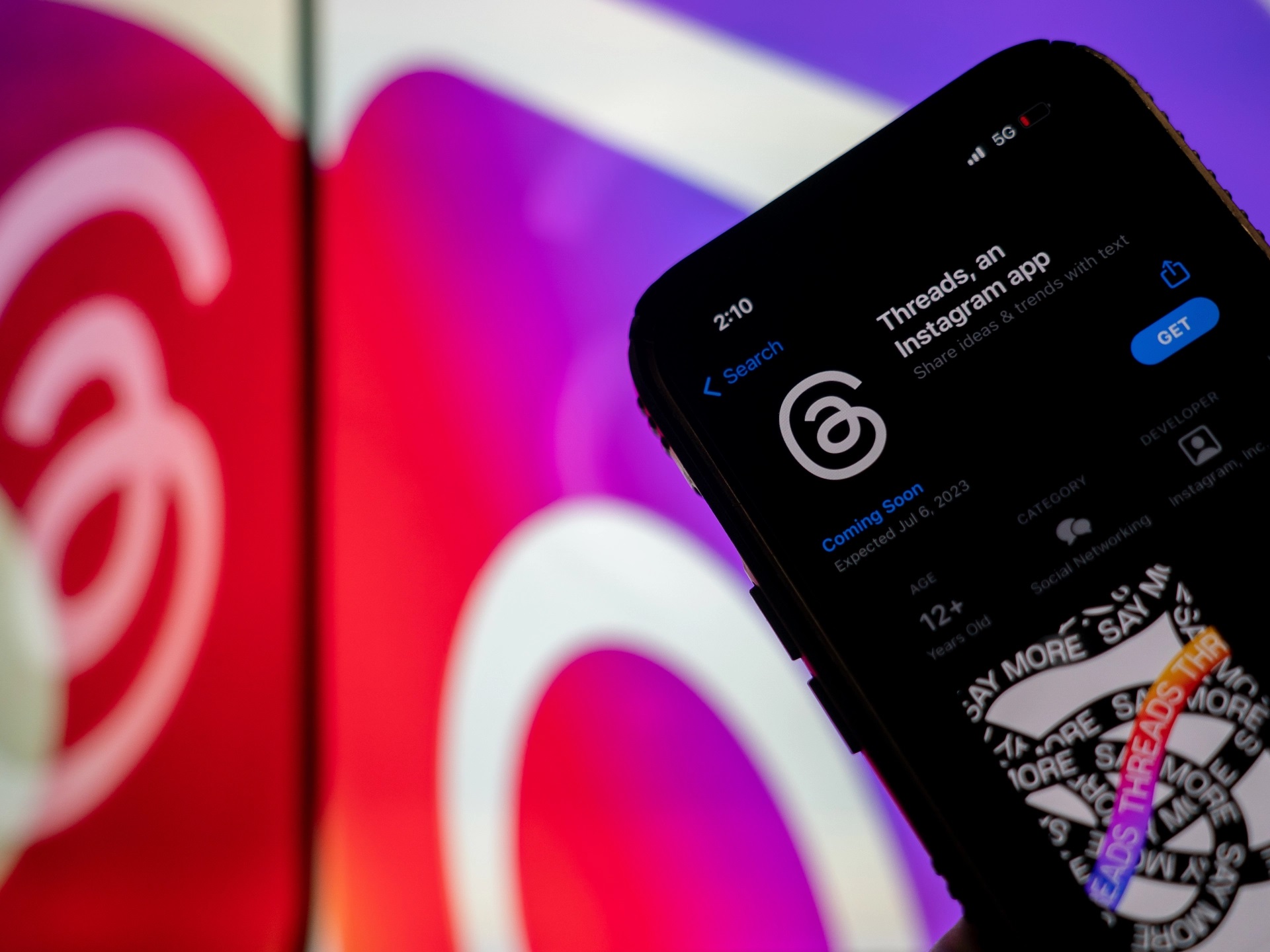
Meta’s social media app Threads has achieved a remarkable milestone, amassing 275 million monthly active users (MAUs), Meta executive Adam Mosseri announced on Sunday.

Mosseri, who heads Threads and Instagram, celebrated the news, acknowledging both the platform’s growth and its development needs: “Yesterday we crossed 275M monthly active users on @Threads. A big thank you to everyone who’s helped us get this far. There’s a lot more to do, and plenty of things to fix, but there’s something exciting about this place,” he said.

Threads initially launched in July 2023 as Meta’s strategic answer to the widespread user dissatisfaction with X (formerly Twitter) following Elon Musk’s acquisition of the platform. Meta seized the moment, rolling out Threads as a fresh, text-based social platform aimed at capitalizing on the discontent among X users and the broader social media community.

Within a few days of its launch, Threads gained 100 million users, a feat that made it the fastest-growing social network in history at that time, creating massive anticipation that it would soon rival X directly. However, despite this initial surge, Threads has struggled to retain that momentum, and user activity levels have not yet consistently matched the expectation of becoming a full-fledged X alternative.

The app’s early success came as a wave of disillusioned X users sought an alternative. Elon Musk’s approach to management—layoffs, controversial policy changes, and a relaxation of content moderation—led to an exodus of both everyday users and some high-profile figures. Sensing a unique opportunity, Meta CEO Mark Zuckerberg fast-tracked the development of Threads as a streamlined, text-first platform aimed at providing a friendlier, more stable environment for users seeking a Twitter-like experience.

Zuckerberg hoped that by integrating Threads with Instagram’s user base, the app would have an automatic edge in building a loyal community. Meta made it easy for Instagram users to join Threads by leveraging their Instagram profiles, which helped boost Threads’ initial adoption rate.

Despite the initial rush and a user base now standing at 275 million MAUs, Threads has faced challenges in its quest to establish itself as a true alternative to X. Zuckerberg confirmed during Meta’s Q3 2024 earnings call that approximately one million new users are signing up daily. While this growth appears steady, it has not been sufficient to retain engagement levels at the platform’s launch pace.

In August, Threads had achieved the milestone of 200 million MAUs, meaning it gained another 75 million users in three months. However, this pace, while significant, reveals the challenge of achieving long-term retention and engagement that could draw a critical mass away from X.

Experts suggest that Threads’ struggle to attract long-term users from X may stem from several factors. Unlike X, which offers users a robust set of features like trending topics, direct messaging, and customizable news feeds, Threads is still in its feature-building stage, limiting its appeal to users accustomed to X’s functionality. Although Meta has promised improvements, the platform’s limited feature set and minimal customization options may be causing hesitation among users who are seeking a full-fledged social media experience.

Adding to the challenge, content moderation has become a recurring issue on Threads. Despite Meta’s efforts to position the platform as a friendlier, safer alternative to X, users have raised concerns over content moderation inconsistencies. Mosseri acknowledged this, stating that “there’s a lot more to do, and plenty of things to fix,” underlining that Meta recognizes the need to address both moderation and platform stability.

While Zuckerberg’s goal of creating a viable X alternative has proven more challenging than anticipated, Threads’ gradual upward trend indicates it still holds potential. For now, however, the platform remains on a growth journey, still working to prove it can ultimately capture—and keep—the loyalty of users who once considered X indispensable.

Bluesky, Mastodon Gear Up As Alternatives to X As US Election Begins

0
The Bluesky social media app logo is seen on a mobile device in this photo illustration in Warsaw, Poland on 21 April, 2023. Founder Jack Dorsey of twitter has released the Bluesky application on Android. (Photo by Jaap Arriens / Sipa USA)(Sipa via AP Images)

As the U.S. presidential election draws closer, Bluesky, a social networking startup backed by recent investments, is readying itself to position as a fact-checked, trusted alternative to Elon Musk’s X (formerly Twitter).

With mounting frustration among X users over Musk’s changes to the platform, Bluesky, along with its peers Meta’s Threads and Mastodon, is hoping to capitalize on a possible user shift. Musk’s platform, recently dominated by his visible support for the Trump campaign and alterations that relaxed content moderation, has alienated some users, and Bluesky’s leadership believes it could be the moment to attract them.

For Bluesky, the upcoming election season is seen as a defining test for its ability to manage misinformation and foster a safer, reliable online environment—one that includes a blend of traditional moderation and new approaches to social networking.

The platform, which emerged from the controversy surrounding Musk’s 2023 acquisition of Twitter, has quickly developed a user base that leans left due to a sizable influx of former Twitter users uncomfortable with Musk’s approach to political content and looser moderation. With Threads opting to distance itself from political conversations altogether by ceasing to recommend any political content, Bluesky has embraced an environment for more engaged, real-time election discussions.

This strategic choice has helped set Bluesky apart as an option for users looking for political discourse moderated with election integrity in mind. As X recently abolished its block function, another Musk move that has generated frustration among users, Bluesky, and its competitors are poised to potentially gain new members from those reconsidering their social media choices.

In a critical move earlier this year, Bluesky appointed Aaron Rodericks, a former senior leader in Twitter’s election integrity team, as its head of Trust and Safety. With experience managing election safety policies at Twitter, Rodericks brings knowledge of the tools, policies, and monitoring strategies essential to moderating election-related content.

Rodericks became a notable figure in the debate over election safety at Twitter when, during Musk’s overhaul, he faced backlash from right-wing groups for openly seeking more staff for election oversight. Following the backlash and Musk’s decision to cut Twitter’s election integrity team, Roderick found a home at Bluesky, where he has been tasked with building a team to help secure Bluesky’s environment during the election period.

Consequently, Bluesky’s Trust and Safety team, led by Roderick, recently unveiled its robust election safety plan in a series of posts on the platform. These plans detail procedures for users to report potential misinformation or disruptive election-related content. Content deemed to include misleading claims around voting processes, requirements for voter ID, or other critical election facts will be flagged for review, with an escalation process for urgent reports.

Additionally, Bluesky’s moderation team plans to implement “unconfirmed” labels on emerging election-related reports that can’t immediately be verified, such as claims about polling place conditions or incidents. Bluesky has also stated it will remove any posts that seem to promote or encourage disruption of voting processes, ensuring a higher level of security for users during this volatile period.

The platform’s decentralized framework is one of its most distinct features compared to other social media platforms. Users are able to join multiple moderation servers, each governed by its own rules, allowing individuals to tailor their feeds and interactions to their preferences. This flexibility in content control aligns with Bluesky’s message that it provides an alternative to “billionaire-driven” content moderation, which some users feel has taken over X.

Bluesky’s leadership has emphasized that anyone who disagrees with how Bluesky’s primary server is run can create their own or subscribe to a different moderation service. CEO Jay Graber highlighted the advantage of this model in a podcast interview, explaining that Bluesky’s structure encourages a participatory approach, empowering users to shape their social media experience beyond what is possible on centralized platforms like X.

In tandem with its moderation strategy, it has expanded its team to prepare for the anticipated increase in election-related traffic. While the company hasn’t disclosed exact figures, Graber has indicated that Bluesky’s staff now includes about 18 members dedicated to engineering, operations, and content moderation—a scale-up necessary to ensure timely and effective management of the surge in activity as election day nears.

Bluesky’s competitors in the alternative social media space are also preparing to position themselves as trusted alternatives to X, which has been the subject of increased criticism over its loosened moderation and political tilt under Musk’s leadership.

Meta’s Threads has taken a different approach by actively avoiding political discussions on its platform. Earlier this year, Threads announced it would no longer recommend political content to users, a decision likely aimed at minimizing divisive discourse. By sidestepping political content, Threads hopes to build a less contentious space, though this decision has also resulted in limited engagement from users seeking real-time updates on election-related news and topics.

Meanwhile, Mastodon, another open-source and decentralized alternative to X, has also been rolling out new features to improve its user experience and potentially attract users disillusioned with X. Its recent updates include notification grouping, a tool for organizing engagement alerts in a more streamlined way similar to X’s layout.

Mastodon is also launching new filters for managing notifications from unsolicited private mentions, recently created accounts, and users who are not following or followed by the user. Additionally, Mastodon’s expanded moderation tools allow users to receive notifications if a moderator’s decision affects their account’s visibility or connections across servers. These improvements aim to give users more control and transparency over their experience, which Mastodon hopes will appeal to users frustrated with the one-size-fits-all approach of X’s moderation.

With each of these platforms bringing unique features to the table, the upcoming election season could be the moment when X’s competitors gain traction by offering more nuanced and reliable content moderation solutions. In the past, Musk’s hands-off approach and mass layoffs of moderation staff have led to concerns about X’s capability to handle sensitive election information responsibly. Many observers see the choices Musk has made, from altering verification processes to eliminating the block feature, as pivotal to the general disillusionment driving users toward alternatives like Bluesky, Threads, and Mastodon.