
DD
MM
YYYY

PAGES

DD
MM
YYYY

spot_img

PAGES

Home Blog Page 2898

Free Credit Links: How to Boost Your Casino Account Without Deposits

0

Online casinos are known for their exciting gameplay and bonuses, and free credit links are one of the hottest trends right now. With the promise of free credits without any deposit, players are flocking to these offers to boost their accounts for free. But what exactly are free credit links, and how can you use them to your advantage? Let’s dive in and find out!

Understanding Free Credit Links

What Are Free Credit Links?

Free credit links are special promotional offers that online casinos provide to new or existing players, allowing them to claim a specific amount of credits without making any deposit. Think of them as “free money” to play with in your favourite casino games, from slots to table games.

How Free Credits Work in Online Casinos

When you click on a free credit link, it directs you to an online casino where you can claim a bonus without having to deposit your own money. These credits are added to your account, which you can then use to play a variety of games. If you’re lucky enough, you might even turn these credits into real winnings that you can withdraw.

Benefits of Using Free Credit Links

The main appeal of free credit links is that you can start playing without financial risk. Whether you’re a newcomer trying out an online casino for the first time or an experienced player looking for extra boosts, free credit links give you a head start. Plus, they offer the opportunity to win real money without spending anything upfront.

Different Types of Free Credit Bonuses

No Deposit Bonus

This is the most common form of free credit bonus. As the name suggests, you don’t have to deposit any money to receive these credits. Simply sign up, and the free credits will be credited to your account.

Welcome Bonus

Many casinos offer a welcome bonus that includes free credits, allowing new players to test out the platform and games before committing their own money.

Referral Bonus

Some casinos offer free credit bonuses when you refer friends. When your friend signs up using your referral link, both of you may receive free credits.

Loyalty Bonuses and Rewards

Casinos often reward their regular players with free credits as part of a loyalty program. The more you play, the more rewards you can earn.

How to Find Reliable Free Credit Links

Trusted Sources for Free Credit Links

When searching for free credit links, it’s essential to use reputable websites and forums. Online casino review sites, social media groups, and trusted online communities often share valid and safe free credit links.

What to Look for in a Free Credit Offer

Always check the terms and conditions before claiming any free credit offer. Look for transparent rules on wagering requirements, withdrawal limits, and expiration dates.

How to Use Free Credit Links to Your Advantage

Maximising Your Free Credit Bonuses

To make the most out of free credits, target games with lower house edges and better odds of winning. For instance, table games like blackjack or video poker usually offer higher return-to-player (RTP) rates compared to slots.

Game Types to Play Using Free Credits

Free credits can be used across a variety of games. Some casinos may restrict which games you can play using free credits, so always check the game eligibility in the terms and conditions.

Wagering Requirements for Free Credit Bonuses

Most free credit bonuses come with wagering requirements, meaning you have to bet a certain amount before you can withdraw any winnings. The lower the wagering requirement, the easier it is to cash out your wins.

Potential Risks of Free Credit Links

Common Pitfalls to Avoid

Not all free credit offers are created equal. Some may have hidden terms that make it difficult to withdraw your winnings, while others may require extremely high wagering requirements.

How to Avoid Scams and Fake Free Credit Offers

Unfortunately, there are many scams in the online gambling world. Always verify the legitimacy of the casino and the offer before claiming free credits. Look for casinos licensed by reputable gaming authorities.

Top Casinos Offering Free Credit Links

Best Casinos in Singapore for Free Credit Bonuses

Some of the most popular online casinos in Singapore offer generous free credit bonuses. Always check reviews and ensure the casino is licensed in your jurisdiction.

Best Casinos in Malaysia for Free Credit Bonuses

Malaysian players have access to a wide range of online casinos that provide free credits. Be sure to choose one with fair terms and a user-friendly interface.

International Casinos Offering Free Credit Links

Global online casinos also feature free credit offers. Many of these platforms cater to players worldwide, providing multiple bonuses to international audiences.

Step-by-Step Guide to Claiming Free Credit Links

Registering on an Online Casino

First, you need to sign up with the casino offering the free credits. Fill in your details and complete the registration process.

Applying the Free Credit Link

Once registered, locate the free credit link either through your email, promotional message, or the casino’s website. Follow the instructions to claim your bonus.

Meeting the Requirements to Withdraw Your Winnings

Before you can cash out your winnings, make sure to meet the wagering requirements. Some casinos also have specific game restrictions or time limits for using the credits.

Conclusion

Free credit links provide a fantastic opportunity to explore online casinos without risking your own money. By understanding how these bonuses work and finding reliable sources, you can boost your casino account and potentially win real money. Just remember to read the terms and conditions carefully, choose trustworthy casinos, and use your free credits wisely.

SBF Appeals Fraud Conviction amid MicroStrategy $1.1B Bitcoin Buys

0
Sam Bankman-Fried

The crypto world has been abuzz with the recent news of Sam Bankman-Fried’s appeal against his fraud conviction. Bankman-Fried, the founder and former CEO of FTX, has filed an appeal after spending five months in prison, arguing that he did not receive a fair trial. This move has sparked a significant discussion about the legal processes and the fairness of trials in high-profile cases.

Bankman-Fried’s legal team has submitted a 102-page appeal, requested a new trial and claimed that the judge overseeing his case exhibited bias. They argue that the media’s portrayal of Bankman-Fried influenced the proceedings, leading to a ‘trial by media’ rather than a fair assessment based on the evidence presented.

The appeal also contends that the jury was not privy to the full picture regarding FTX user funds, alleging that prosecutors presented a false narrative. The defense suggests that FTX was never insolvent and had assets worth billions to repay its customers, a fact they claim the jury was not allowed to consider.

The case of Sam Bankman-Fried is a complex one, involving allegations of misusing customer funds, contributing to the collapse of FTX, and causing significant financial losses. At the height of its success, FTX was a prominent figure in the cryptocurrency industry, with endorsements from celebrities and a strong presence in the media.

The outcome of this appeal could have far-reaching implications for the crypto industry and the legal system’s handling of such cases. It raises questions about the influence of public opinion, media coverage, and the integrity of the judicial process in the digital age.

As the appeal progresses, it will be crucial to monitor the developments, and the arguments presented by both sides. The legal community and the public alike await with anticipation to see whether Bankman-Fried will be granted a new trial and, if so, what the new proceedings will reveal about the operations of FTX and the actions of its former CEO.

For a detailed understanding of the appeal and its grounds, the full document is available for review, providing insight into the arguments made by Bankman-Fried’s defense team and the potential for a retrial. The decision of the appellate court, whether to affirm the conviction or reverse it, will undoubtedly be a landmark moment in the history of cryptocurrency and legal jurisprudence.

MicroStrategy’s Strategic Bitcoin Acquisition

In a bold move that underscores its confidence in digital currency, MicroStrategy has acquired an additional $1.1 billion worth of Bitcoin, further cementing its position as a leading corporate investor in the cryptocurrency market. This purchase adds 18,300 BTC to its holdings, bringing the total to an impressive 244,800 BTC.

The acquisition was made at an average price of $60,408 per Bitcoin, indicating a strong belief in the long-term value of this digital asset. Despite the volatile nature of cryptocurrency, MicroStrategy’s strategy appears to be paying off, with a reported 17% return over the year.

This move is not just a financial investment but also a strategic one. MicroStrategy’s CEO, Michael Saylor, has been a vocal advocate for Bitcoin, suggesting that it serves as a dependable store of value. The company’s substantial investment in Bitcoin aligns with its two-pronged corporate strategy: to grow its enterprise analytics software business and to acquire and hold Bitcoin.

The decision to invest heavily in Bitcoin may seem unconventional for a business intelligence company, but MicroStrategy believes that this strategy enhances brand awareness and opens up new customer acquisition channels. It’s a testament to the company’s innovative approach to business and investment.

As the cryptocurrency landscape continues to evolve, MicroStrategy’s significant Bitcoin investment positions it at the forefront of corporate adoption of digital assets. It’s a fascinating development that could potentially influence other companies’ approach to cryptocurrency investment in the future.

AI Tokens Buck Crypto Market Drop, as ETH Market Liquidity Dropped by 20% Since ETFs Listing

0

In a surprising twist within the volatile world of cryptocurrency, AI tokens such as ICP and FET have bucked the downward trend of the broader crypto market, showcasing resilience in the face of a market downturn. This unexpected stability comes as tech giant Apple announced its foray into artificial intelligence with its “Apple Intelligence” initiative during the “It’s Glowtime” event which highlighted the company’s foray into integrating artificial intelligence (AI) capabilities into its smartphones.

The current scenario highlights the interconnectedness of technology sectors and how advancements in one area can influence another, particularly in the dynamic and ever-evolving landscape of cryptocurrency markets. The AI tokens’ resilience against the market drop is a testament to the growing interest and confidence in the potential of AI and blockchain technologies to transform various industries.

This bullish behavior of AI tokens stands in stark contrast to the performance of the broader crypto market, which has been under pressure due to various macroeconomic and political factors. Notably, market leaders such as Bitcoin (BTC) and Ether (ETH) experienced losses following a debate where pro-crypto U.S. presidential candidate Donald Trump did not perform as expected against rival Kamala Harris. The CoinDesk 20 Index (CD20), which measures the broader crypto market, reported a loss of 0.7% during the same period.

Here’s a look at some of the AI tokens that are making waves in the cryptocurrency market:

NEAR Protocol (NEAR); Aims to be a platform that facilitates the creation of decentralized applications, with a focus on usability among developers and users.

SingularityNET (AGIX): Allows anyone to create, share, and monetize AI services at scale, fostering a global AI marketplace.

Ocean Protocol (OCEAN): Designed to unlock data for AI, enabling data sharing and data monetization while preserving privacy.

The Graph (GRT): Provides indexing and querying services for decentralized applications, aiming to make data more accessible.

However, AI tokens, particularly those associated with blockchain projects that are supposedly involved with AI, have outperformed the market. The Internet Computer Protocol’s ICP token saw an increase of about 10%, making it the best-performing token among the top 100 cryptocurrencies by market value. The Artificial Superintelligence Alliance’s FET token also saw a significant increase, ranking fifth with a 5% gain. Smaller AI tokens have posted even more impressive gains, with ChartAI’s EYE token leading with a 50% surge.

Apple’s announcement did not directly mention crypto or blockchain technology, but the market has responded positively, anticipating that the integration of AI into smartphones will have a beneficial impact on AI-related blockchain projects. The key feature of Apple Intelligence is a software development kit (SDK), which will allow developers to build apps using on-device generative models while maintaining security and privacy through Private Cloud Compute.

The market’s reaction to Apple’s AI initiative reflects a growing confidence that AI and blockchain technologies will become increasingly integrated into our daily lives, particularly through mobile devices. As Pranav Maheshwari, an engineer at the Graph Protocol, commented, “Just like everyone’s buzzing about Apple Intelligence in phones now, soon it’ll be all about crypto. People will want blockchain and crypto payments baked into their phones. Watch the shift happen. Slowly, then suddenly.”

This development serves as a reminder of the dynamic and interconnected nature of technology sectors. As AI continues to advance and find new applications, its influence on related fields like cryptocurrency is likely to grow, potentially leading to more stability and innovation within the market. The AI tokens’ performance amid a market drop is a testament to the potential of AI in shaping the future of technology and finance.

ETH Market Liquidity Dropped by 20% Since ETFs Listing

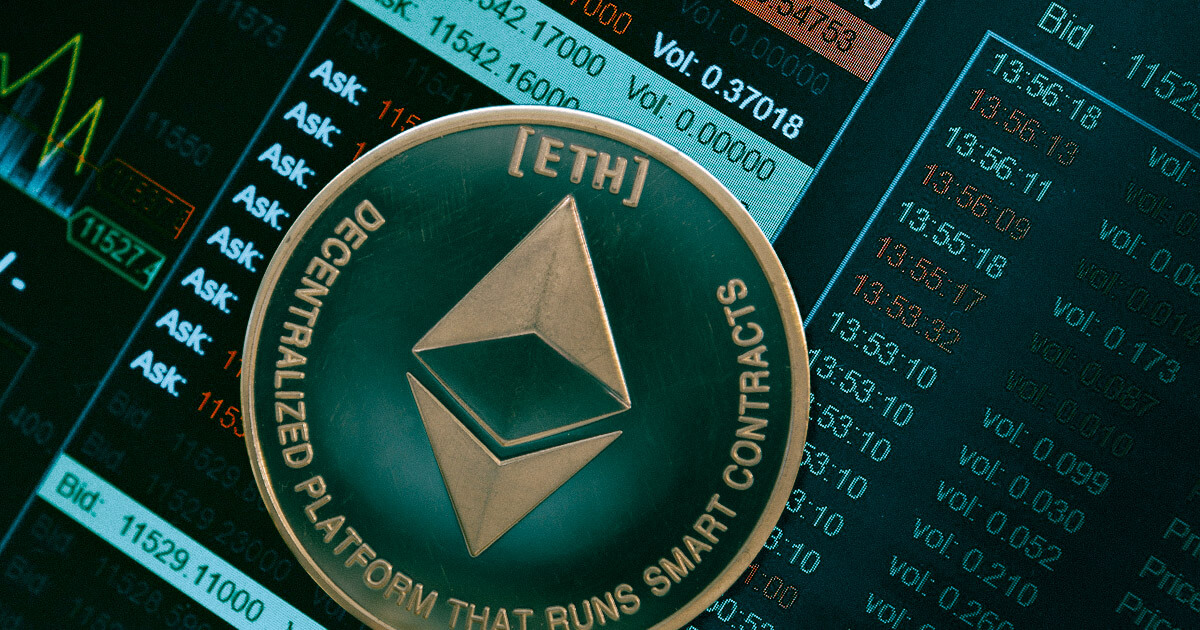
The Ethereum (ETH) market has experienced a significant liquidity drop, estimated at 20%, following the listing of Ether Exchange-Traded Funds (ETFs). This development has sparked discussions among investors and analysts, as it contrasts with the initial expectations that ETFs would enhance market liquidity.

Liquidity in financial markets is a measure of how easily assets can be bought or sold in the market without affecting the asset’s price. High liquidity is often associated with a stable market where large transactions can be executed swiftly and with minimal price impact. Conversely, a drop in liquidity can lead to increased price volatility and potentially deter investors seeking stable trading environments.

The introduction of Ether ETFs was anticipated to attract more investors and, consequently, increase liquidity. This was based on the premise that ETFs, by offering exposure to ETH without the need for direct ownership, would simplify the investment process and appeal to a broader investor base, including those less familiar with the complexities of cryptocurrency trading.

However, the reality has been quite different. Since the ETFs’ debut on July 23, there has been a noticeable decline in market depth, which refers to the volume of buy and sell orders close to the market price. The average 5% market depth for ETH pairs on U.S.-based centralized exchanges has decreased by 20% to approximately $14 million, and by 19% on offshore exchanges to around $10 million. This reduction implies that even relatively small orders can now have a more significant impact on the market price, indicating a less robust market.

Several factors may have contributed to this decrease in liquidity. One of the primary reasons could be the substantial outflow from Ether ETFs, with over $500 million withdrawn since their introduction. Additionally, the overall poor market conditions and the typical lower trading activity during the summer season may have exacerbated the situation.

Here are some potential strategies to improve Ethereum’s liquidity:

Automated Market Makers (AMMs): AMMs like Uniswap v3 have shown promise in providing deeper liquidity for ETH pairs compared to some centralized exchanges. By allowing liquidity providers to concentrate their funds within certain price ranges, AMMs can offer more capital efficiency and potentially higher returns for liquidity providers.

Liquidity Incentives: Offering incentives for providing liquidity can attract more participants to the market. This could involve yield farming opportunities, where liquidity providers earn additional tokens as rewards for their contributions to liquidity pools.

Layer 2 Solutions: Implementing Layer 2 scaling solutions can reduce transaction costs and improve the overall efficiency of trades. This can encourage more activity and, consequently, more liquidity. Uniswap’s integration with Optimism, a Layer 2 solution, is an example of this approach.

The implications of this liquidity drop are manifold. For one, it could lead to increased price volatility, making ETH a less attractive investment, especially for institutional investors who prefer more liquid and stable markets. Furthermore, a less liquid market may discourage new market participants, potentially slowing the growth of the ETH market.

Moreover, the perception of ETH as a mature and stable asset could be affected. Investors may view ETH as a riskier investment, which could influence its adoption rate and integration into traditional financial products and services. The liquidity drop could also impact the development and deployment of decentralized finance (DeFi) applications, which rely on the liquidity of underlying assets to function effectively.

In conclusion, the drop in ETH market liquidity post-ETF listing is a complex issue with far-reaching consequences. It highlights the need for a nuanced understanding of how new financial products can interact with existing markets and the importance of monitoring market dynamics closely following significant events such as the introduction of ETFs. As the cryptocurrency market continues to evolve, it will be crucial for investors, regulators, and market participants to stay informed and adapt to these changes.

Access to Products And Pricing: Dangote Refinery Still Mired in Controversy Days After The Commencement of Fuel Supply

0

The excitement surrounding the launch of the Dangote Petroleum Refinery in Lagos is quickly giving way to a more complicated reality as days go by.

While the refinery’s operations marked a significant step in Nigeria’s efforts to refine petroleum locally, issues have arisen, particularly regarding access to products and pricing, casting shadows over the initial optimism.

For days now, petroleum marketers, represented by the Independent Petroleum Marketers Association of Nigeria (IPMAN), said they have been completely left out of. Despite NNPC Limited lifting petrol from the Dangote Refinery last Sunday, marketers still struggle to access the product, according to a report by BusinessDay.

Abubakar Maigandi, IPMAN’s president, was candid about the situation, explaining that the marketers are still relying on old stocks of petrol as they await clarity on pricing from NNPC Limited. According to him, the price uncertainty has left marketers at a standstill.

“We have not been supplied petrol from Dangote Refinery as we wait for the NNPC on pricing,” he said.

“We are still selling old stocks of petrol. There is still so much uncertainty about pricing or when we will lift Dangote petrol,” the IPMAN President stated.

However, Dangote Refinery told Vanguard it has been making strides in delivery. As of this week, the refinery reported that it had delivered 111 million liters of petrol in just three days, far surpassing NNPC’s earlier assertion that the refinery could only supply 16.8 million liters.

A spokesperson from Dangote confirmed that loading operations were ongoing and that they would continue supplying the market.

“We are refining and have no reason not to load. So, loading is ongoing and we would continue to provide the product to the market,” The Group Chief Branding and Communications Officer of Dangote Refinery, Anthony Chiejina, stated.

Contrary to this assertion, a source within NNPC suggested that Dangote’s operations were struggling to meet initial promises, thus casting doubt over the refinery’s capacity to end Nigeria’s dependency on fuel imports anytime soon.

This uncertainty isn’t just a bump in the road—it underscores deeper complications that have dogged the nation’s petroleum sector for years.

The Pricing Controversy and A Deepening Rift

The heart of the matter lies in the price dispute that erupted between NNPC Limited and Dangote Refinery shortly after the refinery began operations. Last Monday, September 16, NNPC released its pricing details for petrol from Dangote Refinery, stating that it was purchasing the product at an eye-watering price of N898 per liter. This announcement sent shockwaves across the industry, as this figure seemed exorbitantly high for locally refined petroleum, sparking controversy and criticisms even among stakeholders.

Dangote Refinery, however, pushed back almost immediately, refuting NNPC’s claim. According to the refinery’s management, the crude oil processed was not yet part of the naira-dollar transaction arrangement that was meant to take effect in October. They argued that the current pricing should reflect the global market in which crude is still purchased in dollars, not naira. However, the refinery did not say how much it was selling to the NNPCL.

An Industry Still in Flux

The ramifications of this pricing dispute are significant. Across Nigeria, petrol prices have soared, with some locations reporting prices as high as N1,000 per liter, while others hover around N1,200. This disparity has left many wondering when, or if, the full benefits of local refining will be felt by everyday Nigerians.

The price debate which has escalated over the week has prompted the question: if the refinery is supposed to reduce Nigeria’s dependence on imports and stabilize prices, why are local consumers still grappling with such high costs?

The roots of the current price controversy stretch far beyond this single transaction between NNPC and Dangote Refinery. For years, Nigeria’s petroleum sector has been hamstrung by a tangled web of policy, subsidy programs, and mismanagement. NNPC, historically, has maintained a near-monopoly on fuel imports and distribution, a control mechanism that has left it at the center of nearly all pricing disputes.

At the heart of the price dispute is the cost of the crude oil purchase made earlier by Dangote Refinery. The refinery has explained that the feedstock was purchased in dollars and thus, must be sold accordingly. This means the naira-based deal made between the Nigerian government and Dangote Refinery will only take effect following the exhaustion of the current feedstock. The refinery said that it will begin in October.

Against this backdrop, many believe that NNPC is used to setting prices unilaterally, thus, reaching a consensus with Dangote on pricing will birth friction.

As Nigeria moved to deregulate its downstream petroleum sector, expectations were high that private sector players like Dangote Refinery would usher in a new era of price stability and transparency. But as seen in this case, the complexities of pricing, supply agreements, and government policies mean that even with the country’s largest refinery now operational, old issues of distrust and inefficiency still plague the system.

Nigeria Denies Frustrating Dangote’s 1,200km Subsea Gas Pipeline Project

0

The Ministry of Petroleum Resources (Gas) has moved to clarify the reasons behind Dangote Group’s decision to abandon the much-anticipated 1,200km subsea gas pipeline project. Contrary to what many may have believed, the Ministry insists that government policies had nothing to do with the project’s suspension, stating that the move was purely a business decision.

This disclosure, contained in a statement signed by Louis Ibah, spokesperson to the Minister of Petroleum Resources (Gas), Rt. Hon. Ekperikpe Ekpo, pushes back against recent comments made by a senior official from Dangote Group.

Devakumar Edwin, Vice President of Dangote Industries Limited, during a webinar hosted by Nairametrics, had alluded to policy roadblocks as the reason for pulling the plug on the pipeline, a project that would have transported natural gas from offshore sources to Nigeria’s shores. These comments sparked a flurry of backlash, leading to the Ministry stepping in with its version of events.

In its response, the Ministry explained that the decision to scrap the pipeline project was made long before President Bola Ahmed Tinubu took office, stressing that it was a business choice driven by internal factors within the Dangote Group. The Ministry noted that the Tinubu administration has made significant strides to promote private sector investments, especially in the gas value chain, and any assertion to the contrary would be misleading.

“The attention of the Honourable Minister of State Petroleum Resources (Gas), Rt. Hon. Ekperikpe Ekpo, has been drawn to the recent statement attributed to the VP Oil and Gas of Dangote Group, regarding the abandonment of plans to build a 1,200km subsea gas pipeline due to government policies,” the Ministry’s statement read.

It further clarified, “Hon. Ekpo notes that the decision to build or abandon the project was solely a business decision of the Dangote Group, taken long before the inauguration of the President Bola Ahmed Tinubu-led administration.”

Policy-Friendly Environment Under Tinubu

Far from hindering private sector participation, the Ministry listed several government policies introduced to encourage investment in Nigeria’s gas sector. Among these initiatives are the Gas Pricing & Domestic Demand Regulations (2023), the Natural Gas Pipeline Tariff Regulations (2023), and the Petroleum Industry Act (PIA) of 2021, which is seen as a landmark framework aimed at revolutionizing Nigeria’s oil and gas sectors.

Under President Tinubu, the Ministry insists, Nigeria’s gas sector has been receiving significant attention, with the government doing everything within its power to encourage private entities like Dangote Group to participate in gas infrastructure development. Several gas projects have already been commissioned, further evidence that the Tinubu administration is not only gas-friendly but is also prioritizing the sector as a cornerstone for the country’s economic growth.

Dangote’s Version: Business as Usual or Policy Struggles?

Edwin had pointed fingers at existing policies that, in his view, restricted the company’s ability to fully explore opportunities in the gas sector. He noted that policies at the time did not allow a single entity to operate across the upstream, midstream, and downstream sectors of the oil and gas industry, which complicated Dangote Group’s plans for the subsea pipeline.

But that wasn’t all. Edwin also cited another policy that granted the Nigerian government ownership of gas pipelines, regardless of who constructed them, as another significant obstacle. According to him, these hurdles were enough to put the ambitious project on ice.

While Dangote Group’s narrative makes a compelling case for why the pipeline project was shelved, the Ministry strongly disagrees with Edwin’s assertions. It maintains that the Petroleum Industry Act (PIA), signed into law in 2021, offers extensive incentives for private entities to invest in both the midstream and downstream gas sectors. The Ministry also argues that the policies currently in place are designed to remove such bottlenecks, not create them.

“There is no provision in the Petroleum Industry Act (PIA) or its predecessor policies and legislation that discourages private sector investment in gas infrastructure,” the Ministry’s statement noted. This direct rebuttal challenges the perception that government regulations have been stifling potential projects in the gas value chain.

Toward A Profitable Nigerian Gas Sector

The back-and-forth between the government and Dangote Group sheds light on the broader complexities of Nigeria’s gas industry. As the country seeks to diversify its economy away from oil, gas is becoming a crucial sector that could provide long-term energy security and significant revenue streams. For this to happen, however, the government needs the full backing of the private sector.

In recent years, Nigeria has been positioning itself as a gas giant, with vast untapped reserves and strategic initiatives aimed at boosting local production. The Tinubu administration has prioritized gas as part of its broader economic strategy, underlining investment in gas infrastructure as key to achieving energy sustainability. The government has also pushed forward with the National Gas Masterplan, a blueprint designed to harness the country’s gas potential.

The fate of the 1,200km subsea gas pipeline may be sealed, but the broader discussion about Nigeria’s gas sector is far from over. For Dangote Group, the decision to shelve the project appears to have been rooted in pragmatic business considerations, while for the government, it is a missed opportunity. Nevertheless, the Ministry of Petroleum Resources (Gas) remains optimistic that its policies will continue to attract private investors.

The clarification from the Ministry paints a picture of an administration keen on building bridges, not roadblocks, for private enterprises eager to invest in the gas value chain.