DD
MM
YYYY

PAGES

DD
MM
YYYY

spot_img

PAGES

Home Blog Page 2905

Microsoft to Cut 650 Roles in Xbox Gaming Division As Verizon Announces 4,800 Job Cuts

0
Microsoft CEO

The wave of layoffs sweeping through the tech industry has hit yet another major player. This time, it’s Microsoft, which announced on Thursday that it is cutting 650 roles from its Xbox gaming division.

The job cuts, primarily in corporate and supporting functions, come as the company continues to streamline operations following its $69 billion acquisition of Activision Blizzard, a gaming juggernaut behind franchises like Call of Duty and World of Warcraft.

These latest cuts mark Microsoft’s third significant round of layoffs in its gaming unit since closing the Activision deal. Phil Spencer, CEO of Microsoft Gaming, acknowledged the difficulty of the decision in an internal memo shared with staff.

“We are deeply grateful for the contributions of our colleagues who are learning they are impacted,” Spencer said, adding that the restructuring aims to “organize our business for long-term success.”

Microsoft said that while some teams will be affected by shifting priorities, no game titles, devices, or experiences are being canceled, and no studios are being closed as a direct result of the layoffs.

“In the U.S., we’re supporting them with exit packages that include severance, extended healthcare, and outplacement services to help with their transition,” Spencer assured, though the severance terms will vary for employees outside the United States.

This round of cuts is part of a broader trend in the tech sector, which has seen a dramatic increase in layoffs over the past two years. While gaming companies like Microsoft, Sony, and Unity have all been forced to reduce their workforces, the challenges extend far beyond gaming.

The broader tech industry is struggling with an economic slowdown, rising interest rates, and post-pandemic shifts in consumer spending patterns. What initially seemed like isolated incidents of downsizing has grown into a much larger movement as companies re-evaluate their long-term strategies in the face of an uncertain future.

Microsoft, despite having made a string of high-profile acquisitions, has not been immune to these pressures. Earlier this year, the company cut 1,900 jobs from its gaming division, only months after completing the Activision deal. In May, the tech giant shuttered several of its gaming studios, including Arkane Austin and Tango Gameworks, although it did not specify how many employees were affected by these closures.

The broader gaming industry has been hit hard. Sony, Microsoft’s key competitor, announced in February that it would lay off 900 workers from its PlayStation unit. The ongoing economic pressures are also visible in other gaming companies like Unity, a software firm, and Twitch, Amazon’s live streaming platform, which have both implemented workforce reductions.

The layoffs are emblematic of a larger downturn in the technology industry. In 2023 alone, tech companies slashed tens of thousands of jobs across multiple sectors—from social media platforms to hardware manufacturers. The mass layoffs at Twitter now rebranded as X under Elon Musk’s leadership, and at Meta, which cut 11,000 jobs, serve as prime examples of the tech industry’s struggle to navigate an increasingly volatile economic environment. The scale of these cuts signals a broader shift away from the rapid growth that tech firms enjoyed during the pandemic.

Verizon Cutting 4,800 Jobs

In a similar move, Verizon Communications Inc. also announced plans to eliminate 4,800 jobs as part of its broader restructuring initiative. The company disclosed a pre-tax charge of as much as $1.9 billion linked to these job cuts, with more than half of the employees affected expected to leave by the end of September, and the rest by March 2025.

The telecommunications giant is also looking to exit certain non-strategic businesses and real estate assets, a move that will incur an additional $230 million to $380 million in pre-tax charges.

The layoffs come at a time when Verizon is pouring billions into building out its fiber-optic network in a bid to secure its future as mobile subscriber growth slows. Last week, the company made its biggest acquisition in over a decade, agreeing to buy Frontier Communications’ fiber-optic assets for $9.6 billion—a deal that also involves taking on Frontier’s debt.

Verizon’s decision to slim down its workforce is part of a growing realization across the industry that the era of rapid expansion, fueled by cheap borrowing and a booming digital economy, may be over. Many tech companies are now facing the harsh reality of declining revenue, rising costs, and fierce competition for consumer attention. The industry’s heavyweights are increasingly being forced to adjust their growth ambitions to match the new economic landscape.

This belt-tightening is likely to continue as tech companies seek new strategies to ensure long-term viability. Verizon, for example, is exploring the sale of thousands of mobile phone towers to raise cash, a move that could bring in over $3 billion, according to Bloomberg.

While Verizon’s recent financial performance has been underwhelming—reporting second-quarter revenue that fell short of analyst expectations due to fewer upgrades of wireless equipment—the company’s stock remains up 15% this year, a small consolation in a challenging environment.

However, the reality for workers in the tech sector is far less rosy. With layoffs continuing across the board, the industry that once promised rapid growth and innovation now finds itself in a period of intense introspection.
Nigeria Partners with World Bank to Register All Lands, Hopes to Revive $300bn Dead Capital

0

In a much-needed move, the Ministry of Housing and Urban Development has joined forces with the World Bank to tackle Nigeria’s land registration woes, aiming to bring order to a chaotic system where over 90% of land remains untitled.

The Ministry signed a landmark agreement with the World Bank to register all land parcels within the next five years, digitize the country’s land records, and formalize transactions to bring the system in line with global standards.

“This is very important to our government as over 90% of land in our country is unregistered and untitled,” explained the Minister of Housing, Arc. Ahmed Musa Dangiwa, during the signing ceremony on September 11, 2024. “Experts estimate a dead capital of over $300 billion. Through this initiative that we plan to implement with the World Bank, we aim to register, document, and title all land parcels within five years.”

The estimated $300 billion in “dead capital” locked up in unregistered land across the country tells the story of immense potential—wasted. Stakeholders, who have advocated land reforms for a long time, believe this new initiative could very well be Nigeria’s lifeline to unlock vast economic growth.

Nigeria’s land registration woes have long been a source of frustration for landowners. Recently, the Lagos State government, Nigeria’s most economically advanced state, added to the urgency of land registration reform by asking landowners to re-register their lands. This development highlights the inherent weaknesses in Nigeria’s land administration framework.

The inefficiencies and inconsistencies of state-level systems have long been bottlenecks in the formalization of land ownership, leaving landowners entangled in endless bureaucracy bottlenecks. Against this backdrop, it is expected that the new partnership with the World Bank will directly address these concerns, offering streamlined solutions that could bring lasting reform.

Dangiwa, in a statement, laid out the ministry’s ambitious plan to register all land parcels across the country within five years. The plan also includes increasing formal land transactions from the current paltry 10% to an impressive 50%, with the introduction of the National Digital Land Information System (NDLIS)—a game-changing tool that promises to finally bring order to Nigeria’s land data, allowing for easier access, registration, and documentation of properties.

For a country grappling with urban expansion, a booming population, and increasing housing needs, this move comes not a moment too soon. With land being a crucial asset, stakeholders in the Nigerian real estate sector have touted the ability to accurately register and title properties as a key step in ensuring that land can be used as a wealth-generating tool, particularly in securing loans and investment opportunities.

Guangzhe Chen, the World Bank’s Vice President of Infrastructure, highlighted the institution’s commitment to helping Nigeria tackle its land challenges.

“We are open to supporting Nigeria in land administration, affordable housing, sustainable financing, climate change mitigation in urban areas, and urban land management,” Chen said during the signing event.

According to Chen, the World Bank plans to leverage successful land registration models from other countries in West and Central Africa to guide Nigeria’s reforms. This expertise will be essential as Nigeria seeks to develop a structured land titling system and provide support for urban planning in vulnerable cities, which are increasingly affected by flooding and rising temperatures.

Ndiame Diop, the World Bank’s Country Director, also expressed confidence in the collaboration, stating that “addressing land registration, with 90% of land currently unregistered, is urgent for the sector’s development.”

Diop confirmed the World Bank’s readiness to provide both financing and technical support to drive Nigeria’s housing and urban agenda, ensuring that the reforms are implemented effectively.

The NDLIS, a critical piece of the plan, aims to revolutionize how land information is collected, stored, and accessed. By moving to a digital platform, land registration could become not only more efficient but also more transparent—reducing the possibility of corruption, one of the current system’s greatest flaws.

State governments, like those in Lagos, will also have a unified system to reference, reducing the inconsistencies and duplications that have plagued land registration processes for decades.

The partnership between Nigeria’s Housing Ministry and the World Bank extends beyond land registration. As Dangiwa explained, another crucial area of collaboration involves urban development and climate resilience.

“We are working with the World Bank on urban livability and developing a framework for systemic barriers in the housing value chain,” he said.

The funds unlocked through better land registration practices—via property taxes, ground rents, and Certificates of Occupancy—could be funneled into urban infrastructure projects designed to mitigate climate impacts, including flooding, which has become a seasonal nightmare for Lagosians.

The housing value chain will also receive much-needed attention, with plans to break down barriers that have long hindered private investment in affordable housing. The Ministry is aiming to attract more investment by streamlining processes and offering incentives for housing development—an initiative that ties into the larger vision of formalizing land ownership.

Can Nigeria Achieve Its Goals?

As lofty as these goals are, the challenges Nigeria faces in achieving them are equally daunting. Registering all land parcels in a country of over 200 million people—where many transactions still happen informally and state-level bureaucracies are often inefficient—will not be easy.

However, many believe the five-year timeline, the World Bank’s technical expertise, state-level partnerships, and the commitment of the Federal Ministry of Housing, if harnessed effectively, will bring the plan to fruition. For landowners in Lagos and beyond, the hope is that this partnership will finally bring clarity to land ownership issues, helping them avoid repeated processes like re-registration.

While this plan offers hope of better land administration, with the potential rewards of $300 billion in untapped capital, many have pointed to the much bigger issue – the Nigerian Land Use Act, which has been fingered as the bane of underdevelopment in the country’s real estate sector. Stakeholders have for long, called for the repeal of the Act, which gives rights to property ownership to the governments.

Over 259 Lives Lost, 625,239 Displaced As Flood Wreaks Havoc in Borno, Others: Govts. Lackluster Approach Blamed

0

The National Emergency Management Agency (NEMA) has raised alarms over the devastating impact of flooding across Nigeria, revealing that 29 states and 172 local government areas (LGAs) have been affected, with over a million people impacted.

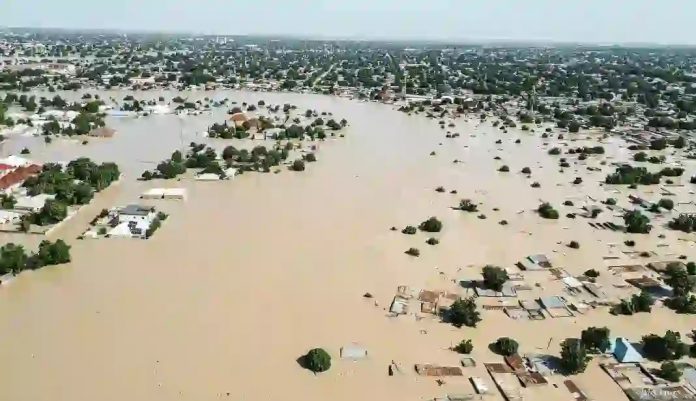
The alarms follow the devastating impact of flood in Borno State, following the collapse of the Alau Dam.

In an update at the National Emergency Coordination Forum (ECF) meeting, NEMA Director General Zubaida Umar shared the grim statistics, highlighting the agency’s ongoing efforts to manage the crisis. According to her, the flooding pattern aligns with predictions made by the Nigeria Hydrological Services Agency (NIHSA) in their Annual Flood Outlook, which had warned that between July and September 2024, 33 states and 135 LGAs would face high flood risks.

The agency said the flooding has displaced 625,239 people, claimed 259 lives, and left communities grappling with widespread destruction.

Despite the pre-warning, Borno State, which now grapples with its worst flooding in three decades, is said to be ill-prepared to mitigate the crisis. Floodwaters have ravaged the area after the Alau Dam overflowed due to heavy rains, leading to the displacement of hundreds of thousands and at least 30 fatalities.

Natural or Man-made Disasters?

This disaster has raised serious concerns about the state’s use of funds designated for flood control, as well as broader concerns over how ecological funds are utilized in Nigeria.

Borno State’s failure to adequately prepare for this year’s flooding crisis has drawn scrutiny, particularly as data reveals that the state received N816.34 million from the Ecological Fund between January and June 2024. The Ecological Fund, established to address environmental challenges such as flooding, erosion, and desertification, is meant to be a vital resource in states prone to natural disasters.

However, despite the increase in total Ecological Fund allocations to Borno, the state has only spent a fraction of it on flood and erosion control. A breakdown of the funds received shows a steady increase compared to 2023, with allocations for the first half of 2024 reaching N816.34 million—an 8.89% rise over the N749.68 million disbursed in the same period last year. Yet, despite these significant allocations, just N20 million, or 2.45%, of the total Ecological Fund has been spent on flood control projects in the first half of 2024.

This underutilization is a recurring issue. In 2023, despite allocating N1.042 billion for flood and erosion control, Borno spent none of it, leaving the state vulnerable to the disasters that have now wreaked havoc. The 2024 revised budget earmarked N1.653 billion for these purposes, but only 1.2% has been utilized, reflecting a concerning trend in the state’s failure to prevent floods.

Consequences of Inaction

The lack of investment in flood mitigation efforts is now taking its toll on Borno State, which has seen massive displacement and significant loss of life. Residents describe harrowing scenes as homes and livelihoods were washed away, with many seeking refuge in makeshift camps for internally displaced persons (IDPs).

Borno Governor Babagana Zulum, alongside the state’s emergency management teams, has spearheaded the response efforts, setting up IDP camps and providing relief to affected persons.

Umar commended the Borno State government for its prompt response in the aftermath of the floods but stressed that the lack of proactive measures had compounded the situation. She outlined NEMA’s intervention strategy, which includes deploying additional personnel for search and rescue operations, distributing water purification kits and critical rescue equipment, and providing food and non-food items to support displaced populations.

“Our agency, NEMA, is working tirelessly to assist those impacted by this disaster, and we assure the victims that sustainable support will be provided. We appreciate the collaboration of our humanitarian partners and stakeholders in addressing the crisis,” said Umar during the ECF meeting.

She added that NEMA’s efforts are nationwide, with multiple states receiving ongoing support.

While Borno State has been severely affected, the flooding crisis is nationwide, with NEMA confirming that 29 states have reported significant impacts from heavy rainfall and river overflow. The flooding has not only displaced people but also destroyed infrastructure, agricultural lands, and livelihoods.

In reviewing the situation, experts and environmental advocates point to the lackluster approach by government authorities in tackling the root causes of the recurring floods. Poor drainage systems, failure to enforce urban planning regulations, and delays in executing flood control projects are all contributing factors. Additionally, the underutilization of ecological funds in flood-prone states is described as a persistent challenge in Nigeria’s disaster management framework.

In light of the devastating impact of the current floods, there is a growing consensus that both state and federal governments need to adopt a more proactive and transparent approach to managing ecological funds. NEMA’s ongoing interventions are helping to provide relief, but experts have called for long-term solutions to be implemented to safeguard communities from the recurring dangers of flooding.

Nigeria Announces Centers for CNG Conversion in Lagos, Other States

0

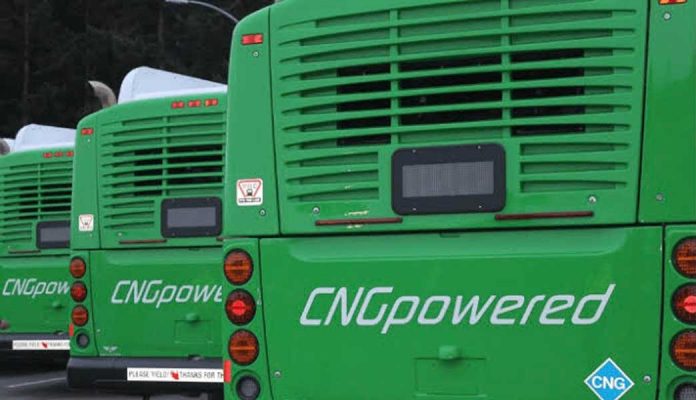
The Nigerian government is pushing forward with the Compressed Natural Gas (CNG) initiative designed to cushion the blow of rising fuel costs following the removal of subsidies.

As part of its Presidential Compressed Natural Gas Initiative (PCNGI), the government is offering free vehicle conversions to CNG for Lagos residents on Friday, September 13. This is part of a larger plan to ease the financial burden on Nigerians struggling with the soaring prices of petrol.

From 3 PM to 6 PM, vehicle owners at six designated centers across Lagos will have the opportunity to convert their petrol-powered cars to run on CNG, an alternative fuel that is significantly cheaper. The first 50 vehicles to pass inspection at each center will be fitted with free CNG conversion kits, allowing them to refuel at N230 per standard cubic meter (SCM) at any NIPCO station, which is a fraction of the cost of petrol.

This initiative is a direct response to the economic hardships brought on by the removal of fuel subsidies earlier this year. The removal sent fuel prices skyrocketing, with Nigerians facing unprecedented costs at the pump. In an effort to counteract this, the PCNGI was launched by President Bola Ahmed Tinubu in August 2023, aiming to introduce over 11,500 CNG-enabled vehicles and 55,000 conversion kits nationwide.

The Lagos State Commissioner for Transportation, Oluwaseun Osiyemi, announced the upcoming free conversions via his official X (formerly Twitter) account, encouraging Lagosians to take advantage of the opportunity. According to him, this initiative will help ease the financial strain that rising fuel prices have placed on vehicle owners, allowing them to switch to a cheaper and more sustainable fuel alternative.

Designated Conversion Locations

To facilitate the conversion process, six centers in Lagos have been designated as official CNG conversion hubs:

  1. Femadec: Km 42, Lekki-Epe Expressway, Majek Second Gate Stop, Abiju Ibeju, Lekki, Lagos.
  2. Portland: No. 1, Ojota Interchange Terminal, Bayo Shodipo, Ojota, Lagos.
  3. Mezovest: KM 23, Lekki-Epe Expressway, Ajah, opposite Kilimanjaro, beside Libmat Motors, by Abraham Adesanya Bus Stop.
  4. Dana Motors: Dana Motors Ltd Kia Plaza, 117 Oshodi-Apapa Expressway, Isolo, Lagos.
  5. MBH Power: Km 5, Ikotun Road, Itamope, Ikorodu, Lagos.
  6. Autogig: Plot 144b Gbagada Expressway, Gbagada, Lagos.

The conversion exercise is also available in other cities. On the same day, CNG conversions will be carried out in Abeokuta, Ogun State, and Ibadan, Oyo State, from 3 PM to 6 PM. On Saturday, September 14, similar efforts will be made in Abuja and Kaduna.

Reducing Dependency on Petrol

The PCNGI is not just about providing immediate financial relief to Nigerian drivers. It’s a cornerstone of the government’s broader strategy to reduce dependency on petrol and move toward cleaner, more affordable energy.

CNG, which is significantly cheaper than petrol, is seen as a sustainable solution to Nigeria’s energy challenges. With CNG priced at just N230 per SCM, compared to the higher and fluctuating prices of petrol, vehicle owners can save substantially by converting their vehicles.

In addition to savings, CNG is also a cleaner fuel, producing fewer emissions and contributing to environmental sustainability. This aligns with global trends as nations around the world push for greener energy alternatives in the face of climate change.

Addressing the Impact of Fuel Subsidy Removal

Since the removal of the fuel subsidy in May 2023, Nigerians have been grappling with severe economic pressures as fuel prices nearly tripled. The subsidy removal, which was part of the government’s broader economic reforms, was necessary to curb rising national debt and unsustainable spending. However, the immediate effects have been tough, with many Nigerians struggling to cope with the sudden increase in fuel prices and inflation.

The government’s response, including the launch of the PCNGI, is aimed at alleviating some of this pressure. By offering free CNG conversions, the government hopes to provide vehicle owners with an alternative fuel option that is not only cheaper but also more sustainable in the long term.

Speaking on the initiative, the PCNGI committee noted that program is a critical part of the government’s strategy to mitigate the impact of the subsidy removal.

The government’s long-term vision goes beyond individual vehicle conversions. As part of the PCNGI, plans are underway to introduce a network of workshops across Nigeria to facilitate CNG adoption. This includes not only private vehicle conversions but also converting public transportation and commercial fleets to run on CNG.

In July 2024, PCNGI signed a Memorandum of Understanding (MoU) to convert one million commercial vehicles to CNG by 2027, identifying 2,000 workshops to support this project. The initiative is also working in collaboration with the Nigerian National Petroleum Corporation (NNPC) and NIPCO Gas to establish a nationwide network of CNG refueling stations, making it easier for Nigerians to access cheaper fuel alternatives.

This ambitious project is expected to create jobs, boost local manufacturing, and develop technical skills.

However, while the PCNGI represents a significant turning point for Nigeria’s transportation sector, offering immediate relief from the effects of subsidy removal, its pace has become a concern. The initiative which was announced more than a year ago, was expected to be widely by now, to alleviate the high cost of transport-induced suffering of Nigerians.

Meme Coins: A New Era Of Investment

0

These meme coins are now widespread in the cryptocurrency market, attracting new and experienced investors. Usually based on internet memes and pop culture references, these coins have huge price appreciation and impressive community support. Some top meme coins include ADA, UNI, Jupiter, and Yeti Ouro (YETIO). This article also explains the current trends and investment fundamentals and identifies Yeti Ouro as the next investment crack.

1.  Cardano (ADA)

Cardano (ADA) is currently trading at $0.369, with a market capitalization of $27.44 billion. Although ADA has been progressing below its May 2022 high, it is still trading above 100— and 200-day moving averages. Cardano is a third-generation blockchain technology based on the PoS algorithm, characterized by energy efficiency and high security. ” It is designed to support financial services for the unbanked and serves smart contracts of decentralized applications (dApps).

Adding Cardano’s two-layered architecture increases its versatility, future-proof, and scalability. It is managed through nearly 3,000 distributed stake pools, thus the network’s decentralization. Cardano is designed with clear outlooks for complete decentralization, increased scalability, and better compatibility with other systems to become a revolution in blockchains.

2.  Uniswap (UNI)

Uniswap (UNI), at the time of writing, is priced at $6.74 and has a 24-hour trading volume of $ 145 million. Being an autonomous DEX based on the Ethereum platform, Uniswap supports the direct exchange of tokens integrated into the platform and their ERC-20 equivalents by relying on smart contracts. The platform utilization has expanded; overall, transactions came in at more than 14% higher, $5.7 billion in the same year, along with the legal settlement agreement with the U. S. Commodity Futures Trading Commission (CFTC).

Second, Uniswap has been launched with the proprietary token known as UNI, which provides token holders with the right to vote on the usage of the protocol’s treasury and further development updates. The fact that the platform is open for any token and has no restrictions regarding listing allows various tokens to start with more opportunities for investors to make good money. Uniswap is also planning to launch the third version of Uniswap, i.e., Uniswap V3, which will help increase the rate even more.

3. Jupiter (JUP)

The price for Jupiter (JUP) is $0.00093553, with the current market capitalization standing at $1.17 billion and a current circulation of 1.35 billion JUP. JUP is the governance token for the Jupiter aggregator that sits on the Solana blockchain; it facilitates swap trades in different liquidity pools to be efficient. New features integrated into Jupiter are perpetual futures, decentralized stablecoin management, and the LFG launchpad for new Solana projects.

JUP’s tokenomics contain a limitation in the maximum supply of tokens, which could set the stage for possible price increases in the future. Moreover, there are strong incentives on Jupiter through staking rewards and as a liquidity provision platform for long-term holders. Most analysts have estimated that the value of JUP could reach up to $3.51 by 2030, meaning high growth is expected to be achieved.

4. Yeti Ouro (YETIO): The Next Big Thing

Yeti Ouro (YETIO) is a project that differs from others as it links meme culture with functionality. Based on the Ethereum platform, it focuses on an upcoming game called Yeti Go, which belongs to the Play-to-Earn (P2E) genre. This makes it an appealing investment proposition since it caters to fun and a way of making money.

Yeti Ouro has had it audited by SolidProof, which focuses on smart contract audit and penetration testing. This guarantees the security and efficiency that is very important for attracting investors. The Yeti Ouro is at the presale stage 1, and nobody knows the lower prices of these tokens than the current ones. This puts the investors in a better position to purchase the company shares before the share price might have likely increased. The presale price of the tokens is $0. 012, giving traders a low entry level with the possibility of gaining 100 times their initial investment.

Yeti Ouro is presented as a promising meme coin that may provide significant gains shortly. Its sound environment encourages investment, and community backing plays a key role.

Conclusion

Considering the given options, Ada, UNI, and Jupiter are unique investment tools; therefore, the following meme coin is Yeti Ouro (YETIO). Yeti Ouro provides an ideal investment opportunity for high returns with this unique strategy, enhanced community support, and high growth prospects. Currently, the presale is done at $0.012, which is promising for Yeti Ouro, and this is the best time to invest in Yeti Ouro for those willing to see 100x returns shortly.

Join the Yeti Ouro Community: