DD
MM
YYYY

PAGES

DD
MM
YYYY

spot_img

PAGES

Home Blog Page 2907

Beyond MVNO, Our Focus Is MVNO Linked To Satellite Direct-to-Cell in Nigeria

0

Good People, thanks for the questions on the MVNO investment opportunity. Let me provide more details. First, Tekedia Capital is not interested in investing in any mobile virtual network operator (MVNO) as I have written here many times that we do not see any value in that business category in Africa. Why?

MVNO makes sense in markets where telcos have OVERcapacity and need help to bring customers into their ecosystems. For example, Verizon (MTN equivalent in America) may have a network capacity to support 20 million customers in an area but it has just 5 million customers. So, working with an MVNO makes sense as that MVNO can use its local knowledge, superior customer service, etc to add maybe an extra 5 million users.

But in Nigeria, all the telcos are operating at above capacity. In other words, they have capacity for 10 million users, but they could have 25 million already. Under that framework, adding more users via MVNO does not improve any customer experience. Rather, it is more customer congestion. As that happens, the MVNO has no leverage to differentiate on service from the telcos since the core product is broken. That is why we are not interested in investing in any MVNO. It has nothing to compound competitive positioning in any way possible!

However, if you are an MVNO and can get NCC (Nigeria’s telecom regulator) to allow you to partner with Elon Musk’s SpaceX Starlink, to pipe its direct-to-cell satellite service, cutting out the terrestrial telcos, Tekedia Capital becomes interested once you get your approval-in-principle from NCC. But just being an MVNO is not something we find interesting.

Paasa, Welcome to Tekedia Capital

0

India is going to become a significant economic powerhouse within the next two decades. It is one of the most amazing nations today when you look at its national leadership composite. Tekedia Capital believes that India will join the innovation society era, just as China did the same in the last three decades. As that happens in India, HNIs (high-net-worth individuals) of India will dream bigger.

Paasa (paasa.com), a global investing platform for aspiring HNIs in emerging markets, is poised to help with those dreams. Simply, HNIs in countries like India want to diversify their wealth internationally and they need Paasa. Paasa streamlines this – thus empowering HNIs to save for their child’s education, spend overseas confidently, and build generational wealth in a stable currency.

The focus is high-net-worth individuals (HNIs) in emerging markets, and through Passa, they will get the same globally diversified portfolios as HNIs in America and Western Europe.

Tekedia Capital (capital.tekedia.com) is excited to welcome Paasa to our portfolio.

Tekedia Black Friday Deals of 50% Off End

0

Note: The deal has ended. 

You can learn about each of these courses here – https://school.tekedia.com/courses/all/

-Tekedia Startup Masterclass 

-Tekedia AI in Business Masterclass 

-Tekedia Practice with Internship (Energy, Agric, Digital)

-Tekedia Industries (Agro, Energy, Digital Tech) 

-Tekedia Investment & Portfolio Management 

– Tekedia CEO and Director Program 

– 1:1 Video Consultation w/ Ndubuisi Ekekwe 

You can learn about each of these courses here – https://school.tekedia.com/courses/all/

And depending on your payment options, you can pay via a local bank (Naira), Stripe, PayPal, Zelle, etc when you click the program. After payment, email info@tekedia.com for your login details.

Note: we’re not changing the prices on our website; we just want only those in our mailing list and community to get this discount. Take advantage and let us co-learn at Africa’s largest business school for entrepreneurial capitalism. We’re launching a dedicated portal where learners will play the game of business management and leadership, empowered with tools to achieve.  

Registration for the next Tekedia Mini-MBA (Feb 10 – May 3, 2025) continues here (not included in this bonus). Thanks for your partnership. 

Regards,

Tekedia Team

Stablecoin MarketCap Soared to ATH of $190B

0

The digital finance landscape has witnessed a remarkable milestone as the total market capitalization of stablecoins has soared to a new all-time high (ATH) of $190 billion. This surge reflects a burgeoning confidence in stablecoins, which are increasingly becoming a cornerstone of the cryptocurrency market.

Stablecoins, designed to offer the best of both worlds—the stability of fiat currencies and the flexibility of cryptocurrencies—have seen a dramatic rise in popularity. Their ability to mitigate the volatility traditionally associated with digital assets makes them an attractive option for investors and users seeking a more stable medium of exchange.

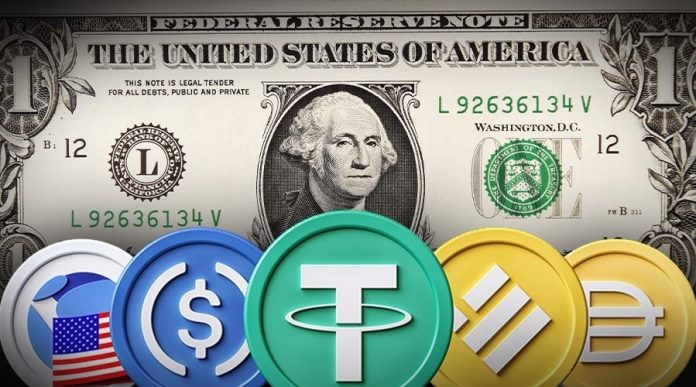
The recent rally in the stablecoin market can be attributed to several factors. The dominance of Tether (USDT) and innovative offerings like Ethena’s USDe have played significant roles in this growth. USDT continues to lead the pack with a market cap that rose 10% over the past month to a new peak of $132 billion. Meanwhile, Circle’s USDC has grown 12% to nearly $39 billion, marking its highest point since the regional banking crisis in March 2023.

The increase in market cap is not limited to the top players. A total of 38 out of nearly 200 tokens tracked made a new all-time high supply over the past month. This includes Ethena’s USDe, which saw a 42% increase to a new record of $3.8 billion in November. The token generates yield to investors by holding spot BTC and ETH and simultaneously shorting an equal number of perpetual futures farming the funding rate.

The broader crypto market rally has also contributed to the increased trading volumes with stablecoin pairs on centralized exchanges, which rose 77% month-over-month to $1.8 trillion. The majority of these volumes were driven by USDT, followed by Hong Kong-based First Digital’s FDUSD and USDC.

The increase in stablecoin market cap also reflects the broader crypto market rally, which has been particularly strong since the U.S. presidential election. Investors are flocking to cryptocurrencies, anticipating a more favorable environment for the industry under the new administration. This has led to a 77% month-over-month increase in trading volumes with stablecoin pairs on centralized exchanges, reaching $1.8 trillion.

The record-breaking stablecoin market cap surpasses the previous peak of $188 billion recorded in April 2022, before the Terra-Luna stablecoin implosion that contributed to the crypto winter. The recovery and growth beyond the pre-crash levels suggest a resilient and maturing market that is increasingly being recognized for its utility and potential in the global financial landscape.

This ATH in the stablecoin market cap is a testament to the growing role of stablecoins in the global financial ecosystem. They are not only used for trading but are increasingly utilized for savings, payments, and as a hedge against market volatility. The stablecoin market’s resilience and growth, especially after surpassing the pre-Terra crash peak, indicate a maturing market that is ready to expand its horizons and integrate more deeply into the fabric of digital finance.

As the stablecoin market continues to evolve, it will be interesting to watch how it shapes the future of money and finance. With their promise of stability and innovation, stablecoins may well be at the forefront of a new financial paradigm.

Tax Exemptions for Crypto Products in Hong Kong is a Strategic Move

0

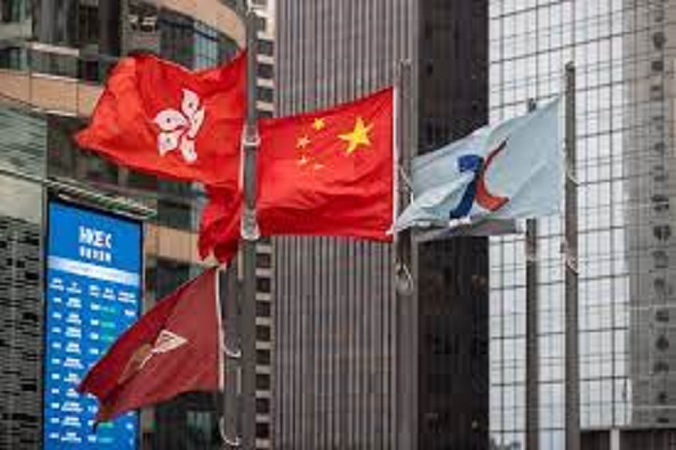
In a bold step towards solidifying its position as a leading financial hub, Hong Kong has announced plans to exempt certain cryptocurrency products from taxes. This initiative is aimed at hedge funds, private equity funds, and family offices, which could significantly benefit from the tax relief on investment gains from cryptocurrencies and other alternative assets.

The move is seen as a strategic effort to enhance Hong Kong’s appeal as a wealth management hub, potentially outpacing rivals such as Singapore and Switzerland. By waiving taxes on investment gains, Hong Kong is positioning itself as a competitive destination for the burgeoning crypto market, which continues to attract substantial global investment.

The proposed tax exemptions are part of a broader strategy to attract asset managers and high-net-worth individuals to the region. The government’s proposal includes expanding tax-exempt investments to encompass private credit, overseas property, and carbon credits, with a six-week consultation period underway to gather feedback.

Hong Kong’s proactive approach to cryptocurrency regulation has been evident, with the city-state taking steps to integrate crypto into its financial system. This includes licensing exchanges and offering retail customers direct cryptocurrency trading opportunities. The Securities and Futures Commission (SFC) is also planning to fast-track licensing for Virtual Asset Trading Platform (VATP) applicants holding provisional status.

Analysts have highlighted the significance of taxation in asset managers’ choice of location, and Hong Kong’s latest policy changes could tip the scales in its favor. The city’s strategic location, robust legal framework, and investor-friendly policies have long made it an attractive destination for global capital. With these new tax exemptions, Hong Kong is not only reinforcing its financial hub status but also embracing the future of digital assets.

The government-backed business hub, Cyberport, is at the forefront of this shift, now supporting over 270 blockchain firms. This surge in blockchain-related enterprises is part of Hong Kong’s broader strategy to drive innovation in fintech, security, and entertainment. The rapid growth of Cyberport, including the addition of more than 120 firms in just 16 months, underscores the region’s commitment to becoming a central node in the Web3 network.

Moreover, Hong Kong’s welcoming approach to crypto regulations contrasts with more restrictive policies in other regions. The city is paving the way for retail investors to trade certain digital assets on licensed exchanges, replacing a framework that previously limited trading to accredited investors. This inclusive regulatory environment is likely to foster a more vibrant and diverse crypto ecosystem.

The implications of this policy shift are far-reaching. It signals a growing recognition of cryptocurrencies as a legitimate asset class and could pave the way for increased institutional investment in the crypto space. Moreover, it reflects Hong Kong’s adaptability and forward-thinking approach in the face of evolving financial landscapes.

As the world watches, Hong Kong’s tax exemption plans for certain crypto products could mark a significant turning point in the global financial sector’s approach to digital assets. It remains to be seen how this policy will impact the competitive dynamics among the world’s top offshore financial centers, but one thing is clear: Hong Kong is making a decisive play to secure its future as a leading global financial hub in the era of digital finance.