DD
MM
YYYY

PAGES

DD
MM
YYYY

spot_img

PAGES

Home Blog Page 2918

The Apple’s iPhone 16 Age Challenge And Escape via Apple Intelligence

0

When you are worth close to $3.4 trillion, you have the best playbook in business. Yes, Apple is a market leader and a category-king in many ways. But even as we note that, Apple is largely an old company (health-tech companies for the elderly, watch out), and the signs are everywhere. How? What it is offering in the new iPhone 16 is all fashionista with incremental marginal innovation!

If you remove the bitten apple from the logo, those products may not be worth really much. But with the bitten apple on them, perceptions come, and luxury emerges, and Apple will continue to collect.

Good People, the biggest protector of Apple today is the Western governments which are actually preventing Chinese brands from having their ways. If you allow Huawei Tri-Fold, Apple will have real challenges in New York, London, Berlin and more.  

Of course, this is not to make a case for China since they return the favour in kind. But my point is that Apple is winning because its #1 competitor, Huawei, is not free to roam around. The most ambitious elevations in the world of smartphone designs are now coming from China. Have you seen the Huawei Tri-fold phone? Read it here.

The Chinese company began pre-orders for its Mate XT on Saturday, which coincides with Apple’s iPhone 16 release launch date, making it a worthwhile moment for tech enthusiasts and market watchers as both tech giants vie for dominance in the premium phone categories.

It is however worth noting that lately, Huawei has managed to displace Apple’s iPhone in terms of sales in China, largely due to a combination of technological innovation, patriotism, and geopolitical dynamics. In recent years, Huawei has invested heavily in research and development, especially in the 5G and foldable phone markets, which helped to maintain a competitive edge despite global challenges, such as the U.S. sanctions limiting their access to advanced chip technologies.

In the next ten years, Americans will drive sub-par electric vehicles since the best in the world now are made by Chinese brands like BYD and NIO, and they cannot export to the US. We are likely to see the same thing with phones because what Apple launched today is a sign of a protected species that will continue to thrive head or tail in its universe. Simply,  when it comes to ergonomics, the Chinese are leading that game as the Huawei Tri-Fold has shown. 

Sure, there is the Apple Intelligence which offers something new in this iPhone generation, cementing Apple’s current playbook of innovating mainly on software over hardware.

At the core of this new generation of iPhones is Apple Intelligence, a powerful AI-driven personal assistant that understands personal context, draws from user data to simplify everyday tasks, and protects user privacy through a robust Private Cloud Compute system. This hybrid approach between on-device processing and server-based models balances performance with privacy, ensuring that user data remains secure.

Apple Intelligence delivers a range of functionalities. Users can adjust the tone of their writing in real time with Writing Tools, which can help make notes or emails friendlier, more concise, or professional. Apple Intelligence also integrates into the Phone and Notes apps, allowing users to record, transcribe, and summarize audio. Even during a phone call, users can record conversations (with the necessary consent notifications) and later receive a summary that highlights key

Apple Unveils iPhone 16 Along with Apple Intelligence

LinkedIn Summary: Investors appeared not to be impressed by Apple’s new product lineup, where the highly anticipated iPhone 16 — along with the tech giant’s integration of artificial intelligence features over the next few months — served as the centerpiece. The refreshed phone has a faster A18 processor, a vertical camera layout and a new camera control button. Meanwhile, its AI software, dubbed Apple Intelligence, will help users summarize content, provide writing and transcription tools, allow users to create custom emojis and search video. Updates will start to roll out in the U.S. next month.

  • Prices for the iPhone 16 start at $799 and go up to $1,199 for the Pro Max.
  • New iPhone shipments are expected to rise 5% in the next fiscal year, Bloomberg Intelligence reports, but Apple’s AI ambitions are “still not fully baked,” and its most promising AI features, including ChatGPT, have yet to be unveiled.
  • Apple is also leaning harder into healthcare features: Apple Watch is adding sleep apnea detection, while saying its new AirPods 2 can be used as clinical-grade hearing aids, with FDA approval expected “soon.”

Apple Unveils iPhone 16 Along with Apple Intelligence

0

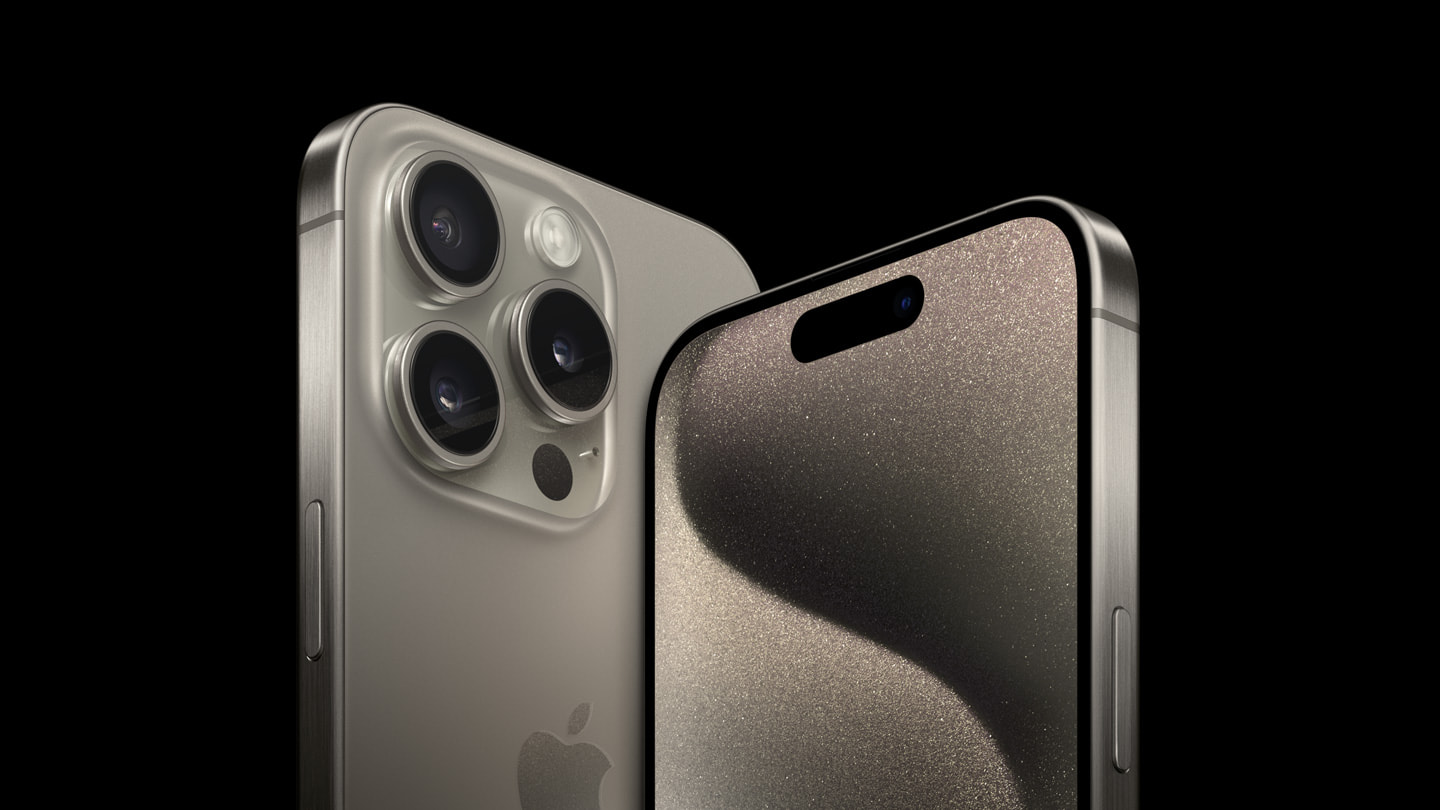
Apple’s latest iteration of the iPhone, the iPhone 16 Pro and iPhone 16 Pro Max, has been unveiled with groundbreaking features that aim to push the boundaries of what a smartphone can achieve.

These new devices introduce Apple Intelligence, expanded display sizes, and cutting-edge camera capabilities that set new standards in mobile photography and video recording. At the heart of these advancements is the A18 Pro chip, an engineering marvel designed to handle the increasing demands of artificial intelligence, pro-level creativity, and gaming, while delivering the best battery life ever seen in an iPhone.

The new iPhone 16 Pro lineup marks a significant leap forward in terms of power, functionality, and user experience.

“Powered by the faster, more efficient A18 Pro chip and built for Apple Intelligence, iPhone 16 Pro and iPhone 16 Pro Max are the most advanced iPhone models we’ve ever made,” Greg Joswiak, Apple’s Senior Vice President of Worldwide Marketing, said of the latest iPhone.

“Customers who are looking for the best possible iPhone will be able to take advantage of this huge step forward, whether they’re applying edits to a photo without lifting a finger, rewriting meeting notes for a more professional tone, or using the advanced camera system to capture their next masterpiece in 4K120 fps in Dolby Vision — all while enjoying extraordinary battery life.”

Apple Intelligence: A Personalized and Private AI Experience

At the core of this new generation of iPhones is Apple Intelligence, a powerful AI-driven personal assistant that understands personal context, draws from user data to simplify everyday tasks, and protects user privacy through a robust Private Cloud Compute system. This hybrid approach between on-device processing and server-based models balances performance with privacy, ensuring that user data remains secure.

Apple Intelligence delivers a range of functionalities. Users can adjust the tone of their writing in real time with Writing Tools, which can help make notes or emails friendlier, more concise, or professional. Apple Intelligence also integrates into the Phone and Notes apps, allowing users to record, transcribe, and summarize audio. Even during a phone call, users can record conversations (with the necessary consent notifications) and later receive a summary that highlights key points.

Incorporating system-wide intelligence, Siri has evolved to become more intuitive. The virtual assistant now maintains context between queries, can process mixed inputs of voice and text, and answers thousands of queries about iPhone features. Siri’s integration into the Apple Intelligence ecosystem enables it to offer an enhanced user experience that feels more natural and responsive.

Additionally, Siri will be able to interact with both Apple and third-party apps, offering users a more seamless experience when switching between tasks.

Enhanced Creative and Camera Capabilities

One of the standout features of the iPhone 16 Pro models is the pro camera system, which introduces the new 48MP Fusion camera with a faster quad-pixel sensor. This hardware improvement allows users to capture 4K120 fps video in Dolby Vision, the highest resolution and frame-rate combination ever available on an iPhone. The 48MP sensor enables zero shutter lag for ProRAW or HEIF photos, making it easier than ever to capture detailed, high-quality images and videos.

Complementing the Fusion camera is the Ultra Wide camera, also upgraded to 48MP. This camera is perfect for macro photography and allows users to take incredibly detailed, wide-angle shots. The 5x Telephoto camera, now available on both models, offers increased flexibility for capturing distant subjects with precision.

Perhaps the most innovative new feature is Camera Control, a novel way for users to interact with the camera system through tactile and touch-based inputs. With Camera Control, users can launch the camera, take a photo, or start a video recording by pressing a physical button or swiping across the camera screen. This intuitive system allows users to make real-time adjustments to zoom, exposure, or depth of field by simply sliding their finger across the display.

Apple’s advanced AI-driven Camera Control feature will soon evolve to include Visual Intelligence, allowing users to interact with real-world objects through their iPhone’s camera. For instance, users will be able to identify a restaurant’s operating hours, read a flyer to add an event to their calendar, or even identify the breed of a dog — all by using the camera system. Integration with ChatGPT and Google Search for extended search capabilities makes Camera Control a multifunctional tool for everyday life.

Pro-Level Creativity: Video and Audio Advancements

The iPhone 16 Pro lineup also introduces new capabilities for videographers and audio enthusiasts. The devices are equipped with four studio-quality microphones that capture true-to-life audio. Additionally, videos can now be recorded with Spatial Audio, delivering an immersive sound experience when played back on AirPods, Apple Vision Pro, or surround sound systems.

On the video front, users can capture 4K120 fps in Slo-mo or Video mode. This new frame rate option allows users to adjust the playback speed after the fact, including the ability to slow down footage to create a dreamy cinematic effect. Moreover, frame-by-frame cinema-quality color grading in Dolby Vision gives users unprecedented control over their video projects. For professionals, ProRes and Log recording at 4K120 fps is now supported, and users can record directly to external storage devices for more efficient workflow management.

Apple Intelligence takes the pro camera system even further by assisting users with in-app edits and tasks. For instance, Siri can help locate a specific shot within a user’s photo library and apply an edit using a third-party app like Darkroom.

Groundbreaking Display and Durability

The iPhone 16 Pro models feature Apple’s largest-ever iPhone displays, with 6.3-inch and 6.9-inch screens for the Pro and Pro Max models, respectively. The Super Retina XDR displays maintain their industry-leading ProMotion and Always-On technologies, delivering a vibrant and smooth visual experience. With the thinnest borders ever seen on an Apple product and an advanced Ceramic Shield that’s twice as tough as any other smartphone glass, the iPhone 16 Pro’s display is as durable as it is stunning.

The iPhone’s external structure also represents a leap forward in design and sustainability. Built with a titanium frame, the Pro models offer strength without the weight, improving the overall user experience. The devices have also been designed with recycled materials in mind, using over 25 percent recycled content, including 100 percent recycled aluminum and cobalt in certain components, and 95 percent recycled lithium in the battery. This aligns with Apple’s 2030 environmental goal to make its products carbon-neutral across their entire lifecycle.

A18 Pro: Powerhouse Performance and Energy Efficiency

Driving the performance of the iPhone 16 Pro lineup is the A18 Pro chip, which utilizes second-generation 3-nanometer technology to deliver more power while improving energy efficiency. The 16-core Neural Engine powers Apple Intelligence with on-device computations, while a new 6-core CPU achieves 15 percent faster performance than its predecessor, all while consuming 20 percent less power. The result is a dramatic improvement in sustained performance, battery life, and the ability to handle intensive tasks like machine learning, gaming, and video editing.

Apple has further enhanced gaming performance with a 6-core GPU, which is up to 20 percent faster than the previous generation. Hardware-accelerated ray tracing enables more realistic lighting and shadow effects in games, while Game Mode in iOS 18 improves responsiveness across peripherals like AirPods and game controllers.

Expanded Safety and Connectivity Features

Building on Apple’s tradition of enhancing safety through technology, the iPhone 16 Pro lineup expands on features like Emergency SOS via satellite, which now allows users to send texts or emojis when outside cellular coverage. This feature will soon extend to Roadside Assistance via satellite, enabling users to contact help when stranded in remote areas.

New features in iOS 18 also improve the safety experience, such as Emergency SOS Live Video, allowing users to share a live video feed or photos with emergency services during a crisis.

The iPhone 16 Pro and iPhone 16 Pro Max represent Apple’s most advanced smartphone technology to date. Pre-orders for the iPhone 16 Pro lineup will begin on Friday, September 13, with availability starting Friday, September 20. The devices will be available in four finishes: black titanium, natural titanium, white titanium, and desert titanium.

The Growing Market of Used Software: A Sustainable Solution for Businesses

0

Introduction to used software

The idea of used software may seem unusual and challenging to grasp, but it is gaining increasing attention in a world where recycling and sustainability are key concerns, even in the digital realm. Used software refers to programs that have already been purchased by another individual or company and are then resold. Unlike physical products, however, software does not experience wear and tear, allowing it to be reutilized as a new license. The transfer of such licenses differs from the sale of physical goods, as it is governed by specific legal regulations.

The market for used software initially emerged to help companies reduce IT-related expenses. Over time, the concept has evolved, driven by increasing digitization and the recognition that software licenses are not necessarily tied to a single user or device. Today, used software presents a valuable opportunity not only for large corporations but also for small and medium-sized businesses and individual users. Any company or individual can purchase second-hand licenses through a specialized software reseller and save on their budget.

How the used software market operates

The second-hand software market is based on a simple principle: anyone who owns a software license that they no longer use can sell it on to someone else. There are several platforms that facilitate this buying and selling, both for companies and individuals. The main sales channels include specialized online marketplaces and authorized resellers. These entities verify the authenticity of the licenses and guarantee the correctness of the transfer.

One of the key benefits of used software is the cost savings. Businesses, in particular, can acquire older software versions at significantly lower prices than newer ones, without sacrificing functionality. This is especially advantageous for those who don’t require the latest or most advanced features.

The software life cycle plays an important role in determining its value in the second-hand market. As new software versions are released, older versions tend to decrease in value, similar to what happens with electronic devices. However, unlike physical products, software doesn’t degrade over time, making it ideal for reuse. Additionally, with increasing awareness of resource conservation and waste reduction, more companies are integrating used software into their IT strategies.

European regulations on used software

The legal framework regulating the sale of used software within the European Union has developed over the years since the decision of the Court of Justice of the European Union (CJEU) in 2012 in Case C-128/11 UsedSoft GmbH v. Oracle International Corp.

The ruling states that: ‘An author of software cannot oppose the resale of his ‘used’ licenses allowing the use of his programs downloaded from the internet. The exclusive right of distribution of a copy of a computer program covered by such a license is exhausted on its first sale.’ 

This therefore forms the basis of the regulation. This directive defines the rights of distribution and use of software, setting the parameters within which software may be transferred to third parties.

The Court introduced the concept of exhaustion of rights, according to which once the manufacturer has sold the first license, it no longer has the right to oppose the resale of that same license by the user. This paved the way for the growth of the used software market, both for downloadable and physical products.

Even if a license agreement between the manufacturer and the original buyer explicitly prohibits the resale of software, the manufacturer cannot prevent the resale. This is because the license agreement is subject to European law, and any clause conflicting with European law is considered invalid.

The legal principle of “exhaustion of rights” is key to understanding the resale of used software. Under this rule, once a license is sold, the owner is allowed to transfer it to another user, provided it is deactivated on the original device and reinstalled on a new one. Essentially, used software must be treated similarly to physical goods when it comes to resale rights.

Potential risks and factors to consider when purchasing used software

When purchasing used software, it is essential to ensure that the license is valid and genuine. One of the first steps is to check licenses carefully, particularly if purchasing from third-party platforms or online marketplaces. Buyers should ensure that the license has not been previously duplicated or used on multiple devices, which could cause problems when installing or using the software.

Another important consideration is the authenticity of the software. Ensuring that the software has not been altered or modified is essential to ensure that it functions properly and does not present security vulnerabilities. In addition, it is important to only use reputable resellers who can provide full documentation on the origin of the license and ensure that all legal requirements have been met.

To avoid scams or unsafe purchases, it is always advisable to research the seller thoroughly and check other users’ reviews. In general, choosing certified resellers or recognised sales platforms can significantly reduce the risks associated with buying used software.

The future of the used software market

The used software market is poised for continued growth, with future trends indicating its increasing appeal to companies looking to cut costs and optimize their IT resources. As environmental awareness rises and the focus on waste reduction intensifies, this sector is likely to remain relevant. Reusing software licenses offers a sustainable solution by eliminating the need for new physical packaging and reducing demand for additional resources. 

Purchasing used software licenses offers significant environmental benefits by reducing the need for new physical packaging, minimizing the consumption of raw materials, and lowering electronic waste. This practice promotes a more sustainable and circular economy by extending the lifecycle of digital products, aligning with global efforts to reduce resource depletion and environmental impact. As businesses and individuals prioritize eco-friendly solutions, the adoption of used software licenses presents a viable strategy for lowering the carbon footprint of IT operations while supporting long-term sustainability goals.

How the hospital St. Johann in Tirol was able to implement their Microsoft licensing affordable

The hospital, which has been in operation since 1262, treats about 15,000 inpatients and 68,000 outpatients annually, with 500 employees using computers. The IT team faced challenges related to Microsoft software licensing, which, although accessible through government contracts, included costly and unnecessary maintenance agreements.

In 2018, the hospital needed to upgrade from Office 2010 to Office 2019 but wanted to avoid the high costs of new licenses and maintenance contracts. They turned to a provider of second-hand software, which helped the hospital cut licensing costs by 50%. This also allowed them to purchase Windows Server Datacenter licenses and other needed tools. The hospital saved additional funds by trading in old Office 2010 licenses.

Nigeria Launches N50,000 Support for One Million Small Businesses

0

In a bid to stimulate Nigeria’s small-scale business sector, the federal government has launched a N50 billion financial lifeline through the Small and Medium Enterprises Development Agency of Nigeria (SMEDAN).

The initiative, spearheaded by President Bola Tinubu, is aimed at supporting approximately one million small businesses across the country, each of which will receive N50,000 under the SMEDAN programme.

The Director-General of SMEDAN, Mr. Charles Odii, unveiled the initiative during the flag-off ceremony for the Delta North zone in Asaba. Speaking to small business owners, Odii explained that the programme is designed to provide immediate financial relief to “NANO businesses”—enterprises with fewer than three employees and an annual turnover of less than N3 million.

The goal, according to him, is to give these businesses a chance to unlock more significant sources of income, build wealth, and ultimately contribute to national economic growth.

Odii highlighted that the N50,000 grants are intended to help small businesses access much-needed funds and navigate the current economic difficulties.

“The NANO businesses of SMEDAN are those businesses that have at least three employees with a turnover of less than three million naira,” he said.

“Poverty does not know political party, sex, or age; a hungry man is an angry man. Yes!

“There is often this undesirable triangle that I’d like to illustrate: hunger leads to anger and anger leads to violence. This is the reason why we have a lot of youth unrest.

“One of the things we are doing as a long-term solution is to help improve the capacity of our people while the short-term solution is to give them grants as we are doing now.”

Economic Realities Undermine the Gesture

While this initiative has been applauded for its intent to boost small businesses and alleviate poverty, many business leaders have voiced concerns about its effectiveness in the face of Nigeria’s current economic challenges. With the naira suffering significant devaluation, the removal of fuel subsidies, and inflation rates skyrocketing, N50,000 may not be enough to make a meaningful impact on most businesses, they note.

Economists have pointed out that, in the face of rising operational costs and fluctuating currency, N50,000 may barely cover the daily operational expenses of many small businesses, let alone foster significant growth or expansion.

Nigeria has been grappling with multiple economic challenges since the removal of the fuel subsidy last year, which has led to a surge in transportation costs and a general rise in the price of goods and services. Additionally, the naira’s ongoing devaluation has further compounded the financial strain on businesses, particularly small-scale enterprises that rely on imported goods or materials.

Against this backdrop, many business leaders feel that N50,000 is a drop in the ocean, advocating the need for a broader, more comprehensive approach that addresses the real financial needs of small businesses in today’s economy.

Experts suggest that a multifaceted approach that includes grants, low-interest loans, and capacity-building programs would offer more sustainable relief to small businesses.

However, Odii expressed optimism about the potential impact of the programme, during the flag-off event in Asaba, where some beneficiaries confirmed receiving the N50,000 alerts. The SMEDAN boss also promised that further financial support would be based on the effective use of the initial grants, urging beneficiaries to invest wisely.

The beneficiaries were selected through a rigorous scrutinizing process via a technology-based system that was not biased or based on “who you know,” but purely on merit.

Odii highlighted that the agency has so far covered 14 states and plans to reach all 36 states and the Federal Capital Territory (FCT), soliciting cooperation from state governments and stakeholders. He reiterated that SMEDAN cannot do it alone, calling on state governments to support the initiative in order to ensure its success.

“We need the support of the state governments to grow the small businesses in the country,” he said.

“When a small business grows, a family grows. You feed one small business owner, you have fed at least 10 people.”

Japan’s Chip Restrictions on China: Global Implications Unfold

0

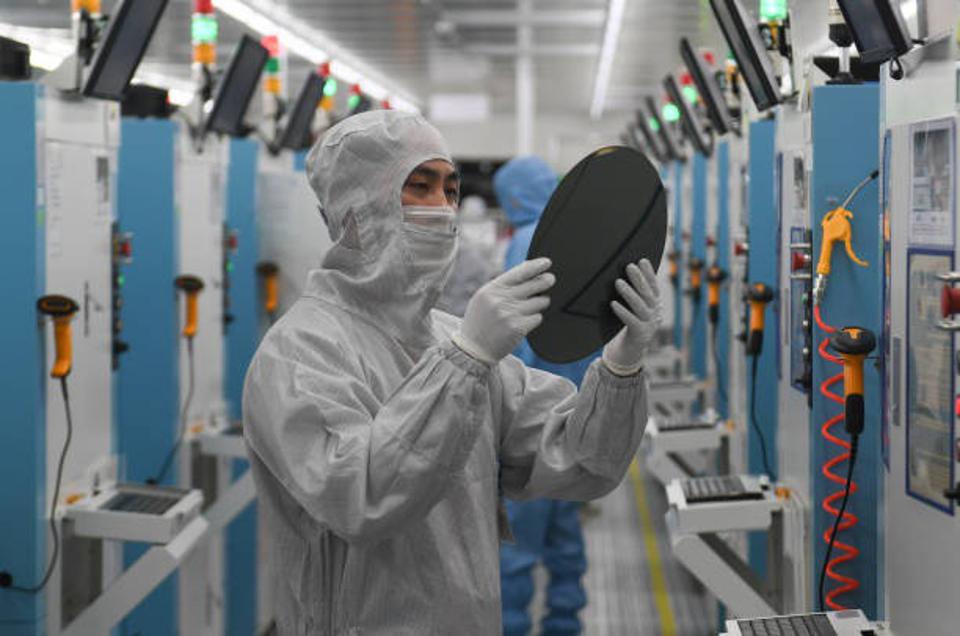
In recent months, tension between China and Japan has escalated, driven by Tokyo’s decision to tighten export controls on semiconductor manufacturing equipment. Japan’s move, influenced by pressure from the United States, risks straining trade relations with China and could significantly affect the global tech industry.

At the beginning of the year, Japan announced its intention to limit exports of key semiconductor manufacturing components to China, including minerals and rare earth metals used in chip production. This sparked an immediate response from the Chinese authorities, who threatened retaliatory sanctions if restrictions were enforced.

As the world’s largest semiconductor consumer, China heavily relies on imported high-tech equipment. Any supply disruptions could seriously slow down China’s tech industry and hinder its efforts to gain self-sufficiency in semiconductor manufacturing.

Japan has reason to be cautious. Back in 2010, China temporarily cut off rare earth metal exports to Japan after the incident in the East China Sea, which impacted Japan’s electronics industry and disrupted the global supply chain for powerful magnets produced in Japan using Chinese raw materials.

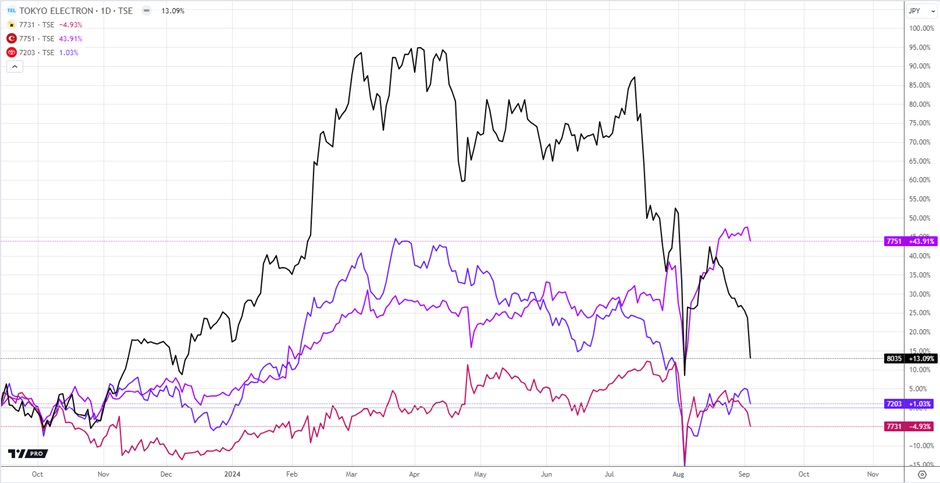
Several Japanese companies, such as Tokyo Electron, Nikon, and Canon, specialize in producing high-tech chip manufacturing equipment. These companies supply their products to China, and any restrictions can slash their revenues and weaken their position in the market.

One of the most vulnerable companies is Toyota. China is a crucial market for Japanese automakers, and any potential sanctions from Beijing could significantly impact their financial performance. Toyota has privately expressed concerns to Japanese officials, particularly about access to essential minerals for car production. This concern is especially relevant as modern cars increasingly depend on high-tech components like semiconductors. Losing access to the Chinese market could create shortages and disrupt production. It looks like an attempt to set up automated trading software with the Internet turned off.

U.S. policy has been aimed at curbing China’s technological growth. Over the past few years, the U.S. has tightened export controls on advanced technologies, including semiconductors, and has urged allies like Japan to adopt similar restrictions.

Washington fears that China gaining technological superiority could shift the global balance of power, strengthening Beijing’s economic and geopolitical position. Limiting China’s access to advanced technologies is becoming a key part in this strategic game, potentially causing the CSI 300 index to fall permanently behind the S&P 500 Index and Nasdaq.

In the long run, this situation may lead to significant changes in the global tech industry, potentially creating fragmented markets. With stricter export controls and sanctions, separate technological ecosystems might emerge, driving up development costs and slowing down global innovation. This might also push Chinese companies to ramp up efforts to localize semiconductor production, leading to greater investments in domestic research and development.

U.S. pressure on its allies to tighten export controls can also cause friction within alliances, leading to new economic and political risks. The financial impact is clear—Japanese companies like Tokyo Electron could face heavy losses if they lose access to the Chinese market, limiting their growth and investment opportunities.

Ultimately, the tensions between China and Japan reflect broader global trends in tech security and economic rivalry. While these moves may cause short-term instability and financial loss, they could reshape the technological landscape for years, influencing innovation across industries from consumer electronics to automotive manufacturing.