DD
MM
YYYY

PAGES

DD
MM
YYYY

spot_img

PAGES

Home Blog Page 2922

Japan’s Chip Restrictions on China: Global Implications Unfold

0

In recent months, tension between China and Japan has escalated, driven by Tokyo’s decision to tighten export controls on semiconductor manufacturing equipment. Japan’s move, influenced by pressure from the United States, risks straining trade relations with China and could significantly affect the global tech industry.

At the beginning of the year, Japan announced its intention to limit exports of key semiconductor manufacturing components to China, including minerals and rare earth metals used in chip production. This sparked an immediate response from the Chinese authorities, who threatened retaliatory sanctions if restrictions were enforced.

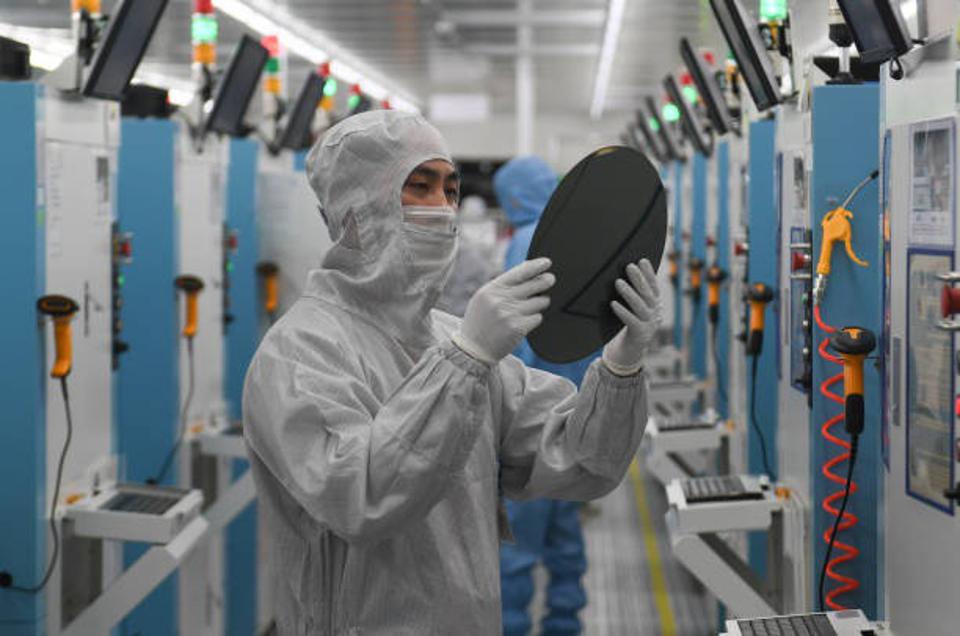
As the world’s largest semiconductor consumer, China heavily relies on imported high-tech equipment. Any supply disruptions could seriously slow down China’s tech industry and hinder its efforts to gain self-sufficiency in semiconductor manufacturing.

Japan has reason to be cautious. Back in 2010, China temporarily cut off rare earth metal exports to Japan after the incident in the East China Sea, which impacted Japan’s electronics industry and disrupted the global supply chain for powerful magnets produced in Japan using Chinese raw materials.

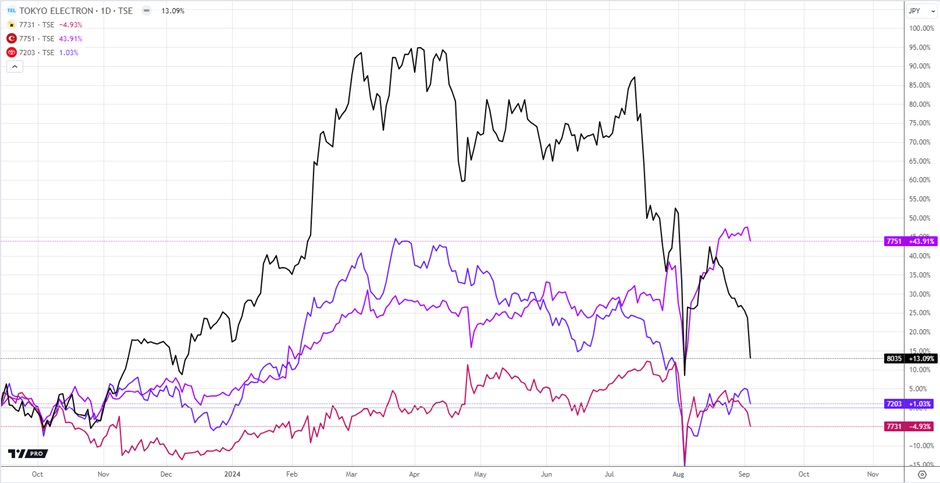
Several Japanese companies, such as Tokyo Electron, Nikon, and Canon, specialize in producing high-tech chip manufacturing equipment. These companies supply their products to China, and any restrictions can slash their revenues and weaken their position in the market.

One of the most vulnerable companies is Toyota. China is a crucial market for Japanese automakers, and any potential sanctions from Beijing could significantly impact their financial performance. Toyota has privately expressed concerns to Japanese officials, particularly about access to essential minerals for car production. This concern is especially relevant as modern cars increasingly depend on high-tech components like semiconductors. Losing access to the Chinese market could create shortages and disrupt production. It looks like an attempt to set up automated trading software with the Internet turned off.
U.S. policy has been aimed at curbing China’s technological growth. Over the past few years, the U.S. has tightened export controls on advanced technologies, including semiconductors, and has urged allies like Japan to adopt similar restrictions.

Washington fears that China gaining technological superiority could shift the global balance of power, strengthening Beijing’s economic and geopolitical position. Limiting China’s access to advanced technologies is becoming a key part in this strategic game, potentially causing the CSI 300 index to fall permanently behind the S&P 500 Index and Nasdaq.

In the long run, this situation may lead to significant changes in the global tech industry, potentially creating fragmented markets. With stricter export controls and sanctions, separate technological ecosystems might emerge, driving up development costs and slowing down global innovation. This might also push Chinese companies to ramp up efforts to localize semiconductor production, leading to greater investments in domestic research and development.

U.S. pressure on its allies to tighten export controls can also cause friction within alliances, leading to new economic and political risks. The financial impact is clear—Japanese companies like Tokyo Electron could face heavy losses if they lose access to the Chinese market, limiting their growth and investment opportunities.

Ultimately, the tensions between China and Japan reflect broader global trends in tech security and economic rivalry. While these moves may cause short-term instability and financial loss, they could reshape the technological landscape for years, influencing innovation across industries from consumer electronics to automotive manufacturing.
Huawei Tri-Fold Phone Secures 2.7 Million Pre-Orders, Ahead of iPhone 16 Release

0

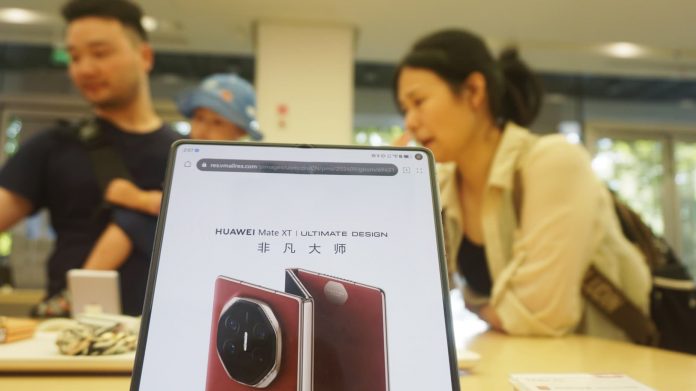
Huawei’s upcoming tri-fold phone has reportedly garnered significant attention, amassing 2.7 million pre-orders, as shown on its website on Monday.

The Chinese company began pre-orders for its Mate XT on Saturday, which coincides with Apple’s iPhone 16 release launch date, making it a worthwhile moment for tech enthusiasts and market watchers as both tech giants vie for dominance in the premium phone categories.

It is however worth noting that lately, Huawei has managed to displace Apple’s iPhone in terms of sales in China, largely due to a combination of technological innovation, patriotism, and geopolitical dynamics. In recent years, Huawei has invested heavily in research and development, especially in the 5G and foldable phone markets, which helped to maintain a competitive edge despite global challenges, such as the U.S. sanctions limiting their access to advanced chip technologies.

The Chinese company’s latest premium phone, Huawei Mate 60 Pro, which features satellite communication capabilities and cutting-edge chips produced domestically, has captured the attention of Chinese consumers. The launch of the phone generated significant buzz, with pre-orders and initial sales exceeding expectations. These technological advancements, along with the perception of Huawei as a national brand facing foreign pressures have increased consumer loyalty and patriotism, boosting its sales domestically.

Meanwhile, Apple is set to unveil the iPhone 16 and iPhone 16 Plus on September 9, 2024, bringing a range of upgrades designed to enhance performance and further challenge its competition in the smartphone market. One of the most anticipated features of the iPhone 16 lineup is the integration of the new A18 chip, which promises to deliver a significant boost in processing power, improved energy efficiency, and enhanced Al capabilities. This next-generation chip will likely make the iPhone 16 one of the fastest smartphones available, reinforcing Apple’s lead in mobile computing technology.

In addition to the performance boost from the A18 chip, the camera layout on the iPhone 16 models will be redesigned. Apple is expected to introduce more advanced sensors that support better low-light photography, enhanced zoom capabilities, and overall photo quality improvements. This upgrade will appeal to photography enthusiasts and users who prioritize a premium camera experience.

With the launch of these models, Apple aims to further solidify its position in the high-end smartphone market, competing with other tech giants, particularly Huawei, which has gained ground with innovative foldable devices and cutting-edge technology in regions like China. Anticipation has driven Apple’s stock up 13% since June when it previewed its Al strategy, adding nearly $400 billion to the company’s market value ahead of the launch. The iPhone 16 launch marks Apple’s continued focus on premium features and consumer experience, as it seeks to maintain its edge against growing competition in the global market.

Furthermore, the iPhone 16, which is Apple’s first Al-centric device, could position the Cupertino giant as a leader in the consumer AI revolution. Analysts, such as Dan Ives of Wedbush Securities, see Apple leveraging Al to become a “gatekeeper” for the technology’s widespread use.

Nigerian Fintechs Move to Begin Deduction of N50 Electronic Money Transfer, Sparks Public Backlash

0

Starting Monday, September 9, 2024, several Fintech companies in Nigeria have notified their customers about the upcoming deduction of N50 electronic Money Transfer Levy (EMTL) on all electronic transfers of N10,000 and above.

This levy, mandated by the Federal Inland Revenue Service (FIRS), follows the Electronic Money Transfer Levy Regulations, 2022, which aims to boost government revenue from digital transactions. The regulation extends to both personal and business accounts, with exceptions for transfers below N10,000 or transfers between accounts of the same owner within the same bank.

However, the introduction of this levy has sparked widespread backlash, with several Nigerians voicing their concerns on X platform (formerly Twitter). Many view the levy as excessive taxation, accusing the Bola Tinubu-led administration of burdening citizens without transparent use of public funds.

Check out some reactions on X,

@ TaiwoMuyiwa3 wrote,

“Federal government continue to extort every organization in this country but failed to attend to the needs of the people they govern. Price of everything in this country is ridiculously high but they are unconcerned by it. Misplaced priorities.”

@realTobiAkinbo wrote,

“FIRS has also directed Fintech companies to charge a N50 naira levy on transfers above N10,000, this is a plot to further extort the poor masses. It’s criminal and illegal”.

@obaroddy wrote,

“The Tinubu tax and income thieves have finally descended on OPAY and Fintech apps with the EMTL levy of N50 for every transaction above N10000. When will this craziness stop?”

@ibrulezz wrote,

“FIRS has instructed Fintech companies to impose a N50 levy on transactions exceeding N10,000. This move appears to be an attempt to further burden the already struggling low-income population, sparking questions about its legitimacy.”

Nigerian Economists, Marcel Okeke, a former Chief Economist at Zenith Bank, has also expressed concern about the levy, warning of the potential economic consequences. He criticized the move as ill-timed, suggesting that it could deter the adoption of digital financial services, harm fintech innovation, and ultimately damage the economy.

Also commenting on the fintech tax levy, another Nigerian economist, Alias Aliyu, described the levy as a “desperate move” to increase revenue, especially given the current economic hardships Nigerians are facing, including the recent 10% VAT hike and the floating of the naira.

Notably, there strong are calls from citizens urging the government to focus on regulating the fintech sector, addressing cybersecurity concerns, and curbing prevalent issues like the proliferation of loan sharks, rather than imposing more financial burdens on the public. Despite the criticism, the Federal Government sees the EMTL as a necessary measure to support its revenue generation efforts.

Elon Musk’s Starlink Now Accounts For Two-thirds of All Active Satellites

0

Elon Musk’s Starlink satellite network has surged to unprecedented heights, now accounting for nearly two-thirds of all active satellites orbiting Earth.

This week, the 7,000th Starlink satellite was launched, propelling SpaceX’s satellite constellation to new dominance. In just four years since its first launch in 2019, Starlink has become the most formidable player in the space-based internet industry.

According to the latest data from CelesTrak, a non-profit satellite tracker, SpaceX currently operates 6,370 active Starlink satellites in low-Earth orbit, with several hundred more either inactive or deorbited. This figure accounts for over 62 percent of all operational satellites orbiting the Earth, positioning Starlink as the undisputed leader in satellite constellations.

The sheer volume of satellites in SpaceX’s fleet is approximately 10 times greater than its closest competitor, OneWeb, a UK-based startup that operates as a subsidiary of French satellite giant Eutelsat.

With over 6,370 active satellites in low-Earth orbit, SpaceX has rapidly expanded its presence, launching an average of three satellites per day. While Musk’s ambitious goal is to bring high-speed internet to every corner of the globe, it is in rural and underserved areas where Starlink has had the most profound impact. These are regions where traditional Internet Service Providers (ISPs) have struggled, often due to prohibitive costs or infrastructure challenges. By bypassing terrestrial networks, Starlink provides an alternative in areas where internet connectivity had previously been a luxury—or was altogether non-existent.

These satellites have become a lifeline, providing internet service to remotest communities worldwide. Musk’s vision for Starlink is encapsulated in this pursuit—delivering reliable, fast internet to those who have long been left behind in the digital divide.

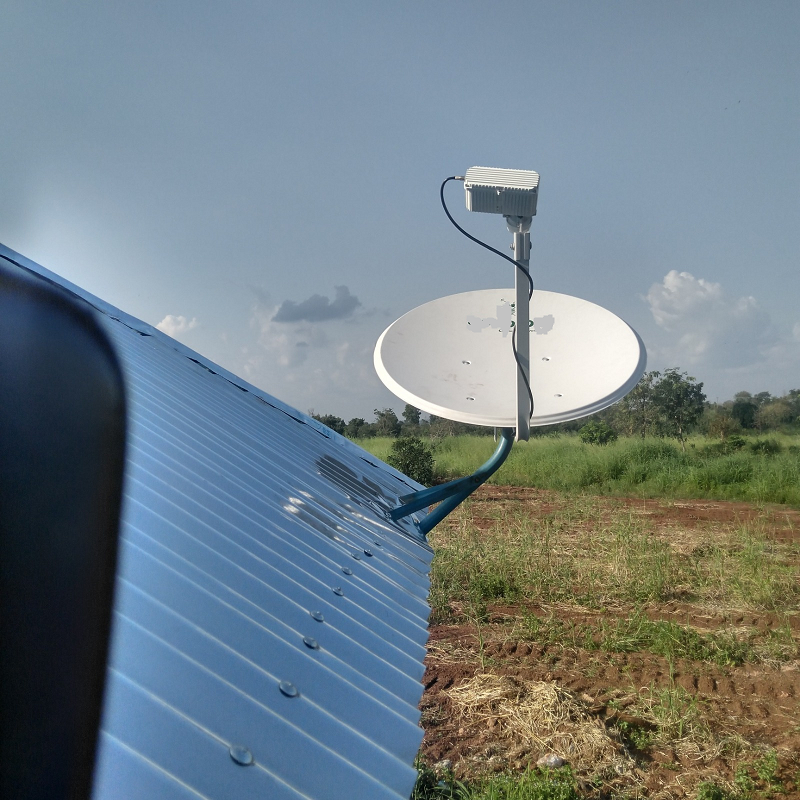
Starlink currently operates in 102 countries, with more than three million users already benefiting from the service. The cost for access requires a $300 ground-based dish and a monthly subscription fee, but for many in hard-to-reach locations, this cost is justified by the consistent internet speeds and reliable connection Starlink provides.

Local ISPs, especially in sparsely populated rural areas, have often lacked the incentives or resources to lay fiber or build cell towers. Starlink’s innovative technology sidesteps these logistical hurdles by beaming the internet directly from space, completely revolutionizing how remote communities access the digital world.

The project is still in its relative infancy, with SpaceX planning to launch up to 42,000 satellites to complete the Starlink constellation. This will further boost coverage and performance, ensuring that even the most isolated villages or homes on the fringes of civilization can access the same high-speed internet as those in metropolitan hubs.

Musk’s push for satellite internet is already yielding benefits in countries struggling with connectivity. Communities in rural parts of North America, parts of Africa, and remote islands are now using Starlink where once only patchy or non-existent internet existed.

From enabling children in isolated towns to access online education to providing local businesses with new opportunities, Starlink is bringing more than just the internet—it’s offering economic growth and social connectivity.

Following SpaceX’s latest launch, which saw 21 additional Starlink satellites sent into orbit aboard a Falcon 9 rocket from Cape Canaveral, Florida, Musk tweeted, “Starlink now constitutes roughly 2/3 of all active Earth satellites.”

However, Musk’s rapidly growing control over global communications has sparked concerns about the level of power concentrated in his hands. With the combined influence of Tesla, X (formerly Twitter), and Starlink, Musk has unrivaled real-time access to global economic and technological trends.

“Between Tesla, Starlink, and Twitter, I may have more real-time global economic data in one head than anyone ever,” Musk remarked in April 2023.

When Brazilian judiciary announced a ban on X, Musk’s Starlink initially made the platform available to its users in Brazil, bypassing the ban. Although the company later complied with the order, it raised questions about Musk’s ability to leverage his technological assets in response to national legislation, exemplifying his enormous influence.

However, many believe that the benefits of Musk’s tech companies, such as Starlink, far outweigh the concerns. For instance, as the satellite network continues to grow, millions more are expected to come online, especially in areas that have long awaited the kind of connectivity Starlink promises.

The prospect of universal high-speed internet—once a dream for many—has never been closer to reality. With Starlink, even the most remote corners of the planet may soon have the opportunity to plug into the global digital economy, overcoming the failings of traditional ISPs in ways never before possible.

Tekedia Mini-MBA Edition 15 Has Started, Registration Continues

0

Ladies and Gentlemen, we have started Tekedia Mini-MBA edition 15. The Week 1 courseware is already in the Board, and the first live session will be on Saturday; all details are in the Board. We have added AI capabilities to quickly summarize our live sessions for learners. Make sure you are in the WhatsApp Group; we will be sharing those summaries via WhatsApp even as you can get them in the classboard.

I want to welcome everyone to this academic festival. If you have paid and yet to receive your login details, please quickly get in touch with support here .

Registration continues here. Register for Tekedia Mini-MBA and accelerate your professional development https://school.tekedia.com/course/mmba15/